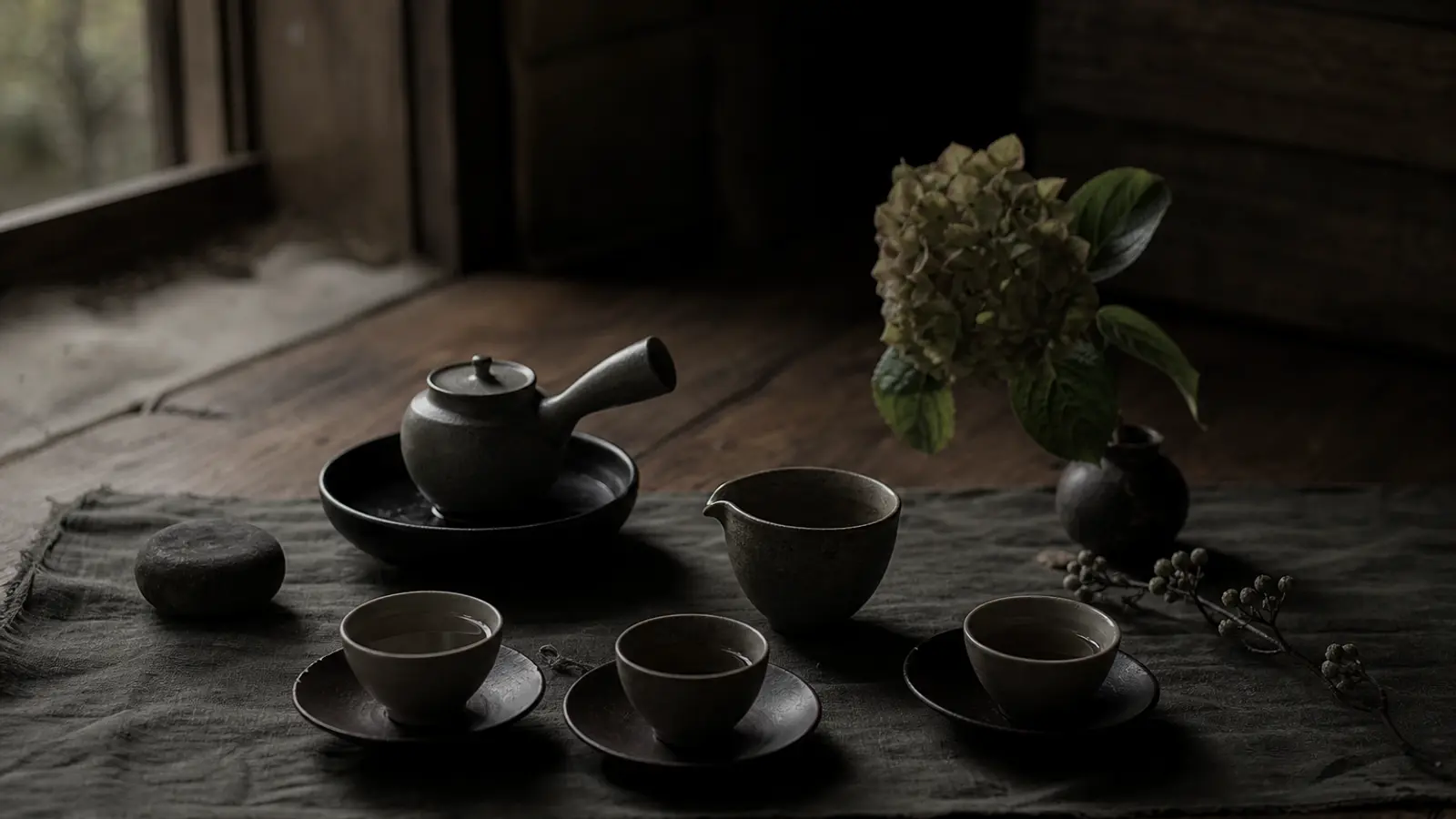
Darye (다례, 茶禮) is the Korean tea ceremony — a meditative practice of preparing and serving tea that emphasizes seasonal simplicity, quiet attention, and the aesthetic principle of sobakham (소박함, understated beauty). Simpler and less codified than Japanese chanoyu, darye uses a side-handle teapot (다관 dagwan), cooling pitcher (숙우 sugu), and individual cups to create a practice centered on presence rather than performance.
The first time I sat through a Korean tea ceremony, I kept waiting for the choreography to begin. I’d spent years watching gongfu cha (功夫茶) sessions and reading about Japanese chado (茶道), and both traditions had trained me to expect precision — exact movements, specific angles, measured timing. Instead, my mother-in-law placed a few vessels on the table, heated water, and made tea. Slowly. Quietly. With no performance whatsoever.
That was darye (다례, 茶禮). And it took me a while to understand that the absence of spectacle was the entire point.
Darye is Korea’s indigenous tea ceremony tradition. The word itself breaks into two characters: 다 (茶, tea) and 례 (禮, rite or etiquette). It is not Chinese gongfu cha. It is not Japanese chado. It occupies its own philosophical space — one defined by seasonal awareness, understated simplicity, and the radical idea that making tea attentively is, by itself, enough.
The Philosophy Behind Darye: Simplicity as Practice
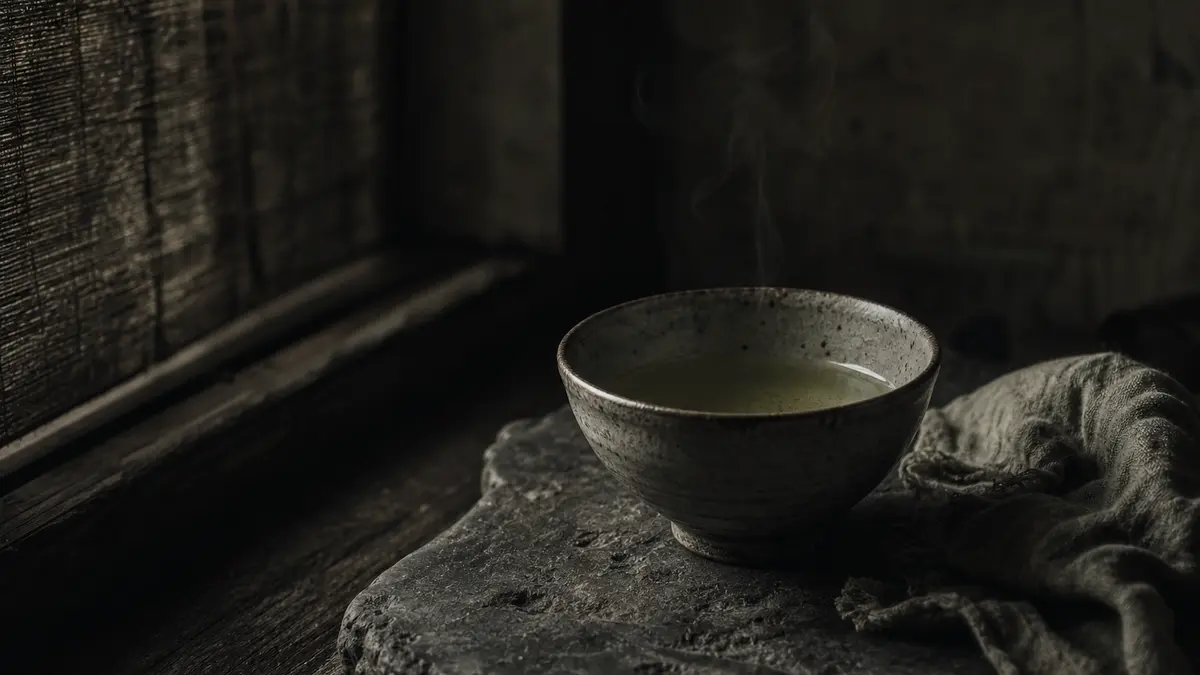
To understand the Korean tea ceremony, you need to understand a single Korean concept: 소박함 (sobakham). The word translates roughly as “understated simplicity,” but that English rendering strips away the cultural weight. Sobakham is the aesthetic philosophy that produced the moon jar — that iconic white porcelain sphere with its deliberate asymmetry. It’s the same sensibility behind buncheong (粉靑) pottery, with its rough slip and casual brushwork. In sobakham, perfection is not the goal. Presence is.
This distinction matters enormously when comparing darye to its East Asian counterparts.
Japanese chado codifies every gesture. The angle of the whisk, the number of rotations, the placement of the natsume — each element follows a script refined over centuries. The beauty is in the mastery of form. Chinese gongfu cha pursues technical extraction. Water temperature, leaf-to-water ratio, steep timing down to the second — the beauty is in the cup, in pulling the best possible liquor from the leaf.
Darye asks something different. The tea maker does not strive for perfection. The tea maker strives to be here, in this season, with these leaves, at this table. The act of making tea is the practice — not a performance, not a competition, not a demonstration of technical skill, but quiet, attentive preparation.
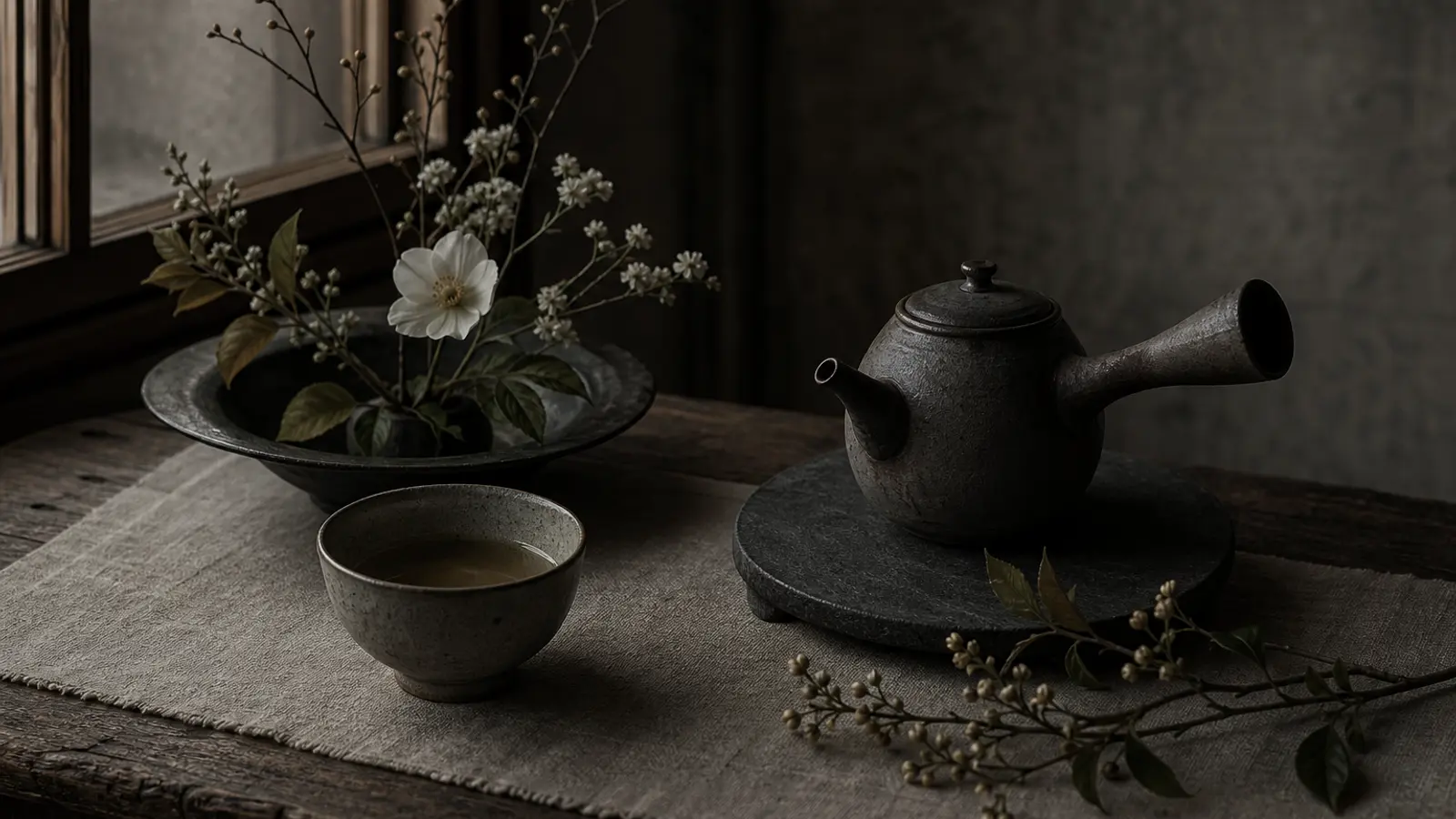
Seasonal flowers on the tea table change with the month. Forsythia in spring. Lotus in summer. Chrysanthemum in autumn. A single bare branch in winter. The vessel chosen reflects the season — lighter, thinner cups when the air is warm; heavier, broader bowls when cold settles in. Nothing is forced. The tea session responds to what is already happening in the world outside the window.
If Japanese tea ceremony is a sonata — every note composed — darye is improvised jazz. There is structure, there are conventions, but the practitioner brings themselves to each session fresh.
Essential Korean Tea Ceremony Equipment
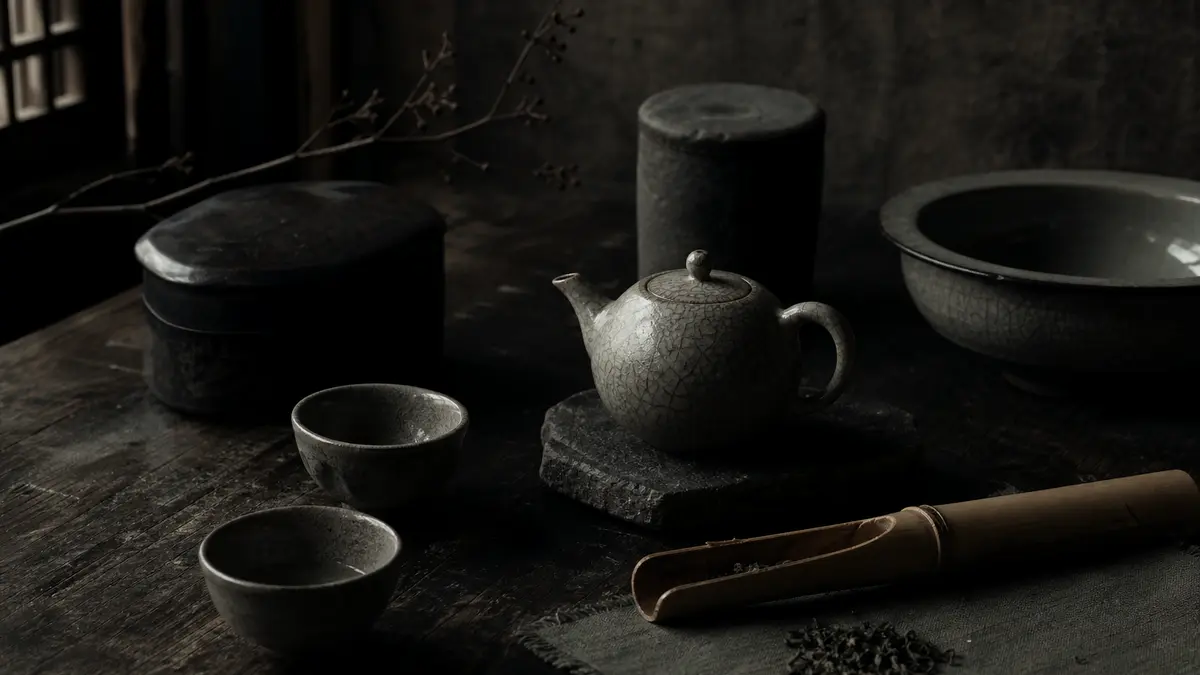
The tools of darye are distinct from both Chinese and Japanese teaware. Each piece has a Korean name and a specific function, and understanding the set helps you understand the philosophy.
다관 (Dagwan) — Side-Handle Teapot
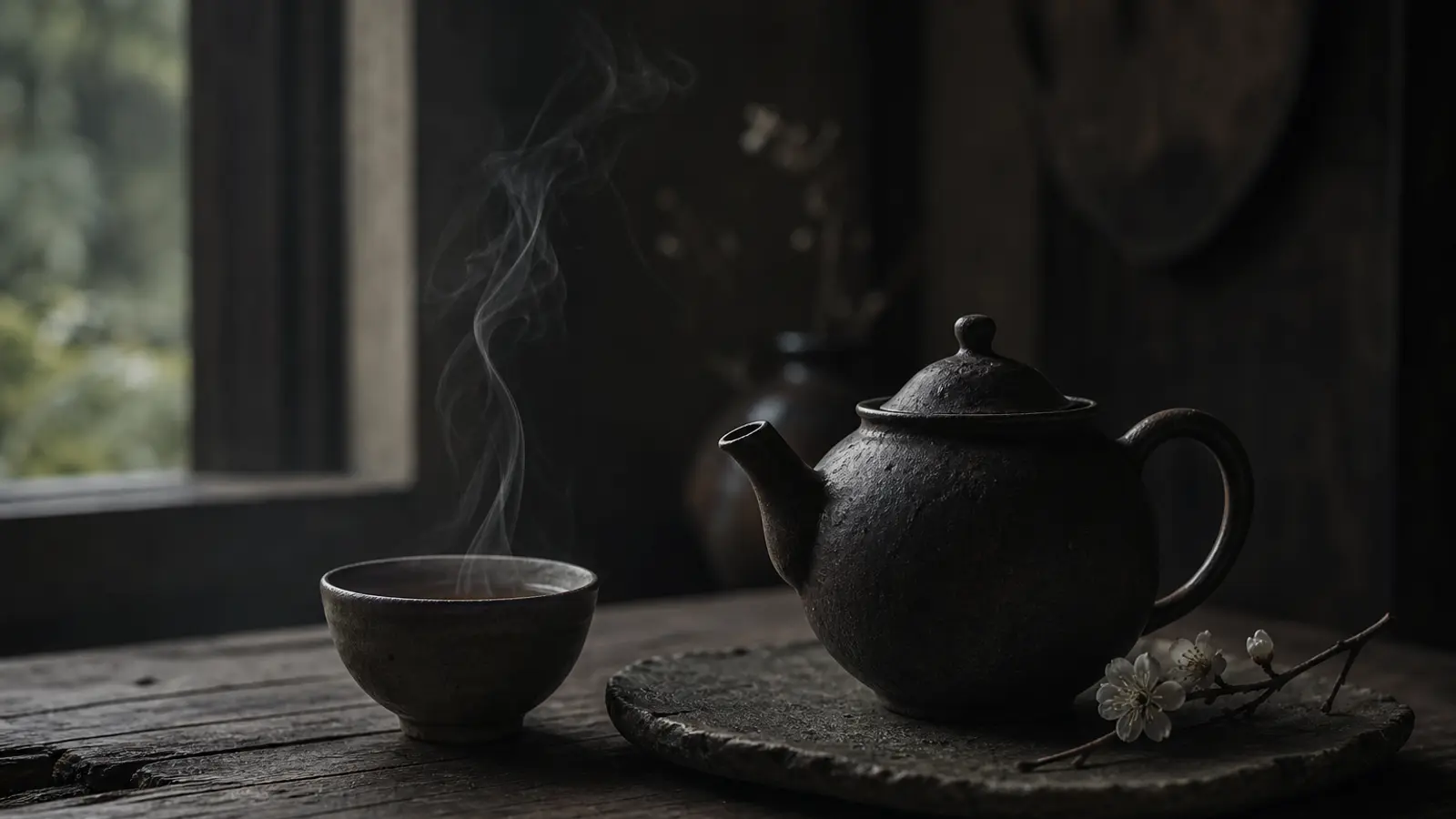
The dagwan is the primary Korean brewing vessel. Unlike a Chinese Yixing teapot with its rear handle or a gaiwan (蓋碗) with its lidded-bowl design, the dagwan features a side handle set at a right angle to the spout. This design encourages a particular pouring motion — more of a tilt than a lift — that feels unhurried and controlled.
Dagwan are typically made from ceramic or stoneware, often unglazed or lightly glazed. Capacity ranges from 150 ml to 300 ml, larger than most Chinese gongfu pots. The size reflects darye’s pace: fewer, longer steeps rather than rapid-fire infusions.
숙우 (Sugu) — Cooling Pitcher
The sugu is the most distinctively Korean element in the entire setup. It functions as a fairness pitcher, yes, but its primary purpose is temperature control. In darye, boiling water is never poured directly onto tea leaves. Instead, it goes from the kettle into the sugu first, where it sits and cools to the target temperature before being transferred to the dagwan.
This deliberate cooling step is central to Korean tea philosophy. Korean green teas — particularly high-grade ujeon (우전, 雨前) and sejak (세작, 細雀) — are delicate. Korean tea masters consider the sugu essential for protecting these leaves from thermal shock. The cooling is not incidental; it is part of the ceremony’s rhythm. You pour the water and then you wait. The waiting is practice.
Think of it as decanting in wine. You could skip it. But the pause changes both the liquid and the person holding the vessel.
찻잔 (Chatjan) — Teacup
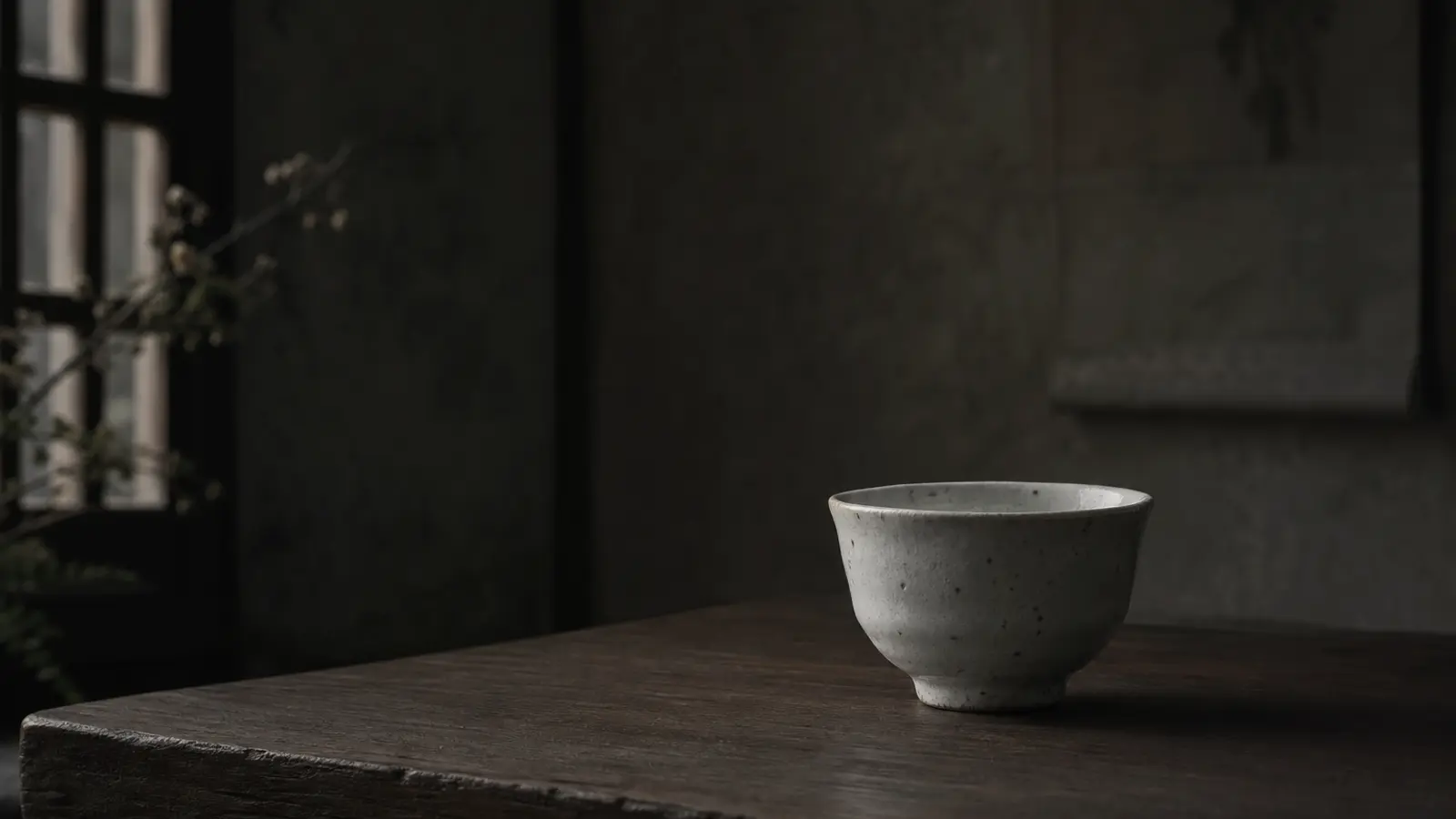
Korean teacups are typically wider and shallower than Chinese gongfu cups. Where a standard Chinese tasting cup might hold 30–50 ml in a tall, narrow cylinder, a chatjan opens outward — broader at the rim, presenting the tea’s color and aroma across a wider surface. The shape encourages you to look at the tea before drinking it.
잔받침 (Janbatchim) — Cup Saucer
Each chatjan sits on its own individual saucer, the janbatchim. This is a distinctly Korean element. In Chinese gongfu service, cups often sit directly on the tea tray or cha pan. In darye, the saucer elevates and frames each cup, and it serves a practical role — you lift the saucer and cup together when serving, offering the tea with both hands.
퇴수기 (Toesugi) — Waste Water Vessel
The toesugi receives rinse water and warming water. It functions similarly to the jianshui (建水) in Chinese practice but is typically a broader, more open vessel.
차호 (Chaho) — Tea Caddy
The chaho holds the dry leaf. Korean tea caddies tend to be simple and unadorned — ceramic or lacquered wood, without the elaborate decoration you sometimes find in Japanese tea containers.
A Note on Assembly
You do not need all of these pieces to begin. A dagwan, a sugu, and two chatjan will carry you through a complete darye session. Korean tea culture values what you have over what you display.
How to Do a Korean Tea Ceremony: Step by Step
Here is a basic darye session for Korean green tea, broken into clear steps. The whole process is slower and more deliberate than Chinese gongfu — darye is not about maximizing steep count but about creating a container for attention.
-
Boil water. Bring fresh water to a full boil.
-
Warm all vessels. Pour hot water into the dagwan, then from the dagwan into each chatjan, then discard the water into the toesugi. This warms the ceramic and prepares it for brewing.
-
Place tea leaves in the dagwan. For a 200 ml dagwan, use approximately 3–5 g of Korean green tea. Ujeon and sejak require the lower end; heavier-bodied teas like jungjak (중작) can handle more.
-
Pour boiling water into the sugu. This is the critical Korean step. Let the water sit in the sugu for 1–3 minutes, cooling to approximately 70–80°C. You will feel the exterior of the sugu change temperature under your hand. No thermometer is required — the sugu is your thermometer.
-
Pour from sugu into dagwan. Slowly. The water meets the leaves.
-
Steep for 60–90 seconds. This is longer than a typical gongfu first infusion (which might be 10–20 seconds). Darye extracts more per steep, with fewer total steeps. The first steep opens the leaf. The second steep is often considered the best.
-
Pour into chatjan through the sugu. The sugu here doubles as a fairness pitcher, evening out the concentration across all cups.
-
Serve with both hands. Lift the chatjan on its janbatchim and offer it to your guest, both hands supporting the saucer. Receiving with both hands is equally important. This two-handed exchange is a gesture of respect fundamental to Korean culture — it appears in every context from business cards to soju glasses.
-
Repeat for 3–5 infusions. Each steep lengthens slightly. By the third steep, the tea’s character has shifted — the initial vegetal brightness gives way to a rounder, sweeter body. By the fifth, you are tasting the leaf’s afterlife, faint and mineral.
The entire session might take 30–45 minutes. There is no rush. Conversation is welcome but not required. Silence is welcome but not mandatory. The session ends when the tea is done.
Two Living Traditions of Korean Tea Ceremony
사찰 다도 (Sachal Dado) — Temple Tea Ceremony
Korean Buddhist temples have practiced formal tea ceremony for over a thousand years. Sachal dado is the monastic tradition — more structured than domestic darye, integrated with meditation practice, and carrying specific protocols around seating, offering, and silence.
In temple practice, tea is often prepared as an offering before being consumed. The first cup may be placed before a Buddha image. The preparation itself is considered a form of moving meditation — 선 (seon, the Korean form of Zen) applied to water and leaf.
Temple tea ceremonies tend to use larger bowls rather than small cups, and the tea is sometimes powdered green tea (말차, malcha) prepared with a bamboo whisk, though loose-leaf preparation in a dagwan is equally common. The atmosphere is spare. The table holds only what is necessary.
생활 다례 (Saenghwal Darye) — Everyday Tea Ceremony
Saenghwal darye is the domestic counterpart — tea ceremony adapted for daily life. This is the practice most accessible to non-Koreans and the form I practice most often at home.
Everyday darye is flexible and personal. There is no dress code, no prescribed seating arrangement, no rigid sequence of gestures. The core remains the same: heat water, cool it in the sugu, steep with attention, serve with respect. But the details adapt to your life, your space, your morning.
You can practice saenghwal darye alone at your kitchen table at 6 a.m. You can practice it with a friend in the afternoon. The point is not formality but intentionality. You are choosing to make tea slowly in a world that rewards speed.
Historical Context: Suppression and Revival
Korean tea culture carries scars. During the Japanese colonial period (1910–1945), Korean cultural practices were systematically suppressed, and tea culture was among the casualties. Japanese matcha and sencha traditions were promoted while Korean indigenous practices were marginalized. Temples maintained their traditions in relative isolation, but the broader domestic tea culture fractured.
The modern darye revival draws heavily from two sources.
The first is pre-colonial temple tradition — the unbroken thread of sachal dado maintained by Korean Buddhist monks and nuns through the occupation.
The second is the writings of Choui Seonsa (초의 선사, 草衣禪師, 1786–1866), a Joseon-era Buddhist monk widely regarded as the father of modern Korean tea culture. His two major works — Dongdasong (동다송, 東茶頌, “Hymn to Korean Tea”) and Dasinjeon (다신전, 茶神傳, “Record of the Spirit of Tea”) — documented Korean tea practice with philosophical depth and practical specificity. These texts serve as the foundational literature for contemporary darye instruction.
Contemporary darye teachers operate through institutional programs at cultural centers, university courses, and informal transmission through tea houses across South Korea. The tradition is alive and evolving — not a museum piece but a living practice adapting to modern life.
Korean Tea Ceremony vs. Japanese and Chinese Traditions
Understanding darye in context sharpens its identity. Here is a comparison across the three major East Asian tea traditions:
| Element | Korean Darye (다례) | Japanese Chado (茶道) | Chinese Gongfu Cha (功夫茶) |
|---|---|---|---|
| Core philosophy | Seasonal harmony, simplicity, presence | Codified beauty, wabi-sabi, mastery of form | Technical extraction, sensory evaluation |
| Primary vessel | Dagwan (다관, side-handle pot) | Chawan (茶碗, tea bowl) for matcha; kyusu for sencha | Gaiwan (蓋碗) or Yixing teapot |
| Temperature control | Sugu cooling pitcher | Yuzamashi or direct pour | Direct pour or fairness pitcher after brewing |
| Steep count | 3–5 infusions | Single preparation (matcha) or 3–4 (sencha) | 6–15+ infusions |
| Steep duration | 60–90 seconds, lengthening | Varies by school | 5–30 seconds, depending on tea type |
| Formality | Flexible (saenghwal darye) to formal (sachal dado) | Highly codified by school (Urasenke, Omotesenke) | Informal to semi-formal |
| Serving gesture | Both hands, with saucer | Both hands, bowl turned | One hand or two, varies by context |
| Seasonal emphasis | Central — flowers, vessels, tea type all shift | Present in scroll and flower selection | Less formally structured |
The most revealing difference is in the relationship between practitioner and form. In chado, you learn the form and, through years of repetition, find freedom within it. In gongfu cha, you learn the variables and optimize them. In darye, you learn to pay attention, and the form follows.
Practicing Darye at Home
You do not need to be Korean to practice darye. You do not need formal training. You need a few vessels, decent tea, and the willingness to slow down.
Starting Equipment
At minimum, acquire a dagwan (150–250 ml), a sugu, and two chatjan. Korean ceramic teaware is widely available and often more affordable than comparable Japanese or Chinese pieces. A basic dagwan set from a Korean ceramicist runs $30–$80 USD.
Choosing Tea
Darye is most traditionally practiced with Korean green tea. Sejak (세작) — “thin sparrow,” harvested in late April to early May — is the everyday workhorse. Ujeon (우전) — “before the rain,” the earliest spring harvest — is the prestige pick, delicate and sweet. Jungjak (중작), a later harvest, is earthier and more forgiving of temperature mistakes.
That said, darye is a philosophy of preparation, not a prescription of leaf. I regularly apply darye’s principles to other teas — the slow pour, the cooling step, the two-handed service, the seasonal attention. The ritual adapts.
Building the Habit
Start with one session per week. Choose a time with no competing demands. Set a simple table — a cloth, your vessels, a seasonal element if you like (a small branch, a single flower, a stone from a walk). Heat water. Cool it. Steep. Drink. Pay attention to what the tea tastes like in this particular moment, on this particular day.
There is no exam. There is no certification. There is only the practice of noticing.
The Hybrid Path
I came to tea through Chinese gongfu cha, drawn by the technical precision — the gram-scale measurements, the temperature control, the systematic extraction across a dozen steeps. I learned darye later, through my Korean wife, and at first I thought it was less rigorous. It isn’t. It’s differently rigorous. Gongfu trains your hands. Darye trains your attention.
My own practice now combines both: gongfu technique for extraction precision, darye philosophy for contemplative presence. When I’m evaluating a new sheng pu-erh, I brew gongfu — fast steeps, careful parameters, detailed tasting notes. When I want to start the morning with clarity, I brew darye — slow, seasonal, present.
They are not contradictory. They are complementary lenses on the same leaf.
Where Darye Goes From Here
Korean tea culture is in a genuine renaissance. Young Korean ceramicists are producing dagwan and chatjan that honor traditional forms while exploring contemporary aesthetics. Korean green tea production is expanding, with increased attention to terroir and cultivar specificity. And internationally, awareness of darye as a distinct tradition — not a derivative of Japanese or Chinese practice — is growing.
The best thing about darye is also the simplest: it asks almost nothing of you except that you show up. Heat water. Cool it. Pour it over leaves. Drink what results. Notice the season. Notice the taste. Notice yourself noticing.
That is the entire Korean tea ceremony. It has always been enough.