I stopped drinking alcohol in the autumn of 2022. Not because I hit a bottom. Not because someone made me. A health protocol flagged a possible sleep apnea signal, and my doctor was direct: alcohol, even moderate amounts, meaningfully worsens airway obstruction during sleep. The cost-benefit ratio shifted. I ran the numbers and quit.
What I did not anticipate was which part would be hard.
The substance gap — no wine with dinner, no whisky at the end of a long day — closed within two weeks. The ritual gap stayed open for months. Something that had structured my evenings since my early twenties was just gone, and nothing had moved into that space. I tried sparkling water with lime. I tried kombucha. I tried not having anything in my hand and just sitting there, which was somehow the most uncomfortable option of all.
Gongfu tea (功夫茶) filled it. I want to explain why it worked, both the practical mechanics and the biochemistry, because I think the ritual dimension gets underweighted in most writing about alcohol alternatives.
Why the Ritual Gap Is Harder Than the Substance Gap
Alcohol is a molecule with a specific mechanism: it binds to GABA receptors, producing fast, strong relaxation, and simultaneously triggers a dopamine release. That combination — the tension leaving your shoulders plus the small reward signal — is why the first glass feels as good as it does. The body learns this pattern efficiently.
But the glass of wine was never only about GABA and dopamine. It was also about 6:30 PM arriving and having a thing to do. Uncorking a bottle, choosing the right glass, thinking about what you were smelling. If you took wine seriously — and I did, seriously enough to spend years chasing allocations and building a cellar — then there was also the intellectual architecture: the producer debates, the vintage comparisons, the sourcing decisions. That structure occupied real mental and physical bandwidth. It gave the transition from work to evening a shape.
When I quit, I lost the structure, not just the substance. That is an underappreciated distinction.
What L-Theanine Actually Does (And What It Doesn’t)
The tea-as-alcohol-replacement conversation often leans too hard on L-theanine as the answer, so I want to be precise about what the research actually shows.
L-theanine (an amino acid found almost exclusively in Camellia sinensis) increases alpha brain wave activity — the wave pattern associated with relaxed alertness, the state you are in when you are meditating or deeply focused but not drowsy. Multiple published studies have confirmed this effect in humans at doses of 50–200 mg, which is roughly the range in a strong cup of tea depending on leaf type and brew parameters. The effect is real. It is also gentle and slow — onset takes 30–60 minutes, not the 10–15 minutes that a glass of wine delivers.
This is not a flaw. It is a different tool. L-theanine produces calm without sedation and without the rebound anxiety that chronic alcohol use generates by downregulating GABA receptors over time. It does not create dependence. It does not impair sleep architecture — in fact, the research suggests it may improve sleep quality, which was the entire reason I was in a doctor’s office in the first place.
What L-theanine does not do: it does not produce that specific hit of tension release that alcohol delivers in the first 20 minutes. If you are reaching for a drink primarily to feel something shift quickly and strongly, tea will not replicate that. Being honest about this matters. Tea is not a pharmacological substitute for alcohol. It is a better anchor for a ritual that also happens to contain a compound with genuinely useful effects.
Shou Pu-Erh for Evening: The Case in Detail
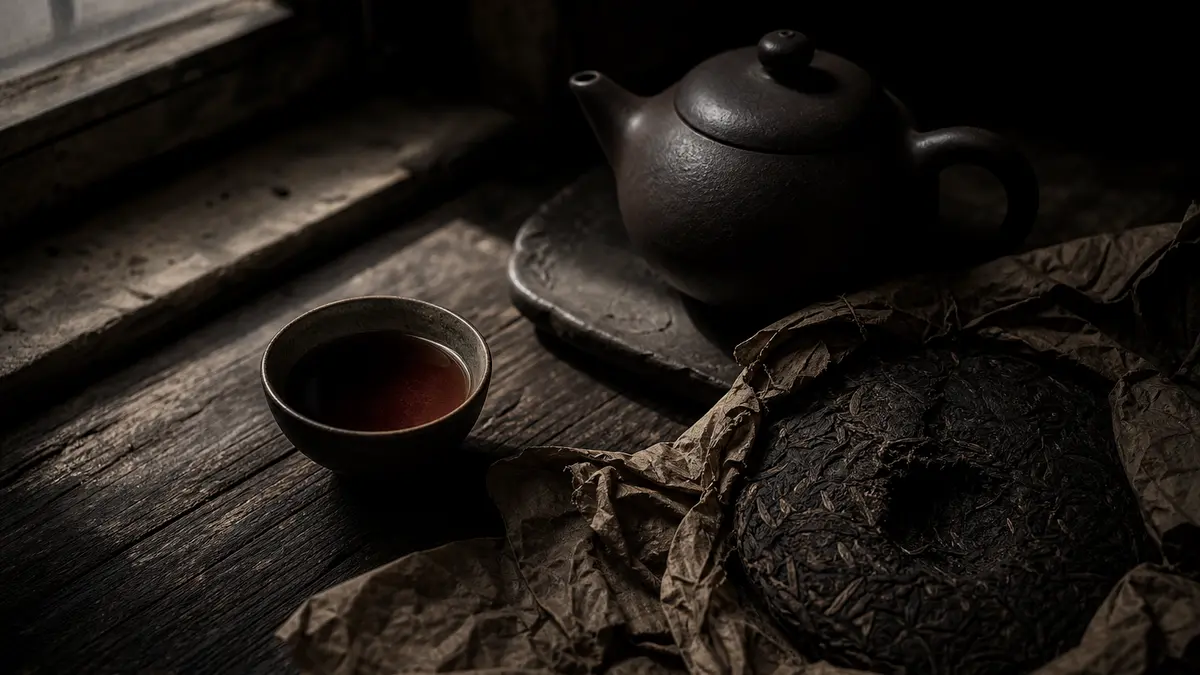
I want to make an argument for shou pu-erh (熟普洱) as the specific tea for evening sessions, because it does something that most teas don’t.
Shou pu-erh undergoes a microbial fermentation process called wo dui (渥堆), wet piling, which transforms the leaf over weeks. The result is a tea that is dark, earthy, and thick in the cup — a mouthfeel that is genuinely substantial in a way that green tea or even most oolongs are not. Older shou cakes from producers with good storage age into something that approximates the body of a full red wine more closely than anything else in the tea world.
The caffeine content matters too. A well-made shou pu-erh brewed at reasonable leaf ratios runs low — typically 20–40 mg per session versus 80–120 mg for a comparable green tea session, because the fermentation process converts much of the caffeine and because the compounds that interact with caffeine have been transformed. I can brew shou at 8 PM and sleep normally. I could not do that with a gaiwan (蓋碗) of high-caffeine sheng (生普) or high-roast oolong.
The warming body sensation — what Chinese tea drinkers call the cha qi (茶氣), the body feeling of the tea — is pronounced in good shou. It does not read as stimulation. It reads as warmth moving through the chest and stomach. That physical dimension is part of why evening shou works as a ritual anchor where chamomile tea does not, for me. Chamomile is pleasant. Shou is engaging.
How Gongfu Brewing Fills the Ritual Architecture
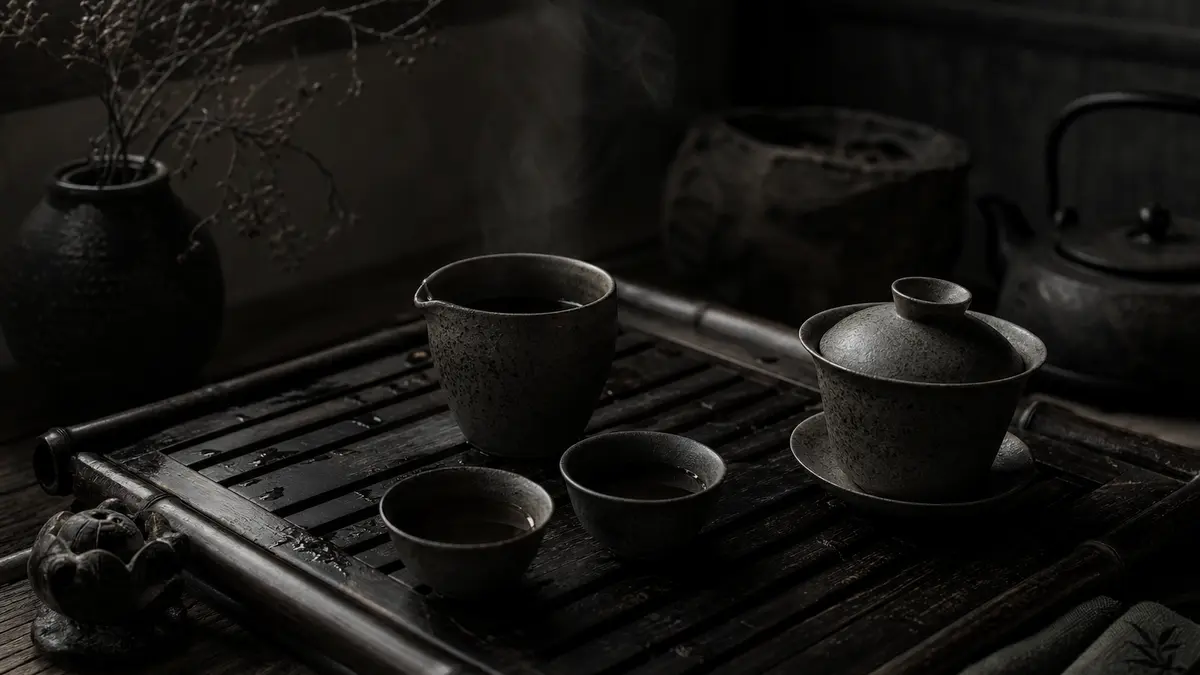
Gongfu brewing is slow by design. Heating water, choosing a vessel, measuring leaf, doing a rinse steep, then conducting a series of short infusions — each 20 to 45 seconds, adjusting as the session progresses — takes 45 minutes to an hour if you are paying attention.
That is the point.
The wine ritual occupied time and attention. Gongfu brewing occupies roughly the same amount of time and demands a comparable quality of attention. Your hands are doing something. Your nose is involved. You are making judgments about what you are tasting and adjusting accordingly. There is no way to do it on autopilot, which means it does not coexist well with scrolling or passive television. The session asks for presence.
For someone who came from serious wine, the intellectual architecture transferred almost completely. Terroir debates — is Lao Banzhang (老班章) worth the premium, does storage location genuinely transform a cake, what does a 2005 pressing from a named factory taste like against a 2018 pressing from the same trees — these are structurally identical to the conversations wine people have about Burgundy producers and vintage variation. The precision required to taste the difference between two similar teas is the same precision that wine tasting demands. The sourcing decisions carry the same mixture of obsession and uncertainty.
I did not need to build new intellectual habits. I needed to redirect existing ones.
A Practical Starting Point
If you are in the early stages of a ritual rebuild, here is what I would suggest:
- Start with shou pu-erh. Buy a single 357g cake from a mid-tier producer — something in the $20–$45 range. You do not need to spend more while learning.
- Get a basic gaiwan — a 100–150ml porcelain gaiwan is around $10–$20 and covers every session you will brew for the first year.
- Establish a fixed time. The ritual anchor needs a time slot or it will not hold. I brew at 8:30 PM. The consistency matters more than the vessel or the tea.
- Use 6–8 grams of leaf in a 100ml gaiwan, water at 95°C, rinse steep discarded, then infusions starting at 20 seconds and adding 10–15 seconds per subsequent steep.
- Put your phone across the room. The session cannot compete with a notification feed. The whole value is in the undivided attention.
The first few weeks feel effortful. Around week three or four, the session starts to feel like something you look forward to rather than something you are doing instead of something else. That shift — from substitute to genuine ritual — is when it has taken hold.
What I Didn’t Expect
I did not expect to find the tea world as intellectually deep as the wine world. I came in skeptical. The aging and storage rabbit hole for pu-erh is as complex as anything in wine, and the sensory education is genuinely ongoing — I am still learning to identify what I am tasting in a well-stored 15-year cake.
I also did not expect the physical dimension to matter as much as it does. The warmth of a thick shou, the specific weight of a gaiwan in both hands, the steam — these are sensory facts that the body registers. They are not the same as alcohol’s warmth, but they are real.
The cost-benefit ratio on the tea side is straightforward: no metabolic damage, no sleep disruption, no next-morning fog, no tolerance escalation, no rebound anxiety. A serious pu-erh habit is cheaper than a serious wine habit by a significant margin. The intellectual rewards are comparable.
I am not making a moral argument about alcohol. I liked wine. I made that choice to quit for specific health reasons, and I am not suggesting anyone else should make the same choice. What I am saying is that if you have already made that choice — or you are sober curious and wondering whether there is a satisfying replacement for the ritual — the gongfu tea path is more complete than you probably expect.
The ritual gap turned out to be fillable. It just needed the right tool.