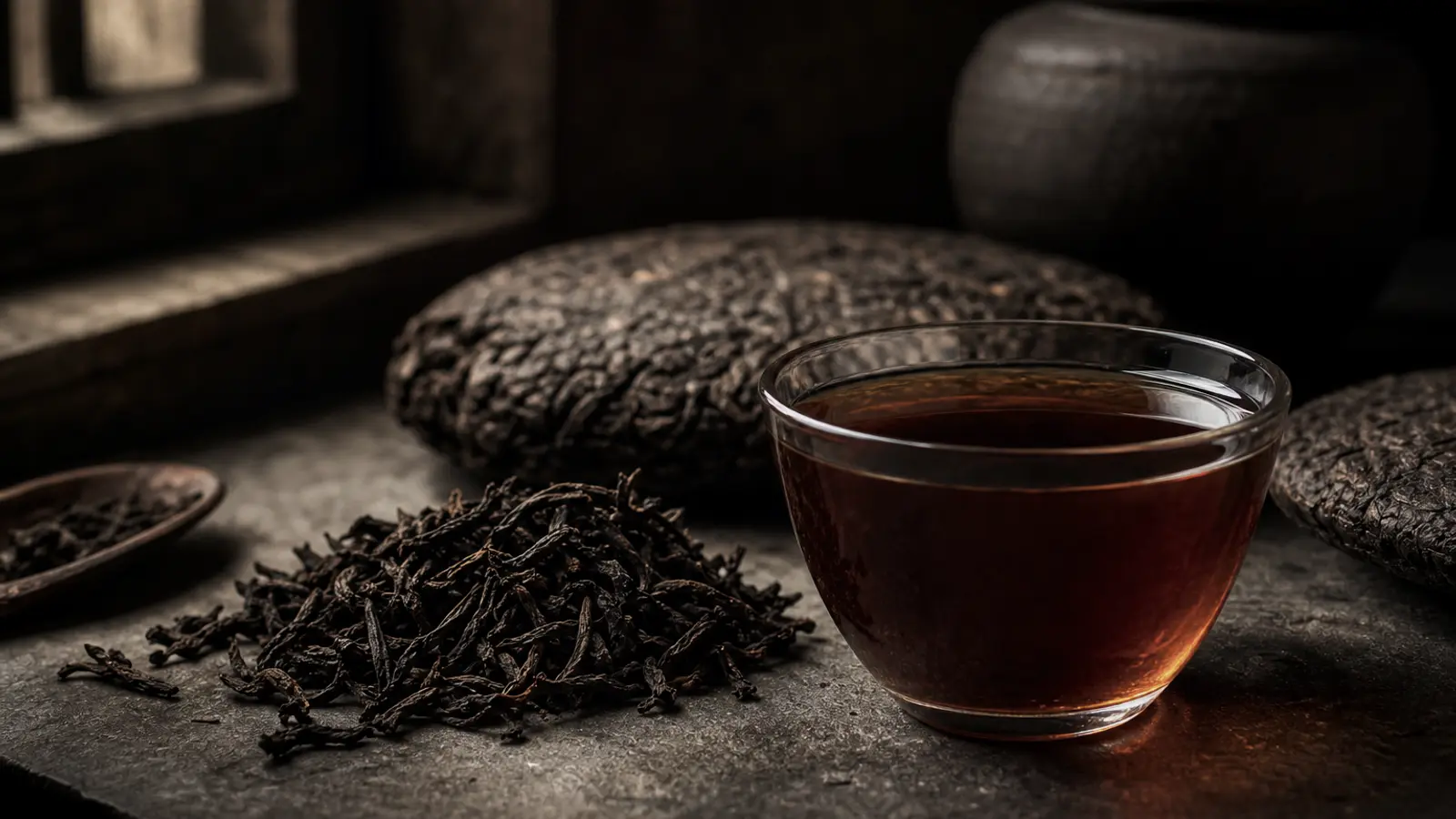
Tea gut health research has arrived at a genuinely interesting moment. A PRISMA systematic review that analyzed 868 papers on tea and the gut microbiome published in recent years has produced a picture that is both mechanistically compelling and honestly incomplete. The short version: tea polyphenols behave as prebiotics, shou pu-erh (熟普洱) produces the most dramatic microbiome shift of any tea studied, and the gut-brain axis may connect your cup to your mood in ways researchers are only beginning to map.
The longer version requires separating what the evidence actually shows from what the supplement industry wishes it showed.
How Tea Polyphenols Reach Your Gut
Most of a cup of tea’s bioactive compounds — catechins (兒茶素) in green tea, theaflavins and thearubigins in black tea, theabrownins (茶褐素) in shou pu-erh — are not absorbed in the stomach or small intestine. They pass through largely intact and arrive in the colon, where roughly 100 trillion bacteria are waiting.
This matters because it means tea polyphenols function as prebiotics, not probiotics. They don’t introduce new bacteria. They selectively feed bacteria already present in your gut, shifting the competitive balance between species.
The systematic review found two bacterial populations consistently increased across tea-drinking studies:
- Bifidobacterium — associated with immune modulation, vitamin B production (particularly folate and B12), and protection of the gut lining
- Akkermansia muciniphila — a bacterium that degrades and replenishes the mucin layer lining the intestinal wall; elevated levels are consistently associated with leanness, metabolic health, and reduced intestinal permeability
Alongside these increases, tea polyphenols suppress certain Clostridium species and other pathogenic or opportunistic bacteria. The net effect is a shift toward what researchers describe as a more “favorable” microbial balance — though I’ll note that the concept of a universally optimal microbiome remains contested in the field.
Short-Chain Fatty Acids and the Intestinal Barrier
The microbiome shift has a downstream consequence that may matter more than the bacterial counts themselves. As Bifidobacterium and related species ferment tea polyphenols in the colon, they produce short-chain fatty acids (SCFAs) — particularly butyrate, propionate, and acetate.
Butyrate is the one that draws the most attention. It serves as the primary energy source for colonocytes (the cells lining the colon), directly strengthening the intestinal barrier. A more intact barrier means less “leaky gut” — the condition where bacterial fragments and undigested compounds pass into the bloodstream and trigger systemic inflammation.
Multiple studies in the review linked tea polyphenol consumption to increased butyrate production, with the strongest effect seen in fermented teas. This is a plausible mechanism connecting tea consumption to the reduced inflammatory markers reported in some observational studies, though I want to be careful not to overstate the leap from butyrate production in a petri dish to measurable inflammation reduction in a human body.
Why Shou Pu-erh Is Different
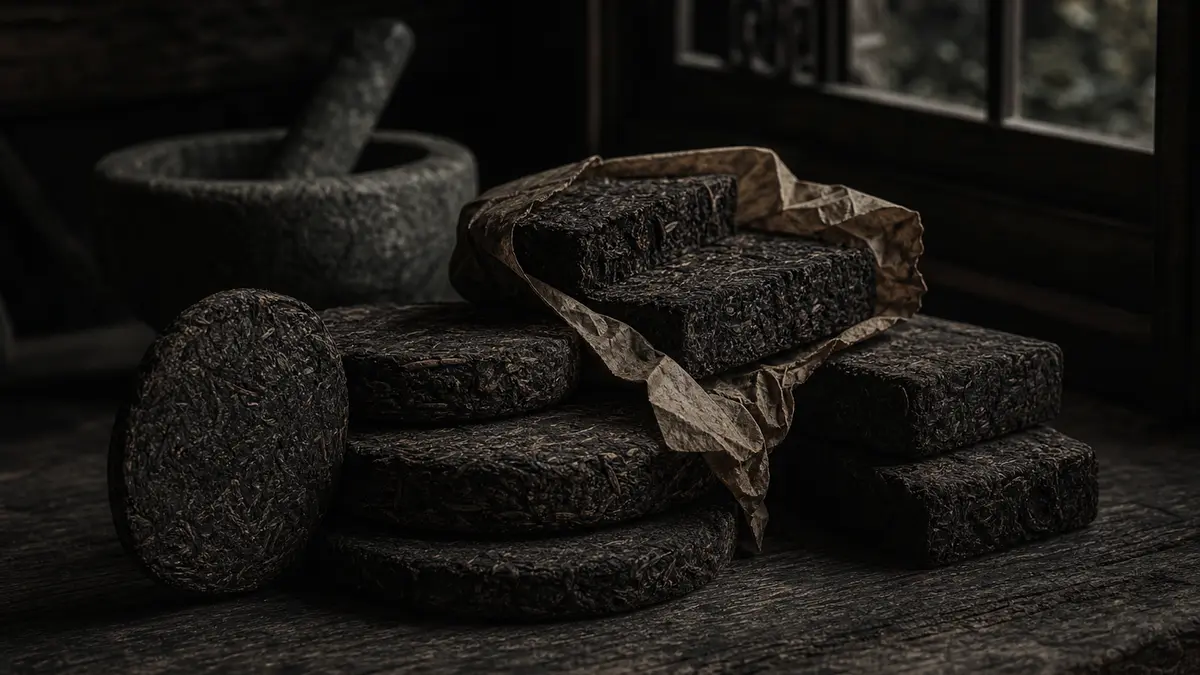
All tea delivers polyphenols to the colon. Shou pu-erh delivers polyphenols plus something else — and that addition changes the picture substantially.
Shou pu-erh undergoes wo dui (渥堆), a microbially driven pile fermentation lasting 45 to 90 days. Molds, bacteria, and yeasts transform the raw leaf, generating compounds that do not exist in unfermented tea:
- Theabrownins — high-molecular-weight pigments unique to microbially fermented teas, formed from the breakdown of catechins and other polyphenols
- Gallic acid — a potent polyphenol with both antimicrobial and prebiotic properties
- A range of microbial metabolites from the fermentation process itself
In studies comparing the microbiome effects of green tea, black tea, and shou pu-erh, shou pu-erh consistently produced the largest compositional shift in gut bacterial populations. The combination of tea polyphenols and fermentation-derived metabolites appears to be synergistic — more than either component alone would predict.
This does not mean the live microorganisms from wo dui survive in brewed tea and colonize your gut. They don’t. The fermentation happens in the factory; what remains in the leaf and transfers to your cup are the metabolic products of that fermentation. The distinction between a probiotic (live organisms) and a prebiotic-plus-metabolite carrier (what shou pu-erh actually delivers) is worth holding clearly.
Comparing Teas by Microbiome Effect
Different teas deliver different polyphenol profiles, and those profiles produce different gut effects:
| Tea Type | Primary Bioactive Compounds | Microbiome Effect (per current research) |
|---|---|---|
| Green tea | Catechins (EGCG dominant) | Antimicrobial + prebiotic; increases Bifidobacterium |
| Black tea | Theaflavins, thearubigins | Moderate prebiotic effect; butyrate promotion |
| Shou pu-erh | Theabrownins, gallic acid, microbial metabolites | Largest documented microbiome shift; strongest SCFA induction |
| Liu bao (六堡茶) | Similar to shou pu-erh (microbial fermentation pathway) | Expected similar effects; significantly less studied |
| Sheng pu-erh (生普洱) | Catechins dominant (young); oxidized polyphenols (aged) | Closer to green/black tea depending on age |
Liu bao hei cha (六堡黑茶) is worth noting specifically. It undergoes a fermentation process broadly similar to wo dui, and its polyphenol and metabolite profile resembles shou pu-erh more than it resembles green or black tea. The research on liu bao gut effects is sparse compared to shou pu-erh, but the mechanistic expectation is that effects would be comparable. I wouldn’t claim equivalence confidently — the studies simply haven’t been done yet.
The Gut-Brain Axis Connection
The vagus nerve (迷走神経) runs from the brainstem to the abdomen and forms the physical infrastructure of the gut-brain axis — the bidirectional communication pathway between your enteric nervous system and your central nervous system. Gut bacteria don’t just digest food; they produce neurotransmitter precursors, including serotonin precursors (roughly 90% of the body’s serotonin is produced in the gut) and gamma-aminobutyric acid (GABA).
The implication for tea is speculative but mechanistically grounded: if shou pu-erh reshapes gut bacterial composition, and those bacteria influence neurotransmitter production via the gut-brain axis, there may be a pathway connecting fermented tea consumption to cognitive function and mood regulation.
This is hypothesis territory. The human clinical evidence for this specific pathway is thin. But the mechanistic logic is coherent, and it connects to a broader body of research showing that high-fiber, polyphenol-rich diets are associated with better mental health outcomes — a correlation that may run through the microbiome.
What the Evidence Actually Supports
I categorize the research behind this article as Tier 2: emerging evidence with strong mechanistic support.
Here’s what that means in practice:
The systematic review methodology is solid. Analyzing 868 papers using PRISMA criteria filters out a lot of noise and creates a more reliable picture than any single study could.
The mechanistic evidence is compelling. We understand why tea polyphenols should function as prebiotics — their chemical structure explains why they survive upper GI digestion and reach the colon. The butyrate pathway is well-characterized. The theabrownin data is consistent across multiple research groups.
The human clinical trial base is thin. Most of the studies feeding this review are in vitro (cell cultures) or rodent models. The jump from “this happens in a mouse colon” to “this happens in your colon” is real but not guaranteed. Human gut microbiomes are more variable, more complex, and more influenced by diet, stress, and environment than any controlled animal study captures.
The honest framing: drinking shou pu-erh or green tea regularly is unlikely to harm your gut microbiome and may meaningfully benefit it. Treating tea as a substitute for dietary fiber, sleep, stress management, or a diverse whole-food diet would be a mistake. The polyphenol contribution from even a generous tea-drinking practice is modest compared to what a vegetable-rich diet delivers.
Practical Takeaways
If gut health is a consideration in your tea choices, a few things follow from the current evidence:
Drink more shou pu-erh if you’re interested in microbiome effects specifically. The theabrownin and gallic acid profile distinguishes it clearly from unfermented teas.
Consistency matters more than quantity. The microbiome studies showing meaningful shifts generally involve regular consumption over weeks, not a single session. A daily gongfu (功夫) session of three to four steepings puts you in a reasonable range.
Don’t rinse away the benefit. The quick rinse (洗茶, xǐ chá) most pu-erh drinkers perform discards the first steep’s worth of compounds. This is fine for flavor and standard practice — don’t skip it — but worth knowing if you’re counting polyphenol exposure.
Green tea and shou pu-erh serve different functions. Green tea’s catechin profile leans antimicrobial; shou pu-erh’s theabrownins lean toward microbiome restructuring. Drinking both is not redundant.
The research is moving fast in this area. The gut microbiome field broadly has accelerated since 2015, and tea-specific studies are following. What’s available now is enough to say the mechanism is real and the direction is favorable. It’s not yet enough to write a precise prescription.
What I can say: a daily practice of well-sourced shou pu-erh brewed in a gaiwan (蓋碗) at 95–100°C is one of the more pleasant ways to deliver polyphenols and fermentation metabolites to your colon. That’s a reasonable baseline to hold while the clinical trial data catches up.