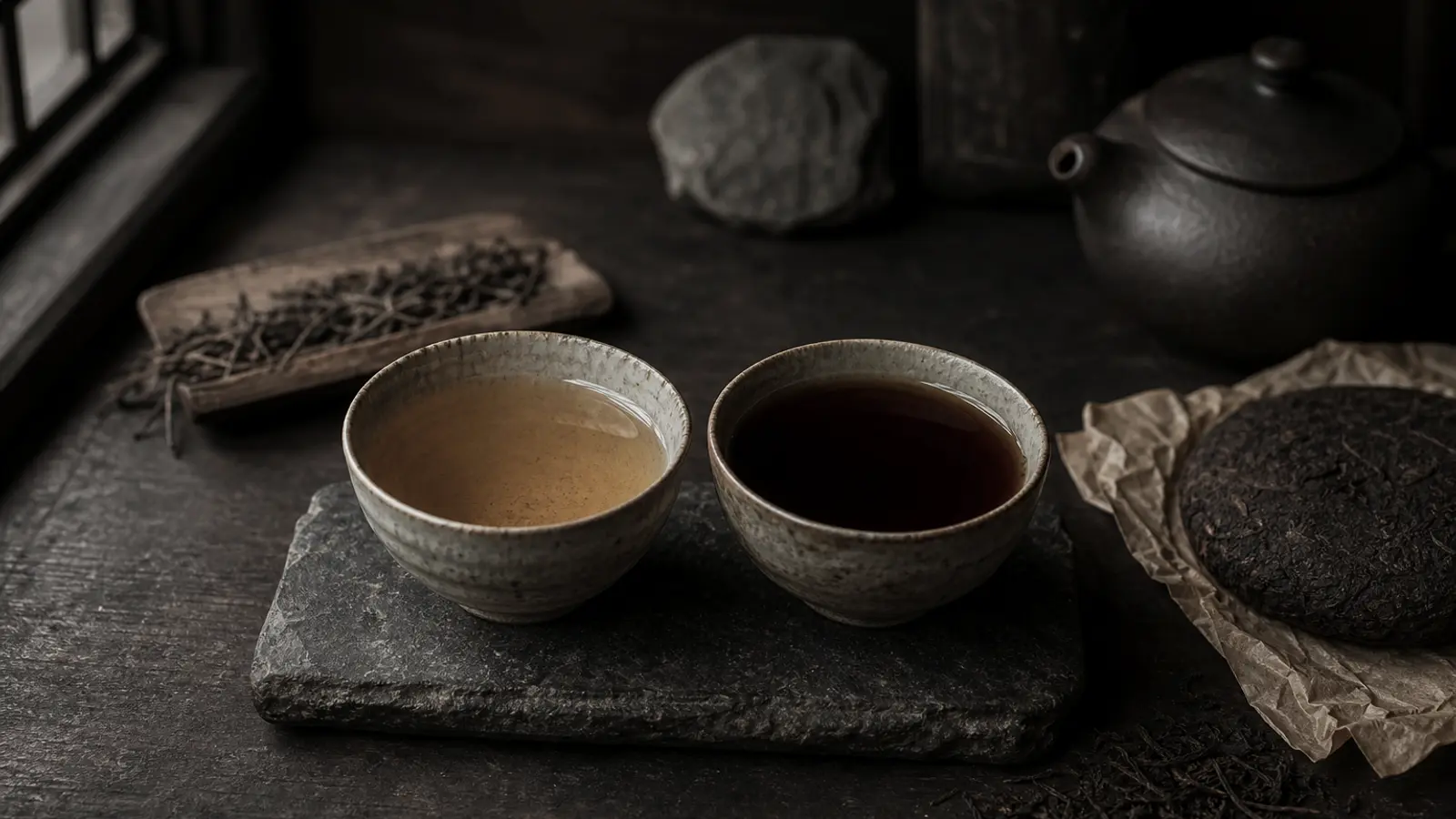
Pu-erh tea tastes like earth and time. Shou (ripe) pu-erh is dark chocolate, wet forest floor, and smooth velvet. Aged sheng (raw) pu-erh is camphor, dried fruit, and silk. Young sheng is bitter, bright, and floral. The range within pu-erh is wider than most people expect — a 2-year sheng and a 38-year sheng share a name but almost nothing else in the cup.
That range is the whole point. Pu-erh (普洱茶, pǔ’ěr chá) is the only major tea category defined by transformation over time. Understanding what it tastes like requires a map, not a single description.
The Pu-erh Flavor Map
I’ve spent sessions across all four zones below — young sheng, aged sheng, vintage sheng, and shou — using gongfu parameters in a gaiwan (蓋碗): 5–7g per 100ml, 95°C water, steeps from 10 seconds up. The flavors I describe here come from that protocol. Western-style steeping compresses and muddles the progression; gongfu exposes it steep by steep.
Shou Pu-erh Flavor: The Accessible Entry Point
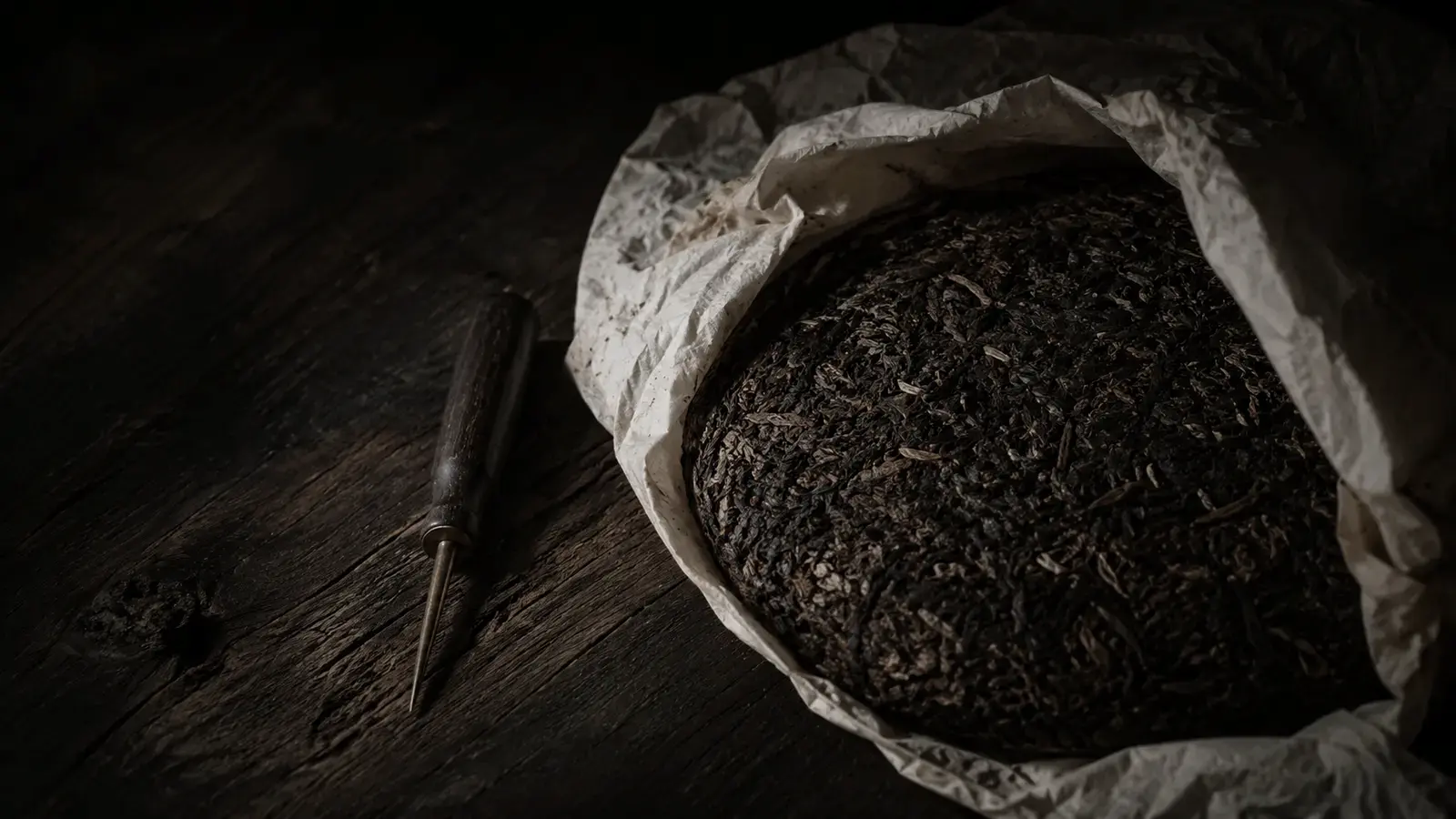
Shou pu-erh (熟普洱, shú pǔ’ěr) — also called ripe pu-erh — undergoes accelerated fermentation via a process called wò duī (渥堆), a controlled microbial piling that transforms the raw leaf over 45 to 60 days. The goal is to compress decades of natural aging into months.
The flavor signature of shou: dark chocolate, mushroom, earth, dried wood, and wet leaves after rain. The texture is the first thing most people notice — thick and coating, almost syrupy, with a physical weight that green teas and oolongs don’t approach. A well-made shou feels substantial in the mouth even before you register individual flavors.
The best shou adds complexity underneath that earthy baseline. I’ve had craft productions from old-tree material where layers of dark chocolate and dried stone fruit — prune, date — emerge by the third and fourth steep. The earth is present but not dominant. It’s the foundation, not the whole building.
Bad shou tells a different story. The most common flaw is a fishy or wet cardboard quality called wòduī wèi (渥堆味) — pile taste — the direct result of incomplete or poorly managed fermentation. This is not a pu-erh problem; it’s a production quality problem. Quality shou should never taste fishy. If yours does, the issue is that specific cake, not the category.
The earth in good shou is clean earth. Forest-floor earth. Rain-on-stone earth. Not dirt.
Young Sheng Pu-erh Flavor: Raw and Honest
Young sheng (生普洱, shēng pǔ’ěr) — roughly defined as 1 to 5 years post-production — is pu-erh at its most unfiltered. The leaf hasn’t had time to mellow. What you taste is the mountain.
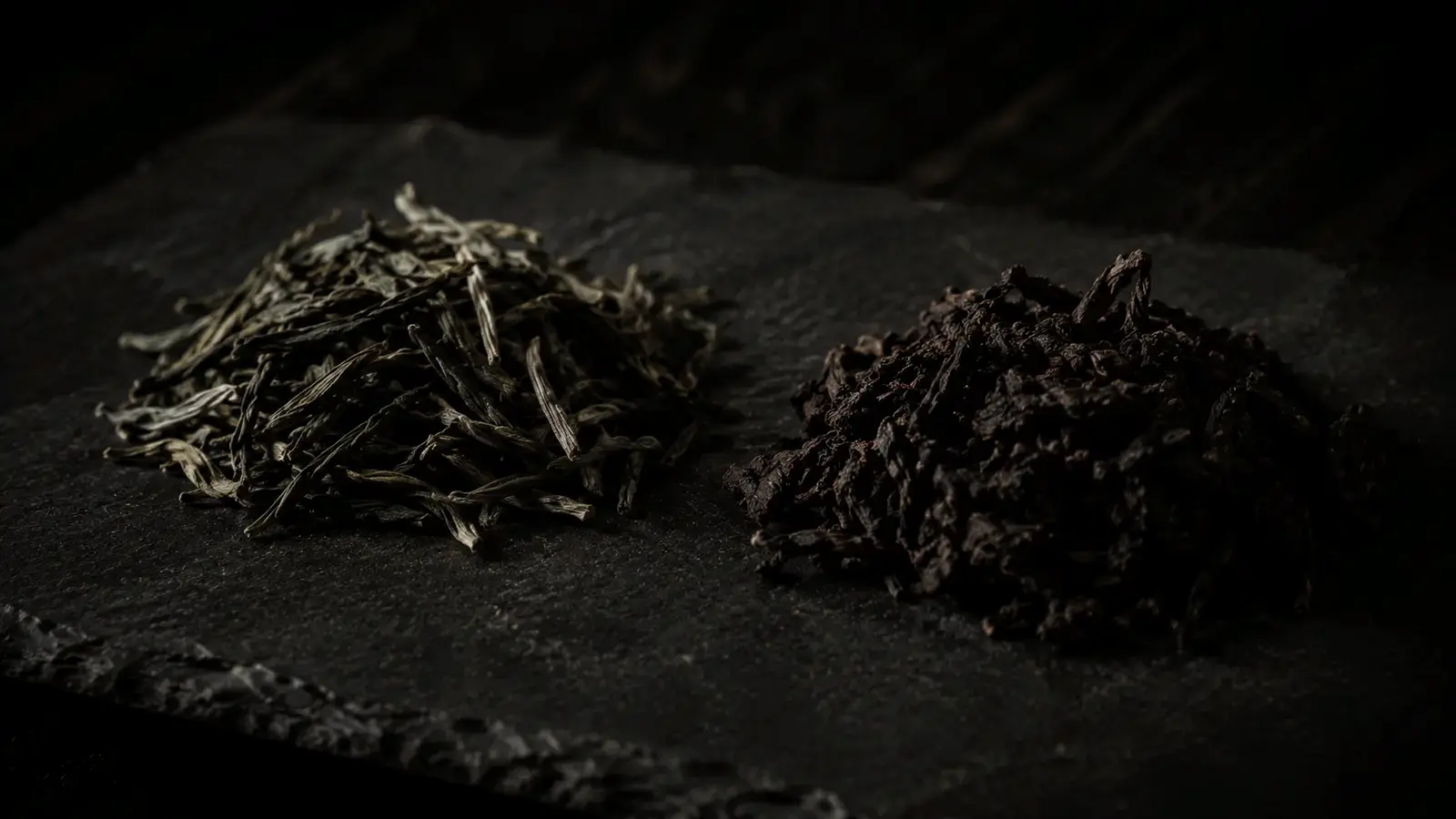
The flavor signature of young sheng: floral top notes, bitter backbone, astringent grip, and high-register brightness. Some young sheng smells like fresh hay or green melon before the pour. The liquor color is often golden to pale amber — light, clear, nothing like the dark brew of shou.
Regional character expresses itself most clearly in young sheng. Yiwu (易武) young sheng — from one of Yunnan’s most celebrated ancient-tree regions — tends toward peach, honey, and a soft floral lift, with bitterness that’s present but not aggressive. Bulang (布朗) young sheng is a different conversation: explosive bitterness on the front palate, almost medicinal in its intensity. But here’s what distinguishes quality Bulang from low-grade tea — the bitter converts. Within 10 to 15 seconds of swallowing, that bitterness transforms into sweetness that floods the back of the throat. This is the kǔgān (苦甘) experience: bitter-sweet, a physiological chain reaction triggered by the polyphenols interacting with saliva. When it works, it’s one of the more remarkable things any beverage can do.
Young sheng is not meant to be easy. It’s meant to be honest. The bitterness and astringency aren’t bugs. They’re the mountain’s character, unresolved, offered directly. Some drinkers never warm to it. Others find it the most alive thing in their cup.
One practical note: young sheng is also the most variable category. A mediocre shou from a large factory is predictable. A young sheng from a poorly stored or low-quality source can be genuinely unpleasant — sour, thin, or chemically bitter rather than the clean, converting bitterness of good material. The floor is lower, and the ceiling is higher.
Aged Sheng Pu-erh Flavor: The Transformation Zone
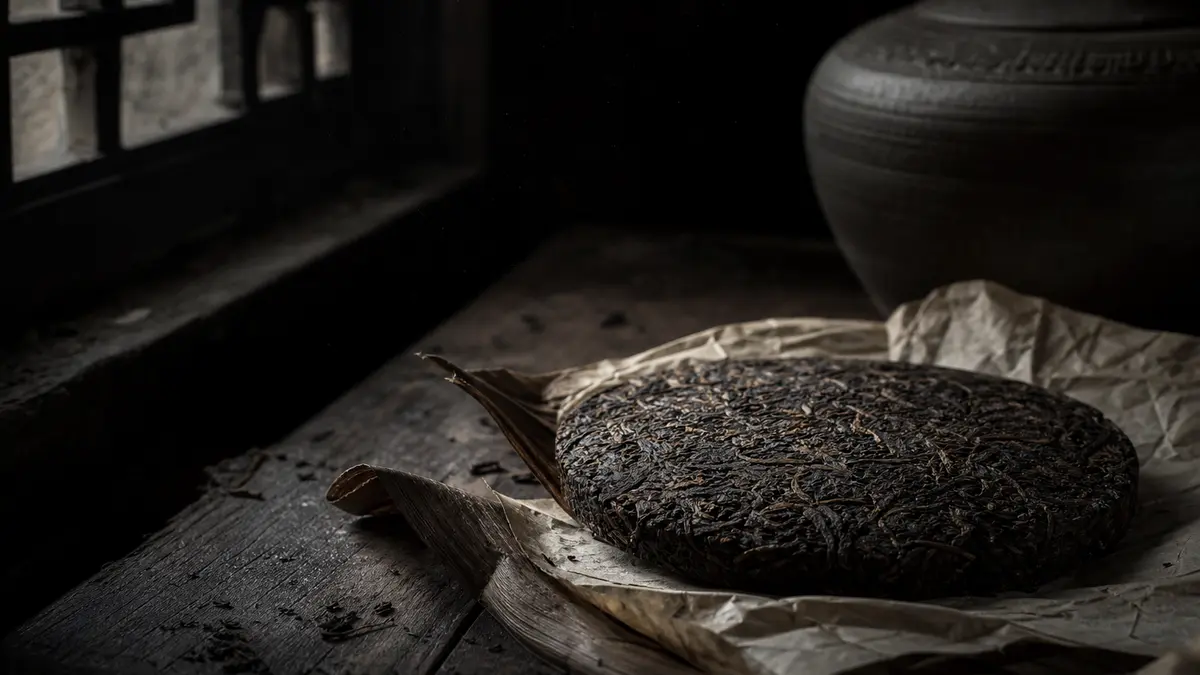
Aged sheng — roughly 10 to 20 years — is where pu-erh’s unique proposition becomes undeniable. This is the transformation zone, and it’s where most serious pu-erh enthusiasts eventually settle.
The flavor signature of aged sheng: camphor, dried fruit, medicinal herbs, aged wood, and an increasingly silky mouthfeel. The bitterness and astringency of youth have resolved. What replaced them is a smoothness that’s qualitatively different from the smoothness of shou — where shou’s texture is thick and coating, aged sheng’s texture is silky and penetrating. It moves through the palate differently.
The huigan (回甘) — returning sweetness — becomes the defining experience in aged sheng. In young sheng, the sweetness returns quickly but briefly. In aged sheng, it comes slower, lasts longer, and saturates the mouth more completely. Some sessions I’ve timed the huigan lingering for two to three minutes after the last swallow. Nothing else in the beverage world replicates that.
Camphor (樟香, zhāng xiāng) is the defining aromatic of aged sheng. It can read as medicinal, as cool and mentholated, or as deeply forested. The best aged sheng from traditionally stored material layers camphor over dried longan, dried apricot, and what enthusiasts sometimes describe as a library note — old paper, old wood, accumulated time.
The comparison that keeps surfacing in my tasting notes: aged Burgundy. Not in flavor — though both are complex and terroir-specific — but in structure. The way both reveal themselves in slow waves across multiple sips. The way they reward patience.
Vintage Sheng Pu-erh Flavor: The Summit
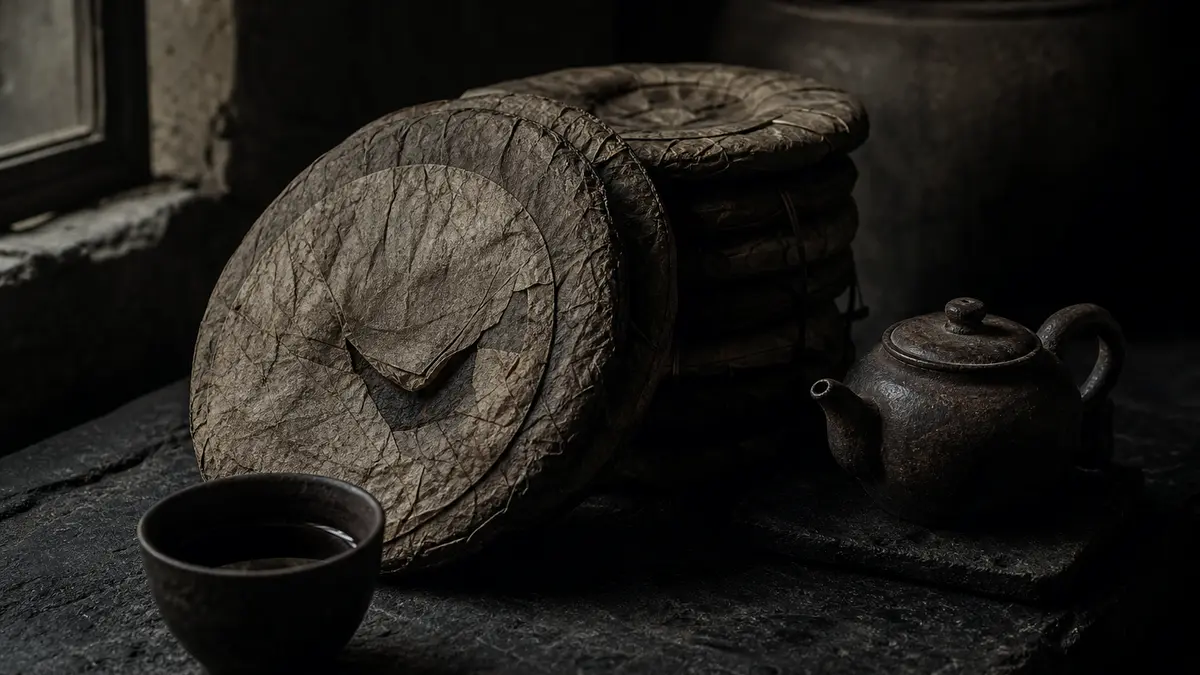
Vintage sheng — 25 years and older — occupies a different register entirely. I’ve had limited sessions with material in this age range, and I want to be precise about what I observed rather than extrapolate.
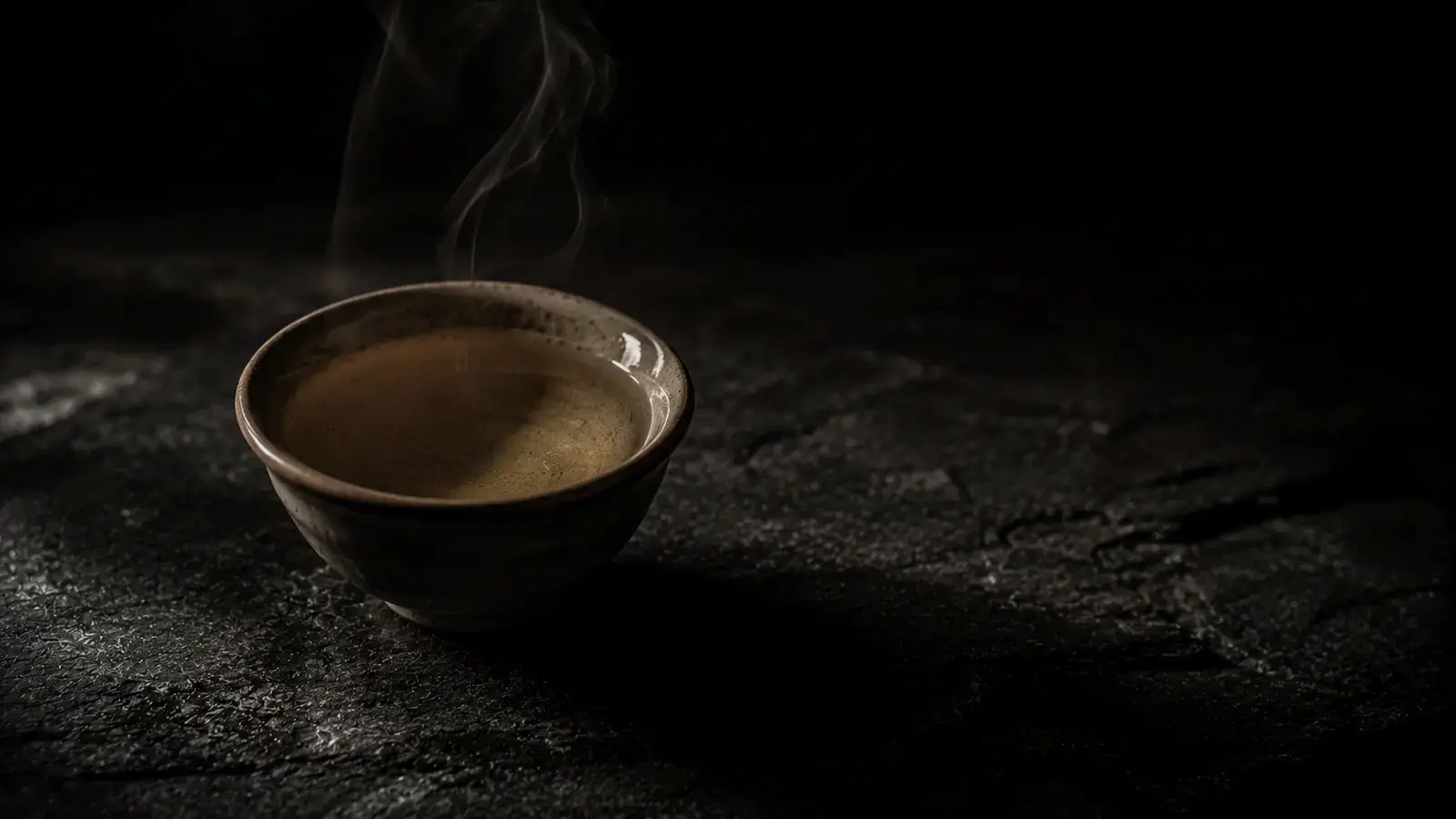
A 38-year-old sheng I brewed in a session produced camphor so intense the room filled with it before the first pour left the gaiwan. The liquor was nearly garnet in color — deep amber edging toward red. The texture was silk. Not silky. Silk.
The defining characteristic of vintage sheng is dimensionality: multiple distinct flavor layers coexisting within each steep, shifting from the first sip to the last, and evolving across the 8 to 12 steeps that a quality cake at this age can sustain. Shou cannot replicate this dimensionality because the wò duī process, while efficient, destroys the aromatic complexity that slow natural transformation preserves. You cannot shortcut 35 years.
What I tasted in that session: camphor (dominant), dried cherry, roasted plum, something between incense and sandalwood, and a persistent mineral finish that lingered through to the fifth or sixth steep. The huigan arrived slowly and stayed. The bitterness was entirely gone — not suppressed, but genuinely absent, transformed completely.
Vintage sheng is also expensive. Quality 30+ year material from known storage commands $30 to $80+ per 100g at the international retail level, and auction prices for historically significant cakes are multiples beyond that. This is where pu-erh intersects with the fine wine and fine spirits market in ways that make other tea categories look affordable.
Does Pu-erh Taste Like Dirt? The Honest Answer
“Does pu-erh taste like dirt” is one of the most common search queries about pu-erh, and it deserves a direct answer.
Low-quality shou can taste like dirt. More specifically, it can taste like wet cardboard, fish, or muddy earth. These are real and valid negative experiences. They’re also production quality problems, not inherent category problems.
The distinction that matters: good pu-erh earth is clean. Bad pu-erh earth is muddy.
A forest floor after rain smells of decomposition, yes — but it’s organized decomposition, complex and layered. That’s the earthy quality in quality shou. Dirt from a construction site smells like nothing. Wet cardboard smells like cardboard. If your pu-erh lands in the second category, the tea is at fault.
A few common culprits when pu-erh tastes bad:
- Poor fermentation quality (wòduī wèi) — fishy or wet cardboard notes in shou; the most common issue in budget-tier productions
- Poor storage — off-aromas from damp, uncontrolled environments; tastes musty rather than the clean, dry storage mustiness that aging is supposed to produce
- Brewing errors — too much leaf, water too hot for too long, skipping the rinse pour; all of these can magnify flaws in otherwise acceptable tea
- Low-grade material — plantation-farmed young leaf processed into shou will never produce what old-tree material produces
If pu-erh has tasted bad in your experience, I’d encourage a single experiment: source a well-regarded production from a verifiable origin, brew it gongfu with a quick rinse and short first steeps, and taste it fresh. The category should not be judged by its worst representatives.
Brewing Parameters That Reveal Pu-erh Flavor
The way you brew pu-erh shapes what you taste as much as the tea itself does.
| Parameter | Recommended | Why It Matters |
|---|---|---|
| Vessel | Gaiwan (蓋碗) or yixing | Control over steep time; yixing can mellow young sheng |
| Leaf dose | 5–7g per 100ml | Standard gongfu ratio; adjust up for aged sheng |
| Water temperature | 95°C (203°F) | Full flavor extraction without excess bitterness |
| First steep | Rinse and discard (5 seconds) | Opens the leaf, removes dust, reduces storage notes |
| Early steeps | 10–15 seconds | Prevents over-extraction; reveals the tea’s natural pace |
| Late steeps | Extend gradually | Each steep shifts the flavor; the 7th steep is not the 2nd |
The rinse pour — a quick wet of the leaf that you immediately discard — is standard practice and not optional with compressed pu-erh. It removes surface dust and any storage-related off-aromas that would otherwise dominate the early steeps.
What the Pu-erh Flavor Spectrum Tells You
The full pu-erh flavor map — from the bright bitterness of young sheng to the camphor silk of vintage sheng to the earthy chocolate of shou — is not a ranking. These are different experiences for different contexts and different palates.
Shou is the category for everyday drinking: forgiving, satisfying, affordable, and consistent. Young sheng is for people who want to engage with a tea that has opinions. Aged sheng is for people who want to understand what time does to a living thing. Vintage sheng is for people willing to pay for an experience that genuinely cannot be replicated by anything brewed faster.
The range within pu-erh is wider than most people expect. It is wider, I’d argue, than any other beverage category except perhaps whisky — where a young grain whisky and a 40-year single malt share a name and almost nothing else in the glass.
If you’ve tasted one pu-erh, you’ve tasted one pu-erh. The category rewards the next cup.