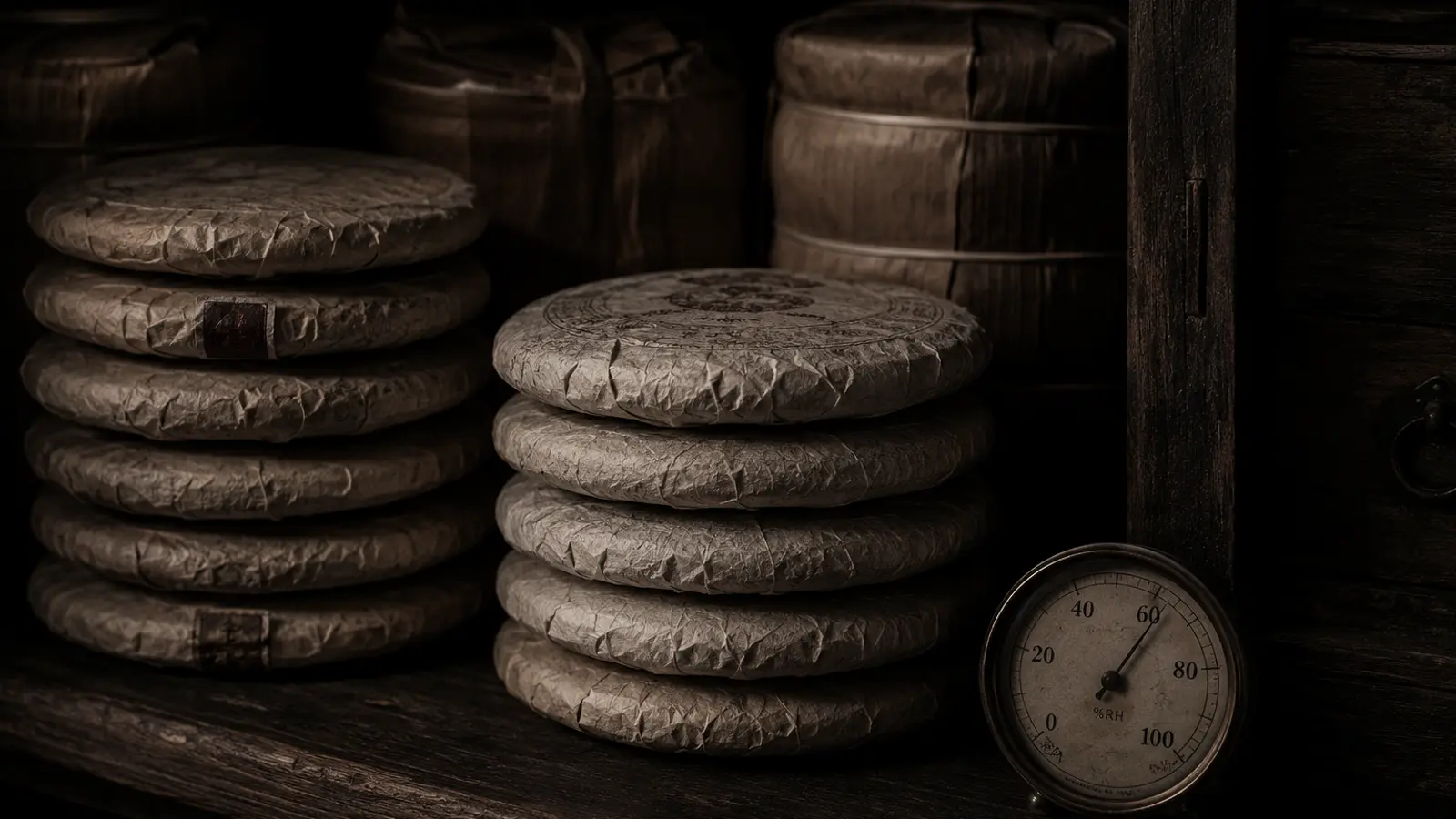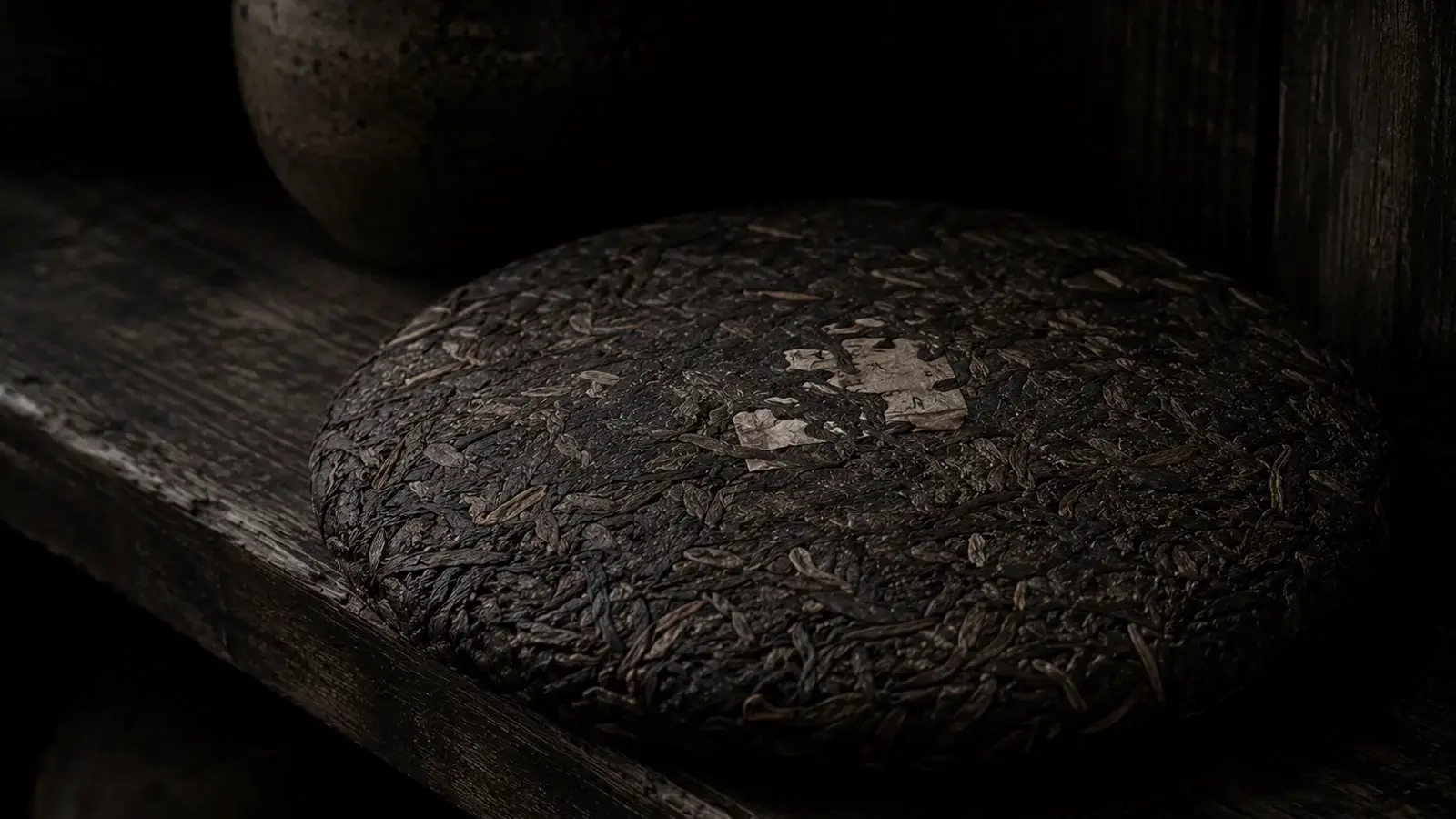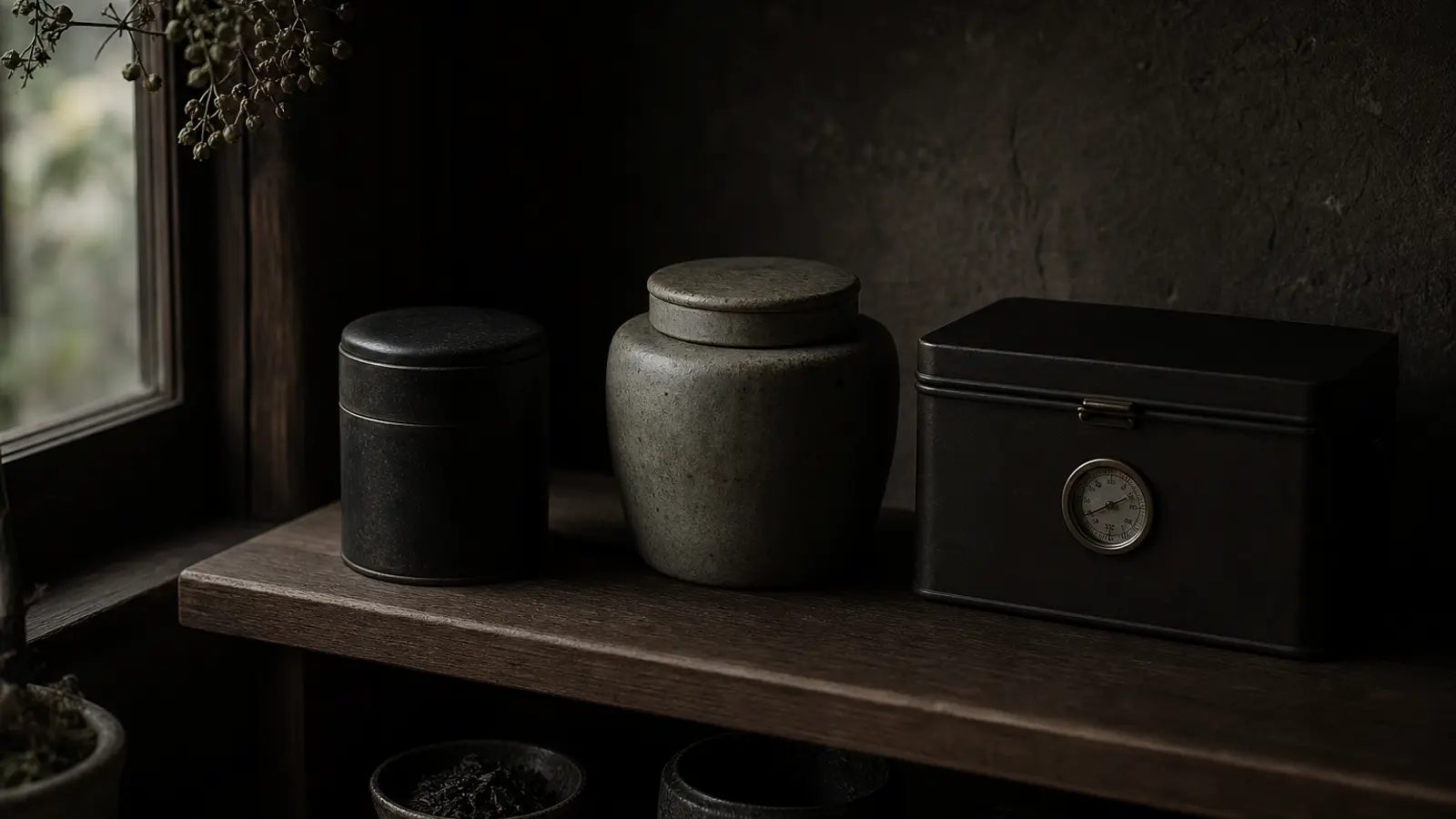
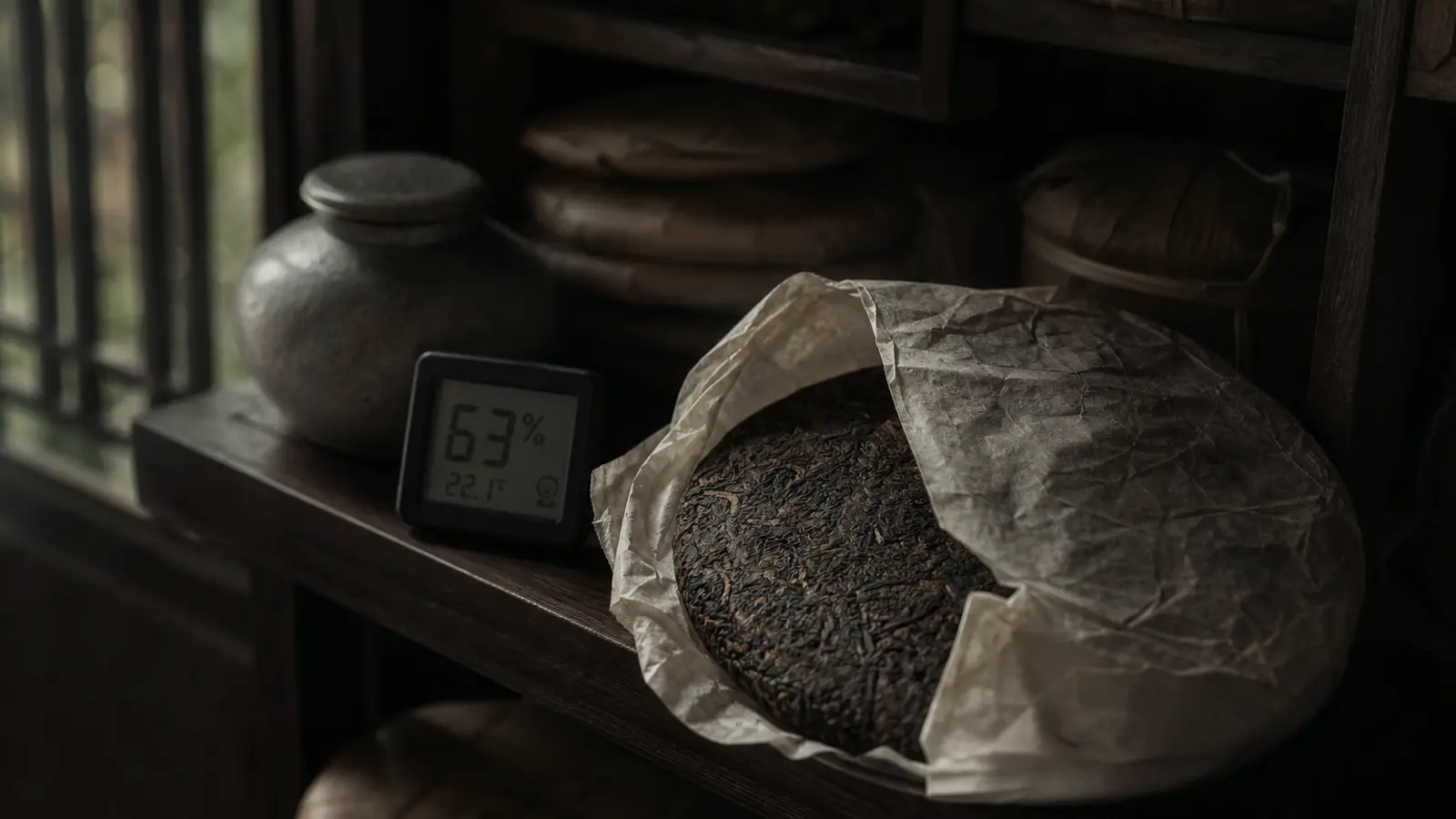
Humidity is the single most consequential storage variable for pu-erh tea (普洱茶). It controls the speed and character of microbial aging more directly than temperature, and it determines whether a cake develops clean aged complexity or unrecoverable mold damage. The difference between 60% and 80% relative humidity over a decade produces fundamentally different teas from identical starting material.
I think of pu-erh storage humidity the way a winemaker thinks about cellar conditions. A Burgundy aged at 55°F and 70% humidity develops differently from the same wine stored at 65°F and 85% humidity — not just faster, but along a different qualitative trajectory. The same principle governs pu-erh, except the stakes are arguably higher. A Grand Cru that’s been stored warm may lose some elegance. A pu-erh cake stored too wet can grow mold that renders it undrinkable.
Here is what the numbers actually mean across the full humidity spectrum, what happens chemically at each range, and how to manage conditions in practice.
The Pu-erh Storage Humidity Spectrum
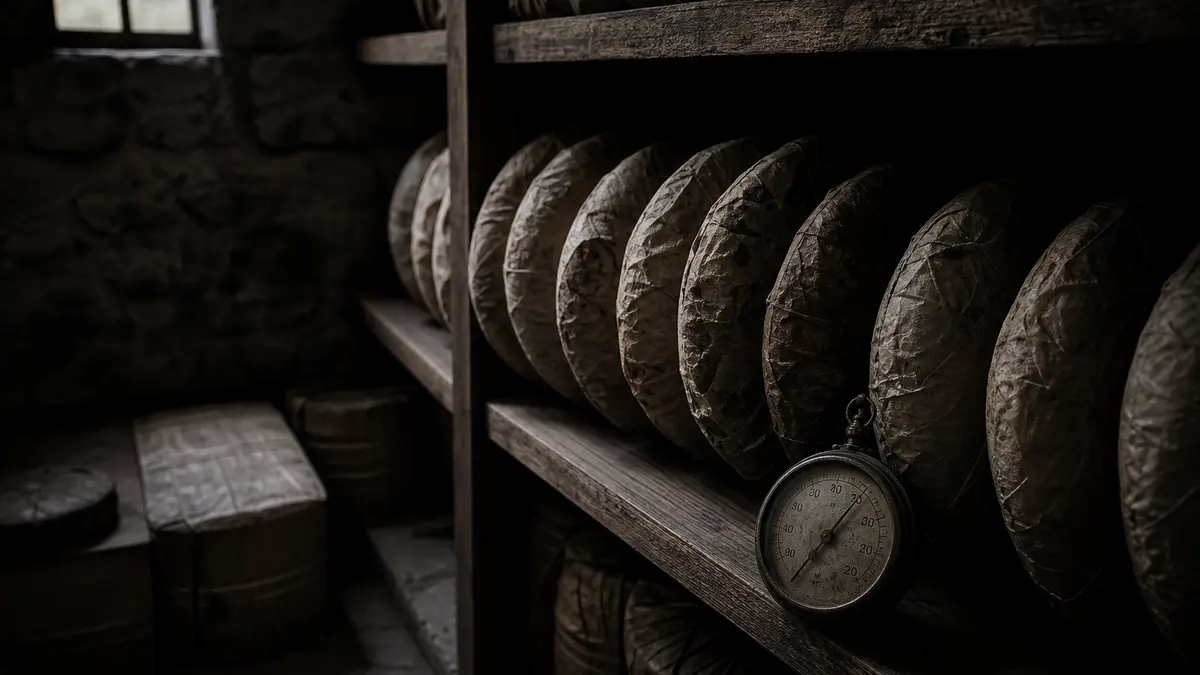
Relative humidity (RH) is the percentage of moisture the air holds relative to its maximum capacity at a given temperature. For pu-erh storage, it’s the number that matters most. The spectrum breaks into four meaningful zones.
Dry Storage (干仓, Gāncāng): 50–65% RH
This is the Kunming (昆明) benchmark. Kunming sits at roughly 1,900 meters elevation in Yunnan province, where ambient humidity typically ranges from 50–65% RH — low enough that microbial activity proceeds slowly and deliberately.
Dry-stored pu-erh ages at the slowest rate. It preserves more of the original leaf character through the transformation: the floral top notes of a young sheng (生茶), the bitterness that gradually converts to huigan (回甘), the structural backbone of the tea. Over 25–30 years, dry storage produces clean, refined aged notes — camphor, dried fruit, sandalwood — without the heavy earthiness of wetter storage.
The trade-off is patience. What wet storage achieves in 10–15 years, dry storage takes 25–30 years to approximate. For collectors who value the journey and can afford the timeline, this pathway preserves the most complexity. For everyone else, it tests commitment.
Natural Storage (自然仓, Zìráncāng): 65–75% RH
This is where most home collectors land, intentionally or not. A climate-controlled apartment in most temperate cities naturally sits somewhere in this range, especially with a pumidor moderating conditions.
Aging at 65–75% RH proceeds at a middle pace — meaningfully faster than Kunming dry storage, meaningfully safer than traditional wet storage. The tea transforms enough over 15–20 years to develop genuine aged character (陈香, chén xiāng) while retaining some of the vibrancy and structural definition that higher humidity strips away.
For most people reading this article, this is the target range. It’s the sweet spot where transformation is real but mold risk remains manageable with basic monitoring.
Traditional Wet Storage (湿仓, Shīcāng): 75–90% RH
This is the Hong Kong warehouse tradition — the method that created most of the aged pu-erh that built the market’s reputation in the 1990s and 2000s. Large ground-floor warehouses in Hong Kong’s subtropical climate naturally maintain 75–90% RH, and experienced warehouse operators learned to manage these conditions over decades.
Wet storage produces the fastest transformation. In 10–15 years, it can achieve what dry storage takes 25–30 years to produce. The character tends toward earthy, mushroomy, and smooth. The liquid is dark, the body is thick, and the rough edges of young sheng are entirely gone.
The risk is real. Above 85% RH without excellent air circulation, you will get mold. Mold-damaged pu-erh is not salvageable — no amount of airing or additional aging removes it. The line between great wet storage and ruined tea is narrow, and it’s a line that professional warehouse operators manage through years of accumulated knowledge, precise ventilation schedules, and constant monitoring. This is not a beginner’s approach.
Tropical Storage: 70–85% RH
I store pu-erh in tropical Southeast Asia, where ambient humidity naturally sits in the 70–85% RH range year-round. This is firsthand experience — I monitor conditions daily with calibrated digital hygrometers and have tracked the evolution of cakes over multiple years in this environment.
Tropical storage produces aging speed between Hong Kong wet and Kunming dry. The year-round warmth (28–34°C) combined with sustained high humidity drives active microbial metabolism without the seasonal temperature swings that characterize storage in temperate or continental climates.
A 1988 Hong Tai Chang cake that spent 38 years in tropical warehouse conditions demonstrates what this environment can produce: silk-smooth texture with dimensional complexity, camphor depth, and — critically — residual tropical fruit notes that pure shou pu-erh (熟茶) or aggressively wet-stored sheng never retains. The tea transformed deeply but didn’t lose its identity.
Tropical storage is a legitimate and increasingly recognized aging pathway. But monsoon seasons — when humidity sustains above 85% for weeks — require active monitoring and intervention. This is the season when I check storage conditions most frequently and take steps to manage airflow.
What Humidity Does to Pu-erh Chemically
Understanding the chemistry clarifies why different humidity levels produce fundamentally different teas, not just different speeds of the same process.
Higher humidity accelerates microbial metabolism. The fungi that drive pu-erh aging — primarily Aspergillus niger, along with Aspergillus luchuensis, Penicillium, and various yeasts — are more active in humid conditions. They metabolize catechins (the compounds responsible for bitterness and astringency in young sheng) into theabrownins (茶褐素) faster, producing more fermentation byproducts in less time.
Higher humidity also increases the rate of non-enzymatic browning (the Maillard reaction) and oxidation. Published analysis of aged pu-erh samples stored at different humidity levels shows clear correlations: faster color change in the liquor, faster smoothing of the mouthfeel, faster development of chén xiāng (陈香) — the aged aroma that collectors prize.
But faster is not necessarily better. The gradual transformation of dry storage preserves micro-compounds — volatile esters, specific terpenes, delicate aromatic molecules — that rapid wet transformation destroys. This is analogous to the difference between a slow-roasted Wuyi yancha (武夷岩茶) and a flash-fired one: both are “done,” but the slow process retains aromatic complexity that speed sacrifices.
This likely explains why the 1988 Hong Tai Chang retains tropical fruit notes after nearly four decades of tropical storage. The humidity was high enough to drive substantial transformation, but the particular microbial community and reaction kinetics of that environment preserved volatile compounds that the aggressive conditions of traditional wet storage or the accelerated fermentation of shou processing would have broken down.
Practical Pu-erh Humidity Management
Theory means nothing if you can’t control conditions. Here is what actually works.
Pumidor Construction
A pumidor is a sealed storage container with humidity regulation — the pu-erh equivalent of a humidor for cigars. The standard home setup:
- Container: A large, food-safe plastic storage bin (60–120 liters) with a tight-fitting lid. Some collectors use converted coolers or custom wooden boxes, but plastic bins are practical and effective.
- Humidity regulation: Boveda packs are the standard. For most home environments, 69% RH or 72% RH packs work well. Use enough packs for the container volume — Boveda publishes sizing guidelines.
- Monitoring: Place a calibrated digital hygrometer inside the container. Analog hygrometers are unreliable; spend the $15–25 on a digital unit.
- Separation: Don’t let cakes touch the Boveda packs directly. Keep different tea types (sheng and shou) in separate containers — their microbial environments differ, and cross-contamination can produce off flavors.
Monitoring Protocol
Check the hygrometer weekly. It takes 30 seconds to open the lid, read the number, and close it again. If you find yourself checking less than weekly, set a recurring reminder. The teas you’re storing are likely worth hundreds or thousands of dollars — the monitoring habit is cheap insurance.
Record the readings if you want to track seasonal patterns. In my tropical storage environment, I see a clear 5–8% RH swing between dry season (January–March) and monsoon season (June–September). Knowing this pattern lets me anticipate adjustments.
Ventilation
Crack the storage container for 30 minutes once a month to exchange stale air. Pu-erh aging involves gas exchange — the microorganisms produce CO₂ and volatile organic compounds, and they need fresh oxygen. A sealed container with no ventilation can develop a stale, flat character in the tea over time.
In tropical climates, I time the monthly ventilation for dry, lower-humidity days when possible. Opening the container during peak monsoon humidity defeats the purpose.
Seasonal Adjustment
If you live in a climate with significant humidity swings, adjust accordingly:
- Summer in humid climates: Switch to lower-target Boveda packs (65% instead of 72%), or add more packs to increase their buffering capacity against ambient humidity trying to push conditions higher.
- Winter in dry climates: The Boveda packs will work harder to maintain humidity. Check them more frequently and replace when they’ve hardened.
- Monsoon seasons (tropical climates): This is the danger zone. When ambient humidity sustains above 85% for extended periods, the Boveda packs may not be sufficient to hold conditions down. Consider adding silica gel packets temporarily, or moving storage to an air-conditioned room during the worst weeks.
Recognizing Trouble: Mold and Other Warning Signs
Vigilance matters more than perfection. Here is what to look for and what each sign means.
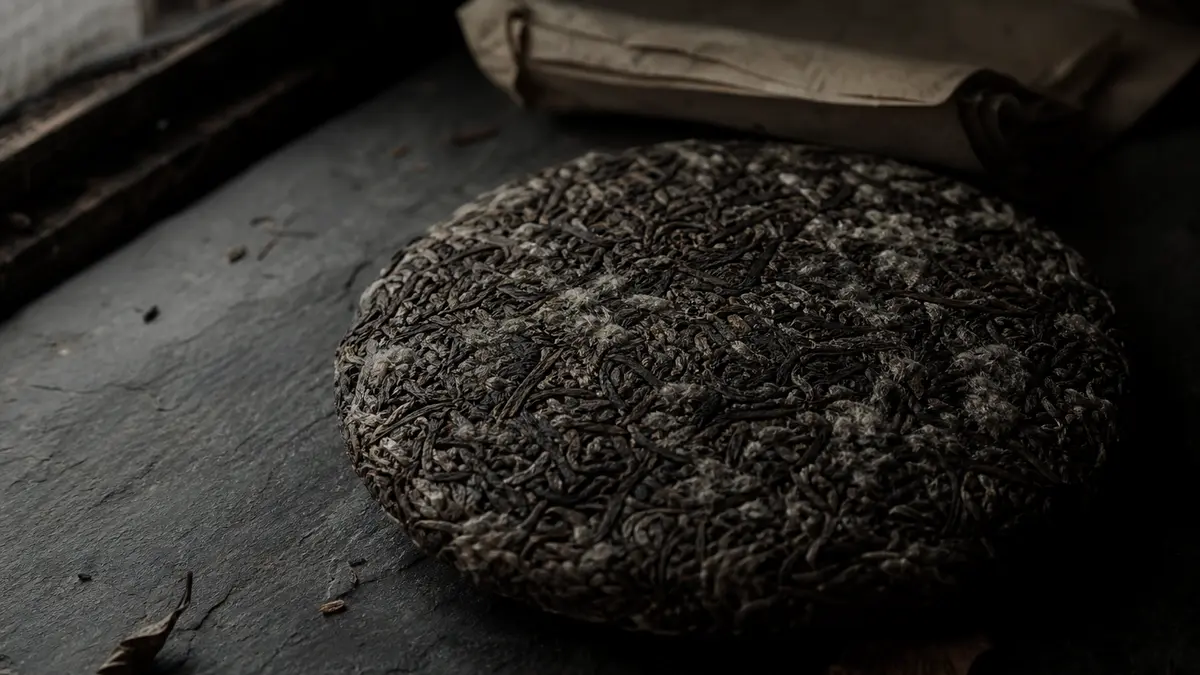
White fuzzy mold: This is the worst-case scenario. White, cotton-like growth on the surface of a cake means conditions exceeded safe limits. Remove the affected cake immediately and isolate it from your other teas. Inspect every other cake in the container. The cake with visible mold is not salvageable — the mycelium penetrates the compressed leaf, and surface cleaning doesn’t remove internal colonization.
Golden flowers (金花, jīnhuā): These small yellow granular growths are Eurotium cristatum, a beneficial fungus deliberately cultivated in fu zhuan tea (茯砖茶). In fu zhuan, golden flowers are desirable. In sheng pu-erh, their presence suggests humidity conditions more suited to heicha (黑茶) processing than pu-erh aging. It’s not dangerous, but it indicates your storage conditions may be wetter than intended.
Musty smell that doesn’t dissipate: When you open a cake’s wrapper, a brief musty note is normal for pu-erh stored at moderate-to-high humidity — it should dissipate within 30 minutes of airing. If the mustiness persists after extended airing, it may indicate internal mold that isn’t visible on the surface. Break the cake at a seam and inspect the interior.
Wet or damp wrapper: If the paper wrapper feels damp rather than merely soft, conditions are too wet. Even if the tea itself looks fine, sustained wrapper dampness creates a microenvironment where mold can start.
The Honest Perspective on Pu-erh Humidity Levels
I store pu-erh in tropical Southeast Asia at natural ambient humidity, typically 70–85% RH depending on season. Everything I’ve written about tropical storage comes from direct daily experience — monitoring, adjusting, observing how cakes evolve over years in these conditions.
The dry storage and traditional wet storage sections are informed by research and by tasting teas from those storage traditions. I’ve brewed Kunming-stored sheng alongside tropically-stored equivalents from the same production year, and the differences are exactly as dramatic as the chemistry predicts. I’ve tasted Hong Kong traditionally stored teas that were extraordinary and others that were clearly mold-compromised. But I haven’t personally managed storage at 55% RH in Kunming or 88% RH in a Hong Kong ground-floor warehouse.
What I can say with confidence from firsthand experience: tropical storage at 70–85% RH is a legitimate aging pathway that no other English-language resource covers with real data. The teas it produces are distinct from both dry-stored and traditional wet-stored equivalents — they carry a particular combination of transformation depth and retained vibrancy that I find compelling. But it requires active management, especially during monsoon season, and the consequences of inattention are permanent.
Humidity is not a number to set and forget. It is an ongoing relationship between you, your tea, your climate, and a digital hygrometer that costs less than a single good cake. Manage it well, and time does remarkable things. Neglect it, and time does irreversible ones.