Four nights into this producer’s Liu Bao collection, and the 2015 Premium Autumn just delivered something none of my other teas — across any category — have produced before: a cooling mint sensation that filled my mouth after swallowing. Not mint tea. Not camphor. A genuine menthol-like coolness generated by the tea itself.
The Producer
This Liu Bao comes from a producer in Cangwu County — the geographic heart of authentic Liu Bao production — whose traditional processing methods have earned formal recognition as part of China’s intangible cultural heritage system. When the Chinese government identifies someone as a living heritage keeper, the tea they produce carries weight that marketing budgets can’t buy.
Why Autumn Matters
This is autumn harvest (秋茶) — a fundamentally different raw material from the spring teas (Pre-Qingming, She Qian) in the same collection. Autumn leaves have spent all summer under intense Guangxi subtropical UV exposure, accumulating polyphenols as a defense mechanism. Spring leaves are young, tender, amino-acid-rich — sweet and refined. Autumn leaves are mature, thick, polyphenol-dense — bold, bitter, structurally assertive.
At 11 years of aging, this autumn material has been partially transformed by time but not fully tamed. The bitterness is still present, the tannins are still active, the structural aggressiveness of the autumn harvest is still audible. Given another decade, these compounds would soften further — but right now, at 11 years, the tea is in its adolescence. Still angular. Still asserting itself.
Dry Leaf
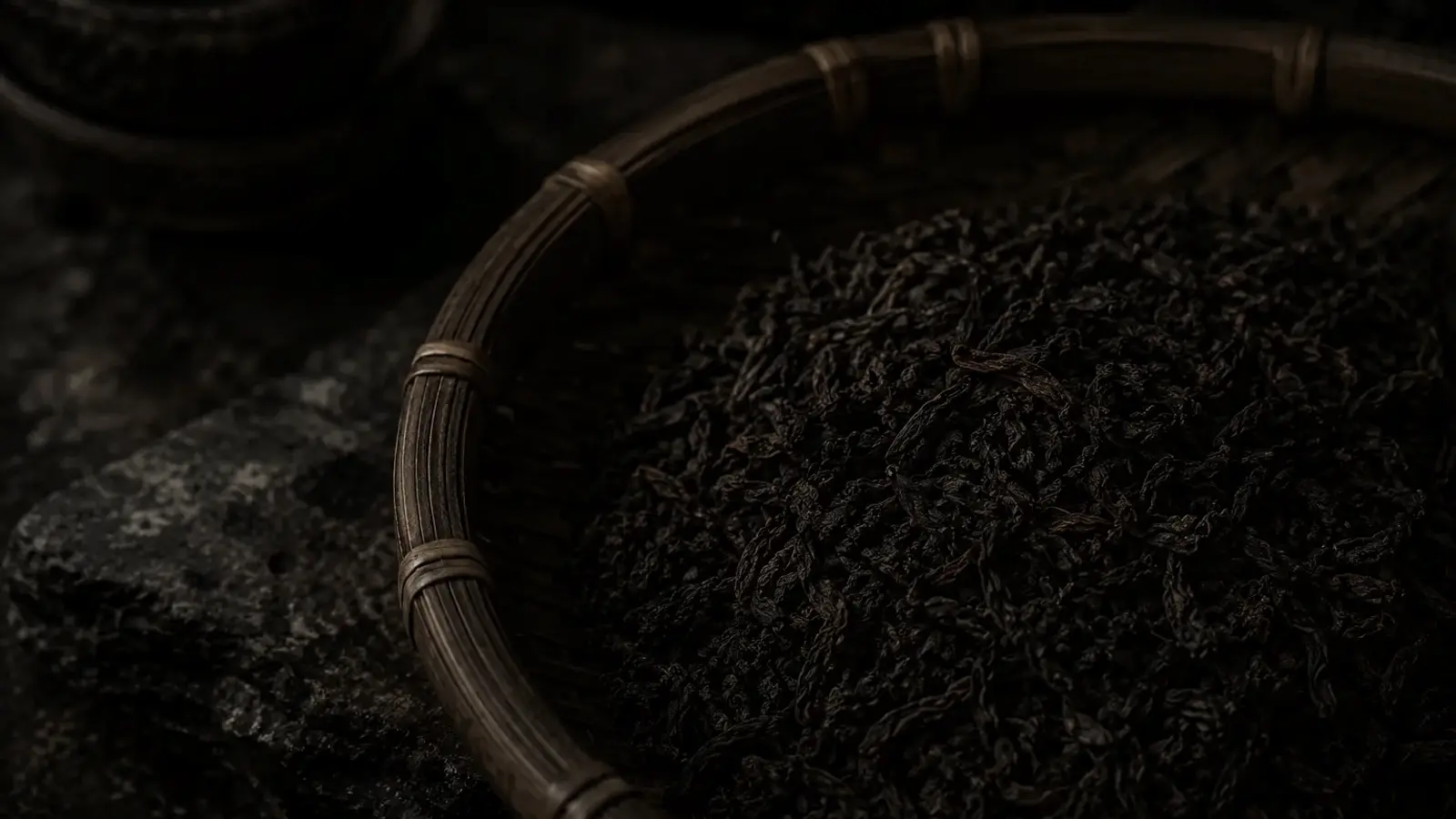
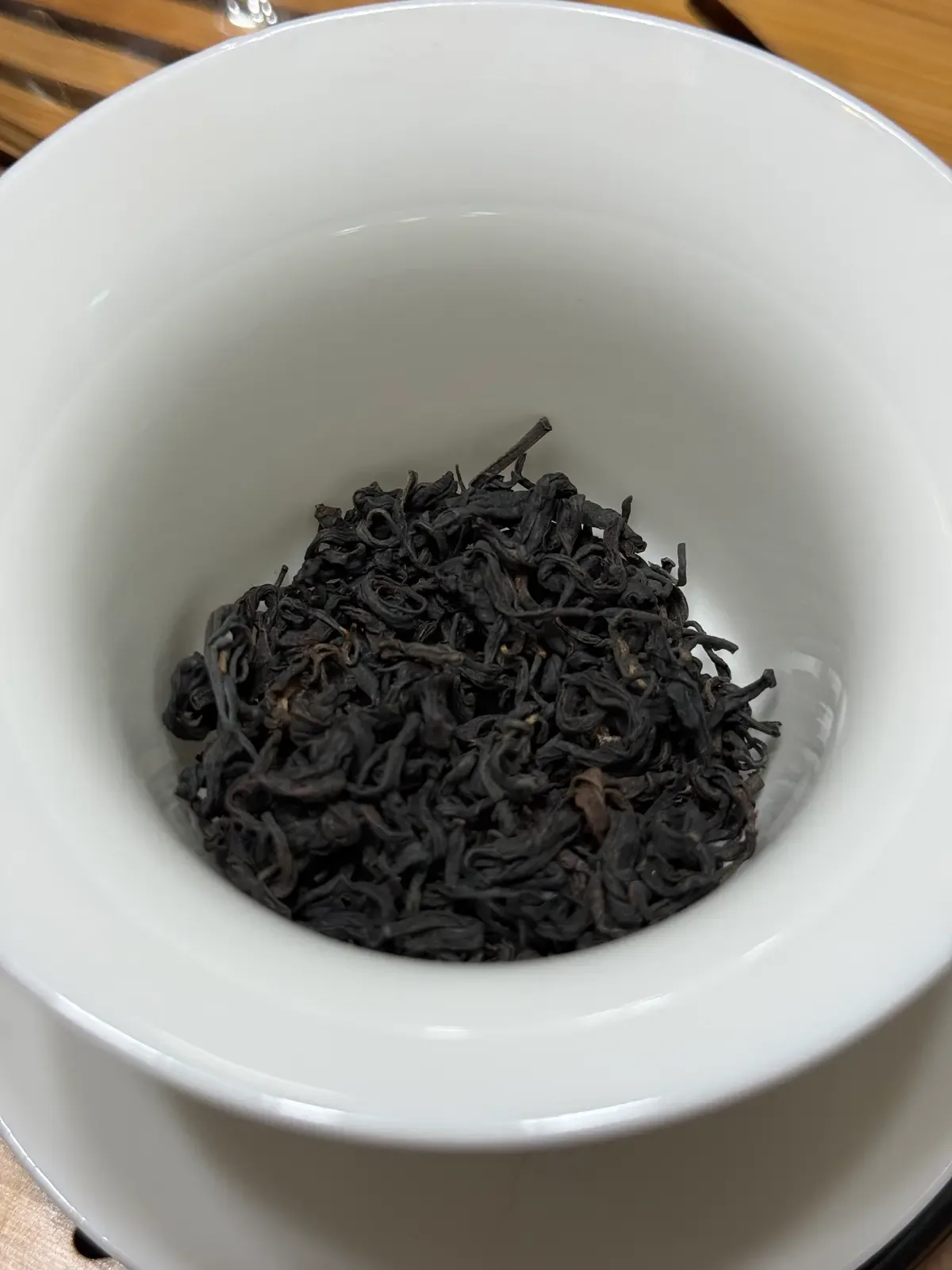
The dry leaf aroma shares a consistent base signature with every other Liu Bao in this collection — earthy, woody, aged, with a producer-specific character that identifies the source before the first steep. This aromatic consistency across six different teas (spanning 2009 to 2026, from buds to old leaves, from spring to frost-descent harvest) confirms that the terroir and processing tradition creates a recognizable house signature.
But despite similar dry leaf aromas, the tastes have been dramatically different tea to tea. The nose promises family resemblance. The cup delivers individual personality.
The Session
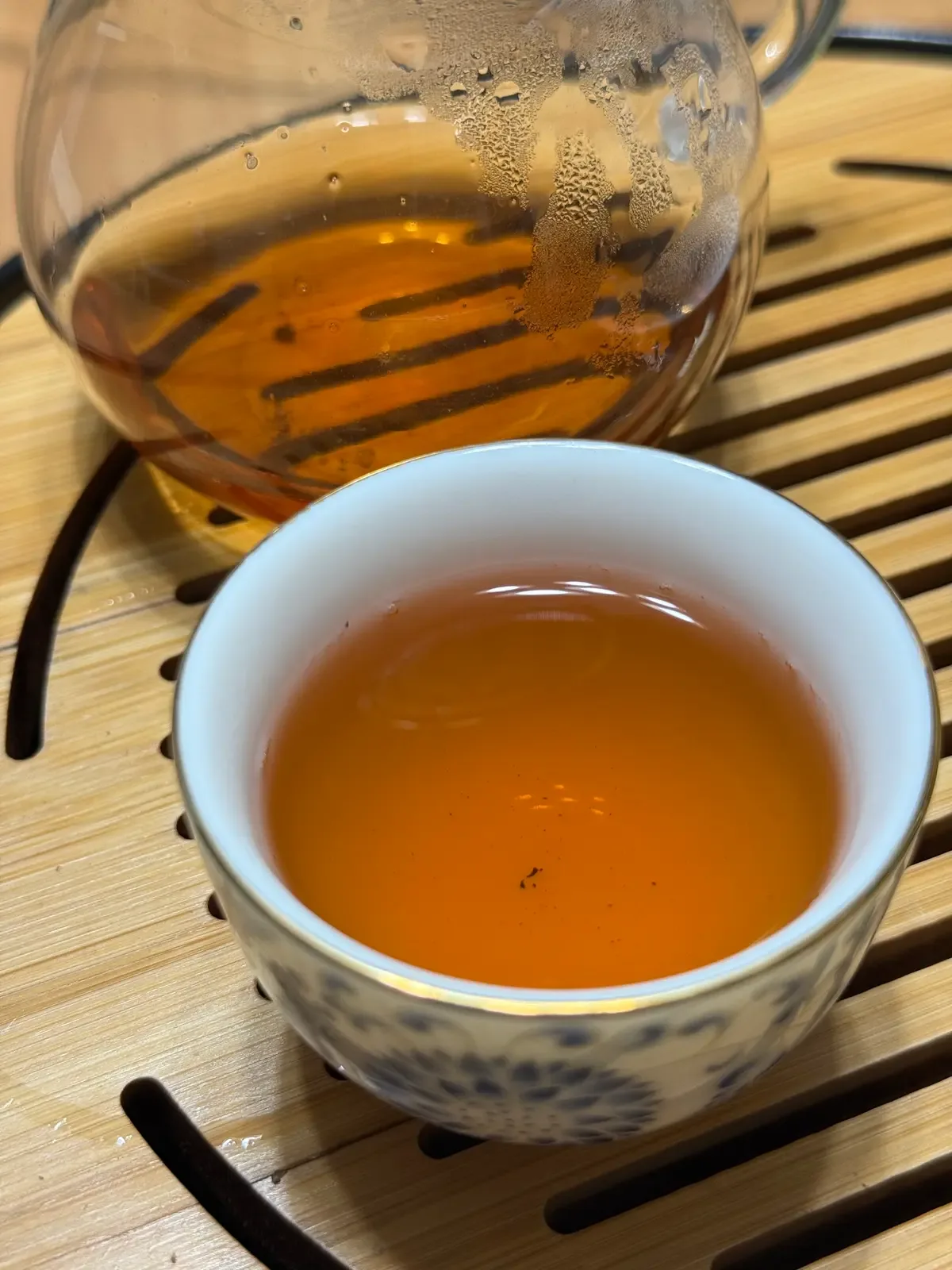
The first steep was a departure from expectations. After the aged smoothness of the Lao Cha Po (17 years) and the refined elegance of the Pre-Qingming (16 years), this 11-year-old autumn tea opened with genuine bitterness. Not the polite architectural bitterness of the Yiwu shengs. Not the gentle buffer of the Banna-stored teas. This was bold, forward, structural bitterness — the autumn polyphenol load announcing itself without preamble.
By steeps 3-4-5, the bitterness began receding. But instead of converting to sweetness (the standard huigan pathway I’ve experienced dozens of times in sheng and shou), it transitioned into tannins. The sensation migrated from the tongue (flavor-driven bitterness) to the teeth and cheeks (mouthfeel-driven astringency). A textural shift rather than a flavor shift. The tea was moving from what it tastes like to how it feels.
Then the cooling arrived.
The Cooling Mint — Hui Gan Liang (回甘凉)
After swallowing in the mid-to-late steeps, my mouth felt cool. Not cold. Not numb. Cool — as if a mint breeze had passed through the oral cavity. The sensation was so unexpected I initially questioned whether something external had caused it. Nothing had. The cooling was coming from the tea itself.
This sensation is produced by specific terpene compounds — the same chemical family as camphor (the 편백나무 I’ve detected across multiple teas) and menthol. But instead of expressing as warm resinous wood (camphor in aged sheng) or as the 목욕탕 (bathhouse) quality in certain shou, these terpenes activate cold receptors. The mouth perceives coolness without any actual temperature change. The same mechanism that makes peppermint feel cold on the tongue, but generated internally by the tea’s chemistry rather than externally by an added ingredient.
Not all Liu Bao produces this. Chinese Liu Bao connoisseurs consider hui gan liang one of the highest quality markers — evidence of genuine Cangwu terroir, quality material, and proper traditional processing. Its presence in this 2015 Autumn confirms the producer’s material at a level that subjective taste preferences can’t. The cooling doesn’t lie.
Flavor Profile
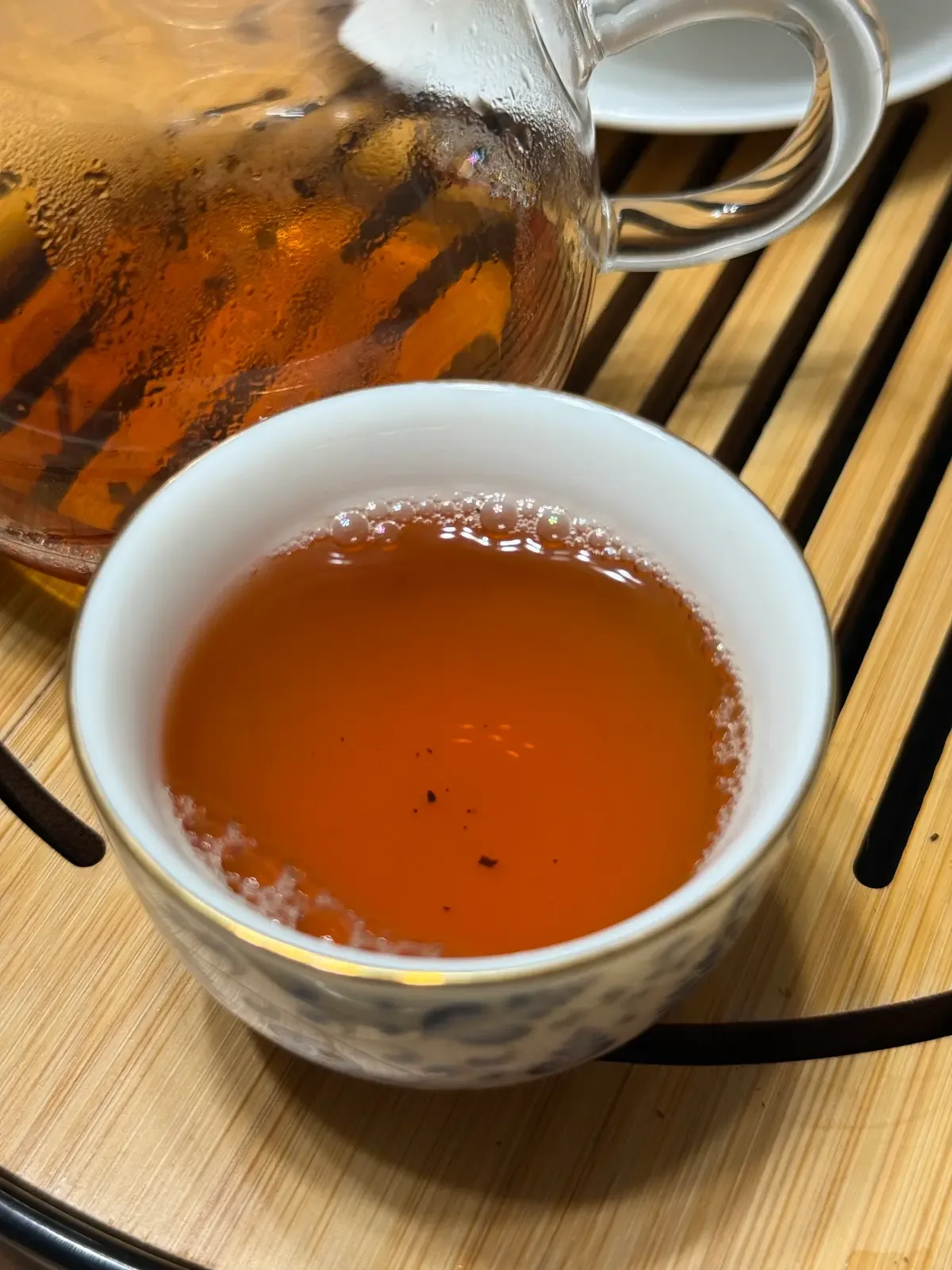
The front is bitter — structurally bold, architecturally assertive. This is autumn leaf at 11 years: transformed enough to be drinkable, young enough to retain its raw character. The mid transitions from bitterness to tannin — a textural migration from tongue to cheeks. The finish is the cooling sensation — hui gan liang replacing the expected sweetness with something entirely different. The complete arc: bitter → tannic → cool. A three-act structure that none of my 30+ shou pu-erh sessions have produced.
Mouthfeel & Huigan
The tannin grip is light but real — teeth and cheeks lightly engaged, similar to what a structured red wine does. This is the architectural quality that shou pu-erh typically lacks and that this palate consistently demands. The autumn harvest’s polyphenol content creates a mouthfeel closer to young aged sheng than to any shou. Liu Bao, at least from this producer and this harvest season, occupies a structural middle ground between the velvet of shou and the grip of sheng.
The huigan expresses as cooling rather than sweetness. This is a different conversion pathway from everything previously experienced — not bitter-to-sweet (sheng) and not persistent sweet-after-dark (shou). Bitter-to-tannic-to-cool is a third huigan modality that seems specific to Liu Bao, or at least to this quality level of Liu Bao.
Why Liu Bao Might Be Better Than Shou
Four sessions, four distinct personalities from one producer:
- Lao Cha Po (2009, 17yr): Aged thickness, deep, smooth
- Pre-Qingming (2010, 16yr): Prestige refinement, delicate, elegant
- Betel Nut (2018, 8yr): 槟榔香 terroir signature — warm, areca, defining
- Premium Autumn (2015, 11yr): Bitter-tannic-cooling architecture
Compare this to shou pu-erh from any single producer: the flavor range is narrower. The best shou sessions — all excellent, all beautiful — speak the same basic language of chocolate-earth-smooth with variations in emphasis. Liu Bao from this producer speaks four different dialects in four sessions. The mixed seed-propagated varietals (群体种, qunti zhong) of Guangxi — as opposed to shou pu-erh’s uniform large-leaf assamica — produce a more layered, more variable, more complex range of expression.
For a palate that consistently demands dimensionality and rejects one-dimensional sweetness, Liu Bao’s structural range is the answer that shou only partially provided.
Value Assessment
50g of Premium Grade (特级) 11-year-aged Liu Bao from a recognized heritage producer. The quality markers present — particularly the hui gan liang cooling — confirm material that would command significant premiums through conventional retail channels.
Verdict
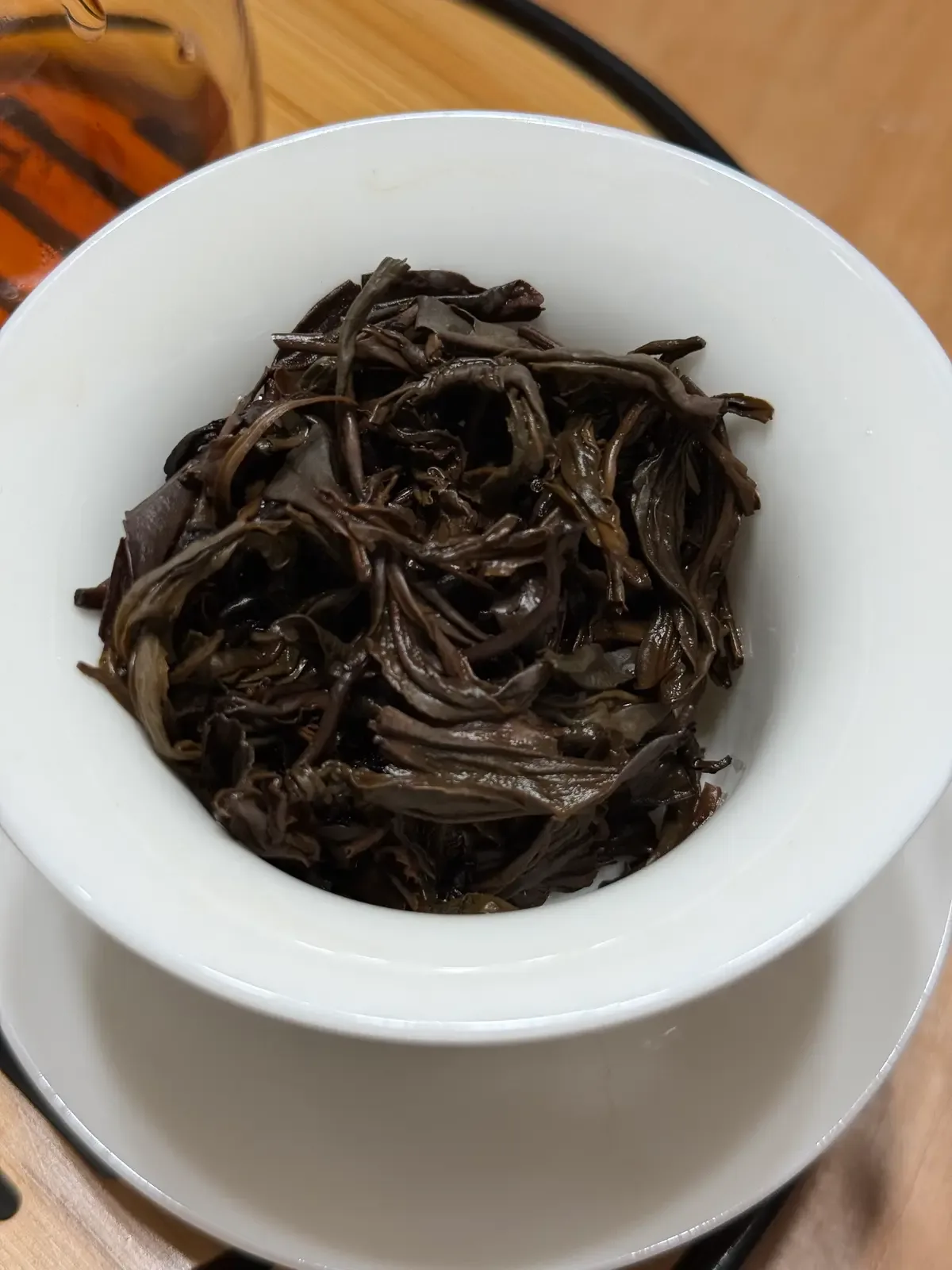
The cooling mint discovery. A genuinely new sensation after 40+ gongfu sessions across sheng, shou, hei cha, yan cha, green tea, and Taiwan high mountain oolong. Liu Bao, through this producer’s work, has demonstrated more personality range in four evening sessions than shou pu-erh demonstrated across months of exploration. The bitter-tannic-cooling architecture of this autumn tea specifically addresses what shou consistently lacks for this palate: structural complexity, tannin presence, and a finish that doesn’t resolve into simple sweetness.
The evening tea might not be shou anymore. It might be Liu Bao.
This tea's strongest axis is Huigan (8/10). Also notable: Flavor Transition, Finish Length. Notably low: Mineral.