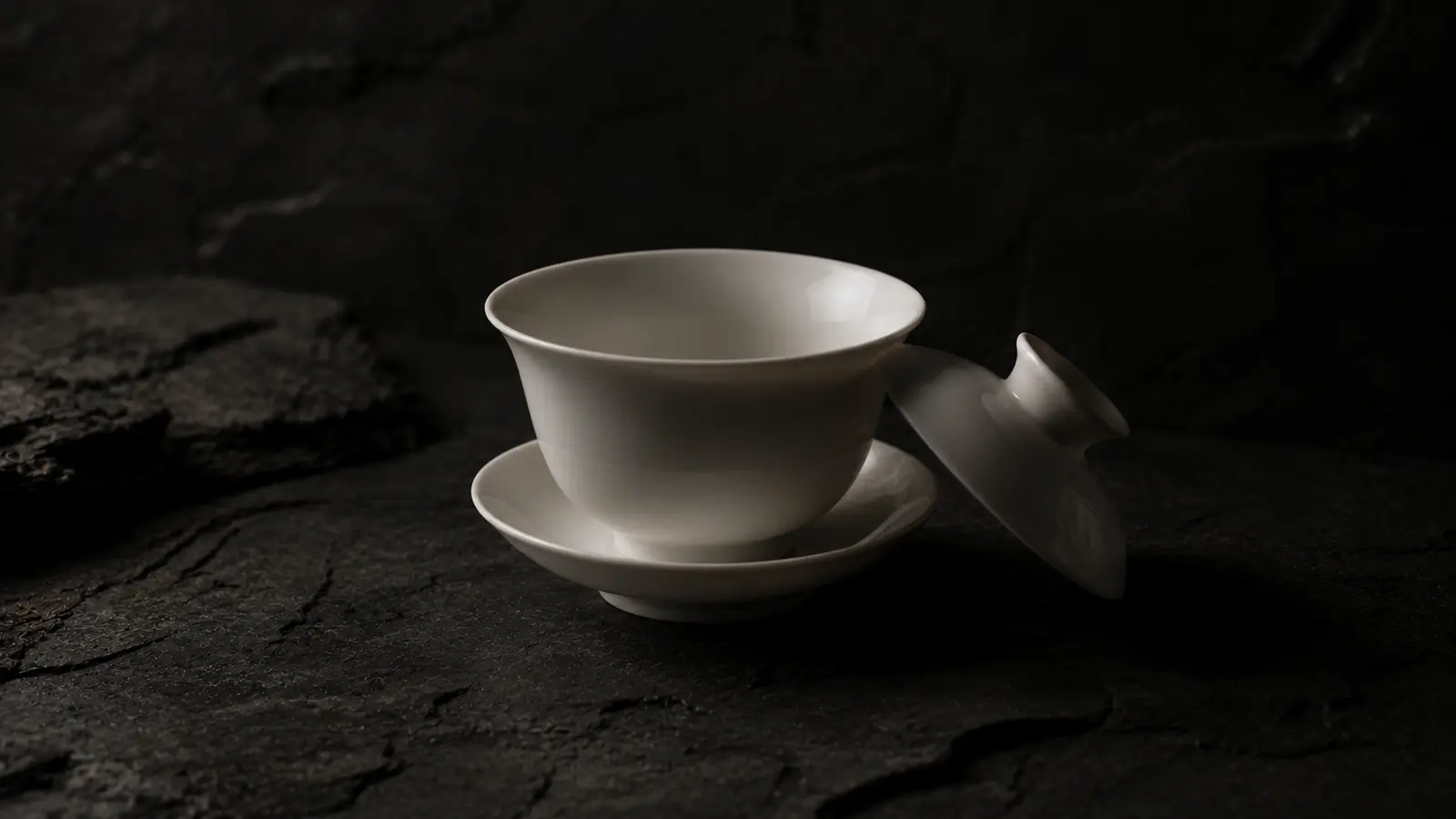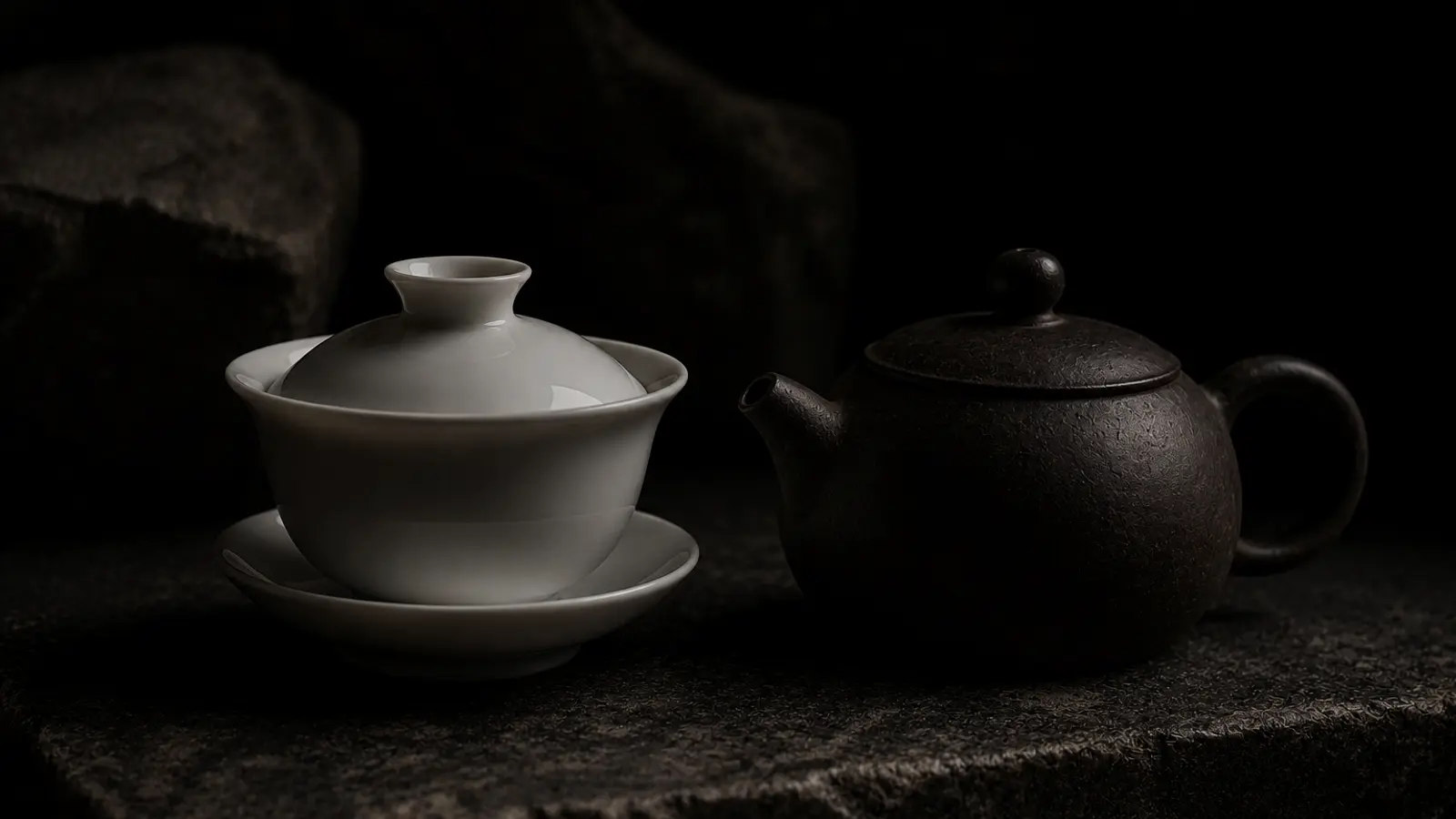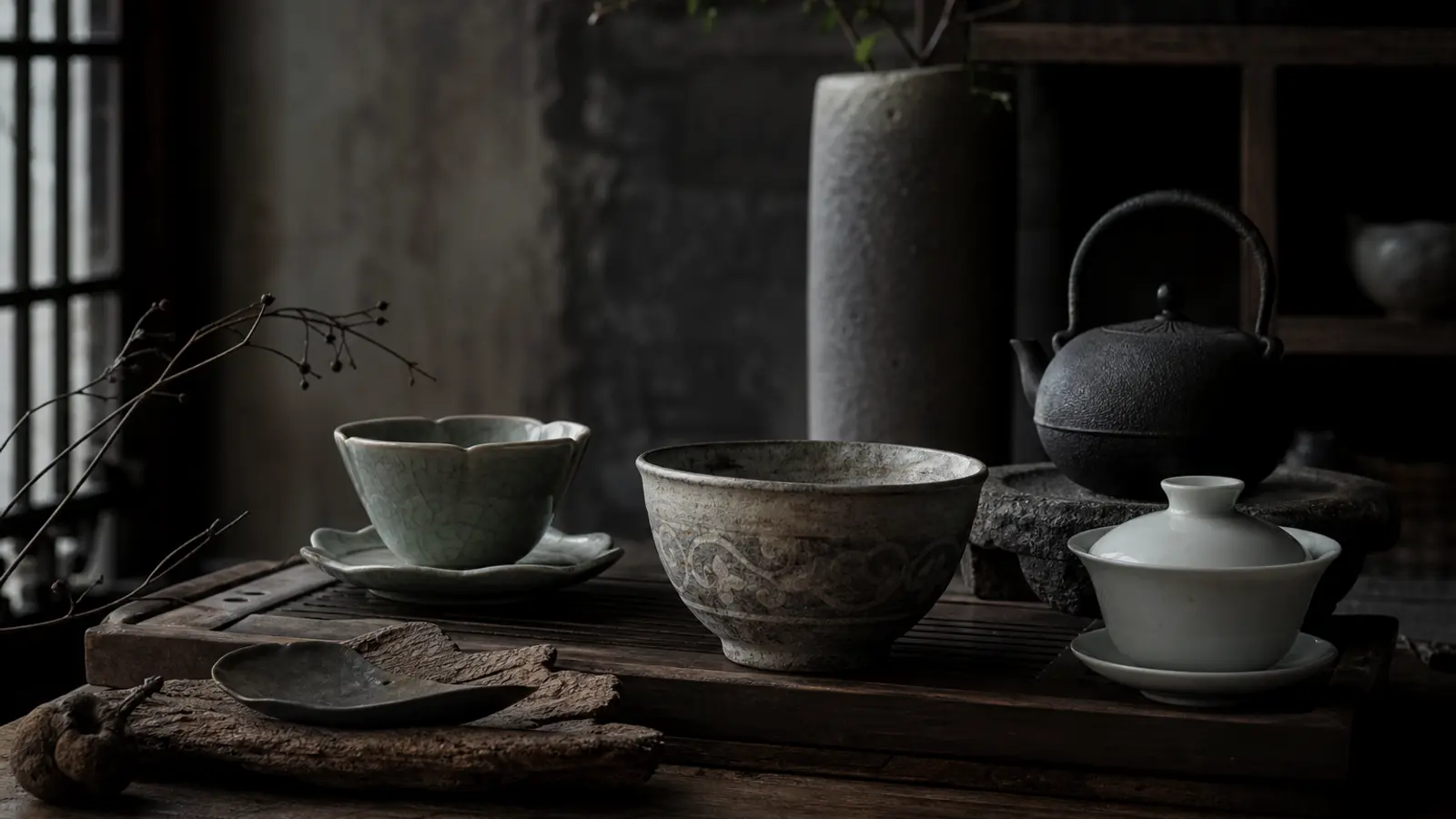
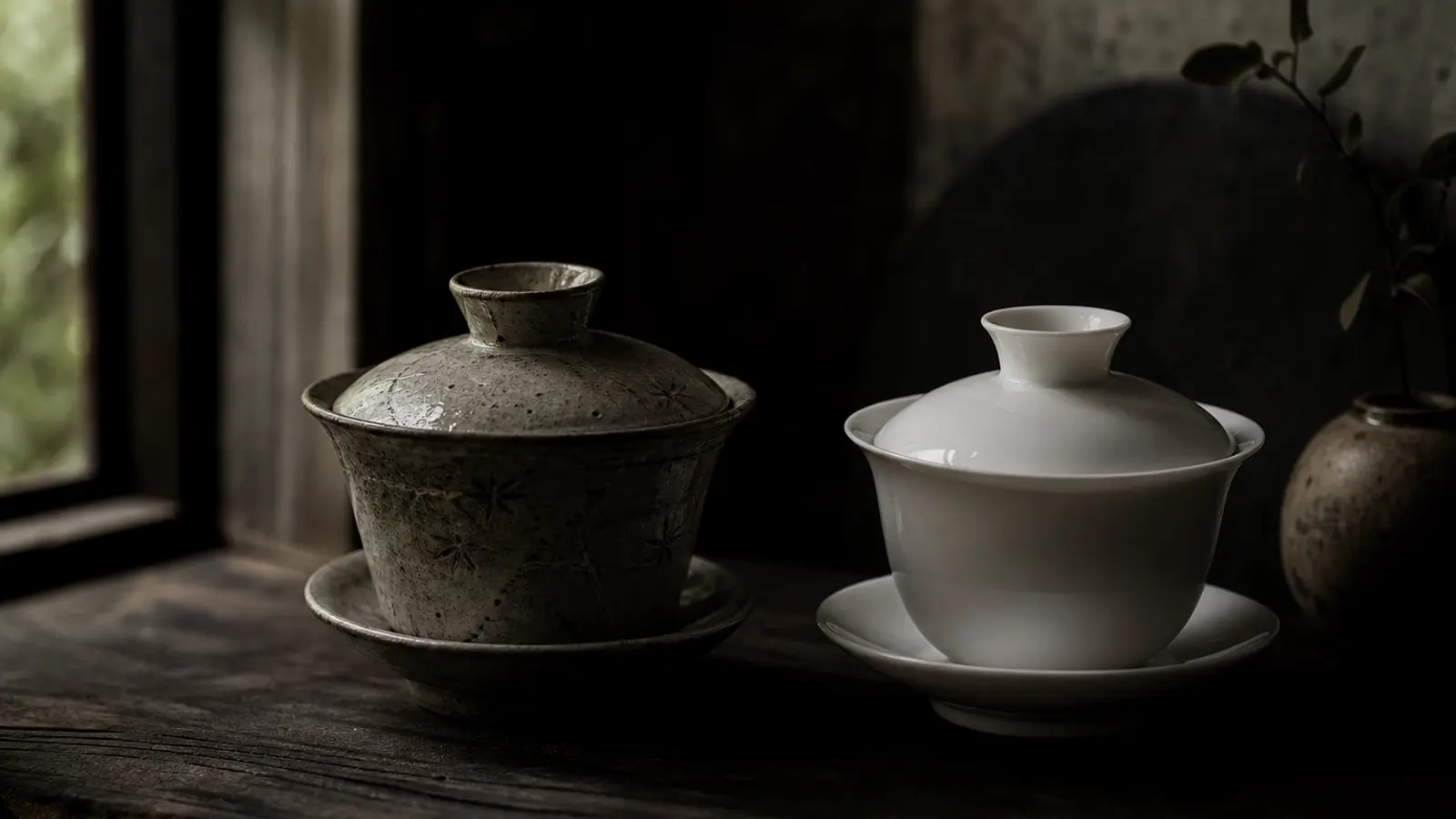
The korean gaewan (개완) is one of the more interesting developments in contemporary gongfu teaware — not a novelty, but a genuine reinterpretation of a form that has been central to Chinese tea culture for centuries. Korean potters took the gaiwan (蓋碗), the lidded bowl that defines so much of how we brew and taste tea, and ran it through a completely different ceramic tradition. What came out the other side handles differently, ages differently, and produces a different kind of session.
This guide covers what sets a Korean gaewan apart from its Chinese counterpart, when to reach for one versus the other, the specific forms and makers worth knowing, and the practical details of sizing, lid technique, and seasoning.
What Makes a Korean Gaewan Different from a Chinese Gaiwan
The Chinese gaiwan is a marvel of functional minimalism. Thin walls, full glaze, neutral porcelain — it adds nothing to the tea, removes nothing, and cools quickly enough to give you precise control over steep time. It is the universal tasting glass of the tea world.
The Korean gaewan starts from different premises.
Korean ceramic traditions — buncheong (분청사기), celadon (청자), iron-painted wares, carbon-fired black clay — were never optimized for neutrality. They carry texture, weight, and material presence. When Korean potters began making gaewan forms, they brought those traditions with them. The results are vessels that interact with the brewing session rather than simply containing it.
Thicker Walls and Heat Retention
A Korean gaewan typically has walls noticeably thicker than a standard Chinese porcelain gaiwan. This changes the thermal profile in two ways.
First, the vessel takes longer to heat through. This means the rinse and warm-up step matters more — a Korean gaewan that hasn’t been properly preheated will pull heat from your water, dropping the effective brew temperature. Rinse with boiling water, let it sit 30 seconds, discard, then brew.
Second, once heated, the thick walls hold that heat longer. The cooling curve is slower. For teas where temperature retention helps — aged shou pu-erh (熟普洱), heavily roasted oolongs, ripe teas that benefit from sustained heat — this is an advantage. For delicate greens where you want rapid cooling to stop extraction precisely, it works against you.
Semi-Porous Clay Bodies
Some Korean gaewan, particularly those made from natural Korean clays rather than refined kaolin porcelain, have a semi-porous body. This puts them in territory closer to Yixing (宜興) ware than to standard Chinese gaiwan porcelain.
The implication: these vessels season over time. The clay absorbs trace compounds from the tea — oils, polyphenols, aromatic molecules — and builds up a patina that subtly rounds the character of subsequent brews. It is a slow process, measured in months and years rather than sessions, but it is real.
The practical rule is the same as with Yixing: dedicate a semi-porous Korean gaewan to a single category of tea. Shou pu-erh in one, aged oolongs in another. Mixing tea types dilutes whatever seasoning you are building.
Textured Surfaces and Tactile Ritual
Buncheong and iron-painted ware have surfaces you can feel — not rough in a way that damages, but textured in a way that is present. This changes the handling experience. The grip is more deliberate. You feel the vessel in a way you do not with polished porcelain.
This sounds like an aesthetic point, and partly it is. But it also has a practical effect: a textured, slightly weighted Korean gaewan slows you down. You become more conscious of the pour, the angle, the timing. For contemplative single-tea sessions — the kind where you are spending an hour with one tea rather than running comparison flights — that tactile presence is an asset.
Korean Gaewan vs Chinese Gaiwan: When to Reach for Each
| Feature | Korean Gaewan (개완) | Chinese Gaiwan (蓋碗) |
|---|---|---|
| Typical size | 120–150ml | 80–120ml |
| Wall thickness | Thick | Thin |
| Clay body | Often semi-porous | Typically fully vitrified |
| Surface | Textured, matte, or uneven glaze | Smooth, polished glaze |
| Cooling speed | Slower | Faster |
| Seasoning potential | Yes (porous bodies) | No |
| Best use | Contemplative sessions, aged/roasted teas | Analytical tasting, comparison sessions |
| Neutrality | Lower — the vessel has character | High — reveals the tea unfiltered |
Think of this the way you might think about choosing between a Burgundy glass and a universal tasting glass. The Burgundy glass enhances specific wines — it opens pinot noir, concentrates its aromatics, softens its edges. The universal tasting glass reveals every wine equally without enhancement or interference. You would not use the Burgundy glass to evaluate an anonymous sample blind. But you would reach for it when you want the full experience of a wine you already know.
The Chinese gaiwan is the universal tasting glass. Use it when you are evaluating a new tea, running a comparison, or want the cleanest possible read on what is in the bowl. The Korean gaewan is the Burgundy glass. Use it when you have already chosen your tea and want to settle into it.
Teas That Suit Korean Gaewan
- Shou pu-erh (熟普洱): Benefits from heat retention and from a seasoned vessel that has been dedicated to fermented teas.
- Aged sheng pu-erh (生普洱): The slower cooling curve and thick walls complement the long, evolving character of well-aged sheng.
- Medium-to-heavy roast oolongs: The thermal mass holds heat through later steeps as roasted oolongs typically need.
- Korean teas (한국 차): There is a coherence to brewing ujeon (우전) or sejak (세작) in Korean-made ware, though these teas are more temperature-sensitive — reach for an unglazed or lightly glazed piece rather than a thick porous body.
Forms and Makers Worth Knowing
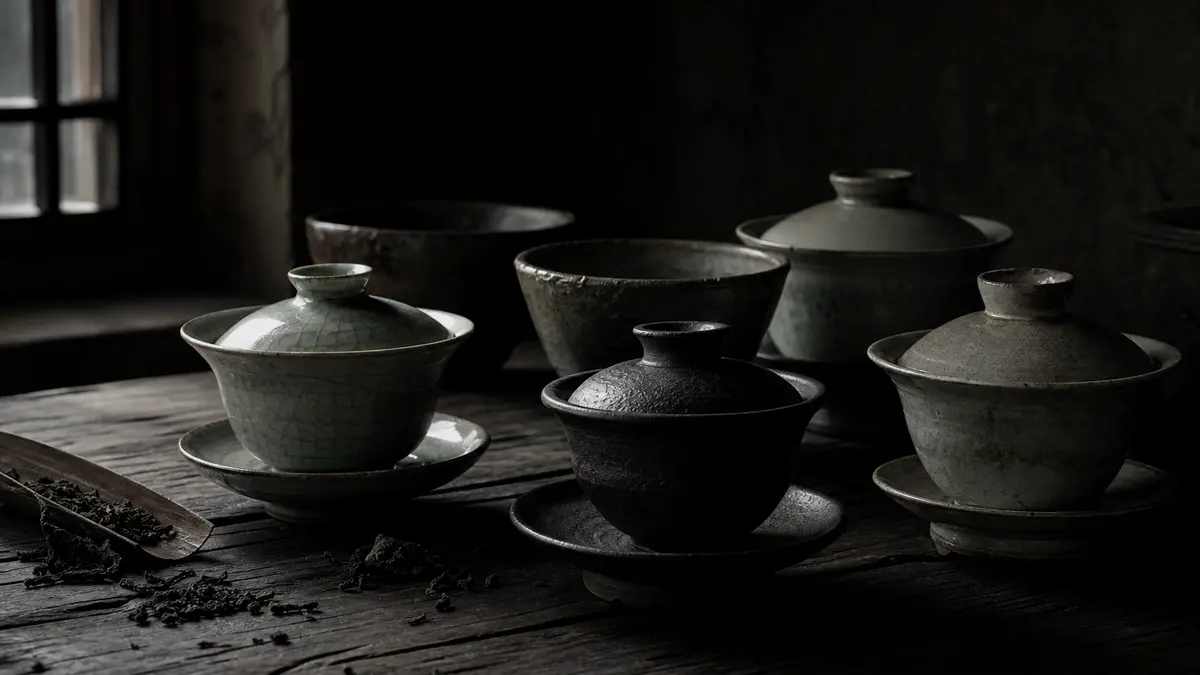
The Korean gaewan market is still small by global teaware standards. Several potters are producing work of serious quality.
김정우 (Kim Jeong-woo) — 철화분청 개완 Iron-painted buncheong gaewan, with clay sourced from 계룡산 (Gyeryongsan), a mountain in South Chungcheong Province with a long history of ceramic clay extraction. The iron brushwork on buncheong is one of Korea’s most distinctive decorative traditions — dark geometric or naturalistic painting on grey-toned slip. These gaewan have substantial presence in the hand and develop seasoning well.
민토 최민록 (Minto, Choe Min-rok) — 무유 검정 개완 Carbon-fired unglazed black gaewan. Unglazed black wares sit at the more porous end of the spectrum — these will season relatively quickly and should be dedicated to a single tea type from the start. The matte black surface absorbs light and gives these vessels a quiet, austere quality that suits extended sessions.
정유나 (Jeong Yu-na) — 청화백자 개완 Blue-and-white porcelain in the cheongwa baekja (청화백자) tradition. This is the Korean gaewan closest in character to Chinese gaiwan — porcelain body, glazed surface, less porous. The distinction is in the form language and the painting style, which carries Korean brushwork aesthetic rather than Chinese. If you want a Korean gaewan but are not ready to commit to a porous vessel, this is a reasonable entry point.
사예 (Saye) — 흑유 개완 Black glaze, wide low form. The wide, low profile is a distinctive shape departure from the standard taller gaiwan profile. It changes the arc of the pour — the tea exits more quickly with the wide opening, requiring a slightly different wrist angle. Worth handling before buying if possible. The black glaze has a depth that shifts in different light conditions.
All four of these potters have work available through Delphic, which has developed one of the more focused collections of contemporary Korean teaware for an international audience.
Practical Sizing and Lid Technique
Size
Standard Chinese gaiwans cluster around 100ml, with 80ml and 120ml versions common. Korean gaewan frequently run 120–150ml. This is not an arbitrary difference — it reflects the slightly different rhythm of Korean tea practice, which often involves longer contact times and fuller pours.
At 150ml with the same leaf-to-water ratio, your steeps will run slightly larger than the same session in a 100ml Chinese gaiwan. Adjust accordingly, or load slightly more leaf to maintain the same ratio.
Lid Handling
The mechanics of using a gaiwan lid to hold back leaves while pouring are slightly different with a thick-walled Korean gaewan.
The thicker rim means a smaller gap between lid and bowl edge when you tilt — which is actually useful for containing smaller or broken leaf material, but requires more precise angle control to pour freely. The additional weight of a thick ceramic lid changes the grip point slightly.
Recommended technique: instead of resting the lid edge on the rim, try using your forefinger along the flat of the lid while your thumb and middle finger hold the bowl from opposite sides. The thicker form distributes better across three contact points. Practice with cool water before your first tea session.
Heat is also a more pressing concern with a thick Korean gaewan than with thin porcelain — the vessel stays hot longer, meaning you may need to use a sleeve or pick up the bowl near the base rather than at the middle.
Seasoning a Porous Korean Gaewan
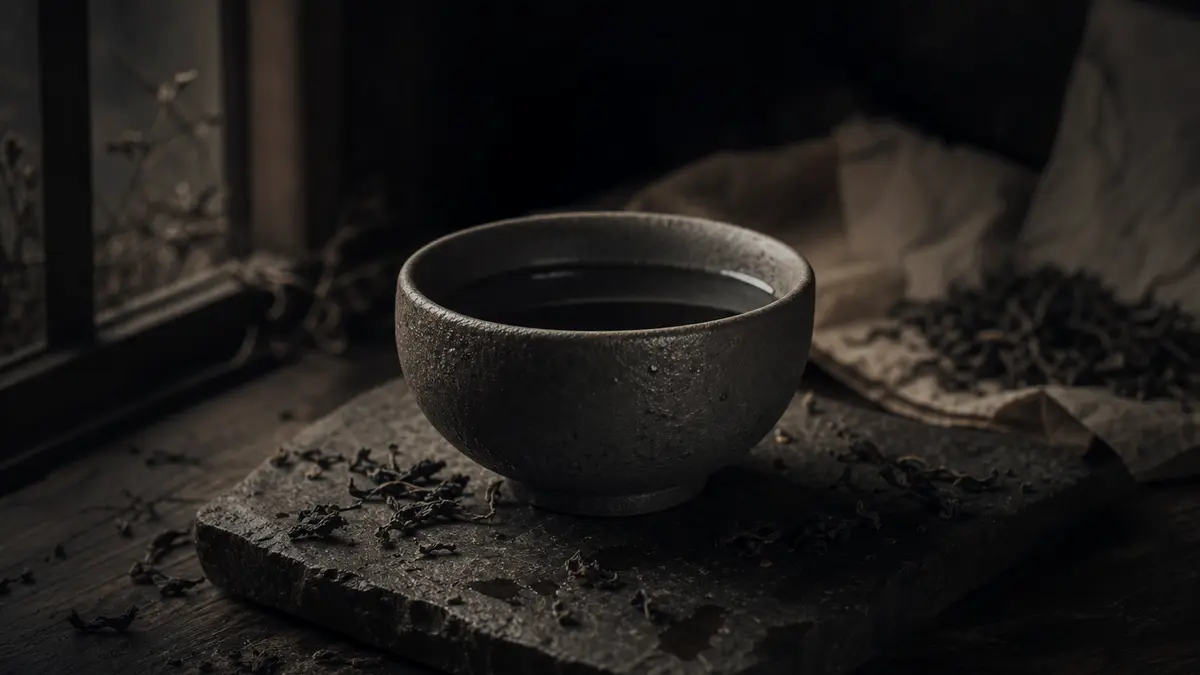
If your Korean gaewan has a semi-porous clay body — buncheong, unglazed carbon-fired, or natural clay with minimal firing — it benefits from intentional seasoning.
Initial rinse and warm-up: Before the first brew, rinse with boiling water twice. Let the vessel absorb the heat and open the pores slightly. Discard.
First sessions — build the base: Choose the tea type you intend to dedicate this vessel to. Brew it three to five times in the first week. These early sessions are more about building a base seasoning layer than about optimal tea extraction — treat them as the investment.
Maintenance: After each session, rinse with hot water only. No soap, no scrubbing. Allow to air dry completely before storing. Storing a damp porous vessel invites mold.
Avoid: Mixing tea types, especially crossing from shou pu-erh to light oolongs or green tea. The seasoning built from one tea type will not serve another well.
Over months of regular use, the interior of a well-maintained semi-porous Korean gaewan develops a faint patina. You can see it as a slight darkening of the clay. The character it adds is subtle — a slight rounding of sharpness, a faint sense of depth — but it is part of what makes this category of vessel interesting.
A Note on Korean Tea Ceremony and the Gaewan Form
Korean tea culture (다례, darye) has historically centered on different vessel forms — the wide-mouth bowl used in bowl tea practice, the teapot-forward dado (茶道) style. The gaewan is not indigenous to Korean ceremony the way it is to Chinese gongfu brewing practice.
What Korean potters are doing with the gaewan is a deliberate synthesis: taking the most practical brewing form from Chinese tradition and remaking it in Korean materials and aesthetics. The result is not a traditional Korean object but it is a genuinely Korean one — the difference between something made in Korea and something made through Korean ceramic sensibility.
For practitioners who work across both Chinese and Korean traditions, the Korean gaewan sits at an interesting junction: a functional gongfu tool that carries the weight and texture of Korean craft. That dual citizenship is precisely its value.
Building a Two-Gaiwan Practice
The most practical conclusion from all of this is that the Korean gaewan and the Chinese gaiwan are not in competition — they serve different purposes, and a shelf with both is more useful than a shelf with only one.
Keep a thin-walled Chinese porcelain gaiwan in the 80–100ml range for tasting new teas, running comparisons, and any session where you want maximum clarity. Keep a Korean gaewan — ideally a semi-porous piece you have been seasoning — for the teas you know well and want to sit with. The Korean vessel becomes the vessel for depth; the Chinese vessel remains the vessel for clarity.
Two tools. Two registers. Neither replaces the other.