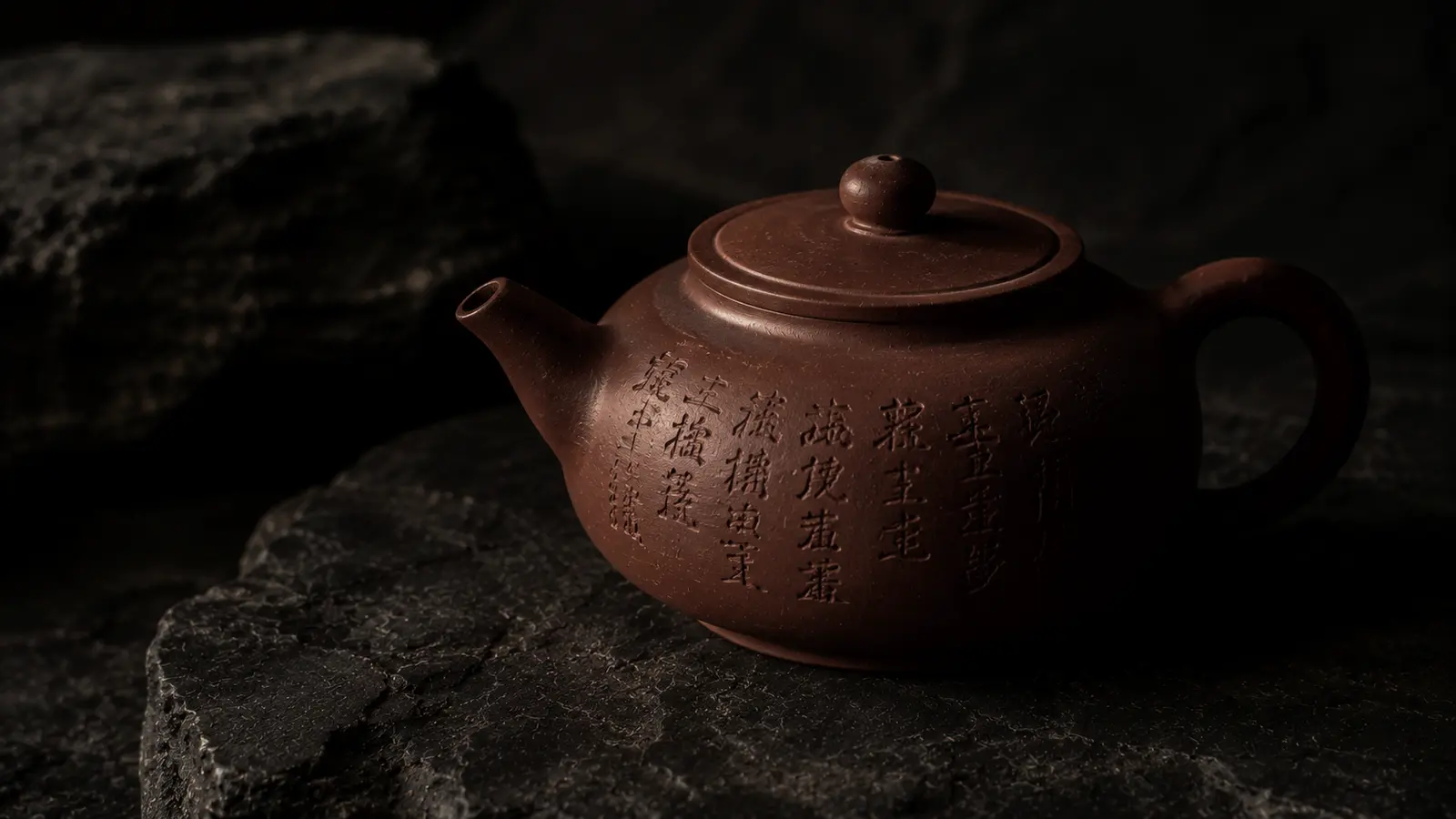
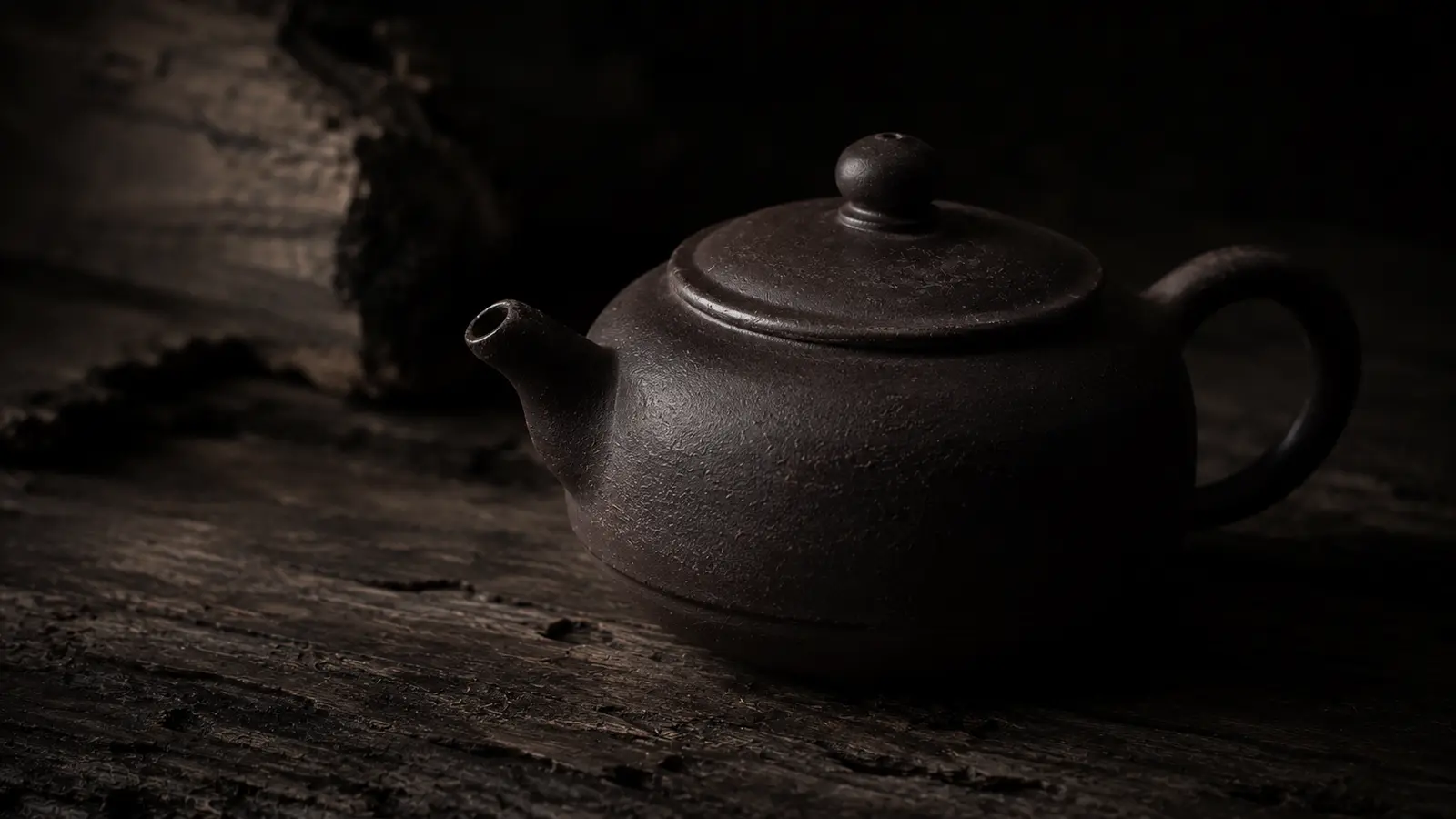
A Yixing (宜兴) teapot is the most celebrated clay vessel in the tea world. Made from zisha (紫砂, purple sand) clay mined from a single hill in Jiangsu province, these pots have been the preferred brewing vessel of serious Chinese tea practitioners for at least five centuries. They are also one of the most counterfeited objects in the tea market.
This guide covers what you actually need to know before spending money: the three primary clay types, how to identify authentic pots from chemical-treated fakes, how to choose a shape and size for your brewing style, how to season a pot correctly, and what you should expect to pay at each tier of the market.
What Makes Yixing Clay Different
Zisha clay is unglazed stoneware with a double-pore structure — micropores open when the pot heats and close as it cools. This is not marketing language. The porosity means the clay absorbs tea oils and aromatic compounds from every brew. Over hundreds of sessions, the pot builds a seasoned patina that, demonstrably, influences flavor.
The analogy I keep returning to is wine: a sommelier using the right glass shape for a specific varietal isn’t being precious, they’re optimizing a sensory experience. Dedicating a Yixing pot to one tea type operates on the same logic. The vessel becomes a long-term collaborator in the cup.
Beyond the chemistry, zisha clay retains heat extremely well, has a natural mineral astringency that can smooth rough edges in certain teas, and its thermal mass allows a skilled brewer to modulate temperature by controlling how long the pot sits open between infusions.
None of this matters if the pot is made from processed or chemically treated clay. Which brings us to the problem most guides skip past.
The Authenticity Problem
The fakes are everywhere, and some are convincing at first glance.
The Yixing fake market operates at several levels. At the low end, you have mass-produced factory pots made from inferior clay blends — these are functional teaware but not true zisha. At the more alarming level, there are pots made from regular clay that has been chemically dyed to mimic the color of genuine Zi Ni or Zhu Ni. Some contain metal oxides added specifically to produce artificial surface patina quickly — compounds you do not want leaching into your tea over years of use.
Red Flags to Check Before You Buy
Smell test first. Pour boiling water into the pot. Wait 30 seconds. Smell the steam rising from the spout and lid. Authentic zisha smells earthy and mineral — slightly like wet stone or clean soil. Any chemical smell, plastic odor, paint-like sharpness, or artificial fragrance is a disqualifying signal. This is the single most reliable test you can perform.
Examine the texture. Authentic zisha clay has a naturally grainy, slightly uneven texture when you look closely — you can sometimes see individual mineral particles catching light at different angles. Chemically processed or press-molded fakes tend to look too uniform, too smooth, or have a plastic sheen. Handmade pots also show subtle surface irregularities from the potting process; perfect machine uniformity on a pot claimed to be handmade is a contradiction.
Price as signal. I’ll be direct: if a pot claiming to be authentic handmade Yixing costs under $40–50, it is not what it claims to be. Genuine entry-level handmade zisha starts at $50–80 minimum, and that’s for simple shapes from unknown makers. Anyone selling “authentic handmade Yixing” for $15 on a marketplace platform is selling you clay with better marketing.
Source matters. Reputable Western vendors who specialize in Chinese teaware — and who stake their reputation on it — are a safer starting point than general marketplace listings. A vendor who can name the maker, describe the clay source, and answer questions about the pot’s construction is showing their work.
The Three Primary Yixing Clay Types
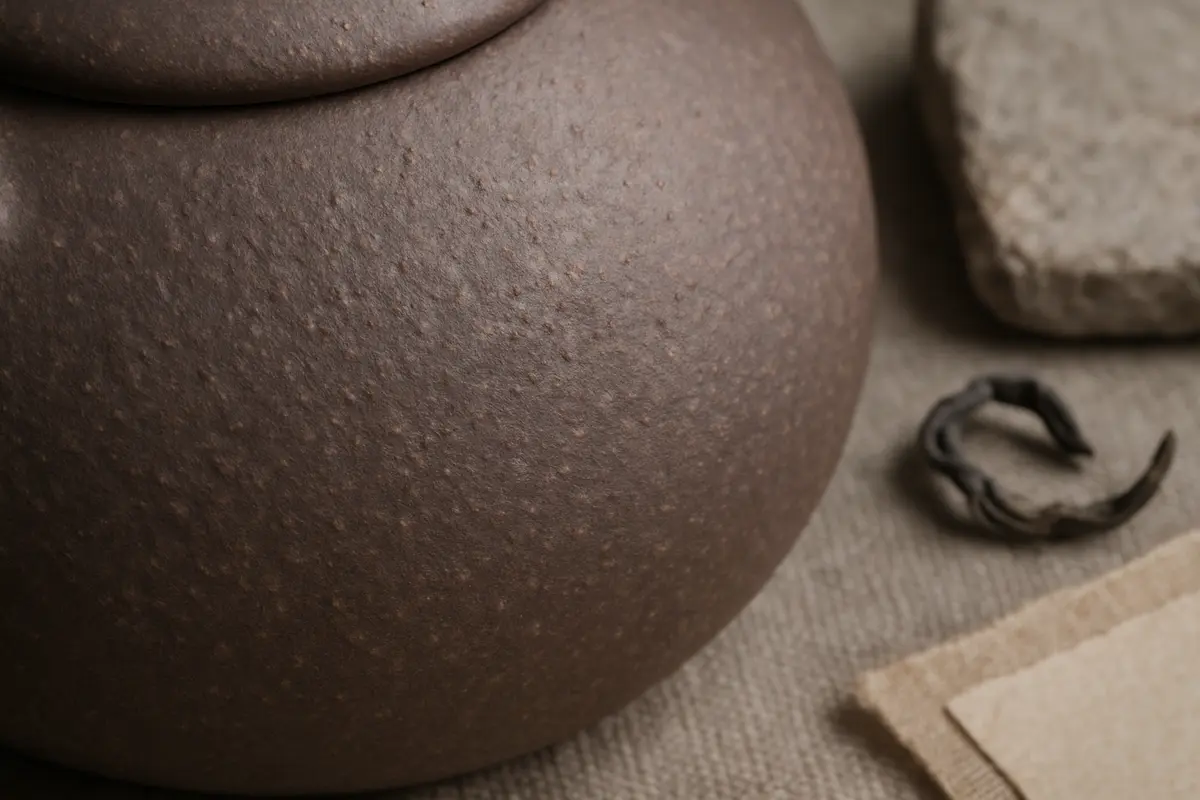
Zi Ni (紫泥) — Purple Clay
The most common zisha clay and the one most beginners encounter first. Zi Ni fires to a rich brownish-purple and sits in the middle range for porosity and density. It’s versatile: capable of handling oolong, pu-erh, black tea, and aged teas without strongly favoring one over another.
If you’re buying your first Yixing pot and plan to use it for aged sheng pu-erh or a roasted Wuyi oolong, Zi Ni is the practical choice. It’s forgiving, widely available in authentic form, and has the broadest range of artisan expression in the market.
Zhu Ni (朱泥) — Cinnabar Clay
Zhu Ni is genuinely rare. It fires to a vivid orange-red and shrinks more during firing than other zisha clays — up to 25–30% — which means pots require precise craftsmanship and more of them crack in the kiln. The result is a dense, high-fired clay with very low porosity and exceptional thermal retention.
Zhu Ni is the traditional clay for small Chaozhou-style pots used with Tie Guan Yin (铁观音) and other Fujian oolongs. The density means less tea oil absorption compared to Zi Ni, which makes the flavors in the cup cleaner and brighter rather than integrated and rounded. For delicate, fragrant greener oolongs, this is a genuine advantage.
Because authentic Zhu Ni is scarce, it’s heavily faked. Red-orange pots claiming to be Zhu Ni but priced under $100 are almost certainly dyed Zi Ni or mixed clay. The texture of real Zhu Ni is extremely fine and almost silky despite being unglazed.
Duan Ni (段泥) — Yellow Clay
Duan Ni fires to a range of buff, yellow, and light brown tones depending on the specific deposit and firing temperature. It’s the most neutral of the three primary types — lower in iron content than Zi Ni, less dense than Zhu Ni, with a slightly more open pore structure.
Some practitioners prefer Duan Ni for aged white teas, lightly roasted oolongs, and certain pu-erh where they want the clay to amplify rather than integrate flavors. The lighter color also has a practical appeal: you can watch how the patina develops over time and see the tea’s influence on the clay directly.
A note on clay variants: the Yixing taxonomy goes deeper than these three — Hong Ni (红泥), Qing Shui Ni (清水泥), and various blended or regionally distinct clays all exist. For a first or second pot, focusing on these three primaries is sufficient.
Choosing a Shape for Your Tea
Shape is not merely aesthetic. It affects how the leaves move in the water, how heat dissipates during steeping, and how much steam escapes during brewing.
Wide, Flat Pots
Shapes like the shi piao (石瓢) — a flat, trapezoidal form — or the bian deng (扁灯) excel with tightly rolled ball oolongs like Tie Guan Yin and Oriental Beauty. The wide, shallow chamber gives the compressed leaves room to unfurl fully without jamming against the walls. Restricted expansion leads to uneven extraction, which produces astringency in the early steeps and flat flavor in later ones.
Tall, Vertical Pots
Taller forms with narrower chambers work well with twisted or strip-style leaves: Wuyi rock oolongs (岩茶, yan cha), Phoenix Dan Cong (凤凰单丛), and many black teas. The vertical orientation keeps the leaves moving vertically through the water column and concentrates the aromatic steam before it escapes through the spout.
Round, Classic Forms
Shapes like the si fang (四方, square) and hong ni round pots split the difference and handle most teas adequately. For pu-erh, a medium-round shape with good volume retention is typical — aged leaves tend to be large and compressed, needing adequate space without the extreme flatness of a shi piao.
Practical Sizing
- Solo gongfu brewing: 80–120ml
- Two people: 120–180ml
- Three or more people: 150–250ml
Stay below 200ml unless you’re regularly brewing for a group. The gongfu approach depends on short infusion times and high leaf-to-water ratios; large pot volumes work against both.
One Pot, One Tea
The cardinal rule of Yixing use is also the most counterintuitive one to newcomers: dedicate each pot to a single tea type and never switch.
This is not ceremony for ceremony’s sake. Zisha clay is porous. It absorbs aromatic compounds, tea oils, and trace mineral content from every brew. Over 50, 100, 200 sessions, the clay becomes impregnated with the character of that specific tea. Introduce a different tea — especially one from a different oxidation level — and you’re mixing those absorbed compounds in unpredictable ways. The result is muddy, off-flavor tea.
Think of it this way: a Burgundy glass shaped to amplify Pinot Noir’s aromatics performs perfectly for that purpose. Put Islay Scotch in it and you’ve gained nothing and potentially muddied both experiences. The Yixing pot, over time, becomes optimized for its tea. Protecting that optimization is why experienced practitioners might own separate pots for roasted oolong, sheng pu-erh, shou pu-erh, and aged white tea.
How to Season a New Yixing Teapot
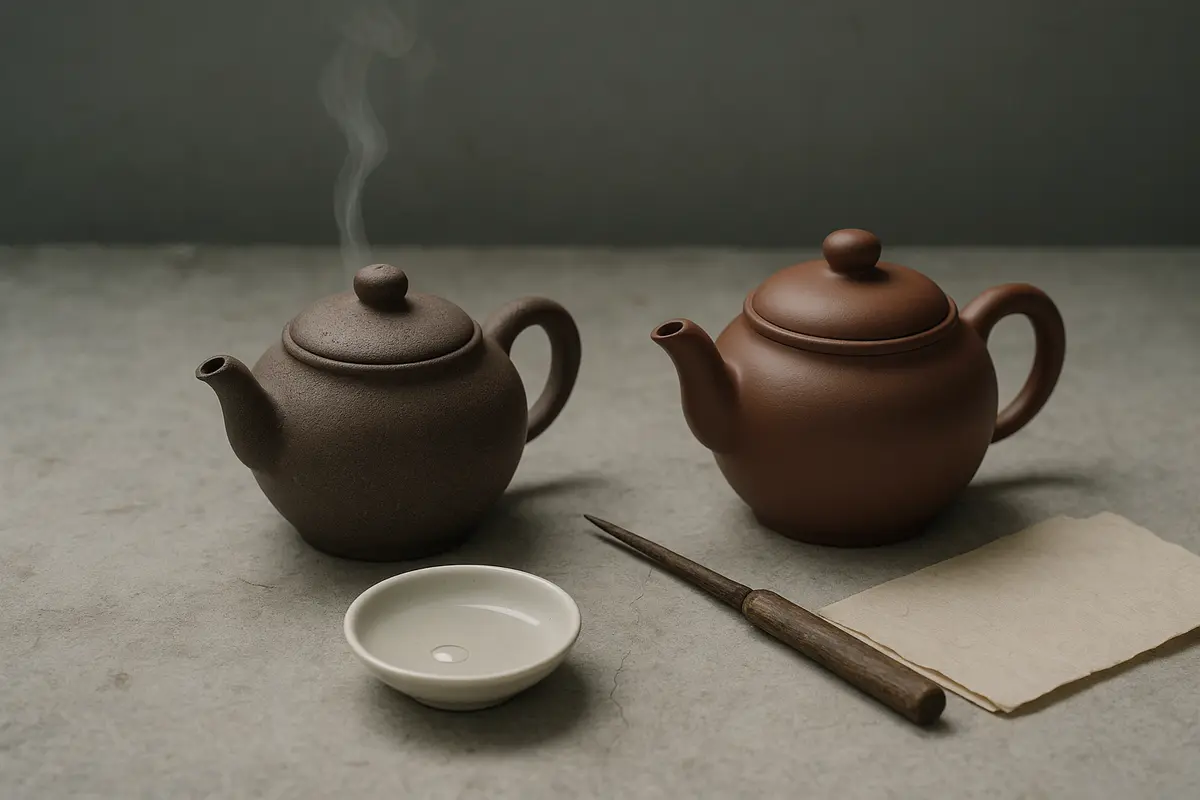
Seasoning (开壶, kāi hú, literally “opening the pot”) is the process of preparing a new Yixing pot for use and beginning the patina-building process.
Step 1: Initial rinse. Rinse the pot inside and out with boiling water. Discard. Do this twice to remove any production residue, dust, or kiln particles.
Step 2: Optional boiling. Some practitioners submerge the pot in a pot of clean, gently simmering water for 20–30 minutes, sometimes with used tea leaves of the intended type added to the water. This opens the pores slightly and pre-seasons the clay with a neutral tea character. I consider this optional but useful for new pots.
Step 3: First brew sessions. Brew your chosen tea type in the pot. In the first 20–30 sessions, also pour spent tea liquid over the exterior of the pot after each session. The outside surfaces season as readily as the interior, and an evenly seasoned pot develops patina more beautifully.
Step 4: Dry between sessions. After each session, rinse with plain hot water (no soap, ever — soap will destroy the seasoned surface and can’t be fully removed from the pores), leave the lid off, and let the pot air dry completely. A pot left sealed and damp will develop mold.
The patina begins to show after 30–50 sessions. After 100+ sessions, a well-used pot will develop a natural sheen (called 养壶, yǎng hú, or “nourishing the pot”) that distinguishes it from any new vessel.
Yixing Price Guide
| Tier | Price Range | What You’re Getting |
|---|---|---|
| Factory / machine-pressed | $20–40 | Functional clay teaware, not authentic handmade zisha, not collectible |
| Entry-level handmade | $50–150 | Authentic zisha, simple shapes, lesser-known makers; good daily pot |
| Established artisan | $200–800 | Named makers, documented clay source, refined craftsmanship |
| Master potter | $1,000–$10,000+ | Collectible, investment-grade, often exhibition pieces |
A few notes on this table:
Factory pots in the $20–40 range are not without utility. If you want to learn gongfu brewing technique before committing money to authentic zisha, a factory pot won’t harm you and will teach you the mechanics. Just don’t expect it to season meaningfully or contribute to the cup the way authentic clay does.
The $50–150 entry tier is where I’d direct most beginners who’ve decided they want a real pot. At this price, you’re buying from a smaller workshop or an apprentice-level maker — the clay is genuine, the pot functional, and the risk is acceptable for a first purchase.
The $200–800 range is where you start engaging with Yixing as a craft object with a traceable maker. At this tier, a vendor should be able to tell you the maker’s name, their workshop location, and ideally the specific clay batch.
Master potter pots are their own market, closer to ceramics collecting than teaware shopping. Pots by National Intangible Cultural Heritage masters (国家级非物质文化遗产传承人) regularly sell at auction for prices that bear no relationship to their functional value.
Caring for Your Yixing Teapot Long-Term
- Never use soap. Rinse with hot water only.
- Store with the lid off to prevent mustiness.
- Handle the lid carefully. Yixing lids are fitted individually to each pot; a cracked or chipped lid from another pot won’t seal correctly.
- Don’t put it in the dishwasher. Thermal shock and detergent will ruin it.
- Polish periodically with a soft cloth while the pot is warm and slightly damp from use — this is part of yǎng hú practice and encourages even patina development.
Do You Actually Need a Yixing Teapot?
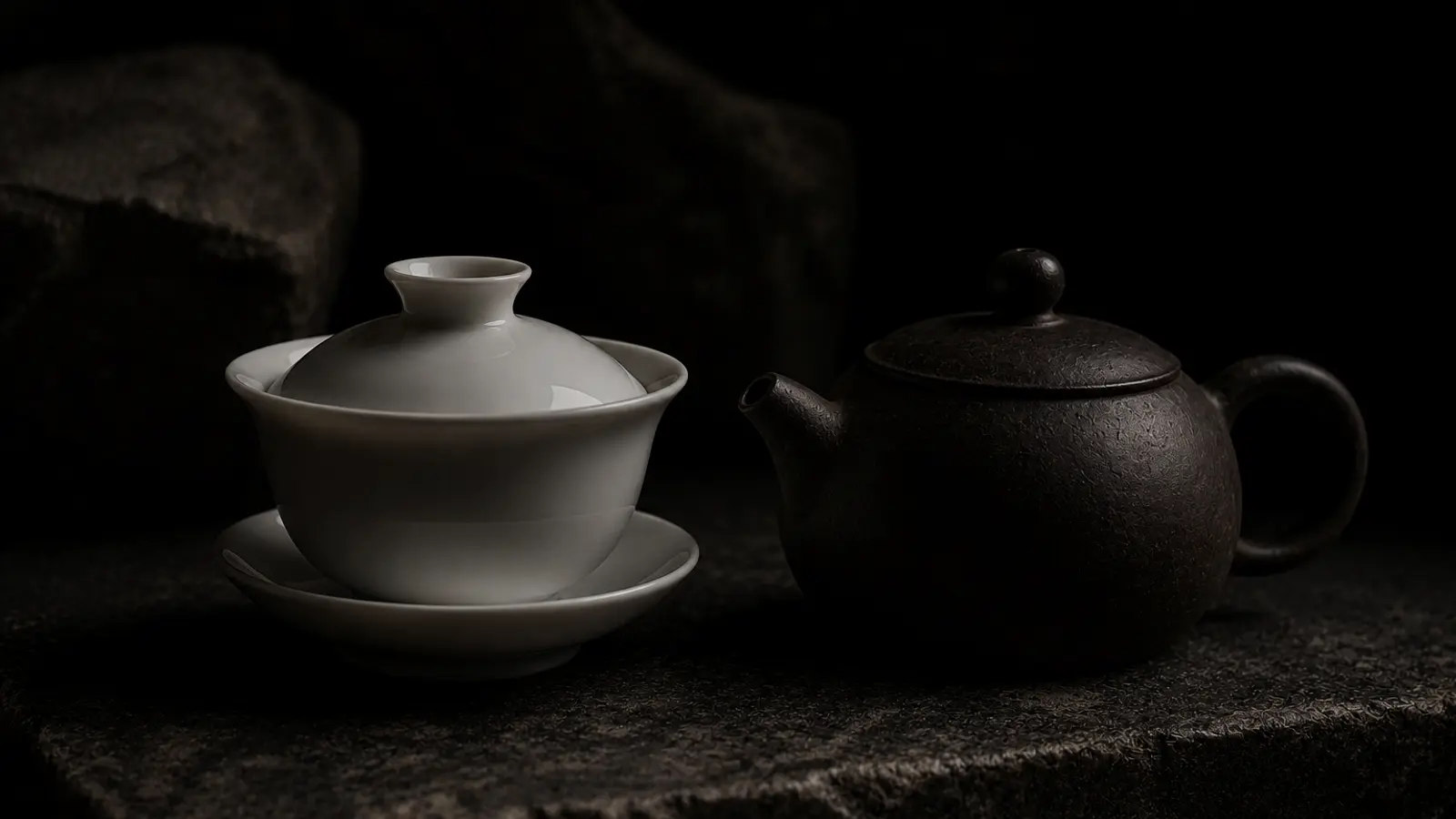
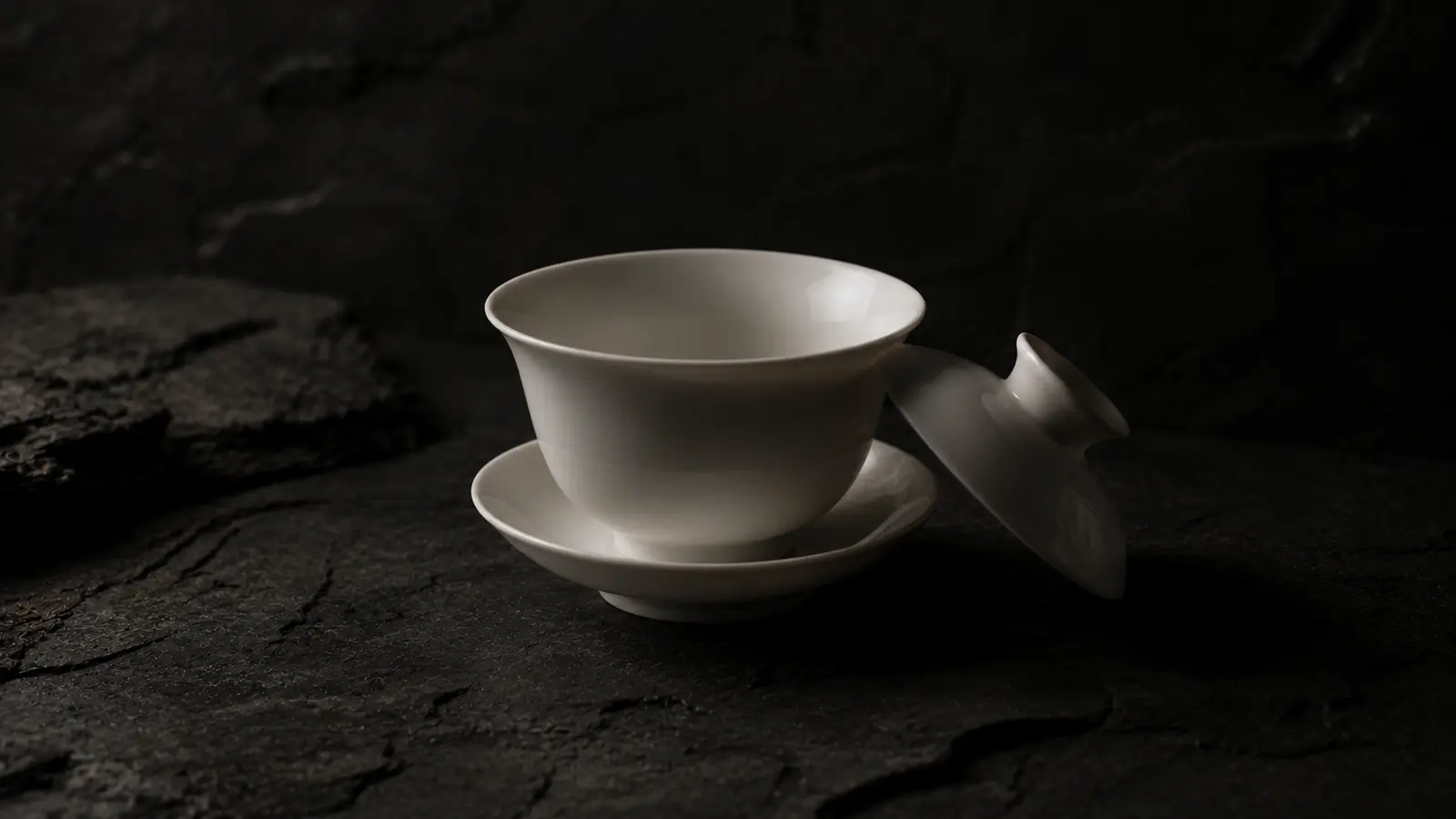
This is the honest question. A gaiwan (蓋碗) costs $10–30, is made of glazed porcelain or glass (so it absorbs nothing and stays neutral), can brew any tea type in rotation, and is easier to clean. Many serious practitioners use gaiwans exclusively and produce extraordinary results.
A Yixing pot makes sense when: you’re committed to gongfu brewing as a long-term practice, you’re working with one tea type consistently, and you find value in the relationship between vessel and tea that develops over hundreds of sessions.
It doesn’t make sense when: you brew many different teas, you want flexibility, you’re just starting out, or you’re buying primarily for aesthetics without intent to use the pot regularly.
The pot is a tool. The best tool is the one you’ll actually use.