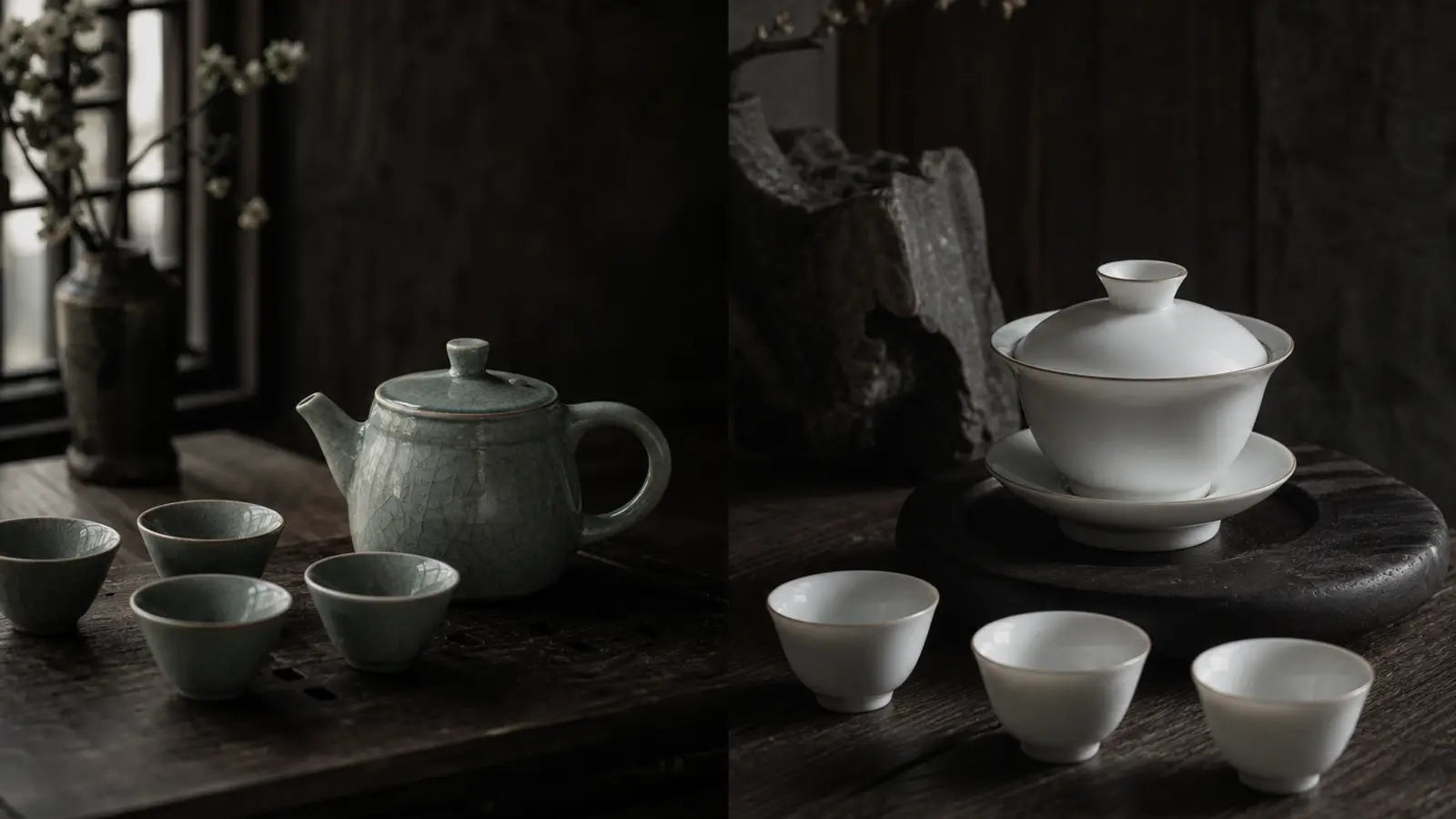
Korean vs Chinese teaware is one of the more instructive comparisons in the tea world — not because one tradition is superior, but because they embody genuinely different answers to the same question: what should a tea vessel be and do?
I use pieces from both traditions regularly. White porcelain gaiwans (蓋碗) for comparative tasting sessions where I want the tea to speak without interference. Korean dawan (다완) or gaewan (개완) for evening shou puerh (보이차) sessions where the vessel is part of the ritual, not just a tool. Understanding why I reach for each one requires understanding what separates these two traditions across five dimensions: material, philosophy, function, aesthetics, and price.
This comparison covers Korean 청자 (celadon), 분청 (buncheong), and 백자 (baekja white porcelain) alongside Chinese vitrified porcelain, Yixing zisha (宜興紫砂), and Jianshui (建水) purple clay. These aren’t exhaustive lists of either tradition — both countries produce extraordinary breadth — but they represent the pieces most relevant to daily tea practice.
What Is the Difference Between Korean and Chinese Teaware?
Korean teaware emphasizes natural imperfection — asymmetric forms, visible clay texture, and a wabi-sabi aesthetic rooted in Joseon-era philosophy. Chinese teaware prioritizes precision and function — symmetrical forms, refined clay bodies like Yixing zisha, and performance-driven design shaped by centuries of gongfu practice. Different cultures, different values in the cup.
At a Glance:
| Dimension | Korean Teaware | Chinese Teaware |
|---|---|---|
| Material | Semi-porous stoneware; mild seasoning over time | Vitrified porcelain (neutral) or porous clay (Yixing/Jianshui) |
| Philosophy | 소박함 — understated simplicity, acceptance of imperfection | 功夫 — refined mastery, pursuit of technical precision |
| Function | Gaewan: slower heat drop; 다완: tactile drinking experience | Gaiwan: thermal neutrality, analytical clarity; Yixing: flavor development |
| Aesthetics | Natural variation, matte textures, expressive imperfection | Controlled surfaces — uniform porcelain or precise clay forms |
| Price | $15–$600+ (명장 work competitive with Chinese masters) | $10–$1,400+ USD (Jingdezhen accessible; Yixing artist work fraud-prone) |
Material: What the Clay Actually Does
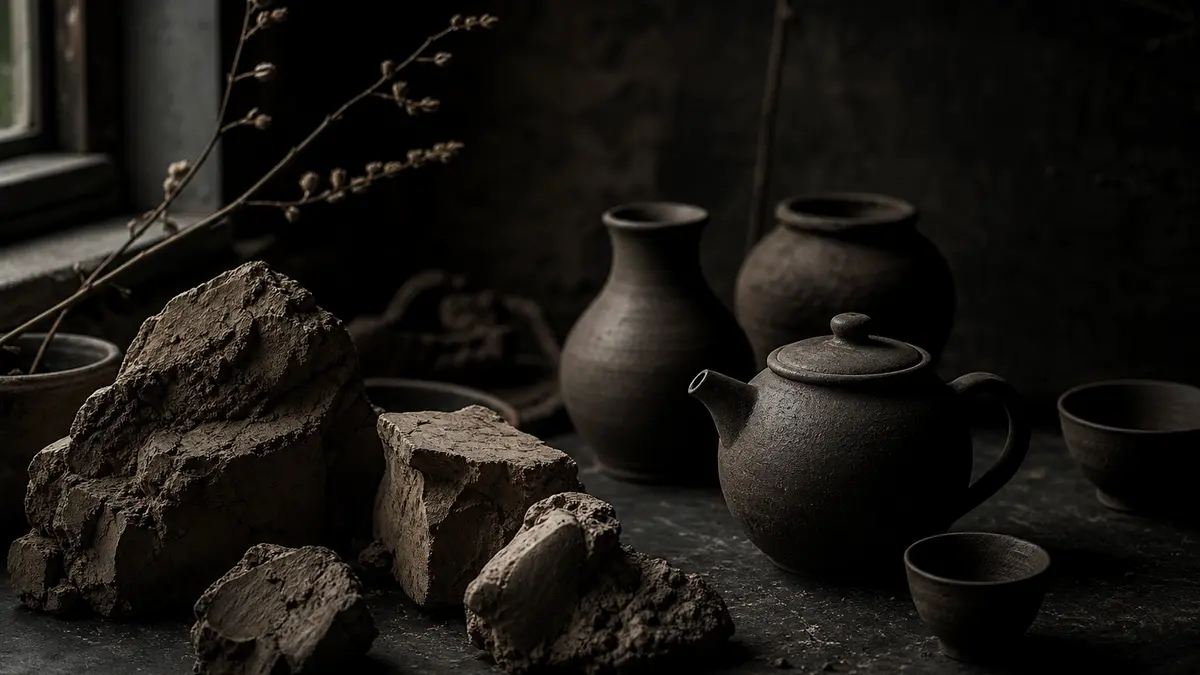
The deepest technical difference between Korean and Chinese teaware is in the clay body itself.
Korean Ceramic Bodies
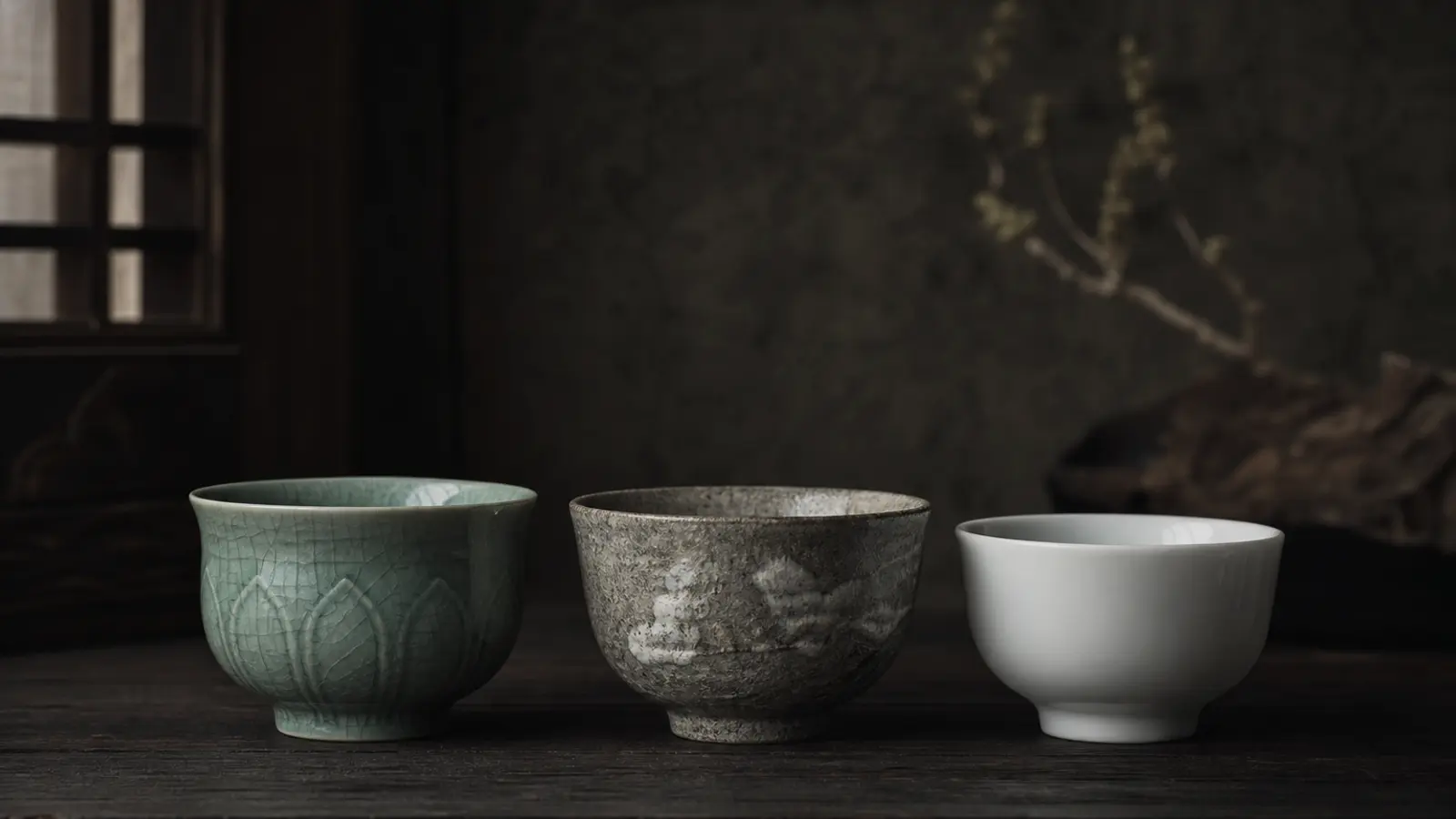
Korean ceramics traditionally use semi-porous stoneware bodies fired at high temperatures but not fully vitrified. Celadon (청자, cheongjа) is fired around 1250–1280°C, producing a dense, stone-like body that retains some microporosity. Buncheong (분청사기) uses a similar iron-rich body with slip decoration. Joseon-era baekja (백자) white porcelain approaches Chinese porcelain in vitrification but typically retains a warmer, slightly less glassy surface.
This semi-porosity matters for brewing. A Korean gaewan or 다완 will absorb trace oils and compounds over many sessions, subtly seasoning over time. The effect is more modest than Yixing clay — we’re not talking about a vessel that transforms the tea — but over years of use, well-loved Korean stoneware develops character.
Chinese Ceramic Bodies
Chinese teaware divides clearly into two camps. Jingdezhen (景德鎮) porcelain and its descendants are fully vitrified — zero porosity, glass-like body, no absorption whatsoever. This is a deliberate choice: the porcelain gaiwan as an instrument of neutrality.
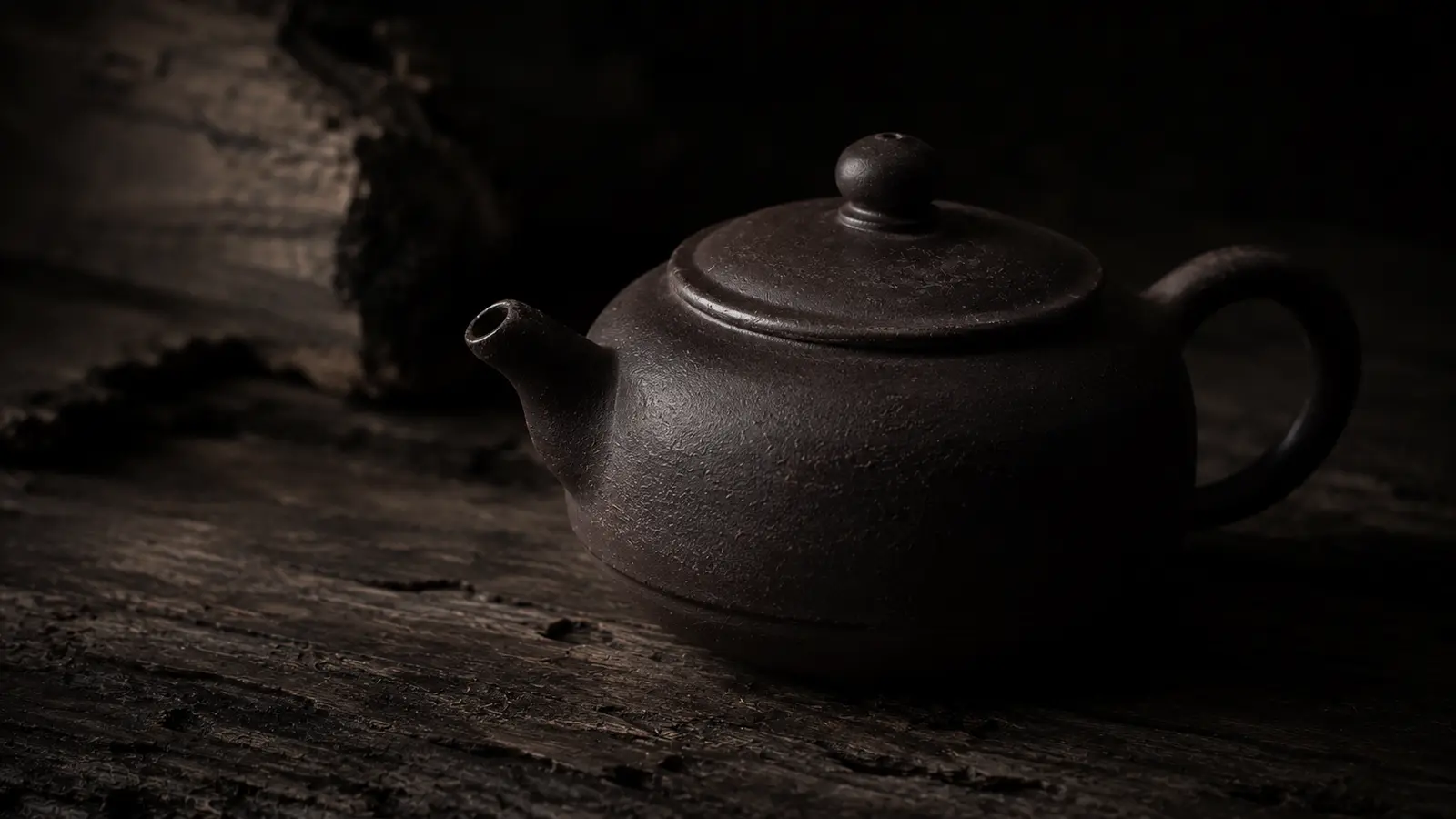
On the opposite end, Yixing zisha (宜興紫砂) and Jianshui (建水) purple clay are deliberately porous, fired lower (roughly 1100–1200°C for Yixing), with the explicit goal of seasoning. A dedicated Yixing pot absorbs tea compounds session by session, building a patina inside and out. The clay composition — rich in iron, quartz, and mica — is also thought to interact beneficially with certain teas, particularly aged sheng puerh and Wuyi yancha (武夷岩茶).
The Chinese tradition has, in essence, two distinct philosophies about clay within the same tradition: the porcelain school that removes the vessel from the equation entirely, and the clay school that makes the vessel an active participant.
Philosophy: Restraint vs Mastery
This is where Korean vs Chinese teaware diverges most profoundly — and where surface descriptions like “Korean is rustic, Chinese is refined” break down into something more interesting.
Sobakham (소박함): Korean Ceramic Philosophy
Korean ceramics express 소박함 (sobaham) — a concept translating roughly as understated simplicity, or the beauty found in restraint and acceptance of imperfection. This isn’t accidental imperfection or naïve craft. It’s a cultivated aesthetic stance, most fully articulated in the 다례 (darye) tea ceremony tradition.
A 명장 (myeongjang) — a Korean master craftsperson designated by the government — may spend decades developing the skill to produce a piece that looks effortlessly simple. The asymmetry in a celadon bowl is intentional; so is the finger-mark ghost in the clay, the slight wavering of the glaze line. The bowl exists in dialogue with natural process, not opposition to it.
This philosophy has deep roots in the Confucian-inflected aesthetic of the Joseon dynasty and was powerfully influential on Japanese wabi aesthetics — many of the tea bowls most revered in Japanese chado (茶道) were Korean-made pieces valued precisely for their unselfconscious irregularity. The most famous example, the Kizaemon Ido chawan, embodies exactly this quality.
Gongfu (功夫): Chinese Ceramic Philosophy
Chinese ceramic mastery, particularly in the Yixing tradition, expresses 功夫 (gongfu) — the pursuit of refined skill through sustained practice. A master Yixing potter like Gu Jingzhou (顧景舟) or his successors spends years perfecting the uniformity of a teapot wall, the precision of the lid fit (ideally sealed tight enough that tea flow stops when you cover the air hole), the exact curve of the spout’s pour.
The Chinese approach celebrates technical control. Consistency across pieces is a virtue. A set of Jingdezhen cups matched in color, thickness, and weight represents mastery — not the Korean ideal, where variation between individual pieces in a set is accepted or even preferred.
Neither philosophy is more sophisticated than the other. They’re different answers to the question of what craft is for.
Function: What Each Vessel Does in Practice
Korean Gaewan and Dawan
The Korean gaewan (개완) functions similarly to a Chinese gaiwan — a lidded bowl used for brewing — but with meaningful physical differences. Korean stoneware walls are typically thicker, 4–6mm versus 2–3mm for a quality Chinese porcelain gaiwan. This changes the thermal dynamics.
Thicker walls mean slower heat release to the environment and more thermal mass. Water poured at 95°C (203°F) drops temperature more slowly in a Korean gaewan, which can be an advantage for teas that benefit from sustained heat — aged sheng, roasted oolongs, shou puerh. For greens and light oolongs that need a steep temperature drop between pours, the thicker Korean vessel is slightly less forgiving.
Korean Dawan (다완, tea bowls) aren’t lidded brewing vessels — they’re drinking bowls, often used for matcha (말차, malcha in Korean) or single-steep teas. A 다완 in the hands is the defining sensory experience: the clay texture against the palm, the weight, the slight thermal gradient as heat moves through the wall. This tactile dimension is deliberate and central to Korean tea culture.
Chinese Gaiwan and Yixing
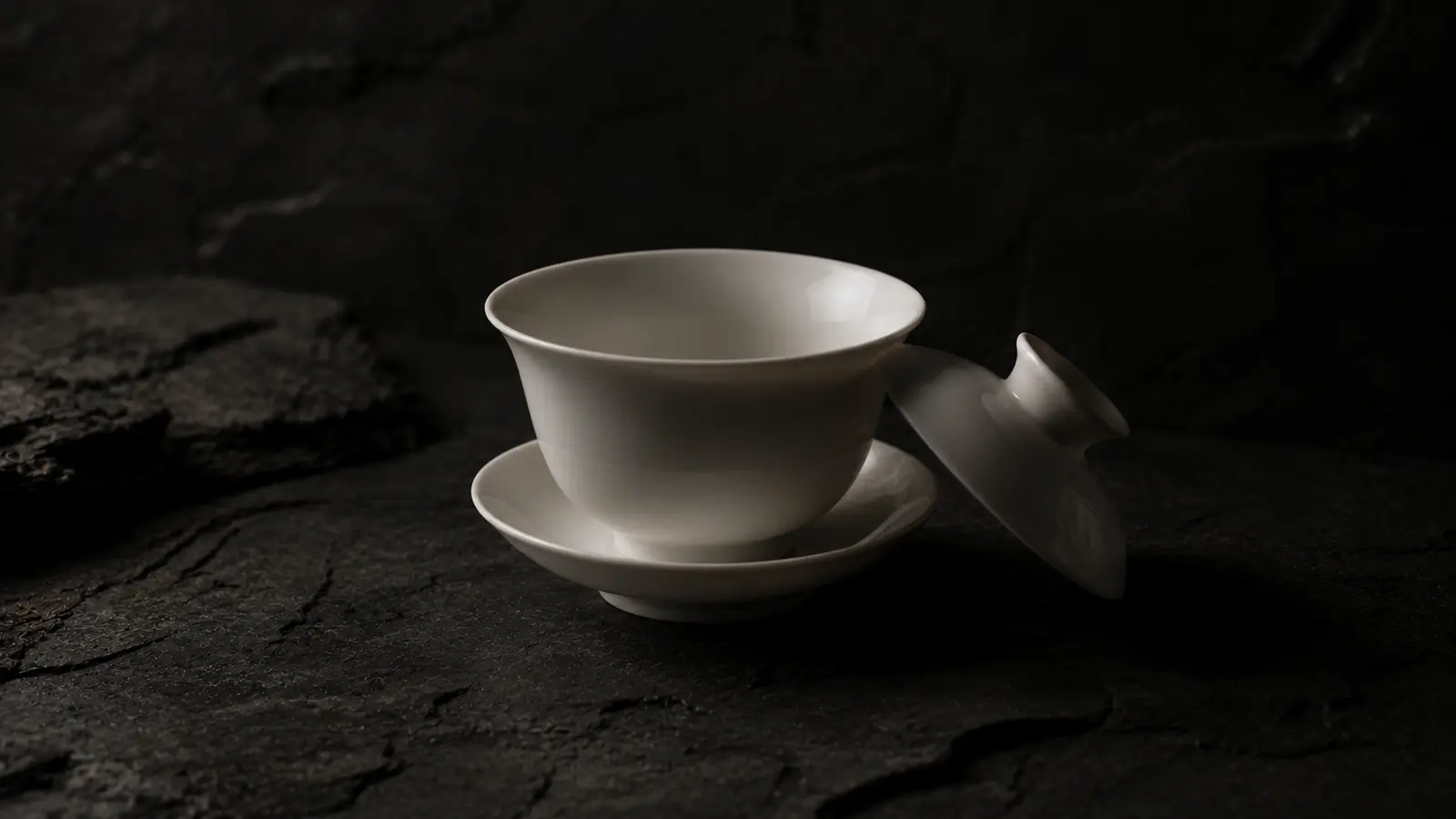
The Chinese white porcelain gaiwan (蓋碗) is, for my purposes, the closest thing to a neutral analytical instrument the tea world offers. Zero absorption, smooth surface for easy cleaning, thin walls that flash-cool quickly between pours. When I’m evaluating a new tea — trying to understand what it is, how it performs — I default to a 100ml white porcelain gaiwan every time.
The gaiwan’s thin walls also make it honest: it burns your fingers if your water is too hot, or if you’re pouring too slowly. There’s physical feedback built into the tool.
Yixing teapots are function-optimized for specific tea families. The classic pairing with Wuyi yancha or aged sheng puerh is well-documented, and the reasoning is sound: the clay’s porosity and mineral composition interact with heavily oxidized or aged teas in ways that round rough edges and develop complexity over many sessions. A well-seasoned Yixing pot used exclusively for one tea type over ten years is a genuinely different brewing environment than a neutral porcelain gaiwan.
The functional trade-off is commitment: a Yixing pot becomes specialized, while a gaiwan or Korean gaewan remains general-purpose.
Aesthetics: Earth Versus Control
Korean Visual Language
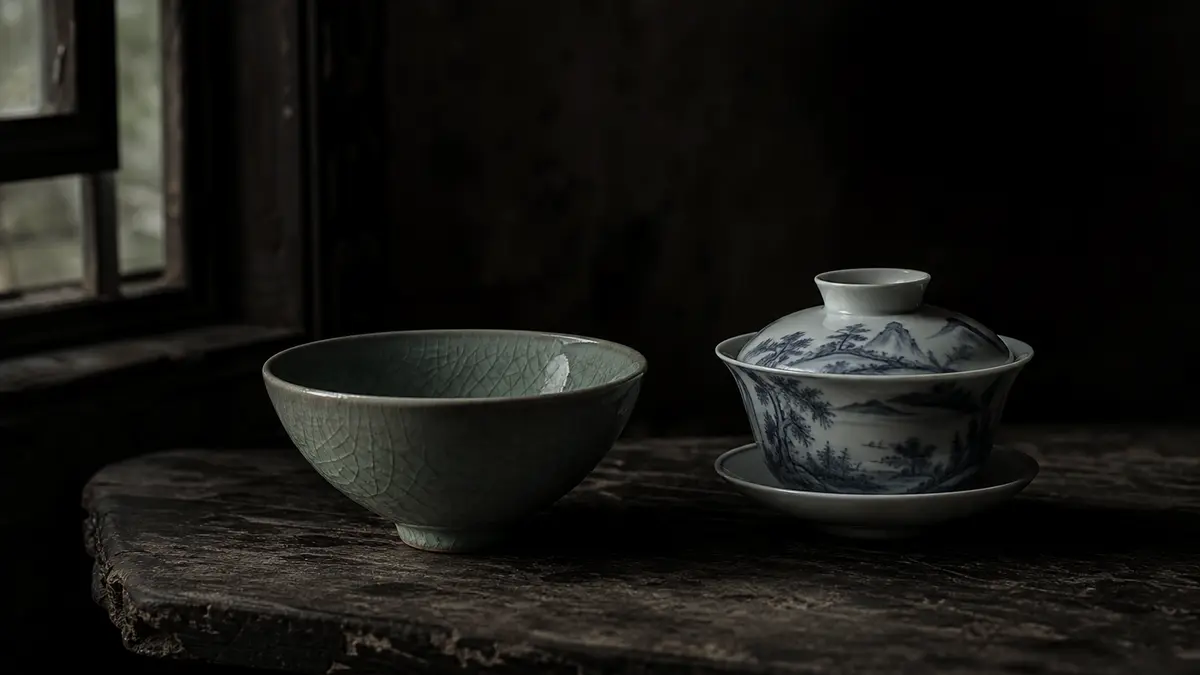
Korean ceramic aesthetics favor 비색 (bi-saek) — the jade-green of celadon that shifts character in different light, moving from grey-blue in shadow to warm green under sunlight. This color variation isn’t a defect; it’s the point. The same bowl looks different in the morning than in candlelight. The history of this color is explored in depth in the article on why Goryeo celadon was named after jade.
Buncheong (분청) aesthetics go further: bold brushwork, abstract slip decoration, deliberate asymmetry. A buncheong bowl might have a fish painted in three strokes with confident informality. It’s decoration that doesn’t labor over itself.
Korean glazes tend toward matte to semi-matte surfaces. The texture is meant to be touched as much as seen. Celadon in particular has a quality that’s almost jade-like — an inner depth to the glaze, a slight translucency that rewards close attention.
Chinese Visual Language
Chinese porcelain prioritizes surface uniformity and precision. The ideal white porcelain is blanc-de-chine (白瓷) — pure, undecorated, consistent across every piece in a set. Where decoration appears, in the blue-and-white tradition or the famille rose palette, it’s executed with technical exactitude.
Yixing teapots have their own aesthetic vocabulary: the beauty of matte clay in natural earth tones, the geometric precision of classic forms (西施, 石瓢, 仿古 — Xishi, Shípião, Fǎnggǔ), the subtle texture of different zisha grades. A well-thrown Yixing pot has the same satisfaction as a well-turned piece of furniture joinery — everything where it belongs, nothing wasted.
If Korean ceramics ask you to be present with impermanence, Chinese porcelain and Yixing ask you to appreciate perfection. Both are legitimate aesthetic demands.
Price: What You Actually Pay
Pricing in both traditions spans enormous ranges. Here’s a realistic breakdown.
| Tier | Korean | Chinese |
|---|---|---|
| Entry artisan | $15–40 for a single gaewan or 다완 | $10–30 for a basic Jingdezhen gaiwan |
| Mid-range artisan | $40–120 for studio-made pieces | $40–150 for quality Yixing (factory/early artist) |
| Named artist | $100–300+ per piece | $200–700 for mid-tier Yixing artist pots |
| Master work (명장 / 国家级工艺美术师) | $200–600+ per piece; full sets $600–2,000 | ¥2,000–10,000+ ($280–$1,400+ USD) for recognized Yixing masters |
| Auction / historic | Varies widely | Gu Jingzhou-era pots: tens of thousands |
A few observations on these numbers.
Entry Korean artisan work is often excellent value — there’s a strong studio pottery culture in Korea producing gaewans and 다완 at $30–60 that would cost two to three times as much from a comparable Chinese studio. The Korean domestic market for hand-thrown ceramics is deep and supports working potters at accessible price points.
Chinese Yixing is heavily stratified by artist credentials. A pot stamped with an artist’s seal but without documentation is worth much less than one with a clear provenance chain. The market also has significant issues with fakes at every price point — a genuine Gu Jingzhou pot is extremely rare, and anything claiming that provenance cheaply is almost certainly not what it claims to be.
Korean 명장 (myeongjang) designation is a government-recognized master craftsperson status. Pieces from designated myeongjang carry a cultural authenticity guarantee that has no direct Chinese equivalent in the Yixing market, where credentials are murkier.
The Five-Dimension Comparison
| Dimension | Korean Teaware | Chinese Teaware |
|---|---|---|
| Material | Semi-porous stoneware; mild seasoning over time | Fully vitrified porcelain (neutral) or deliberately porous clay (Yixing/Jianshui) |
| Philosophy | 소박함 — understated simplicity, acceptance of imperfection | 功夫 — refined mastery, pursuit of technical precision |
| Function | Gaewan: thicker walls, slower heat drop; 다완: tactile drinking experience | Gaiwan: thermal neutrality, analytical clarity; Yixing: flavor development through seasoning |
| Aesthetics | Natural variation, 비색 jade-green shifts, matte textures, expressive imperfection | Controlled surfaces — uniform porcelain or precise clay forms; consistent color across sets |
| Price | $15–600+ (명장 work competitive with Chinese masters) | $10–$1,400+ USD (Jingdezhen accessible; Yixing artist work expensive and fraud-prone) |
Which Tradition Belongs in Your Practice?
The honest answer: both, if you’re serious about tea.
Use Chinese Porcelain When:
- You’re tasting analytically — evaluating a new tea, comparing two productions, or building sensory memory
- You’re brewing high-end greens or light taiwanese oolongs where clean flavor transmission matters most
- You want consistency across brewing sessions for accurate comparison
- You’re sharing tea with people new to gongfu brewing technique — the gaiwan’s simplicity is easy to explain
Use Korean Vessels When:
- The session is contemplative rather than analytical — an evening tea, a solo practice, a quiet ritual
- You’re brewing aged sheng puerh (陳年生普), shou puerh (熟普洱), or roasted oolongs where the vessel’s warmth and slight porosity can support rather than compete
- You want the tactile dimension to be part of the experience — the weight of a 다완, the texture of buncheong slip under your fingers
- You’re exploring the 다례 (darye) tradition or studying the Korean aesthetic contributions to East Asian tea culture
Use Yixing When:
- You’ve committed to one tea style deeply enough to dedicate a pot to it
- You have a trusted source for authenticated pieces — the fraud problem in Yixing is real
- You want to observe how a pot changes over years of dedicated use
I reach for a 120ml white porcelain gaiwan for any tea I’m tasting for the first time or writing about. When I’m not working — when tea is for the evening, not the article — I reach for a Korean Dawan (다완) more often than anything else. There’s something about holding a hand-thrown bowl, feeling the irregularity of the clay, watching the bisaek (비색) glaze shift under the lamp, that makes the act of drinking tea feel less like performance and more like presence.
That’s not a knock on Chinese ceramics. A perfectly made Yixing pot or blanc-de-chine gaiwan achieves something different but equally real: the sense that everything unnecessary has been removed, that the object has become purely itself. Both experiences are worth having.
The choice isn’t Korean vs Chinese teaware — it’s knowing which tool serves which moment.
Practical Buying Guidance
Korean Teaware
Look for pieces with clear maker identification — ideally a stamped or incised mark and some documentation of origin. Korean studio potters active in Seoul, Gyeonggi-do, and the traditional kilns of Icheon (이천) and Gwangju (광주) produce work at every price point. Gyeonggi Ceramic Creative Center and similar institutions have helped formalize quality standards.
For celadon specifically, the Gangjin (강진) region in South Jeolla Province is historically significant — Goryeo-era celadon production centered there, and contemporary potters in the area maintain related traditions.
Chinese Teaware
For porcelain gaiwans, Jingdezhen (景德鎮) production is reliable and well-documented. Entry to mid-range Jingdezhen gaiwans from reputable sellers are consistent performers at $10–50.
For Yixing, the due-diligence requirement is higher. Learn the major authentic clay types (紫泥 zǐní, 紅泥 hóngní, 綠泥 lǜní, 段泥 duàní) before buying. Understand that the mid-range market ($100–400) is where fraud is most concentrated. Either buy from specialists with clear sourcing documentation or buy at entry level from factory production where you’re not paying for artist attribution.
Jianshui (建水) purple clay from Yunnan is an underrated alternative — different mineral profile than Yixing, distinctive reddish-purple surface, and a more transparent market with less counterfeiting pressure.
The point isn’t to choose a side. Korean and Chinese teaware represent two of humanity’s most developed ceramic traditions, and they’ve been in dialogue with each other for over a thousand years — Korean celadon techniques were developed partly in exchange with Song Chinese production; Japanese wabi aesthetics that influenced Korean tea culture looped back through Zen Buddhism that had its own complex debts to Tang Chinese culture. These traditions aren’t in competition. They’re a conversation.
Your teaware collection, assembled slowly over years of practice, will probably end up reflecting both sides of it.