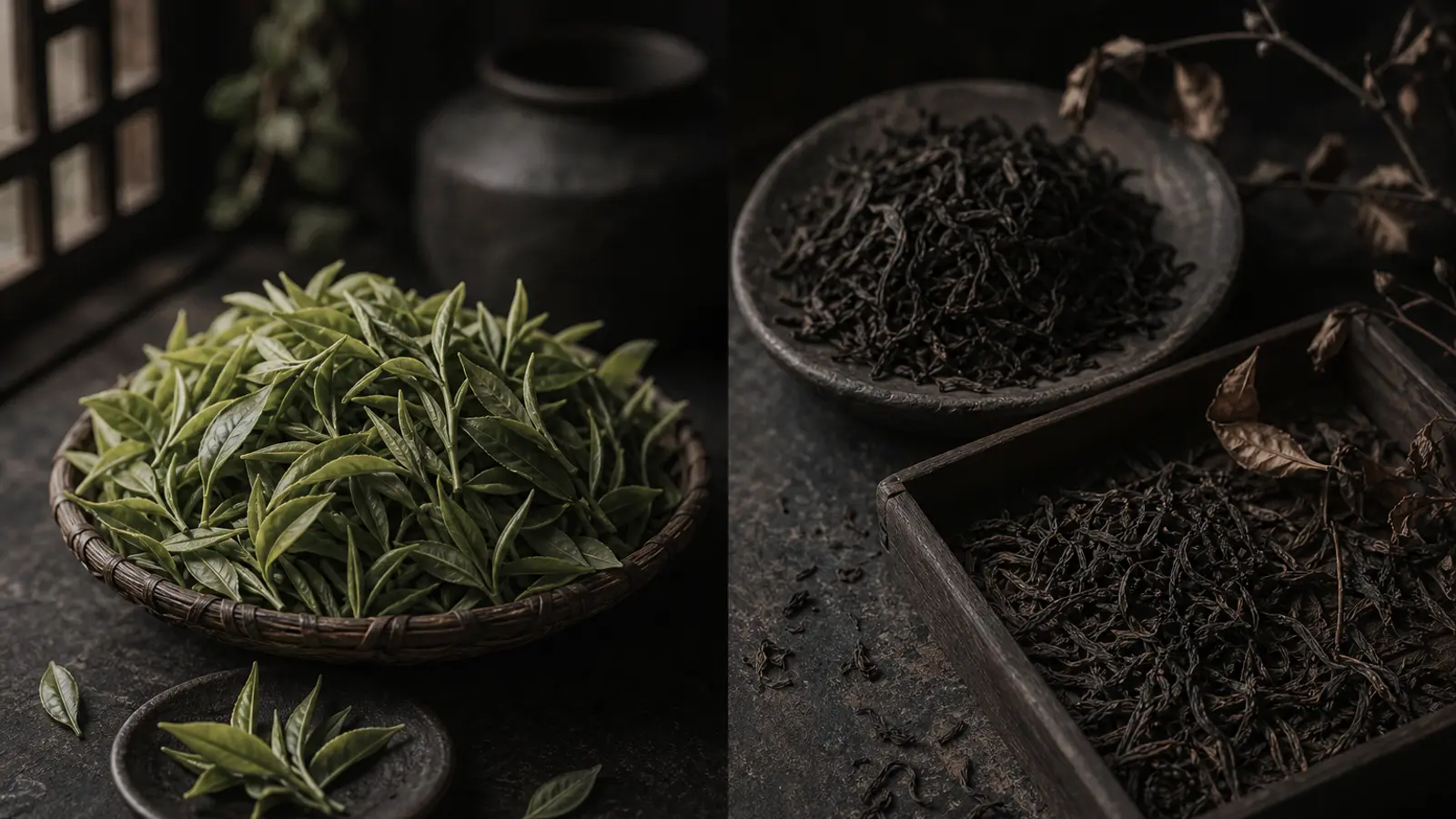
Spring tea (春茶, chūn chá) and autumn tea (秋茶, qiū chá) are the two primary harvest seasons for most East Asian teas — and the season of picking fundamentally changes what ends up in your cup. Spring brings sweetness and amino acid concentration built during months of winter dormancy. Autumn brings aromatic intensity and a smoother, more rounded body that spring’s brightness rarely achieves.
The “spring is better” narrative dominates tea markets across China, Taiwan, Japan, and Korea. It is broadly true for specific qualities. It is also incomplete. Understanding what each season actually produces — chemically and sensorially — gives you the tools to make purchasing decisions based on your own palate rather than market convention.
Spring vs Autumn Tea: At a Glance
| Characteristic | Spring Tea (春茶) | Autumn Tea (秋茶) |
|---|---|---|
| Harvest timing | Late March – early May (varies by region/elevation) | September – November |
| Amino acid content | High (L-theanine peak) | Lower |
| Catechin content | Lower | Higher |
| Aroma intensity | Moderate to high | High — often peaks in autumn |
| Sweetness | Pronounced | Mild to moderate |
| Bitterness / astringency | Lower | Higher (from catechins) |
| Body | Richer, fuller | Lighter, drier |
| Typical price | Higher (often 20–50% premium) | Lower for equivalent material |
| Best for | Umami-forward styles, aging (pu-erh), delicate green teas | Aromatic oolongs, floral dancong, everyday drinking |
| Tea types where season matters most | Green tea, pu-erh, Korean grades, Japanese shincha | High-mountain oolong, dancong, light-roast oolong |
Why the Season Changes the Chemistry
The tea plant (Camellia sinensis) follows a predictable annual cycle. In temperate and subtropical growing regions, growth slows dramatically or stops entirely through winter. During this dormancy period, the plant isn’t producing new leaf matter — it’s accumulating. Amino acids, particularly L-theanine (茶氨酸, chá āmiǎn suān), concentrate in the roots and stems.
When temperatures rise in late winter, the plant pushes that stored reserve into its first new growth. The spring flush is, in a chemical sense, the plant spending months of savings in a few weeks. L-theanine is the primary driver of sweetness and umami in tea. High L-theanine also moderates the perceived bitterness of caffeine and catechins. The result: spring tea tastes sweeter, rounder, and less bitter than its autumn counterpart even when catechin and caffeine levels are held constant.
By autumn, the equation has shifted. The plant has been actively photosynthesizing through a full growing season. Catechin (儿茶素, érchá sù) levels are higher — these are the polyphenols responsible for astringency and bitterness. But the plant has also been producing and accumulating volatile aromatic compounds all season. Autumn leaves often carry a more complex and intense fragrance than spring leaves, even as their amino acid sweetness declines.
Think of it this way: spring draws on stored capital. Autumn reflects active production. Neither is superior — they express different things.
Where the Season Matters Most
Oolong (烏龍茶): The Case for Autumn
High-mountain oolong (高山茶, gāoshān chá) is perhaps the clearest case where the “spring is best” rule breaks down.
Taiwanese Ali Shan (阿里山) oolong has distinct spring and autumn profiles. Spring Ali Shan is buttery, sweet, and full-bodied — the amino acid concentration comes through clearly as a milky, rounded character. Autumn Ali Shan trades some of that sweetness for fragrance. The floral aromatics — gardenia, osmanthus, sometimes honeysuckle — are more vivid, more persistent, and more layered in the autumn flush.
Many serious oolong drinkers prefer autumn material specifically for this reason. When you’re drinking a lightly oxidized, non-roasted high-mountain oolong, fragrance is what you’re chasing. Autumn delivers it. I’ve brewed the same cultivar side by side from spring and autumn harvests — same farm, same processing — and the autumn version consistently opened into more complex fragrance on steeps two and three, while the spring version peaked earlier with greater sweetness.
This isn’t universal. Some drinkers prioritize the buttery body. But the market narrative that spring oolong is categorically superior to autumn oolong doesn’t hold up when you evaluate them on their own terms.
Pu-erh (普洱茶): Spring Commands the Premium
For sheng (生) pu-erh, spring maocha (毛茶, máochá) commands substantially higher prices than autumn material, and the reasoning is defensible.
The higher amino acid content in spring material is believed to contribute to more complex aging trajectories. Spring pu-erh typically has a thicker, more viscous body (cha qi, 茶氣) immediately, and the conventional wisdom among collectors and producers in Yunnan holds that this richer raw material develops more interestingly over years and decades.
Autumn pu-erh is not inferior — it’s different. It tends to be more aromatic immediately, with a drier, slightly more astringent profile. Some drinkers find autumn sheng more approachable young precisely because it’s less aggressive. For drinking in the short term, autumn pu-erh can be excellent value at lower price points.
Shou (熟) pu-erh is less season-sensitive at the finished-tea level. The wet-piling fermentation process (wo dui, 渥堆) transforms the leaf character substantially, and seasonal differences in maocha become harder to trace in the final compressed tea.
Korean Green Tea: The Season IS the Grade System
Korean tea grades are, in practical terms, a harvest timing system. Understanding this makes the pricing immediately legible.
- Ujeon (우전, 雨前): Harvested before gogu (穀雨, Grain Rain — around April 20). The year’s first buds only. Highest amino acid concentration, most delicate, most expensive.
- Sejak (세작, 細雀): “Small sparrow” — harvested in late April to early May. Still spring material, slightly more developed.
- Jungjak (중작, 中雀): “Medium sparrow” — May harvest, transitional.
- Daejak (대작, 大雀): “Large sparrow” — summer to early autumn. Higher catechin content, more robust, lower price.
Ujeon commands the highest prices in Korean tea — sometimes dramatically so compared to daejak from the same garden. The price gap isn’t marketing. It directly reflects the amino acid difference that winter dormancy creates. In my experience, a well-made ujeon has an umami depth that is qualitatively distinct from later harvests, closer to high-grade gyokuro than to most Chinese green teas.
Green Tea (Chinese and Japanese): First Flush is the Standard
For Chinese and Japanese green teas, spring harvest is the unchallenged standard. The market premium is largest here, and the justification is strongest.
Japanese shincha (新茶, literally “new tea”) — the year’s first harvest of sencha (煎茶) cultivars — is sold at premium prices and high anticipation each spring. The sweetness is pronounced, the color vivid, the L-theanine concentration at its annual peak. Gyokuro (玉露), which is shade-grown to maximize L-theanine, is almost exclusively a spring tea; producing it in autumn would undermine the core quality that justifies its price.
Chinese green teas like Longjing (龍井) from West Lake and Biluochun (碧螺春) from Jiangsu are similarly spring-dominant. Pre-Qingming (明前, míngqián — before the Qingming Festival, typically April 5) Longjing is the most prized and priced category. Summer and autumn green teas from these regions exist but are rarely exported and serve primarily as commodity-grade domestic consumption material.
Dancong (單叢): Spring Sharpens the Identity
Phoenix Dancong (鳳凰單叢, Fènghuáng Dāncōng) oolongs — named and prized for the distinct aromatic identities of individual cultivars — show their clearest aromatic character in spring. The single-bush aromatic identity (whether Honey Orchid, Duck Shit, or Almond Blossom) is most vivid and most precisely itself in spring material.
Autumn dancong exists and can be excellent, particularly for drinkers who find spring dancong’s intensity overwhelming. The roasting that many Chaozhou (潮州) producers apply also changes the seasonal equation — a well-roasted autumn dancong may outlast an unroasted spring version in both shelf life and approachability.
Price Differences: What You’re Actually Paying For
Spring tea typically carries a 20–50% price premium over comparable autumn material. For premium grades — ujeon, pre-Qingming Longjing, high-mountain spring oolong — the premium can be larger.
The price difference reflects three things:
- Amino acid concentration — genuinely higher in spring, genuinely valued by palate-driven buyers
- Scarcity — spring windows are narrow and weather-dependent; a late frost or early rain can devastate a harvest
- Market convention — “spring tea” carries cultural prestige that influences price beyond strict quality differentials
The third factor is worth naming honestly. For some tea types — particularly oolong — autumn material offers real quality advantages at lower prices. If your palate prefers fragrance to sweetness, autumn oolong is frequently better value than spring oolong at equivalent price points.
How to Taste the Difference Yourself
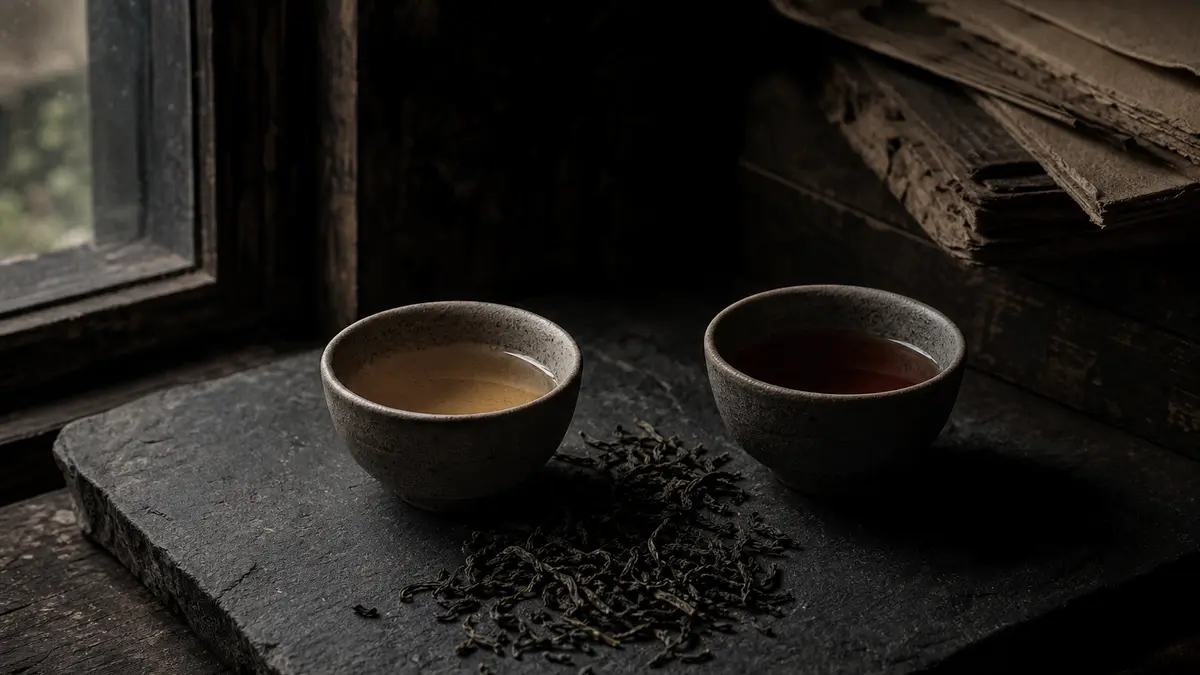
The most direct way to understand spring vs autumn tea is to brew them side by side from the same producer and cultivar. Most established Taiwanese oolong farms release both harvests, often labeled clearly.
Brew parameters held constant: 5g leaf, 100ml water, 95°C (203°F) for high-mountain oolong, three steeps of 30 / 45 / 60 seconds. Pour into identical cups. Compare:
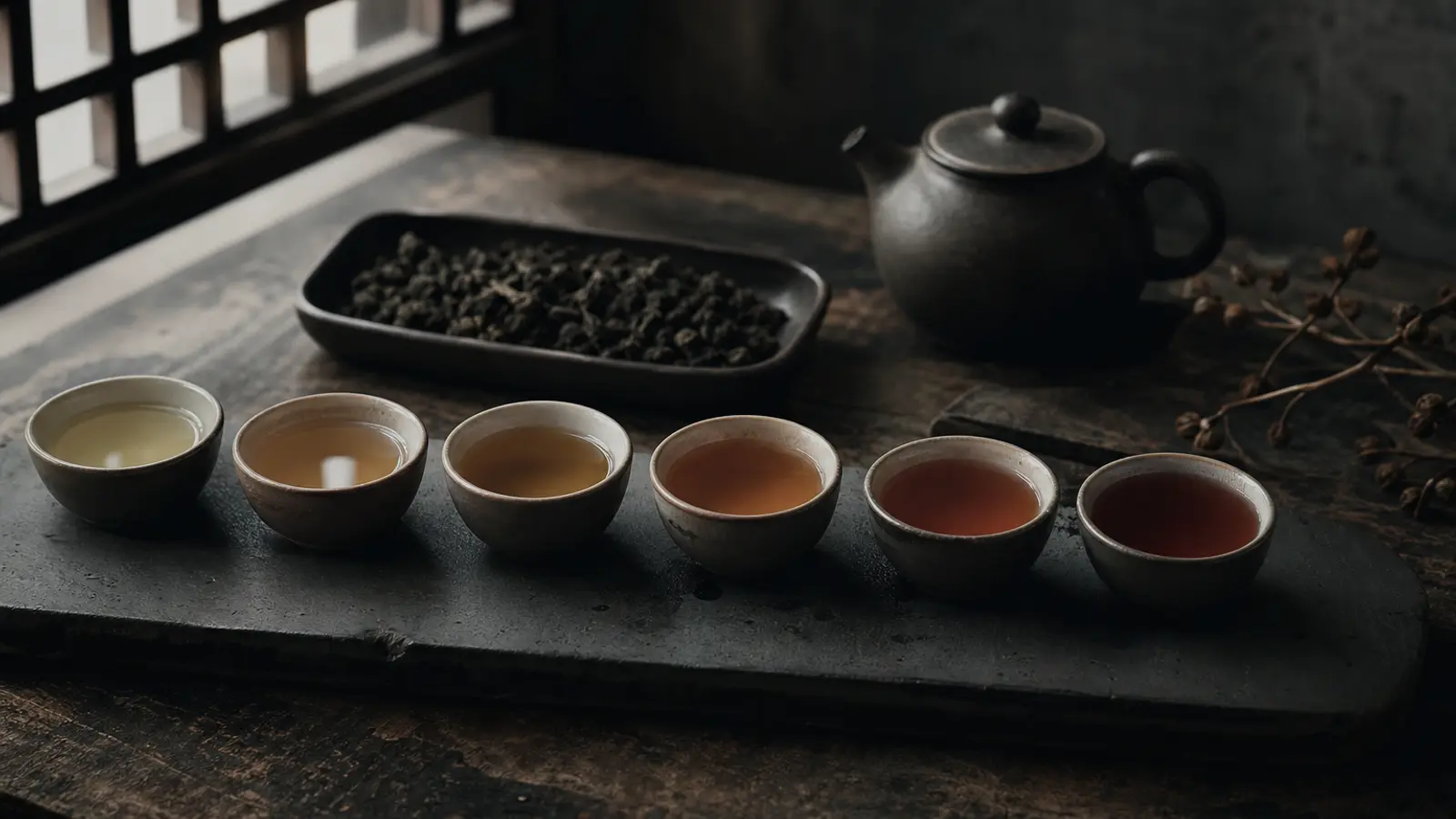
- Color of the liquor (spring often slightly greener or more golden; autumn can be slightly more amber)
- Aroma in the cup immediately after pouring (autumn oolong typically more intense here)
- First sip — where does the sensation appear on your palate? Spring tends to coat; autumn tends to lift
- Aftertaste — huigan (回甘, the returning sweetness) and persistence
Neither result is correct. The point is to locate your preference against an actual sensory reference rather than a market preference.
The Wine Parallel
Spring vs autumn tea maps cleanly onto vintage variation in wine — the same vineyard, the same vines, producing different character depending on growing season conditions. A Burgundy producer doesn’t apologize for an autumn-ripened vintage any more than a tea farmer should apologize for autumn material. They’re different expressions of the same plant and place.
The tea world’s tendency to rank spring above autumn categorically is closer to saying that every lean, aromatic vintage is inferior to every rich, concentrated one. Some drinkers prefer Burgundy’s structure. Others prefer its fragrance. Both are valid responses to genuine complexity.
What the season puts in the cup is real. What your palate does with it is yours to discover.