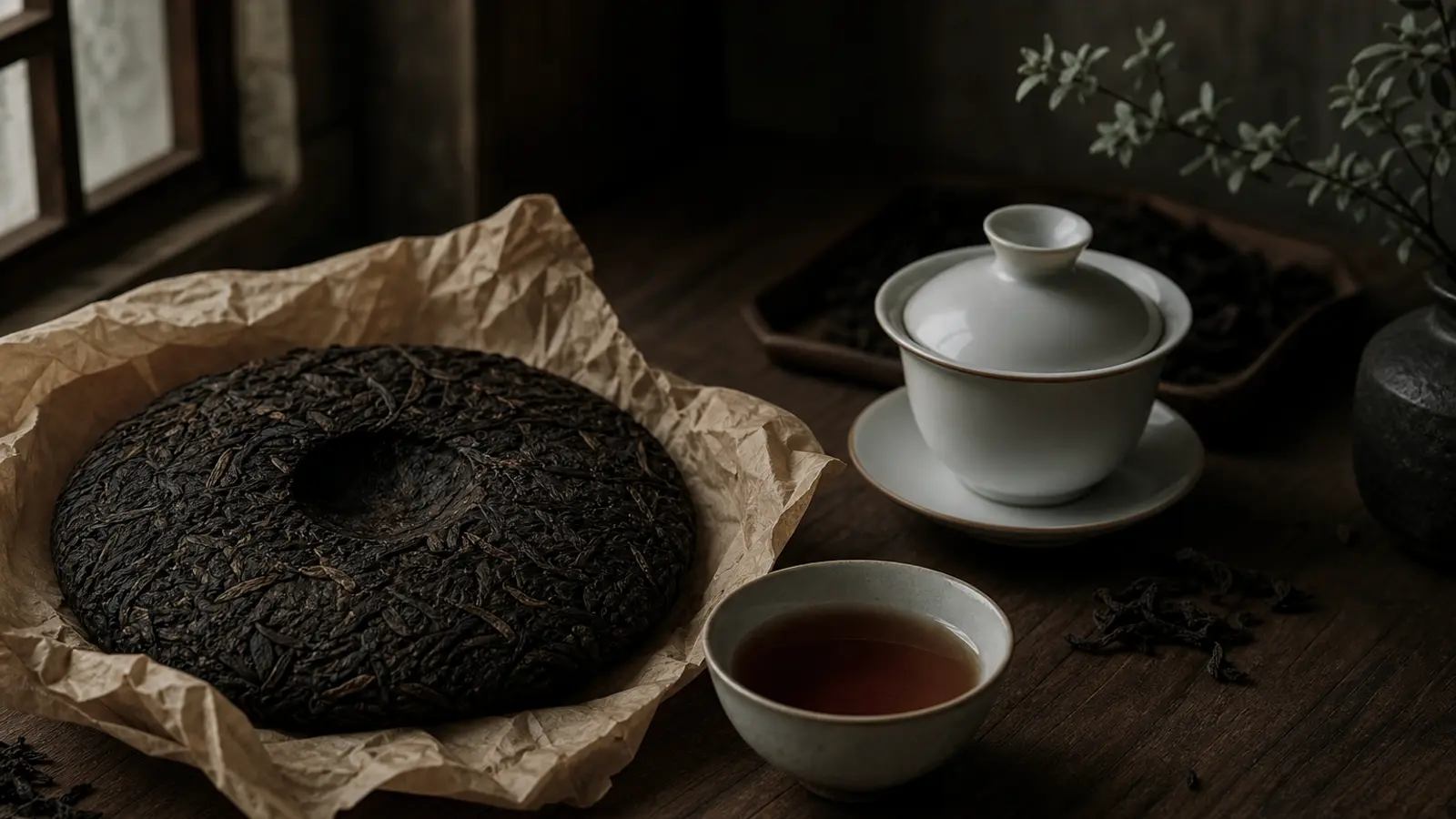
The best pu-erh tea for a beginner is a well-made shou (熟普洱, ripe pu-erh) — smooth, earthy, and immediately satisfying, with none of the bitterness that makes young sheng (生普洱, raw pu-erh) difficult before your palate has a frame of reference. That’s the short answer. The longer answer is a sequenced path: start with shou to understand what pu-erh body and depth feel like, then move to aged sheng to hear terroir for the first time, then pit young sheng origins against each other in a single afternoon session. Follow that path and pu-erh clicks into place. Skip it and you’re likely to drink something confusing, blame yourself, and miss one of the most compelling tea categories on earth.
This guide lays out that path with specific guidance on what to buy, what to spend, and what equipment you actually need.
Why Shou Pu-erh Is the Right First Tea
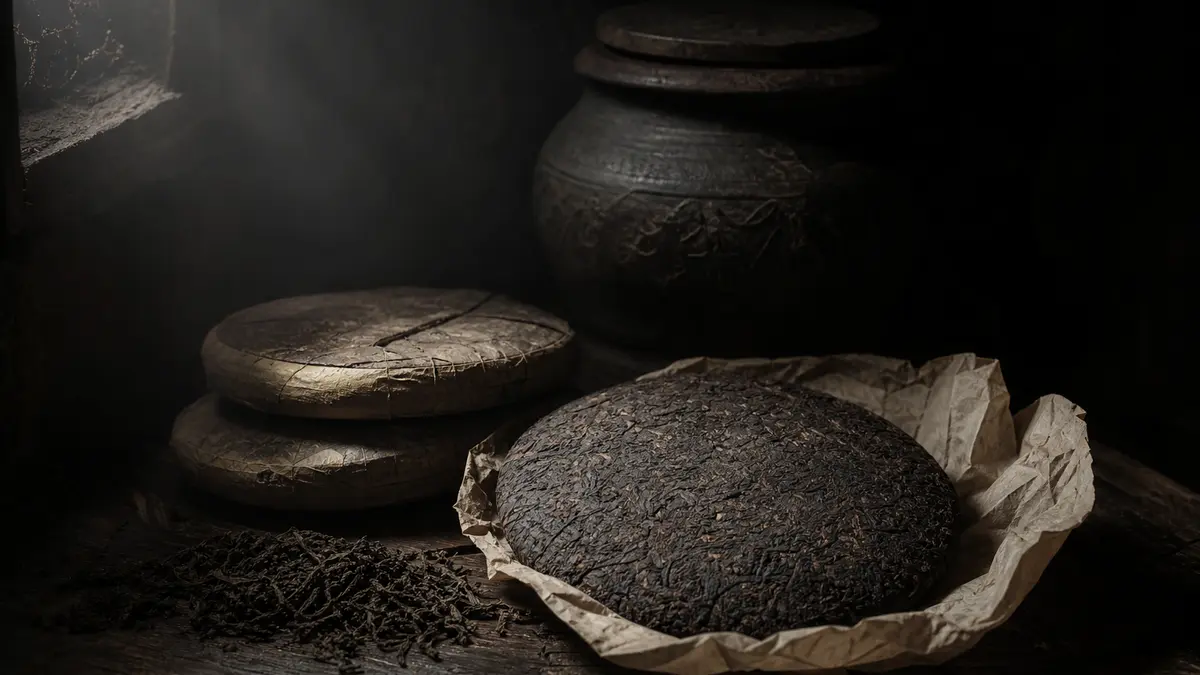
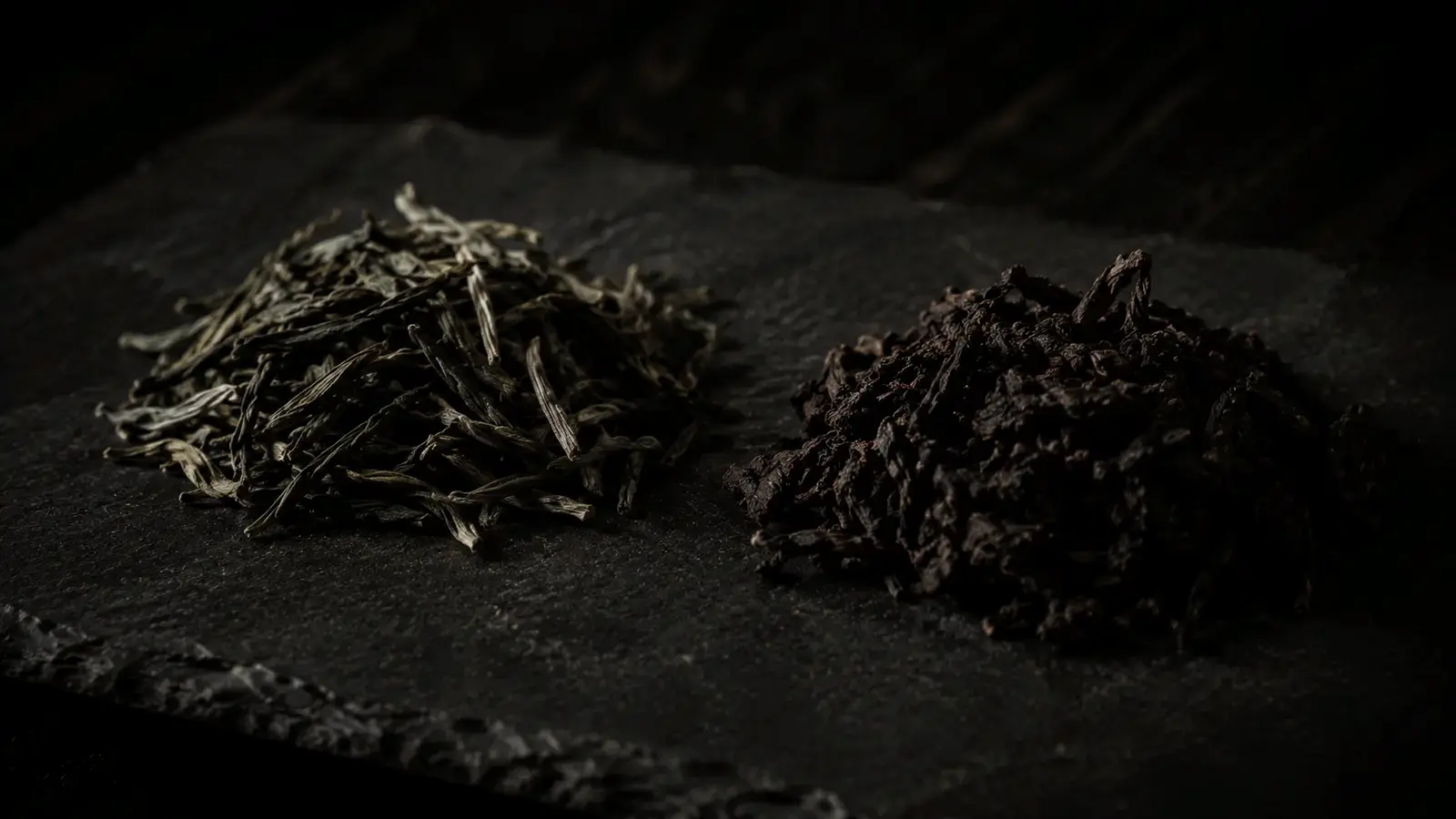
Young sheng pu-erh can be aggressively bitter and astringent. That’s not a flaw — it’s part of what makes it age into something extraordinary — but without context, that bitterness reads as bad tea rather than promising tea. Asking a beginner to start with a young Bulang sheng is like handing someone their first wine as a tannic young Barolo. Technically excellent. Pedagogically wrong.
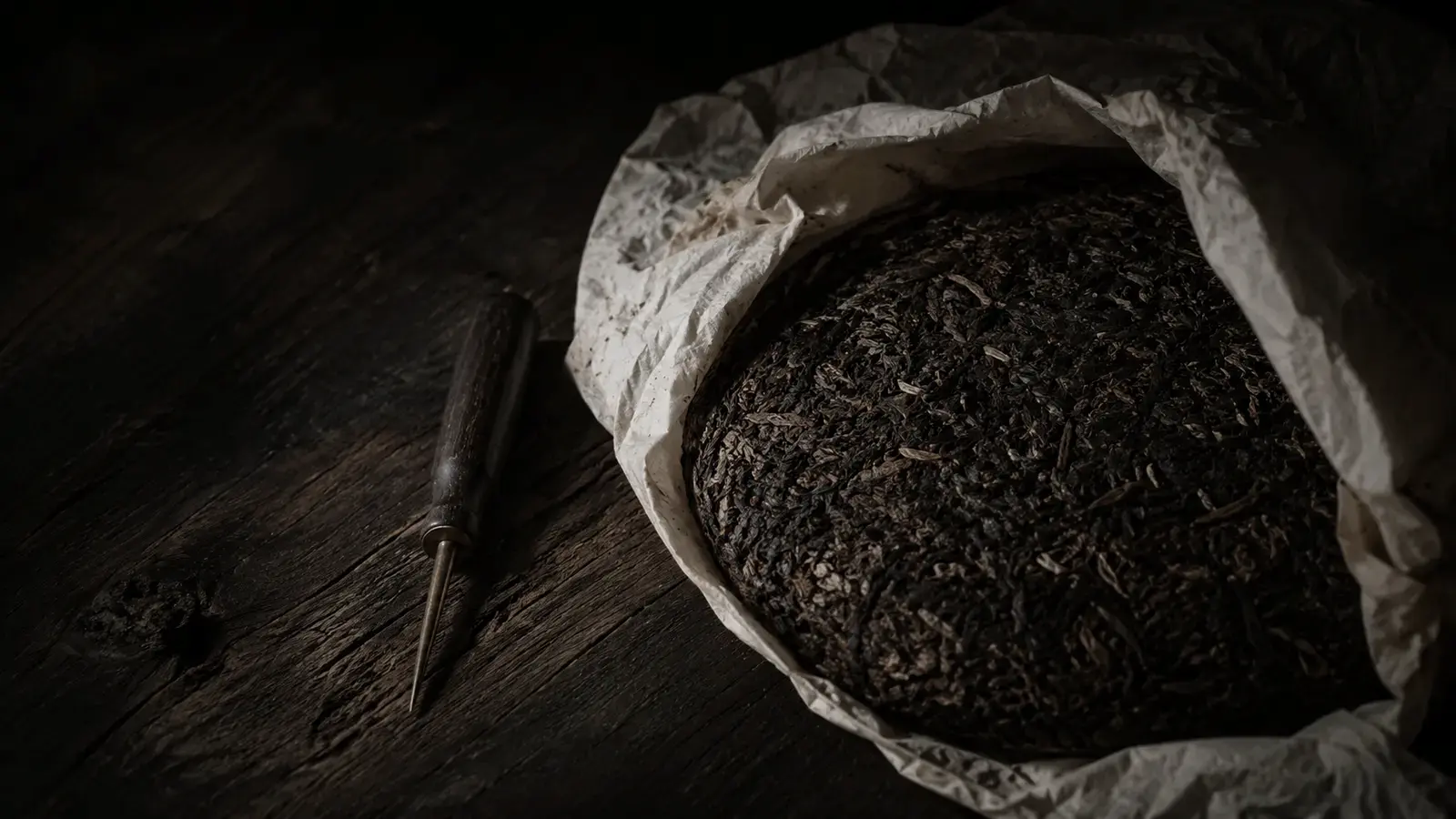
Shou pu-erh undergoes a wet-piling fermentation process called wò duī (渥堆) that accelerates the aging transformation artificially. The result is a tea that’s already smooth, already dark, already complex — ready to drink now and forgiving to brew. A well-made shou gives you the core experience of pu-erh: that distinctive earth and compression and velvety body that no other tea category offers. It’s the baseline your palate needs before you can interpret anything else.
One honest caveat: low-grade shou is unpleasant in a specific way. It tastes like wet cardboard or fish tank — what the industry calls “pile taste” or duī wèi (堆味). This is why price matters. Budget $15–30 for your first 357g cake and buy from a vendor with transparent sourcing. That price bracket, bought right, gets you clean earth and dark chocolate and a body that lands like velvet. Anything under $10 a cake is a gamble I wouldn’t take.
The Three-Tea Learning Path
First Tea: A Quality Shou Pu-erh Cake
Target a 357g shou cake from Menghai (勐海) area production or Bulang Mountain (布朗山) material. These regions produce shou with the density and dark-chocolate character that defines the style at its best. At $15–30, a single cake yields 50 or more gongfu sessions — one of the better cost-per-session values in specialty beverages.
What to look for in the flavor profile:
- Clean earth: forest floor, dried mushroom, dark stone
- Dark chocolate or cocoa notes
- Smooth, full body with no astringency
- A gentle sweetness that lingers after swallowing — what Chinese tea culture calls huigan (回甘)
What to avoid:
- Fishiness or wet cardboard (pile taste from poor fermentation or storage)
- Thin or watery body
- Anything labeled “gushu shou” (古樹熟) at consumer prices — old-tree material is rarely used in shou production because the wet-piling process doesn’t preserve the terroir character that makes gushu material expensive. At $20–30 a cake, that label is almost certainly marketing
- Anything under $10/cake, which is too likely to be low-grade factory floor sweepings
Also skip flavored pu-erh for now. Chrysanthemum pu-erh (菊花普洱) and tangerine pu-erh (柑普茶) are legitimate and pleasant products, but the additives mask the tea itself. You need to learn what pu-erh tastes like before you complicate it. Mini tuochas (小沱茶) are similarly poor starting points — the compressed novelty portions often use material that wouldn’t sell as a full cake.
Second Tea: A 5–8 Year Aged Sheng from a Named Origin
Once you have 10–15 sessions on a quality shou and you understand what pu-erh body feels like, you’re ready for your first sheng.
Don’t start with a young sheng. Start with a mid-aged one.
A Yiwu (易武) sheng aged 5–8 years sits at the ideal bridge point. The bitterness that dominated the tea when it was fresh has softened into something that reads as structure rather than punishment. The terroir character — and Yiwu has one of the most recognizable terroir signatures in pu-erh — starts to become audible. You’ll find apricot, dried peach, or muscat notes alongside deeper aged complexity. Budget $30–60 for a 357g cake at this tier.
This is where pu-erh starts to feel like wine. You’re not just drinking tea; you’re tasting a specific mountain at a specific moment in time, transformed by years in storage. The parallel isn’t hyperbole — the mechanism of transformation (slow oxidation and microbial activity over time) genuinely resembles what happens in a wine cellar.
Third Tea: Young Sheng from Contrasting Origins, Side by Side
This is the session that teaches terroir faster than anything else.
Buy two 25g samples of young sheng (one to two years old):
- Yiwu — known for sweetness, elegance, long huigan, stone fruit and floral notes
- Bulang (布朗) or Menghai area — known for intensity, persistent bitterness, power, darker mineral character
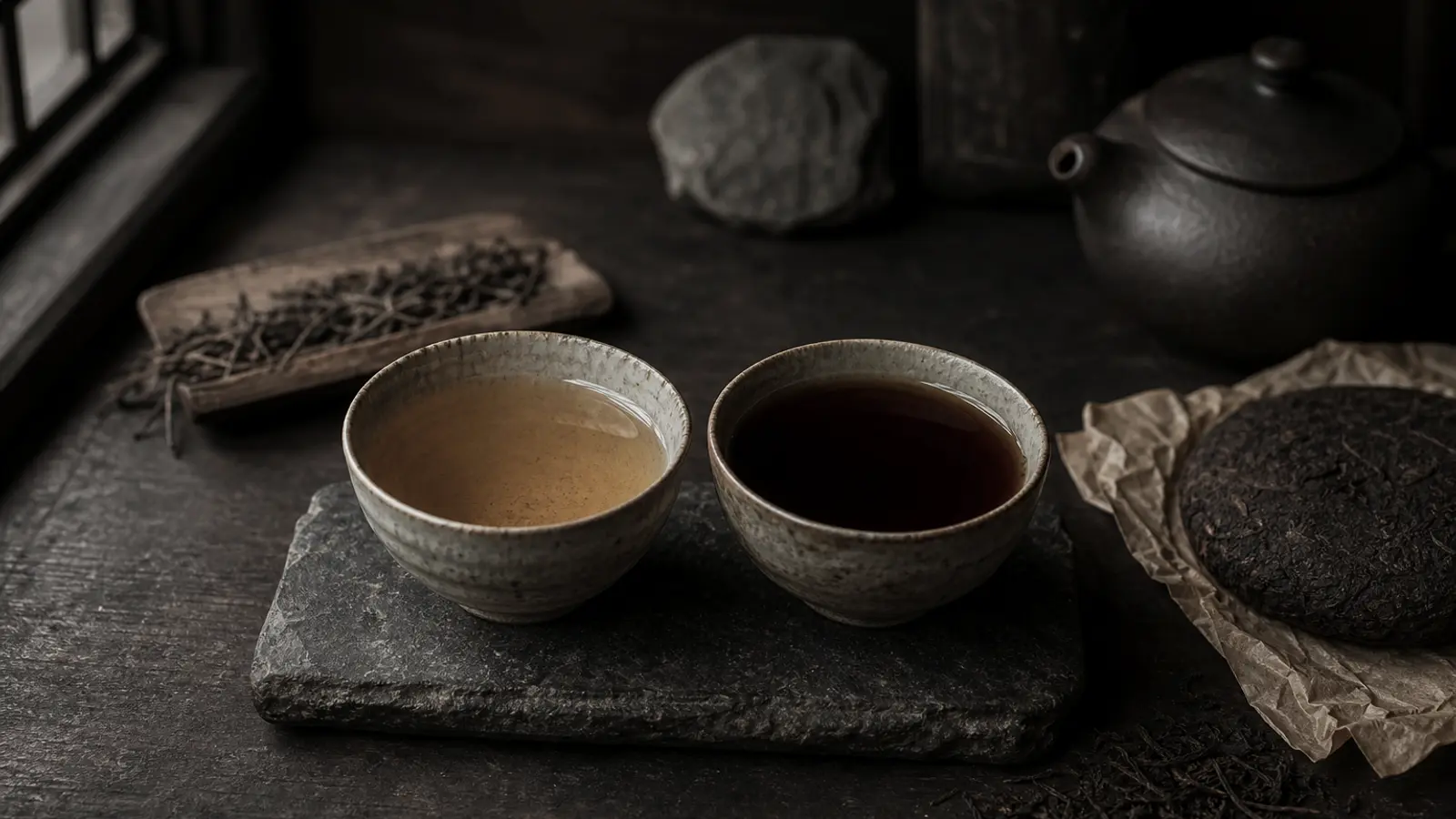
Brew them side by side on the same afternoon with identical parameters: 5g of tea in a 100ml gaiwan (蓋碗), boiling water, 10-second steeps escalating from there. Taste them alternately. The contrast is immediate and dramatic.
The bitterness of the Bulang isn’t better or worse than the elegance of the Yiwu — they’re different flavor philosophies from different mountains 100 kilometers apart. That single session teaches you more about pu-erh terroir than reading ten articles.
I can tell you from my own tasting sessions that this comparison lands differently in person than it does on the page. The Yiwu peach note appeared in two different sessions from material sourced from different producers — that kind of cross-session pattern recognition is what begins to calibrate your palate. The Bulang bitterness, when it converts on the back of the throat into a wave of sweetness (that is the huigan), stops feeling aggressive and starts feeling intentional. You have to taste it.
What Equipment Do You Actually Need
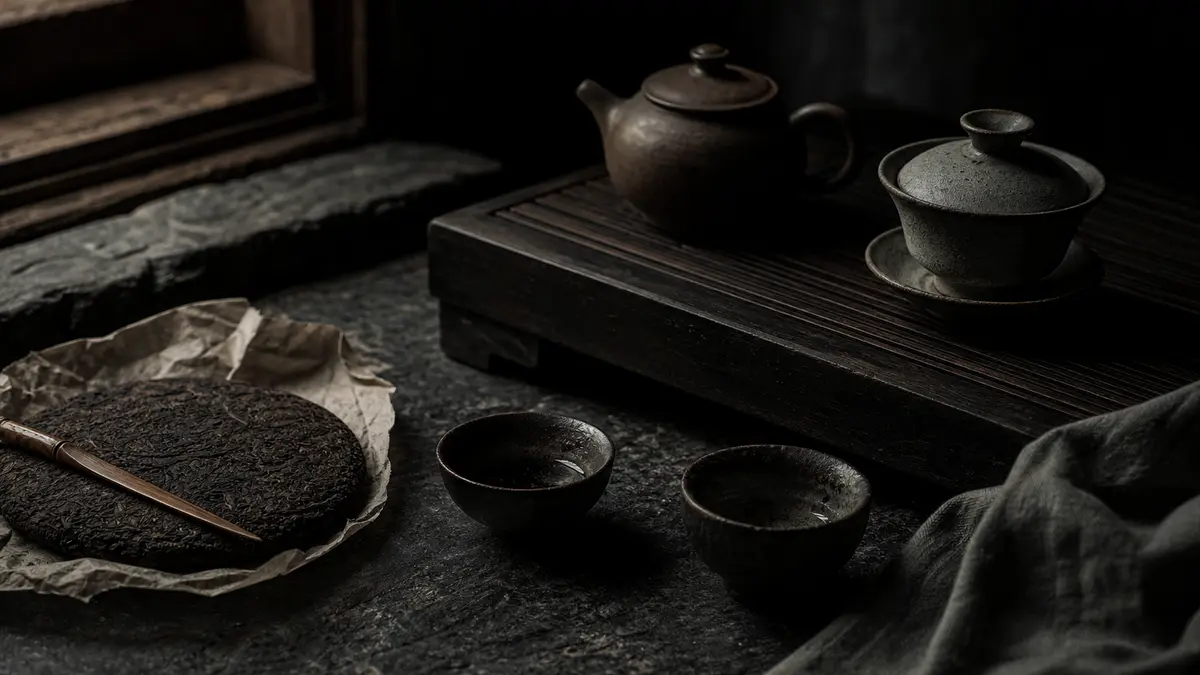
The pu-erh equipment category has a way of expanding into obsessive territory fast. Here’s the honest minimum.
| Item | What to Get | Budget |
|---|---|---|
| Gaiwan | 100ml white porcelain | $8–15 |
| Scale | Digital, 0.1g precision | $15–25 |
| Kettle | Variable temperature, gooseneck | $30–60 |
| Total | $53–100 |
White porcelain (白瓷) is the right choice for a first gaiwan because it doesn’t interact with the tea. It shows you the tea’s actual character without the clay seasoning that a Yixing (宜興) teapot introduces. You can always move to clay later; start neutral.
The scale matters more than most beginners expect. Brewing 4g versus 6g of pu-erh in the same vessel produces a noticeably different cup. Once you know your baseline — I use 5g per 100ml for both shou and sheng — you can adjust intentionally rather than accidentally.
The variable-temperature kettle lets you dial 95–100°C for sheng and 95°C for shou. Boiling water isn’t wrong for pu-erh, but the control is useful as you develop your palate.
A fairness pitcher (公道杯, gōngdào bēi) improves the experience by letting you decant the whole steep before pouring, which prevents the last cup from over-extracting. Small tasting cups in the 30–40ml range let you actually smell the tea properly. Neither is essential on day one.
The Honest Note
I’ll tell you the three sessions that changed how I understood this category.
The first was a craft old-tree shou with a dark chocolate density and velvet body unlike anything I’d tasted in the shou category before — it dismantled the idea that ripe pu-erh is simply earthy and one-dimensional.
The second was a 2005 Ban Zhang (班章) sheng where bitterness I almost found uncomfortable converted, by the third steep, into a flooding sweetness that occupied the whole mouth. That conversion — bitterness to sweetness in real time — is what the Chinese term huigan means in practice. You can read the definition fifty times; you need to feel it once.
The third was Yiwu’s peach note appearing unexpectedly in two separate sessions from different sources. That kind of pattern recognition — the same terroir signature surfacing across different productions — is what the concept of appellation means when applied to tea.
No article replicates these moments. The path above is designed to put you in front of them as efficiently as possible.
The Path, Summarized
- Start: Buy one quality shou pu-erh cake ($15–30, Menghai or Bulang material). Brew it 15 times. Learn what pu-erh body and earth feel like.
- Progress: Buy one mid-aged Yiwu sheng cake ($30–60, 5–8 years old). Brew it alongside your shou. Notice the difference.
- Compare: Buy two 25g young sheng samples — one Yiwu, one Bulang or Menghai. Brew them side by side in one afternoon. Feel terroir.
- Equipment: White porcelain gaiwan, digital scale, variable-temperature kettle. Under $100 total.
- Avoid: Flavored pu-erh, mini tuochas, anything under $10/cake, any “gushu” label at consumer prices.
The category is large and can feel designed to confuse you. It isn’t. It’s just deep. The path above gives you a foundation from which every subsequent discovery makes sense.