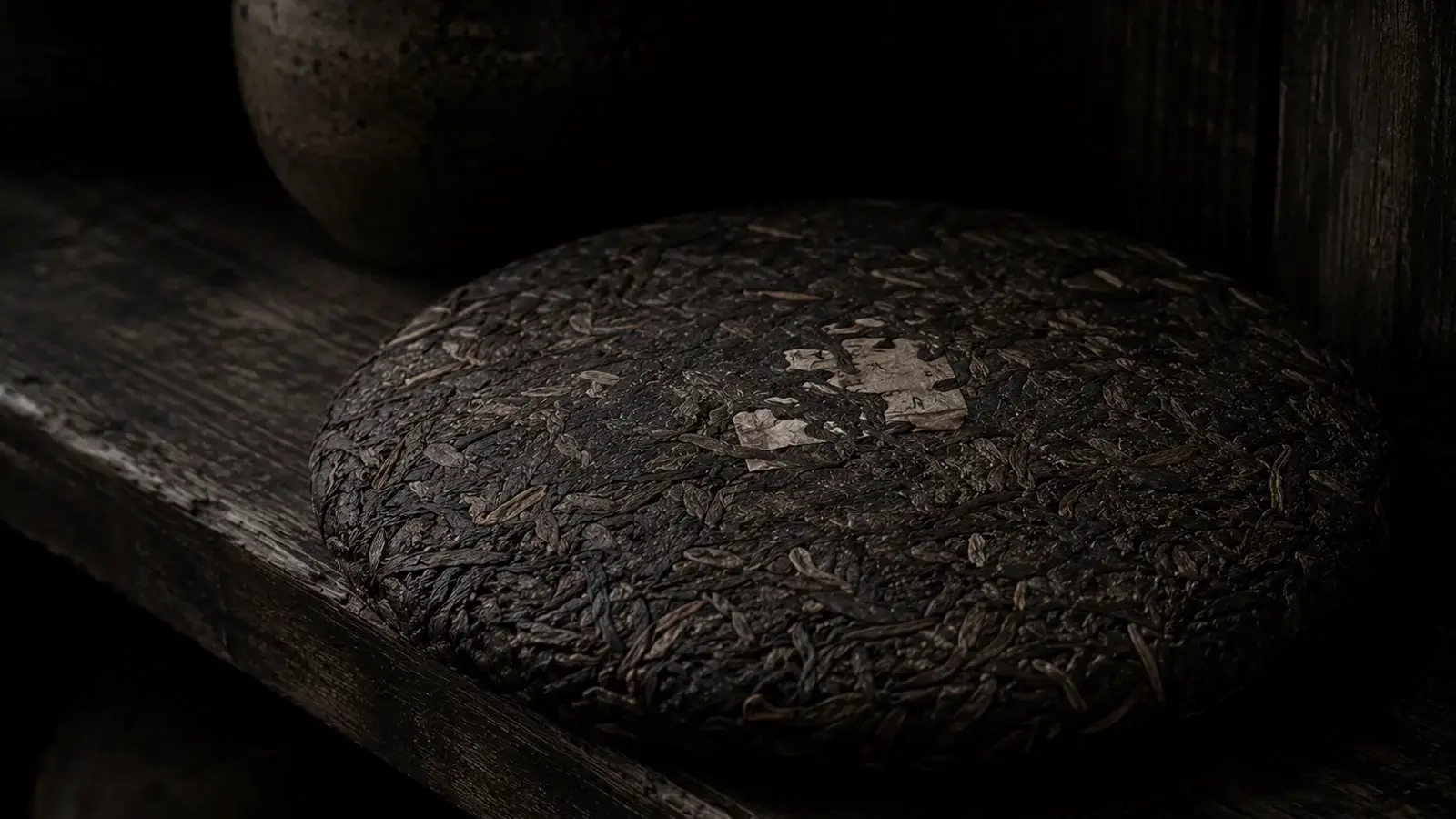
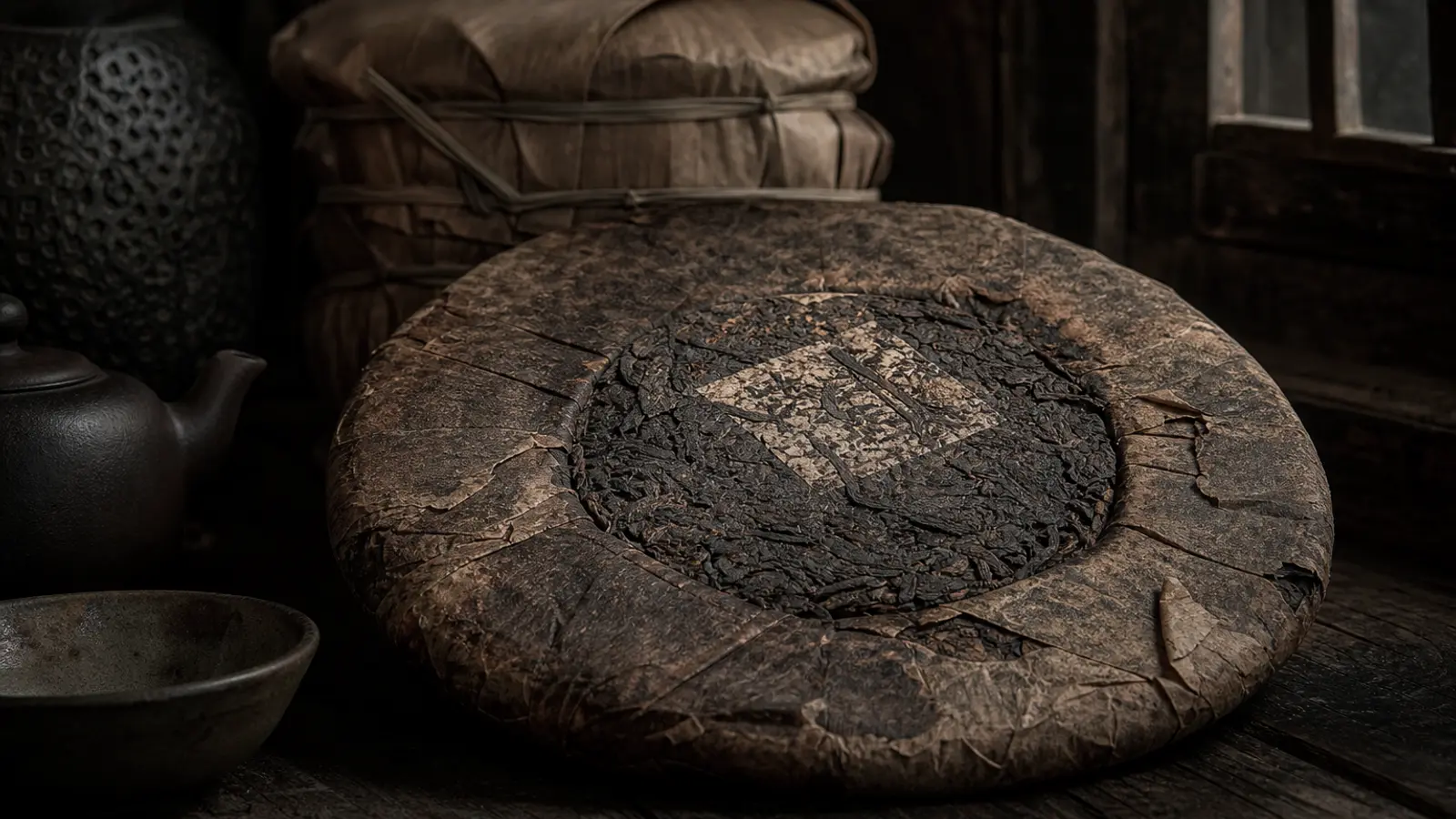
Chen xiang (陳香) is the fragrance that stops you mid-breath. Open the wrapper of a twenty-year pu-erh cake and it fills the room before a single leaf touches water — a deep, layered smell that carries the suggestion of old wood, dried herbs, a library that hasn’t been dusted in decades, and something harder to name. Most people settle for “the smell of time itself.”
That phrase is not poetic hyperbole. Chen xiang is literally what time smells like when it acts on compressed tea.
What Chen Xiang Means
The characters 陳香 break down simply: 陳 (chén) means aged or old, and 香 (xiāng) means aroma or fragrance. Together they describe the specific aromatic quality that proper aging — years or decades under stable, suitable conditions — produces in pu-erh. No other category of tea develops this particular aroma. It is specific to pu-erh because pu-erh is the only tea category designed to continue transforming after production, and chen xiang is the sensory evidence that transformation has actually occurred.
The wine parallel is direct and useful: chen xiang is to pu-erh what secondary and tertiary aromas are to aged fine wine. When a great Burgundy loses its primary cherry and raspberry in favor of leather, tobacco, forest floor, and dried herbs, those new aromatics are the product of slow chemical transformation in bottle. Chen xiang is the same class of phenomenon — primary aromatics replaced by something deeper, more complex, and more integrated.
What Chen Xiang Smells Like
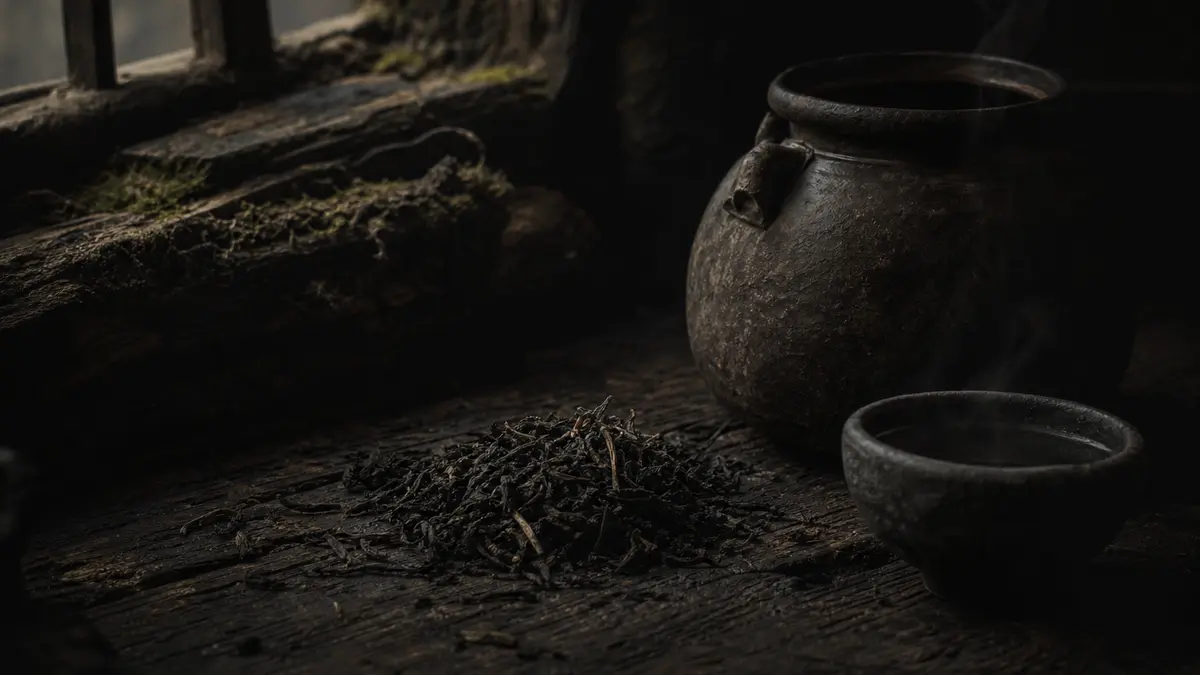
The descriptors are wide but share a common texture: depth, age, and organic complexity.
- Old wood and furniture polish. Dark hardwood with a slight resinous quality.
- Herbal medicine and traditional pharmacy. The smell of a Chinese medicine shop — dried bark, roots, herbs in wooden drawers.
- Aged library or antique paper. Old books, dusty but not unpleasant.
- Camphor and dried cypress. Particularly pronounced in traditionally stored sheng pu-erh from certain regions.
- Dried fruit, dates, or plum. A sweet undertone beneath the earthier notes.
- Rich soil after rain. Especially in shou pu-erh (熟普洱), where wet-pile fermentation accelerates certain aromatic pathways.
My first encounter with a genuinely pronounced shou chen xiang came from a 2006 HTC loose shou. The dry leaf carried a muddy, rich soil aroma that was fully present — you could detect it across a table. That particular character sat at the earthier end of the chen xiang spectrum: foundational, dense, unmistakably aged.
The more unsettling and memorable encounter was with a 1988 HTC aged sheng (生普洱). The aroma there was something I’d call a camphor-cypress revelation — clean and resinous, almost aromatic in the perfume sense, threaded through with something that I can only describe as compressed time. It was the smell of thirty-seven years of slow microbial transformation in a single breath.
The Microbiology Behind the Aroma
Chen xiang is not mystical. It is the aromatic product of microbial succession — one of the more beautiful examples of ecology operating at the scale of a tea cake.
Think of a pu-erh bing (餅, the compressed disc format) as a miniature ecosystem. At production, it is colonized by specific microbial communities. Over decades of storage, those communities shift. Different organisms dominate different phases, and each phase produces different aromatic metabolites.
In the early years, Aspergillus niger tends to dominate, laying down the earthy foundational notes. As the tea moves into its middle years, more diverse fungal communities emerge, generating the herbal and medicinal aromatics that start to read as recognizable chen xiang. In late-aged tea — think 20+ years — complex community interactions among multiple fungal and bacterial species produce the deepest layer of the aged-library character. The process mirrors, at microscopic scale, the ecological succession that transforms a bare field into a mature forest. Each stage produces its own community composition, its own chemistry, its own smell.
This is why chen xiang in well-aged tea reads as layered and integrated rather than flat. It is the product of multiple overlapping transformations, not a single chemical reaction.
Chen Xiang in Dry Leaf vs. Brewed Leaf
Chen xiang is detectable at multiple points in a brewing session, and paying attention to each reveals something different.
Dry leaf before brewing: Open a well-aged cake wrapper and chen xiang should be immediately present — sometimes powerfully so. The intensity here indicates how far transformation has progressed. A flat or absent dry-leaf aroma in a supposedly aged tea is a flag.
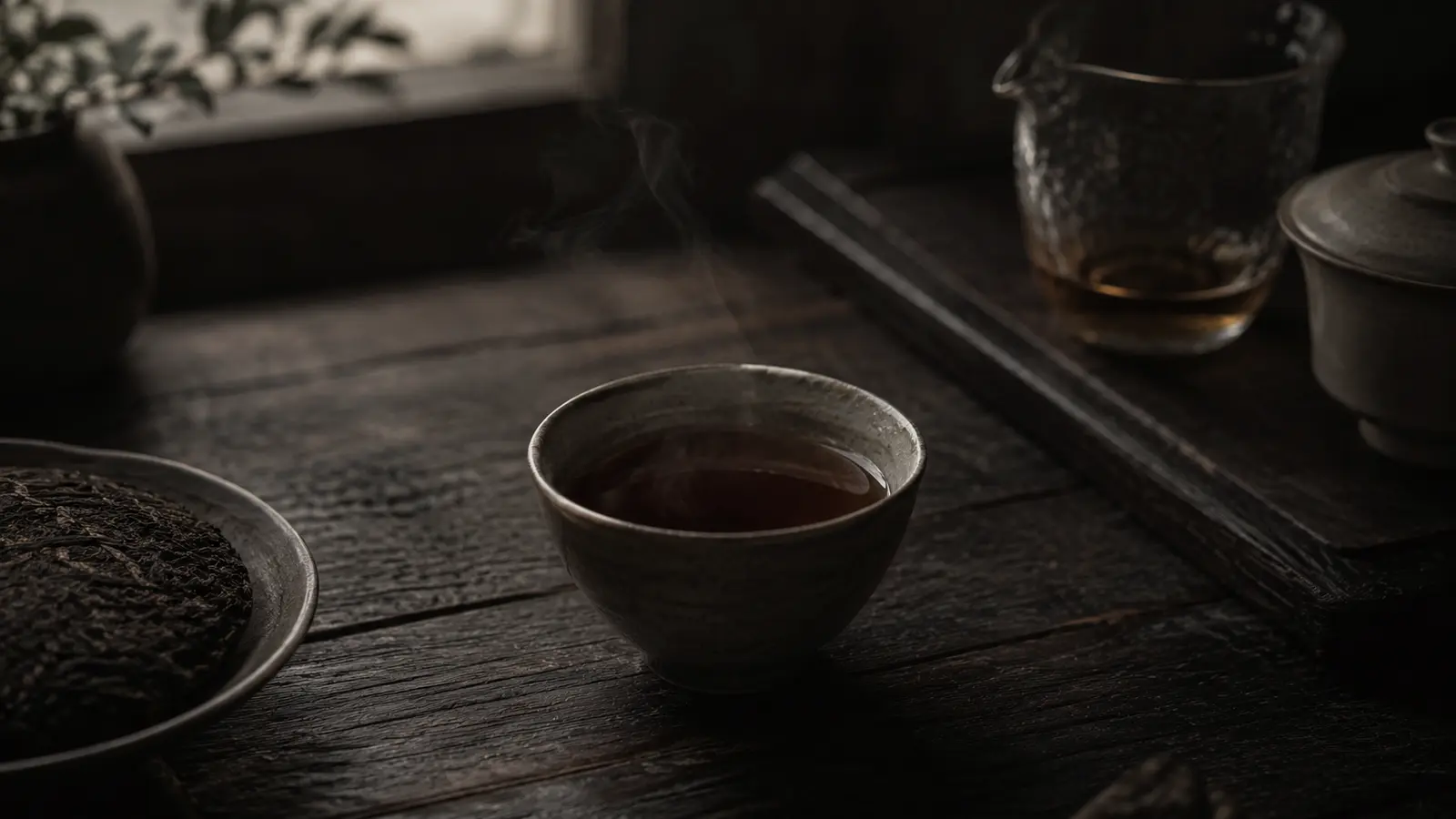
Warmed empty cup (the 空杯香, kōng bēi xiāng): After pouring out a steep, the empty cup retains aromatic compounds. In well-aged tea, the lingering aroma in the empty cup often expresses chen xiang more clearly than the liquid itself — the volatiles concentrate as the liquid evaporates.
Brewed leaf (wet leaf aroma): Open the lid of a gaiwan (蓋碗) between steeps. The humid heat drives aromatic compounds off the wet leaves in concentrated form. This is one of the clearest diagnostic moments for assessing the depth and authenticity of aged aroma.
The cup itself: Chen xiang should integrate with the flavor in the liquid — not a separate note but a background condition that the entire experience rests on.
Real Chen Xiang vs. Artificial Chen Xiang
This is where the stakes get practical.
Wet storage (濕倉, shī cāng) — intentional high-humidity storage designed to accelerate aging — can produce what looks like chen xiang in 3–5 years rather than the 15–20 required by traditional dry storage. The economics are obvious: a tea that smells aged can command aged prices.
The problem is that artificially induced wet-storage aged aroma typically lacks the complexity and integration of genuine chen xiang. The most common defects:
Muddy or musty flatness. Real chen xiang has depth and dimension — different notes emerge at different temperatures, in different vessels, at different steeps. Artificial wet-storage aged aroma tends to be one-dimensional, hitting the same musty note from every angle.
Pond or mold edge. Where genuine chen xiang smells of a clean old library, heavy wet storage can produce an aroma that reads as pond water, active mold, or damp basement. These are not the same thing.
Disconnection between aroma and flavor. In properly aged tea, the chen xiang in the leaf translates to integrated character in the cup. In heavily wet-stored tea, there is often a disconnect — intense aged aroma in the dry leaf that doesn’t carry forward cleanly into the liquor.
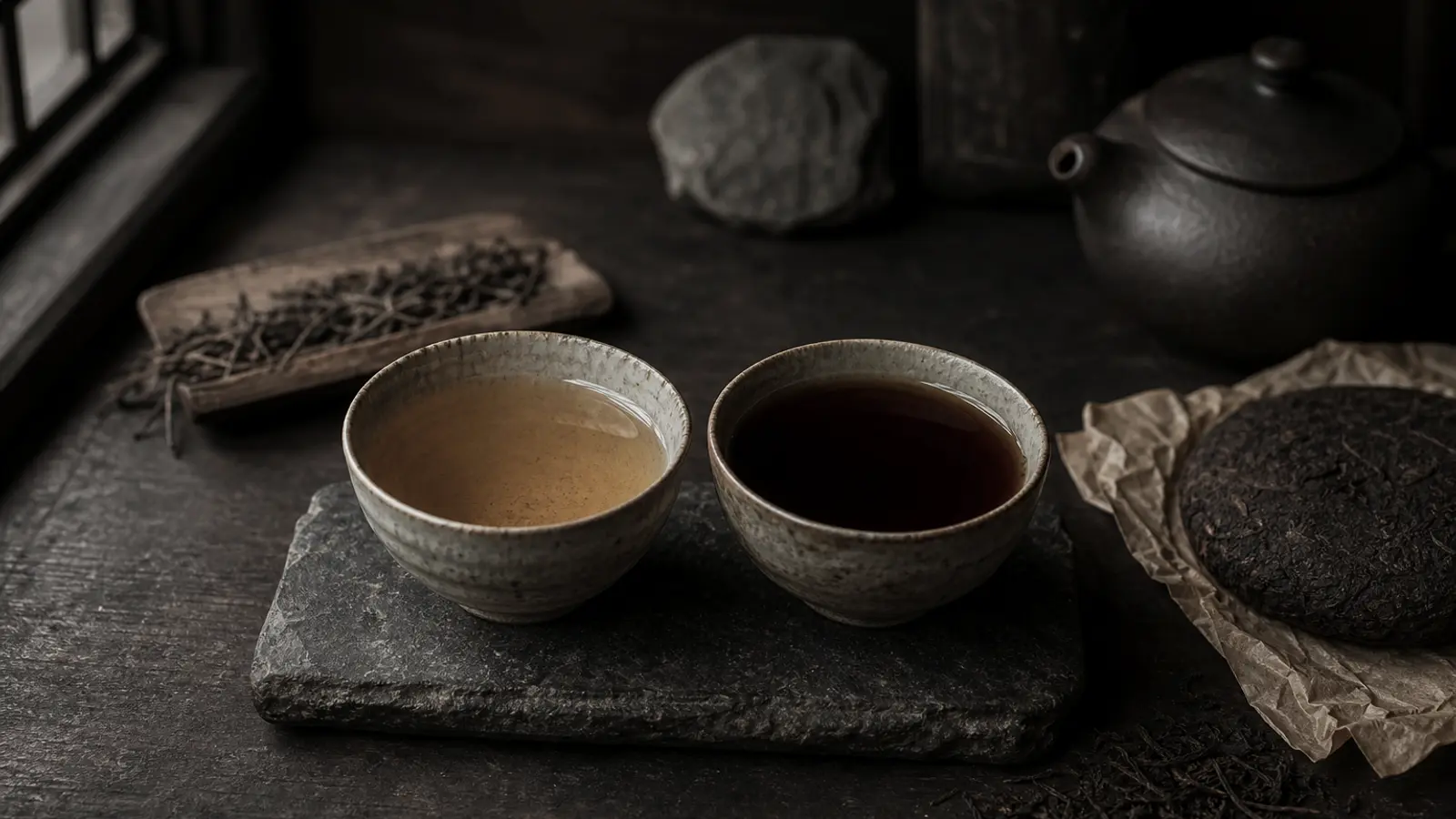
Learning to make this distinction is one of the foundational skills in evaluating aged pu-erh. The best training is comparative: drink both side by side, starting with a known reference for each.
How Long Does Chen Xiang Take to Develop?
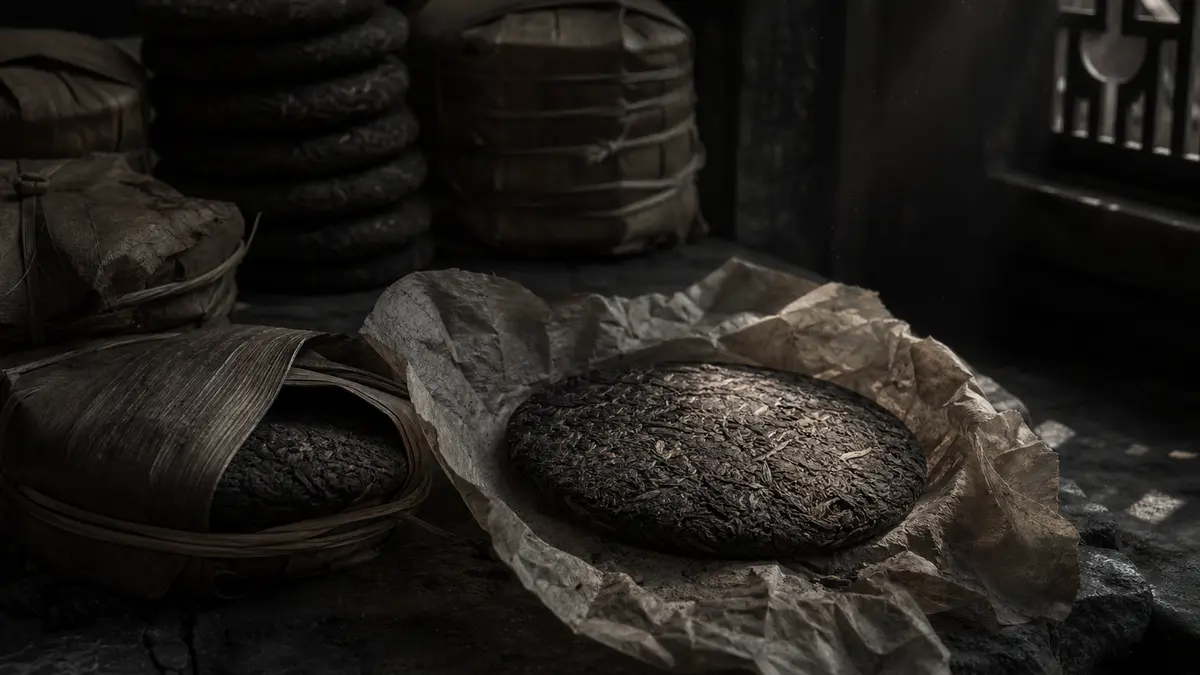
Under traditional dry storage conditions — stable temperature, moderate humidity, clean air, no extreme fluctuations — meaningful chen xiang typically requires a minimum of ten years. Most serious collectors would put the threshold higher: 15 years before the aroma begins to feel fully integrated, 20+ years before it reaches genuine depth.
Shou pu-erh (熟普, made via the accelerated wet-pile fermentation called wò duī 渥堆) develops recognizable aged aroma somewhat faster than sheng pu-erh because the fermentation process front-loads certain microbial transformations. The 2006 HTC shou I described earlier carried pronounced chen xiang at roughly eighteen years of age — a reasonable timeline for well-made shou under good storage.
Sheng pu-erh aged in the traditional way moves more slowly and, in the view of many experienced drinkers, reaches greater aromatic complexity when it finally arrives. The 1988 HTC sheng represents the far end of that spectrum: a tea where thirty-seven years of patient transformation produced something that no artificial acceleration can replicate. To understand how pu-erh ages across these timelines is to understand why patience is the core discipline of the category.
Developing Your Nose for Chen Xiang
Chen xiang is learnable. A few starting points:
-
Start with older shou. Well-aged shou from reputable storage is more consistent and more affordable than aged sheng at the same age. A reliable 15-year shou gives you a reference point for what genuine aged aroma smells like before you start evaluating aged sheng.
-
Smell the dry leaf before every session. Make it a deliberate practice. Even in young tea, you are training your baseline sense of what non-aged leaf smells like, which makes aged aroma recognizable by contrast.
-
Pay attention to the empty cup. The kōng bēi xiāng is often where chen xiang expresses most clearly. Get in the habit of smelling the empty gaiwan lid and cup immediately after pouring.
-
Seek comparative tastings. The wet-storage vs. dry-storage comparison is worth doing deliberately. The difference is more obvious in direct comparison than in isolation.
-
Trust your instincts about dimensionality. Genuine chen xiang has layers — notes that shift as the cup cools, as the steeps progress, as the leaf opens. If an aged aroma smells the same from every angle, that flatness is information.
Chen xiang is one of the most compelling reasons to study aged pu-erh seriously. It is aromatic complexity produced by decades of patient transformation — the sensory evidence that time, properly managed, is one of the most powerful processing tools available. Learning to recognize it, in all its forms and quality levels, is one of the deeper pleasures this category of tea offers.