Every serious pu-erh guide repeats the same elevation heuristic: higher is better. Ancient trees stressed by cold, UV radiation, and thin soils at 1600, 1800, 2000 meters produce leaves with greater concentration, slower growth, and more complex flavor compounds. Bingdao (冰島) sits near 1800m. Baiyingshan (白鶯山) climbs past 2000m. The correlation between altitude and premium pricing is consistent enough that it functions almost like a rule.
Xigui (昔歸) breaks the rule at 900 meters.
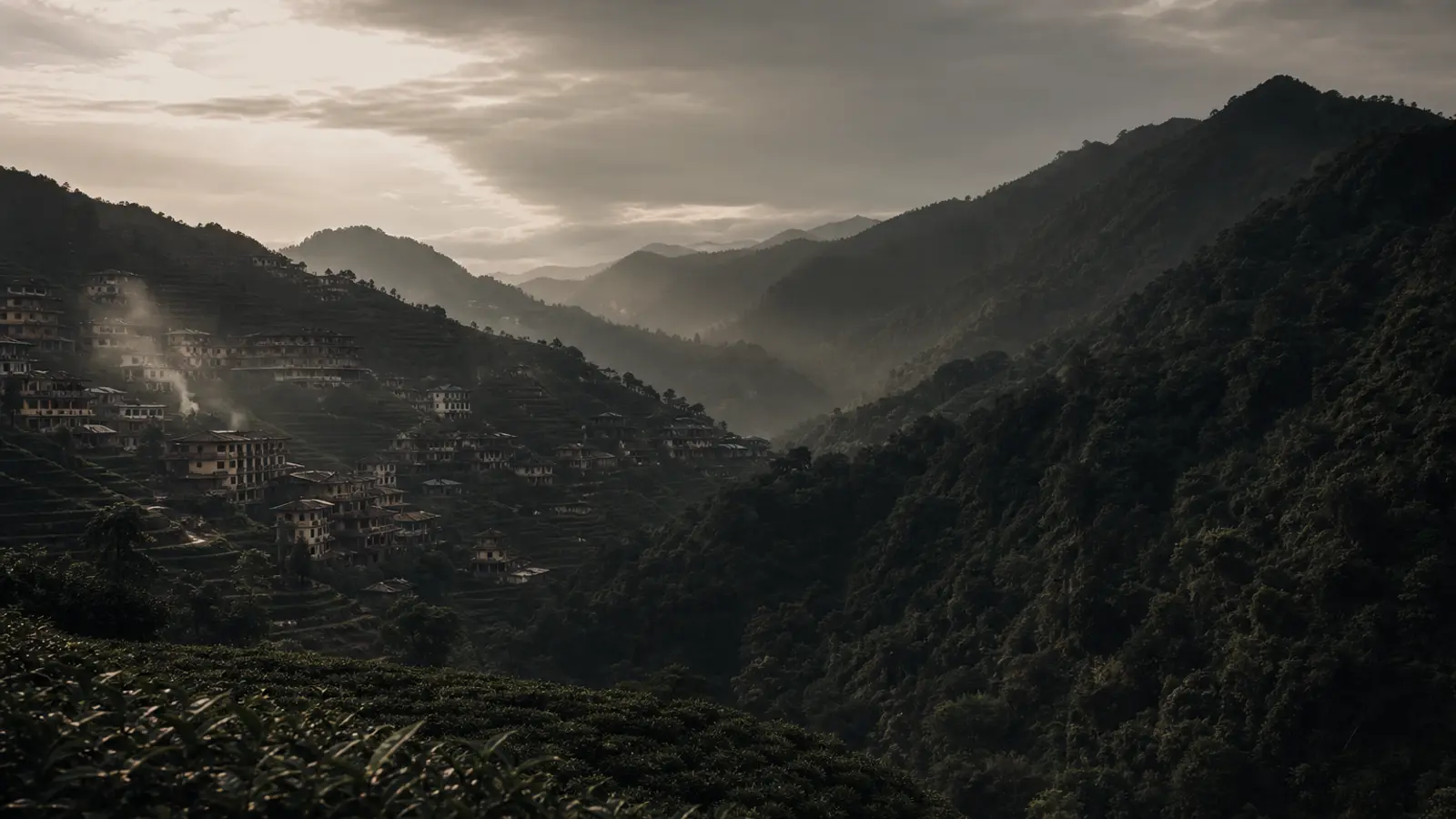
This village in Lincang’s (臨滄) Linxiang District sits on a steep bank above the Lancang River (瀾滄江), hundreds of meters below the regions it routinely matches in both complexity and market price. The altitude gap is not marginal — it’s the difference between a foothill and a genuine mountain. And yet xigui pu-erh produces one of the most immediately distinctive sensory profiles in all of Yunnan: a vivid citrus-like acidity, powerful sheng jin (生津, saliva generation), and an aromatic character that experienced drinkers identify blind.
The question worth asking is not whether Xigui is good. That’s settled. The question is why — and what it tells us about how terroir actually works.
What Makes Xigui Pu-erh Different
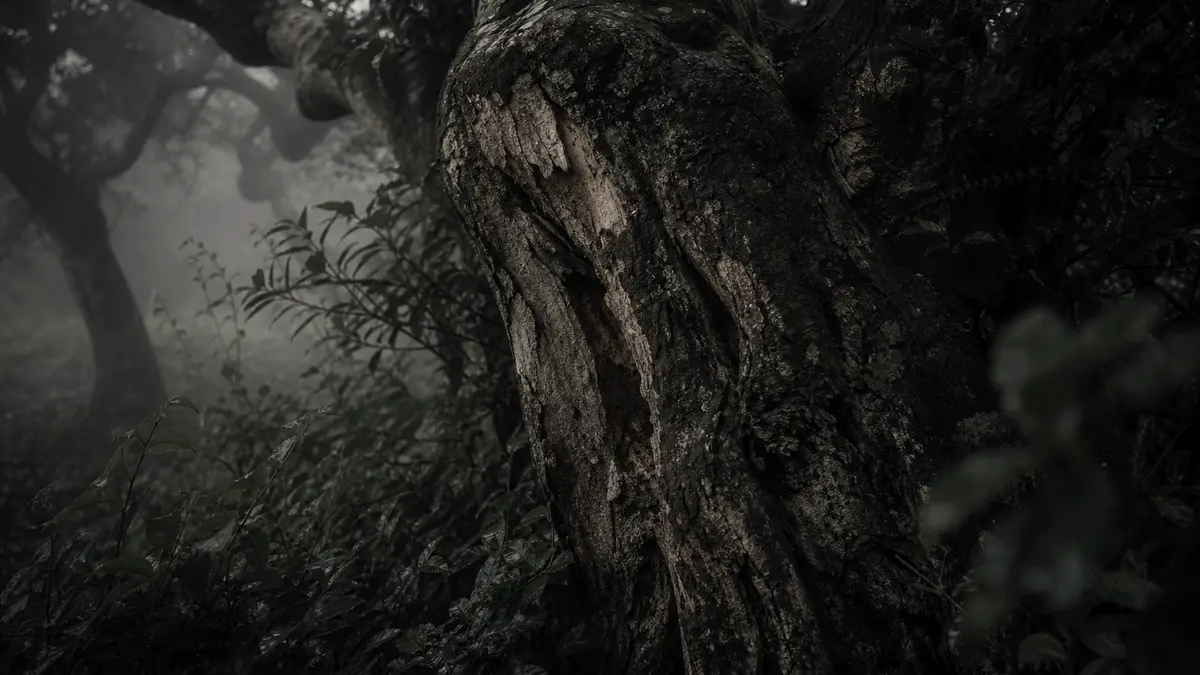
The Elevation Paradox
The conventional explanation for altitude-driven quality is plant stress. At elevation, tea trees grow slowly. Cold nights, intense UV, and nutrient-sparse soils force the plant to produce secondary metabolites — polyphenols, amino acids, aromatic compounds — at higher concentrations than trees growing in easier conditions. The result is a leaf with more to offer in the cup.
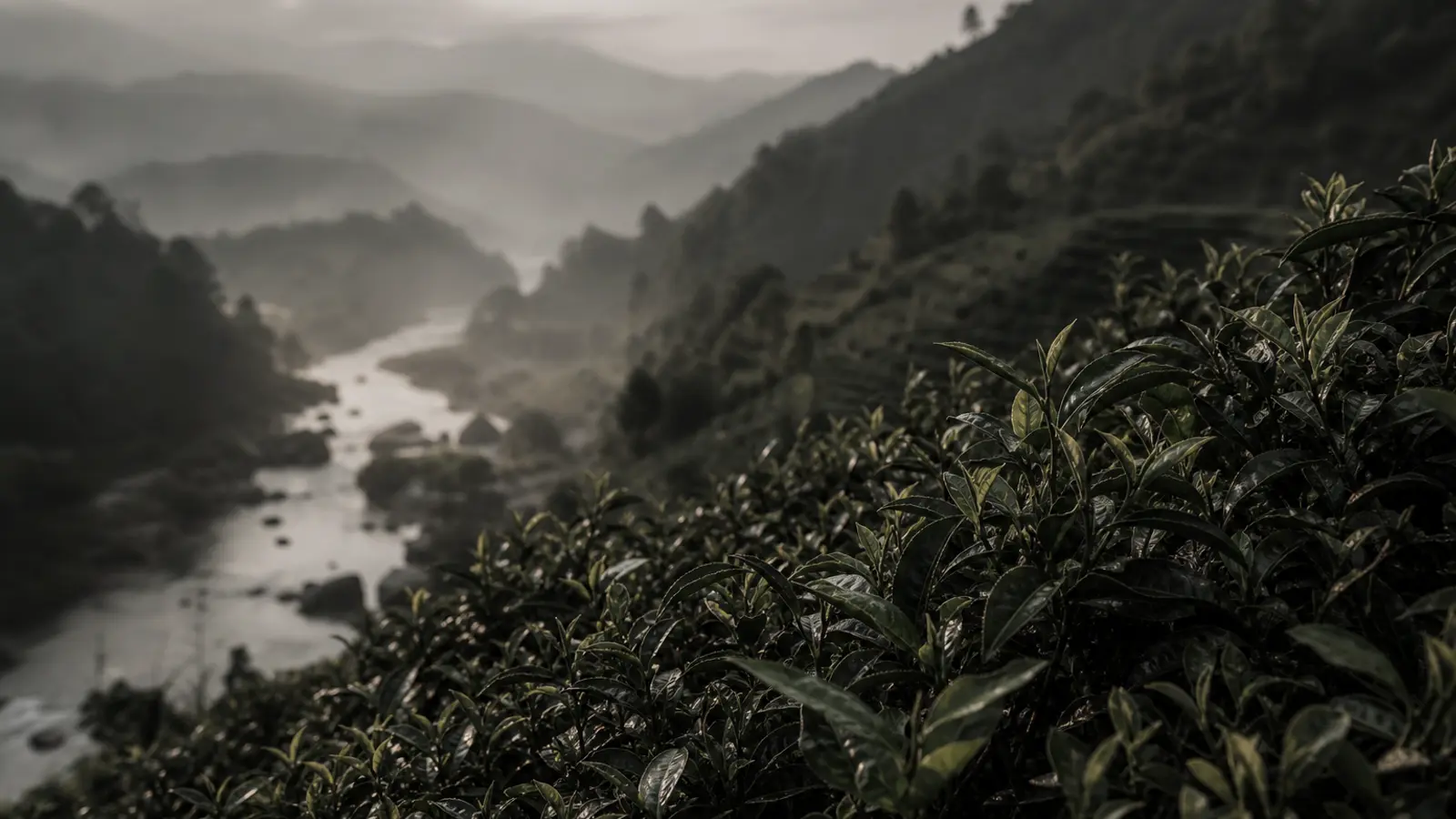
Xigui operates on a different stress model. At 900m in Lincang, summer temperatures run significantly higher than at the great mountain elevations. The Lancang River creates a microclimate — humid, warm, with less diurnal temperature variation than you’d find in the highlands. The trees aren’t stressed by cold. They’re stressed by heat, by a particular mineral load from riverine soils, and by competition for water at a depth most tea roots don’t reach.
The hypothesis — and I want to be clear this is an interpretive model rather than settled science — is that different stress pathways can produce comparable biochemical richness through different mechanisms. Altitude stress and heat-mineral stress may both push the plant toward elevated secondary metabolite production, just via different triggers. This would explain why the leaves from Xigui’s oldest trees register, cup by cup, in the same league as teas from mountains twice its elevation.
Geography and the River Effect
Xigui’s specific position matters. The village perches above a bend in the Lancang River, and that proximity shapes everything: humidity, morning fog, soil mineral delivery through centuries of riverine sedimentation, and a groundwater profile unlike any highland tea garden in Yunnan. Ancient roots — trees here reach several hundred years of age — tap into mineral reserves at depths that younger plantations never access.
Think of it like a wine parallel. Sancerre (in France’s Loire Valley) sits at modest elevation and lacks the prestige address of Burgundy’s Côte d’Or, yet it produces Sauvignon Blanc with a flint-and-citrus precision that no Burgundy village can replicate, because the Kimmeridgian limestone beneath Sancerre expresses itself in a way that geography simply dictates. Xigui has its own Kimmeridgian moment: the convergence of riverine terroir, heat stress, and ancient root access produces something that more famous mountains cannot copy even if they wanted to.
The Sensory Profile of Xigui Sheng Pu-erh
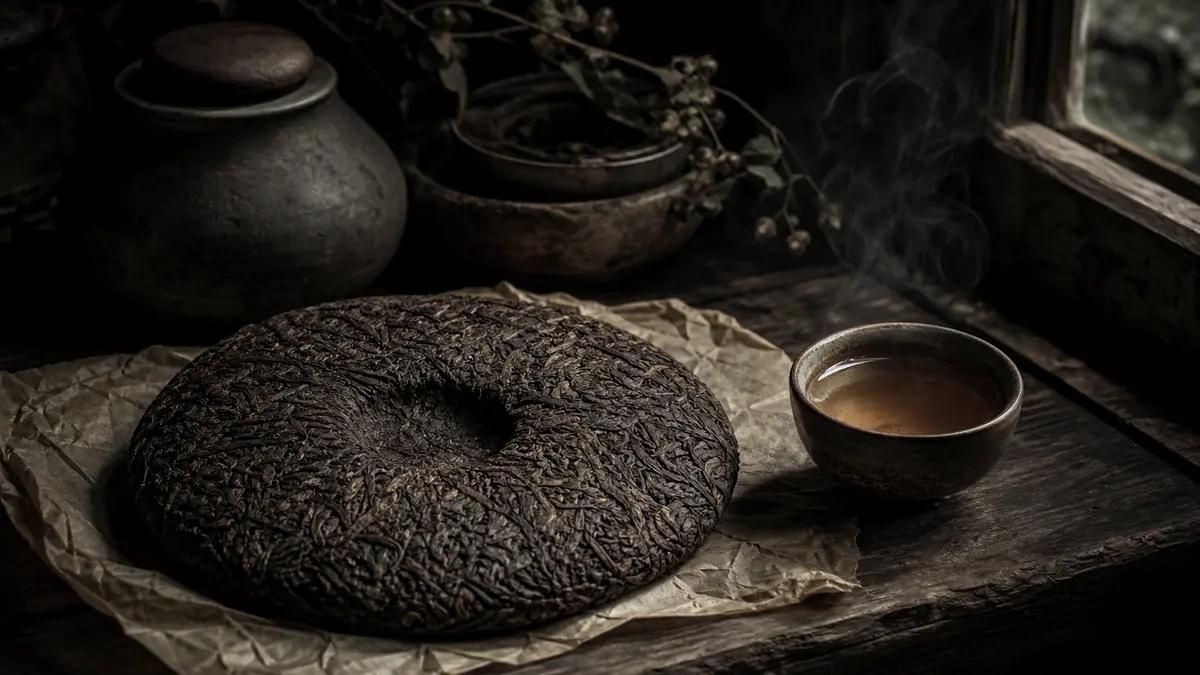
Acidity First
The single most diagnostic feature of xigui pu-erh is its acidity. This requires some framing: acidity in raw pu-erh is unusual. Most sheng (生) teas trend toward bitterness in youth and florals as they develop, with sweetness (huigan, 回甘) as the long-finish reward. Acidity as a primary note is rare — it appears in some Yiwu (易武) teas as a soft fruitiness, and in over-processed or poorly stored teas as a harshness.
Xigui’s acidity is neither of those. It’s bright and citrus-adjacent — more tangerine peel or yuzu zest than sour or sharp. It arrives early in the sip, on the front and sides of the tongue, and it integrates with the sweetness rather than fighting it. Tasters who come from wine backgrounds sometimes reach for Loire whites as a reference: that combination of brightness and mineral depth.
Sheng Jin and the Full-Mouth Experience
Sheng jin (生津) — the involuntary production of saliva — is prized across Chinese tea culture as a marker of quality and qi (氣). Xigui produces some of the strongest sheng jin I’ve encountered in sheng pu-erh, comparable to the best Bingdao material. It activates specifically at the sides of the tongue and beneath it, producing a mouth-filling sensation that persists between steeps.
This is not just a pleasant sensation. Strong sheng jin correlates with specific amino acid and polyphenol profiles in the leaf — it’s a cup-level signal of biochemical richness, the same richness that altitude-stress advocates are pointing at when they recommend highland teas.
The Long Finish
The huigan (回甘) in quality xigui pu-erh is among the most extended I’ve tasted. It begins 15–20 seconds after swallowing, builds slowly, and can remain perceptible for several minutes. The return sweetness often has a slightly cooling, mentholated quality — not peppermint exactly, but a similar sensation of airiness in the throat and upper palate.
The aromatic character is floral and slightly mineral: orchid is a common descriptor, sometimes gardenia, with a background stony quality that I associate with the riverine soil profile. These florals are more delicate than Yiwu’s famous sweetness and more volatile than the richer depth of Bingdao — they emerge quickly and require attention.
Brewing Xigui Pu-erh
Parameters
Xigui rewards precision. I brew it in a gaiwan (蓋碗) at 95°C with approximately 7g per 100ml. Flash steeps — under 10 seconds — for the first several infusions, extending gradually through the session. The tea is forgiving of temperature but sensitive to time: extended steeps amplify the acidity in ways that feel unbalanced.
Rinse once, briefly, then give the first drinkable steep 8–10 seconds. You’ll have 8–10 good steeps before the leaf starts to fade, with the third through sixth often showing the clearest expression of that citrus-mineral acidity.
Soft water suits Xigui better than mineral-heavy water — the tea already has a mineral signature, and hard water stacks onto it in ways that muddy rather than clarify.
Aging Potential
Xigui sheng pu-erh ages interestingly, though opinions diverge on the optimal window. The vivid acidity and aromatic volatiles that define it in youth are the first things to transform under storage conditions. Some collectors prefer drinking Xigui young, capturing that citrus brightness before it mellows into the deeper, earthier profile of aged material. Others argue the structure supports long aging, with sheng jin intensity and mineral depth persisting as the aromatic top notes soften.
My own view, based on tasting material at various ages: drink Xigui young-to-middle (1–8 years) if you want what makes it distinctive. The floral-citrus-mineral signature is its identity. Long-aged Xigui is still excellent, but it begins to resemble good aged Lincang broadly rather than something uniquely Xigui.
Price and Authenticity
Authentic old-tree (古樹, gushu) Xigui from named gardens commands significant premiums. Market pricing for verified material from reputable sources runs $80–200+ per 100g at the top end, with plantation-grade Xigui available for far less. The price gap reflects both genuine quality differences and the well-documented problem of Xigui fraud — the name is frequently applied to material from surrounding areas or blended cakes that contain only a fraction of actual Xigui leaf.
For buyers, the sensory benchmarks matter. If a tea labeled Xigui lacks the distinctive acidity, shows weak sheng jin, or presents as generically floral without mineral depth, treat that as a signal worth interrogating. Authentic Xigui is not subtle — its character is immediate and distinctive, which also makes it one of the more verifiable premium pu-erh origins by taste alone.
Why Xigui Matters Beyond the Cup
Xigui is worth understanding because it complicates a model that the pu-erh world has leaned on too heavily. Elevation is a useful heuristic. It correlates with quality often enough to serve as a guide. But it is not the mechanism — it’s one of several stress pathways that can drive complex leaf chemistry, and the assumption that low elevation means lesser tea has caused serious underestimation of terroirs that operate by different rules.
The practical implication: when you evaluate any tea, interrogate the cup rather than the geography. Xigui will keep surprising people who expect 900 meters to produce something ordinary. That it doesn’t is the whole point.