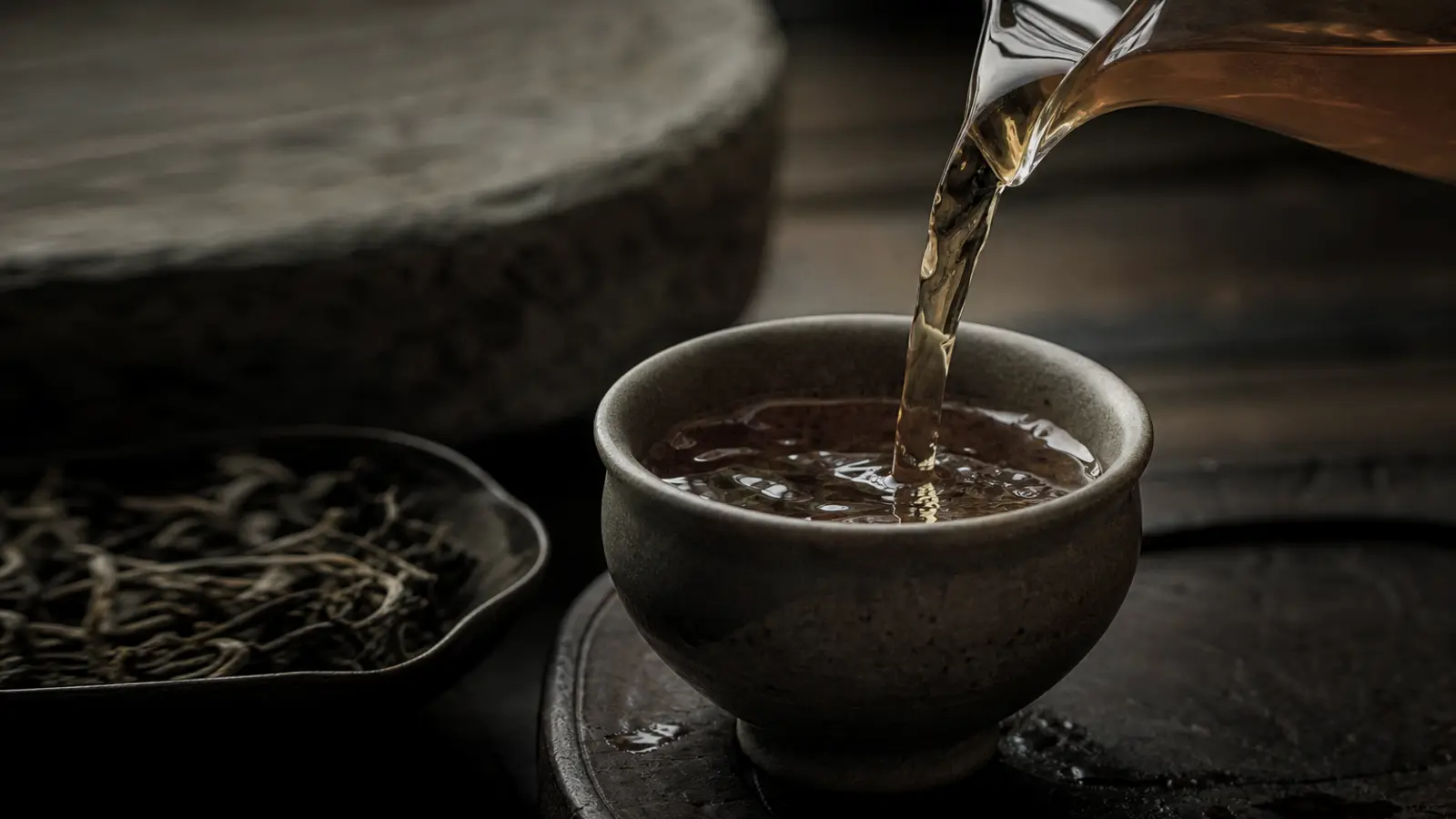
After swallowing a steep of quality sheng puerh, pause. Don’t immediately sip again. Wait about 20–30 seconds and direct your awareness to:
There is a moment that happens with good tea — maybe thirty seconds after you swallow — where your mouth simply fills. Not because you just drank something wet. A welling up, from the sides of the tongue and the inner cheeks, of clean sweet moisture that seems to arrive from nowhere. That is sheng jin (生津), and once you know to look for it, you will never ignore it again.
What Sheng Jin (生津) Actually Means
The characters break down simply: sheng (生) means “generate” or “produce,” jin (津) means “fluid” or “saliva.” Together, sheng jin means to generate fluid — specifically, the spontaneous production of saliva triggered by drinking tea.
It is not a poetic metaphor. It describes a real, measurable physiological event: your salivary glands responding to what you just swallowed. What elevates it from a biological curiosity to a tasting criterion is that the quality of that saliva — its sweetness, its cleanliness, how long the sensation persists — tells you something real about the tea that produced it.
There is no direct English equivalent. Western tea vocabulary doesn’t have a word for this, which partly explains why it’s underappreciated outside Chinese tasting contexts. The closest parallel I can offer is the mouth-watering response to a high-acid wine. A bone-dry Chablis, a Mosel Riesling with firm acidity, a Muscadet sur lie — all of these make your mouth water in a way that rounder, lower-acid wines don’t. The biochemistry differs from what happens with tea astringency, but the sensory result — that involuntary, appetizing salivation — is recognizable to anyone who’s experienced it with wine.
How to Detect Sheng Jin
Detection requires attention to the right places at the right moment.
After swallowing a steep of quality sheng puerh, pause. Don’t immediately sip again. Wait about 20–30 seconds and direct your awareness to:
- The sides of the tongue — run the tip of your tongue along the lower back edge where it meets the floor of the mouth
- The inner cheeks — the soft tissue on both sides, toward the back
- Under the tongue — the sublingual area, where the submandibular glands drain
What you’re looking for is a welling sensation — moisture accumulating in these areas without you doing anything to cause it. With very good tea, it can feel almost like the glands are expressing, pressing fluid outward.
The character of that fluid matters. Sheng jin is not just wetness. The saliva produced by a quality tea carries a sweet, clean quality — sometimes described in Chinese tasting notes as the sweetness arriving on the wave of salivation, as though the mouth prepares itself to receive something good. This distinguishes it from the neutral wetness you’d get from drinking water or a low-quality tea that simply left your mouth moist.
The Mechanism: Why This Happens
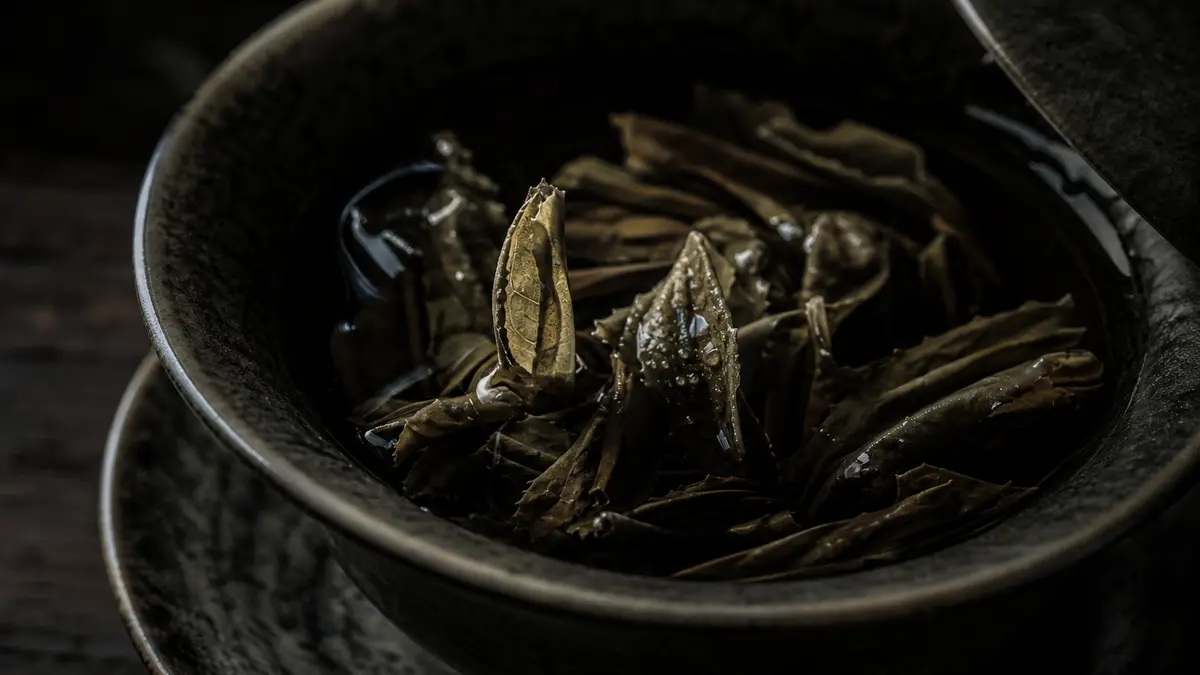
The primary drivers are polyphenol compounds, specifically the catechins EGCG (epigallocatechin gallate) and ECG (epicatechin gallate). These are the same compounds responsible for astringency — that drying, gripping sensation in the mouth.
When your body registers astringency, it reads it as a signal to flush. The parotid glands (located in front of and below each ear, draining into the cheeks) and submandibular glands (under the jaw) respond with increased saliva production as a physiological reflex. In lower quality teas, this reflex fires but the resulting dryness and mild astringency is the dominant experience. In high-quality material with a well-developed compound profile, the flush happens and keeps happening — and the sweetness of the tea’s other compounds (amino acids, natural sugars, volatile aromatics) registers in that saliva as clean sweetness.
The body intended to neutralize the astringency. Instead, it delivered sweetness.
Sheng Jin as a Quality Marker
This is where sheng jin moves from interesting physiology to practical evaluation tool.
Intensity indicates raw material quality. A strong, immediate sheng jin response suggests a complex polyphenol and amino acid profile developed over years of slow growth in appropriate conditions. Plantation tea from young bushes, heavily fertilized, tends to produce astringency without the full sheng jin response — the dryness arrives but the sweet salivation doesn’t follow cleanly.
Duration indicates compound complexity. Sheng jin that persists for two to three minutes after swallowing — where the mouth continues to water through subsequent steeps — points to a richer, more layered profile than sheng jin that appears briefly and fades. You can track this between steeps: if steep three still has you salivating 45 seconds after swallowing, that’s meaningful information about what you’re drinking.
Sweetness quality of the saliva itself is the most subjective but arguably most telling aspect. Experienced tasters distinguish sheng jin with a crystalline, clean sweetness from sheng jin that’s somewhat flat or muted. The former is associated with old arbor (古樹, gǔshù) material; the latter with younger plantation leaf.
Sheng jin is closely related to — but distinct from — huigan (回甘), the returning sweetness that develops in the throat after swallowing. The two phenomena often appear together in high-quality teas, and both are valued for the same reason: they indicate that the tea continues to deliver experience after the liquid has left your palate.
The Teas Most Known for Sheng Jin
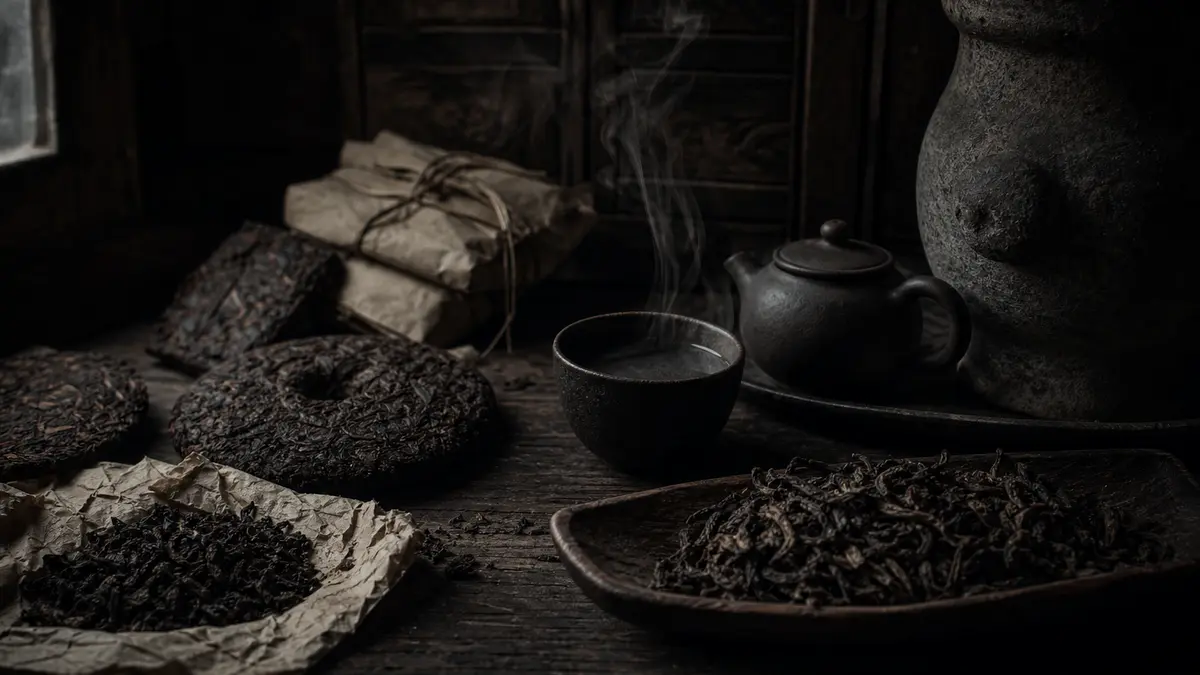
Two Lincang (臨滄) region sheng puerh are consistently cited as producing the most pronounced sheng jin response in the Chinese tea world:
Bingdao (冰島) — From Shuangjiang County in Lincang, Bingdao old arbor material is famous for an intense, immediate sheng jin that carries what many describe as a rock sugar (冰糖, bīng táng) sweetness. The sweetness seems to arrive simultaneously with the salivation rather than after it, which distinguishes Bingdao’s profile from almost anything else. Authentic old arbor Bingdao is expensive — at the top of the market, old tree maocha runs into hundreds of dollars per 100g — but even younger arbor Bingdao area teas often show the characteristic sheng jin response in attenuated form.
Xigui (昔歸) — From Lingang Township on the banks of the Lancang River, Xigui produces sheng jin with a slightly more tobacco-like, camphor-edged character compared to Bingdao’s clean sweetness. The salivation is similarly intense and long-lasting. Where Bingdao’s sheng jin tastes like sugar water, Xigui’s has more complexity — a cool, slightly mineral sweetness underneath.
Both are Lincang teas, and the Lincang region generally produces sheng puerh with particularly expressive sheng jin compared to Xishuangbanna material, which tends toward more fragrance and less pronounced salivation. This is likely a function of both cultivar (Lincang tends toward broader leaf, more locally adapted varietals) and processing traditions, though the precise agronomic reasons remain debated among producers.
Bringing Sheng Jin into Your Practice
The practical application is simple: make it part of your post-swallow attention.
In a gongfu session, after each steep, wait. Don’t evaluate the tea immediately. Let the liquid settle, then check the sides of your tongue and inner cheeks at the 20-second and 45-second marks. Note whether the salivation is strong or mild, how long it persists, and whether the moisture tastes sweet or neutral.
Do this across a session — early steeps versus later steeps — and you’ll start to see the sheng jin arc of a tea. Most quality sheng puerh peaks in sheng jin intensity around steeps two through four, as the most soluble catechins extract fully. In very high-quality material, meaningful sheng jin can persist into steeps seven, eight, or beyond.
Use it comparatively. Brew two teas side by side with identical parameters — same water temperature, same leaf-to-water ratio, same steep times — and compare the sheng jin response directly. This is how it functions as a quality sorting tool: you’re not looking for a score, you’re looking for what the tea does to your physiology after it leaves your mouth.
Sheng jin won’t tell you everything about a tea. But in a tasting vocabulary where many English words describe what tea tastes like, sheng jin describes what good tea does — and that distinction matters.