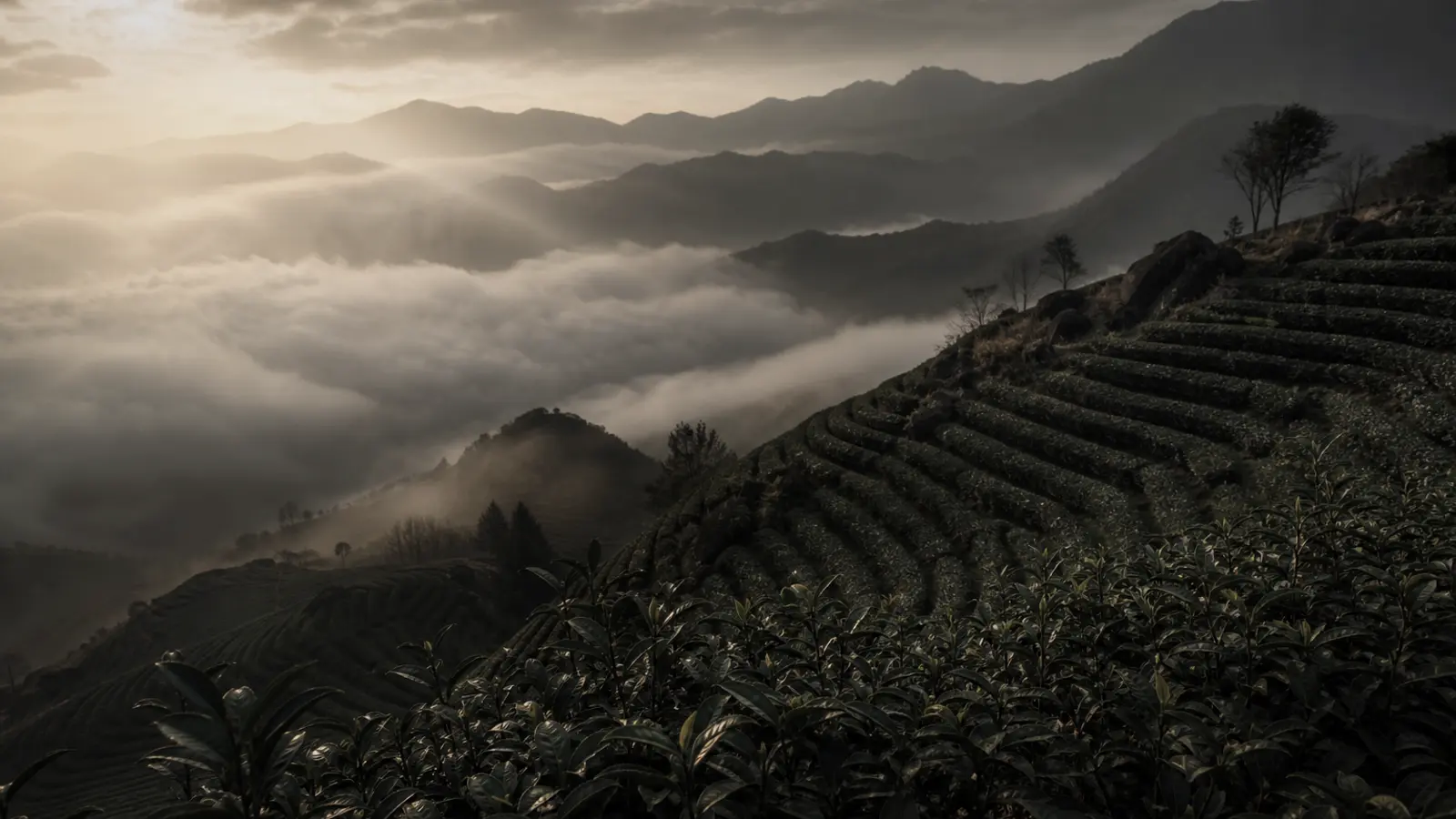
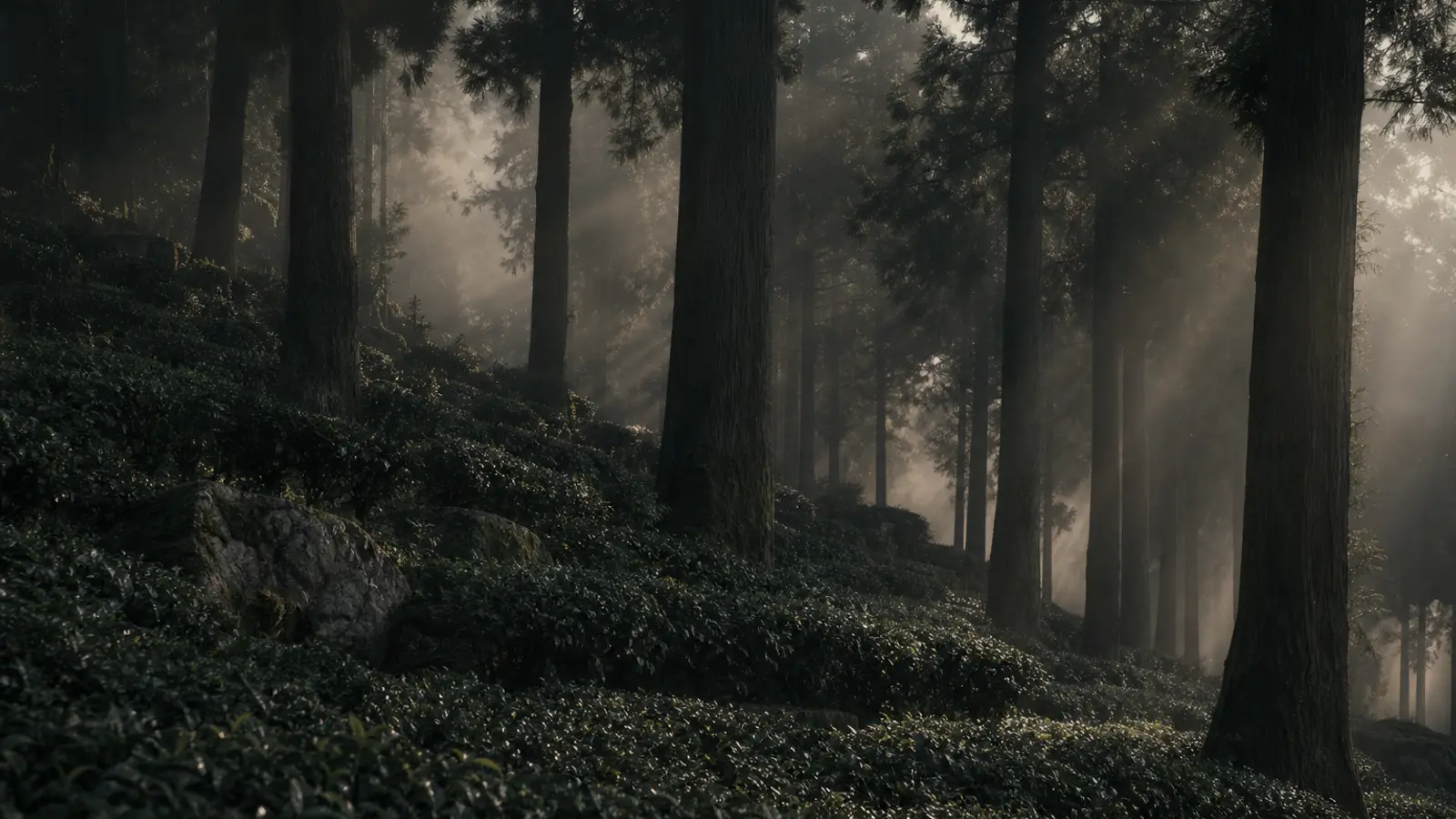
Shan Lin Xi (杉林溪, literally “Cedar Forest Creek”) is a Taiwanese high mountain oolong origin at 1,600–1,800 meters in Nantou County, distinguished by a terroir feature found nowhere else on the island: the tea gardens sit within dense stands of Japanese cedar forest whose aromatic resin creates a microclimate that imprints a cool, minty-cedar character on the finished tea. If Ali Shan (阿里山) is Taiwan’s accessible introduction to gaoshan cha (高山茶, high mountain tea), Shan Lin Xi is the origin that makes you rethink what terroir can do to an oolong leaf.
The wine world has a useful parallel. Shan Lin Xi reminds me of Alto Adige Gewürztraminer — a cool-climate wine from a specific forested mountain valley where the surrounding vegetation contributes aromatic character that the grape expresses. At Shan Lin Xi, the environment is the flavor.
Geography & Location
Shan Lin Xi sits in Taiwan’s central mountain range, inland from Sun Moon Lake (日月潭) in Nantou County (南投縣). The name is descriptive: 杉 (shān, cedar), 林 (lín, forest), 溪 (xī, creek). This is cedar forest creek country, and the name is not poetic license.
The area falls within the broader Lugu Township (鹿谷鄉) administrative zone, historically one of Taiwan’s most important tea-producing districts — Dong Ding (凍頂) oolong comes from the lower slopes of the same general region. But where Dong Ding sits at 600–800 meters, Shan Lin Xi climbs to 1,600–1,800 meters, placing it firmly in gaoshan territory.
The tea-growing areas cluster around the Shan Lin Xi Forest Recreation Area, roughly at coordinates 23.7°N, 120.7°E. Access roads wind through dense forest before opening onto terraced gardens that sit among — and in some cases directly beneath — towering cedar canopies. It is one of the most visually striking tea-growing environments I have encountered in photographs and satellite imagery; the gardens read as clearings within a forest rather than plantations on an open mountainside.
Climate & Elevation
At 1,600–1,800 meters, Shan Lin Xi’s elevation is higher than most Ali Shan gardens (typically 1,000–1,600m) but lower than the highest Li Shan (梨山) plantings that reach 2,600 meters. The elevation alone would produce classic gaoshan characteristics: slow leaf growth, concentrated amino acids, reduced bitterness from lower catechin development.
But elevation tells only part of the story. The cedar forest creates a secondary climate system within the mountain climate:
- Cloud immersion. The gardens sit within the cloud belt for much of the growing season. Fog rolls through the cedar stands daily, reducing direct sunlight hours and keeping humidity high.
- Canopy shade. Where tea rows border or intermingle with cedar trees, the canopy provides partial shade, further reducing UV exposure. This shifts the leaf’s chemistry toward L-theanine production and away from catechin synthesis — the same biochemical logic behind Japanese kabuse-cha (かぶせ茶), though achieved through forest proximity rather than artificial shading.
- Temperature moderation. The forest mass moderates diurnal temperature swings. Daytime highs stay cooler; nighttime lows stay slightly warmer. The net effect is a more gradual, even growing season.
Average temperatures during the spring harvest season (April–May) hover around 12–18°C, with nighttime drops that slow the plant’s metabolism and extend the period of amino acid accumulation in the leaf.
Soil & Terroir
This is where Shan Lin Xi becomes genuinely unusual among Taiwanese origins.
The soils are mountain forest soils — well-drained, relatively thin, with underlying rock providing mineral structure. Standard for high mountain tea. What is not standard is the organic layer.
Japanese cedar (Cryptomeria japonica, 日本柳杉) was planted extensively across Taiwan’s mountain zones during the Japanese colonial period (1895–1945). At Shan Lin Xi, these plantings have matured into towering stands, some trees now exceeding 80 years of age. Decades of needle drop have created a thick litter layer on the forest floor. Cedar needles decompose slowly and release organic acids as they break down, gradually acidifying the topsoil. Tea plants (Camellia sinensis) prefer acidic soil — a pH of 4.5–5.5 is optimal — and the cedar needle contribution likely pushes Shan Lin Xi soils toward the acidic end of that range.
More intriguing is the aromatic dimension. Cedar resin is rich in terpene compounds — notably α-pinene, β-pinene, and cedrol. These volatiles permeate the air around the trees, creating what anyone walking through a cedar forest recognizes immediately: that clean, resinous, slightly mentholated scent. The tea plants grow within this aromatic atmosphere for their entire lives.
The mechanism by which these terpenes enter the tea is debated. Multiple plausible pathways exist: volatile absorption through leaf stomata during transpiration, root uptake of terpene-derived compounds from decomposing needle matter in the soil, or both. The science is not settled. What is settled is the result. Shan Lin Xi oolong, across different farms and different producers, consistently exhibits a cool mint-cedar note that does not appear in oolongs grown at comparable elevations without the cedar forest context. The terroir connection is accepted even if the precise biochemical pathway remains under investigation.
Key Cultivars & Tea Types
The dominant cultivar at Shan Lin Xi is Qingxin (青心, also written 青心烏龍, Qingxin Oolong), the same cultivar that defines most of Taiwan’s premium gaoshan production. Qingxin is prized for its delicate floral aromatics and its responsiveness to terroir — it expresses site character clearly, which is precisely why it thrives as the vehicle for Shan Lin Xi’s cedar-influenced flavor.
Some gardens also grow Jin Xuan (金萱, TTES #12), the cultivar known for its milk-like creaminess. Jin Xuan at Shan Lin Xi elevation can produce interesting results, but Qingxin remains the prestige cultivar and the one most associated with competition-grade Shan Lin Xi.
The tea produced here is almost exclusively ball-rolled high mountain oolong (高山烏龍茶), lightly oxidized (typically 15–25%) and unroasted or very lightly roasted. This style preserves the volatile aromatics that define the origin. Heavier roasting would mute the mint-cedar top note — defeating the purpose of growing tea in this particular forest.
Processing Traditions
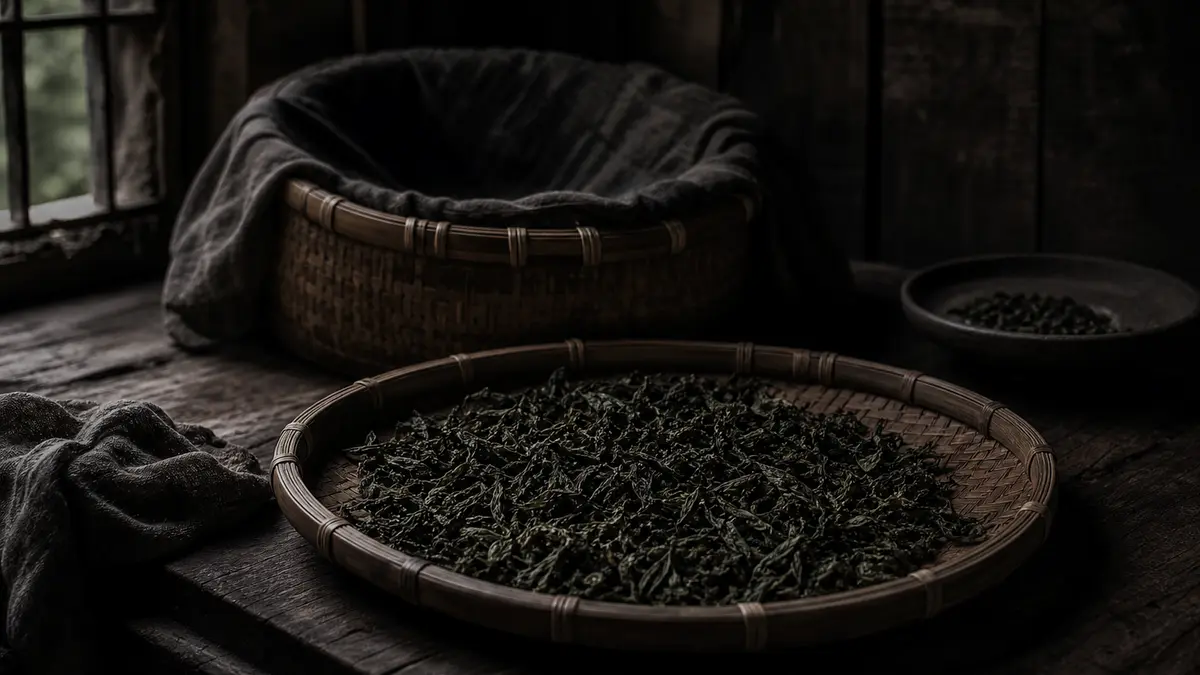
Shan Lin Xi oolong follows the standard Taiwanese gaoshan processing template, with subtle adjustments that reflect the local leaf character:
- Harvest. Spring (April–May) and winter (October–November) are the primary seasons. Spring harvest is generally considered superior for aromatic complexity. Leaves are picked as one bud and two to three leaves.
- Withering (萎凋, wěi diāo). Outdoor and indoor withering reduces moisture and initiates enzymatic changes. The cool mountain air at harvest time means withering proceeds slowly — a benefit for flavor development.
- Tossing and bruising (浪菁, làng qīng). Leaves are tumbled in bamboo drums to bruise the edges, triggering partial oxidation. This step is handled gently for Shan Lin Xi; producers aim for light oxidation that preserves the mint-cedar aromatics rather than pushing toward deeper floral or honey notes.
- Kill-green (殺菁, shā qīng). Heat is applied — typically in a rotating drum — to halt oxidation. Timing here is critical: too early locks in grassy, underdeveloped flavors; too late pushes oxidation past the sweet spot for this origin’s character.
- Rolling (揉捻, róu niǎn). The leaves are rolled into the tight ball shape characteristic of Taiwanese oolong. Multiple rolling and drying cycles achieve the dense pellet form.
- Drying and optional light roast. Final drying stabilizes the tea. Most Shan Lin Xi is left unroasted or given only a very gentle finish to preserve its defining volatile top notes.
The processing is deliberately conservative. The terroir does the heavy lifting at Shan Lin Xi; the maker’s job is to not get in its way.
Characteristic Flavor Signatures of Shan Lin Xi Oolong
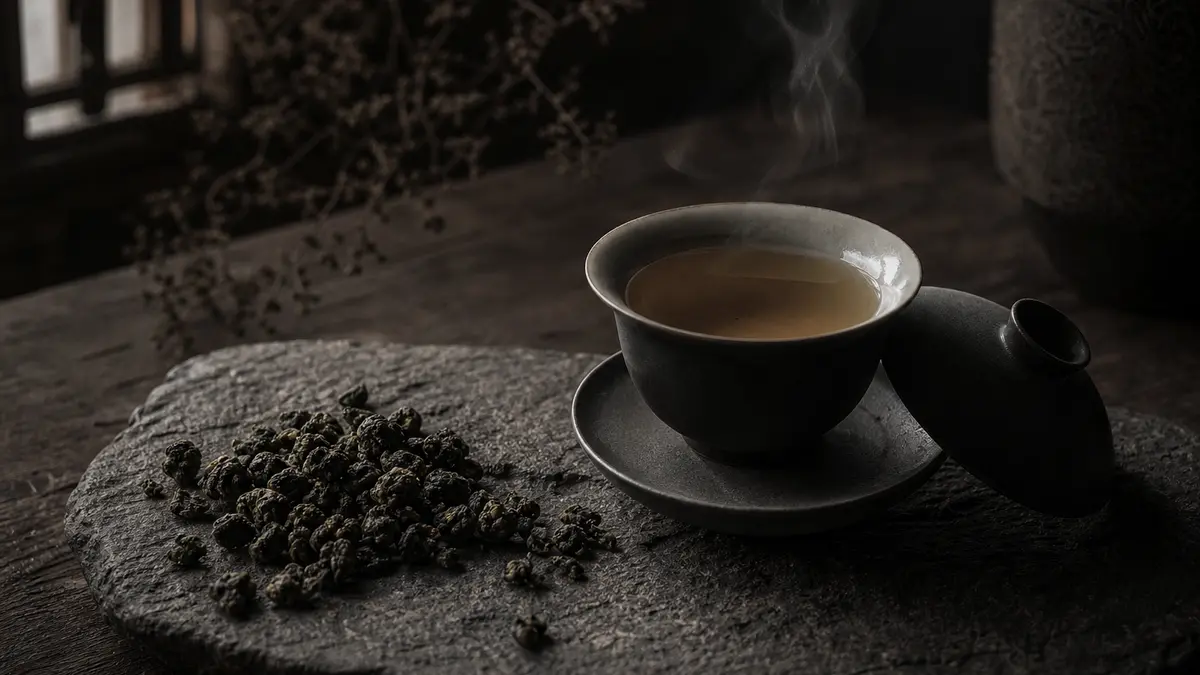
The defining note is a cool mintiness underlaid by cedar. This is not subtle. In a well-made Shan Lin Xi oolong, the mint-cedar impression arrives on the first steep and persists through six or more infusions. It registers not just as aroma but as a physical cooling sensation — a mentholated quality in the throat that Chinese tea tasting vocabulary would describe as a form of huigan (回甘, returning sweetness), though here it manifests more as returning coolness.
Behind this signature top note, the classic high mountain oolong architecture is present:
- Orchid floral. The Qingxin cultivar’s trademark, expressed as a light, high-toned floral quality reminiscent of cymbidium orchid.
- Cream and butter. A smooth, dairy-like richness in the mid-palate, more restrained than in Ali Shan but clearly present.
- Alpine freshness. A clean, bright quality that suggests mountain air — partly a function of elevation, partly the cedar influence amplifying the impression.
- Medium body. Shan Lin Xi is not a thick, heavy oolong. The body sits in the medium range, with a silky texture rather than a viscous one.
- Clean, long finish. The aftertaste extends well, with the mint-cedar note persisting as a gentle cooling sensation. In competition-grade examples, this finish can last several minutes.
The combination creates a uniquely refreshing cup. Where Li Shan often dazzles with sheer intensity and Ali Shan comforts with buttery sweetness, Shan Lin Xi refreshes. It is the high mountain oolong you reach for when you want clarity and lift rather than weight and depth.
Brewing Parameters
I brew Shan Lin Xi gongfu-style in a porcelain gaiwan (蓋碗):
| Parameter | Gongfu | Western |
|---|---|---|
| Leaf-to-water ratio | 6g per 120ml | 3g per 200ml |
| Water temperature | 90–95°C (194–203°F) | 90°C (194°F) |
| First steep | 45 seconds | 3 minutes |
| Subsequent steeps | +10–15 seconds each | +1 minute each |
| Expected infusions | 6–8 | 3–4 |
Use water at 90°C if you want to emphasize the floral-mint top notes. Push to 95°C if you want to draw out more body and the underlying sweetness. Avoid full boiling — it can flatten the cedar aromatics that make this origin worth seeking out.
Quality Indicators & Authentication
Identifying genuine Shan Lin Xi requires attention to a few markers:
- The mint-cedar note should be present. This is non-negotiable. If a tea labeled Shan Lin Xi tastes like generic gaoshan — floral, sweet, buttery, but without the cool cedar overlay — it is likely from a lower-elevation garden in the broader Lugu area being sold under the more prestigious name.
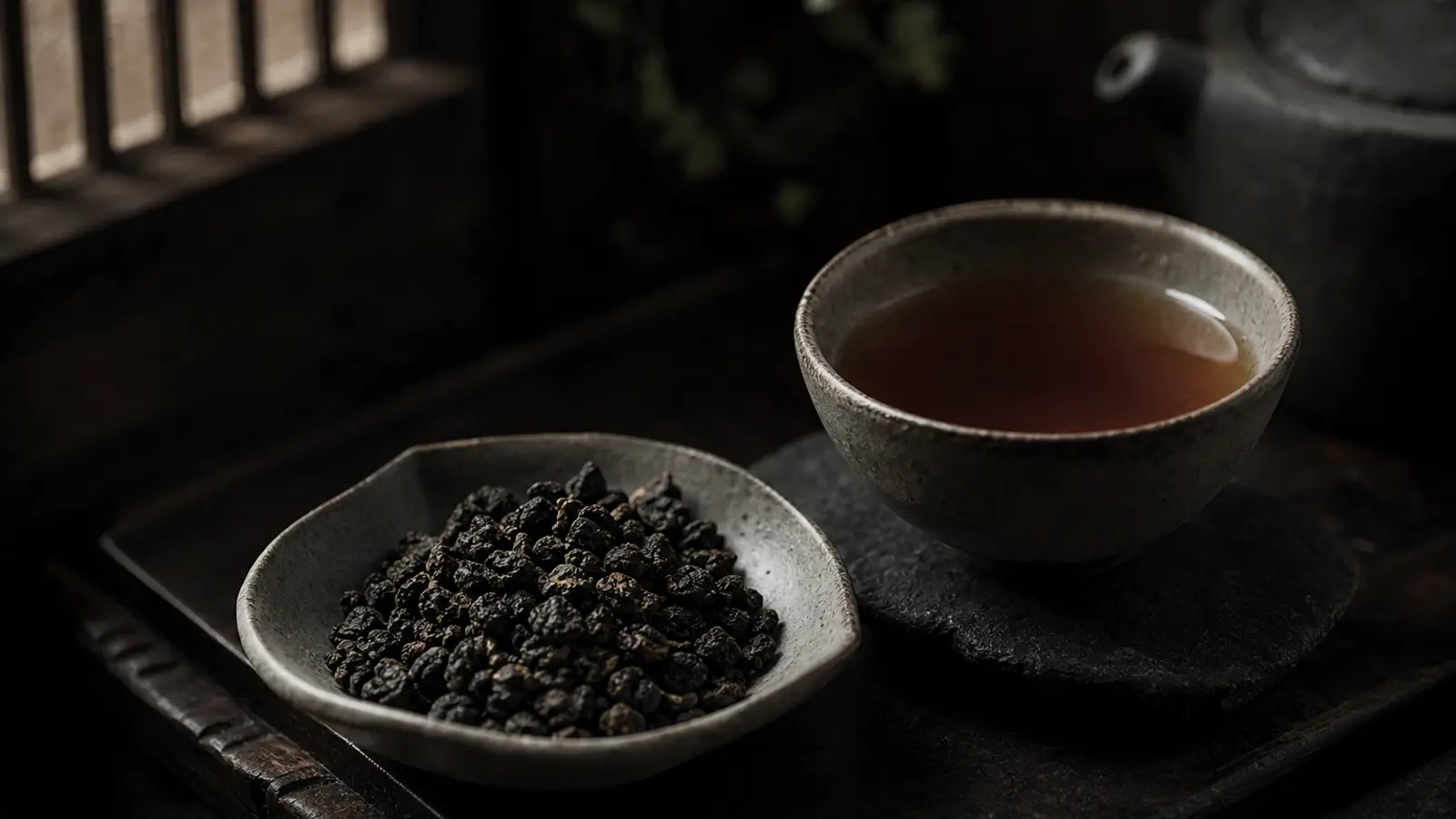
- Dry leaf appearance. Tightly rolled balls, dark green with some lighter edges. The roll should be compact and uniform.
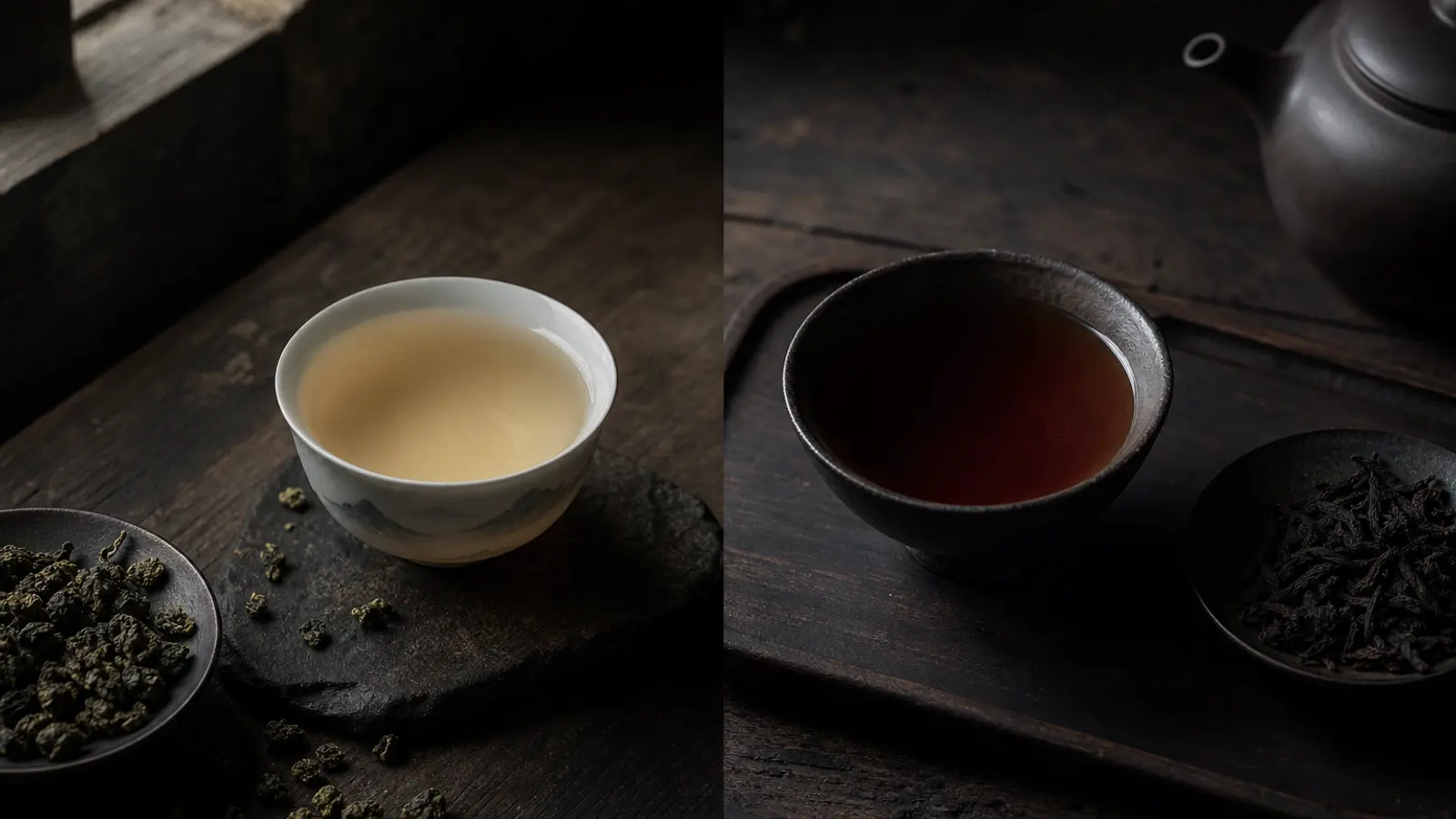
- Liquor color. Pale gold to light green-gold. Darker liquor suggests heavier oxidation or roasting than is typical for authentic Shan Lin Xi.
- Persistence. Good Shan Lin Xi lasts. If the tea flattens by the third steep, quality is suspect.
- Competition labels. Shan Lin Xi teas that have placed in local competitions (particularly the Lugu Farmers’ Association competitions) carry verification labels. These are the most reliable authentication available, though competition-grade tea commands a significant premium.
Price Ranges
Shan Lin Xi commands prices comparable to upper-tier Ali Shan, with a slight premium reflecting the smaller production area.
| Grade | Price (USD per 50g) | Notes |
|---|---|---|
| Standard | $8–$18 | Solid everyday gaoshan with clear mint-cedar character |
| Premium | $15–$25 | Select harvests, stronger terroir expression |
| Competition-grade | $25–$30+ | Competition winners or near-winners; exceptional clarity and persistence |
These are international retail prices. In Taiwan’s domestic market, prices run roughly 15–25% lower for equivalent quality, particularly if purchased directly from producing families in Lugu Township. Competition-winning lots can spike well above these ranges at auction.
Compared to Ali Shan at similar quality tiers, expect to pay 10–20% more for Shan Lin Xi. Compared to Li Shan, Shan Lin Xi remains more accessible — Li Shan’s extreme elevation and tiny production volumes push its prices higher.
For anyone building a Taiwanese gaoshan education, Shan Lin Xi is the origin that demonstrates terroir most convincingly. Ali Shan is the welcoming introduction. Li Shan is the high-altitude benchmark. Shan Lin Xi is the proof that where tea grows — down to the specific trees surrounding the garden — shapes what ends up in your cup. The cedar forest is not scenery. It is an ingredient.