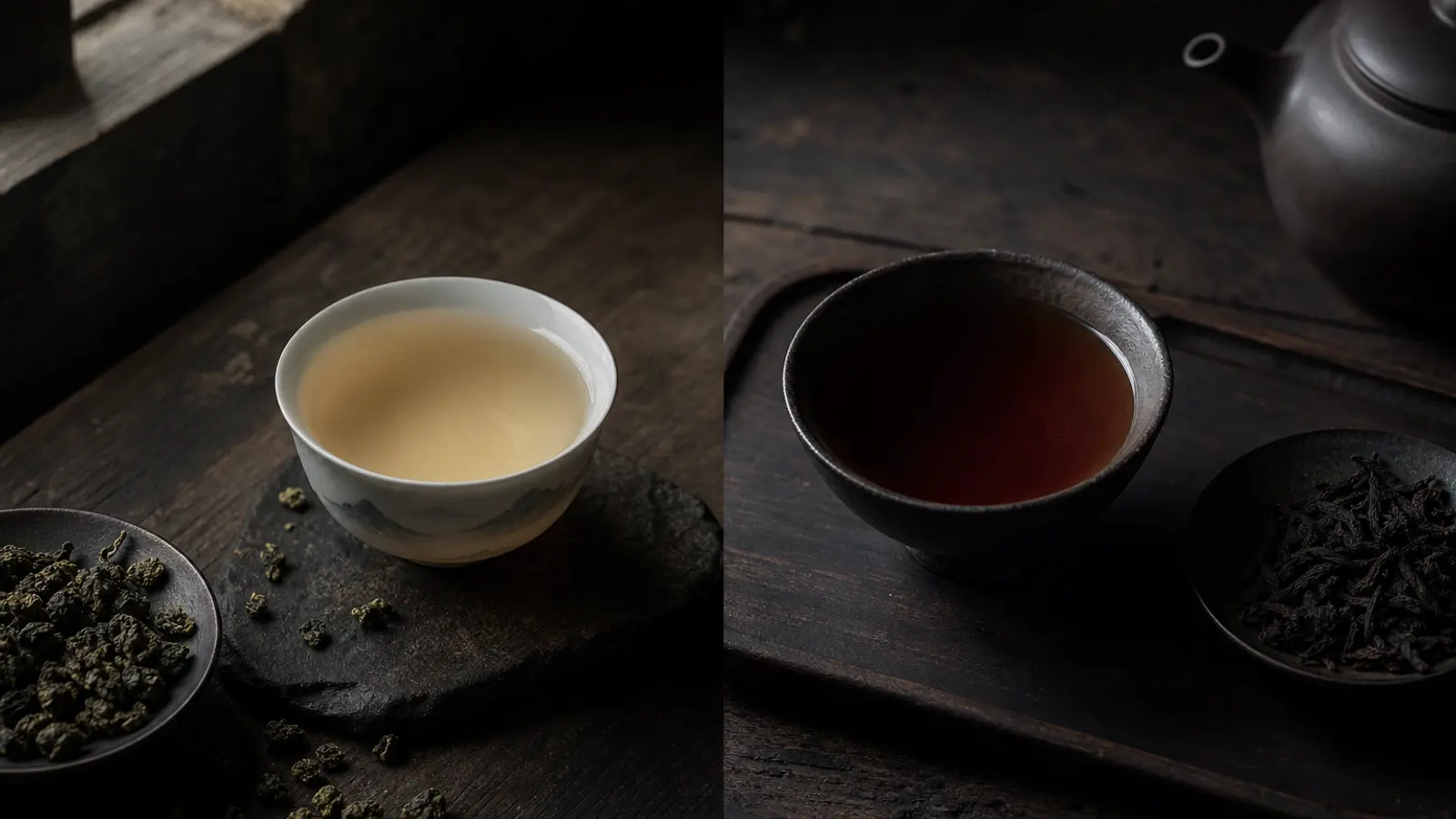
There is a moment, drinking a properly made Da Hong Pao (大红袍) from zhengyan material, when you taste something that has no parallel in the rest of the tea world. It arrives in the mid-palate after the initial hit of toasted grain and caramel subsides — a stony, mineral quality like wet rocks after rain, dense and structural, coating the mouth with something that feels geological in origin. Because it is.
This is wuyi mountain tea. And the story of why it tastes this way starts with ancient volcanoes.
Geography & Location
The Wuyi Mountains (武夷山, Wuyi Shan) sit in northern Fujian province at approximately 27.7°N, 117.7°E — about 500 kilometers southwest of Shanghai, close enough to the coast to receive moisture-laden Pacific air, far enough inland to develop significant temperature variation. The range forms a natural boundary between Fujian and Jiangxi provinces.
UNESCO designated the area a World Heritage Site in 1999 for both natural and cultural significance — one of only a handful of sites recognized on both counts. The listing covers roughly 999 square kilometers, but the core tea production area is considerably smaller: the canyon system carved by the Nine Bend Stream (九曲溪, Jiuqu Xi), where the most prized zhengyan teas grow, covers perhaps 70 square kilometers.
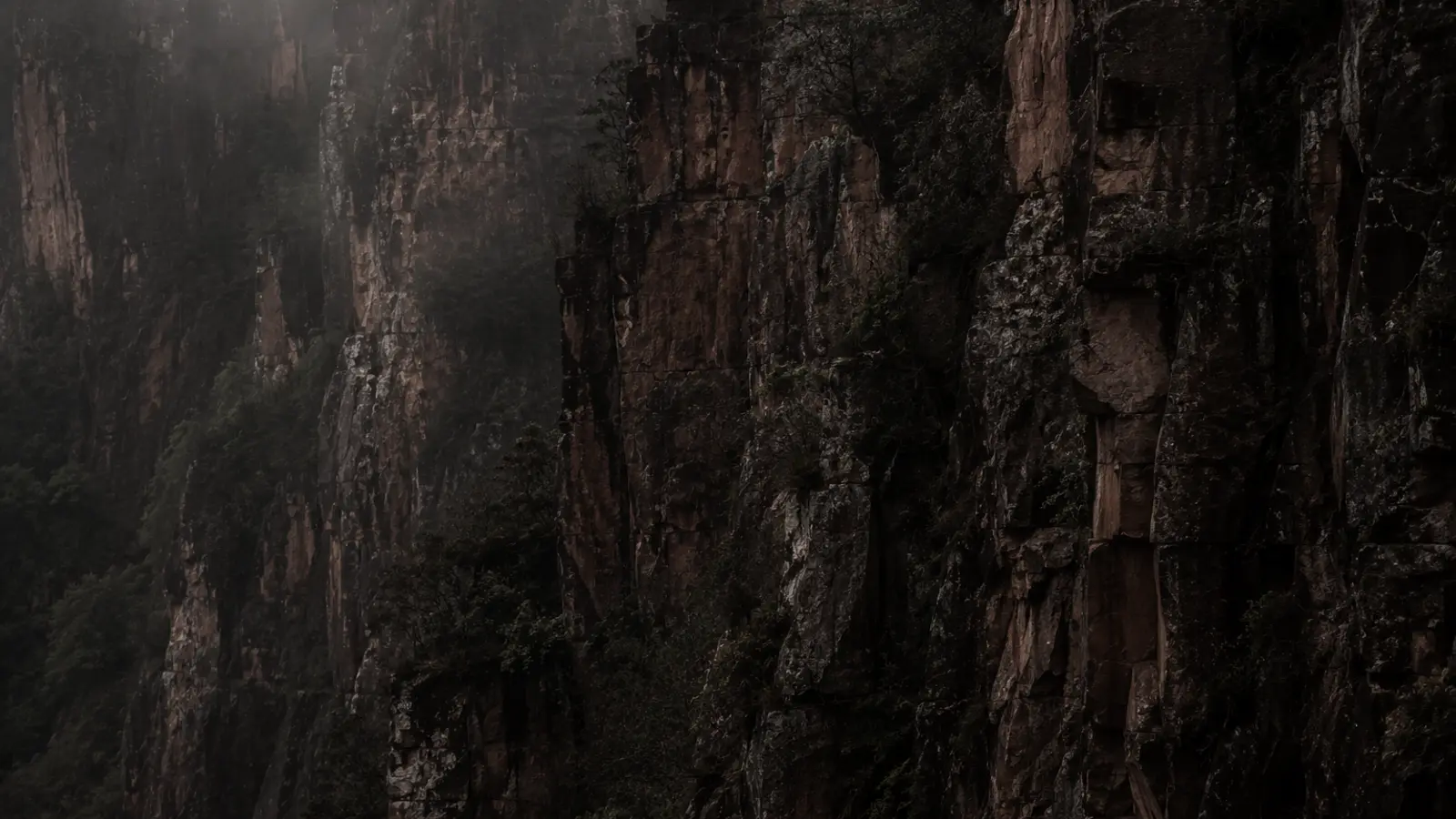
The geography is dramatic in the specific way that matters for tea. The Nine Bend Stream cuts through the Danxia landform in a series of tight meanders, creating shaded gorge walls, microclimates of high humidity and filtered light, and the kind of steep, rocky terrain that makes agriculture impractical by any conventional measure. Tea bushes grow in places where nothing else will — in rock fissures, on near-vertical cliff faces, in narrow ravines that see sun for only a few hours each day.
Like the Mosel River valley in Germany, the landscape itself selects for quality by making quantity impossible.
Climate & Elevation
The Wuyi Mountains operate under a subtropical monsoon climate. Annual rainfall runs 1,800–2,000mm, distributed fairly evenly through the year with peaks in spring and early summer. Humidity is high year-round — the canyon system traps mist, and morning fog is routine. This moisture keeps tea leaves hydrated and growing slowly, which correlates with flavor complexity.
Elevation within the core production area ranges from 200–700 meters — lower than many celebrated Chinese tea regions. This is not an altitude story the way Darjeeling or high-mountain Taiwan oolongs are altitude stories. The elevation matters less here than the canyon topography: the gorge walls create shade, moderate temperature extremes, and channel air movement in ways that flat land at the same elevation would not.
The diurnal temperature variation — significant swings between warm afternoons and cool nights — is a well-documented driver of tea quality. Slow accumulation of flavor compounds during cool nights, accelerated metabolism during warm days. Wuyi’s canyon terrain amplifies this: valley floors stay cooler than surrounding plateaus, and the rocky terrain absorbs and radiates heat differently than soil-covered land.
Spring harvest (first and second flushes, March–May) is the prestige season. Autumn harvest produces a smaller, often more aromatic crop that some producers value highly for specific cultivars.
Soil & Terroir
This is where the Wuyi story becomes genuinely singular, and where the wine parallel earns its keep.
The Danxia (丹霞) landform is what you are looking at when you see photographs of Wuyi’s red-orange cliff faces and dramatic rock formations. It is a geological feature formed by ancient volcanic and sedimentary activity: the bedrock is primarily purple-red sandstone, rhyolite, and tuff — volcanic materials that weathered over tens of millions of years into the current landscape.
The resulting soil is thin, rocky, mineral-rich, and drains extremely fast. There is very little organic topsoil. Where tea grows in rock fissures and cliff faces, there is sometimes almost no soil at all — roots extend deep into rock cracks, seeking moisture and pulling up minerals directly from the parent rock. This is an agricultural extreme. By any conventional farming logic, this is not good soil for tea. But it produces something that richer, deeper soils cannot.
The mineral content of Danxia geology — calcium, magnesium, potassium, iron, trace elements from volcanic rock — is what the tea roots are absorbing. And that mineral load is what expresses in the cup as 岩韻 (yan yun, rock rhyme).
The Mosel comparison is the most useful I know. The great Riesling vineyards of the Mosel — Bernkasteler Doctor, Wehlener Sonnenuhr — grow on steep Devonian slate slopes where no sane farmer would plant a crop. The slate gives those wines their Schieferstein: a mineral quality, a stony wetness, a structural tension that distinguishes them from Riesling grown anywhere else. Wuyi’s Danxia geology does the same thing for tea. The dramatic, impractical growing sites are not incidental to the quality — they are the mechanism.
If terroir has a single clearest expression anywhere in the tea world, this is a strong candidate for it.
The Three Tiers of Wuyi Terroir
The production area is formally divided into zones based on their proximity to and resemblance to the core Danxia terrain:
Zhengyan (正岩, True Rock): The inner canyon of the Nine Bend Stream system. This is the core, perhaps 70 square kilometers, defined by the most pronounced Danxia geology, the most dramatic topography, and the highest concentration of mineral character in the cup. Prices are substantially higher, and authentication is a serious issue.
Banyan (半岩, Half-Rock): Surrounding areas that share the general geology but sit outside the canyon proper — hillsides and transitional zones where the Danxia character is present but less intense. These teas show yan yun but typically with less concentration and persistence.
Zhou Cha (洲茶, Riverbank Tea): Flatland production from the broader Wuyi area, grown on alluvial soils without the Danxia mineral base. Cheaper, more approachable, but the defining rock character is largely absent.
The distinction matters commercially and sensory. Zhengyan tea from a reputable source is not just more expensive — it is qualitatively different in ways a calibrated palate can detect. The mineral density simply is not present in the same way in zhou cha.
Key Cultivars & Tea Types
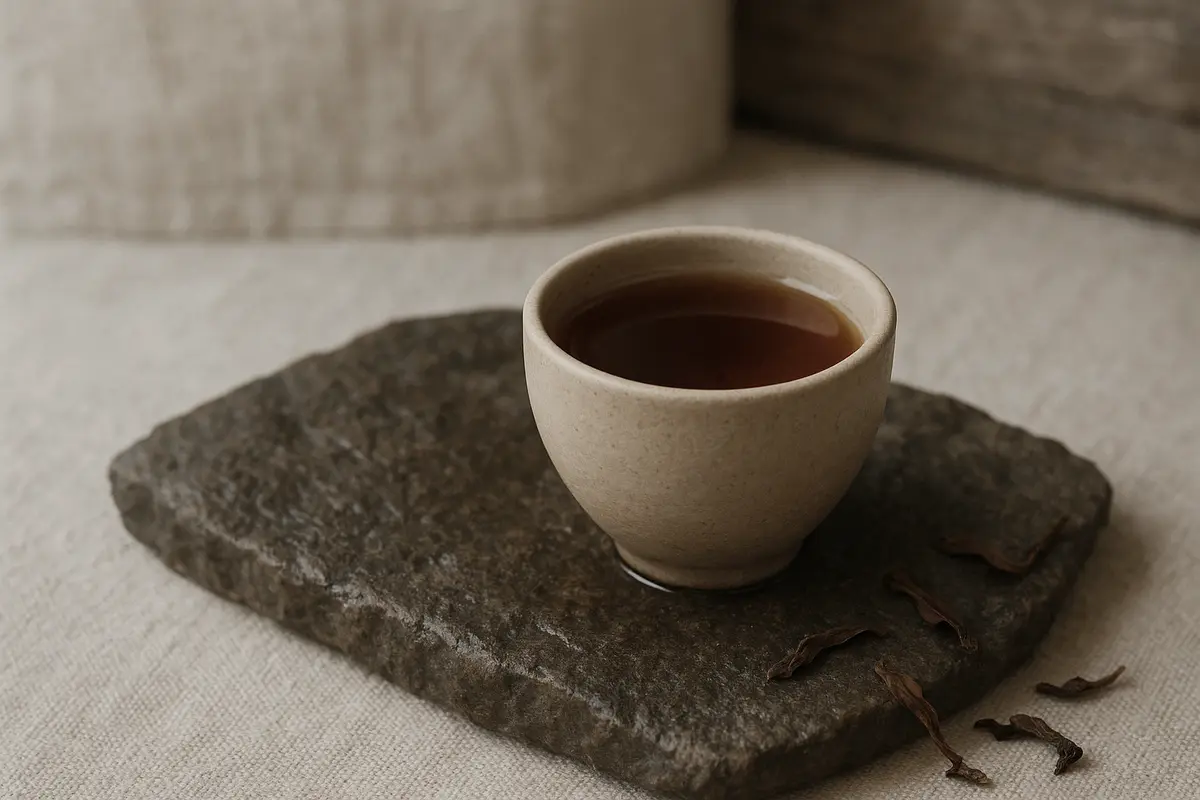
Wuyi produces almost exclusively oolong — specifically the style called yan cha (岩茶, rock tea). The cultivar diversity is substantial, with hundreds of named varieties, but a handful dominate the market and the conversation.
Da Hong Pao (大红袍 — Big Red Robe)
The most famous Chinese tea by reputation, and the cultivar I know best. The name refers to a legendary story: a Ming dynasty scholar, cured of illness by tea from a particular cliff, draped his red scholar’s robe over the bushes in gratitude. The three “original” Da Hong Pao bushes still grow on a cliff face in the Tianxin Rock area of the core zhengyan zone — they are a UNESCO cultural heritage site unto themselves and have not been commercially harvested in decades.
Modern Da Hong Pao is a blend or single-cultivar tea propagated from cuttings of those original bushes (or cuttings of cuttings). The genetic integrity is contested, and what is sold as DHP spans an enormous quality and price range.
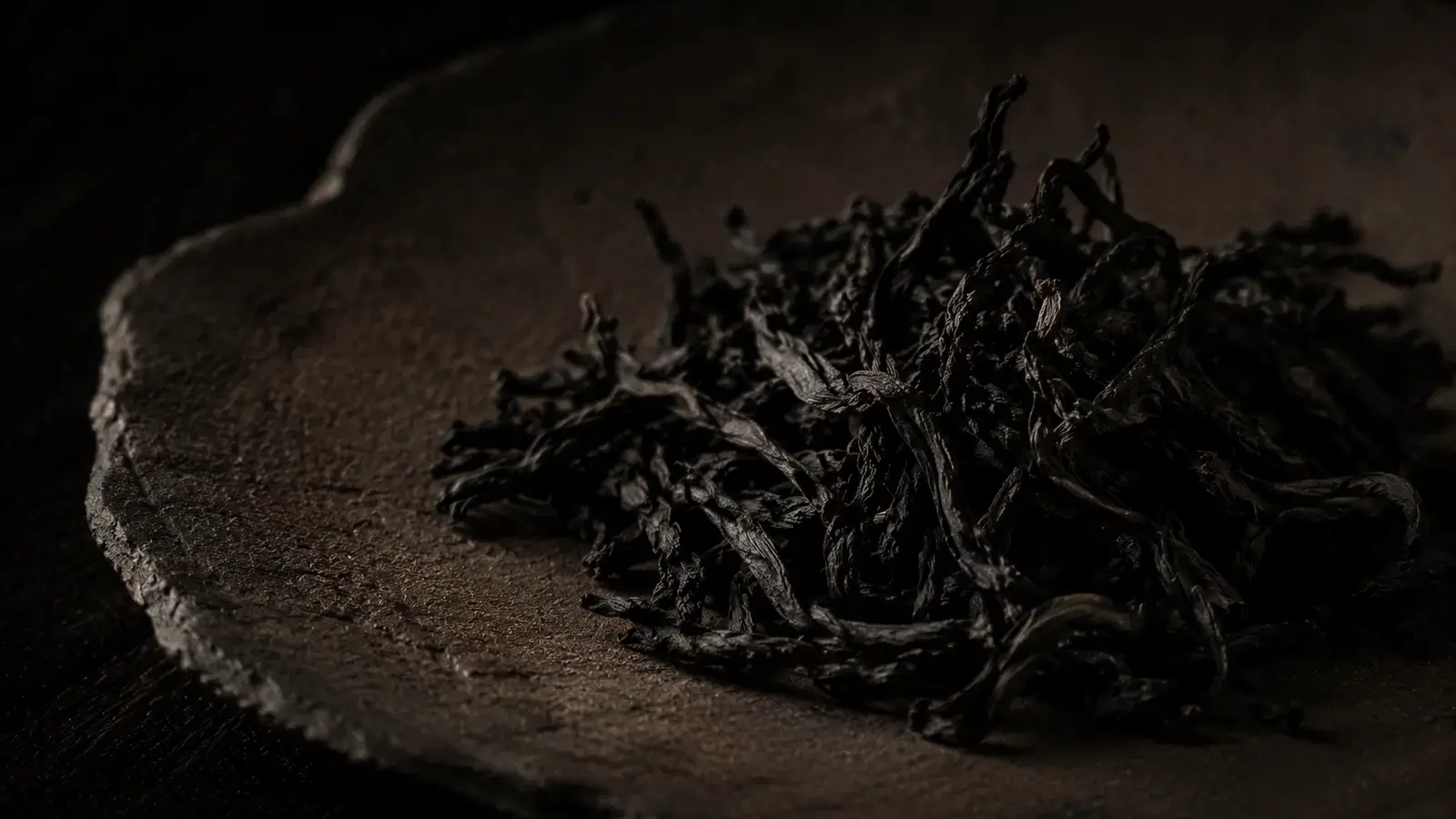
My firsthand experience with Da Hong Pao is from two sources: daily morning work sessions with Da Hong Pao from a specialist tea shop in Bangkok, and a Wuyi rock oolong sampler from a reputable vendor that includes Premium AA DHP, 13-Year Aged DHP, Wild DHP from Tong Mu Guan, Fo Shou, and Qi Lan (the sampler has arrived but my systematic session notes on those specific teas are still accumulating). What I can speak to directly is the sensory profile of good DHP from the Bangkok source, with the sampler data to come. The profile: toasted grain and caramel lead — the charcoal roast announces itself immediately. Then, as the roast settles in the mid-palate, the mineral backbone (yan yun) emerges. This is not a subtle mineral note the way a white Burgundy might show flinty minerality. It is front-and-center: wet rocks after rain, a stony density that coats the mouth. The finish reveals orchid and dried fruit sweetness as the roast fades, with huigan (回甘, returning sweetness) emerging from behind the roast rather than from bitterness conversion the way pu-erh huigan works. The mouthfeel is thick, almost oily, with the rock bone density that distinguishes zhengyan material from lighter oolongs.
In my 10-dimension flavor profile system, this tea scores mineral at 8/10 — the highest mineral score in my collection by a significant margin. Mineral is the dominant dimension. No other tea I work with regularly approaches it.
Rou Gui (肉桂 — Cinnamon)
Rou Gui has become arguably more commercially important than Da Hong Pao in recent years. The name refers to the spicy, cinnamon-like aromatic character that distinguishes it — a warming, sharp fragrance that sits above the mineral base. Where DHP is complex and layered, Rou Gui is more overtly aromatic, with that signature spice note doing much of the sensory work.
Top zhengyan Rou Gui — particularly from named cliff sites like Mǎtóu (马头岩) or Niúlán Kēng (牛栏坑) — commands premium prices and a devoted following.
Shui Xian (水仙 — Water Sprite)
The workhorse cultivar of Wuyi production by volume. Shui Xian tends to be smoother and less spicy than Rou Gui, with a fuller, more viscous body and a somewhat gentler approach to the mineral character. Older Shui Xian bushes — laocong (老丛, old bush) Shui Xian — produce a distinctive woody, deep character that commands its own premium.
Shui Xian is often the entry point for people new to yan cha: more forgiving to brew, more accessible in flavor, and generally lower priced than top DHP or named-cliff Rou Gui. Brewing it well rewards a methodical gongfu approach — multiple short infusions reveal how the mineral and floral dimensions shift across steepings.
Tie Luo Han (铁罗汉 — Iron Arhat)
One of the original Four Famous Bushes (四大名丛, Si Da Ming Cong) — alongside Da Hong Pao, Bai Ji Guan (白鸡冠), and Shui Jin Gui (水金龟). Tie Luo Han is among the oldest cultivated Wuyi varieties. The name references the iron-like density of the roasted leaf and the martial quality of the flavor — forceful, mineral, austere. Less commercially prominent than DHP or Rou Gui today but historically significant and still produced by quality-focused operations.
Qi Lan (奇兰 — Rare Orchid)
The most accessible of the major Wuyi cultivars. Qi Lan produces a lighter, more overtly floral profile — orchid and stone fruit forward, with the mineral character present but less dominant than in DHP or Rou Gui. The Wuyi sampler I am working through includes a Qi Lan, and early impressions suggest it lives up to its name: genuinely orchid-forward in a way that makes it a useful reference point for understanding how different cultivars express the same terroir differently.
Processing Traditions
Wuyi yan cha processing is one of the most technically demanding in Chinese tea. The signature step — charcoal roasting — is what makes it unique within the oolong family.
The Basic Sequence
Withering (萎凋, wei diao): Fresh leaf is spread and allowed to wilt, reducing moisture and beginning enzymatic activity.
Shaking and bruising (做青, zuo qing): The leaves are periodically tossed and bruised against each other in bamboo trays or tumbling cylinders. This damages the leaf edges and controls the rate and extent of oxidation. Skilled zuo qing management — reading the leaf, adjusting timing and intensity — is considered the central craft of yan cha production.
Kill-green (殺青, sha qing): Heat applied to halt oxidation at the desired level. Yan cha is typically 30–70% oxidized — more than most Taiwanese oolongs, less than black tea.
Rolling (揉捻, rou nian): Shaping the leaf, typically into the twisted strip form characteristic of Wuyi oolongs (as opposed to the rolled-ball form of Taiwanese high-mountain oolongs).
Initial drying: Reduces moisture to a stable level before roasting.
Charcoal Roasting (炭焙 — Tan Bei)
This is the defining step and the source of most of the complexity that distinguishes yan cha.
After initial processing, the tea undergoes multiple rounds of slow charcoal roasting in bamboo baskets over pits of glowing charcoal — typically longan wood charcoal, which burns long, hot, and clean. Each round may last 6–12 hours at temperatures that vary by the desired roast level. Between rounds, the tea rests. The entire roasting process for a heavily roasted tea can span weeks or months.
Roast levels are described along a spectrum:
| Level | Chinese | Character |
|---|---|---|
| Light fragrance | 清香 (qing xiang) | Minimal roasting, green and floral |
| Medium fire | 中火 (zhong huo) | Balanced roast and floral notes |
| Foot fire | 足火 (zu huo) | Heavy roast, deep and complex |
The roast does not mask the tea’s character — this is a common misconception. Done correctly, it integrates with and transforms the underlying terroir. The charcoal fire drives off remaining moisture and volatile compounds, concentrates minerals and flavor precursors, and adds its own toasted, caramelized dimension. The interaction between the leaf’s mineral content and the roast heat is what creates the full yan cha experience: the toasted notes are the roast’s contribution, the mineral density is the rock’s contribution, and the long finish is what happens when they meet.
Fire Withdrawal (退火 — Tui Huo)
Heavily roasted yan cha needs time after roasting to settle. Fresh off the fire, the tea can taste harsh, bitter, and aggressively roasted — the “fire energy” has not yet integrated. Producers and serious buyers allow 6–12 months of rest before drinking heavily roasted material. This is not optional for full-fire yan cha: it is a required part of the production timeline. The roast gradually mellows, the mineral and floral dimensions re-emerge, and the integrated complexity of good zhengyan tea becomes accessible.
This aging requirement has commercial implications. Quality-focused producers release their heavily roasted teas with appropriate lead time. A “fresh roast” of full-fire yan cha released for immediate consumption is either misrepresented or intended for consumers who do not know what they are buying.
Characteristic Flavor Signatures
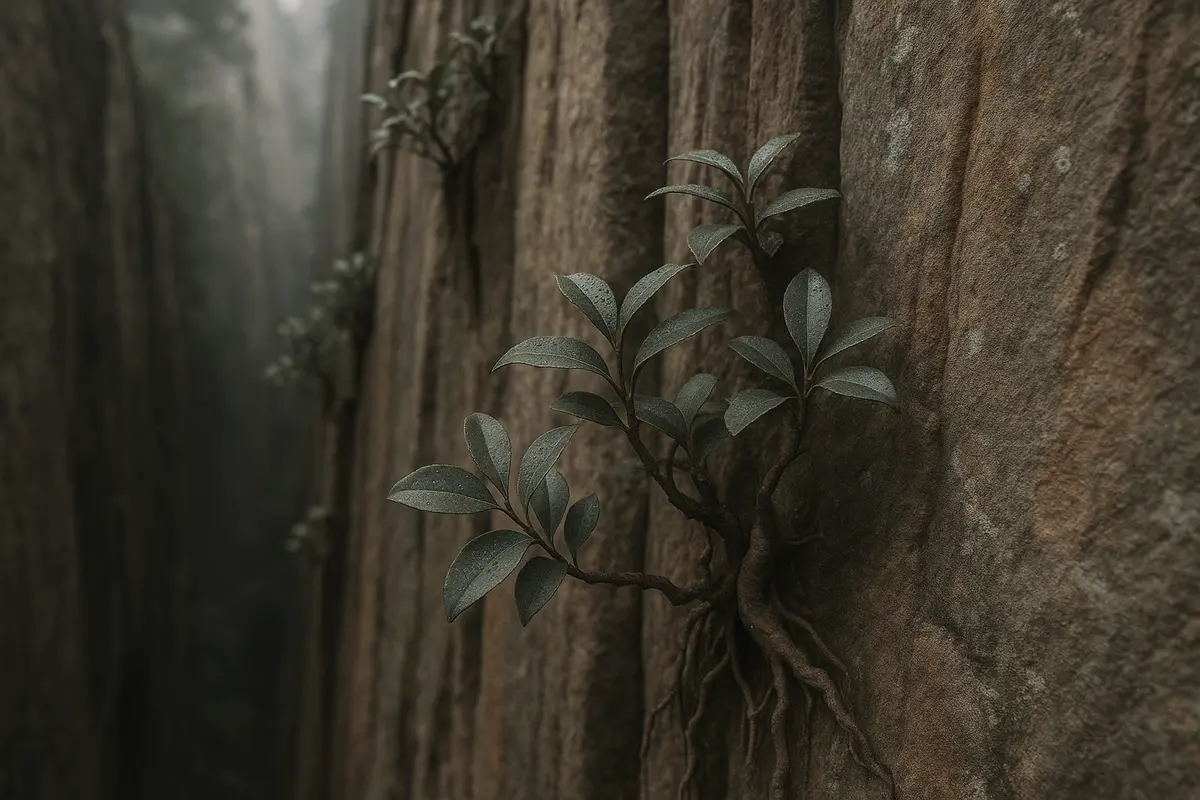
Two concepts frame the Wuyi aesthetic ideal, and they are worth understanding precisely:
岩韻 (yan yun — Rock Rhyme): The mineral sensation — wet rocks after rain, a stony quality in the mouthfeel and mid-palate. This is not just minerality as a flavor note; it is a textural and structural quality, a weight in the mouth that persists through the finish. Yan yun is the reason zhengyan teas command premiums and the quality marker that distinguishes core-area material from peripheral production.
岩骨花香 (yan gu hua xiang — Rock Bone, Floral Fragrance): The Wuyi aesthetic ideal. Rock bone (岩骨, yan gu) refers to the structural density — a viscosity and mineral weight that lighter oolongs cannot match. Floral fragrance (花香, hua xiang) refers to the aromatic beauty that sits above the mineral structure: orchid, osmanthus, dried fruit, spice depending on the cultivar. The ideal is not floral tea with mineral hints, or mineral tea with floral hints — it is both, in equal measure, inseparable. In practice, well-made Da Hong Pao demonstrates this beautifully. The caramel and toasted grain from the roast arrive first. The rock bone mineral density emerges through the mid-palate — a structural quality that makes the liquor feel thick and weighty, not just watery with a mineral note. The floral fragrance comes last, on the finish, as the roast recedes and orchid and dried fruit sweetness appear. The huigan is there, but it works differently than pu-erh: less about bitterness converting to sweetness, more about the roast stepping aside to reveal underlying sweetness that was always present.
Cultivar Flavor Matrix
| Cultivar | Roast Weight | Mineral Expression | Aromatic Character |
|---|---|---|---|
| Da Hong Pao (大红袍) | Medium–heavy | High, wet stone | Orchid, dried fruit, toasted grain |
| Rou Gui (肉桂) | Medium–heavy | Medium–high | Cinnamon, spice, floral |
| Shui Xian (水仙) | Light–medium | Medium | Woody, smooth, orchid |
| Tie Luo Han (铁罗汉) | Heavy | High | Austere, mineral, forceful |
| Qi Lan (奇兰) | Light–medium | Lower | Orchid, stone fruit, accessible |
Quality Indicators & Authentication
Wuyi yan cha presents significant authentication challenges. Da Hong Pao in particular — the most famous, most expensive, most counterfeited — is worth approaching with calibrated skepticism.
Indicators of Zhengyan Material
Mineral density in the cup: The rock rhyme and rock bone qualities cannot be faked with processing alone. If the tea lacks that stony mid-palate weight, it is not from core zhengyan.
Roast integration: In quality material, the roast is seamless — present but not dominant, integrated with rather than layered over the underlying character. In cheaper material, the roast is often the only interesting thing happening.
Hui gan quality: The returning sweetness in authentic zhengyan teas is slow, deep, and persistent. It builds behind the mineral and roast notes rather than appearing immediately.
Leaf appearance: Zhengyan material tends to show a tightly twisted strip form, a rich brown-black color after roasting, and a certain heaviness to the leaf. The wet leaf after steeping should show even oxidation and intact structure.
Authentication Challenges
The name “Da Hong Pao” is not protected in any meaningful way. It is used for teas across the entire quality spectrum, from genuine zhengyan material worth hundreds of dollars per 100 grams to mass-market Rou Gui blends labeled DHP for marketing purposes.
Buying from known vendors with transparent sourcing is the practical answer — there is no consumer-accessible authentication mechanism. The rock oolong sampler I am working through specifies source areas and processing details, which is the minimum standard I apply when sourcing for serious sessions.
The rise of single-cliff and named-mountain teas — Niúlán Kēng Rou Gui, Mǎtóu Rou Gui — has extended authentication challenges further up the quality ladder, as prestigious names command premiums that create obvious counterfeiting incentives.
Price Ranges
Wuyi yan cha spans one of the widest price ranges in Chinese tea. The market segments roughly as follows:
| Tier | Source Area | Price per 100g (USD) |
|---|---|---|
| Entry-level | Zhou cha / unspecified | $3–$15 |
| Mid-range | Banyan / general Wuyi | $15–$60 |
| Premium | Zhengyan, reputable vendors | $60–$200 |
| High-end collector | Named cliffs, premium vintages | $200–$600+ |
| Exceptional / historical | Aged, rare cultivars, top producers | $600+ |
The Premium AA Da Hong Pao from the sampler I am working through falls in the mid-to-premium range — representative of what a serious western buyer with quality intentions pays from a reputable specialist vendor.
Regional market pricing in China differs substantially from export pricing. Zhengyan tea traded within the Fujian market can reach prices that strain credibility when converted to USD — the combination of prestige, limited production, and a dedicated domestic collector market drives valuations that have limited relationship to the international market.
The practical guidance: below $30/100g for labeled zhengyan material from a vendor without transparent sourcing, skepticism is warranted. Authentic zhengyan tea from the Nine Bend Stream canyon, properly processed and rested, costs real money because it comes from a tiny area where labor-intensive agriculture produces limited quantities.
A Final Thought on Why This Place Matters
I score mineral at 8/10 in Da Hong Pao — the highest in my collection, and the only tea I work with where mineral is the unambiguously dominant dimension. That number represents something qualitative: this is a place where the geology speaks directly through the cup, without translation.
Most terroir claims in tea are softer than their proponents admit. Altitude affects leaf metabolism, shade affects catechin concentration, soil affects drainage and root health — but the causal chain between soil composition and cup flavor is often hypothetical or indirect. Wuyi is the exception. The Danxia volcanic rock geology, the thin mineral-rich soils, the tea roots penetrating fissures in ancient rhyolite — the translation from rock to cup is plausible enough and the sensory result distinctive enough that yan yun stands as one of the more defensible terroir claims in the tea world.
That wet-rock mid-palate quality — arriving behind the roast, persisting through the finish, sitting beneath the orchid and dried fruit like a foundation — is what makes wuyi mountain tea singular. It is not the most complex tea in the world, or the most delicate, or the most historically layered. It is the most geological. And for a certain kind of tea drinker, that is the most interesting thing a cup can be.