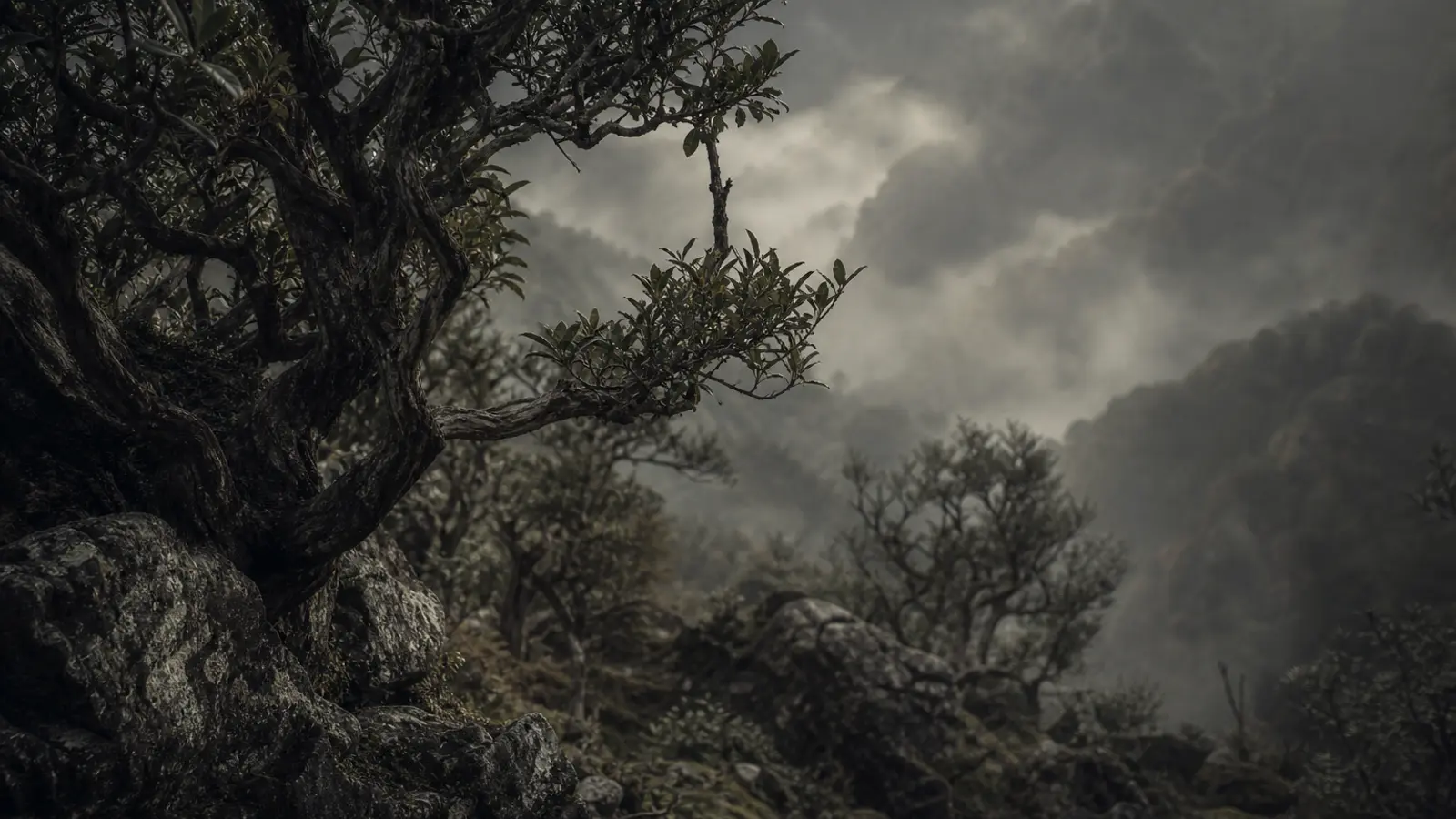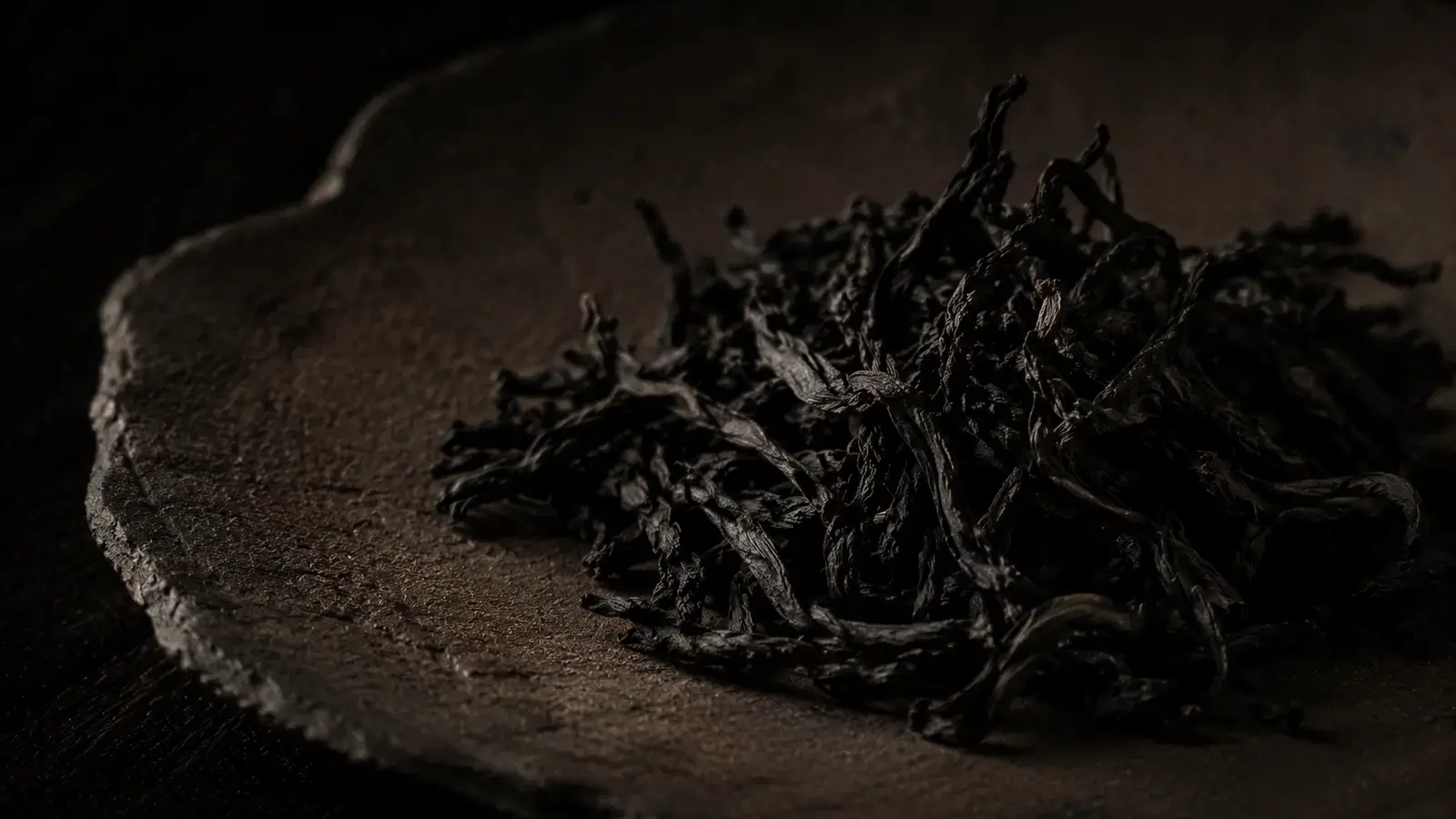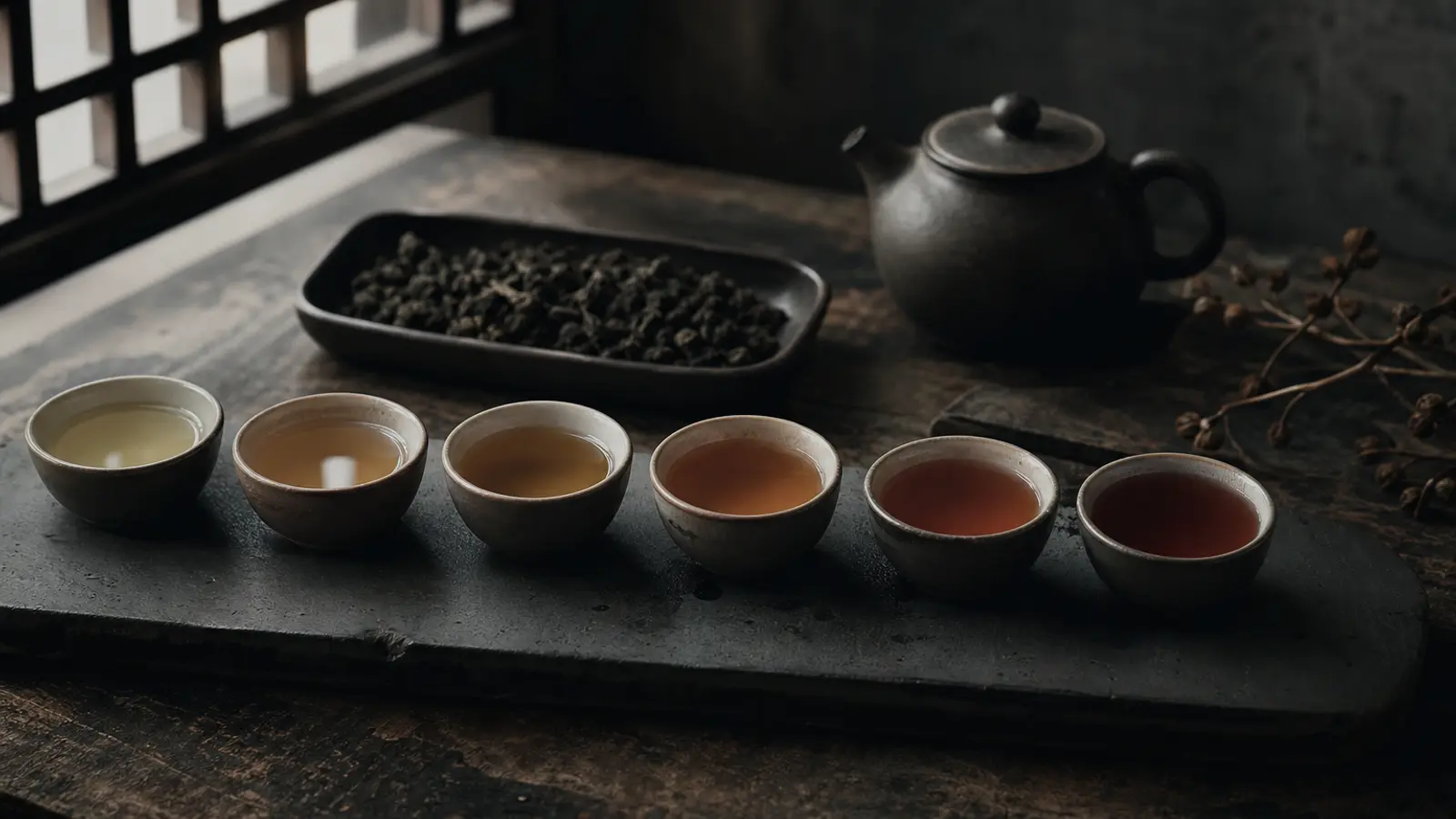
Dancong (单丛) from Guangdong’s Phoenix Mountain and yan cha (岩茶) from Fujian’s Wuyi Mountains are China’s two great heavy-oxidation oolong traditions. Both are dark, complex, and demanding to brew. Both come from steep mountain terrain with centuries of cultivation history. And both produce tea that can stop you mid-sip with its intensity. But comparing dancong vs yan cha reveals two fundamentally different philosophies of what oolong can be: one defined by aromatic specificity at the individual tree level, the other defined by mineral terroir that imprints itself on every cultivar grown in volcanic rock.
The wine parallel I keep returning to is Condrieu versus Cornas — two appellations from the northern Rhône, both planted on steep granitic hillsides, but one showcasing the aromatic extravagance of Viognier while the other delivers the structural mineral depth of Syrah. Same geology, different expression. Dancong and yan cha work the same way.
Dancong vs Yan Cha at a Glance
Before diving into the details, here’s how these two traditions compare across the dimensions that matter most:
| Dimension | Dancong (单丛) | Yan Cha (岩茶) |
|---|---|---|
| Origin Province | Guangdong (广东) | Fujian (福建) |
| Mountain | Phoenix Mountain (凤凰山, Fènghuáng Shān) | Wuyi Mountains (武夷山, Wǔyí Shān) |
| Oxidation Level | 50–70% | 50–75% |
| Key Technique | Aromatic cultivar selection; light-to-moderate roasting | Multi-round charcoal roasting (炭焙, tànbèi) |
| Defining Character | Fragrance — each cultivar has a named aroma | Mineral — yan yun (岩韵, “rock rhyme”) persists across cultivars |
| Processing Time | 1–2 days (with shorter roasting phases) | 2–4 days (extended roasting cycles over weeks) |
| Cultivar Significance | Extremely high — cultivar is the identity | Moderate — terroir overrides cultivar differences |
| Price Range (USD/100g) | $8–$50 (single-bush old-tree: $80–$300+) | $10–$60 (zhengyan core-zone: $80–$500+) |
| Brewing Parameters | 95–100°C, 5–8s first steep, 8g/110ml gaiwan | 95–100°C, 8–10s first steep, 8g/110ml gaiwan |
| Best For | Aroma-driven drinkers who lead with the nose | Texture-driven drinkers who lead with mouthfeel |
| Wine Parallel | Condrieu (Viognier) — aromatic intensity from granitic slopes | Cornas (Syrah) — structural mineral depth from granitic slopes |
This table captures the broad strokes. The rest of this article explains why those differences exist.
Two Mountains, Two Kinds of Terroir
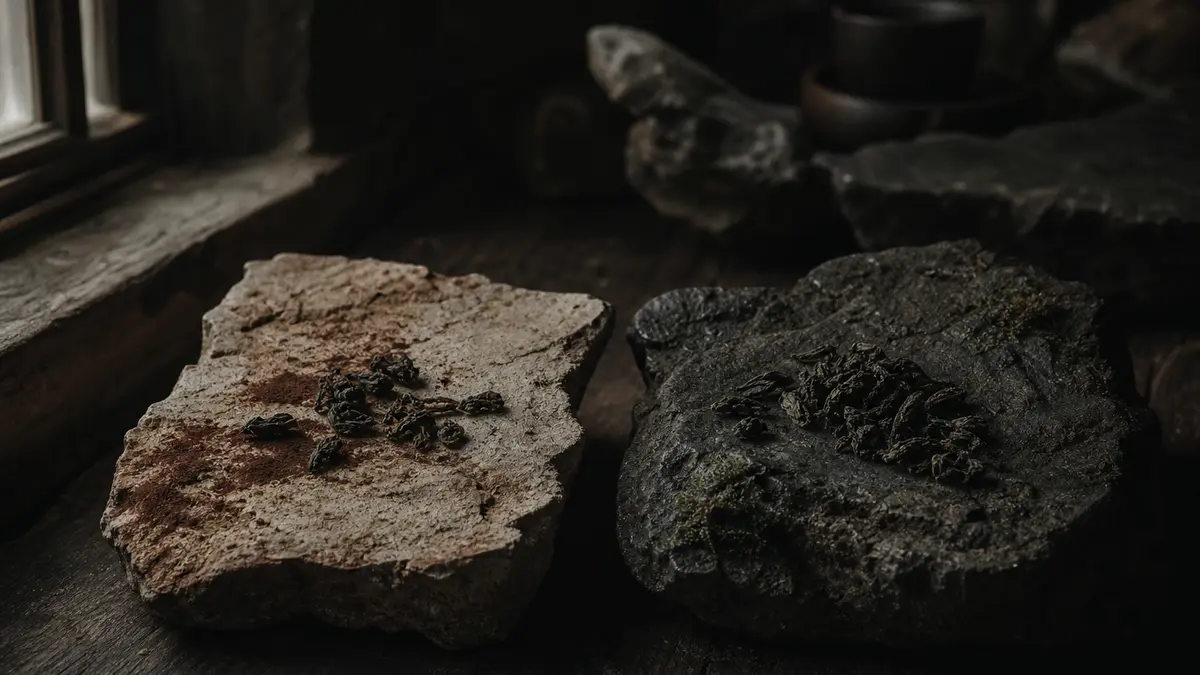
Both Phoenix Mountain and the Wuyi Mountains produce terroir-expressive tea. That much is indisputable. But the mechanism of terroir expression differs in a way that I find genuinely fascinating.
Phoenix Mountain: Terroir at the Tree Level
Phoenix Mountain sits in northeastern Guangdong, rising to about 1,498 meters at its peak (凤凰髻, Fènghuáng Jì). The soils are primarily granite and clay — acidic, well-drained, mineral-rich. The subtropical climate delivers significant diurnal temperature variation at elevation, which stresses the plants and concentrates flavor compounds.
But here’s what makes dancong unique among Chinese oolongs: the terroir operates at the individual tree level. Over centuries, farmers on Phoenix Mountain identified specific bushes with distinctive aromatic profiles and propagated them through cuttings. Each cultivar — and there are dozens — carries a named fragrance: Mi Lan Xiang (蜜兰香, honey orchid), Ya Shi Xiang (鸭屎香, duck shit aroma), Gui Hua Xiang (桂花香, osmanthus), Xing Ren Xiang (杏仁香, almond), and many more.
The genetic variation between individual trees growing just meters apart can produce radically different cups. Two bushes on the same slope, same elevation, same soil — one tastes like gardenias, the other like stone fruit. The cultivar is the terroir. Processing exists to preserve what the tree already expresses.
Wuyi Mountains: Terroir at the Site Level
The Wuyi Mountains in northern Fujian tell a different story. The bedrock here is Danxia (丹霞) landform — volcanic sandstone and conglomerate, rich in iron and trace minerals, formed during the Cretaceous period. The famous “nine-bend stream” (九曲溪, Jiǔqū Xī) carves through narrow gorges where tea grows in rocky crevices, on cliff ledges, and in the thin mineral-dense soil between boulders.
Yan cha’s terroir operates at the site level. The rock chemistry is consistent enough that it imprints a shared character on every tea grown within the zhengyan (正岩, “true rock”) zone — the core production area within the scenic district. Da Hong Pao (大红袍), Rou Gui (肉桂), Shui Xian (水仙), and Tie Luo Han (铁罗汉) all taste different. But they all share the yan yun (岩韵) — that rocky, mineral backbone that feels like licking a warm stone after rain. The mineral dominates the experience regardless of cultivar.
This is why the zhengyan/banyan (半岩, “half rock”) distinction matters so much in Wuyi tea pricing. Tea grown outside the core zone, even from the same cultivar, lacks the mineral intensity. The rock makes the tea.
The Processing Fork: Preservation vs Transformation
Dancong and yan cha share overlapping oxidation ranges (roughly 50–70% for dancong, 50–75% for yan cha) and both undergo some degree of roasting. But the processing philosophies diverge sharply at the roasting stage, and this is where the cup character really splits.
Dancong: Preserve the Volatile
Dancong processing aims to capture and lock in the aromatic compounds that make each cultivar distinctive. After withering, shaking (摇青, yáo qīng), and oxidation, the leaf goes through a light-to-moderate roast. The roasting is enough to stabilize the tea and halt enzymatic activity, but restrained enough to preserve the delicate volatile aromatics — the floral esters, terpenes, and alcohols that define each named fragrance.
Over-roast a dancong and you destroy exactly what makes it special. The honey orchid disappears. The osmanthus flattens into generic “roasted oolong.” This is why dancong processing requires such precision — the margin between “perfectly stabilized” and “aromatics burned off” is narrow.
Yan Cha: Transform Through Fire
Yan cha processing takes the opposite approach. After initial oxidation, the leaves undergo multiple rounds of charcoal roasting (炭焙, tànbèi) — sometimes three, four, or more sessions spaced over weeks or even months. Each roasting cycle lasts hours, with the tea resting between rounds to allow moisture to redistribute from stem to leaf.
This isn’t preservation. It’s transformation. The heavy roasting creates Maillard reaction products — caramel, toasted grain, dark chocolate, roasted nuts — that layer on top of the base leaf character. A well-roasted Rou Gui doesn’t just taste like cinnamon bark; it tastes like cinnamon bark caramelized over charcoal and laid on a bed of warm stone.
The roasting also explains yan cha’s greater structural resilience. Those Maillard compounds buffer the tea against overextraction, giving yan cha a wider margin of error during brewing than dancong.
In short: dancong processing is about protecting what the leaf already has. Yan cha processing is about building something new on top of what the leaf provides.
Flavor Profiles: Aroma-Led vs Structure-Led
The Dancong Experience
Brewing a good dancong is like uncorking a great aromatic white wine. The fragrance hits first — sometimes before the liquor even touches your lips. Each variety is its own aromatic world:
- Mi Lan Xiang (蜜兰香): honey, Cattleya orchid, lychee
- Ya Shi Xiang (鸭屎香): gardenia, mango, mineral finish
- Gui Hua Xiang (桂花香): sweet osmanthus, apricot
- Xing Ren Xiang (杏仁香): toasted almond, marzipan, stone fruit
- Zhi Lan Xiang (芝兰香): orchid, lily, clean citrus
The aromatics dominate the experience. Body and texture are present — good dancong has a silky, sometimes oily mouthfeel — but they’re supporting cast. You drink dancong for the nose. The huigan (回甘, returning sweetness) in quality dancong tends toward floral and fruity rather than mineral.
The Yan Cha Experience
Brewing a good yan cha is like opening a structured red wine. The first thing you register isn’t a specific aroma but a physical sensation — weight, minerality, a kind of rocky grip on the palate that the Chinese call yan yun (岩韵). Then the cultivar-specific aromatics arrive:
- Da Hong Pao (大红袍): roasted grain, dark stone fruit, mineral — the benchmark. I brew Da Hong Pao regularly, and the mineral character consistently registers around 8/10 in my tasting protocol.
- Rou Gui (肉桂): cinnamon bark, clove, sharp spice over that mineral base
- Shui Xian (水仙): orchid, wood, and a fuller, rounder body than Rou Gui
- Tie Luo Han (铁罗汉): herbal, medicinal, darker and more brooding
These cultivars taste different from each other. But they share the rocky mineral backbone — yan yun is the constant. If the mineral is absent, multiple sources report that the tea is likely banyan or outright non-Wuyi in origin, regardless of what the label claims.
The huigan in yan cha tends toward mineral and grain rather than floral. It lingers in the throat rather than spreading across the palate.
Brewing Dancong vs Yan Cha
Both teas reward gongfu (功夫) brewing with near-boiling water and high leaf-to-water ratios. A gaiwan (蓋碗) of 100–110ml with 7–8g of leaf is standard for both. But the timing differs, and the consequences of error differ even more.
Dancong Brewing Parameters
- Water temperature: 95–100°C (full boil for heavily oxidized versions; 95°C for lighter, more fragrant ones)
- Leaf-to-water ratio: 7–8g per 110ml gaiwan
- First steep: 5–8 seconds
- Subsequent steeps: add 2–3 seconds per round
- Expected steeps: 6–10 from quality leaf
Dancong punishes oversteeping severely. Even two or three extra seconds on early steeps can push the tea from “intensely fragrant” to “harshly astringent with a bitter metallic edge.” The leaf is thin and tightly rolled, and it releases compounds fast. Speed matters. Pour decisively.
Yan Cha Brewing Parameters
- Water temperature: 100°C (full rolling boil, no exceptions)
- Leaf-to-water ratio: 8g per 110ml gaiwan
- First steep: 8–10 seconds
- Subsequent steeps: add 3–5 seconds per round
- Expected steeps: 7–12 from quality zhengyan leaf
Yan cha is more forgiving. The heavy roasting acts as a buffer — the Maillard compounds dissolve more gradually, and the mineral character actually benefits from slightly longer extraction. You can overshoot by five seconds on a yan cha steep and still get a drinkable cup. Try that with a dancong and you’ll be dumping it.
Both teas benefit from a rinse — a brief flash steep discarded before the first drinking steep — to open the tightly rolled leaves and wash off any charcoal dust from roasting.
Which Should You Try First?
This comes down to how your palate works, and it’s worth thinking about honestly.
Try dancong first if:
- You smell before you taste — the nose drives your experience
- You gravitate toward aromatic wines like Riesling, Gewürztraminer, or Viognier
- You want variety — each dancong cultivar is a different aromatic world
- You enjoy precision brewing and don’t mind a narrow margin of error
Try yan cha first if:
- You evaluate body, mineral, and mouthfeel before aroma
- You gravitate toward structured wines like Barolo, northern Rhône Syrah, or aged Bordeaux
- You want consistency — yan yun is the reliable thread across all cultivars
- You prefer a tea that’s slightly more forgiving during brewing
Neither is “better.” They’re different instruments playing different music. I drink Da Hong Pao regularly and have dancong incoming — once I have firsthand comparison data from the same session, same water, same gaiwan, I’ll add tasting notes directly.
Price and Value Considerations
Entry-level dancong and yan cha overlap in the $8–$15 per 100g range. At this tier, both deliver solid introductions to their respective traditions, though neither will showcase the full depth of what the mountains can produce.
The premium tiers diverge. Single-bush old-tree dancong from ancient Phoenix Mountain cultivars can run $80–$300+ per 100g, driven by tree scarcity and the labor of picking from gnarled trunks at elevation. Zhengyan yan cha from the core Wuyi scenic district commands $80–$500+ per 100g, driven by strictly limited production area and the multi-week charcoal roasting process.
At both price points, provenance verification is the challenge. Dancong labeled as old-tree may be plantation-grown. Yan cha labeled as zhengyan may be banyan or even from outside Wuyi entirely. The palate is the final arbiter — if the fragrance isn’t specific enough to name, the dancong isn’t what it claims to be. If the mineral backbone is absent, the yan cha isn’t zhengyan.
The Same Mountain Logic, Different Expressions
What strikes me most about the dancong vs yan cha comparison is that both traditions prove the same fundamental point: mountains make tea. Steep terrain, mineral-rich soil, temperature stress, and centuries of human selection produce complexity that flatland tea cannot match.
But they prove it through opposite mechanisms. Phoenix Mountain says: the individual tree is everything — protect its voice. Wuyi Mountain says: the rock is everything — let it speak through fire.
Fragrance meets mineral. Both are worth your time.