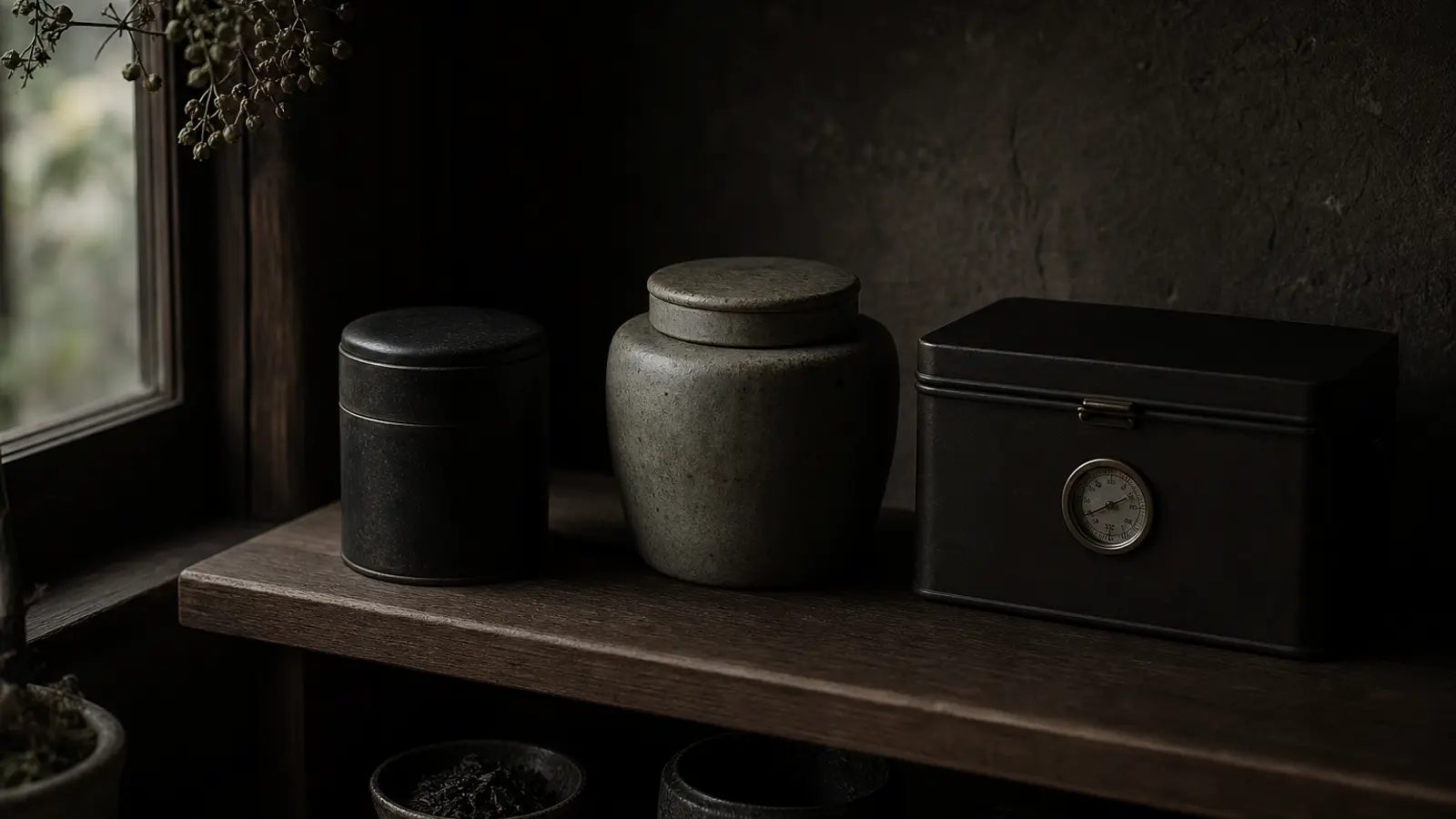
Different teas need different storage because their chemistry and aging pathways differ fundamentally. This isn’t a minor detail — it’s the core principle that determines whether your tea improves, holds steady, or silently deteriorates. Green tea needs protection from air and light to preserve freshness. Pu-erh (普洱茶) needs controlled humidity to enable microbial aging. Oolong falls somewhere between, depending on roast level. Getting storage right preserves what you paid for. Getting it wrong destroys it.
This guide covers how to store tea across every major type, what the actual enemies are, what a practical home setup looks like, and when aging is a feature rather than a failure.
The Tea Storage Spectrum
Storage requirements follow the tea’s relationship with time. Some teas race against it; others are shaped by it.
Green Tea and Fresh White Tea
The enemies are oxygen, light, heat, and moisture — in roughly that order. Green tea is harvested at peak volatility and is designed to be consumed quickly. Every week without proper protection costs you something: first the high top notes, then the vegetal depth, finally the sweetness. What’s left is a flat, hay-like brew that barely resembles the tea you opened.
Store green tea in an airtight container — tin, opaque glass, or ceramic with a tight-fitting lid. Keep it away from direct sunlight and away from heat sources. A cool, dark pantry shelf is adequate. If you live somewhere hot, or if you’ve bought more tea than you’ll drink in the next few months, refrigeration extends shelf life — but only if you seal the container completely before placing it in the refrigerator and let it return to room temperature before opening it. The condensation that forms when cold, dry air meets warm humid air is a genuine hazard.
Consume green tea within 12 months of harvest. Within 6 months if you’re serious about flavor. Japanese shincha (新茶) and Longjing (龍井) from a spring harvest have a fairly short window before the freshness that defines them fades.
Fresh white tea — bai hao yinzhen (白毫銀針), bai mudan (白牡丹) — follows similar logic. Aim to finish it within 18 months. Note the exception: aged white tea is stored deliberately for years under different conditions. That’s an entirely different proposition, not an extension of the fresh-storage principle.
Oolong: Roast Level Changes Everything
Light oolongs — Taiwanese high mountain varieties like Ali Shan (阿里山) or Li Shan (梨山), or modern lightly oxidized Tieguanyin (鐵觀音) — should be treated like green tea. They’re fragile, volatile, and optimized for freshness. Refrigerate for long-term storage; consume within a year.
Roasted oolongs are a different story. Dong Ding (凍頂), Wuyi yancha (武夷岩茶), and heavier-roast Fenghuang dancong (鳳凰單叢) are more stable. The roasting process drives off moisture and creates compounds that resist oxidation. Store in a sealed container at room temperature, away from light and odors.
There’s even a case to be made for resting roasted oolong for 6–12 months after production. A fresh heavy roast can taste sharp, ashy, even harsh. Given time in a sealed container, the roast integrates with the underlying tea character. Some drinkers seek out freshly roasted yancha; others prefer to buy and wait. Both approaches are defensible.
Pu-erh: The Wine Cellar of Tea
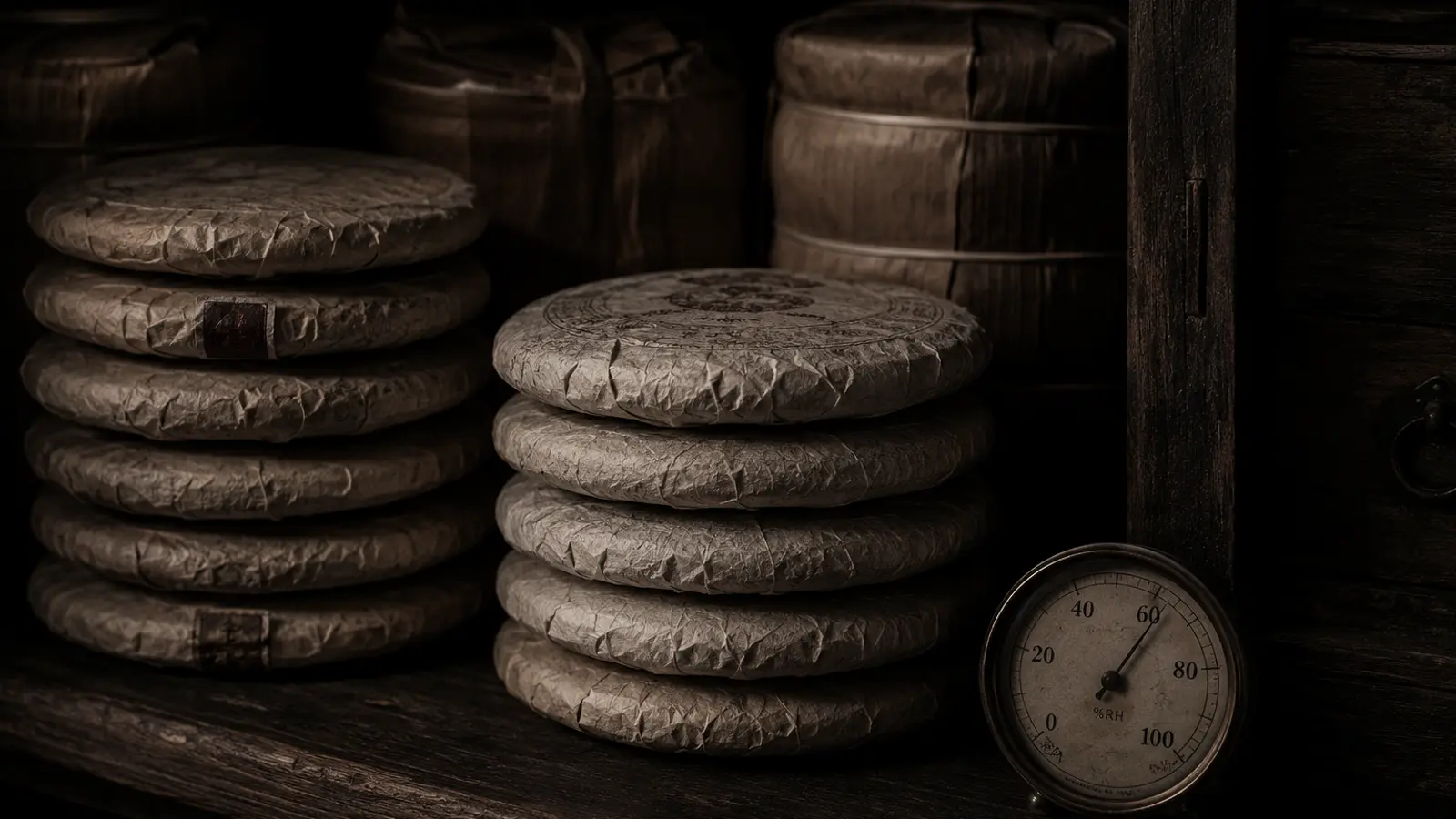
Pu-erh is the only category that requires ongoing environmental conditions because it is actively aging. You’re not just protecting it — you’re managing its development.
Shou pu-erh (熟普洱, ripe pu-erh) goes through wet-piling fermentation before compression. Freshly produced shou can taste muddy, fishy, or otherwise rough. It benefits from resting in a ventilated space for 1–3 years, allowing off-gases to dissipate. After that, seal it up. Shou doesn’t age as dramatically as sheng; it settles into itself rather than fundamentally transforming.
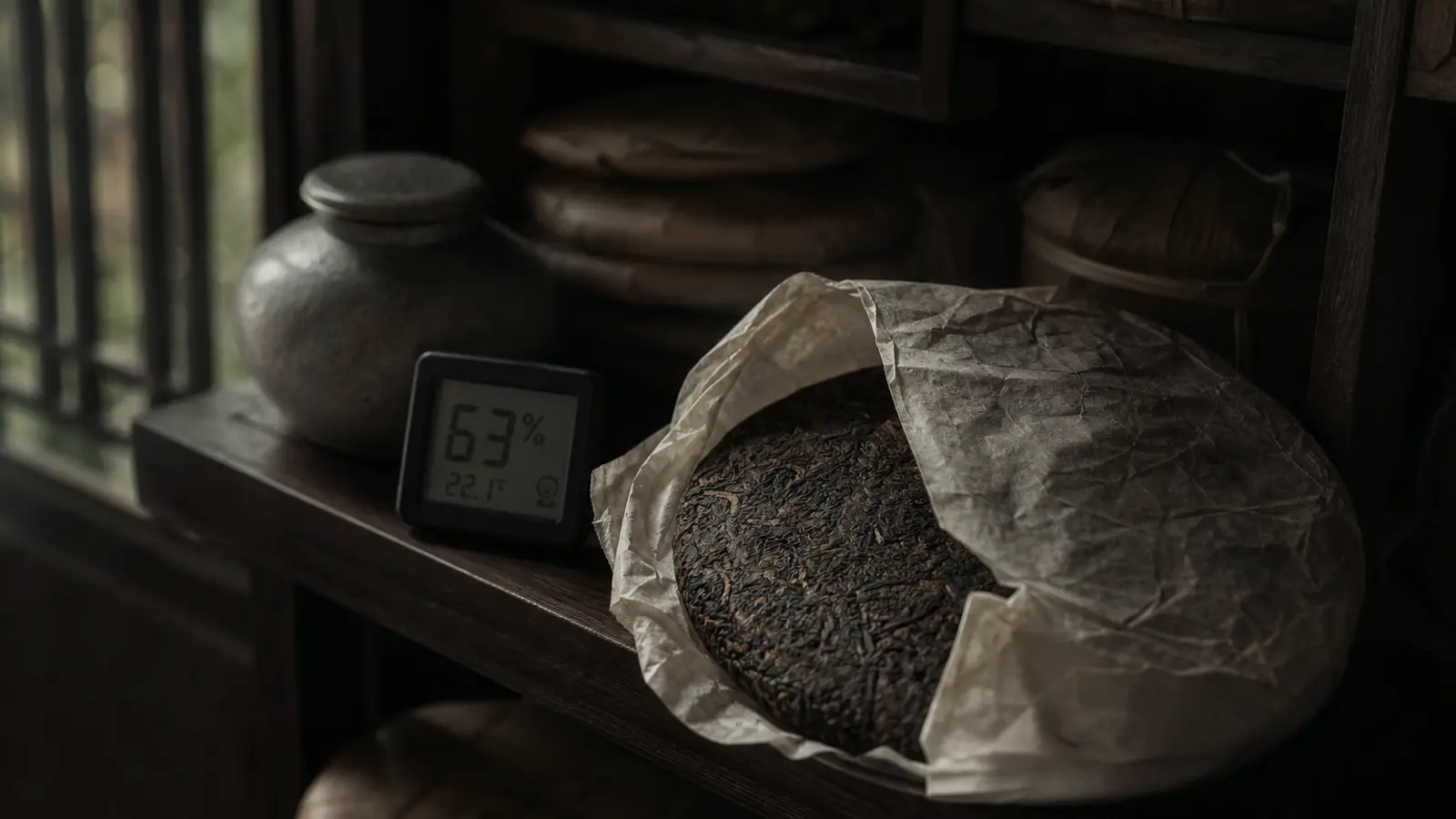
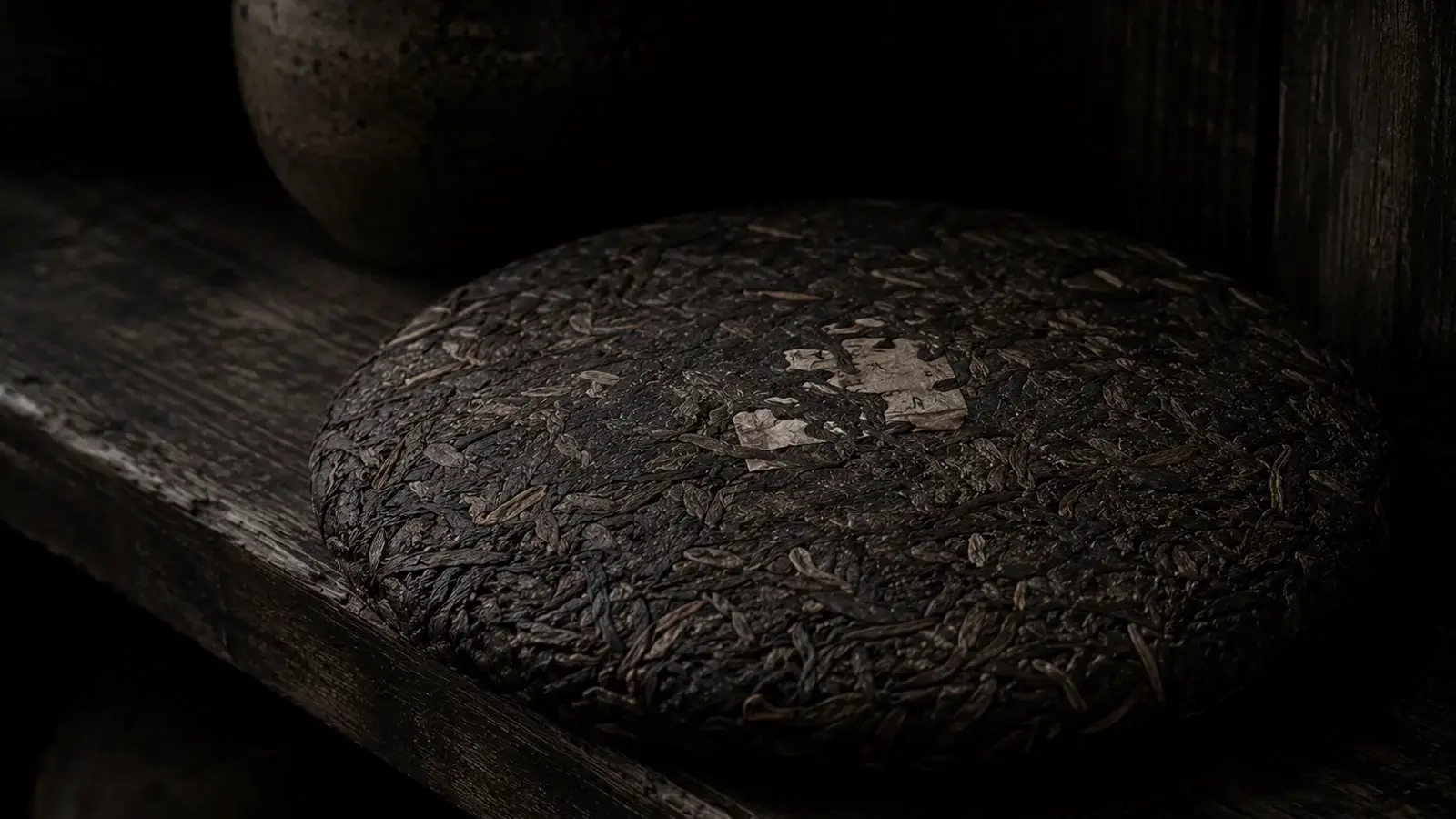
Sheng pu-erh (生普洱, raw pu-erh) is the wine cellar of tea. A well-stored young sheng from a reputable mountain can evolve over 20–30+ years, deepening, losing astringency, and developing complexity that young versions don’t hint at. To get there, the storage environment must meet specific conditions:
- Humidity: 60–75% relative humidity (RH). Below 50%, microbial aging essentially stops. Above 80%, mold risk spikes.
- Temperature: 20–28°C. Higher temperatures accelerate aging; lower temperatures slow it.
- Air: Clean, gently circulating. Stagnant air encourages unwanted microbial activity; pure airlessness prevents aging entirely.
- Darkness: UV and visible light degrade tea compounds over time.
The standard home solution is a pumidor — a sealed plastic storage bin or cabinet with a Boveda 69% humidity pack and a small hygrometer to verify conditions. The name is a play on the cigar humidor. A food-safe plastic tote (60–100 liter capacity is common) with a tight lid costs under $20. Boveda 69% packs run about $3–5 each and last several months. That’s the complete setup.
For a full breakdown of pu-erh humidity management, the pu-erh storage humidity guide covers the mechanics in detail.
Dark Tea: Liu Bao, Fu Zhuan, and Relatives
Liu Bao (六堡茶) and fu zhuan (茯磚茶) sit in a similar category to shou pu-erh in storage terms. Moderate humidity, gentle ventilation, darkness, and patience. These teas improve across 5–20 years with proper storage, developing earthy sweetness and losing harsh edges. They don’t require the same level of humidity precision as sheng pu-erh but do need some ambient moisture — bone-dry storage halts their development.
The Storage Enemies
Across all tea types, the same antagonists keep appearing. Name them, and storage gets easier.
1. Strong odors. Tea is a sponge for ambient smells. A tin left near a spice rack will absorb cardamom. A cake stored near coffee will smell like coffee in six months. Keep tea in dedicated storage areas, separated from anything aromatic. The kitchen is usually the worst room in the house for tea storage.
2. Direct sunlight. UV radiation degrades chlorophyll, amino acids, and aromatic compounds. Store everything in opaque containers or dark spaces. Glass jars look attractive; they’re practical only if stored away from light.
3. Rapid temperature fluctuation. Temperature swings cause condensation inside containers. Condensation introduces moisture. Moisture at the wrong time and place causes mold. Locations above refrigerators, near ovens, or beside windows with afternoon sun are all problem spots.
4. Excessive dryness — specifically for pu-erh. Below 50% RH, the microbial communities responsible for sheng pu-erh aging go dormant. The cake doesn’t age — it just gets stale. A climate-controlled room or a particularly dry winter can create this problem invisibly. A hygrometer in your pumidor is cheap insurance.
A Practical Home Setup
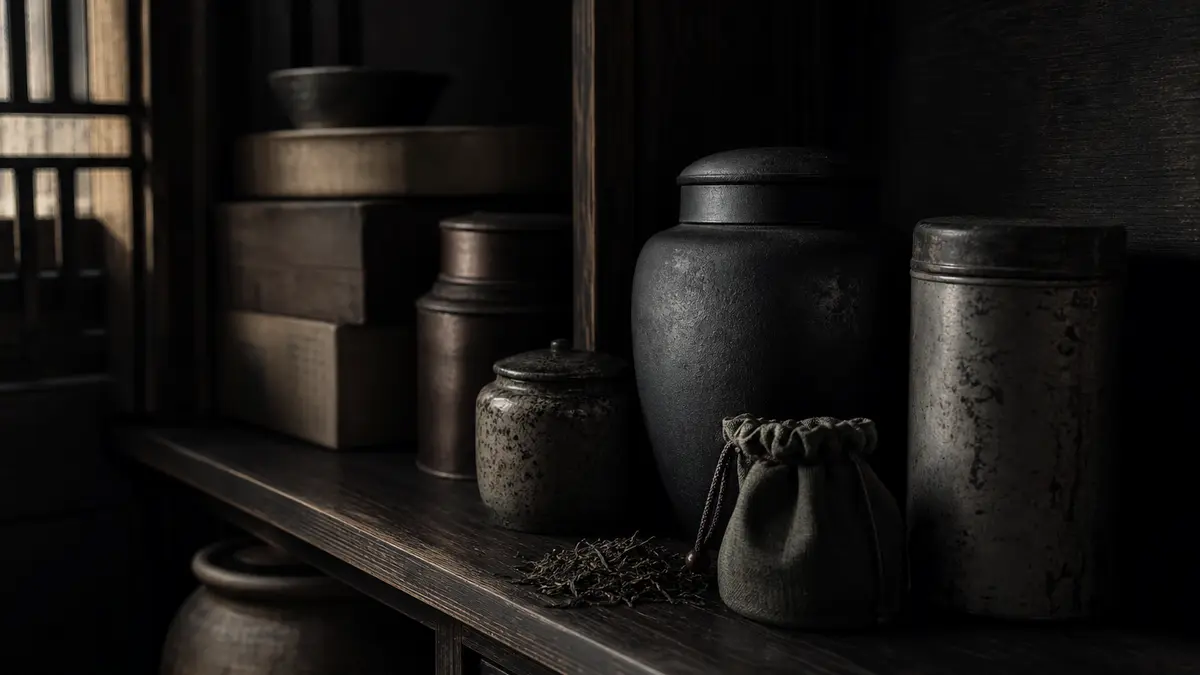
Most tea drinkers don’t need elaborate systems. Here’s what actually works:
For green, white, light oolong, black, and most everyday teas: A set of airtight tins or glazed ceramic jars with tight lids. Store on a cool, dark shelf — a pantry or dedicated cabinet away from the kitchen works well. Label everything with the tea type and approximate harvest date. Total investment: $10–20 for a few tins.
For pu-erh: A food-safe plastic storage tote (60L is a reasonable starting size), a Boveda 69% humidity pack sized for the volume, and a basic hygrometer. Check humidity every 2–3 weeks initially; once the pumidor stabilizes, monthly checks are adequate. Replace Boveda packs when they feel rigid — usually every 3–6 months depending on climate.
For roasted oolong resting: The same airtight tins used for everyday tea work here. The goal is just to keep air and odors out while the roast integrates.
That’s genuinely all you need. Total cost for a full setup covering both fresh teas and a beginner pumidor: under $30.
Does Tea Expire?
Technically, no — tea doesn’t become unsafe to drink the way meat or dairy does. The question of whether it has expired is more useful framed as whether it still has flavor worth tasting.
Green tea past 18 months stored carelessly is a shadow of itself. The cup is drinkable in the sense that nothing will harm you, but it’s flat, thin, and faintly stale — a disappointing experience whether you paid $8 for it or $80.
Sheng pu-erh aged 20–30 years under good storage conditions can be extraordinary — complex, smooth, with the kind of huigan (回甘, returning sweetness) that lingers for minutes after the cup. That same tea aged carelessly for 30 years might taste musty, dead, and flavorless.
The honest answer: how long tea lasts depends entirely on the type and how you’re storing it. For fresh teas, treat expiry as real and act accordingly. For pu-erh and aged dark teas, storage conditions matter far more than a calendar date.
A Note on Refrigeration
Refrigeration is sometimes recommended for green tea, and it works — under specific conditions. The container must be completely airtight before going in. The tea must be allowed to return to room temperature before the container is opened, to prevent condensation forming on the leaves. In practice, many home refrigerators also harbor odors that transfer to tea over time.
For pu-erh, skip the refrigerator entirely. It’s too cold, too dry, and the repeated opening-and-closing cycle introduces condensation risk every time. The pumidor approach is simpler and more effective.
Going Deeper
Storage is where tea theory meets practical consequence. If you’re storing sheng pu-erh seriously, the decisions you make now — humidity targets, temperature control, how you handle seasonal fluctuation in a tropical climate — determine what you’re drinking in 10 years.
The principles across all tea types reduce to the same core logic: protect fresh teas from oxidation, give aged teas the humidity and temperature they need to develop, and keep every tea away from odors, light, and temperature swings. Master those three ideas and most storage problems solve themselves.