2006 Hong Xuan Yi Wu Zheng Shan Raw Pu-erh (易武正山生普洱). Yiwu, Xishuangbanna, Yunnan. One of the six ancient tea mountains (六大茶山). Imperial tribute tea during the Qing Dynasty — this is the terroir that emperors selected above all others. Pressed 2006, Kunming dry-stored for approximately twenty years. Slow, patient aging in cool dry mountain air — no wet storage acceleration.
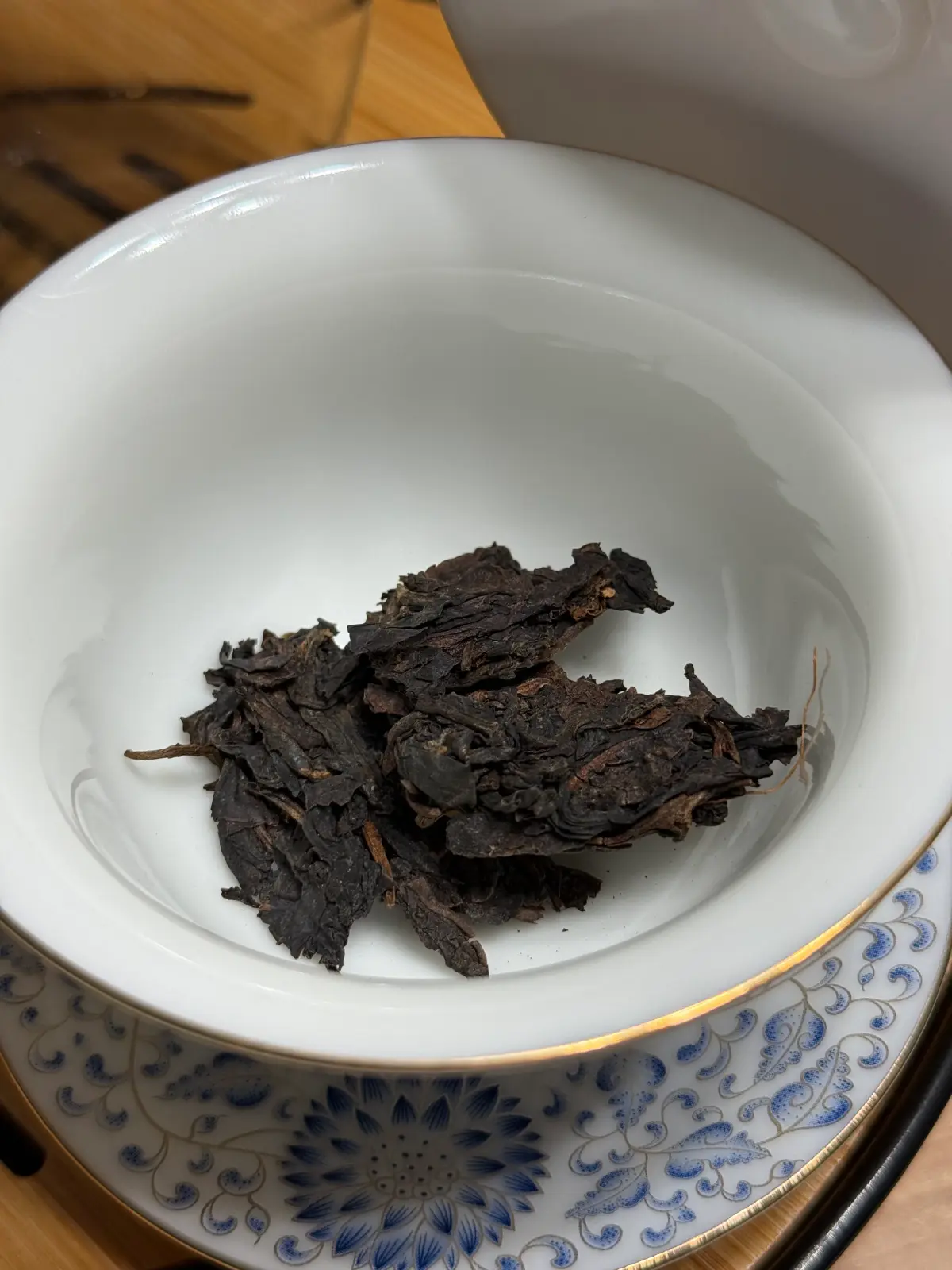
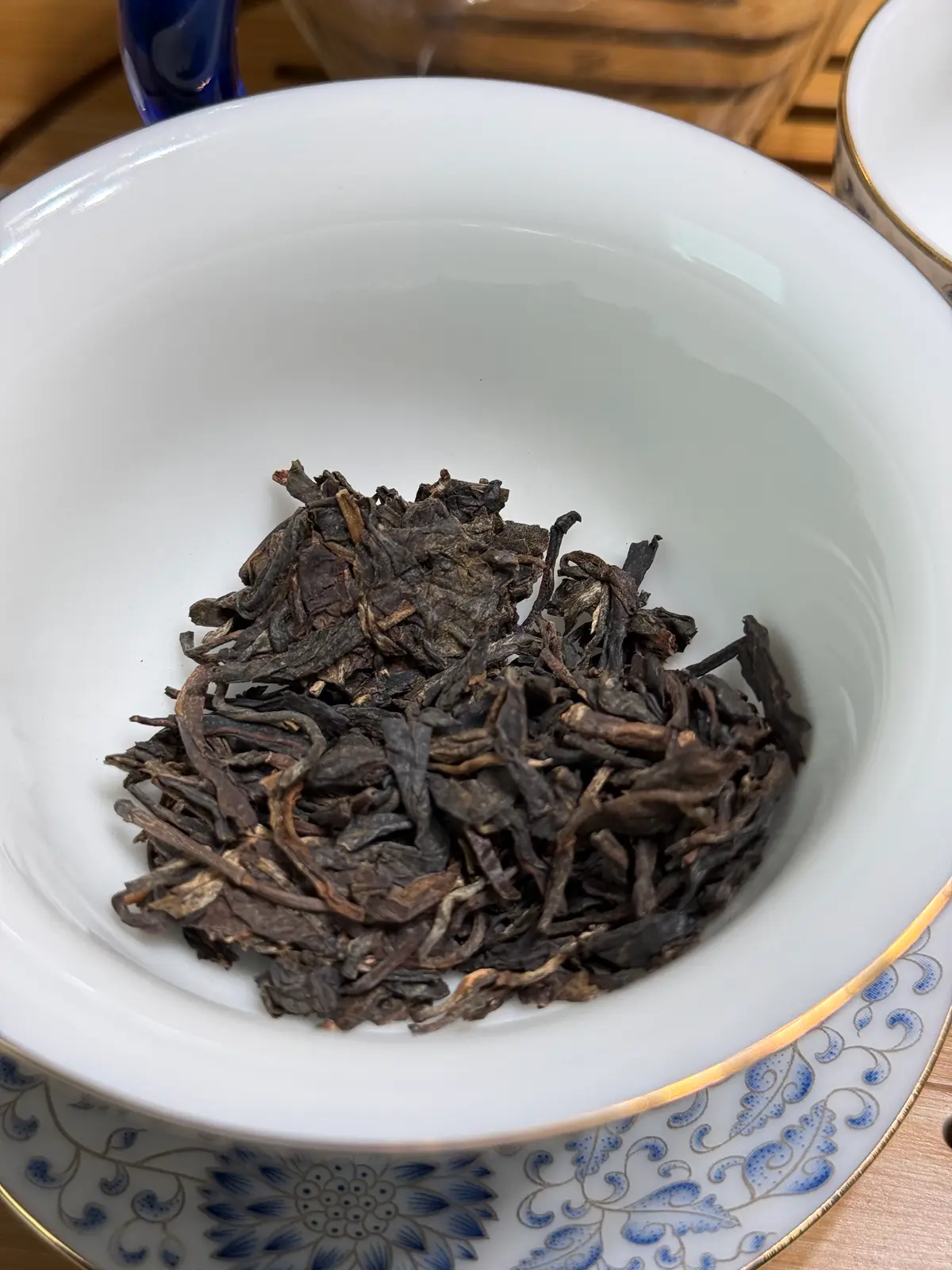
Dry Leaf
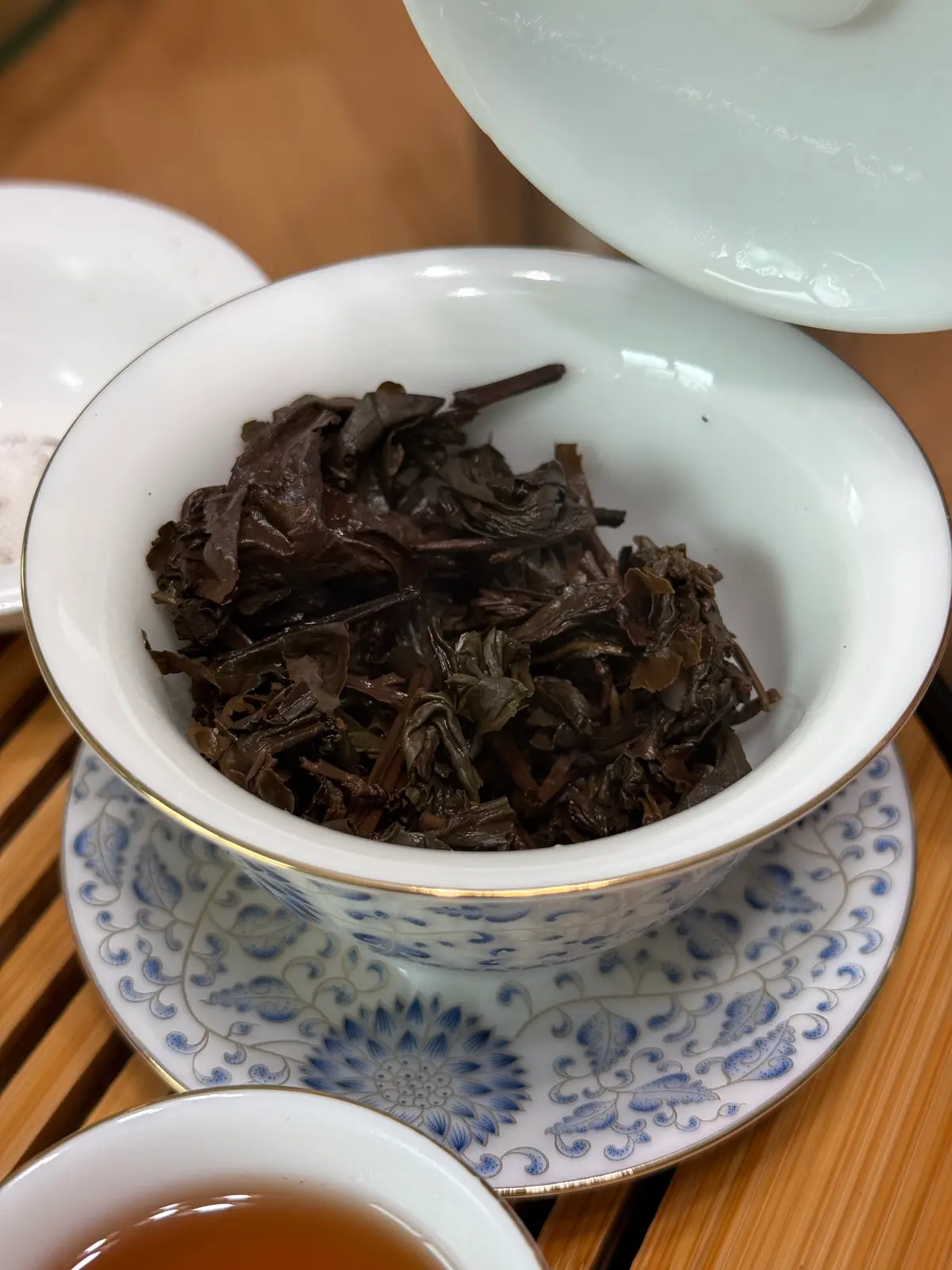
Tight compression, dark with some oxidation browning at the edges — two decades of slow chemical change visible on the surface. Aroma restrained and dignified. Faint sweetness, aged paper, a whisper of dried fruit buried underneath. This cake doesn’t shout. It waits.
Wet leaf after rinse: sweet 편백나무 (hinoki cypress) — the household’s signature aromatic — but softer and sweeter than the 1988 HTC’s sharp clean camphor. Wrapped in fruit. Stone fruit and warm resinous wood intertwined. The wet leaf aroma alone signals this is something different from anything previously brewed.
The Session
Brewed at 95°C in a 100ml gaiwan with approximately 5g of leaf. Two rinses before first drinking steep.
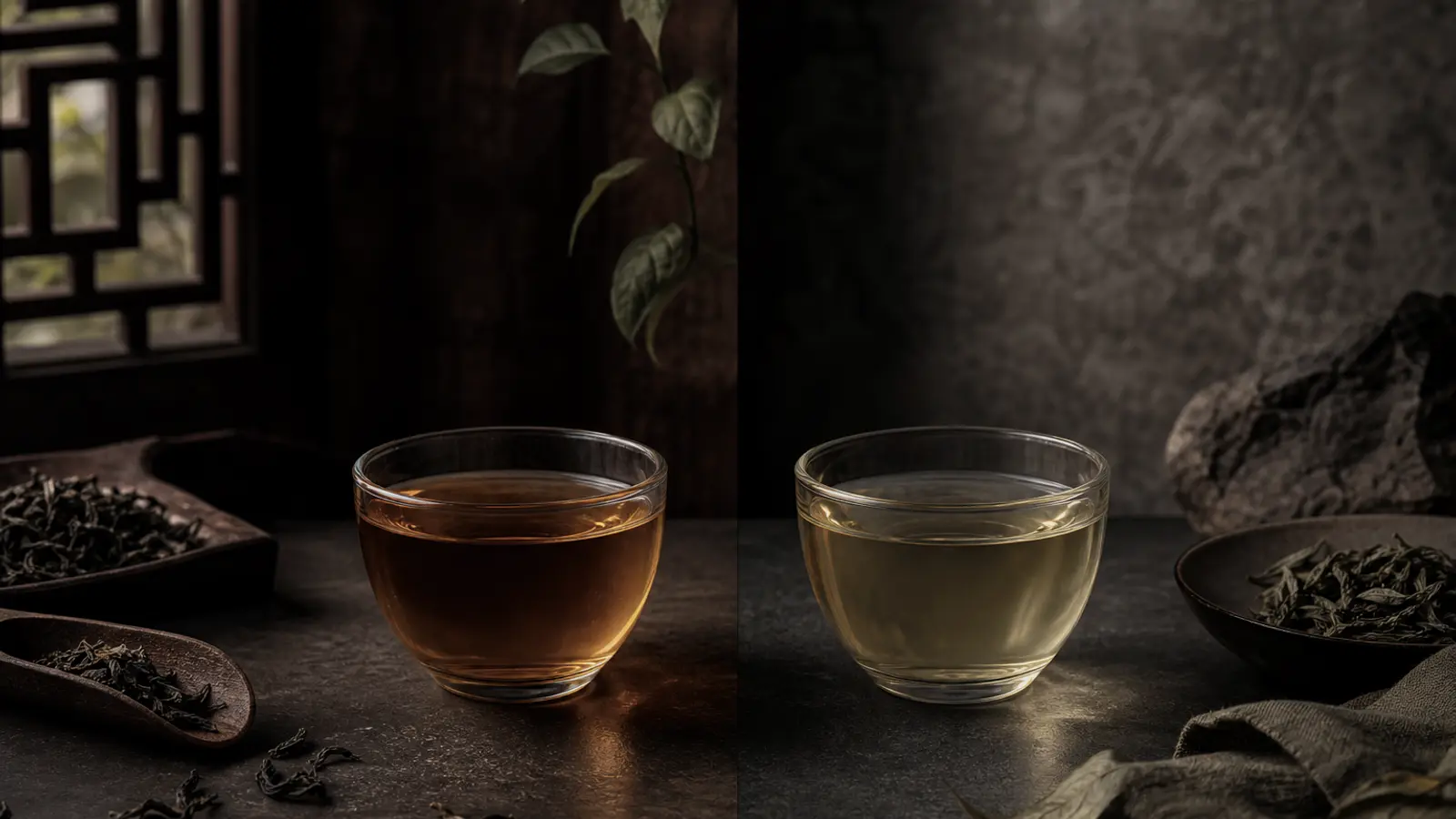
Liquor: amber-gold with a reddish warmth. Clear, clean — Kunming dry storage preserves transparency that wet-stored teas lose. Deeper than young sheng, lighter than shou. The color of dark honey held up to afternoon light.
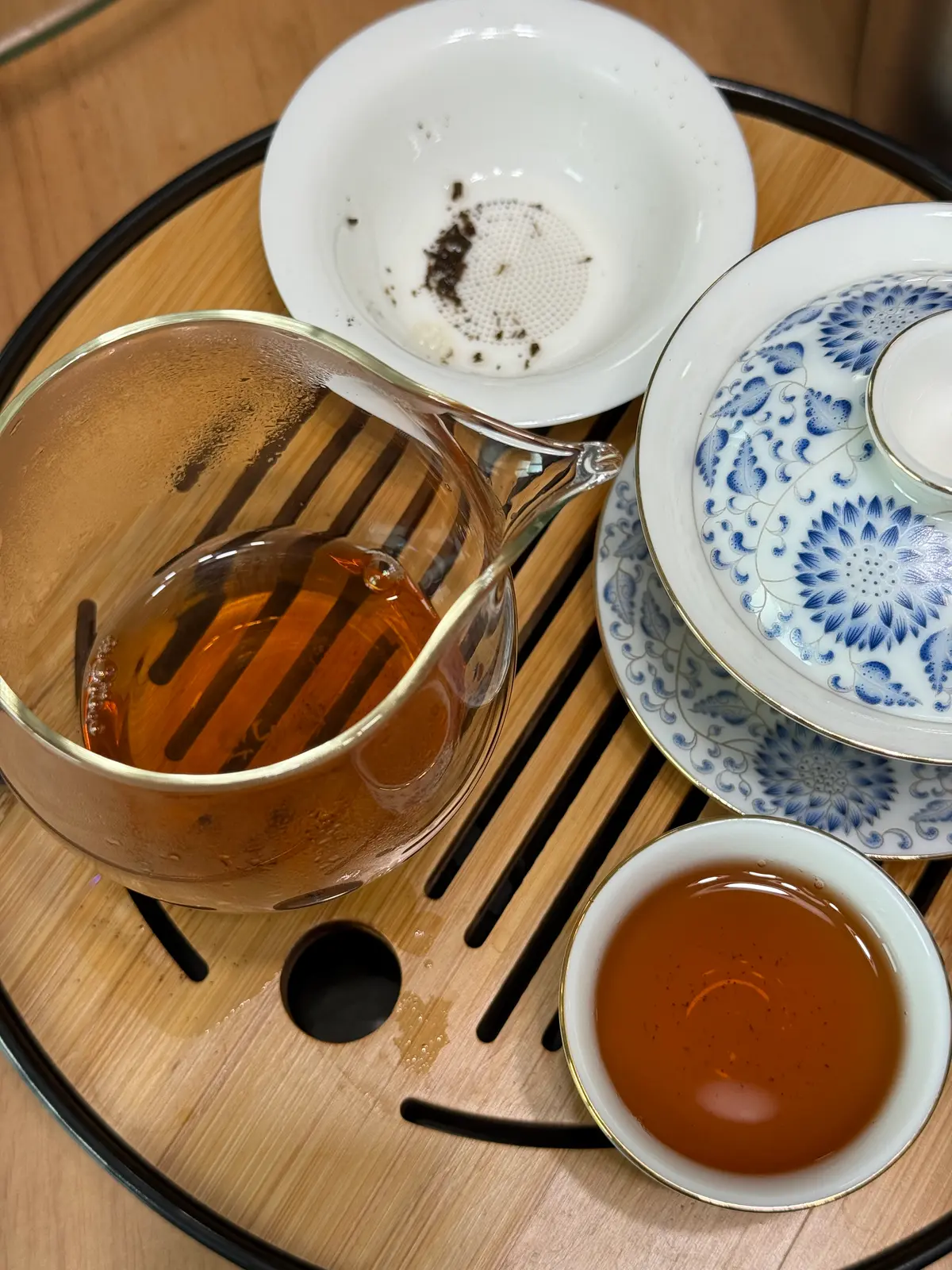
Steep 1 (10s, after 2 washes): Peach. Unmistakable, immediate, shocking. Not peach flavoring, not a suggestion of peach — actual stone fruit sweetness landing fully formed on the palate. This is what twenty years of slow ester development produces: the same chemical family that makes a Da Hong Pao taste like strawberry in days, nature built here across two decades with nothing but air and time. Underneath the peach, a quiet warmth — the 편백나무 sweetness translating from nose to mouth. Mouthfeel already silky, already refined.
Steep 2 (10s): Peach sustaining but apricot arriving alongside it. Dried apricot, not fresh — warmer, denser, more concentrated. The sweetness has depth now. Body thickening. A honey quality developing in the mid-palate that wasn’t there in steep 1. The tea is waking up.
Steep 3 (15s): The stone fruit peak. Peach and apricot in full convergence. Mouthfeel now genuinely thick — silk becoming satin, coating the tongue and throat. Huigan arriving: the sweetness doesn’t stop when you swallow. It deepens. First appearance of a warm woodiness underneath the fruit — aged wood, not fresh. Like opening a cedar chest that’s been closed for years.
Steep 4 (20s): The fruit beginning its slow transition. Peach receding, dried fruit advancing. Jujube (대추/棗) sweetness emerging — a note that connects to the 1993 Liu Bao’s date character but more elegant, more restrained. Chestnut warmth developing. The 편백나무 now fully integrated into the flavor, no longer separate from the fruit.
Steep 5 (30s): Honey and dried longan. The stone fruit has handed off to the tropical dried fruit register. Body at full density. A faint bourbon-vanilla warmth in the finish — this is the aged wood releasing its deepest compounds. The qi settling in: not the grounding heaviness of shou, not the alertness of young sheng. Something between. A warm clarity.
Steep 6 (45s): Woodiness taking the lead. Aged camphor-wood, sandalwood, a touch of leather. The fruit now a memory coloring the edges rather than dominating. The tea is showing its age — not deterioration, but maturity. The difference between a person who has something to prove and a person who stopped proving things years ago.
Steep 7 (60s): Quiet richness. Sweet wood, clean mineral, fading fruit. Still thick. Still coating. The huigan now the primary pleasure — sweetness returning in waves long after each sip.
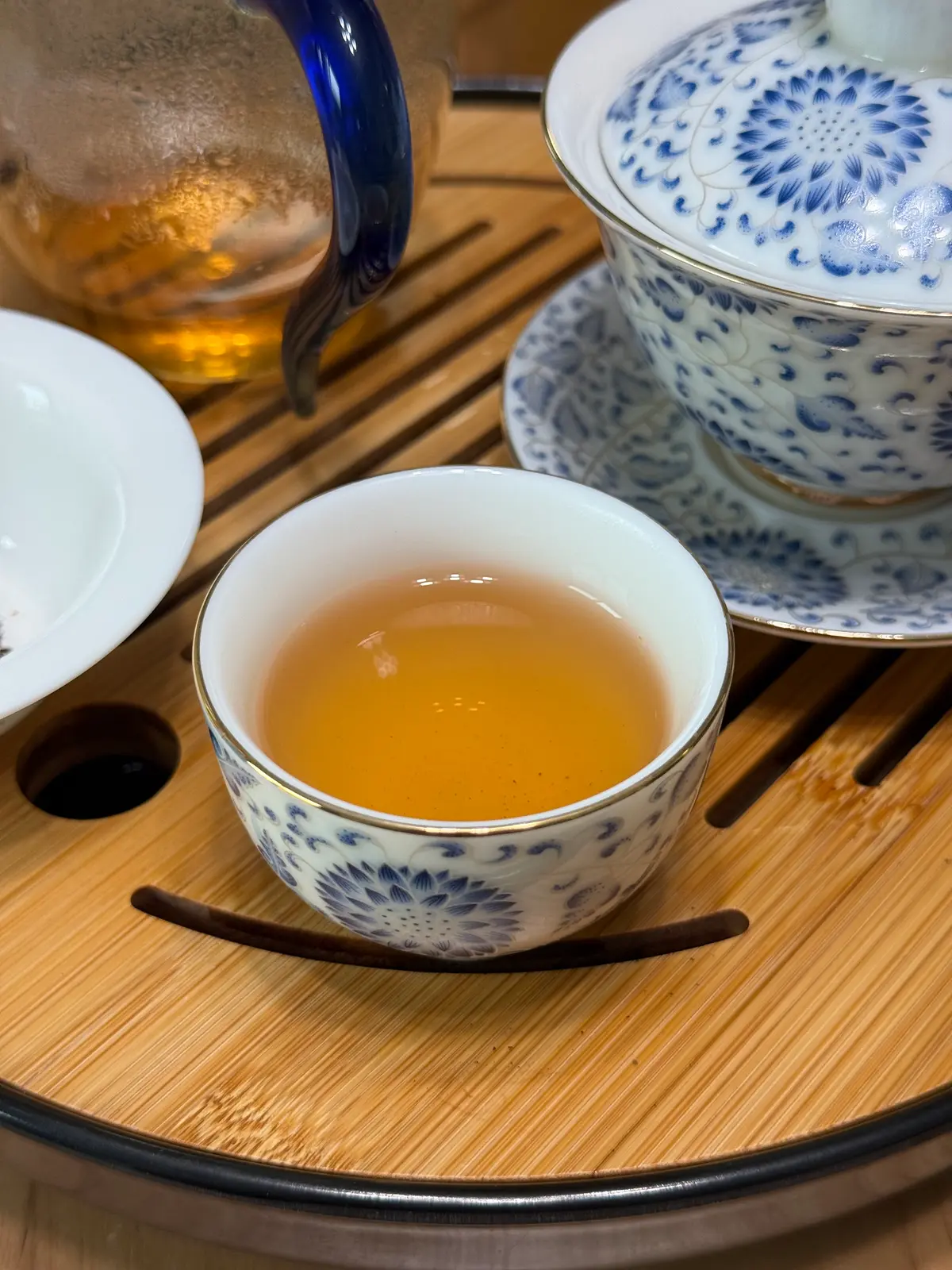
Steep 8 (90s): The fireplace steep. Warm, dry, woodsmoke memory. Not actual smoke — the ghost of warmth. Bourbon barrel, old leather, dried flowers pressed in a book.
Steep 9 (120s): Lighter but not thin. Clean, sweet, still dignified.
Steep 10+ (150s+): Fading gracefully. Forest floor, faint sweetness, mineral. A tea that doesn’t collapse — it bows and exits. Twelve to fifteen steeps total.
Flavor Profile
Front: Stone fruit — peach, apricot. Immediate, shocking, fully formed. This is what you came for and it delivers before you finish the first sip.
Mid: Honey, jujube, chestnut. The fruit matures into dried sweetness with aged wood warmth underneath. 편백나무 integrated throughout — the camphor-cypress aromatic family, but the sweetest, most fruit-wrapped expression of it encountered so far.
Finish: Aged wood, cedar, leather, bourbon warmth. Long. Extraordinarily long. The peach stays in memory even after the wood takes over.
Mouthfeel & Huigan
Silk. Pure silk. Not the velvet of Chocolate Noir, not the liquid density of Zi Ya, not the muscular grip of Meng Song. This is silk — refined, effortless, frictionless. Twenty years of pu-erh aging dissolved whatever roughness the young leaf once had. The texture is the clearest demonstration of what time does to sheng pu-erh. If the 1988 HTC at 38 years was “impossibly smooth,” this at twenty years is the midpoint on that same journey — already beyond anything young sheng can produce, still with structure that the 1988 has transcended.
Huigan: powerful but elegant. Not the sledgehammer of the Liu Bao’s “even the water was sweet.” This is persistent, layered sweetness that unfolds rather than arrives — stone fruit sweetness transitioning to honey sweetness transitioning to wood sweetness across minutes. The kind of huigan that makes you set the cup down and just sit with what’s happening in your mouth.
Qi Notes
Warm clarity. Not the calming ocean wave of the 2006 HTC shou. Not the hypnotic settling of Zi Ya. This is a different register — a quiet expansion. The chest opens. The mind clears without becoming alert. The body warms from the center. Yiwu qi is historically described as yin energy — gentle, deep, internally focused. At twenty years, that character has concentrated.
Verdict
This is the tea that closes the argument about whether aging sheng pu-erh is worth the wait. Twenty years ago this was probably a bright, slightly bitter, floral green tea. Today it tastes like peaches that don’t exist in any orchard. The 편백나무 is here — sweet and fruity this time, confirming it as a palate signature across five teas, four origins, and three processing methods. The imperial tribute mountain earned its reputation. Not through force. Through seduction.
The wine parallel: a 2005 Barolo from a great Langhe vineyard, finally opened after twenty years in a proper cellar. The tannins that once gripped your mouth have dissolved into silk. The fruit that was buried under structure has risen to the surface — dried cherry, leather, tar, rose petal. You’re not tasting what the winemaker made. You’re tasting what time made from what the winemaker started. That’s this Yiwu.
This tea's strongest axis is Aroma (9/10). Also notable: Body, Huigan, Flavor Transition, Finish Length, Steep Endurance, Cha Qi. Notably low: Astringency.