Three Yiwu teas. Three storage conditions. Three times the peach appeared. The trilogy is complete.
The Trilogy
The 2006 Yiwu (Kunming dry-stored, 23 years) introduced the peach — an impossible stone fruit emerging from aged leaves. “How is there so much peach flavor?” was the reaction. The wet leaves smelled like 편백나무.
The 2003 Yiwu (Banna humid-stored, 23 years) confirmed the peach — same mountain, completely different storage, same fruit. The terroir was louder than the warehouse. The wet leaves smelled like chestnuts roasting on an open fire.
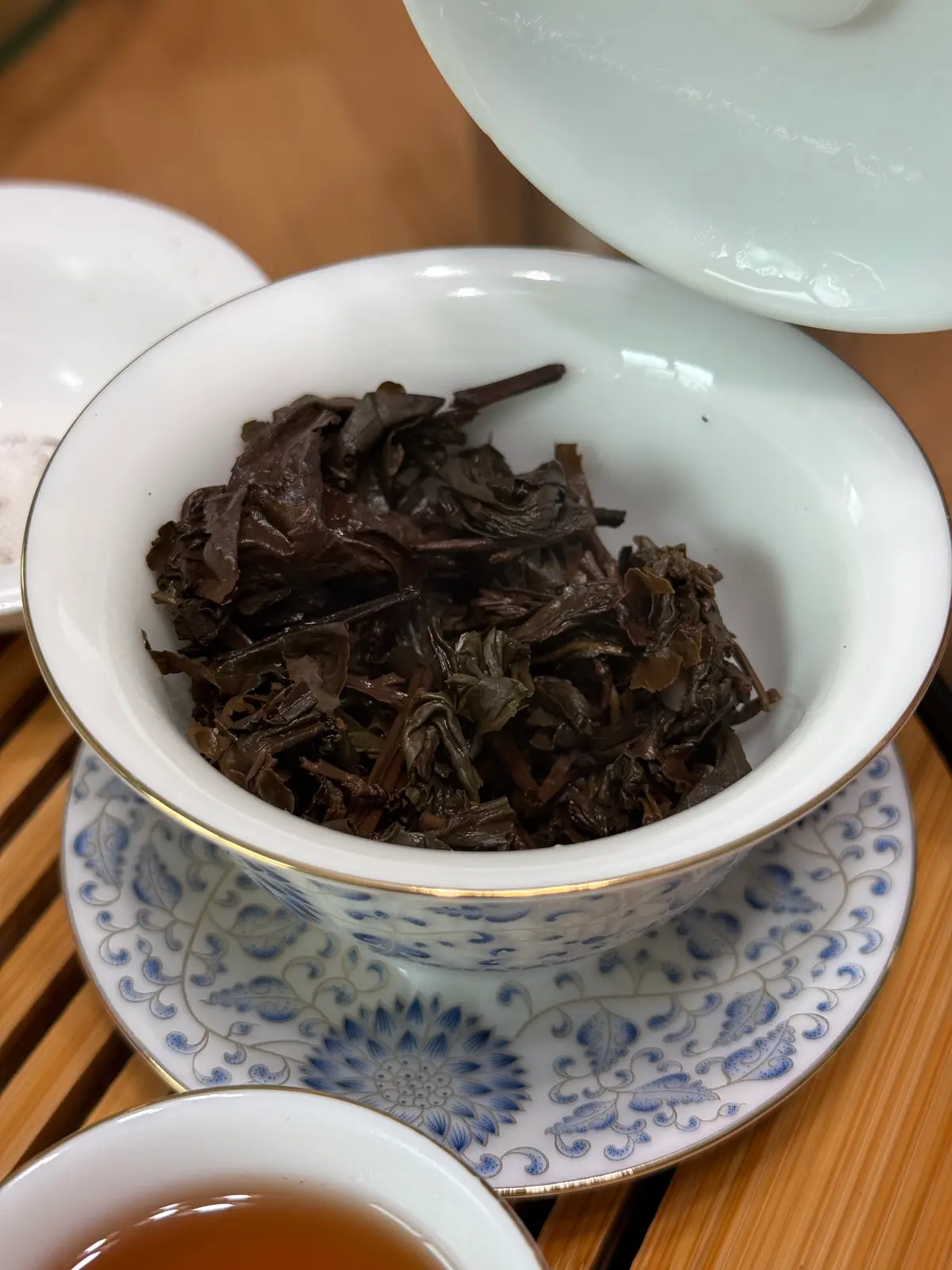
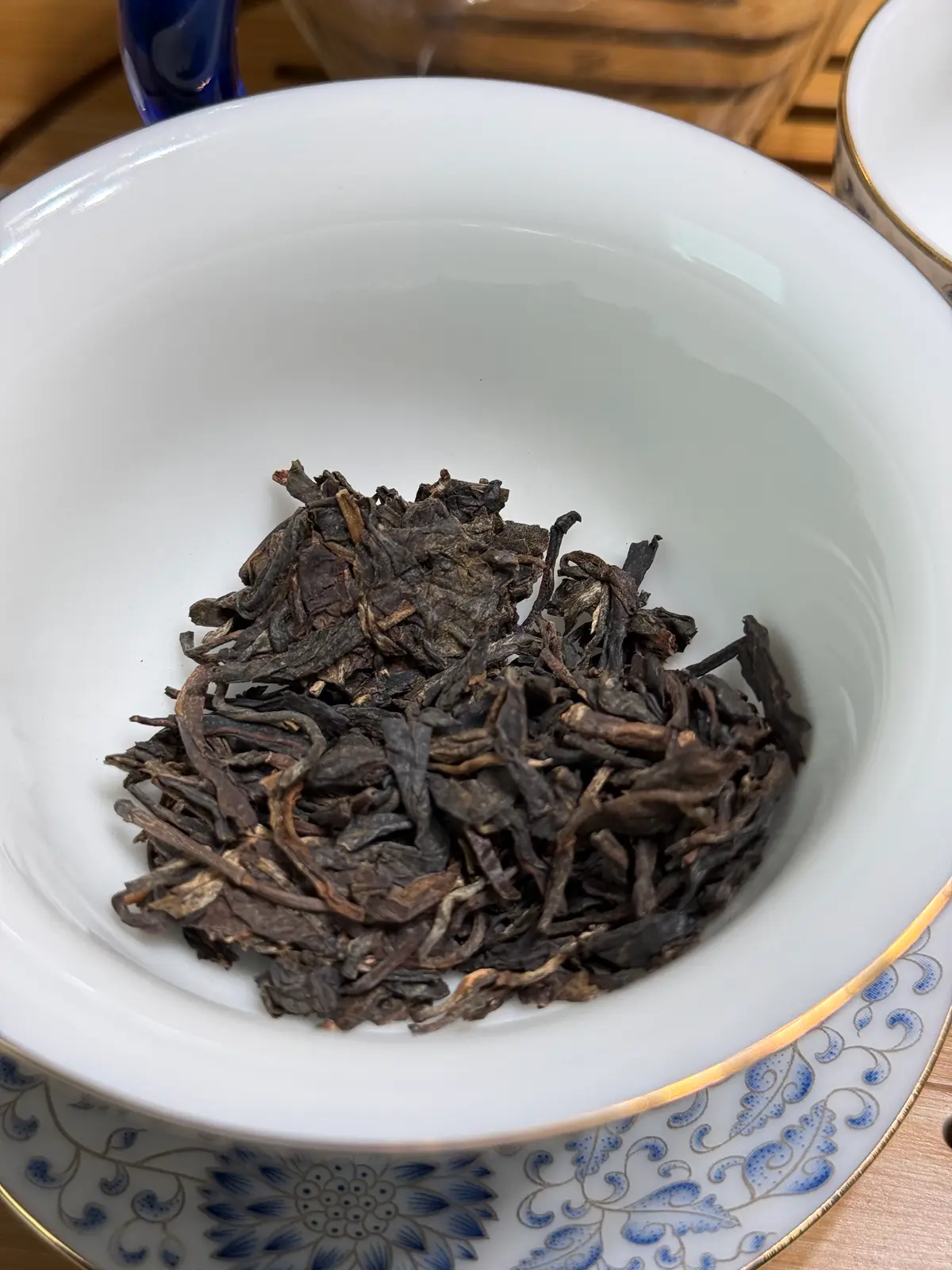
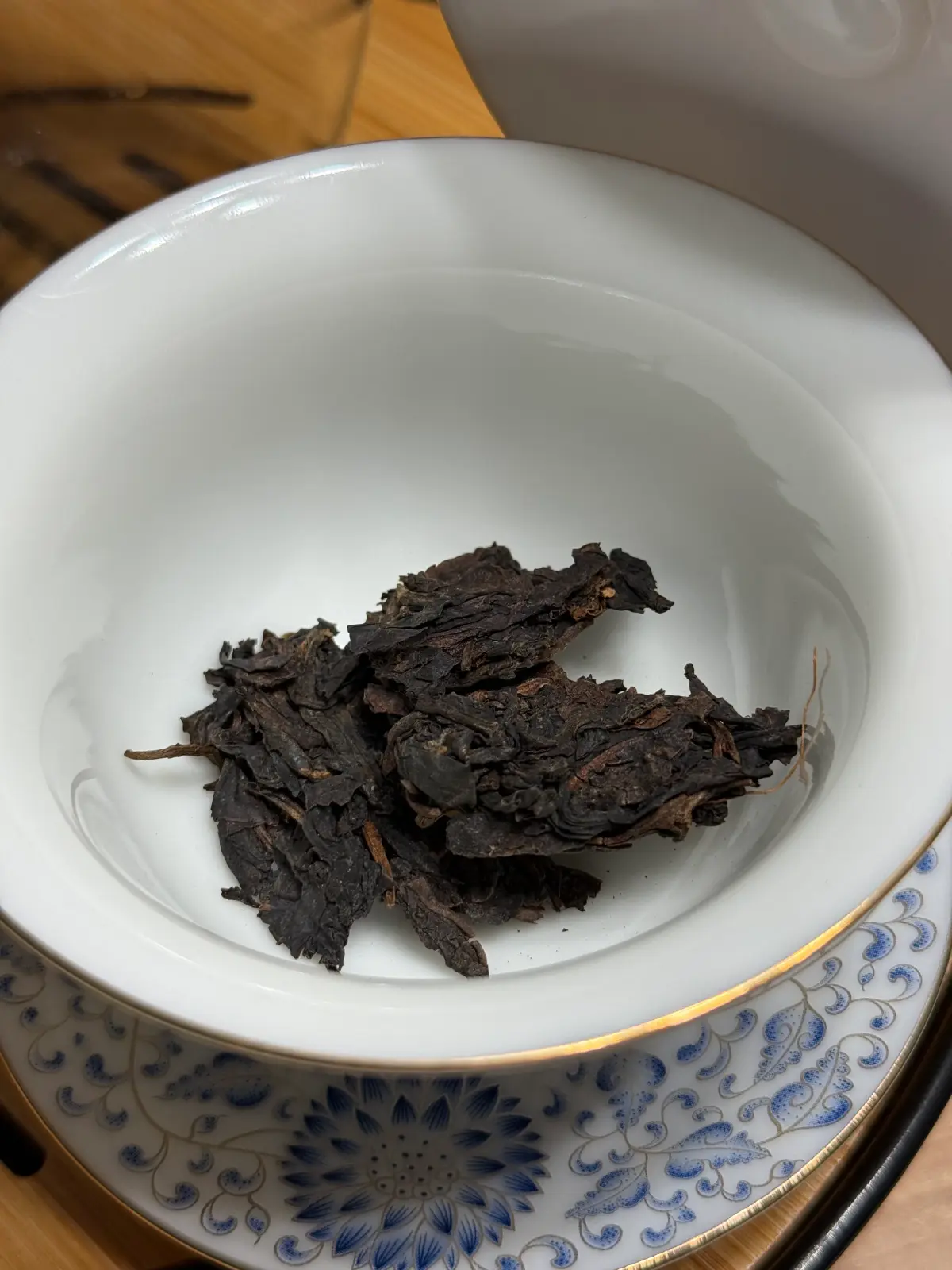
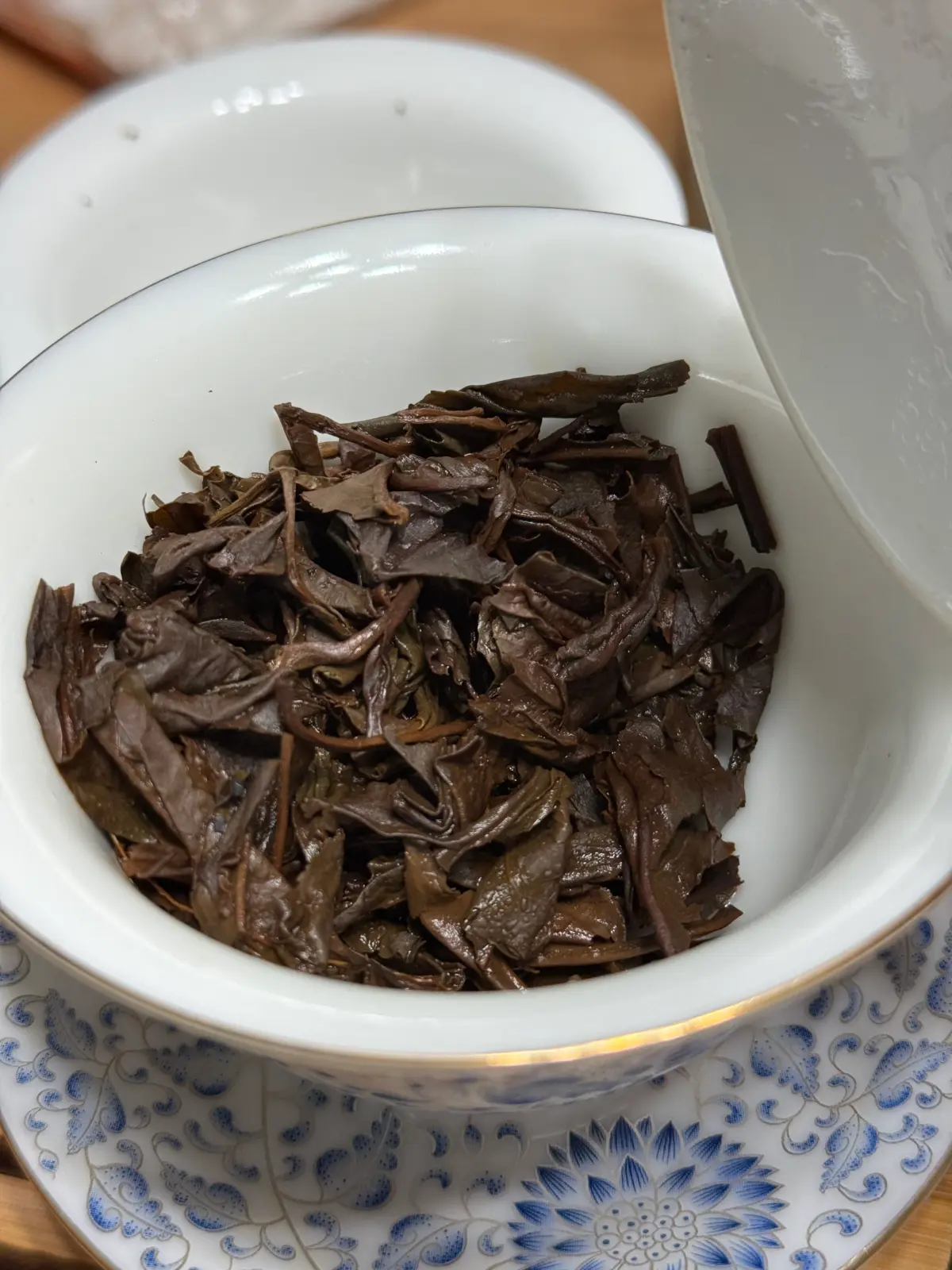
This 2007 Jin Tai Hao completes the trilogy with the most complex storage history of the three: 11 years in humid Jinghong (Xishuangbanna), then transferred to dry Kunming for the final 8 years. Both storage environments left their fingerprints. The wet leaves smell like something neither of the other two produced: floral camphor. The flowers from Banna’s humid years coexisting with the hinoki wood from Kunming’s dry years. Two storage signatures layered in one aroma.
The peach is there. For the third time. The mountain doesn’t care how you store it.
The Session
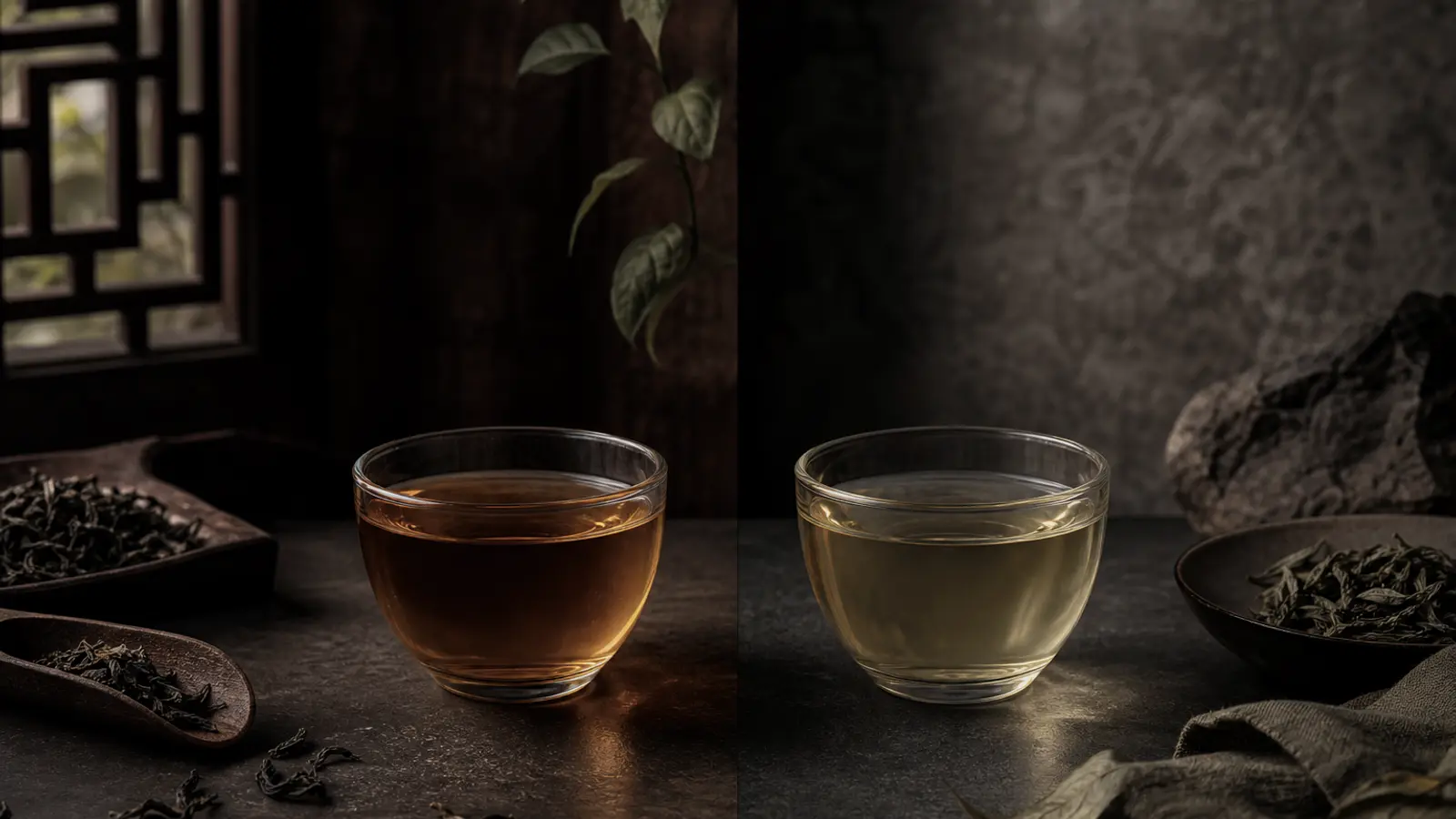
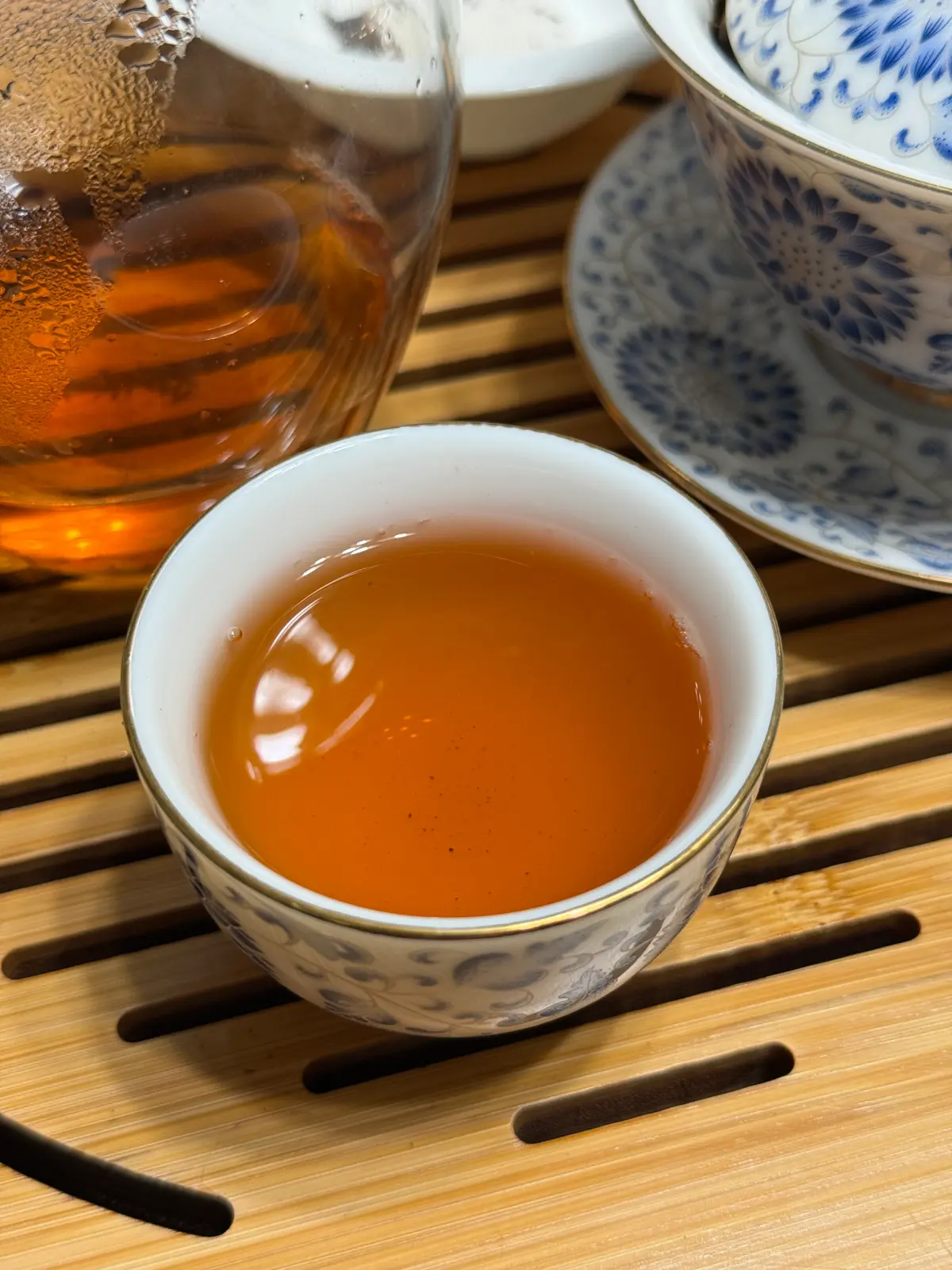
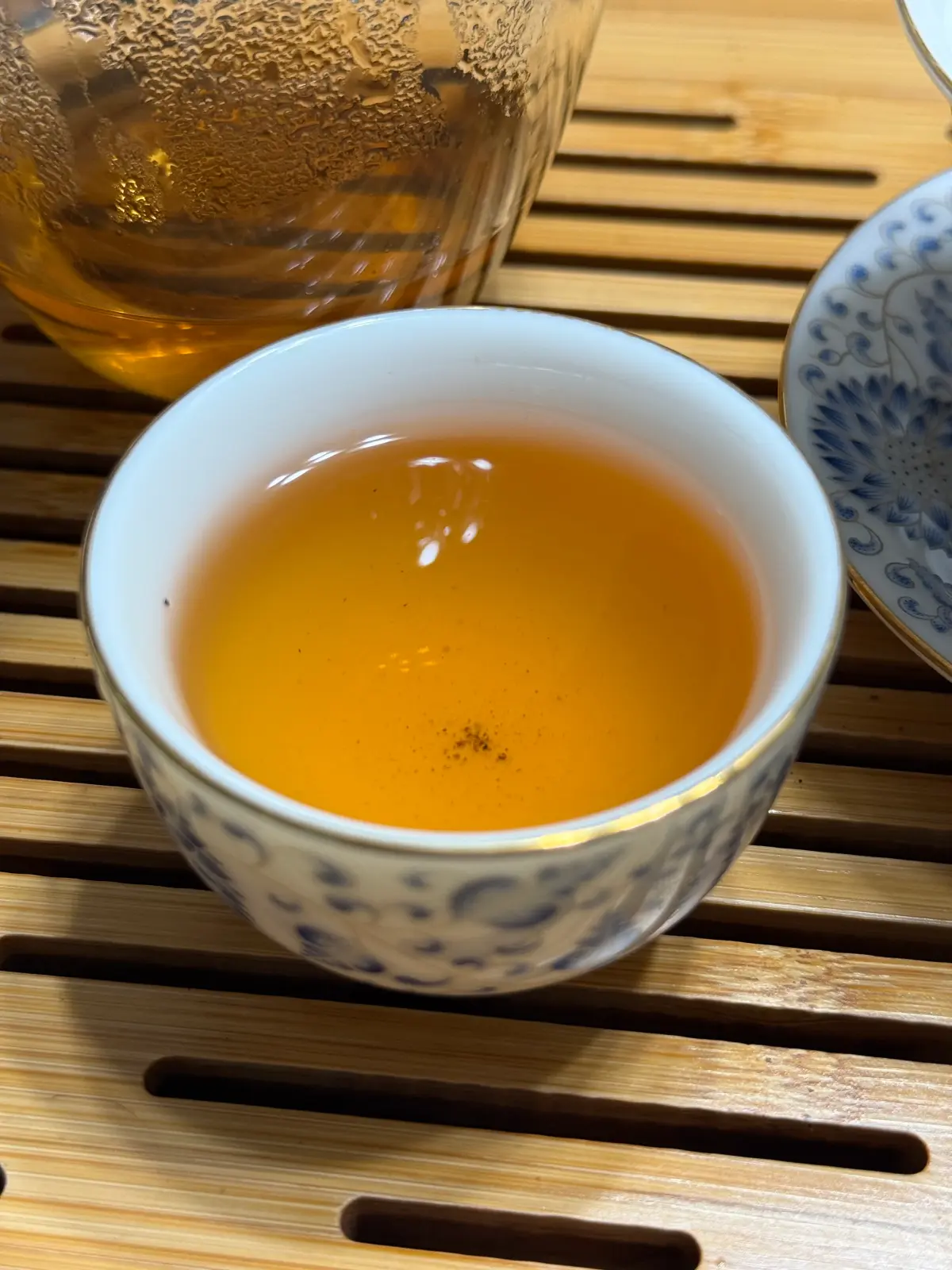
The liquor pours thick. Visibly thick — the kind of viscosity you can see when tilting the pitcher. Eleven years of humid Banna storage developed more body than Kunming alone produces. The color is deeper too — darker amber, richer, the humid years pushing oxidation further than dry storage allows.
The first steep is sweet. Peach, deep and unmistakable. Some moments lean toward pure sweetness — the “incredibly sweet” and “rum and raisin” character documented in reviews of this tea. But the best moments are when the peach sweetness carries a slight bitter edge underneath — the architectural bitterness that prevents cloying, the buffer that gives the sweetness meaning. These are the steeps that stand out. Not the purely sweet ones.
This preference has been consistent across every tea that’s moved me most: the 2005 Ban Zhang (“sweet but not overly sweet because it has a gentle and nice bitterness to hold up the structure”), the 2003 Yiwu Chun Zheng Pin (“the bitterness is a good bitterness that stops the tea becoming too sweet — like a buffer or structure”), and now this Jin Tai Hao. Sweetness needs architecture. It’s the universal principle.
By steeps 2-3, the bitterness takes the foreground. Tannins arrive — light, not aggressive. The sweetness retreats to the background without disappearing. Wood notes emerge — the Kunming dry storage period expressing its contribution. The floral camphor from the wet leaf aroma translates into the cup as a woody, resinous depth underneath the fruit.
The tannins here sit between the extremes of the other two Yiwu teas. The Kunming-only 2006 Yiwu had minimal tannin (too soft for some sessions). The Banna-only 2003 Chun Zheng Pin had fully integrated, gentle tannin (the most harmonious of the three). This Jin Tai Hao’s split storage created a middle path — more tannin than the Banna tea, better integrated than the Kunming tea. Not the best of both worlds, but a distinct third option.
Steeps 4-6: the sweetness returns. The bitterness fades. The tannins persist lightly — texture without fatigue. The full arc completes: sweet, then bitter, then sweet again. This pattern is huigan and steep progression working in concert. The initial sweetness comes from surface sugars. The bitterness comes from deeper polyphenols extracting in the middle steeps. The returning sweetness is both huigan (the palate’s response to bitterness) and the natural re-emergence of the leaf’s inherent sweetness as the bitter compounds exhaust themselves. Two mechanisms producing the same result simultaneously.
Drinking this tea on a Sunday morning, the qi brought an image: sitting mountainside, lush green mountains stretching to the horizon in misty fog, a cool warm breeze moving through. The tea brought the mountain into the room.
Flavor Profile
The front is peach — Yiwu’s terroir signature, now confirmed beyond any doubt as origin-dependent rather than storage-dependent. The sweetness ranges from “super sweet” (rum and raisin) to “peach sweet with slight bitter structure” (the preferred expression). The mid brings wood and bitterness as the deeper extraction begins — the Kunming dry years contributing their harder mineral edge. The finish returns to sweetness through the twin mechanisms of huigan and compound exhaustion — a resolved, structured, complete ending.
Mouthfeel & Huigan
The thick liquor is a primary quality marker. This Jin Tai Hao has more body than the Kunming-stored 2006 Yiwu, thanks to the 11 humid Banna years developing heavier compounds. It stands alongside aged shou for viscosity while retaining sheng’s multi-dimensional flavor architecture. Body and complexity without compromise.
The sweet-bitter-sweet huigan arc is the most fully realized version of this pattern in the collection. Not the dramatic single-conversion of the Ban Zhang. Not the gentle persistent buffer of the Chun Zheng Pin. A full three-act structure with distinct phases — each serving the next, each necessary for the whole.
Aroma — The Floral Camphor Discovery
The wet leaf aroma is the most interesting finding of this session. Floral camphor — two notes that have never appeared simultaneously in any previous tea. The florals echo the Yiwu origin (rose-adjacent aromatics from the leaf material) and the Banna humid period (which preserved volatile florals that dry storage would dissipate). The camphor echoes the 편백나무 signature and the Kunming dry period (which develops the resinous, terpene-family compounds). Split storage created a layered aroma that neither single-storage environment could produce alone.
The Iced Tea Question
A natural observation during this session: why doesn’t anyone make iced tea from aged Yiwu? The peach sweetness is so pronounced it resembles a flavored beverage. The answer is instructive: the peach is a volatile ester compound that requires heat to release into the water. Cold brewing would extract the amino acids (sweetness, umami) but not the volatile aromatics (peach, florals, camphor) that make the hot gongfu experience multidimensional. You’d get sweet water, not peach tea. The magic lives at 100°C. The temperature is part of the recipe.
The Yiwu Trilogy — Summary
Three teas, three storage conditions, one mountain’s voice:
2006 Hong Xuan (Kunming dry, 23yr): Peach + 편백나무. Cool, bright, the most preserved original character. Initial sweetness without much bitter counterweight. The purest expression.
2003 Chun Zheng Pin (Banna humid, 23yr): Peach + chestnuts on fire. Warm, integrated, the most harmonious. Gentle architectural bitterness as buffer. The most balanced.
2007 Jin Tai Hao (Banna then Kunming, 19yr): Peach + floral camphor. Middle path — body from humid years, complexity from dry years. Sweet-bitter-sweet three-act arc. The most dynamic.
The peach survived all three storage conditions. The mountain spoke through every translator. Yiwu’s terroir is the one constant. Everything else — storage climate, duration, humidity — is the accent, not the language.
Verdict
The trilogy completed. The terroir thesis proved beyond doubt. Yiwu owns the peach the way Chambertin owns the black cherry — it’s not the cellar, it’s the soil. Three storage conditions confirmed it. The split-storage floral camphor aroma is a new discovery — two storage signatures coexisting in one breath. The sweet-bitter-sweet arc across steeps demonstrated the sophisticated interplay between huigan and extraction dynamics.
The mountain came home. That’s what Yiwu does.
This tea's strongest axis is Aroma (9/10). Also notable: Body, Huigan, Flavor Transition, Finish Length.