This was supposed to be the pinnacle. Competition-grade Da Hong Pao — the tier above the Premium AA that gave me strawberry and roses, above the Wild that tasted like liquid gold, above the 13-year aged that gave caramel and ghost fruit. The word “competition” implies best. I opened it expecting to be impressed. I was educated instead.
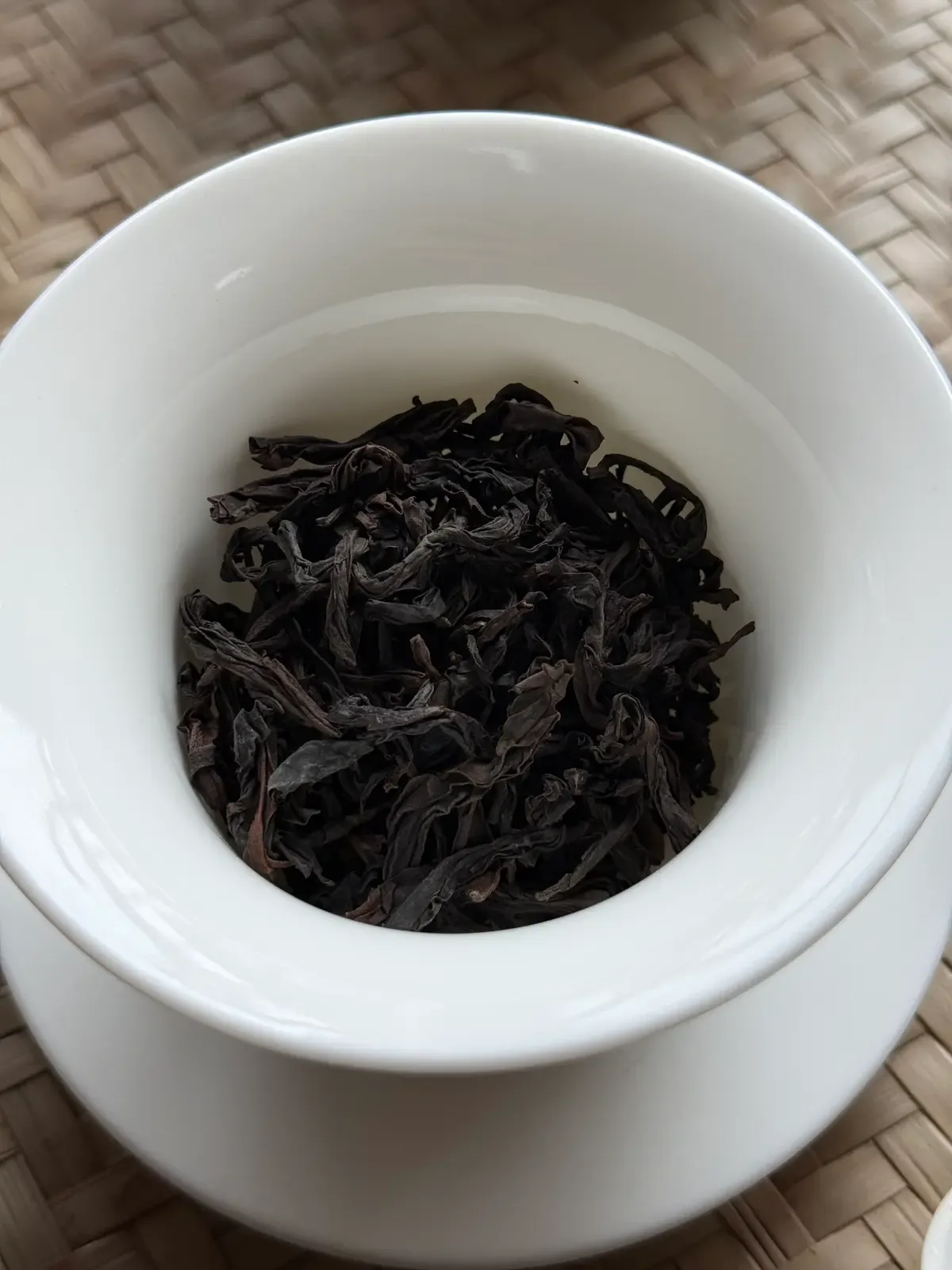
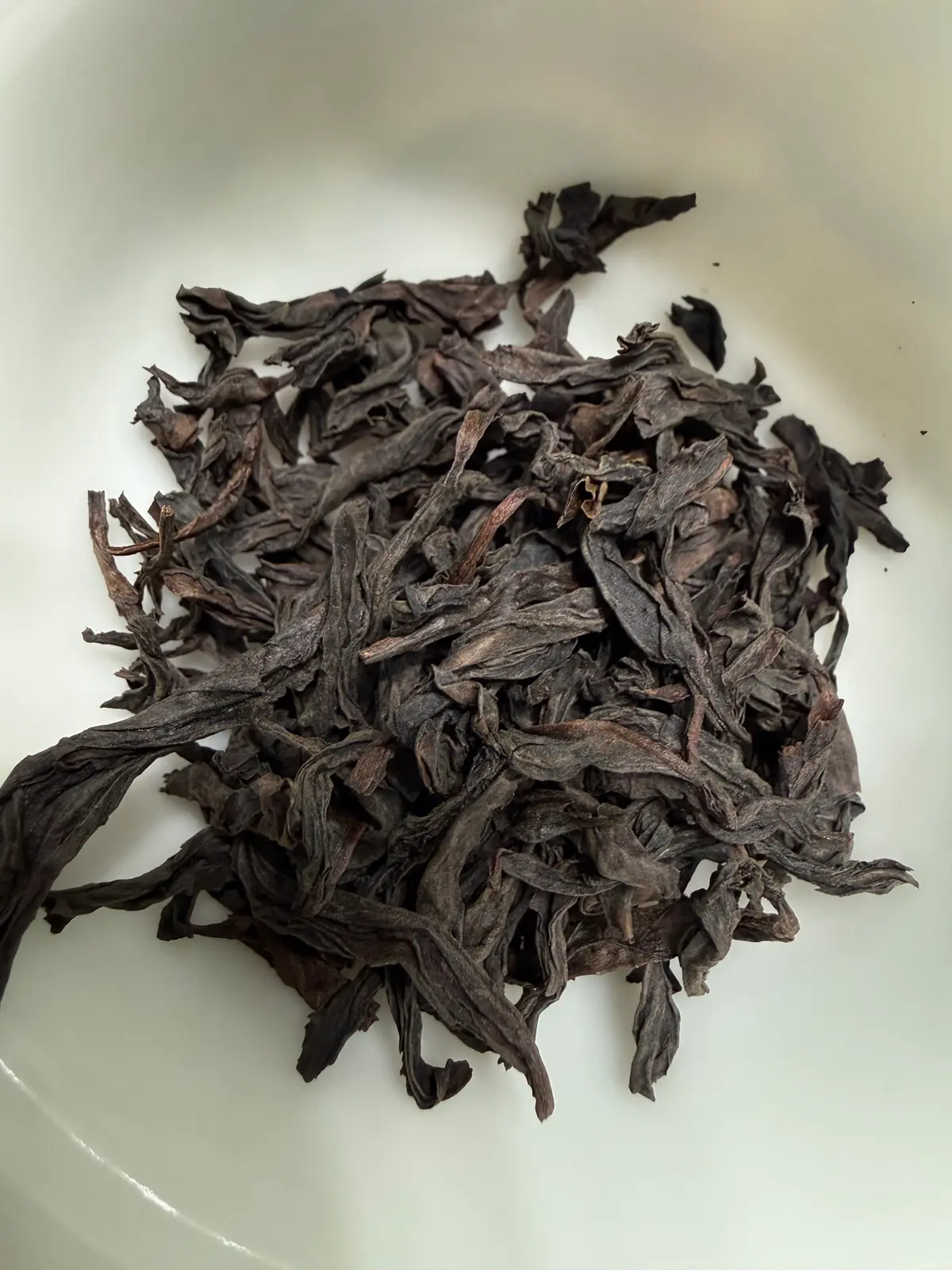
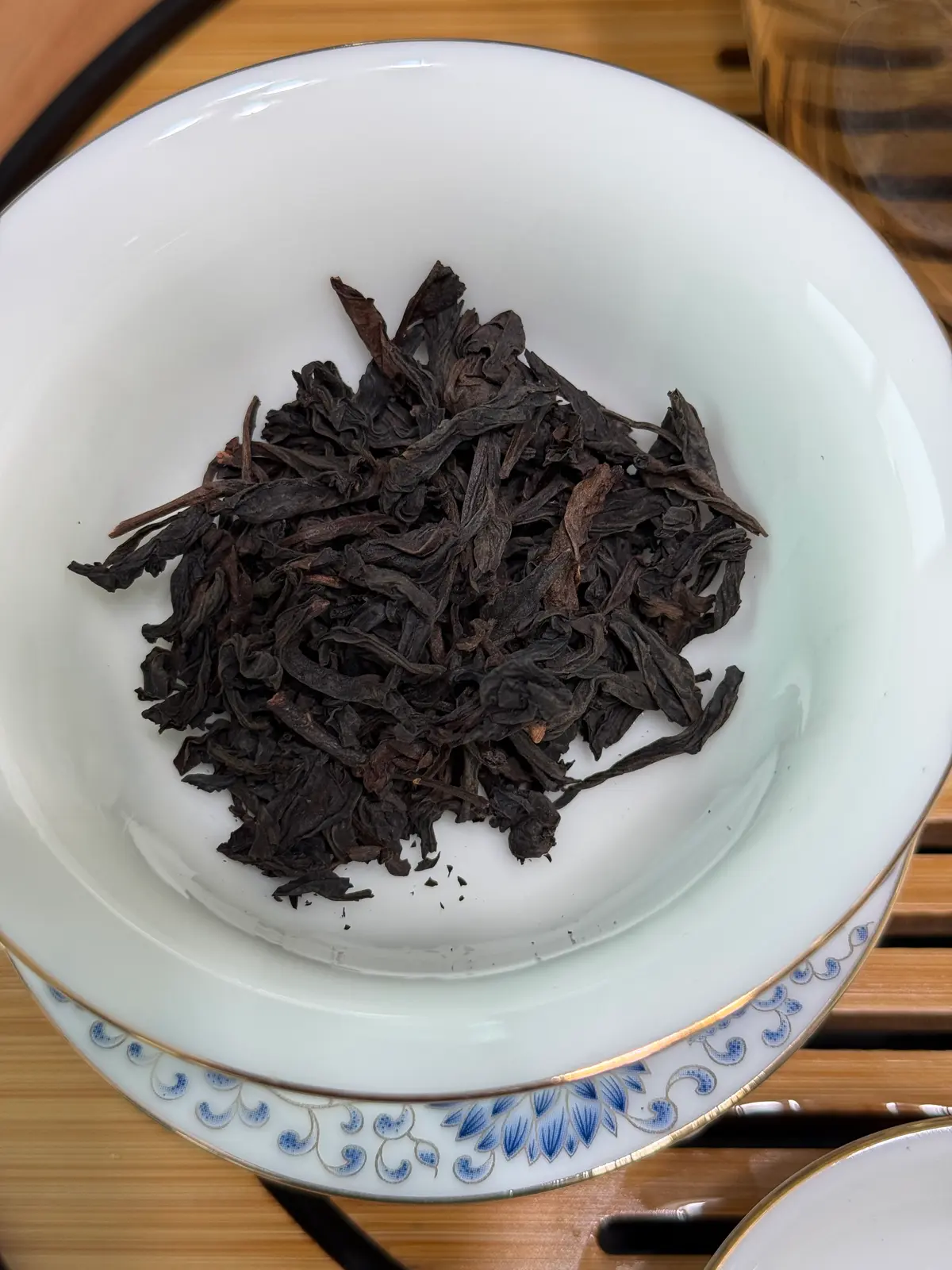
Dry Leaf
Tight, uniform, precisely shaped. The leaf quality is visibly different from the AA — darker, more consistent, the mark of careful processing and selection. The aroma is clean and restrained. Where the AA smelled like a garden and the Wild smelled like dry stone, this smells like a well-ordered workshop. Everything in its place.
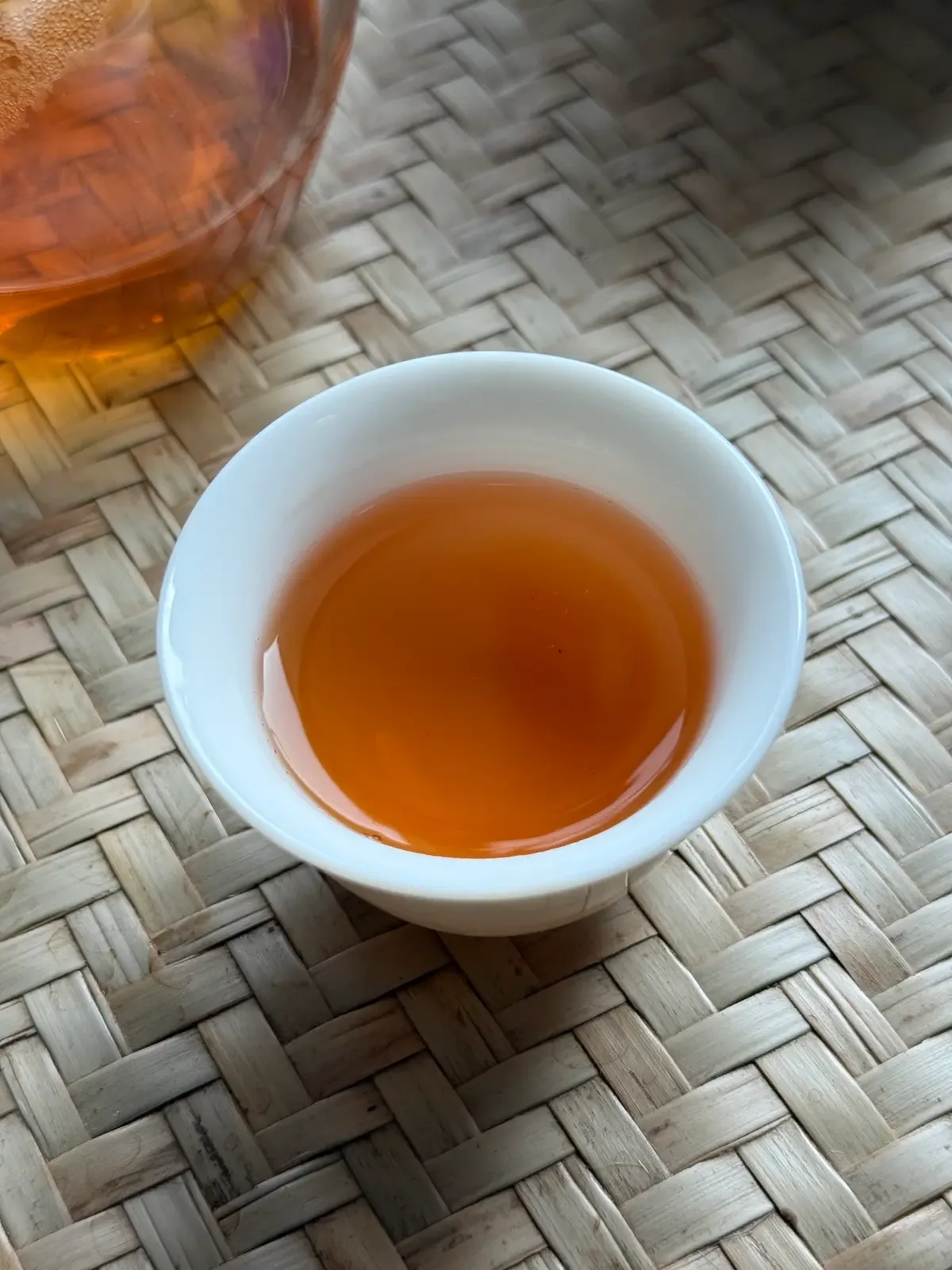
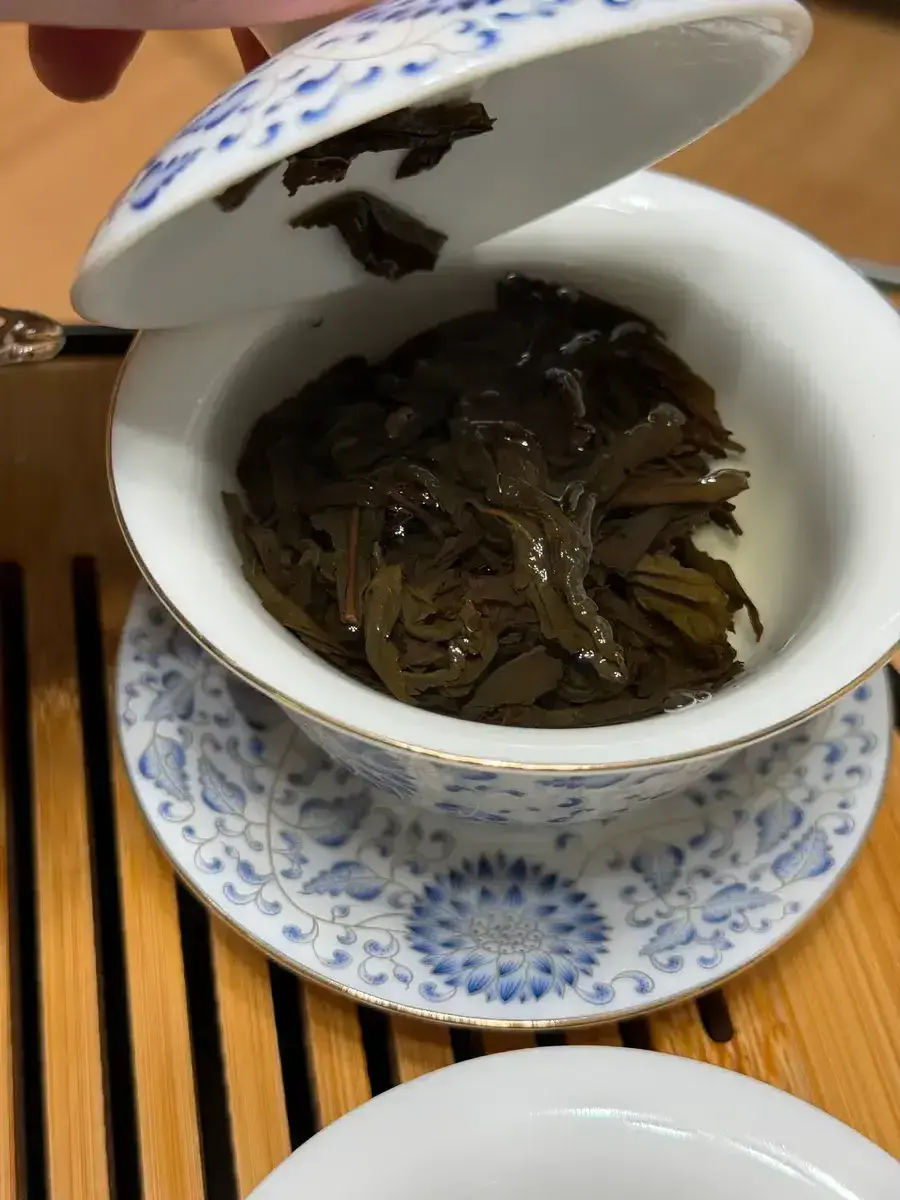
The Session
The first steep was mineral. Clean, balanced, precise. A cinnamon hint sitting underneath the mineral framework — a quieter version of what the Rou Gui delivered more assertively. Well-rounded from the first sip. Nothing out of place. Nothing wrong with it.
And nothing that stopped me mid-sip.
The AA stopped me with strawberry. The Wild stopped me with liquid gold. The 13-year aged stopped me with caramel. This one made me nod and keep sipping. Technically correct. Balanced. Clean. Like listening to a technically perfect pianist who never makes you lean forward in your seat.
Steep 2-3 brought a sourness I’d also caught in the Qi Lan. Not unpleasant — a brightness, an acidity. This is 武夷酸 (Wuyi acid), the liveliness that comes from genuine Zhengyan (正岩) rock-grown material. Competition judges score this as 活 (huó) — liveliness, vitality. It’s a quality marker. But my palate reads it as a sharpness that competes with the smooth sweetness I’m always reaching for.
Bitterness arrived at steep 3-4. Structured, proportional, never aggressive. Alongside the acid and the mineral, it created an architecture that was genuinely impressive in its balance. Everything held together. Nothing dominated. This is what competition judges reward — the absence of any flaw, the presence of every element in correct proportion.
Tannins developed through steep 4-5. The astringency built gradually, adding texture without assaulting. Still mineral. Still balanced. Still smooth underneath the bitter-sour-tannic structure.
Flavor Profile
The front is mineral with a cinnamon whisper — clean, precise, immediate. The mid brings the bitterness and 武夷酸 acidity together — the bitter-sour architecture that yan cha competition scoring rewards as complexity. The finish is tannic, mineral, structured — technically clean rather than lingering and sweet. Where the AA finished with orchid sweetness and the Wild finished with warm stone, this finishes with correctness.
Mouthfeel & Huigan
Smooth. Well-rounded. Balanced. Everything in proportion — the defining quality of competition-grade yan cha. Nothing jumps out because nothing is supposed to jump out. The balance is the achievement.
For a palate that craves thick coating density — the shou’s oily body, the Ban Zhang’s viscous grip — this smoothness registers as refined rather than substantial. The tea has body. It’s not thin. It’s just not thick in the way that makes me close my eyes and pause.
Huigan is present as a mild mineral sweetness. Clean, proportional, understated. Not the dramatic conversions of pu-erh or the ghost fruit of aged yan cha. A quiet mechanism doing quiet work.
Qi Notes
Not strongly noted.
Value Assessment
Tasted as part of a rock oolong comparison session alongside the AA, Wild, 13-year aged, and Rou Gui. The competition grade was the most expensive tier in the sampler.
Verdict
The Opus One moment. Technically excellent wine that doesn’t move you because your palate was built for a different kind of excellence.
This tea is balanced. Clean. Mineral. Every element in correct proportion. Competition judges would reward the 岩韻 (rock charm), the 活 (liveliness), the absence of any flaw. The processing is precise. The roast is controlled. The varietal expression is clear.
And the AA Da Hong Pao — less expensive, less prestigious, lower tier — gave me strawberry and roses that I wrote about for paragraphs. The Wild — naturally grown, no cultivation — gave me liquid gold that became one of my most memorable descriptions. The 13-year aged gave me ghost strawberries and whiskey barrels.
Competition-grade gave me balance. Balance I acknowledge. Balance I respect. Balance that teaches me something valuable about my own palate: I don’t drink tea for balance. I drink tea for the moment that makes me stop and say “what was that.” Strawberry from a rock oolong. Peach from a 22-year-old tree. Liquid gold from a wild bush. Caramel from a ghost.
This palate doesn’t want the technically perfect pianist. It wants the one who plays something unexpected in the third movement that makes the audience hold its breath.
Competition-grade and personally compelling are two different things. Now I know which one I’m chasing.
This tea's strongest axis is Mineral (7/10). Notably low: Cha Qi.