Premium AA Da Hong Pao (大紅袍), Wuyi Mountains, Fujian. Spring 2025 harvest, light-medium roast. Tasted morning session alongside the Wild Da Hong Pao — same cultivar name, opposite philosophy.
Dry Leaf
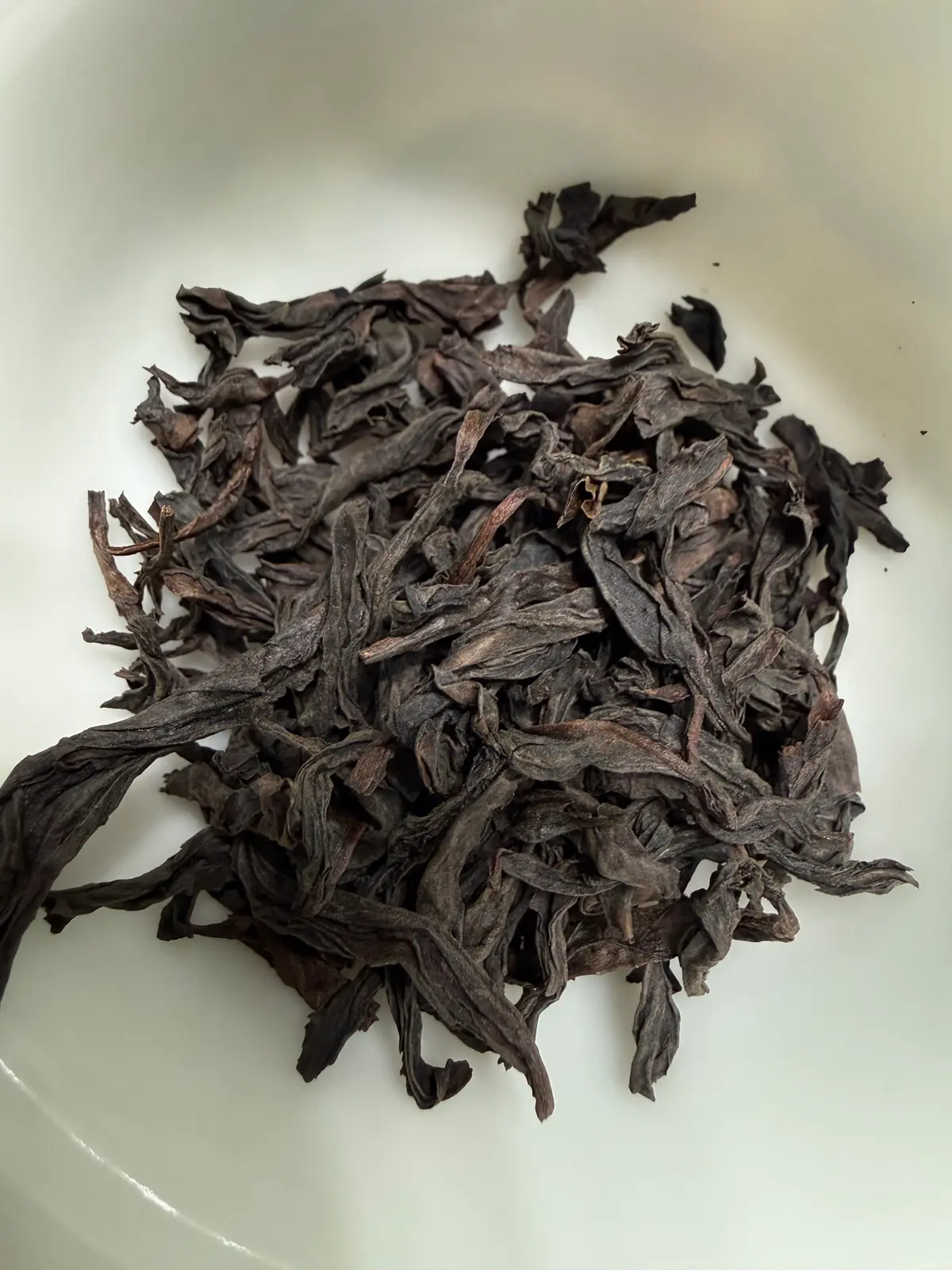
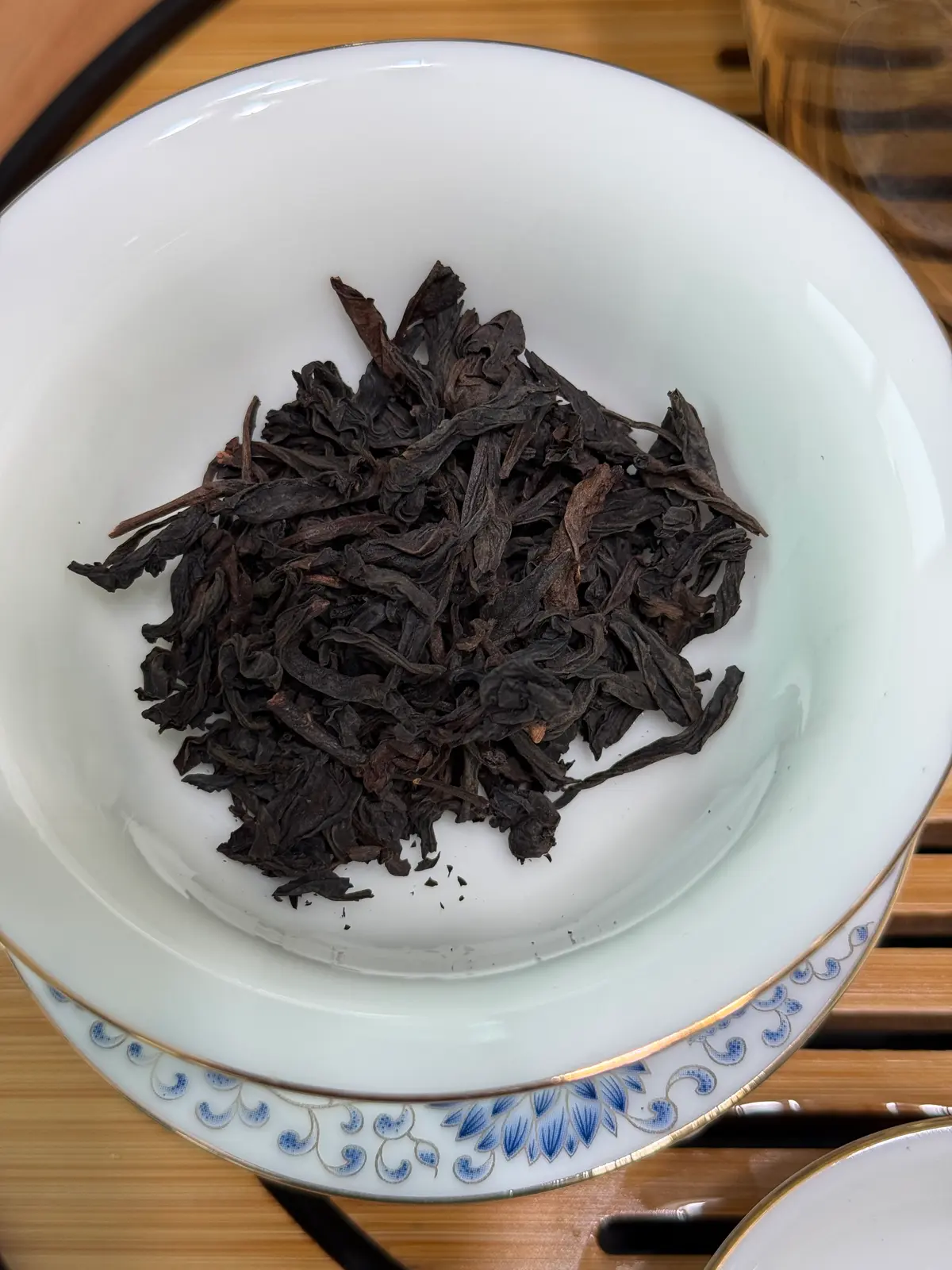
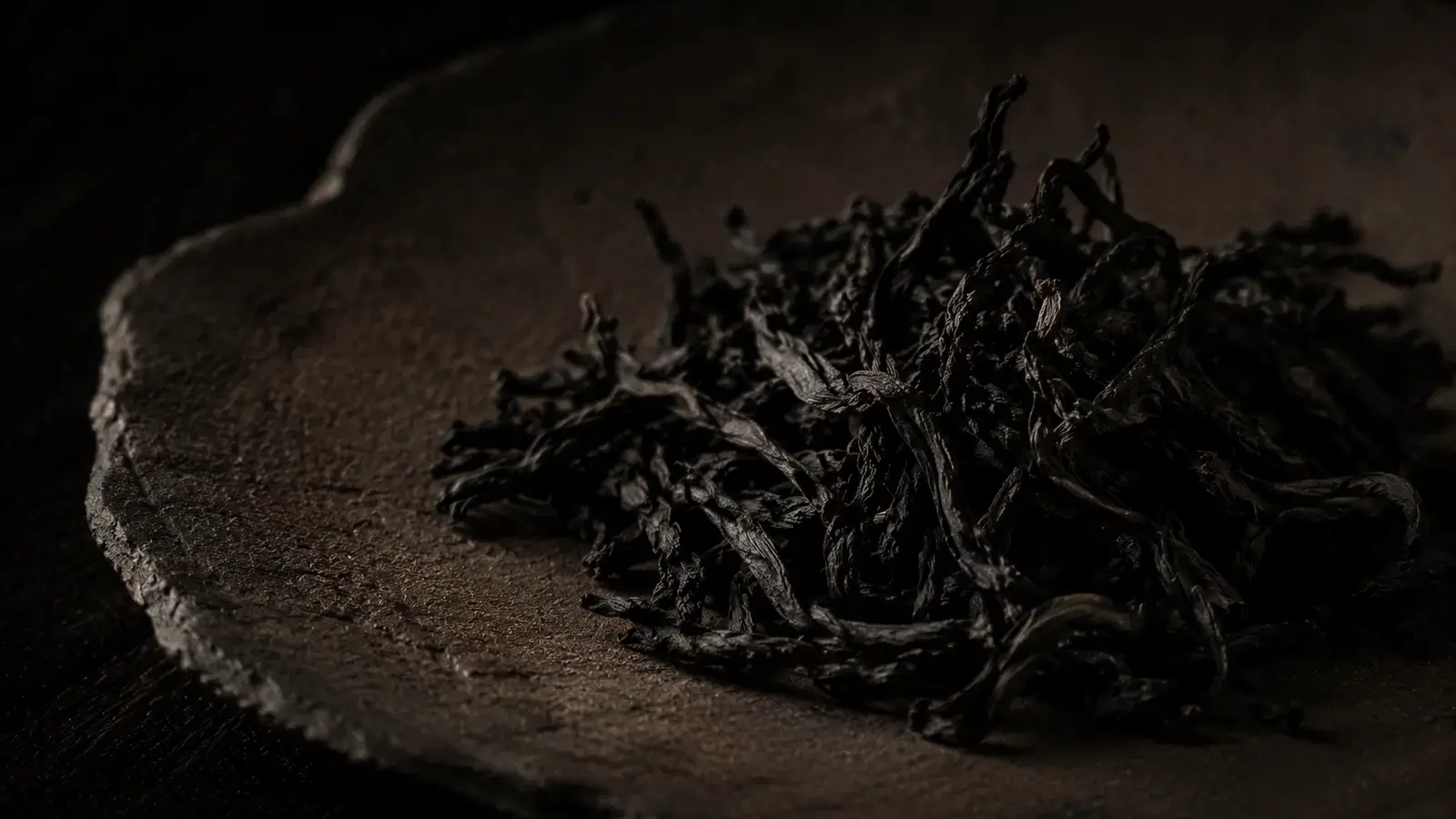
Tightly rolled, dark olive-brown with a faint oily sheen from careful roasting. More uniform and polished than wild-grown leaf — this is cultivated, tended, shaped by human hands. Aroma off the dry leaf: toasted grain, caramel, a sweetness hinting at fruit underneath the roast char. Inviting where the Wild was restrained.
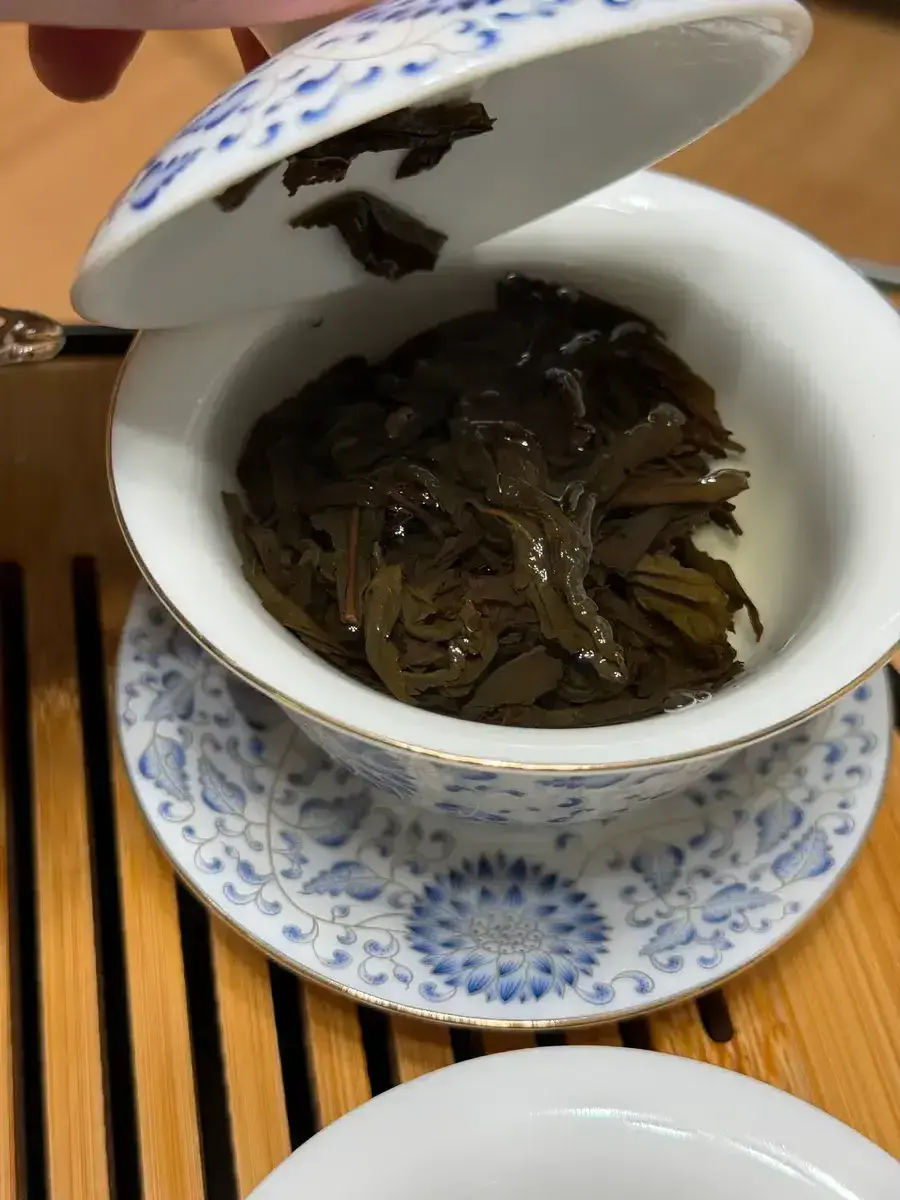
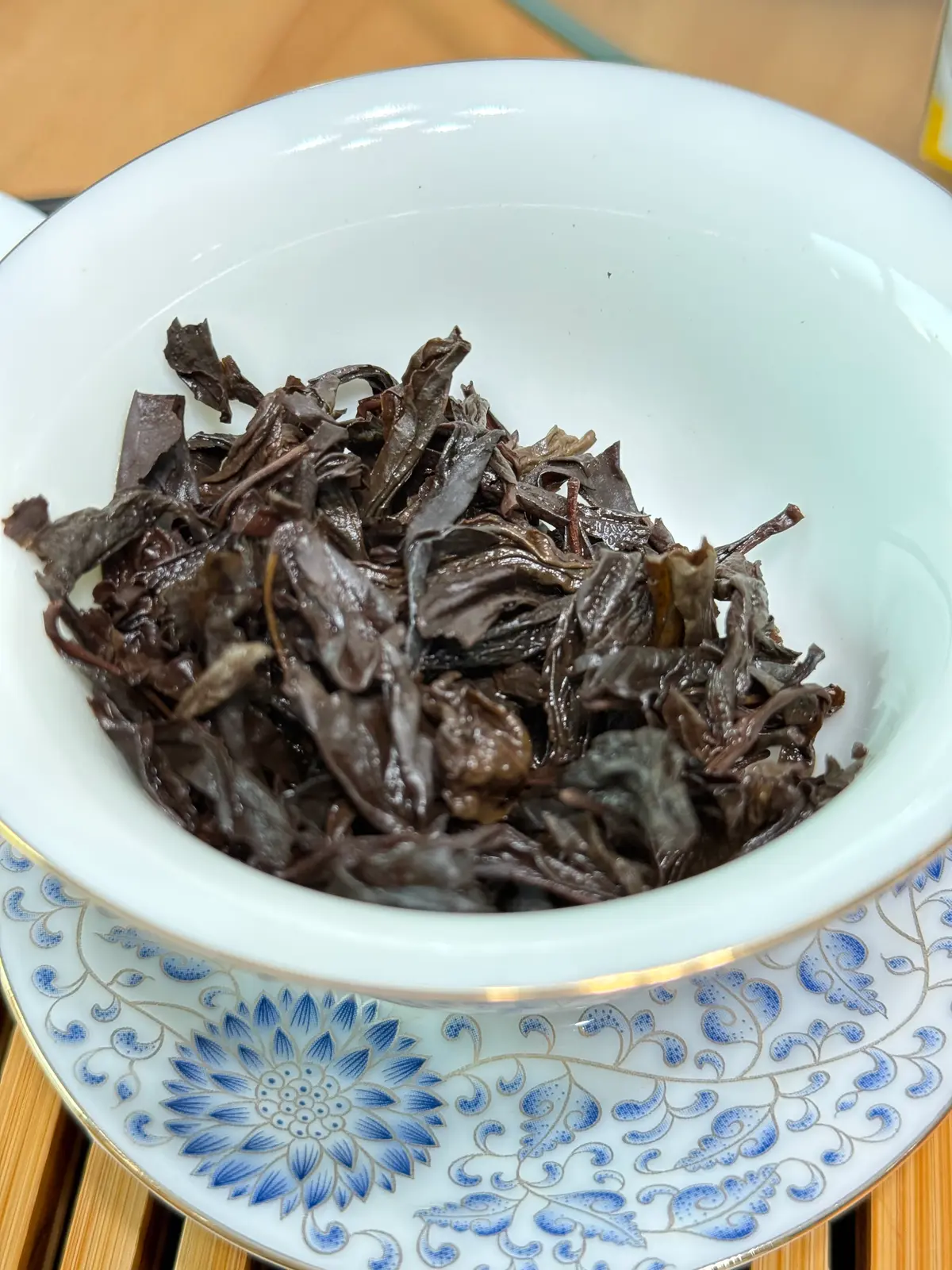
Wet leaf: roses. Not “floral note suggesting rose” — actual rose fragrance rising from the gaiwan lid, filling the space between the cup and the nose. The kind of aroma that makes you stop and hold the lid under your face for a second pass. Underneath the rose, a warm berry sweetness and roasted sugar. The wet leaf tells you everything this tea is about to do.
The Session
Brewed at 95°C in a 100ml gaiwan with approximately 5g of leaf.
Liquor: clear amber, lighter and more luminous than the Wild. Bright, warm, clean — the color of light passing through dark honey.
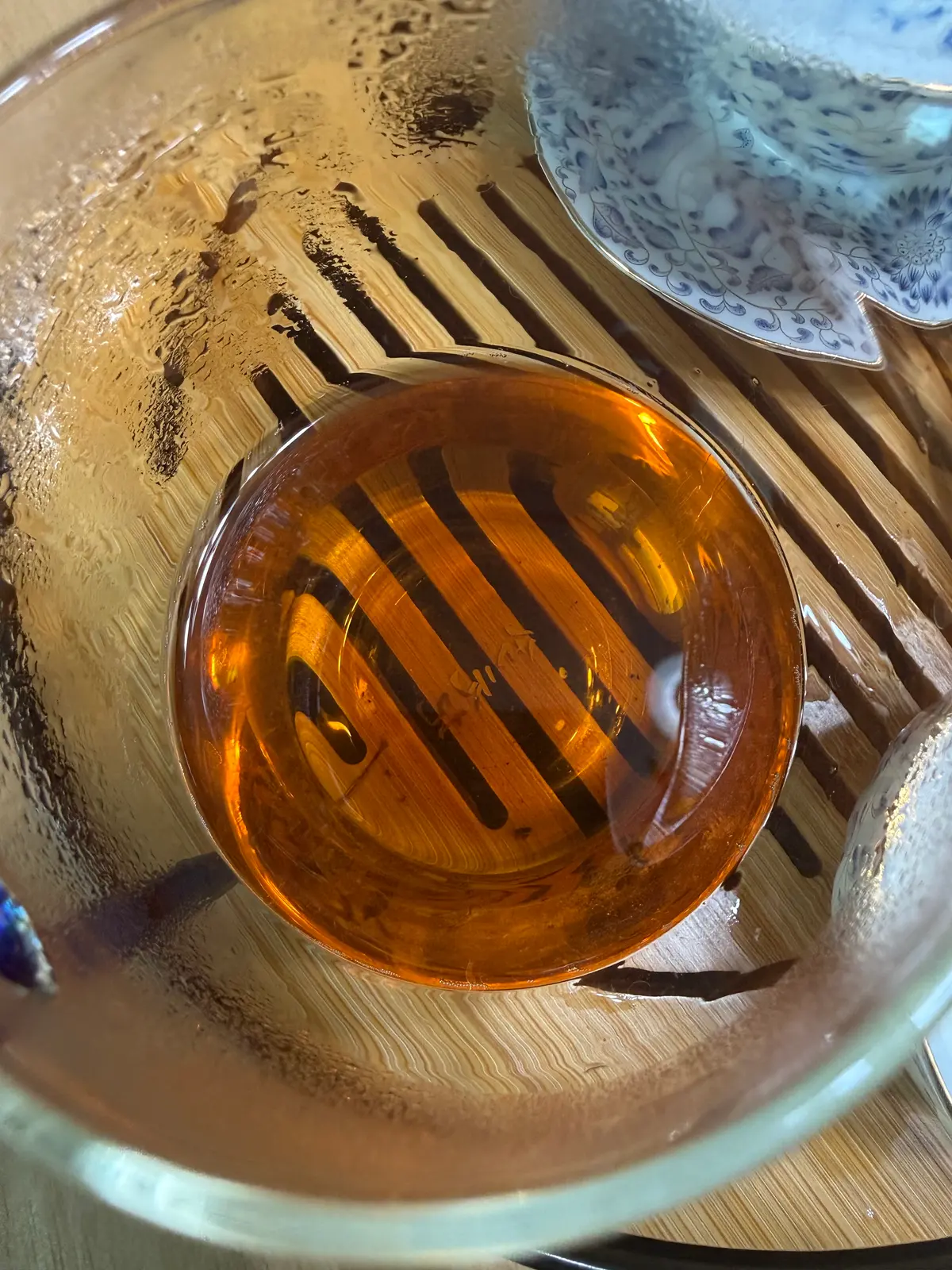
Steep 1 (10s): Strawberry. Not the vague “berry” of young sheng or the dark fruit of aged shou — actual strawberry sweetness, ripe and warm, landing on the front of the tongue. The light-medium roast preserved the ester compounds that heavier roasting would destroy. Behind the strawberry, roasted sugar and a whisper of the rose translating from nose to palate. Immediate, accessible, generous.
Steep 2 (10s): Strawberry deepening. The fruit gaining body now, less bright and more jammy — strawberry preserves rather than fresh strawberry. The rose moving from aroma into the mid-palate as a floral sweetness threading through the fruit. A caramel warmth developing underneath. Mouthfeel coating and smooth.
Steep 3 (15s): The fruit-roast convergence. Strawberry still present but sharing the stage with toasted grain, brown sugar, and a growing mineral backbone. The 岩韻 (yán yùn) arriving — not as dominant as the Wild’s golden mineral wall, but present as a foundation underneath the fruit. The rock makes the sweetness serious.
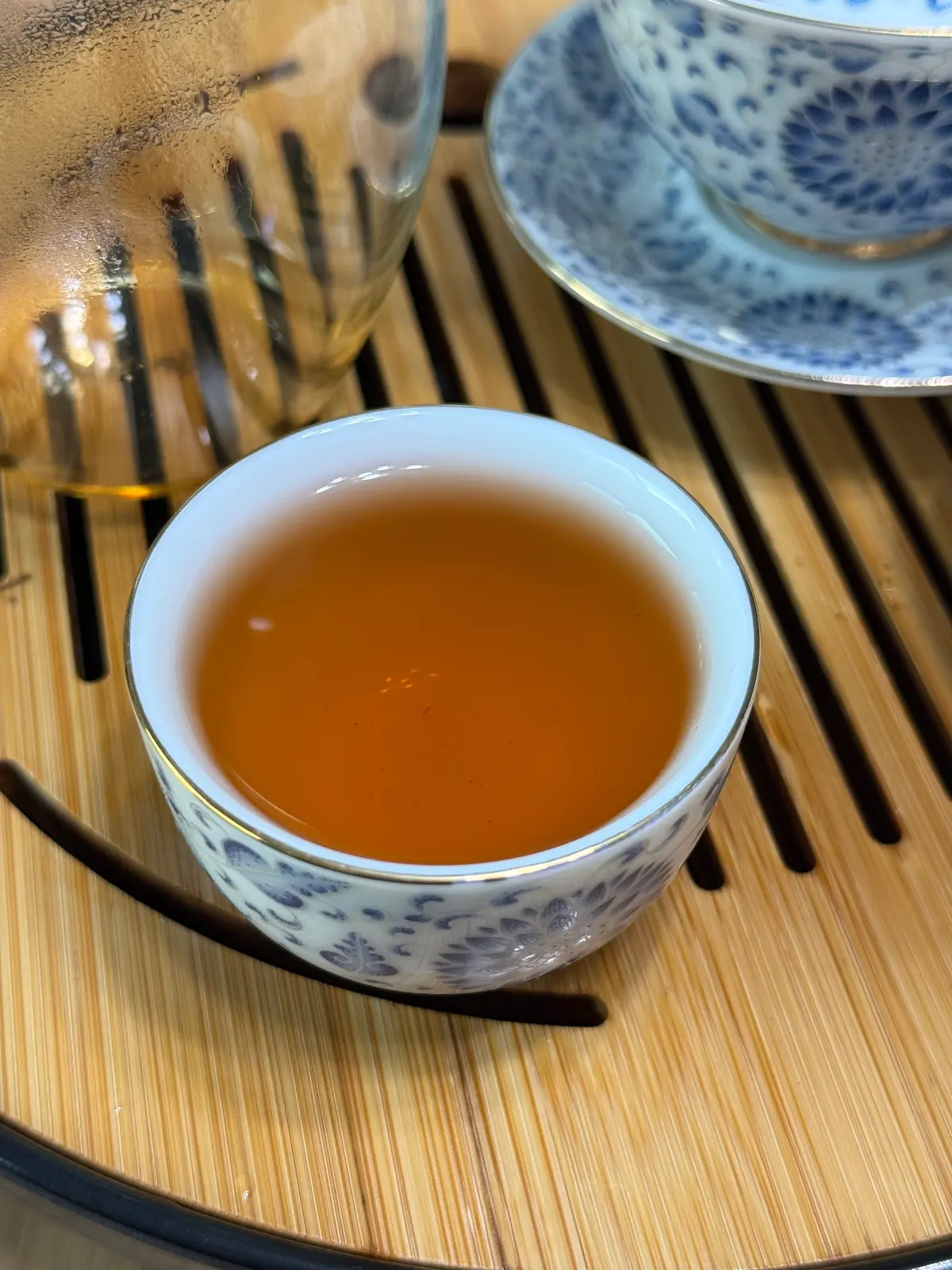
Steep 4 (20s): Transition begins. Fruit receding, mineral advancing. The rose now a memory at the edges. Warm biscuit, roasted chestnut, and a clean stony character taking the lead. This is where the Da Hong Pao identity asserts itself — the fruit was the invitation, the rock is the substance.
Steep 5 (30s): Mineral and roast in balance. Dried stone fruit lingering — peach skin, apricot — but the dominant note now is warm toasted grain over a clean mineral bed. Mouthfeel still thick and oily. Huigan arriving as a gentle sustained sweetness in the throat.
Steep 6 (45s): Warm, clean, focused. The roast character harmonizing into a mellow caramel-wood warmth. Finish extending. Orchid sweetness appearing for the first time — a late floral note replacing the early rose.
Steep 7 (60s): Lighter but not hollow. Clean mineral, warm grain, a fading orchid sweetness. Still pleasant, still rewarding.
Steep 8 (90s): The gentle fade. Sweet wood, clean finish, a ghost of strawberry in the memory. The tea exits with grace. Eight to ten steeps total.
Flavor Profile
Front: Strawberry — ripe, warm, generous. The defining first impression and the reason this tea stops you mid-sip. Rose fragrance translating as floral sweetness threading through the fruit.
Mid: Roasted grain, brown sugar, caramel. The fruit matures into something warmer and denser. Mineral backbone (岩韻) developing as a serious foundation.
Finish: Orchid, warm wood, clean stone. Long and composed. The strawberry is gone but its warmth lingers in the architecture the tea left behind.
Mouthfeel & Huigan
Smooth, oily, coating. Fuller than expected from a light-medium roast — the AA grade material carries density. Not the heavy gravity of the Wild Da Hong Pao. This is welcoming thickness — the texture invites another sip rather than demanding you sit with what’s already there. Slick and clean on the tongue with a coating quality that holds flavor against the palate.
Huigan: gentle and sustained. Not a dramatic conversion — the tea starts sweet and stays sweet, so the huigan manifests as a deepening rather than a reversal. Throat sweetness building across steeps 4-6, persisting between sips. The strawberry sweetness transforms into a warmer, more complex returning sweetness as the session progresses.
Qi Notes
Bright, warming, focused. Good morning energy — alert without tension. A clarity that pairs with work or conversation. Moderate rather than powerful. The kind of qi that improves your morning without rearranging it.
Verdict
This is the crowd-pleasing Da Hong Pao. Strawberry and roses from the first steep — it gives you everything immediately, no patience required. But “crowd-pleasing” is not a dismissal. The mineral backbone keeps it honest. The transition from fruit to rock across the session gives it depth. The mouthfeel carries real density. This is skilled roasting: enough fire to develop the esters that produce strawberry and rose, restrained enough to preserve them rather than burning them into char and grain. That balance is craft.
The wine parallel: a Willamette Valley Pinot Noir — bright strawberry fruit, elegant structure, enough earth underneath to remind you the vineyard matters. Not trying to overpower. Not trying to impress with weight. Just delivering exactly what it promised from the first pour, and delivering it well.
This tea's strongest axis is Aroma (8/10).