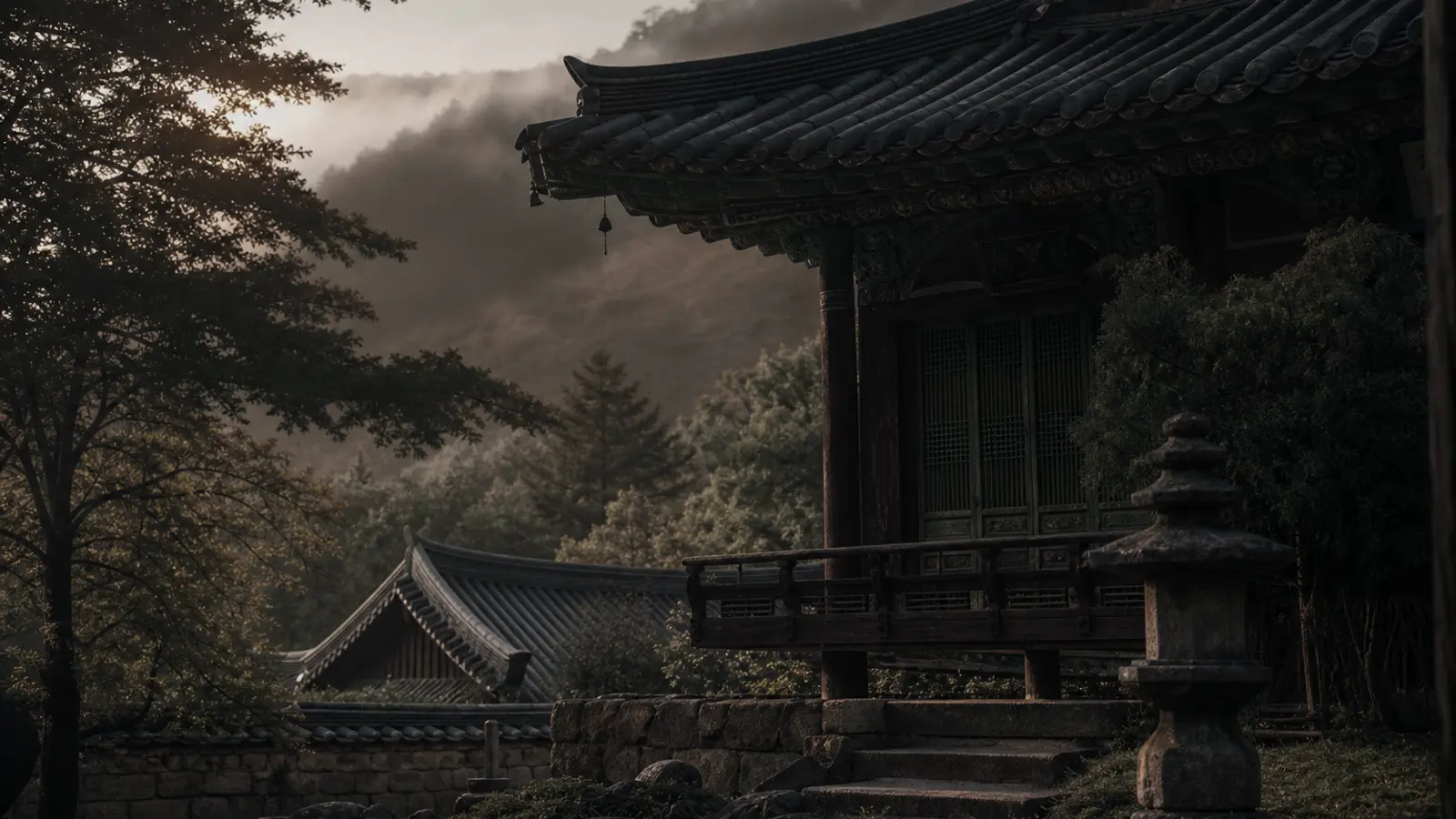
Choui Uisun (초의의순, 草衣意恂, 1786-1866) was the Korean Buddhist monk who preserved Korean tea culture when it was fading from court and public life during the late Joseon Dynasty. His two texts — Dongdasong (동다송, Song of Korean Tea) and Dasinjeon (다신전, Record of the Spirit of Tea) — are the most important primary sources on Korean tea culture from the Joseon period and form the intellectual foundation for Korea’s modern tea renaissance.
If Korean tea culture exists today — the hand-rolled leaves of Hadong (하동), the meditative darye (다례) ceremonies, the thriving artisan producers of Boseong (보성) — it exists in no small part because one monk saw a tradition disappearing and wrote it down. Choui Uisun (초의의순, 草衣意恂, 1786–1866) is the figure to whom every thread of the modern Korean tea world traces back. He is not a folk hero or a marketing myth. He is a documented historical person whose texts survive, whose monastery still operates, and whose influence is concrete and traceable.
The wine world has its Dom Pérignon — the cellar master whose name became synonymous with Champagne, though much of his legend is apocryphal. Choui Uisun is the Korean tea equivalent, except the analogy undersells him. His actual texts survive. His monastery still practices tea. And his contribution was not refining an already thriving industry but rescuing a dying one.
The Historical Crisis: How Korean Tea Culture Nearly Vanished
To understand Choui, you must understand the crisis he responded to.
Korean tea culture has deep roots, stretching back at least to the Silla Dynasty (57 BCE–935 CE), when tea seeds were reportedly brought from Tang China and planted on Jirisan Mountain. Through the Goryeo Dynasty (918–1392), tea was central to Buddhist ritual, court ceremony, and scholarly life. Korea had a sophisticated tea culture centuries before Japan codified its own.
Then the Joseon Dynasty (1392–1897) changed everything.
Neo-Confucianism (성리학, seongni-hak) replaced Buddhism as the state ideology. Buddhist monasteries — the primary institutions preserving tea culture — were marginalized, defunded, and in many cases destroyed. Monks were pushed to mountain peripheries. Tea, so deeply associated with Buddhist practice, lost its privileged place in court life. Alcohol and other beverages filled the social functions tea once served.
By the late 18th century, when Choui was born, Korean tea culture survived in scattered pockets: a few mountain temples, a small circle of literate scholars who valued it as an aesthetic pursuit, some rural communities in the south where tea plants grew semi-wild. There was no national infrastructure. No codified body of knowledge being actively maintained. The tradition was not yet dead, but it was fading toward silence.
This is the landscape Choui entered.
A Life on Duryunsan: Biography of Choui Uisun
Choui was born in 1786 in Naju (나주), South Jeolla Province — Korea’s deep southwest, a region where tea has grown for centuries. He took monastic vows as a young man and entered Daeheungsa Temple (대흥사, 大興寺) on Duryunsan Mountain (두륜산) in Haenam (해남), near the southernmost tip of the Korean peninsula.
Daeheungsa was no minor temple. It was a major center of Korean Seon (선, 禪) Buddhism — the Korean school of Chan/Zen — and had been a repository of Buddhist learning through the difficult Joseon centuries. The mountain climate and coastal proximity of Haenam created conditions favorable for tea cultivation, and the temple maintained tea gardens and tea practice even as the broader culture abandoned them.
Choui spent most of his life at Daeheungsa, eventually establishing a small hermitage called Ilji-am (일지암, 一枝庵) on the mountain slopes. This hermitage — its name translates roughly to “One Branch Hermitage” — became his tea room, his study, and the place where he produced his most important work. He grew tea, processed tea, served tea, and wrote about tea in a setting of deliberate simplicity.
He was also a significant figure in Seon Buddhist practice more broadly — a dharma heir in his lineage, a painter, a calligrapher, and a poet. Tea was not a hobby for Choui. It was inseparable from his spiritual practice, his creative life, and his intellectual engagement with Korean and Chinese classical traditions.
He died in 1866 at the age of 80, having produced a body of work that would lie somewhat dormant for nearly a century before its importance was fully recognized.
The Two Essential Texts
Choui’s lasting contribution rests on two written works. In a culture where tea knowledge was often transmitted orally — master to student, monk to monk — the act of writing it down proved decisive. When the oral chains eventually broke, the texts survived.
Dongdasong (동다송, 東茶頌): Song of Korean Tea
The Dongdasong is the single most important primary source on Korean tea from the Joseon period. Written as a poetic treatise — the title translates as “Song of East [Korean] Tea” — it documents in structured verse what Korean tea was in Choui’s time: how it was cultivated, how it was processed, how it was prepared, and what it meant spiritually.
The text covers practical ground. It addresses the qualities of good tea water, the timing of harvests, the methods of processing leaf, and the correct approach to preparation. But it is not merely a technical manual. Choui wove together aesthetic philosophy, Buddhist contemplative insight, and practical instruction into a unified work. The Dongdasong treats tea as a complete practice — body, mind, and spirit integrated through the act of preparing and drinking tea.
For modern Korean tea practitioners, the Dongdasong serves a function comparable to Lu Yu’s (陸羽) Chajing (茶經, The Classic of Tea) in Chinese tradition — a foundational text that defines the terms of the conversation. Every serious Korean tea student encounters it.
Dasinjeon (다신전, 茶神傳): Record of the Spirit of Tea
The Dasinjeon takes a different approach. Rather than composing original poetry, Choui compiled, selected, and commented upon Chinese tea classics, adapting their insights for Korean practice. The title — “Record of the Spirit of Tea” or “Biography of the Tea Spirit” — signals its concern with the deeper nature of tea.
This text demonstrates Choui’s extensive literacy in the Chinese tea canon. He was not working in isolation. He was a scholar engaged with a thousand years of written Chinese tea culture, and the Dasinjeon represents his effort to bridge that vast tradition with the specific conditions of Korean tea: different cultivars, different climate, different spiritual and cultural context.
Together, the Dongdasong and Dasinjeon formed a complete intellectual framework: one original and Korean, one a curated bridge to Chinese classical knowledge. This dual approach gave later revivalists everything they needed — a Korean identity for their tea practice and a connection to the broader East Asian tea tradition.
The Scholar-Monk Friendship: Choui and Kim Jeong-hui
One of the most significant aspects of Choui’s life was his deep friendship with Kim Jeong-hui (김정희, 金正喜, 1786–1856), known by his pen name Chusa (추사, 秋史). Kim was one of the greatest calligraphers and painters in Korean history, a towering intellectual figure of the late Joseon period. He was also, notably, a Confucian scholar — not a Buddhist monk.
Their friendship matters because it represents the intersection of two streams of Korean culture that the Joseon state tried to separate. Buddhism and Confucianism were not supposed to mix comfortably. But Choui and Kim Jeong-hui maintained a correspondence and personal relationship built around shared interests: tea, calligraphy, painting, philosophy, and the cultivation of aesthetic refinement.
Their letters about tea — its preparation, its philosophy, its role in a well-lived life — are important cultural documents in their own right. They demonstrate that even in a period of official Buddhist suppression, tea created a space where monastic and secular intellectual life could meet. Tea was the medium of their friendship and the subject of their deepest exchanges.
Kim Jeong-hui was exiled to Jeju Island for a period of his life, and even from exile, he and Choui exchanged letters and tea. The image of these two men — one a monk on a southern mountain, one a scholar on a remote island — sending each other tea and writing about its meaning is one of the most evocative scenes in Korean cultural history.
This friendship also helped legitimize tea in Confucian scholarly circles. When a figure of Kim Jeong-hui’s stature valued tea and took a Buddhist monk seriously as an intellectual peer, it expanded the cultural space in which tea could operate.
Daeheungsa: The Living Monument
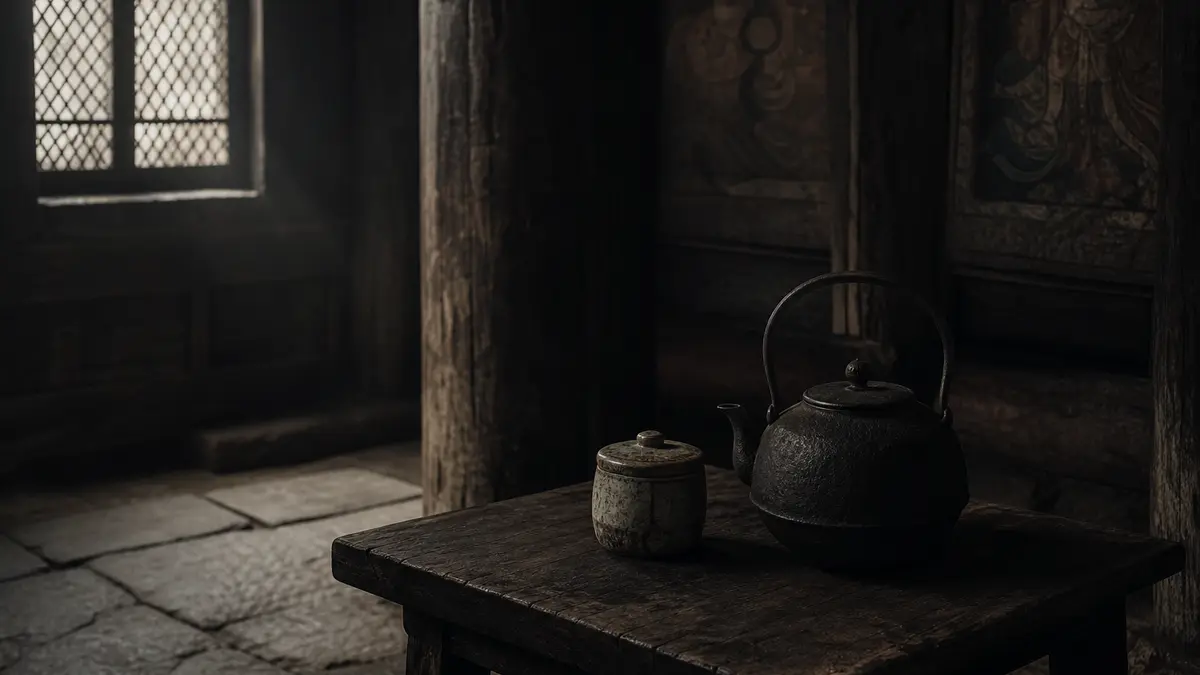
Daeheungsa Temple (대흥사) on Duryunsan Mountain in Haenam remains a functioning Buddhist temple and a site of pilgrimage for Korean tea culture. The temple complex is large and historically significant — it housed important Buddhist relics and served as a center of learning for centuries.
Choui’s hermitage, Ilji-am, has been reconstructed and maintained as a memorial site. The temple grounds include tea gardens that connect to the plantings Choui tended during his lifetime. Visitors can see the physical landscape in which the Dongdasong was composed: the mountain water, the sea-influenced air of Korea’s southwest coast, the modest stone-and-wood architecture of a scholar-monk’s retreat.
The annual Choui Tea Culture Festival (초의문화제) is held at Daeheungsa, drawing tea practitioners, scholars, and cultural organizations. The festival includes traditional tea ceremonies (다례, darye), academic presentations on Choui’s texts, and demonstrations of Korean tea preparation. It is not a tourist spectacle. It is a working gathering of people who take Korean tea seriously.
Daeheungsa also participates in Korea’s temple-stay (템플스테이) program, which allows visitors to experience monastic life including tea practice. For anyone wanting to understand Korean Buddhist tea culture from the inside, rather than from a distance, this is among the most historically significant places to do it.
Legacy in the Modern Korean Tea World
Choui’s texts did not lead to an immediate renaissance. After his death in 1866, Korean tea culture continued its long contraction through the Japanese colonial period (1910–1945) and the devastation of the Korean War (1950–1953). There were darker hours still to come.
The modern revival began in earnest in the post-war period, most prominently through the work of Hyodang Choi Beomseol (효당 최범술, 1904–1979), a monk and educator who championed Korean tea as a practice of cultural recovery. Hyodang’s efforts — and those of the generation that followed — drew explicitly on Choui’s texts as their intellectual foundation. The Dongdasong and Dasinjeon provided the authority, the vocabulary, and the framework for claiming that Korean tea was not an import from Japan or China but a tradition with its own documented heritage.
Today, the lineage is visible everywhere in Korean tea culture:
- Hadong (하동) artisan producers in South Gyeongsang Province, working with wild and semi-wild tea trees along the Seomjin River, operate within a tradition of hand-processing that Choui documented.
- Boseong (보성) tea plantations in South Jeolla Province — Korea’s largest tea-growing region — ground their cultural identity in the broader Korean tea heritage that Choui preserved.
- Darye (다례) ceremony practitioners study the Dongdasong as essential background for understanding why Korean tea preparation takes the forms it does.
- Korean tea scholarship treats Choui’s texts as primary sources — the documentary evidence against which claims about Korean tea history are tested.
- The Choui Tea Culture Festival at Daeheungsa ensures annual institutional attention to his legacy.
The influence is not merely historical. When Korean tea practitioners today speak of cha-do (茶道, the way of tea) or discuss the spiritual dimensions of tea practice, they are working within a conceptual framework that Choui articulated. He did not invent these ideas — they draw on centuries of Buddhist and Confucian thought — but he documented their application to Korean tea at a moment when documentation was the difference between survival and extinction.
Why Choui Uisun Matters to Steep Atlas
Choui Uisun is quoted on the Steep Atlas homepage for a reason. His core insight — that tea knowledge must be documented or it will be lost — is the conviction that drives this site.
Choui looked at the tea culture around him and saw it fading. Court patronage was gone. The monasteries were marginalized. Oral traditions were thinning as fewer practitioners carried them. His response was not to organize a political movement or lobby the court. He wrote. He compiled. He composed poetry that was also instruction. He created a written record that could survive the gaps in human transmission.
That is exactly the problem Steep Atlas exists to address. The global tea world is full of knowledge that lives in the heads of aging producers, in the practices of specific workshops, in the memories of drinkers who learned from people who are no longer alive. Every year, some of that knowledge disappears — not because anyone decided to destroy it, but because no one wrote it down in a form that could reach the people who need it.
In wine, this documentation problem was largely solved decades ago. Wine appellations are mapped. Producers are profiled. Vintage variation is recorded in multiple publications annually. Tea has nothing comparable in English, and even in Chinese, Korean, and Japanese, the coverage is uneven.
Choui saw the crisis in his time and responded with the tools he had: ink, paper, and a monk’s discipline. The tools are different now, but the principle is the same. Map what exists. Document what matters. Make it findable. Before it’s gone.
Choui Uisun died in 1866, 160 years ago. His texts still define Korean tea. The tradition he preserved is still practiced on the same mountain where he lived. That is what documentation does.