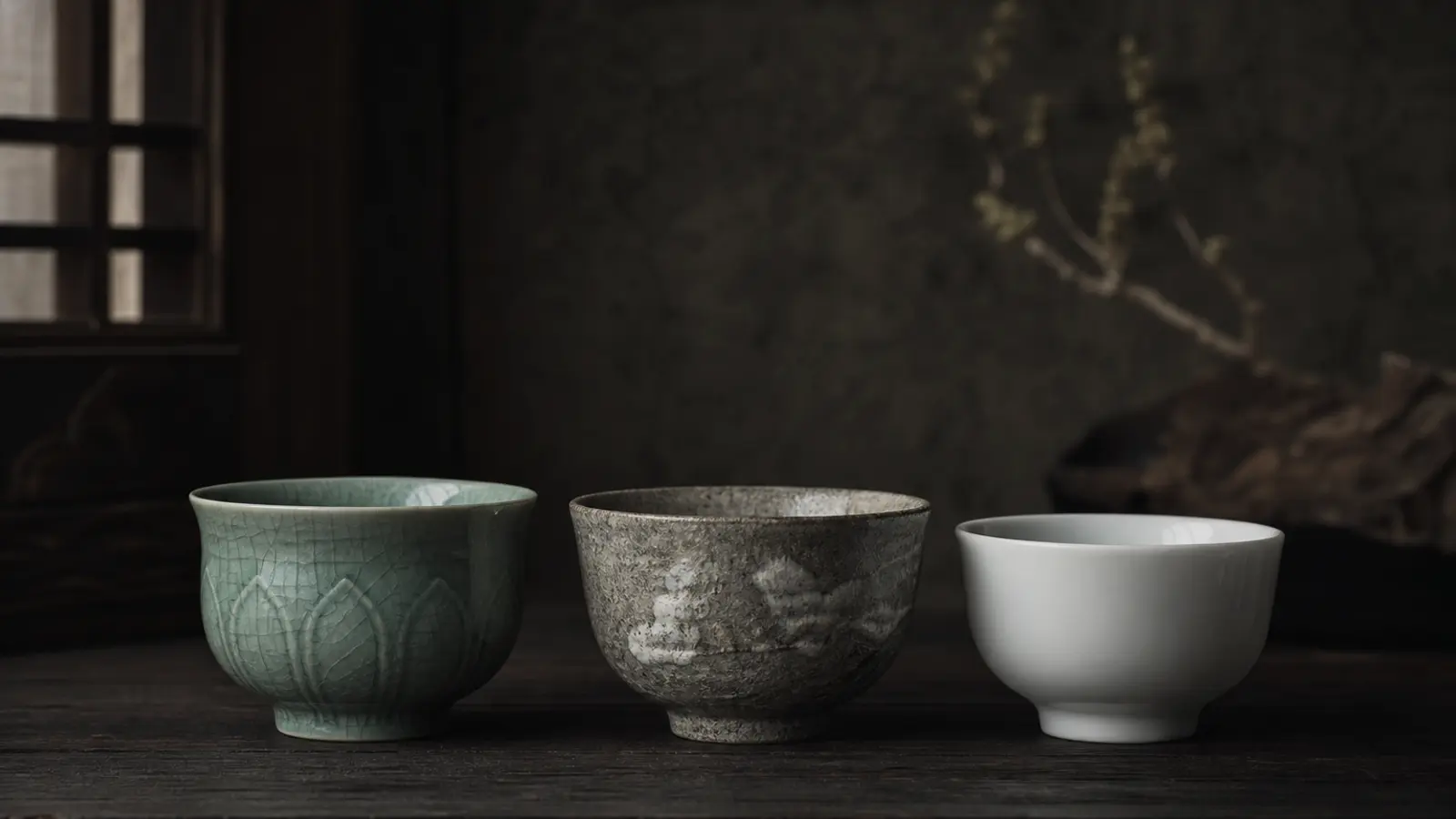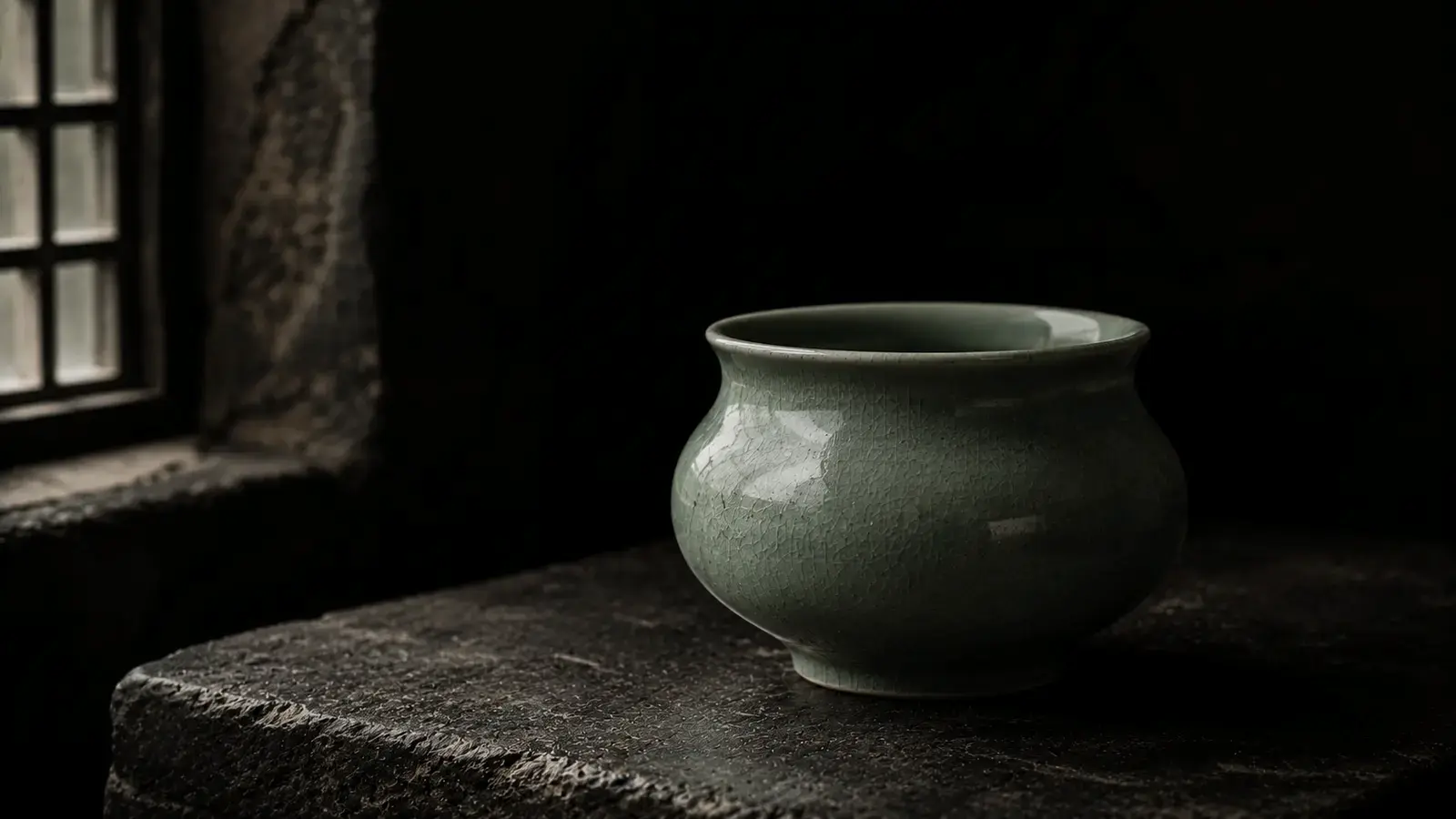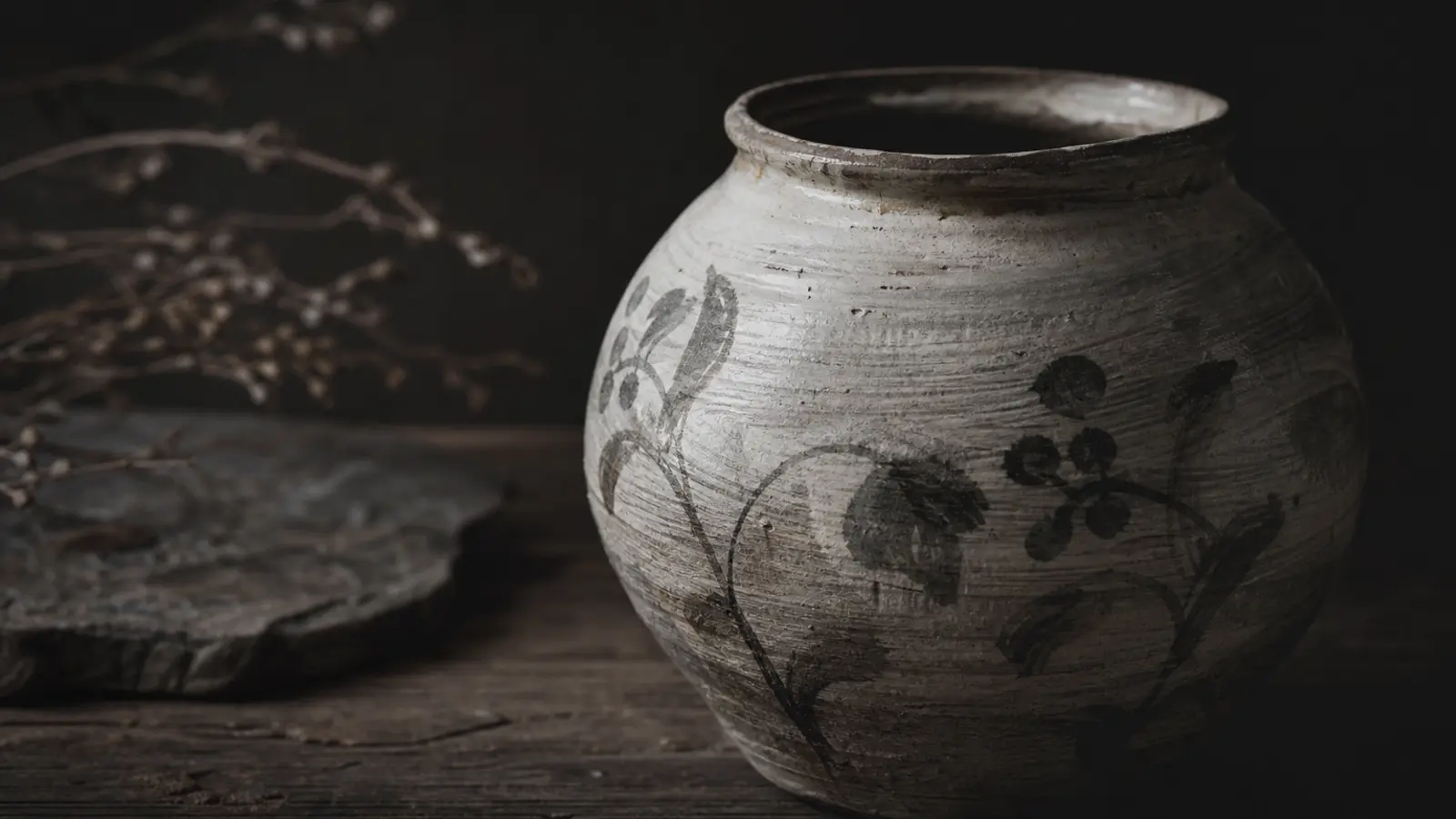
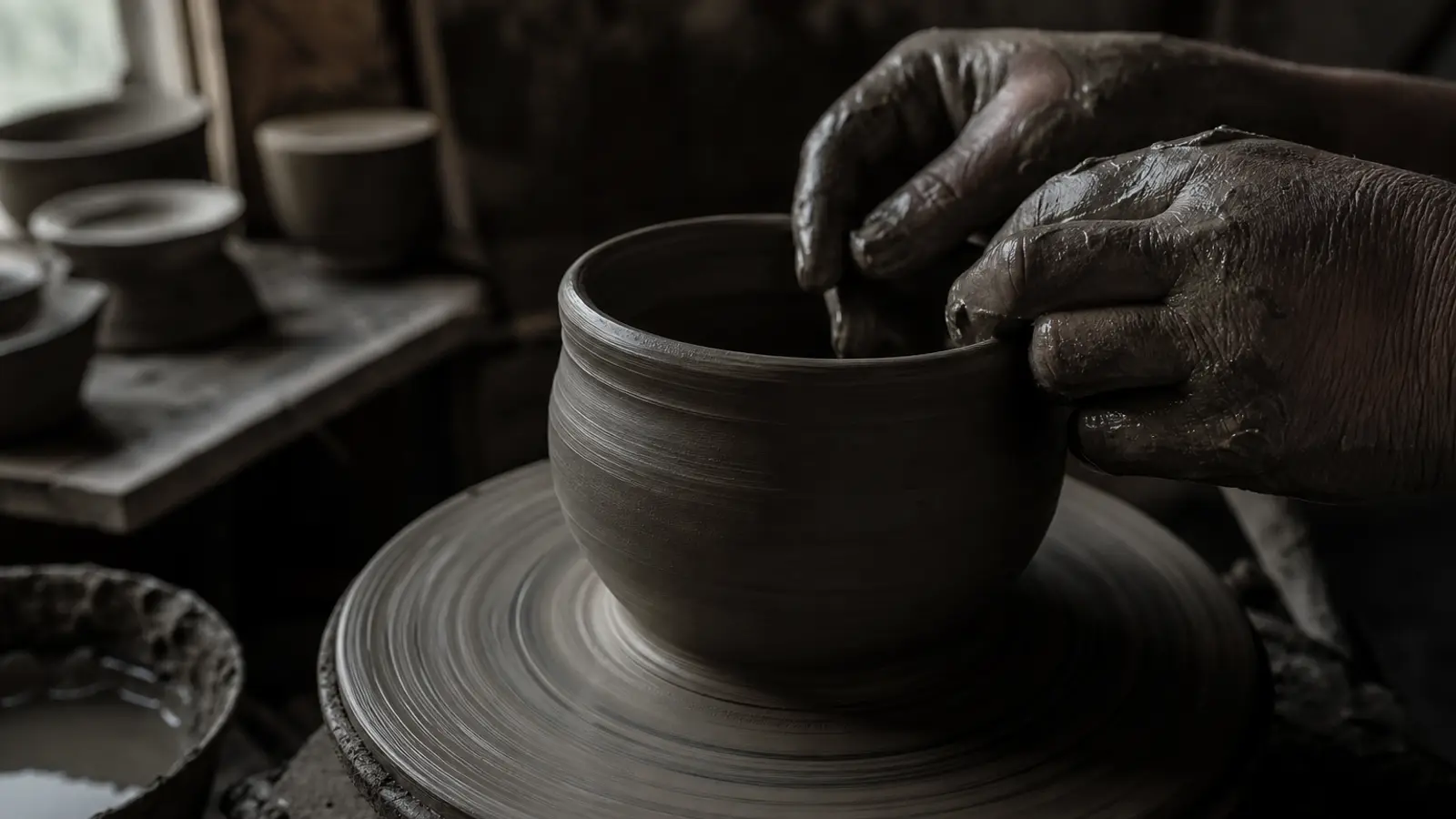
Korean pottery artisan culture operates like a living appellation system. The terroir is fixed — Icheon’s (이천) feldspar-laced clay, Gyeryongsan’s (계룡산) iron-rich earth, the ash glazes that have fired in the same hills for six centuries. But each potter who works that material brings different hands, different philosophy, and a different relationship to the tradition. Profiling these makers is, in that sense, exactly like profiling Burgundy vignerons: the same grand cru soil, radically different wines.
This article is a working reference to living Korean master potters whose output includes teaware. I’ve organized them by designation tier, because designation genuinely signals something here — it maps access to training lineages, exhibition history, and the rigor of peer review. Prices are in USD. Availability notes reflect the current landscape as I understand it.
What Designations Mean and Why They Matter
Before the profiles, a structural note.
Korea maintains two overlapping honor systems for craft excellence. 명장 (名匠, Myeongjang) — Master Craftsperson — is awarded by the Ministry of Employment and Labor to individuals who have demonstrated the highest technical skill in their field over a career. The designation carries a sequential national number; holding 명장 14호 means being the fourteenth person ever designated across all crafts nationwide, not just ceramics. It is rare.
무형문화재 (無形文化財, Intangible Cultural Heritage) is administered by the Ministry of Culture and recognizes masters whose practice embodies a technique of national cultural significance. Where 명장 honors skill, 무형문화재 honors custodianship of a living tradition. A number like 105호 indicates the 105th designated intangible heritage in Korea’s national registry.
Both designations require a lifetime of demonstrated excellence and peer review spanning decades. Neither is honorary. Think of them less like awards and more like formal recognition that a particular set of hands carries something irreplaceable.
Below the designated tier, I’ve organized makers into: First-Generation Senior (이천 1세대, living pioneers who shaped the postwar ceramics revival), Contemporary Studio (active potters working in identifiable personal styles), and Gallery Tier (potters whose work enters international museum collections).
Designated Masters (명장 / 무형문화재)
Seo Gwangsu (서광수) — Blue-and-White Porcelain (청화백자)
대한민국 명장 14호
Seo Gwangsu (서광수) holds the fourteenth 명장 designation in Korea — across all crafts, not merely ceramics. His specialty is 청화백자 (靑華白磁, cheonghua baekja), the blue-and-white porcelain tradition that reached its apogee in the Joseon (조선) dynasty’s official kilns at Bunwon (분원). The technique requires a pure white body, cobalt underglaze painting of extraordinary control, and a transparent glaze fired in an oxygen-rich atmosphere above 1,280°C.
Seo’s teaware — particularly his 다관 (dagwan, teapot) and 찻잔 (chatjan, teacup) sets — maintains the restraint characteristic of classic Joseon court ware: spare brushwork, minimal pattern, the white body doing as much work as the cobalt. He works from a studio in the Icheon area and exhibits through major Korean craft museums and galleries.
Representative piece: 서광수 作 청화백자 매화문 다관 세트 (Blue-and-white plum blossom teapot set) Price range: $400–2,500 depending on piece complexity Availability: Icheon studio visits; represented at the Korean Craft & Design Foundation (한국공예·디자인문화진흥원) exhibitions; select Seoul galleries
Baeksan Kim Jeong-ok (백산 김정옥) — Jeongho Dawan (정호다완)
무형문화재 제105호 — Korea’s first ceramics Intangible Cultural Heritage
Baeksan Kim Jeong-ok (백산 김정옥) is the foundational figure in this entire field. As the holder of 무형문화재 105호, she is the first ceramist in Korean history designated as an Intangible Cultural Heritage — a designation that specifically recognized the 정호다완 (井戶茶碗, jeongho dawon) tradition. The jeongho-style bowl — characterized by a high foot ring, a gently spreading form, and a feldspathic glaze that breaks unpredictably into grays, creams, and earthy tones — was the bowl most prized by Japanese tea masters during the Muromachi and Momoyama periods. Korean potters made them without ceremony for daily use; Japanese collectors retrieved them as national treasures.
Kim Jeong-ok’s life work has been to recover the specific clay bodies, kiln atmospheres, and forming techniques that produce authentic jeongho character. Her bowls carry the distinctive 매화피 (梅花皮, plum-blossom skin) surface texturing and the spontaneous glaze pooling at the foot that defined historic examples. I have not held one of her bowls personally, but multiple Korean ceramics scholars describe the surface as uncanny in its resemblance to 16th-century originals.
Representative piece: 백산 김정옥 作 정호다완 (Jeongho tea bowl) Price range: $600–4,000+ Availability: Baeksan Ceramics Institute (백산도예관); limited production; advance contact required for purchase
Bogwang Cho Seyeon (보광 조세연) — Inlaid Celadon (청자 상감)
이천시 도예 명장 (Icheon City Ceramics Master)
Bogwang Cho Seyeon (보광 조세연) holds Icheon city’s master designation with a specialization in 청자 상감 (靑瓷象嵌, celadon inlay) — the technique that defines Korea’s most internationally recognized ceramic tradition. The process involves incising designs into leather-hard clay, filling the incisions with white or red slip, and firing under a celadon glaze that renders the filled areas as silver-gray or ochre against the characteristic jade-green ground.
What distinguishes Bogwang’s practice is his focus on national treasure reproductions — rigorous scholarly recreations of specific Goryeo (고려) dynasty masterworks held in the National Museum of Korea. This is painstaking archival work as much as pottery, requiring documented study of originals, chemical analysis of historical glazes, and kiln reconstruction. The resulting pieces are simultaneously art objects and living demonstrations that the technique remains viable.
His teaware — 청자 상감 다관 and 찻잔 sets with classic crane-and-cloud or chrysanthemum motifs — carries museum-grade finish with teapot pour spouts that function precisely.
Representative piece: 보광 조세연 作 청자 상감 학문 다완 (Inlaid celadon crane-pattern tea bowl) Price range: $350–2,000 Availability: Bogwang Ceramics Studio, Icheon; Icheon World Ceramics Center (이천세계도자센터) shop
Nokwon Yu Yongcheol (녹원 유용철) — Buncheong (분청)
이천시 도예 명장 (Icheon City Ceramics Master)
Nokwon Yu Yongcheol (녹원 유용철) is Icheon’s designated master for 분청 (粉靑沙器, buncheong ware) — the gray-bodied, white-slip-decorated stoneware that occupies a distinct aesthetic space between celadon refinement and folk directness. Buncheong was the dominant Korean ceramic tradition from the early Joseon period until the mid-16th century, and its visual language — bold hakeme (白粧, brushed-slip) strokes, stamped patterns, iron underpainting — influenced Japanese Mino ware and, through it, Western studio pottery.
Nokwon’s approach to buncheong emphasizes the 귀얄 (gwiyeol, brush-swept) and 분장 (bunjang, slip-coated) techniques, producing pieces where the white slip application is gestural and immediate. His tea bowls and 차호 (茶壺, cangister/tea jar) demonstrate the productive tension between deliberate form and spontaneous surface that makes buncheong compelling.
Representative piece: 녹원 유용철 作 귀얄 분청 다완 (Brush-swept buncheong tea bowl) Price range: $250–1,500 Availability: Nokwon Ceramics, Icheon; Icheon city ceramics festivals
First-Generation Icheon Potters (이천 1세대)
Goam Kim Heungbok (고암 김흥복) — Celadon (청자) / Red Celadon (홍청자) / Buncheong (분청) / Iron Glaze (흑유)
이천도예 1세대 (First-Generation Icheon Ceramist)
Goam Kim Heungbok (고암 김흥복) is among the founding generation of potters who rebuilt Icheon’s ceramics culture after the Korean War — the 이천 1세대 who established the living tradition that the designated masters now inhabit. His particular distinction within that generation is range: he works credibly across 청자 (celadon), 홍청자 (紅靑瓷, red-celadon — an extremely rare variant using copper reduction to produce pink-red glaze effects within a celadon firing), 분청, and 흑유 (黑釉, black-glazed ware). Most senior potters develop depth in one tradition; Goam has achieved depth in four.
The 홍청자 work alone makes him exceptional. Copper reduction in a celadon firing is notoriously unstable — the conditions that produce the characteristic jade green will destroy a copper-red effect, and vice versa. Potters who achieve a reliable red-celadon result are rare globally, and among Korean practitioners working in authentic historical methods, Goam stands nearly alone.
I have spent time with his work directly, and the surface on his 흑유 다완 — a temmoku-adjacent black that breaks to rust and amber at the rim under raking light — is among the most compelling I’ve encountered from any living Korean potter.
Representative piece: 고암 김흥복 作 홍청자 다완 (Red-celadon tea bowl) Price range: $300–2,500 depending on technique Availability: Studio visits; Icheon area galleries; direct by arrangement
Contemporary Studio Potters
This tier represents active mid-career and younger studio potters working in identifiable personal styles, producing teaware in limited quantities. Prices reflect the current market; all are accessible to international buyers with some persistence.
Kim Jeongwoo (김정우) — Iron-painted Buncheong Gaiwan (철화분청 개완)
Kim Jeongwoo (김정우) is among the most technically specific of the contemporary studio generation. His signature form is the 철화분청 개완 (鐵畵粉靑蓋碗) — a 개완 (gaiwan, 蓋碗) in buncheong style with iron-oxide brushwork decoration. What separates his work is the clay source: he uses 계룡산 (雞龍山, Gyeryongsan) clay, sourced from the mountain range in South Chungcheong Province that historically produced some of Korea’s most distinctive iron-decorated buncheong. The iron content and particle size of Gyeryongsan clay produces a specific warm gray body and a particular way of absorbing the white slip.
His gaewans are functional precision instruments as much as art objects — the lid seat is ground to eliminate chatter, and the lid knob is scaled for two-finger control during pouring. He sells primarily through Instagram and periodic studio sales.
Representative piece: 김정우 作 철화분청 계룡산 개완 (Gyeryongsan iron-painted buncheong gaiwan) Price range: $120–300 Availability: Instagram studio sales; periodic Korean craft fairs
Minto Choi Minrok (민토 최민록) — Unglazed Carbon-black Gaiwan (무유 탄소 흑색 개완)
Minto Choi Minrok (민토 최민록) works in territory that sits at the edge of the Korean ceramic tradition: unglazed, carbon-blackened stoneware. His gaewans achieve their surface through a reduction atmosphere in the cooling phase, pulling carbon into the clay body to produce a matte, charcoal-black finish with subtle surface variation from the flame path. There is no glaze layer, which means the thermal mass of the clay itself is the only mediator between water and hand.
In use, an unglazed Minto gaiwan at 95°C reads differently from a porcelain piece — the clay breathes very slightly, and there is a tactile warmth to the exterior that glazed ware cannot replicate. His forms are restrained: clean walls, minimal decoration, the lid seat cut with precision. The work is contemporary in sensibility while being rooted in pre-glaze Korean ceramic practice.
Representative piece: 민토 최민록 作 무유 흑색 개완 (Unglazed carbon-black gaiwan) Price range: $150–350 Availability: Minto studio Instagram; select Seoul lifestyle shops; Insadong (인사동) galleries
Jeong Yuna (정유나) — Blue-and-White Porcelain Gaiwan (청화백자 개완)
Jeong Yuna (정유나) applies the 청화백자 tradition to contemporary gaiwan forms — a combination that sounds obvious but is rarely executed well. The challenge is that classic blue-and-white decoration is designed for vessel forms with generous surface area (jars, vases, large bowls), and compressing that language onto a gaiwan’s compact geometry requires genuine compositional rethinking.
Her work resolves this by using botanical and landscape motifs that wrap continuously around the body, designed specifically for the gaiwan’s proportions rather than adapted from larger vessel compositions. The brushwork is fine but not fussy, and the white body — fired to full vitrification — has the faint blue-white cast characteristic of good porcelain clay rather than the stark white of industrial production.
Representative piece: 정유나 作 청화백자 초화문 개완 (Blue-and-white floral-motif gaiwan) Price range: $180–420 Availability: Online studio shop; Seoul craft galleries; occasional exhibition sales
Saye (사예) — Black-glazed Gaiwan (흑유 개완)
Saye (사예) works exclusively in 흑유 (黑釉, heukyu, black glaze) — iron-saturated glazes that fire to surfaces ranging from lustrous oil-slick black to matte charcoal with rust-brown edges. The aesthetic lineage connects to Chinese Jian (建窯) ware and Japanese temmoku (天目) bowls, but Saye’s forms are distinctly Korean in proportion: slightly higher walls than Chinese prototypes, a foot ring that references Joseon tea bowl forms.
For gongfu brewing, a 흑유 surface has practical implications: it shows the color of rinse water and liquor clearly against the dark interior, which helps when reading a tea’s extraction. More significantly, the thick iron glaze retains heat in a way that thin porcelain cannot, which affects how quickly successive steeps drop in temperature.
Saye’s output is small and irregular. When new pieces become available, they sell quickly.
Representative piece: 사예 作 흑유 개완 (Black-glazed gaiwan) Price range: $160–400 Availability: Studio Instagram; limited online drops; select Seoul teaware shops
Gallery Tier: Museum Collections
Yoon Kwang-cho (윤광조) — Buncheong Reinterpreted (분청의 재해석)
Yoon Kwang-cho (윤광조) is the figure in Korean ceramics most visible to international audiences who engage with the art world rather than the tea world specifically. His work is held in the permanent collections of the British Museum, the Metropolitan Museum of Art, the Victoria and Albert Museum, and the National Museum of Modern and Contemporary Art Korea (국립현대미술관). He is not primarily a teaware maker — he works at the scale of ceramic sculpture and large vessels — but he has produced tea bowls and smaller forms that circulate in the serious Korean tea art (한국 다도) community.
His contribution to the field is conceptual as much as technical: he demonstrated that buncheong could be a living contemporary art language rather than a heritage reproduction exercise. His surfaces use the hakeme brush stroke at a scale and gestural intensity that references calligraphy and abstract painting simultaneously. The slip is applied and then worked — scraped, re-brushed, partially removed — to create surfaces that record process as content.
Work at this level does not have a fixed retail price. Pieces appear at Seoul Auction and K-auction, where recent sales for significant vessels have run $5,000–25,000. Tea bowls by him are rarer at auction and command serious collector attention.
Representative piece: 윤광조 作 분청 사각 다완 (Buncheong rectangular tea bowl) Price range: $1,500–15,000+ (auction market) Availability: Seoul Auction; K-auction; Kukje Gallery; international art fairs where Korean ceramics are represented
Comparative Reference Table
| Art Name | Birth Name | Designation | Specialty | Signature Teaware | Price Tier (USD) | Primary Access |
|---|---|---|---|---|---|---|
| — | 서광수 Seo Gwangsu | 대한민국 명장 14호 | 청화백자 | 다관 세트 | $400–2,500 | Seoul galleries, Icheon studio |
| 백산 | 김정옥 Kim Jeong-ok | 무형문화재 105호 | 정호다완 | 정호다완 | $600–4,000+ | Baeksan Ceramics Institute |
| 보광 | 조세연 Cho Seyeon | 이천시 도예 명장 | 청자 상감 | 상감 다관/다완 | $350–2,000 | Bogwang Studio, Icheon |
| 녹원 | 유용철 Yu Yongcheol | 이천시 도예 명장 | 분청 | 귀얄 다완 | $250–1,500 | Nokwon Ceramics, Icheon |
| 고암 | 김흥복 Kim Heungbok | 이천 1세대 | 청자/홍청자/분청/흑유 | 홍청자 다완 | $300–2,500 | Studio/direct |
| — | 김정우 Kim Jeongwoo | Contemporary studio | 철화분청 | 철화분청 개완 | $120–300 | Instagram, craft fairs |
| 민토 | 최민록 Choi Minrok | Contemporary studio | 무유 탄소 흑색 | 흑색 개완 | $150–350 | Instagram, Insadong |
| — | 정유나 Jeong Yuna | Contemporary studio | 청화백자 | 청화백자 개완 | $180–420 | Online shop, galleries |
| 사예 | Saye | Contemporary studio | 흑유 | 흑유 개완 | $160–400 | Instagram drops |
| — | 윤광조 Yoon Kwang-cho | Gallery/museum tier | 분청 재해석 | 다완 (limited) | $1,500–15,000+ | Auction, Kukje Gallery |
The Icheon Ecosystem and Where to Begin
The Icheon Ceramics Village (이천도예촌) and the adjacent Icheon World Ceramics Center (이천세계도자센터) form the physical hub of Korean master pottery. Most of the designated masters listed above are accessible there — either through studio visits during regular hours or by appointment. For international buyers making a trip, a day in Icheon is the most efficient way to encounter works that almost never ship internationally without the context of seeing them in person.
Seoul’s Insadong district (인사동) functions as the secondary market — galleries there carry work from established names at marked-up prices but with reliable authentication and service for international buyers. For contemporary studio potters, Korean Instagram remains the fastest channel: search by name, follow for drop announcements, and communicate via direct message. Korean studio potters at this tier tend to be responsive and accustomed to international buyer inquiries.
Auction is the appropriate channel for gallery-tier work. Both Seoul Auction and K-auction have English interfaces and international shipping arrangements. Estimate your budget, set alerts by artist name, and expect to be patient. For more on sourcing Korean teaware online and in person, see the sourcing guide.
How to Evaluate Quality When You Cannot Handle the Piece
The wine analogy has a useful limit here: you cannot taste a pot before buying. Some practical proxies:
Form consistency: In reputable photography, the lid seat on a gaiwan should show an even gap around the full circumference. Uneven gaps indicate either forming inconsistency or warping in the kiln.
Foot ring finish: The 굽 (gup, foot ring) is where a Korean potter’s training shows most clearly. It should be cut cleanly, with even width, no tool chatter marks on the inner corner, and a slight bevel at the outer edge to prevent chipping. Sloppy foot rings on expensive work are a red flag.
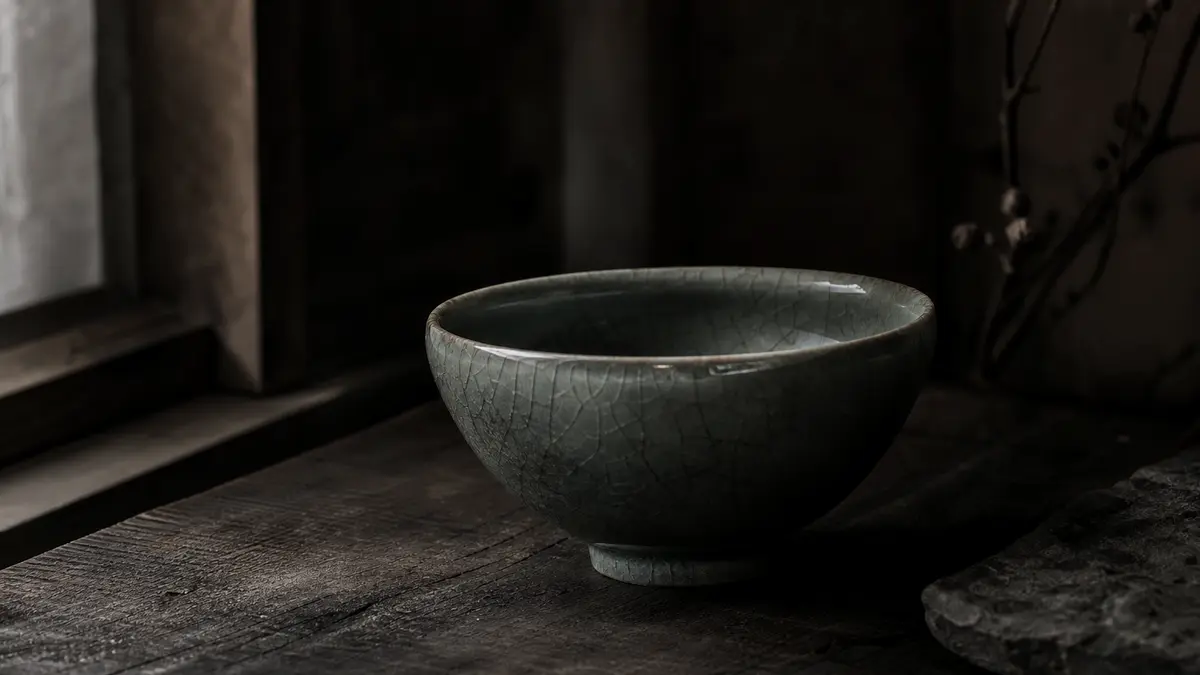
Glaze pooling: For celadon and buncheong, glaze pooling at the foot should appear controlled and intentional — deep accumulation in the center of a bowl’s interior, or at the base of a teapot body. Drips that obscure the foot ring or kiln-stick scars on exterior surfaces indicate quality control problems.
Provenance documentation: Designated masters typically provide a 작품증명서 (work certificate) with significant pieces. If a gallery or seller is offering designated-master work without documentation, that is worth querying.
A Note on Authenticity and the Reproduction Market
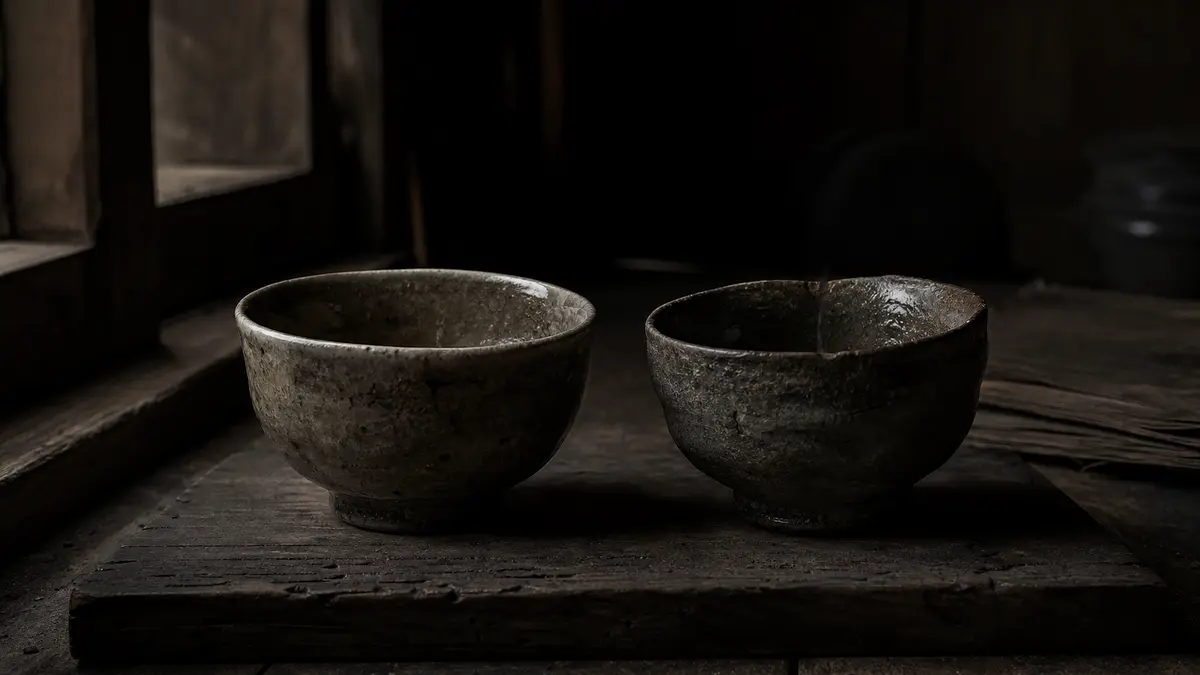
Korean ceramics at every price level coexist with a substantial reproduction market — pieces made in China or by industrial methods in Korea that mimic the visual language of handmade master work. The safest protections are buying directly from studios, purchasing through gallery-represented channels where authentication is standard practice, and developing enough visual literacy to recognize the specific characteristics of hand-thrown forms (weight distribution, finger traces on the interior, micro-variations in wall thickness that show under raking light).
The living masters listed here are not anonymous. Their work is documented in exhibition catalogs, museum acquisition records, and in some cases government designation records that are publicly searchable through the Korean National Intangible Heritage Center (국립무형유산원) website.
The Korean pottery artisan landscape rewards sustained engagement. These are not potters working in isolated tradition — they are in active conversation with each other, with historical material in Korean museums, and with the global community of potters and tea practitioners who are paying attention. Each piece of teaware carries the specific accumulated knowledge of a particular pair of hands and a particular relationship to a particular clay. That is exactly what terroir means, and exactly why it matters.