Tea is one of the most studied dietary substances on the planet, and the evidence for its benefits is substantial. But how much tea per day is actually optimal—and where does beneficial consumption shade into excess? The largest nutritional dataset ever assembled on this question gives us a precise answer. Here it is, translated into practical terms for serious tea drinkers.
What the UK Biobank Study Actually Found

The UK Biobank study analyzed data from 447,485 participants—one of the largest nutritional studies ever conducted on any dietary habit. Its findings on tea consumption are specific enough to be actionable.
The safe optimal range: 2–5 UK standard cups per day. A UK standard cup is approximately 240ml. Within this band, participants showed maximum health benefits across cardiovascular markers, metabolic indicators, and cognitive outcomes, with minimal adverse effects.
The upper risk threshold: 13 cups per day. Above this level, researchers identified a possible reduction in brain grey matter volume and an elevated risk profile for Alzheimer’s disease. Critically, this association was established through Mendelian randomization analysis—a method that uses genetic variants as proxies to establish causal inference rather than mere correlation. That makes this finding stronger than typical observational nutrition research, where confounding variables are endemic.
Below 13 cups, the evidence for harm is weak. Above it, the causal signal is real enough to take seriously.
Translating the Evidence to Gongfu Sessions
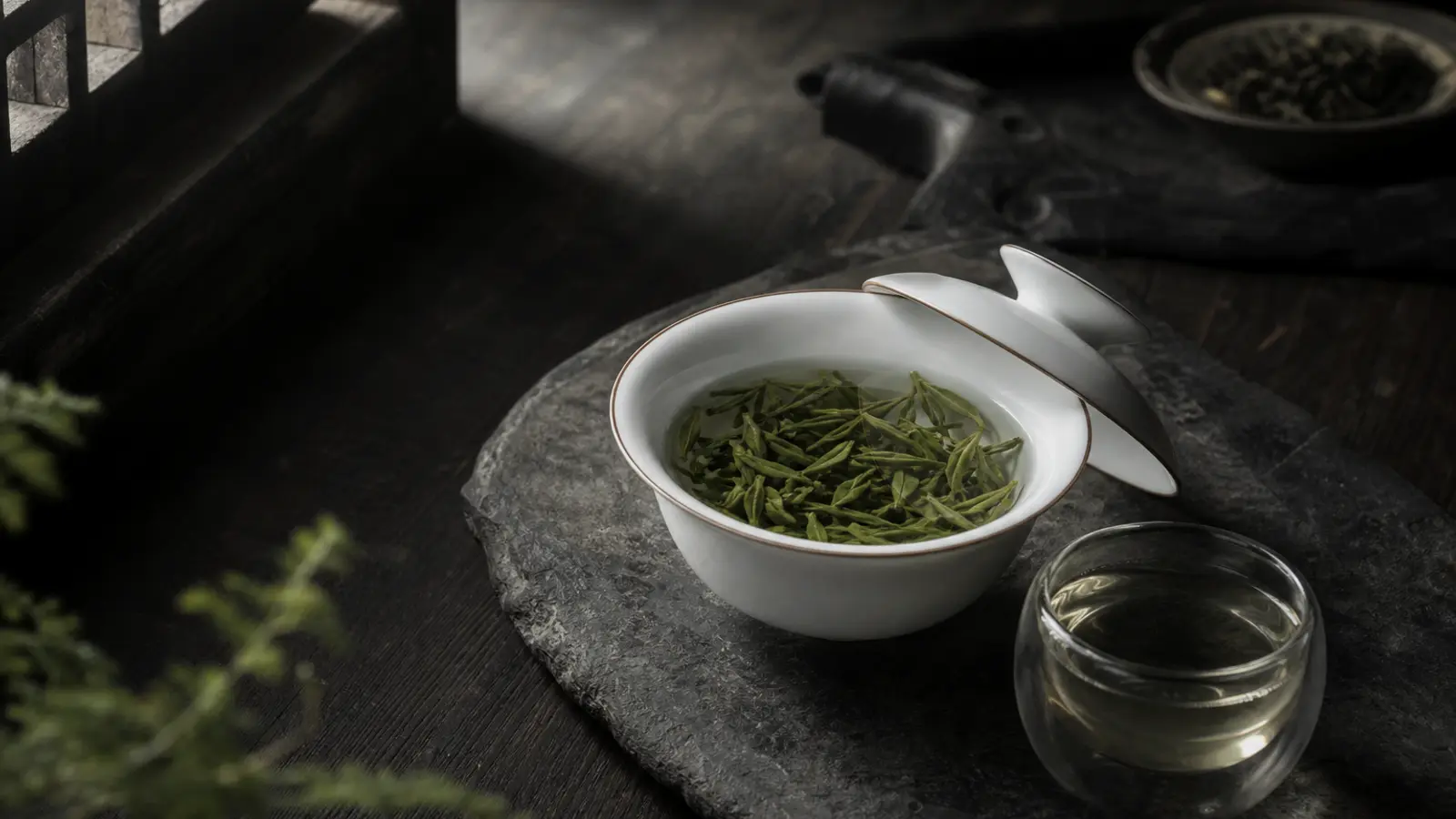
Here’s where this gets relevant for how many of us actually drink tea. Standard-cup counts were designed for the British habit of a 240ml mug, not for a gongfu brewing (功夫) session run through a gaiwan (蓋碗) with 7g of leaf and ten or more steeps.
The conversion matters:
- 1 full gongfu session (7g leaf, approximately 10 steeps at 50–80ml each) produces roughly 600–800ml of total liquid—equivalent to 3–5 UK standard cups.
- 1–2 gongfu sessions per day sits comfortably within the 2–5 cup optimal range.
- 3 sessions per day approaches the upper comfort zone, particularly if the teas are high-caffeine.
- 4+ sessions per day of caffeinated tea moves toward ranges where accumulated caffeine and tannin load warrant attention.
This is good news. A committed daily gongfu practice—one morning session and one afternoon session—is well within the evidence-supported safe range. There is no reason for moderate practitioners to worry.
Five Specific Risks Worth Managing
The broad story is reassuring. But within normal consumption ranges, there are specific mechanisms where tea can cause problems for particular individuals or under particular conditions. These are worth understanding precisely.
1. Iron Absorption
Tannins (單寧, dānníng) bind non-heme iron—the type found in plant foods—and can reduce its absorption by up to 87% when tea is consumed alongside or immediately after a meal. This is the single most practically significant tea-related nutritional concern for many drinkers.
The solution is straightforward: no tea during meals, and a minimum one-hour gap before and after eating. This gap is sufficient to allow iron absorption to proceed normally.
Who needs to pay closest attention:
- Vegetarians and vegans, whose iron intake is entirely non-heme
- People with diagnosed anemia or low ferritin
- Pregnant women, whose iron requirements are substantially elevated
- Anyone taking iron supplements (take supplements at least two hours away from tea)
If you drink tea at every meal and rely heavily on plant-based iron sources, this is worth testing with your doctor via a simple ferritin panel. For a deeper look at this specific interaction, see our full guide to iron absorption and tea.
2. Oxalates and Kidney Stones
Tea contains oxalic acid, which contributes to calcium oxalate kidney stone formation. At intake levels within the safe optimal range, this is manageable for most people. Adequate hydration—which tea itself contributes to—reduces the risk further.
Higher-risk individuals include those with a history of calcium oxalate stones, hyperoxaluria, or reduced kidney function. If you fall into this group, moderate consumption (toward the lower end of the 2–5 cup range) and consistent water intake throughout the day are the appropriate adjustments. This is not a reason for most people to restrict tea; it’s a reason for higher-risk individuals to be deliberate.
3. Caffeine Timing
Not all teas carry the same caffeine load, and timing matters more than total volume for most people.
Young sheng pu-erh (生普洱) is among the highest-caffeine teas in regular circulation—often comparable to or exceeding strong green teas. Aged sheng decreases in caffeine over time as compounds break down. Shou pu-erh (熟普洱) generally runs lower.
A practical caffeine protocol I follow personally, having dealt with caffeine sensitivity for years:
- Morning through early afternoon: young sheng, high-grade oolongs, greens—all the high-stimulus material
- After 2–3pm: aged teas, shou pu-erh, white teas with lighter caffeine profiles
- After 6pm: shou pu-erh, heavily aged sheng, or caffeine-free herbals
This timing protocol eliminates most caffeine-related sleep disruption without requiring any reduction in total session count.
4. Drug Interactions
Tannins affect the absorption of certain medications in the same way they affect iron—by binding to compounds in the gastrointestinal tract before they can be fully absorbed. The medications most commonly cited in clinical literature include some blood thinners and certain blood pressure medications.
The practical rule: maintain a minimum two-hour gap between tea consumption and any medication. Take medications with plain water, not tea.
If you’re on a complex medication regimen, discuss tea timing with your prescribing physician. This is a simple conversation to have, and the gap is easy to build into a daily routine.
5. Stomach Sensitivity and Chá Zuì
Drinking strong tea on an empty stomach—particularly high-caffeine young sheng or intensely astringent greens—can cause nausea, lightheadedness, shakiness, and gastric discomfort. Chinese tea culture has a term for this: 茶醉 (chá zuì), literally “tea drunk.” It’s not metaphorical. It’s a real physiological state caused by the combination of caffeine, catechins, and tannins hitting an empty gut.
Prevention is simple:
- Eat something before an intensive session. Light snacks are enough: a handful of nuts, some dried fruit, rice crackers. You don’t need a full meal.
- Start sessions with softer teas. Open with a few rounds of a mellow, aged tea before moving to the session’s main subject.
- Pace rinse infusions. The first steep of many teas functions partly as an awakening rinse; drinking it slowly rather than immediately allows the stomach to adjust.
For extended sessions sampling multiple teas—a tea market visit, a comparative brewing afternoon—snacks are essential, not optional.
A Practical Daily Framework
Pulling all of this together into a single operational model:
| Time of Day | Recommended Tea | Notes |
|---|---|---|
| Morning | Young sheng, green, high-grade oolong | After breakfast; 1+ hour from iron-rich meals |
| Midday | Any type | 1-hour gap around lunch |
| Early afternoon | Aged sheng, medium oolongs | Caffeine still manageable |
| Late afternoon (after 3pm) | Shou pu-erh, aged teas | Taper caffeine load |
| Evening | Shou pu-erh, white, herbal | Light caffeine or none |
| With/near medications | None | Minimum 2-hour gap |
One to two gongfu sessions per day, structured around this timing, covers virtually every practical scenario without approaching any risk threshold identified in the research.
The Honest Bottom Line on How Much Tea Per Day
Tea at normal consumption levels—one to two gongfu sessions, or two to five standard cups—is safe, well-supported by evidence, and associated with real health benefits. The UK Biobank’s data covers nearly half a million people. The signal is clear.
The upper limit of 13 cups per day is far beyond what most dedicated practitioners consume, even on heavy drinking days. The more immediate and practical concerns—iron absorption, caffeine timing, empty-stomach sessions, medication gaps—are all manageable with simple habits rather than restrictions.
Drink your tea. Know the mechanisms. Adjust for your specific situation if you have iron-related conditions, kidney stone history, or medication requirements. For everyone else, the research says the cup in your hand is almost certainly fine.