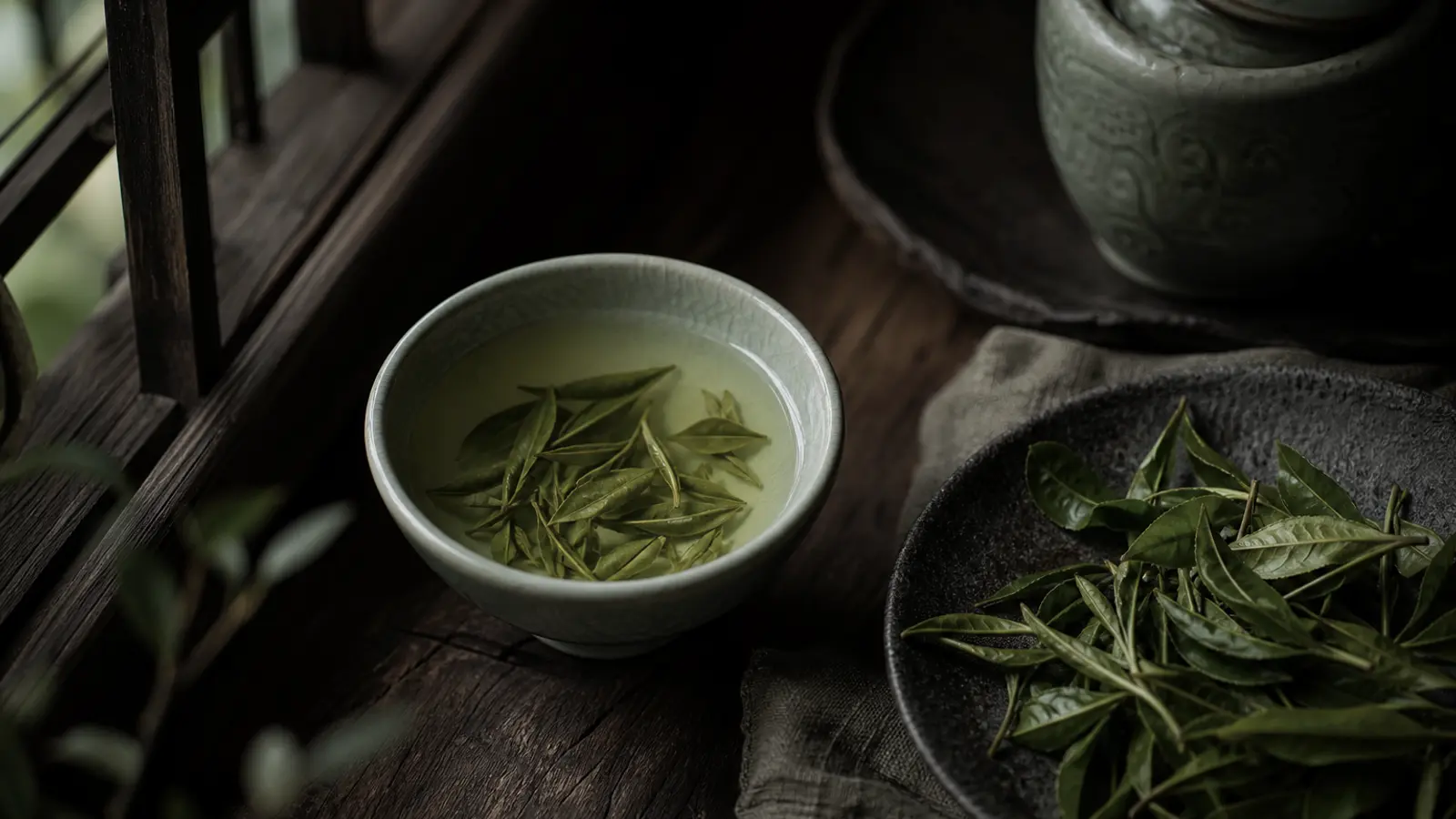
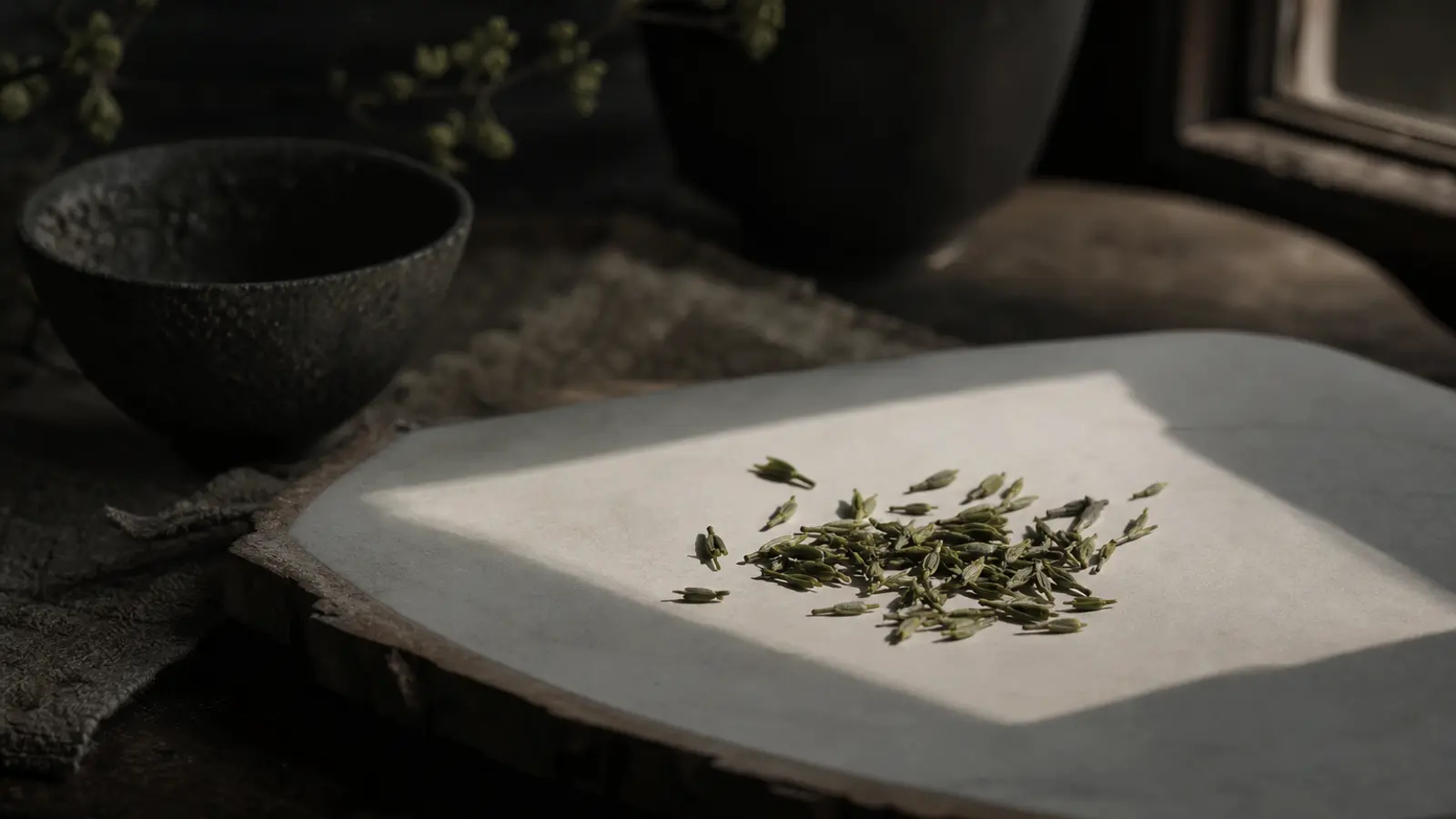
Ujeon (우전, 雨前, “Before Rain”) is the highest grade of Korean green tea — harvested before Gogu (곡우, April 20) from only the tiniest spring buds before the first leaf unfurls. Representing perhaps 5-10% of any farm’s annual output, ujeon is the rarest and most expensive Korean tea, with wild-grown Hadong ujeon reaching $150-250 per 50 grams.
A note on transparency: I have not yet tasted ujeon firsthand. This article draws on Korean-language sources and my wife’s deep familiarity with Korean tea culture. When ujeon arrives and I sit down with it, this page will be updated with session data. Until then, treat the flavor descriptions as well-sourced research rather than personal tasting notes.
What Makes Ujeon Tea So Special
The logic behind ujeon’s quality is biochemical, not merely traditional.
During winter dormancy, tea plants accumulate amino acids — particularly L-theanine (L-테아닌) — in their roots and stems. As temperatures rise in early spring, those compounds migrate into the first emerging buds. The earliest buds, the ones picked before Gogu, carry the highest concentration of these amino acids because the plant has had almost no time to convert them into catechins through photosynthesis.
Catechins produce bitterness and astringency. L-theanine produces sweetness and umami. The equation is simple: earlier harvest means more sweetness, less bitterness.
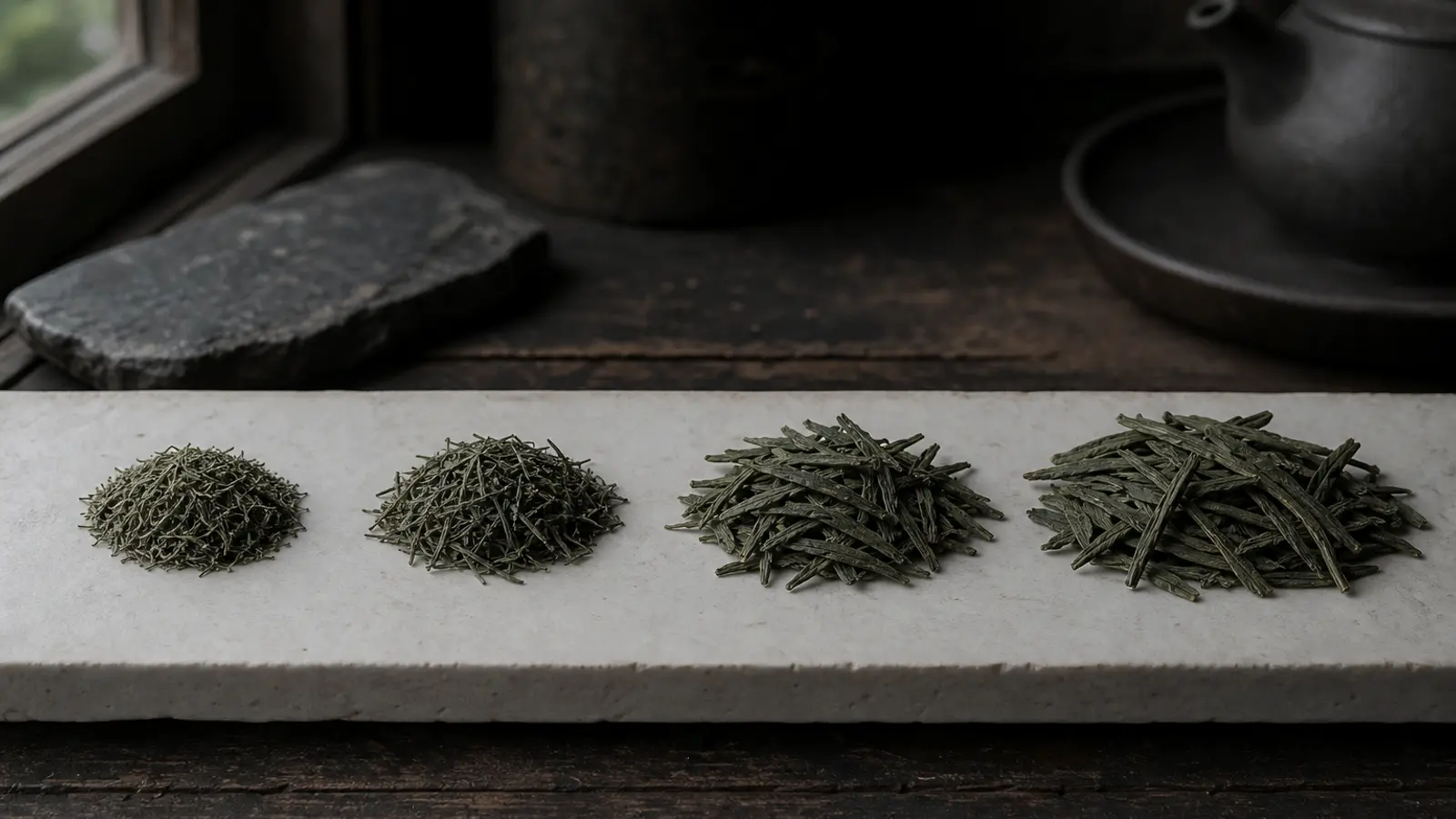
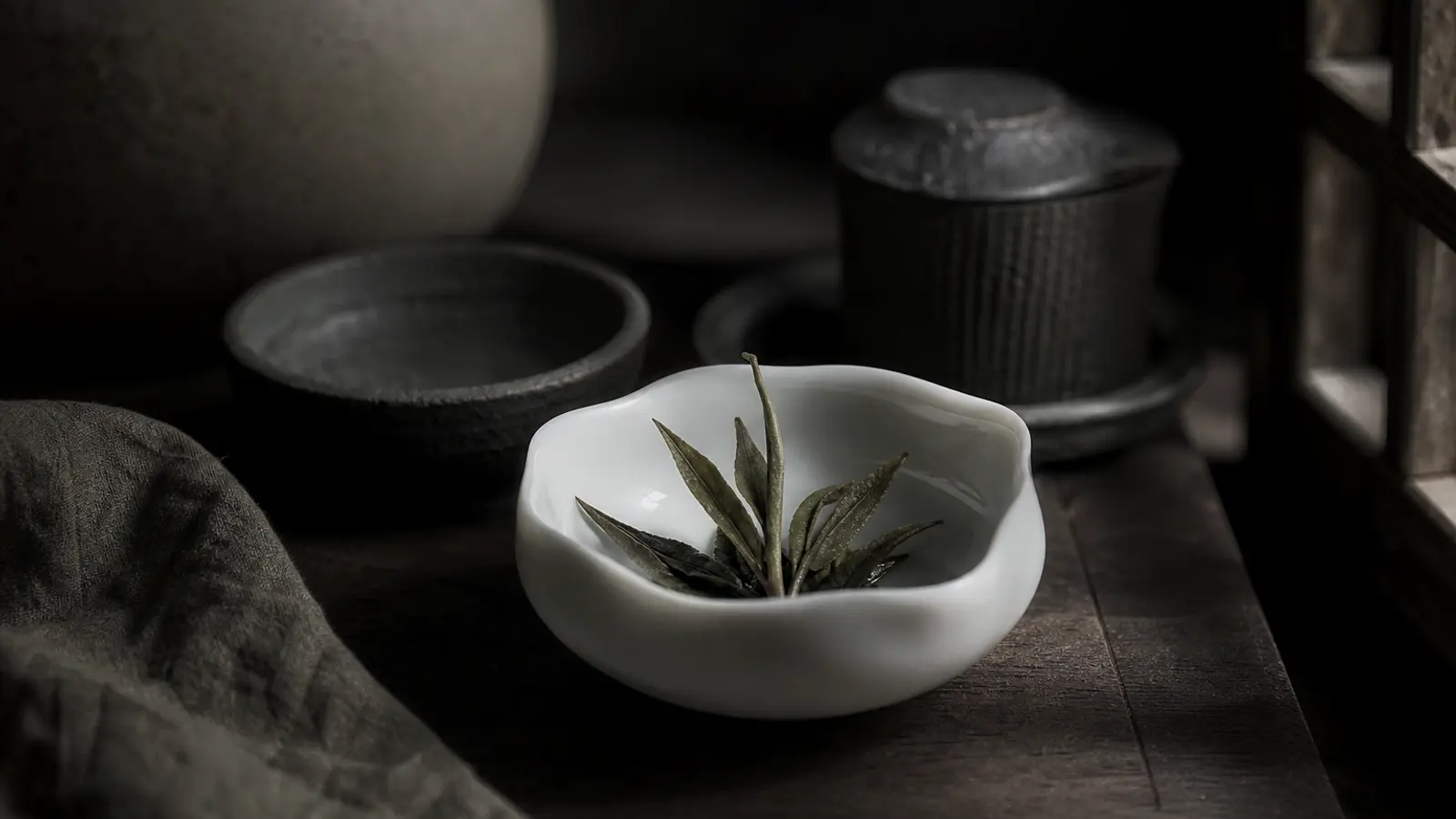
Ujeon buds are small — sometimes just the needle-like tip before any leaf has opened. This low leaf mass means each bud is essentially a concentrated capsule of sweetness and umami compounds. The result is a tea of extraordinary delicacy that even people who think they don’t like green tea can appreciate.
This is the same principle behind Japanese shincha (新茶) and Chinese pre-Qingming (明前) teas, but ujeon occupies its own space because of Korean cultivars, Korean terroir, and — critically — the Korean pan-firing tradition that shapes the final cup.
Ujeon Flavor Profile: Sweetness Distilled
The defining characteristic of ujeon is pure sweetness and umami dominance with very low astringency. The aftertaste (回甘, huigan — or in Korean, 회감 hoegam) lingers long and sweet.
How that sweetness presents depends on processing method.
Pan-fired ujeon (덖음 deokkeum) is the traditional Korean method. The leaves are roasted in an iron pan (가마솥, gamasot) by hand, often through multiple cycles of firing and rolling. This produces the roasted chestnut warmth that defines Korean green tea — a gentle toastiness layered beneath the sweetness. Most ujeon produced in Korea follows this method.
Steamed ujeon (증제 jeungje) is less common but exists, particularly from larger operations. It produces a greener, more vegetal cup closer to Japanese gyokuro (玉露) in character, but with Korean terroir distinction. The sweetness is there, but the roasted dimension is absent.
For most Korean tea drinkers, pan-fired ujeon is the definitive expression.
The Terroir Dimension of Ujeon Korean Tea
Here is where ujeon gets genuinely interesting. Like wine from different appellations, ujeon from different Korean regions tastes different — sometimes dramatically so.
Boseong (보성) Ujeon
Boseong, in South Jeolla Province, is Korea’s largest tea-producing region. Its ujeon comes primarily from plantation rows (재배차, jaebae-cha) — cultivated bushes in organized fields. Boseong ujeon is clean, bright, and approachable. It has reliable sweetness and a straightforward character. Think of it as a well-made village-level Burgundy: satisfying, consistent, and honest about what it is.
Hadong (하동) Ujeon
Hadong, in South Gyeongsang Province along the slopes of Jirisan (지리산), produces what many consider Korea’s finest tea. The key distinction is Hadong’s wild-grown tea plants — yasaeng-cha (야생차, 野生茶). These are not plantation rows. They are semi-wild bushes growing among the forest understory on mountain slopes, their roots reaching deep into rocky soil.
Hadong yasaeng-cha ujeon is concentrated and complex, carrying what Koreans call sanya giwun (산야기운, 山野氣韻) — the energy or character of the mountain wilderness. Multiple sources describe it as having a depth and mineral backbone that plantation tea simply cannot replicate. The terroir is in the cup.
Hadong yasaeng-cha ujeon sits at the pinnacle of Korean tea: the intersection of the highest grade and the deepest terroir. It is, by any reasonable comparison, a Grand Cru.
Jeju (제주) Ujeon
Jeju Island’s volcanic soil gives its teas a subtle mineral undertone that distinguishes them from mainland production. Jeju ujeon is less commonly discussed in the same breath as Hadong or Boseong, but it offers its own distinct profile — clean and bright with a flinty quality underneath the sweetness. The volcanic terroir is real and detectable.
Why Ujeon Is So Expensive
Ujeon pricing follows the same logic as Grand Cru Burgundy: tiny production, maximum demand, and provenance-dependent pricing.
The numbers tell the story. A farm’s ujeon harvest yields a fraction of what the same field produces in later flushes. Sejak (세작, 細雀), harvested after Gogu but before Ipha (입하, 立夏, around May 5), might produce five to ten times the volume from the same plants. Jungjak (중작, 中雀) and daejak (대작, 大雀), the later grades, produce more still. Ujeon is scarce because biology makes it scarce.
Add labor intensity — these tiny buds must be hand-picked one at a time — and the pricing makes sense.
Here are current approximate ranges per 50g:
| Origin & Type | Price per 50g (USD) |
|---|---|
| Plantation ujeon (Boseong) | $80–$120 |
| Artisan Boseong ujeon | $100–$150 |
| Hadong yasaeng-cha ujeon | $150–$250 |
Per 100g, that puts top Hadong yasaeng-cha ujeon at $300–$500 — territory that sounds extreme until you compare it to competition-grade Chinese greens or, for that matter, a bottle of Romanée-Conti. In both cases, you are paying for genuine scarcity, irreplaceable terroir, and skilled human hands at every step.
How to Brew Ujeon Tea
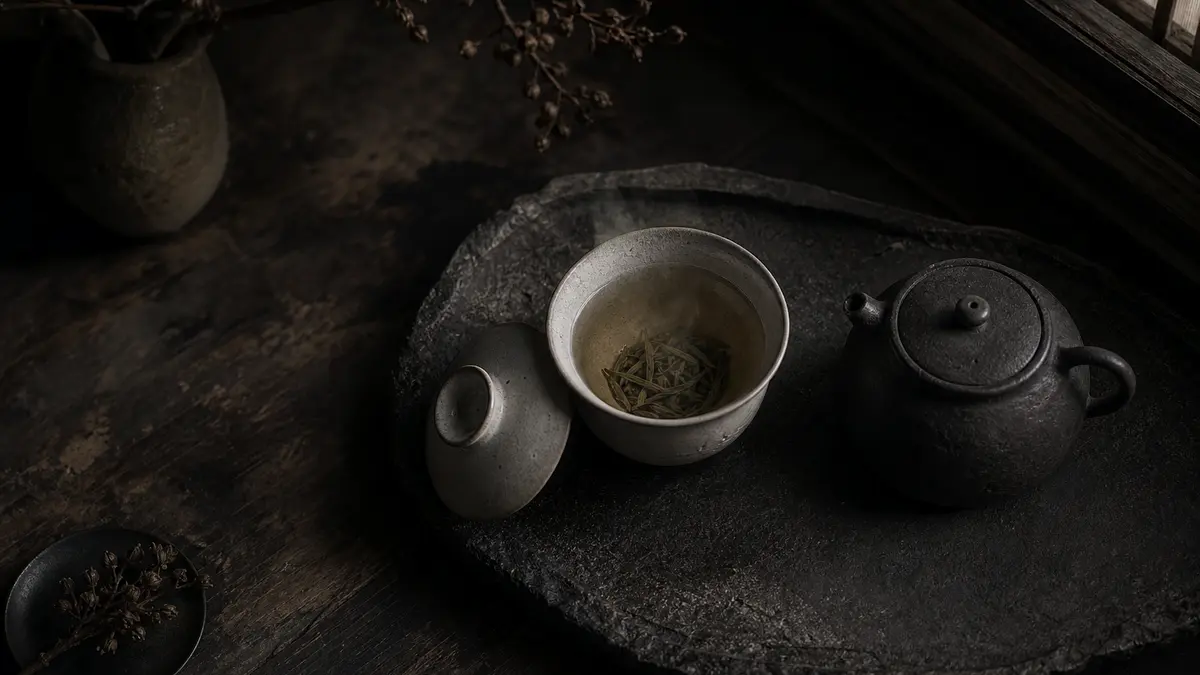
Ujeon is the most temperature-sensitive Korean tea. Brew it wrong and you waste both money and potential.
Recommended Ujeon Brewing Parameters
- Water temperature: 65–70°C. This is lower than sejak (70–75°C) or jungjak (75–80°C). The amino acids that define ujeon’s sweetness extract readily at low temperatures. Higher heat pulls catechins you don’t want.
- Leaf-to-water ratio: 4g per 100ml.
- Steep time: 20–30 seconds for the first infusion. Adjust by taste from there.
- Number of steeps: 3–5 productive infusions. The sweetness typically peaks at steeps two and three.
- Water: soft, filtered water. Hard water with high mineral content can mask ujeon’s delicate sweetness.
Use a small vessel — a Korean dawan (다완) or a gaiwan (蓋碗) in the 100–120ml range works well. Korean tea ceremony practice (다례, darye) traditionally uses a series of cooling vessels to bring water down from boiling to the target temperature, a technique worth adopting.
The key principle: treat ujeon gently. You are not extracting from robust leaf; you are coaxing sweetness from tiny, tender buds. Patience and restraint are the brewing skills that matter here.
Ujeon in Korean Tea Culture
Ujeon holds a place in Korean tea culture that goes beyond flavor. It is the first tea of the year — the signal that winter has ended and the growing season has begun. In Buddhist temple tea culture, which has been a continuous thread in Korean tea history for over a millennium, the first ujeon carries symbolic weight.
The Korean grading system — ujeon, sejak, jungjak, daejak — is tied directly to the solar calendar (절기, jeolgi), a framework that connects tea production to the rhythms of agriculture and season. Ujeon exists because Koreans have, for centuries, paid close attention to exactly when leaves emerge and what that timing means for the cup.
This is not marketing. It is agronomy refined over generations.
Ujeon vs. Sejak: Understanding the Difference
The most common question from people entering Korean tea is whether ujeon is worth the premium over sejak. The honest answer: it depends on what you want.
| Ujeon (우전) | Sejak (세작) | |
|---|---|---|
| Harvest | Before Gogu (~April 20) | After Gogu, before Ipha (~May 5) |
| Leaf size | Tiny buds, often unopened | Small buds with one leaf |
| Sweetness | Maximum | High |
| Astringency | Very low | Gentle, present |
| Complexity | Concentrated, narrow | Broader flavor spectrum |
| Price (50g) | $80–$250 | $40–$100 |
| Best for | Special occasions, focused tasting | Daily drinking, regular enjoyment |
Ujeon offers maximum sweetness and concentration. Sejak offers more body, a broader range of flavors, and gentle astringency that gives the cup structure. Many experienced Korean tea drinkers actually prefer sejak for regular drinking and reserve ujeon for moments of focused attention. Neither is objectively “better.” They are different experiences from the same plants at different moments in spring.
Finding Authentic Ujeon
Because ujeon commands premium prices, mislabeling is a real concern. Sejak sold as ujeon, or blends of ujeon and sejak marketed at ujeon prices — these things happen. A few markers of authenticity worth knowing:
- Harvest date documentation. Reputable producers record and share specific harvest dates. If the date falls after April 20 in a given year, it is not ujeon regardless of what the label says.
- Leaf appearance. True ujeon consists of tiny, tightly furled buds. If you see fully opened leaves in the mix, the grading is suspect.
- Origin specificity. “Korean ujeon” with no farm or region identified warrants skepticism. The best producers name their location, their plants, and their process.
- Price floor. If someone offers ujeon for $30 per 50g, the economics simply do not work. The labor alone costs more than that.
What Comes Next
This article will evolve. When I sit down with ujeon for the first time — ideally a Hadong yasaeng-cha lot and a Boseong plantation lot side by side — I will add detailed tasting notes, steep-by-steep impressions, and photographs. The research says this tea is remarkable. I want to verify that in the cup.
Until then, what I can say with confidence is this: ujeon represents a genuine peak of green tea craft. The scarcity is real. The biochemistry is sound. And the terroir distinctions across Korean regions suggest a depth that rewards the same kind of careful attention wine lovers bring to their best bottles.
Spring arrives once a year. Ujeon captures it before anyone else.