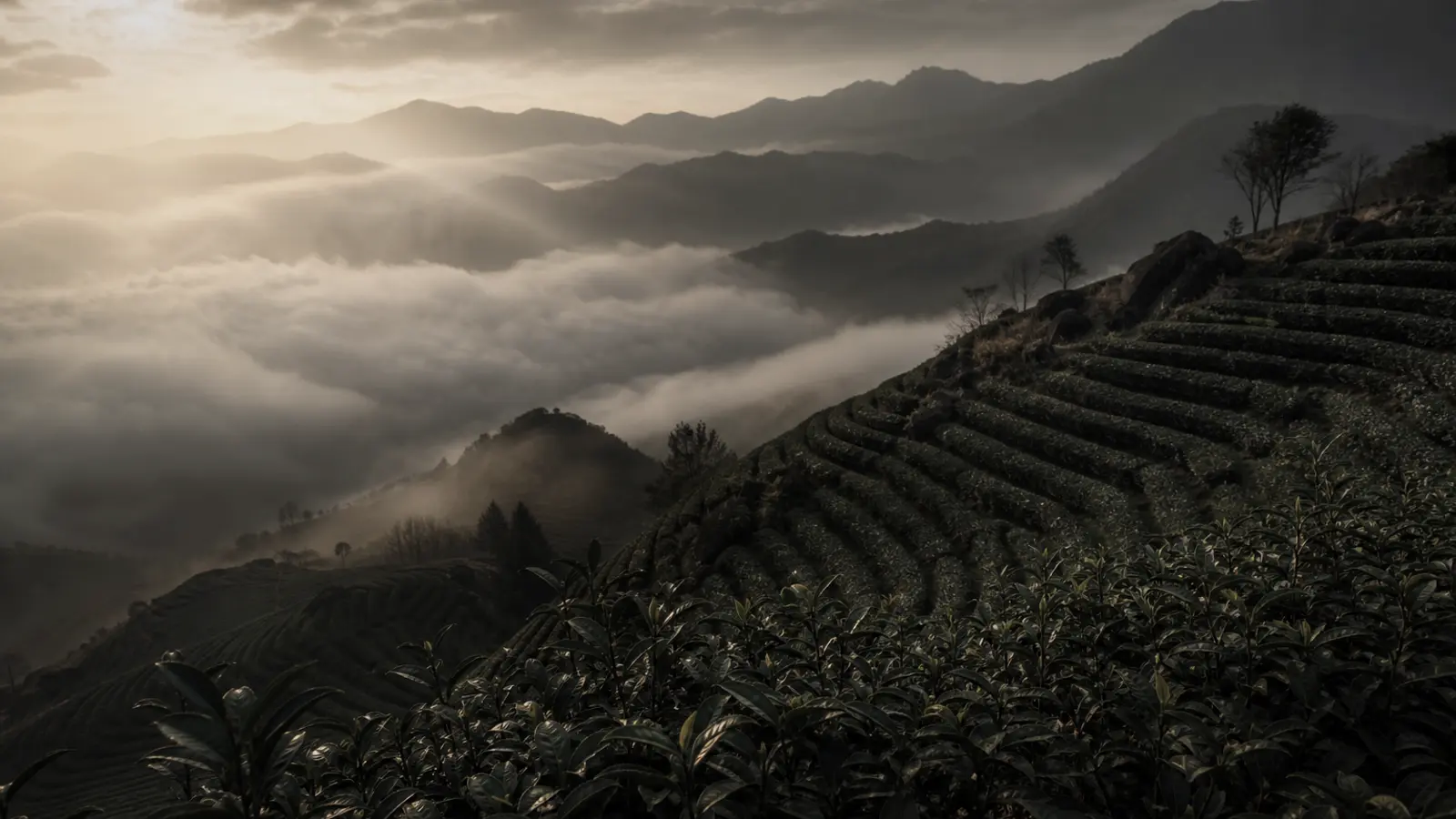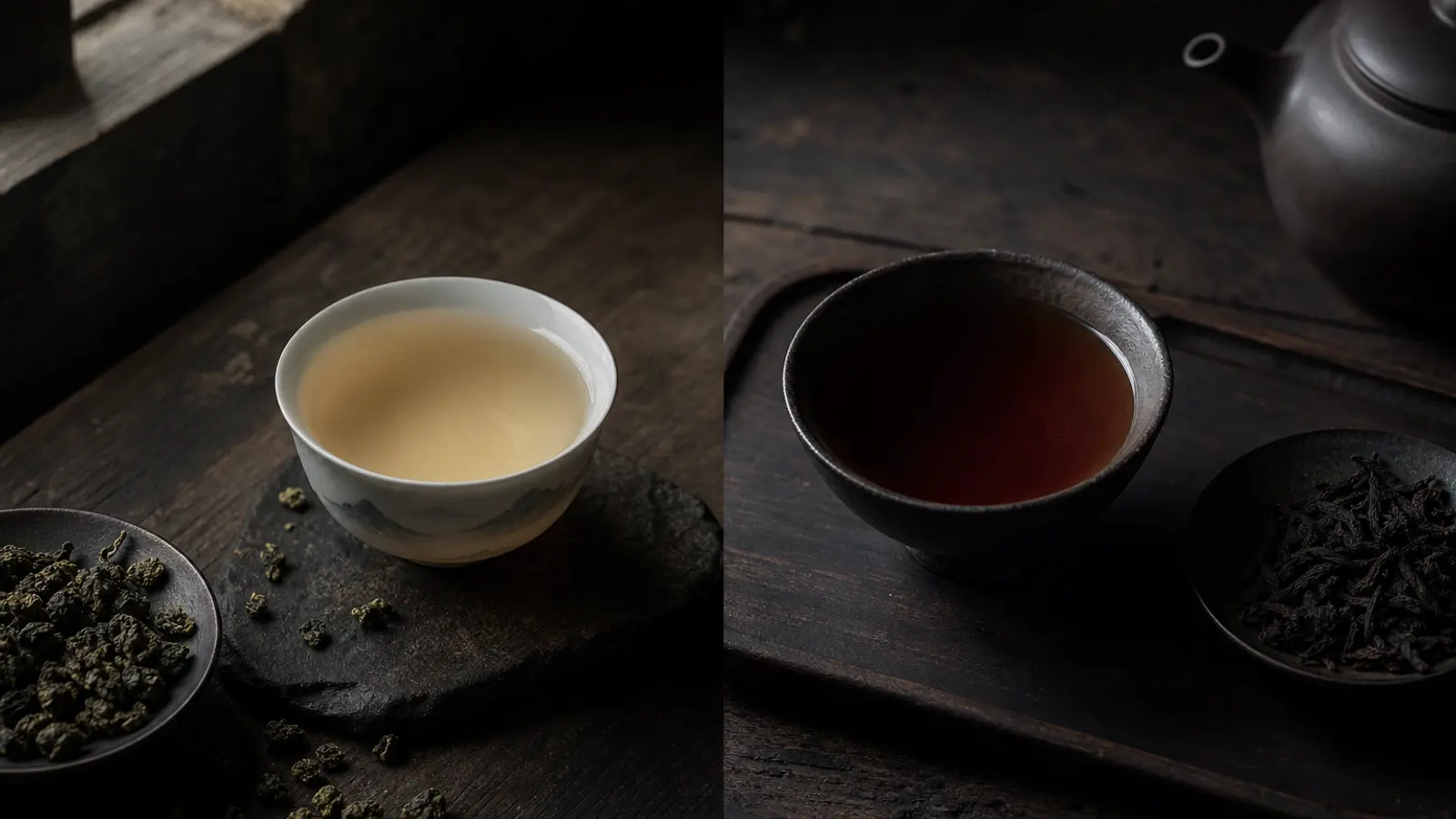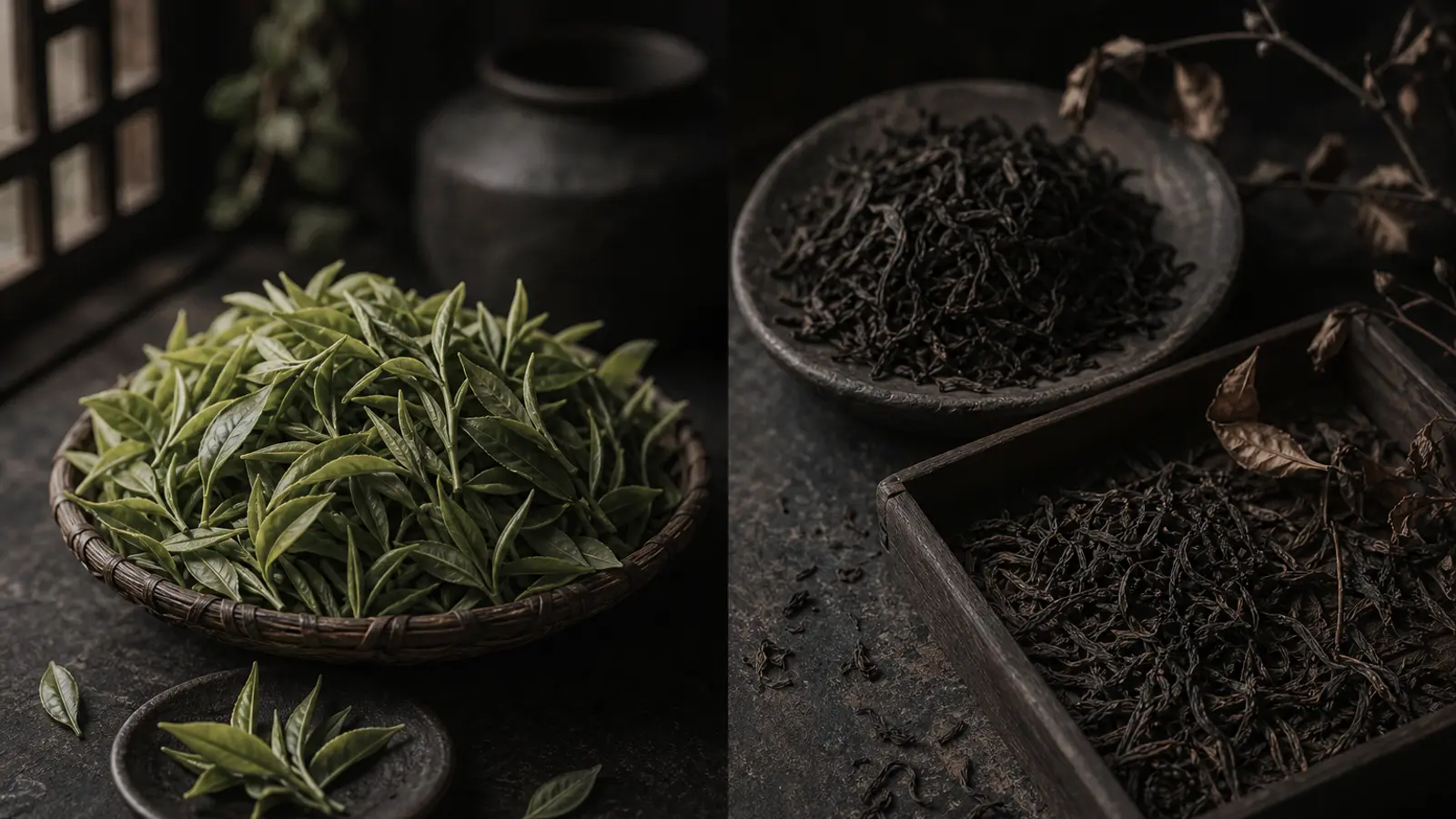
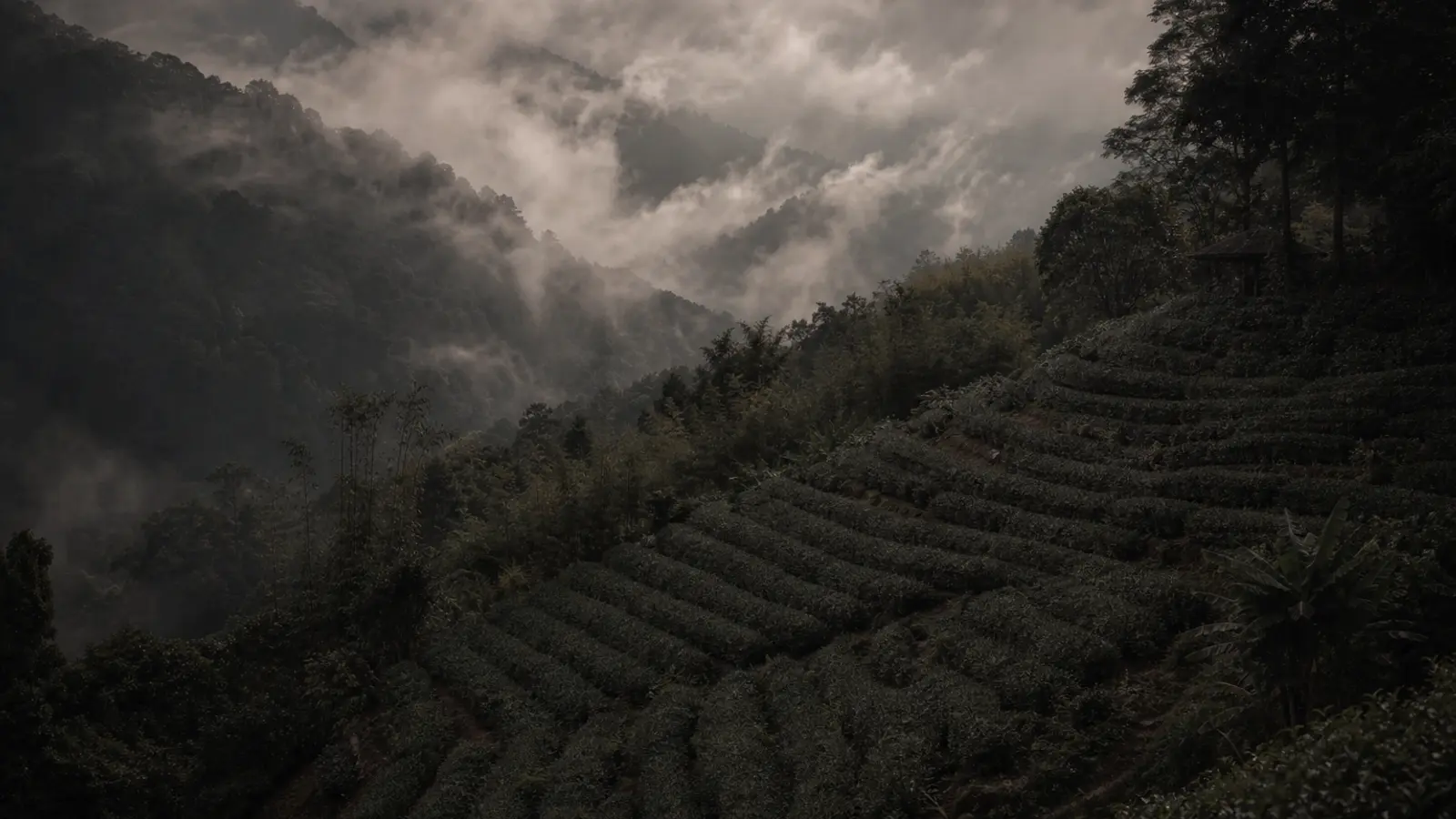
Ali Shan oolong (阿里山烏龍茶) is the most recognized name in Taiwanese high mountain tea. Grown at 1,200–1,600 meters in the Ali Shan National Scenic Area of Chiayi County (嘉義縣), it produces a floral, creamy, butter-textured oolong that has defined what high mountain oolong means for most of the world. If you think of Burgundy, Ali Shan is the Gevrey-Chambertin of Taiwanese oolong — not the absolute peak elevation, but the level where reputation, quality, and accessibility converge, and where the best examples genuinely compete with more expensive neighbors. It is both Taiwan’s flagship oolong origin and its most approachable.
Geography & Location
Ali Shan (阿里山) refers to a mountain range and national scenic area in central-southern Taiwan, situated within Chiayi County. The range stretches roughly from 23.4°N to 23.6°N latitude, 120.6°E to 120.8°E longitude, with tea cultivation concentrated along the western and southern slopes where morning sun exposure is followed by afternoon fog.
The Ali Shan National Scenic Area is one of Taiwan’s most visited tourist destinations. The famous Ali Shan Forest Railway (阿里山森林鐵路) — a narrow-gauge line built during the Japanese colonial period — carries visitors up through elevation bands that also mark distinct tea-growing zones. The iconic sunrise viewing point at Zhushan (祝山) draws hundreds of thousands of visitors annually. This tourism infrastructure gives Ali Shan oolong something no other Taiwanese high mountain tea origin possesses: direct international visibility. Visitors taste the tea on-site, buy it at source, and carry the name home.
Tea gardens are distributed across numerous villages and micro-regions within the scenic area. Shizhuo (石棹), Longtou (龍頭), Longmei (隆美), and Fenqihu (奮起湖) are among the most frequently cited production areas. Elevation varies significantly even within a single village — a garden at the top of a ridge can sit 200 meters above one at the bottom of the adjacent valley. This makes Ali Shan less a single terroir than a collection of micro-terroirs unified by a shared mountain climate and a common name.
Climate & Elevation
Ali Shan’s tea gardens span 1,200 to 1,600 meters. This is high enough to qualify as gaoshan cha (高山茶, literally “high mountain tea,” Taiwan’s designation for tea grown above roughly 1,000 meters) but sits below the extreme elevations of Li Shan (梨山, 1,600–2,600m) and Da Yu Ling (大禹嶺, 2,200–2,600m).
The climate is subtropical mountain. Annual rainfall runs heavy — roughly 2,500–4,000mm depending on the micro-region — distributed across a pronounced wet season from May through September. Typhoons periodically affect harvests. Winter is cool but rarely freezing at the lower tea-growing elevations.
The defining climatic feature is fog. Clouds regularly blanket the tea gardens from late morning through early afternoon, reducing direct UV exposure and slowing photosynthesis. This is the mechanism that drives high mountain character in the cup: slower leaf growth means higher amino acid concentration relative to catechins, producing sweetness and umami rather than astringency. Ali Shan’s fog coverage is substantial but less extreme than the near-perpetual cloud immersion found at Da Yu Ling. The practical result is tea that is concentrated but not as intensely so as the ultra-high origins — a difference you can taste.
Temperature differentials between day and night are significant, typically 8–12°C. This diurnal swing stresses the plant in a productive way, encouraging the accumulation of aromatic compounds in the leaf. Spring nights can drop to 8–10°C while afternoon sun pushes daytime temperatures to 18–22°C. These swings are the engine behind Ali Shan’s floral aromatics.
Harvests follow a seasonal rhythm: spring (April–May), summer (June–July, often considered inferior), autumn/winter (October–November), and occasionally a winter sprout picking. Spring and winter harvests command the highest prices and reputation. Spring tea tends toward richness and body; winter tea tends toward clarity and fragrance.
Soil & Terroir
Ali Shan sits within a geologically complex zone. The mountain range includes areas of volcanic-origin soil — part of Taiwan’s broader volcanic and tectonic geology — producing well-drained, slightly acidite growing medium that tea bushes favor. The soil is generally rich in organic matter due to the heavy rainfall and dense forest cover that surrounds (and historically covered) the tea gardens.
Compared to the slate and shale soils found at certain Li Shan elevations, Ali Shan’s volcanic-derived soils tend to produce a rounder, less mineral cup profile. This is terroir you can taste: where Li Shan often delivers a stony minerality, Ali Shan emphasizes butter and cream. The soil is part of the reason, alongside the lower elevation and slightly faster leaf growth.
Drainage is critical at these rainfall levels. The best gardens sit on slopes steep enough to shed excess water, preventing root rot while still retaining moisture in the organic-rich topsoil layer. Flat or poorly drained plots produce noticeably less concentrated tea — a quality marker that experienced buyers evaluate by knowing the specific garden location.
Key Cultivars & Tea Types
The dominant cultivar is Qingxin Oolong (青心烏龍), also known as Ruanzhi (軟枝). This is the classic Taiwanese high mountain oolong cultivar — thin-stemmed, cold-tolerant, and expressive of terroir. Qingxin is to Taiwanese oolong what Pinot Noir is to Burgundy: a transparent variety that reveals its growing conditions rather than masking them.
Jin Xuan (金萱, TTES #12) also appears at Ali Shan elevations, producing a distinctly different profile — naturally milky and floral with a heavier body. Jin Xuan is a legitimate cultivar choice, but it should not be confused with artificially flavored “milk oolong,” a category of flavored tea that has unfortunately muddied consumer understanding. When grown at Ali Shan elevations, genuine Jin Xuan produces a richer, more overtly creamy cup than Qingxin, though with less complexity and less aging potential.
Si Ji Chun (四季春, “Four Seasons Spring”) appears at lower Ali Shan elevations. It is a hardy, high-yield cultivar that produces pleasant but less concentrated tea. Most serious Ali Shan production focuses on Qingxin.
The tea type produced is almost exclusively ball-rolled (balled) oolong with light-to-medium oxidation, typically 15–25%. Heavy roasting is uncommon at Ali Shan — the prevailing style emphasizes floral freshness and buttery texture rather than roasted depth. This contrasts with the nearby Dong Ding (凍頂) tradition, which historically favors medium-to-heavy roasting at lower elevations.
Processing Traditions
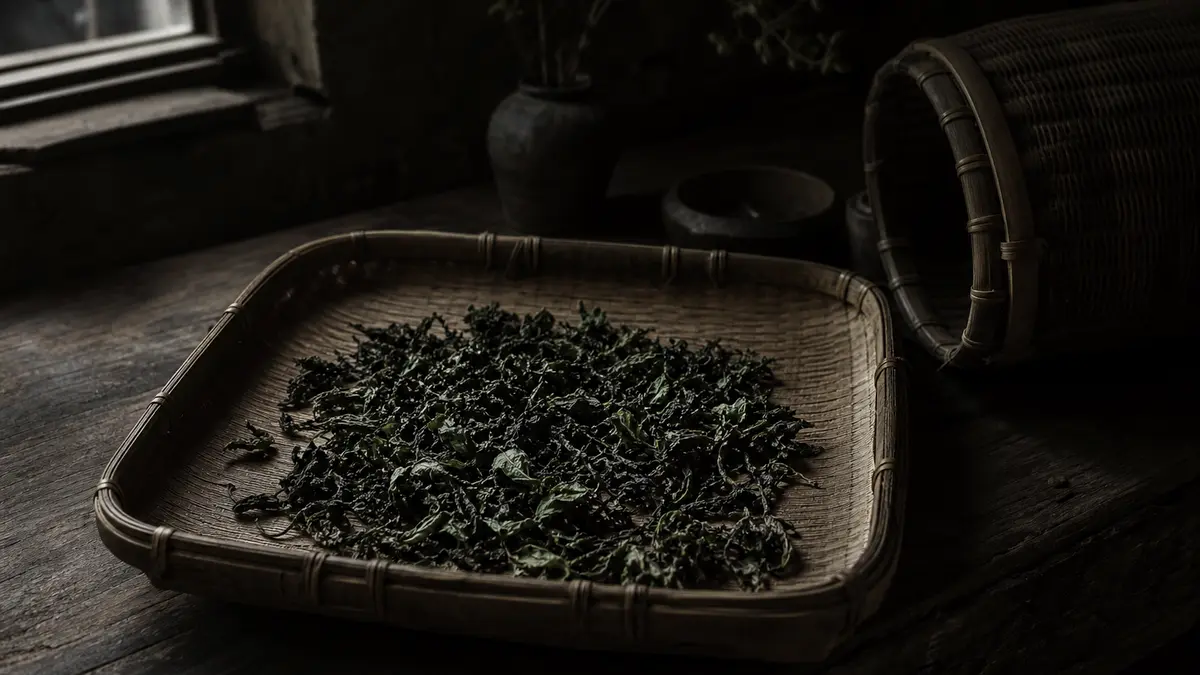
Ali Shan oolong follows the standard Taiwanese high mountain oolong processing sequence, but the execution details matter enormously.
-
Picking (採茶): Hand-plucked as a bud and two to three leaves. Machine harvesting exists at lower quality tiers but produces inferior results. The picking standard directly determines ceiling quality.
-
Withering (萎凋): Sun-withered outdoors, then moved indoors for continued withering. Duration and intensity are adjusted based on weather — too much sun-wither and the tea loses its high mountain freshness.
-
Tossing and bruising (浪菁): The leaves are gently tossed and tumbled in bamboo trays or rotating drums, bruising the leaf edges to initiate oxidation. This step — called làng qīng (浪菁) — develops the floral aromatics. The number of tosses and the rest intervals between them are where the tea maker’s skill is most visible.
-
Kill-green (殺青): Heat is applied to halt oxidation, typically in a rotating drum heated by gas flame. Timing is critical: too early and the tea is grassy; too late and it loses freshness.
-
Rolling and shaping (揉捻): The leaves are wrapped in cloth and mechanically compressed into tight balls — the characteristic tightly rolled pellet shape of Taiwanese high mountain oolong. Multiple rounds of rolling and drying alternate until the desired shape and moisture content are achieved.
-
Drying (乾燥): Final moisture is reduced to approximately 3–5% for shelf stability.
The processing is where Ali Shan’s volume becomes a double-edged sword. The largest production Taiwanese high mountain origin means quality spans a wide spectrum. Mass-produced Ali Shan rushed through processing — with insufficient withering or hasty tossing — produces a flat, generically sweet tea that trades on the name without delivering the terroir. Artisan production from skilled makers at higher-elevation gardens produces tea that stands with the best of Taiwan. The name alone guarantees nothing. Knowing the garden elevation and the maker matters.
Characteristic Flavor Signatures
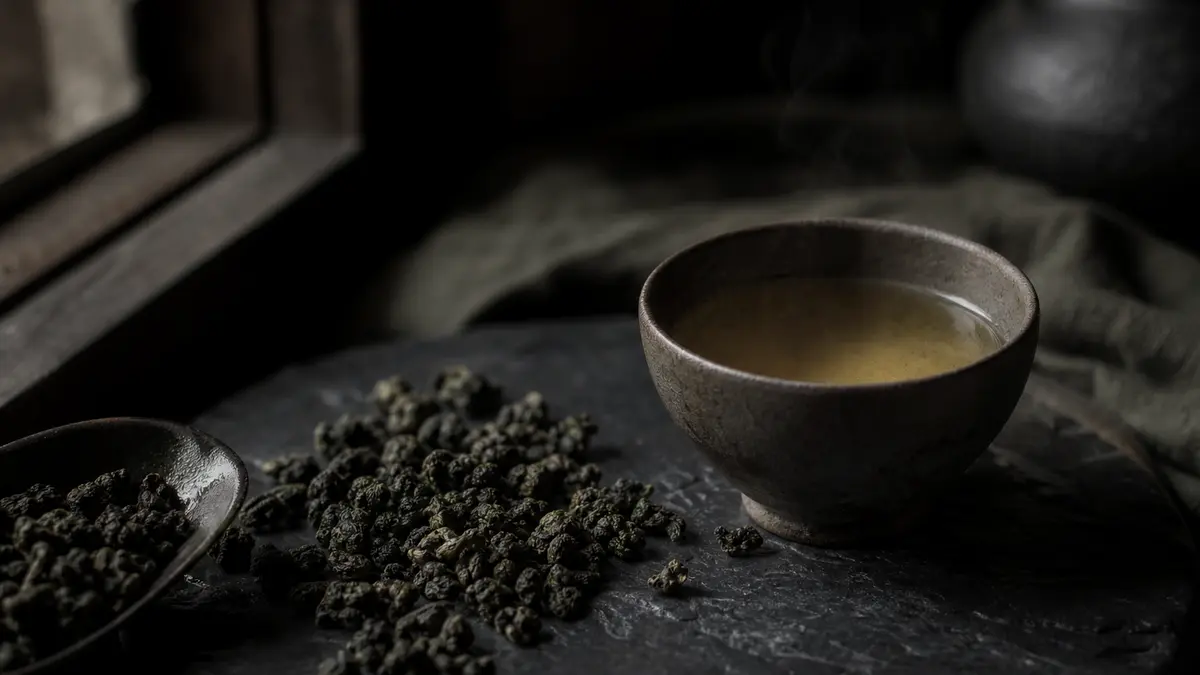
The signature of Ali Shan oolong is butter and cream. A well-made Ali Shan from a garden above 1,300 meters, brewed in a porcelain gaiwan (蓋碗) at 95°C with 6g per 120ml, delivers:
- Aroma: Gardenia, orchid, and a distinct buttered-pastry sweetness on the wet leaf. The lid aroma (聞香) off a gaiwan is where Ali Shan announces itself.
- Mouthfeel: Smooth, coating, medium-to-full body. A viscosity that spreads across the palate. This is the “butter” people reference — it is a textural quality, not a literal flavor.
- Taste: Sweet entry with floral notes that build through the mid-palate. Clean, moderate huigan (回甘, returning sweetness) in the finish. Less mineral than Li Shan. Less ethereal or high-toned than Da Yu Ling. But a warmth and roundness that is immediately appealing.
- Steep progression: The first two steeps emphasize aroma and sweetness. Steeps three through five are typically the peak, where body and florals converge. The tea holds for six to eight steeps with a graceful, gradual decline.
The comparison that best frames Ali Shan is to high-quality Tieguanyin (鐵觀音) from Anxi (安溪), Fujian. The cultivar is different and so is the processing tradition, but the flavor family — floral, creamy, clean — is adjacent. The critical difference is altitude-derived concentration. Anxi’s tea gardens sit at 200–700 meters. Ali Shan’s sit at 1,200–1,600. That 500–1,000 meter elevation gap translates directly into slower leaf growth, higher amino acid density, and a more layered, persistent cup. The comparison illuminates what elevation does, not what cultivar does.
Ali Shan is the oolong that converts people to the category. Its immediate approachability — sweet, floral, zero bitterness when brewed correctly — makes it a gateway. But the best examples reward serious attention. They are not simple teas dressed up in charm.
Quality Indicators & Authentication
Evaluating Ali Shan oolong requires attention to several markers:
Elevation within the range. A tea from 1,500 meters will generally show more concentration and complexity than one from 1,200 meters. Reputable sources specify garden elevation. Vague labeling that says only “Ali Shan” without elevation or village detail is a yellow flag — it may be legitimate tea from a lower garden, or it may be tea from outside the region entirely.
Season. Spring and winter harvests are superior. Summer Ali Shan exists but is generally less aromatic and more astringent due to faster growth in heat.
Leaf appearance. Tightly rolled, uniform pellets in dark green. When unrolled after brewing, the leaves should show intact bud-and-two-leaves sets with reddish-brown oxidation along the edges and green centers — evidence of proper tossing and controlled oxidation.
Spent leaf integrity. After brewing, stretch out a leaf. It should be whole, supple, and show the bruised edge pattern of hand-controlled oxidation. Shredded or fragmented leaves indicate machine harvesting or rough processing.
Aroma persistence. Good Ali Shan holds fragrance through six or more steeps. If the aroma collapses after steep three, the tea lacks the concentration that altitude should provide.
Fraud risk. Ali Shan’s fame and volume make it one of the more commonly mislabeled Taiwanese teas. Vietnamese highland oolong — grown at similar elevations with similar cultivars — sometimes enters the market labeled as Ali Shan. The Vietnamese teas can be good, but they are not Ali Shan. Price is one indicator: genuine Ali Shan from reputable sources has a floor price. Anything drastically below market rates deserves scrutiny. Flavor offers another clue: Vietnamese highland oolongs tend toward a thinner body and a greener, less buttery profile, though the distinction requires experience to detect reliably.
Price Ranges
Ali Shan is the most affordable entry point to genuine Taiwanese high mountain oolong. Current market pricing:
| Tier | Price per 100g (USD) | Description |
|---|---|---|
| Standard production | $12–30 | Blend of gardens, competent processing, 1,200–1,300m |
| Single-garden, higher elevation | $24–50 | Named garden, 1,400m+, skilled maker |
| Competition-grade | $40–60+ | Award-winning lots, limited quantity |
These prices reflect international export pricing. Within Taiwan’s domestic market, prices can run slightly lower for standard production but higher for award-winning competition teas, where prestige and limited supply drive premiums.
For context, equivalent Li Shan teas typically start at $30–50 per 100g for standard production, and Da Yu Ling — when genuinely available — rarely appears below $60–100 per 100g. Ali Shan at $12–30 per 100g delivers authentic high mountain character at roughly half to one-third the price of its higher-elevation neighbors. This is exceptional value. The best Ali Shan productions at $40–50 per 100g can compete in blind tasting with Li Shan teas at twice the price — not always, but often enough to make the comparison meaningful.
The wine parallel holds: Gevrey-Chambertin is not Musigny, but it offers Burgundy character at a price point where more people can access it, and the best village-level Gevrey can outperform a mediocre Grand Cru. Ali Shan occupies exactly that position in the Taiwanese oolong hierarchy.
Why Ali Shan Matters
Ali Shan is not the highest, not the rarest, not the most expensive. It is the origin that defines the category for most drinkers. Its combination of genuine high mountain terroir, reasonable pricing, and wide availability means that for many people around the world, Ali Shan oolong is Taiwanese oolong.
That visibility cuts both ways. The name’s commercial power has attracted both excellent makers producing transparent, terroir-driven tea and large operations producing volume-focused product that trades on the geographic reputation without earning it cup by cup. Navigating this range is the central challenge for anyone buying Ali Shan.
The guidance is straightforward: look for specific garden identification, ask about elevation, prefer spring or winter harvests, and trust your palate. A well-made Ali Shan from 1,400 meters, brewed with care in a gaiwan at 95°C, is one of the most purely pleasurable teas on earth. Buttery, floral, sweet, and clean — it requires no expertise to enjoy and rewards plenty of it.