Few tea regions have shaped modern tea culture as directly as Anxi (安溪). This county in southern Fujian province is where Tie Guan Yin (铁观音) — the Iron Goddess of Mercy — was born, and where the oolong processing tradition that made China’s most beloved aromatic tea was refined over centuries. Understanding Anxi’s geography, soils, and dual-style traditions is essential for anyone who wants to engage seriously with oolong tea.
I have not yet had the opportunity to taste Anxi teas firsthand in the region itself, so what follows draws on published research, technical literature on oolong processing, and detailed accounts from producers and researchers who have documented the county extensively. Where I have personal context from related brewing experience, I’ll note it.
Geography & Location
Anxi county sits in the Quanzhou prefecture of southern Fujian province at approximately 25.0°N, 118.2°E. It lies roughly 50–60 kilometers inland from the Taiwan Strait coast, close enough to benefit from maritime moisture but sufficiently elevated and sheltered to develop its own microclimate.
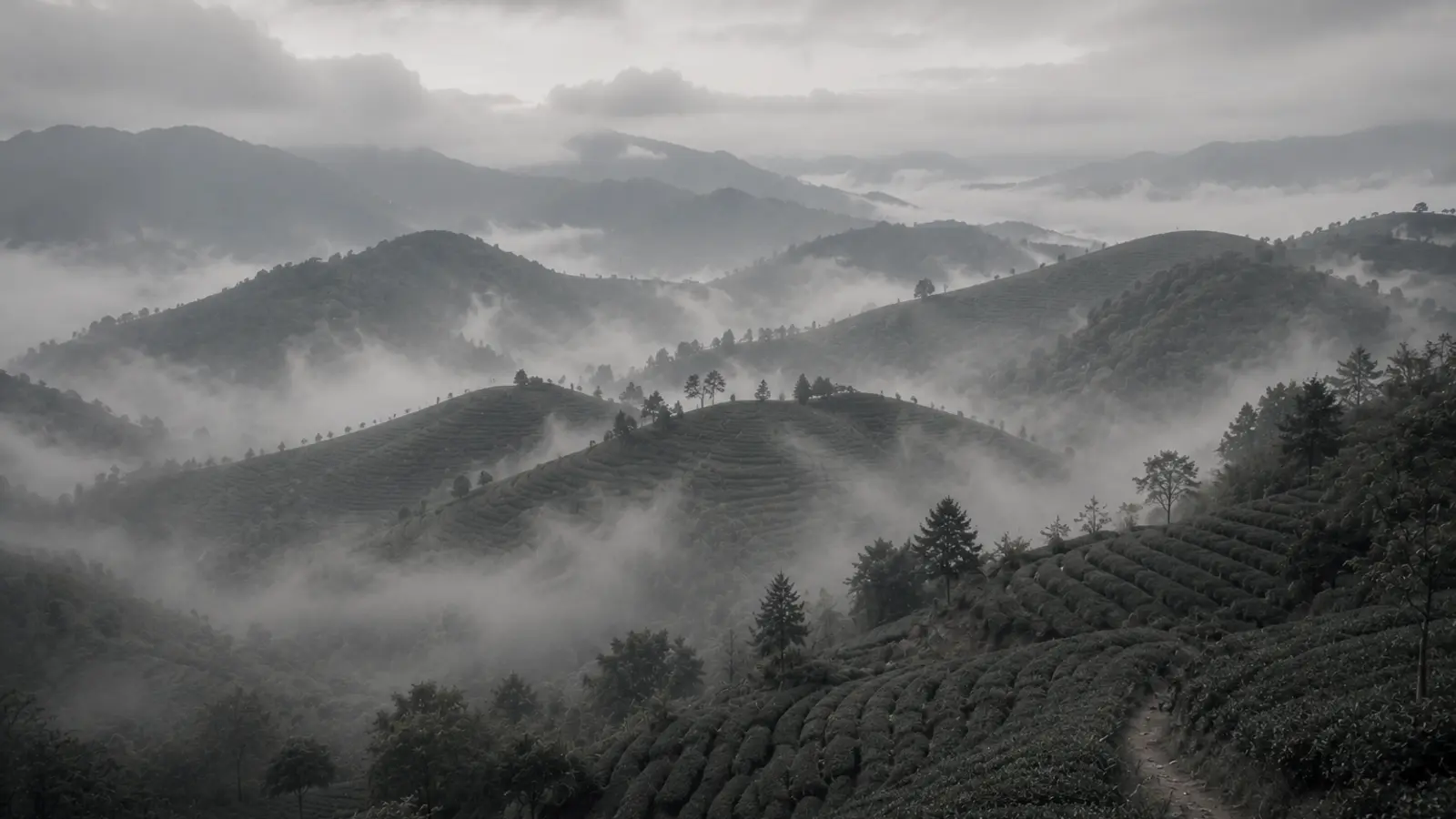
The terrain is not dramatic by the standards of, say, the Wuyi Mountains (武夷山) to the north, but it is genuinely varied. The county seat sits in a basin at low elevation, surrounded by rolling hills that rise toward 1,000 meters on the county’s margins. The classic tea-producing townships — Xiping (西坪), Ganxi (感德), Xianghua (祥华), and Longmen (龙门) — are spread across this hill country, each with its own local reputation. Xiping, located in the western part of the county, holds particular historical significance as the area most closely associated with Tie Guan Yin’s origins.
To make a geographic comparison: Anxi is to oolong what the Côte de Nuits is to Pinot Noir. Not the only place that can express the grape — or in this case the cultivar — but the ancestral home where the definitive character was first identified and codified.
Climate & Elevation
Anxi’s climate is subtropical, moderated by the county’s inland hills and its relative proximity to the coast. Annual rainfall is typically 1,600–1,800mm, distributed reasonably evenly but with a heavier concentration in spring and early summer. The region avoids the extremes of more continental inland areas — winters are mild, summers are warm but not brutal, and the year-round humidity supports continuous leaf growth across multiple harvests.
Elevation is the critical variable. The county’s lowest gardens, near the basin floor, sit at around 200m. The best-regarded growing areas occupy a band between 600m and 900m. At these mid-elevations, temperatures are slightly cooler, diurnal temperature swings are more pronounced, morning fog is common, and the combination slows leaf development. Slower growth concentrates aromatic compounds and produces more complex, dense material.
Above 900m, the climate becomes cooler and somewhat more marginal for the Tie Guan Yin cultivar, which requires specific temperature conditions to express its characteristic aromatics fully. Reports from multiple sources indicate that the 600–900m band consistently produces the most coveted harvests.
This elevation sensitivity has a direct market consequence: garden elevation is one of the few verifiable quality signals buyers can use when sourcing Anxi oolong, though stated elevations on commercial packaging should always be treated with some skepticism.
Soil & Terroir
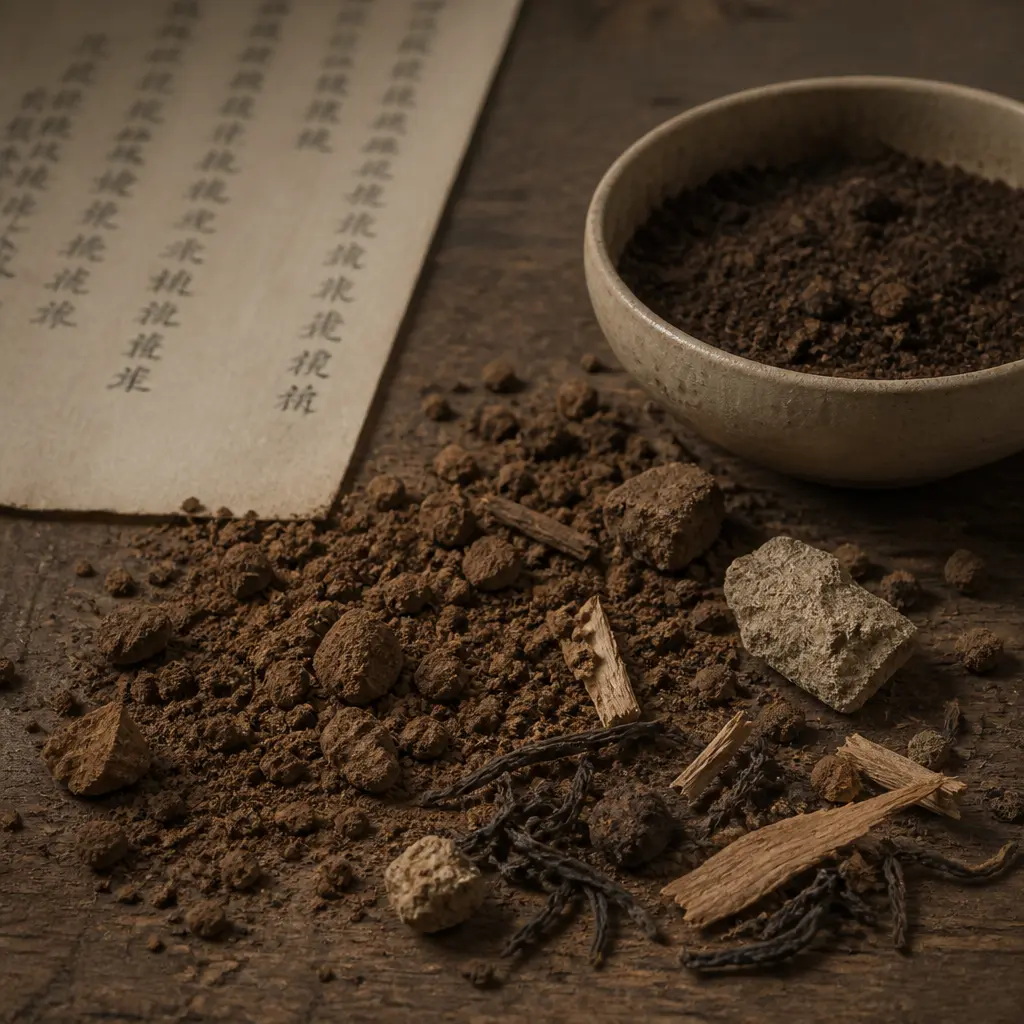
Anxi’s soils are fundamentally different from those of Wuyi, and this difference drives a fundamental difference in tea character. Where Wuyi sits on volcanic and metamorphic rock that produces mineral-dense, nutrient-rich soil, Anxi’s hill soils are primarily acidic red earth derived from granitic decomposition.
This granitic base produces soils that are:
- More porous and free-draining — important for preventing root waterlogging in a high-rainfall environment
- Moderately acidic, typically pH 4.5–5.5, within the preferred range for Camellia sinensis
- Lower in certain minerals compared to Wuyi’s rocky volcanic substrate, which is part of why Anxi teas don’t develop the same pronounced mineral backbone
The result is a terroir that does not impose itself on the tea. Wuyi’s rocky mineral soils leave a detectable stamp on the leaf — the yan yun (岩韵, rock rhyme) that Wuyi enthusiasts prize. Anxi’s lighter granitic soils step back and allow the Tie Guan Yin cultivar’s own aromatic characteristics to dominate. This is not a limitation; it is the terroir’s function. The soil is the ideal substrate for an intensely aromatic cultivar to express itself on its own terms.
Water retention matters too. Anxi’s well-drained soils prevent the root stress associated with waterlogged conditions, supporting consistent seasonal growth. Gardens on steeper slopes with better natural drainage are generally preferred by experienced growers.
Key Cultivars & Tea Types
The Genuine Tie Guan Yin Cultivar
The tea that bears the Tie Guan Yin name should, in its purest expression, be made from the specific cultivar known as Hong Xin Tie Guan Yin (红心铁观音, Red Heart Iron Goddess). This is a clonal cultivar distinguished by reddish-tinged new growth, small to medium leaf size, and a naturally compact growth habit. It is notably slow-growing compared to high-yield commercial alternatives, which makes it economically less attractive to mass producers.
What the genuine cultivar delivers in return for this inconvenience is a specific aromatic profile that has no exact equivalent — a combination of orchid florality (sometimes described as lan hua xiang, 兰花香), a mineral top note, and the classic huigan (回甘, returning sweetness) that arrives in the throat well after the swallow. This is the character that built Tie Guan Yin’s reputation.
Processing the genuine cultivar is demanding. The leaves are fragile at key processing stages, and the window for optimal yao qing (摇青) — the edge-bruising oxidation step — is narrow. Many commercial producers have moved away from it.
Substitute Cultivars
Much of what is sold as Tie Guan Yin — particularly at lower price points — is not made from the genuine Hong Xin Tie Guan Yin clone. Several substitute cultivars are in widespread use across Anxi and other producing regions:
- Mao Xie (毛蟹, Hairy Crab): A high-yield cultivar with a rougher leaf texture. Easier to grow and process; produces a more robust, slightly rougher cup.
- Huang Jin Gui (黄金桂, Golden Osmanthus): Known for early harvest timing and a distinctive osmanthus-like sweetness. Faster to process to light oxidation, which suits modern qingxiang style demands. Has genuine merit on its own terms.
- Ben Shan (本山, This Mountain): Closely related to TGY in genetic terms, with similar rolling shape but subtly different aromatics — generally less orchid-prominent and slightly heavier in body.
Distinguishing genuine cultivar TGY from substitute-cultivar TGY in the cup is a skill that takes deliberate practice. Published descriptions consistently flag the genuine cultivar’s orchid florality and hui gan as distinguishing markers, but developing that reference point requires exposure to confirmed genuine-cultivar examples — ideally from producers who can provide specific cultivar documentation.
Other Notable Anxi Oolongs
Anxi’s contribution to oolong diversity extends beyond Tie Guan Yin. Huang Jin Gui, Ben Shan, and Mao Xie each stand as distinct tea types with their own characters and loyal followings, though they are rarely given the same marketing attention as TGY outside China. Within Fujian’s tea community, these cultivars are understood as distinct expressions rather than simply TGY substitutes.
Processing Traditions
The Yao Qing Step
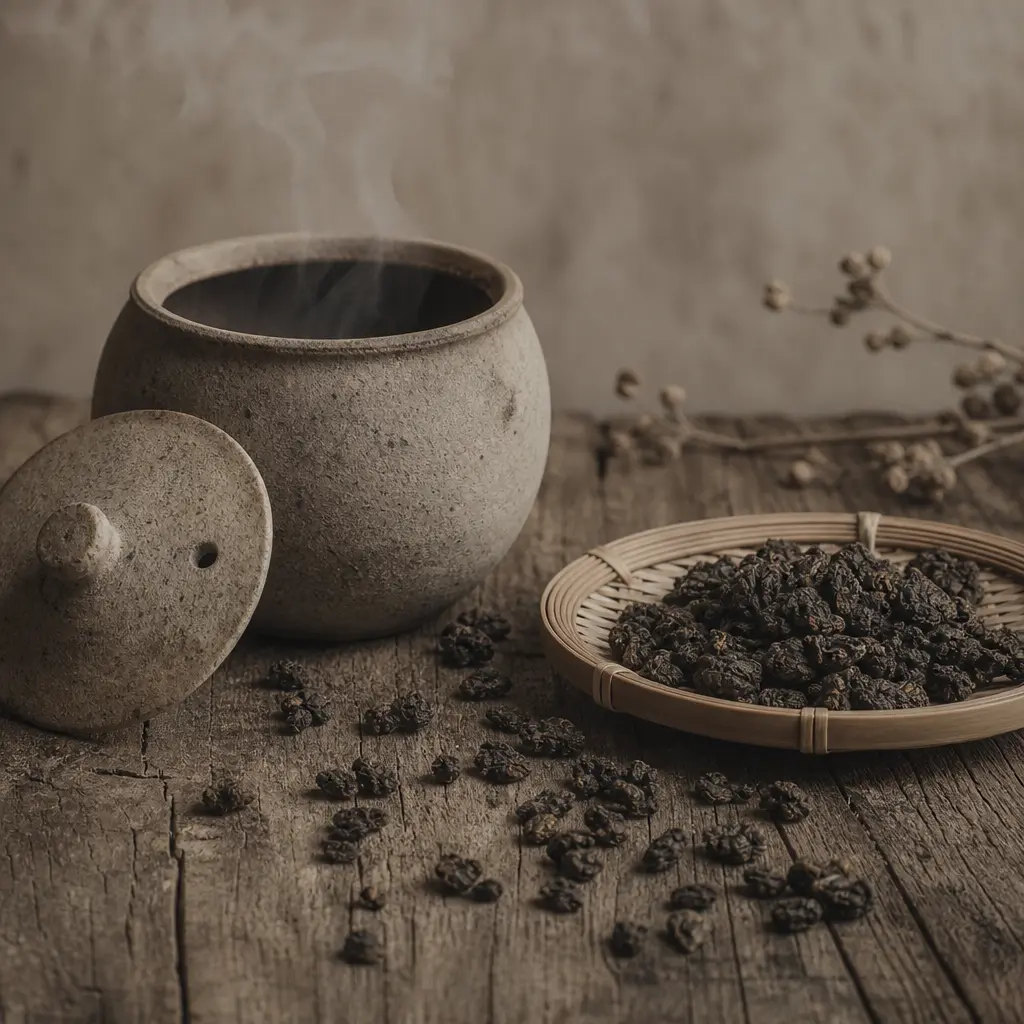
All Anxi oolongs share a foundational processing technique that distinguishes the regional tradition: yao qing (摇青), sometimes translated as shaking or rocking. After an initial wither under sunlight (晒青, shai qing) and an indoor wither period, the partially wilted leaves are placed in large woven bamboo baskets and repeatedly tossed — by hand or by rotating drum in modern facilities — at regular intervals over a period of hours.
The mechanics of yao qing are precise in intent: the goal is to bruise the leaf edges while leaving the center of the leaf intact. This differential bruising creates a characteristic “red rim, green center” appearance on the leaf (红边绿叶底, hong bian lü ye di) and drives a specific oxidation pattern. The bruised edges oxidize more rapidly and develop the orchid-like aromatic compounds; the intact green center retains chlorophyll and fresh vegetal notes. The interplay between these two zones produces TGY’s characteristic aromatic complexity.
The number of yao qing cycles, their intensity, and the rest periods between them determine how far oxidation proceeds — and therefore which style of Tie Guan Yin results.
Traditional Style: Chuantong (传统)
The traditional processing pathway — still practiced by a small but growing minority of Anxi producers — pursues 30–50% oxidation. This means more yao qing cycles and a longer total oxidation window. After rolling, traditional-style TGY undergoes a degree of roasting (烘焙, hong bei), historically over charcoal but now frequently in modern roasting ovens.
The effects on the final cup are significant. At higher oxidation levels, the orchid florality of the genuine cultivar shifts register — it deepens rather than disappears, becoming richer and warmer. Caramel and honey notes develop. The cup has more body. The huigan is present but more integrated into the overall flavor profile rather than arriving as a sharp separate note.
Traditional-style TGY was the standard through most of the 20th century. It fell substantially out of commercial favor as the market shifted toward lighter, more fragrant teas in the late 1990s and 2000s. In recent years, a significant reassessment has been underway. Experienced drinkers and serious collectors are actively seeking out traditional-style TGY from skilled producers, and prices for the best examples have risen accordingly.
Modern Style: Qingxiang (清香)
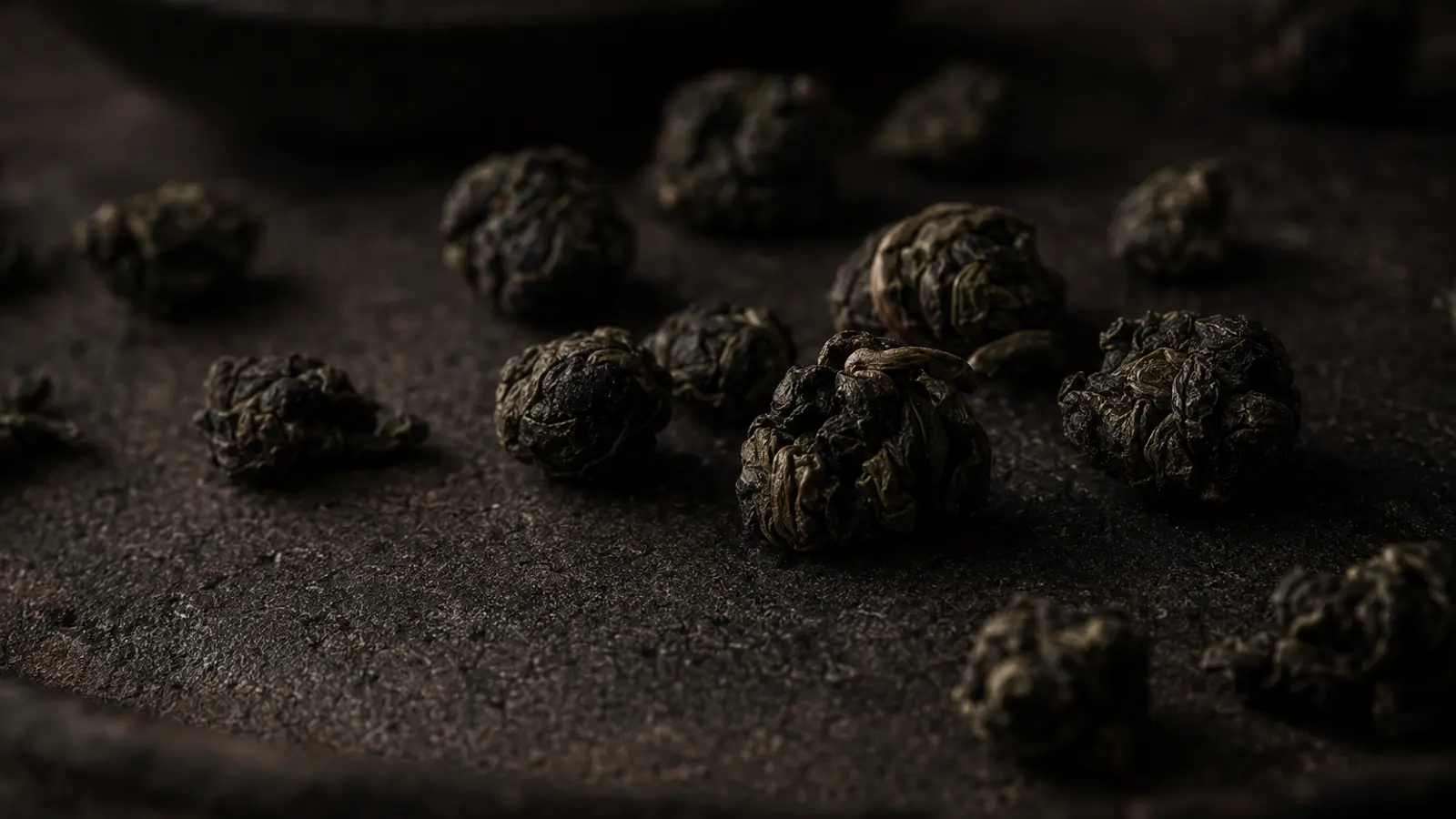
The dominant commercial style from the early 2000s onward, qingxiang (清香, fresh fragrance) Tie Guan Yin, pursues light oxidation — typically 15–25% — with minimal or no roasting. The rolled balls retain a vivid green color. The aromatics are immediate and exuberant: bright floral, fresh green, sometimes almost herbaceous.
Qingxiang TGY is, in wine terms, the crisp unoaked style. Approachable, aromatic, easy to understand and enjoy. It drove an enormous expansion of the TGY market through the 2000s and 2010s, introducing millions of drinkers to oolong who might otherwise have remained green tea drinkers.
Its drawbacks are the flip side of its strengths. The light oxidation makes it fragile — qingxiang TGY degrades noticeably faster than traditional-style, losing its defining aromatics within months without careful refrigeration. Some critics argue that the lightest examples are so close to green tea that they fail to express what makes oolong oolong. These criticisms have merit at the low end of the market, where corners are cut and aromatics are sometimes chemically enhanced.
At the quality ceiling, however, qingxiang TGY from genuine cultivar and skilled processing can be genuinely striking — intensely floral in ways that few other teas can match.
Rolling and Final Drying
After oxidation reaches the desired level, the leaf is pan-fired to halt enzymatic activity (杀青, sha qing), then rolled into its characteristic tight ball shape in cloth or mechanical rolling machines. The rolling step is repeated multiple times with intermediate drying cycles, progressively tightening and shaping the leaf. Final drying stabilizes the tea for storage and sale.
Characteristic Flavor Signatures
Anxi oolong’s defining characteristic is its aromatics-first identity. Where Wuyi oolongs engage you with mineral weight and roasted depth, Anxi teas — at their best — open with florality that can stop a room.
Qingxiang Profile
The modern qingxiang style presents:
- Aroma: Intense orchid florality in the highest-quality examples; lighter jasmine or lily in good commercial examples; green vegetal in lesser material
- Taste: Light body, bright acidity relative to oolongs, fresh-cut grass and floral sweetness
- Mouthfeel: Clean, thin to medium, lacking the depth of more oxidized styles
- Huigan: Often present but fleeting; arrives quickly and fades quickly
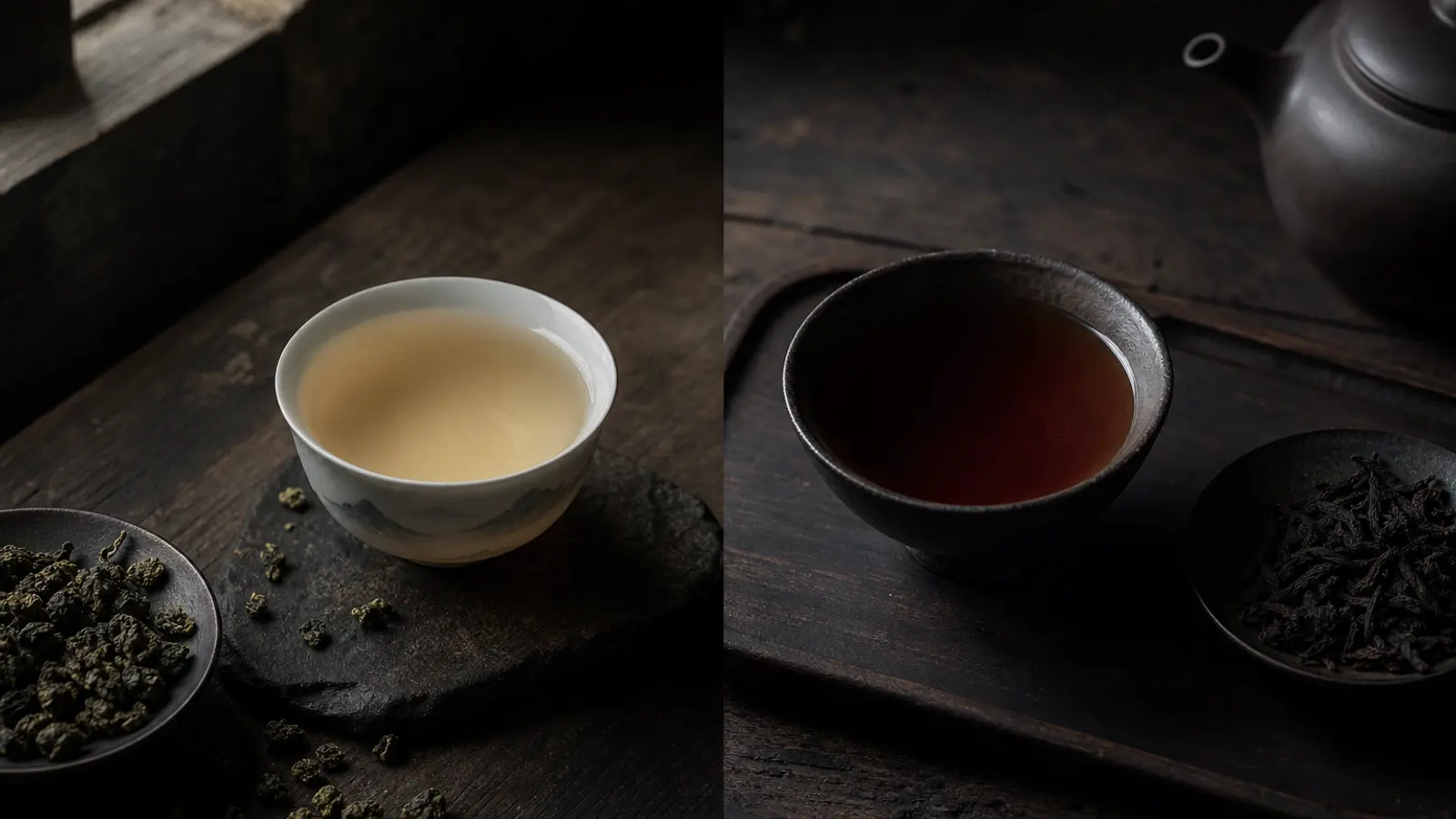
- Color: Pale yellow to light gold liquor
Chuantong Profile
The traditional style offers a substantially different experience:
- Aroma: Orchid character is present but transformed — deeper, more honeyed, sometimes described as ripe stone fruit alongside floral notes
- Taste: Warmer and rounder, with caramel sweetness, some toasted grain from the roasting, and genuine body
- Mouthfeel: Fuller and more coating than qingxiang; the tea stays in the mouth longer
- Huigan: More gradual and sustained, the returning sweetness arriving in the throat 30–60 seconds after the swallow and persisting through subsequent sips
- Color: Amber to light orange-brown
The Anxi-Wuyi Comparison
The contrast is instructive. If you approach Anxi after extended time with Wuyi rock oolongs, the initial impression of qingxiang TGY can feel almost startlingly light. The mineral density, roasted complexity, and structural weight of a good Da Hong Pao (大红袍) give way to something more immediately aromatic but less architecturally complex.
This is a meaningful distinction, not a value judgment. In the same way that Sancerre and Meursault are both serious wines occupying genuinely different registers, Anxi and Wuyi oolongs are both serious teas with different expressive vocabularies. The tendency to rank one above the other says more about the reviewer’s preferences than about objective quality.
Traditional-style TGY, in particular, deserves evaluation on its own terms rather than as a lighter alternative to Wuyi. Its distinctive orchid-and-caramel profile has no real analog elsewhere in the oolong world.
Quality Indicators & Authentication
Identifying quality Tie Guan Yin — and distinguishing genuine cultivar material from substitute-cultivar production — requires attention to several signals.
Visual Indicators
- Dry leaf: Quality traditional TGY should show tight, heavy ball-rolled leaves with a dark green to olive color; qingxiang should be a brighter, more vivid green. Leaves that are dusty, crumbled, or inconsistently rolled indicate lower-grade processing.
- After steeping: Open leaves from genuine cultivar TGY should show the classic “red rim, green center” pattern from the yao qing step. Heavily bruised or uniformly colored leaves suggest rushed or imprecise processing.
- Liquor color: Should be clear, not cloudy. Turbidity indicates dust content or storage issues.
Aromatic Indicators
The genuine Tie Guan Yin cultivar’s orchid aroma (兰花香, lan hua xiang) is specific enough that experienced tasters recognize it distinctly from the lighter, simpler florality of substitute cultivars. Multiple sources describe it as having a depth beneath the floral top note — a slightly mineral, slightly honeyed undertone that other cultivars processed identically don’t replicate.
Be cautious of extremely intense artificial-seeming floral aromas in very cheap qingxiang TGY. Several documented cases exist of commercially produced TGY with added aromatic compounds to simulate the genuine cultivar’s character. The genuine article’s aroma has complexity and slight unevenness; artificially enhanced aroma tends toward a loud, singular, uniform florality.
Provenance Documentation
At higher price points, reputable producers increasingly provide documentation of garden location, harvest season, and cultivar. Spring harvest (谷雨 前后, around Grain Rain, late April) and autumn harvest (秋茶, qiu cha, September–November) are generally considered the two premium seasonal windows, with spring and autumn debated among experts as to which produces superior character in TGY specifically.
Multiple sources suggest autumn harvest traditional-style TGY is particularly compelling for huigan expression, though spring harvest qingxiang captures the most vivid florality of the year.
Price Ranges
Anxi Tie Guan Yin spans one of the widest price ranges of any Chinese tea category — from commodity-grade to genuinely rare artisanal production.
| Grade | Style | Price (USD per 100g) | Notes |
|---|---|---|---|
| Commodity | Qingxiang | $4–20 | Mass-produced, substitute cultivars likely, may include aromatic enhancement |
| Mid-grade | Qingxiang | $20–50 | Better gardens, more careful processing, cultivar uncertain |
| Premium | Qingxiang | $50–100 | Higher elevation, documented gardens, genuine cultivar likely |
| Premium | Chuantong | $40–100 | Traditional style from skilled roasters; rarer on export market |
| Competition-grade | Either | $200–600+ | Award-winning lots; typically sold in small quantities within China |
Export pricing typically runs 20–40% above domestic Chinese market pricing for equivalent material, reflecting the supply chain compression and the smaller buyer pool outside China. Domestic Anxi pricing, particularly at village-level direct sale, can be substantially lower for mid-grade material — multiple accounts from researchers and buyers suggest mid-grade chuantong TGY selling for the equivalent of $25–45 per 100g at source, reaching $50–80 on export platforms.
The other Anxi oolongs — Huang Jin Gui, Ben Shan, Mao Xie — are generally priced below TGY at equivalent quality tiers, reflecting lower market demand rather than inferior intrinsic quality. Well-made Huang Jin Gui, in particular, is frequently cited as undervalued relative to its character.
A Note on Brewing
Tie Guan Yin’s tight ball-rolled format demands patience in early infusions. In a gaiwan (蓋碗) with approximately 7–8g per 100ml, a brief flash rinse at brewing temperature loosens the outermost layers of the ball and prepares the leaf for extraction. Discard the rinse.
For qingxiang style, water temperature around 90–95°C preserves the delicate floral aromatics that define the style. At full boiling (100°C), some of the most volatile top notes dissipate before they reach the nose. For traditional-style TGY, 95–100°C is appropriate — the roasted, caramelized character of the style is robust enough to handle full-boil water, and higher temperature supports full extraction of the deeper flavor compounds.
First and second infusions (20–30 seconds each) may be lighter as the tightly compressed balls only partially open. By the third steep, most balls have fully expanded, and the tea enters its most expressive phase. Quality TGY should sustain six to nine infusions before significant flavor degradation; genuine cultivar material from careful processing often extends further.
Anxi’s Place in the Oolong World
Anxi’s contribution to tea culture extends well beyond a single tea. It is the region that demonstrated what an aromatics-first oolong could be — that partial oxidation, when handled with precision and suited to the right cultivar and soil, could produce a cup that led not with mineral weight or roasted complexity but with sheer floral intensity.
Whether or not that trade-off suits your palate, understanding it is necessary for understanding Chinese oolong as a category. Every conversation about whether you prefer Anxi or Wuyi style is, at its core, a conversation about what you want oolong to do: carry you into a mineral, structural, roast-inflected world, or open into something bright, floral, and immediately aromatic.
The backlash against light-oxidized qingxiang TGY that has gained momentum in the 2020s is partly a correction to the excesses of the 2000s market — the race to the lightest, most fragrant, most commercially accessible style, sometimes at the cost of authenticity. But it is also, among serious drinkers, a genuine rediscovery of what traditional-style TGY can do at its best: an orchid-and-caramel synthesis that is unmistakably Anxi, unmistakably Tie Guan Yin, and unlike anything produced anywhere else.
The Iron Goddess earned her name somewhere on these granitic Fujian hills. That origin still matters.