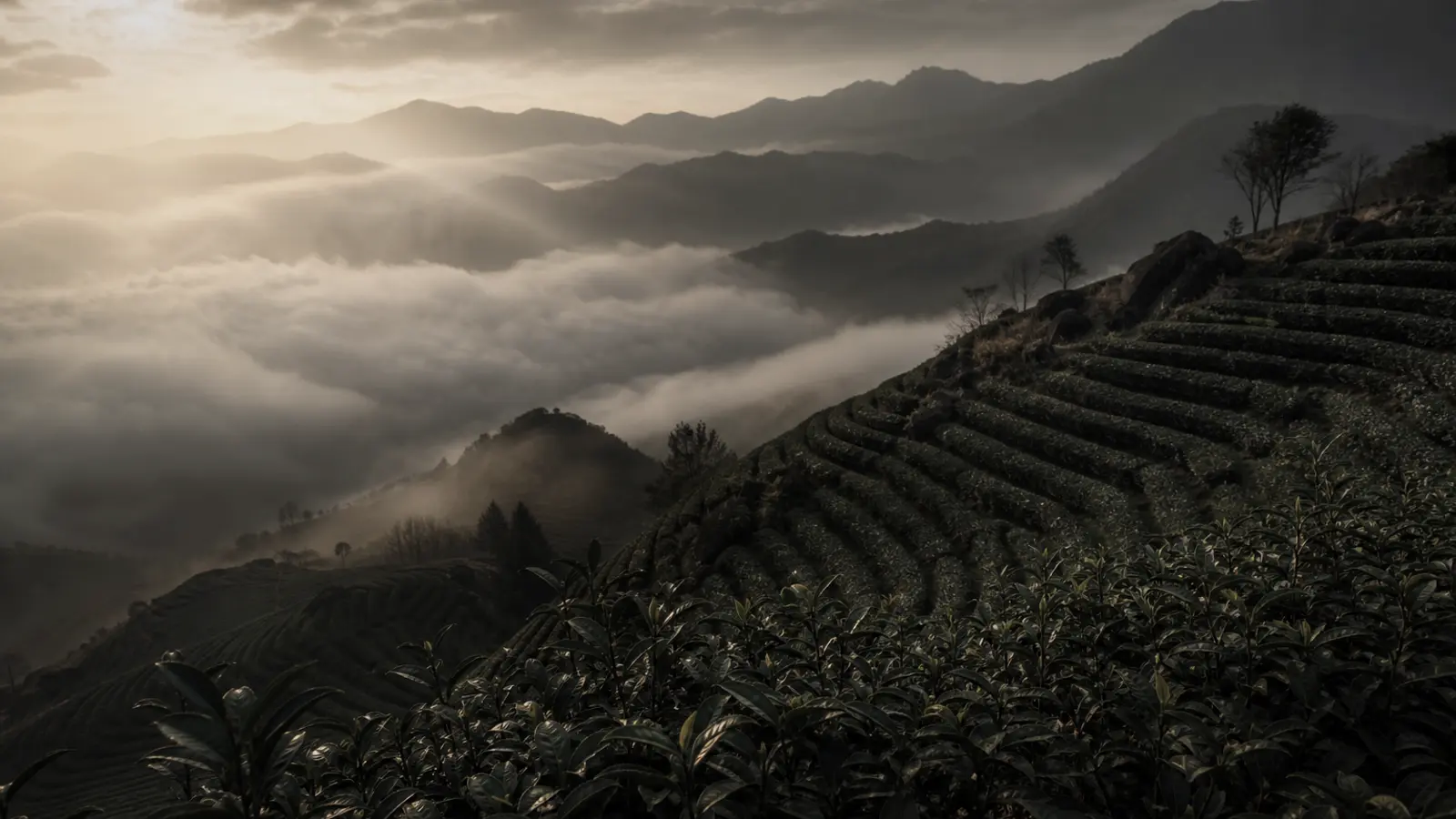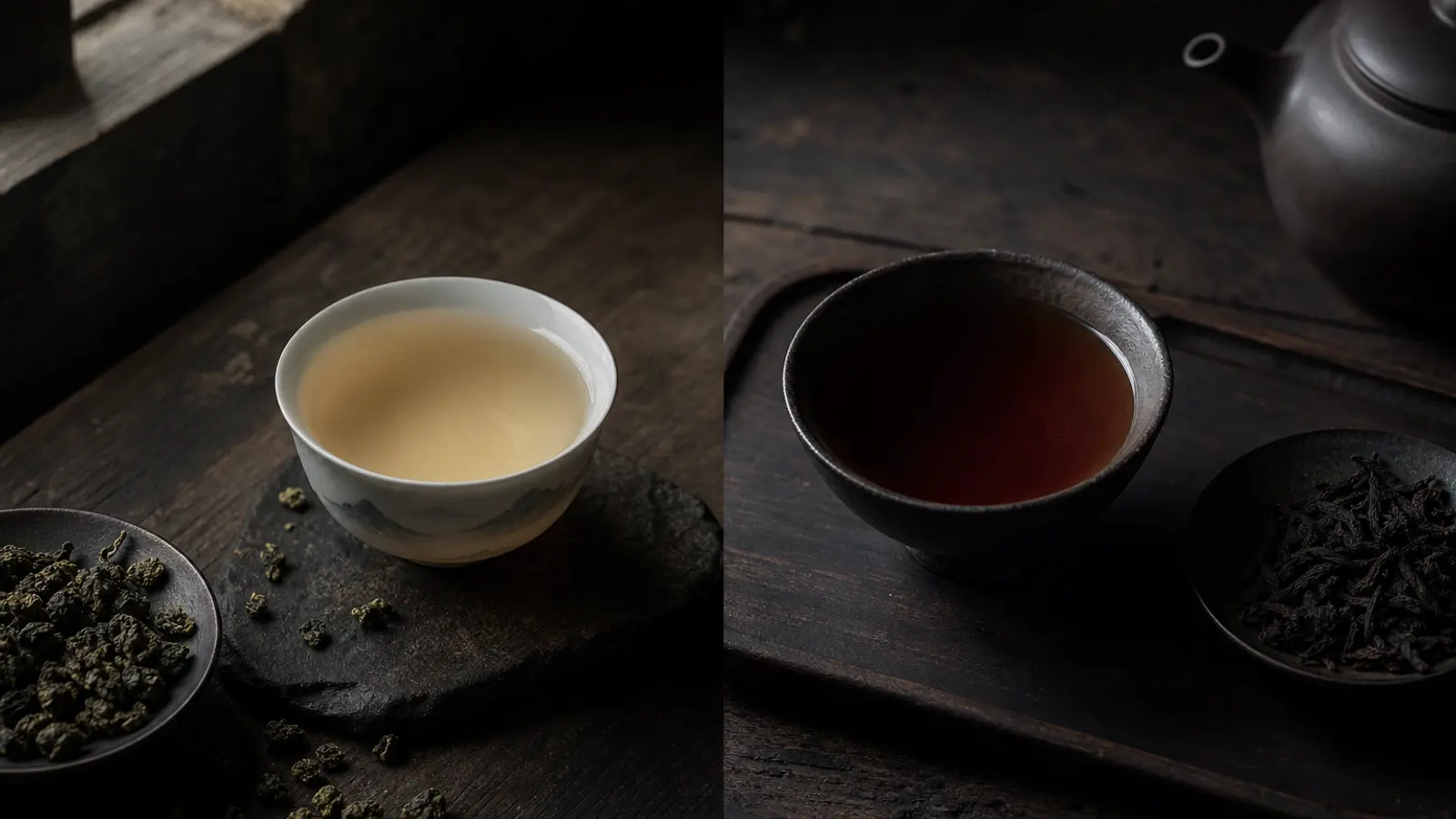
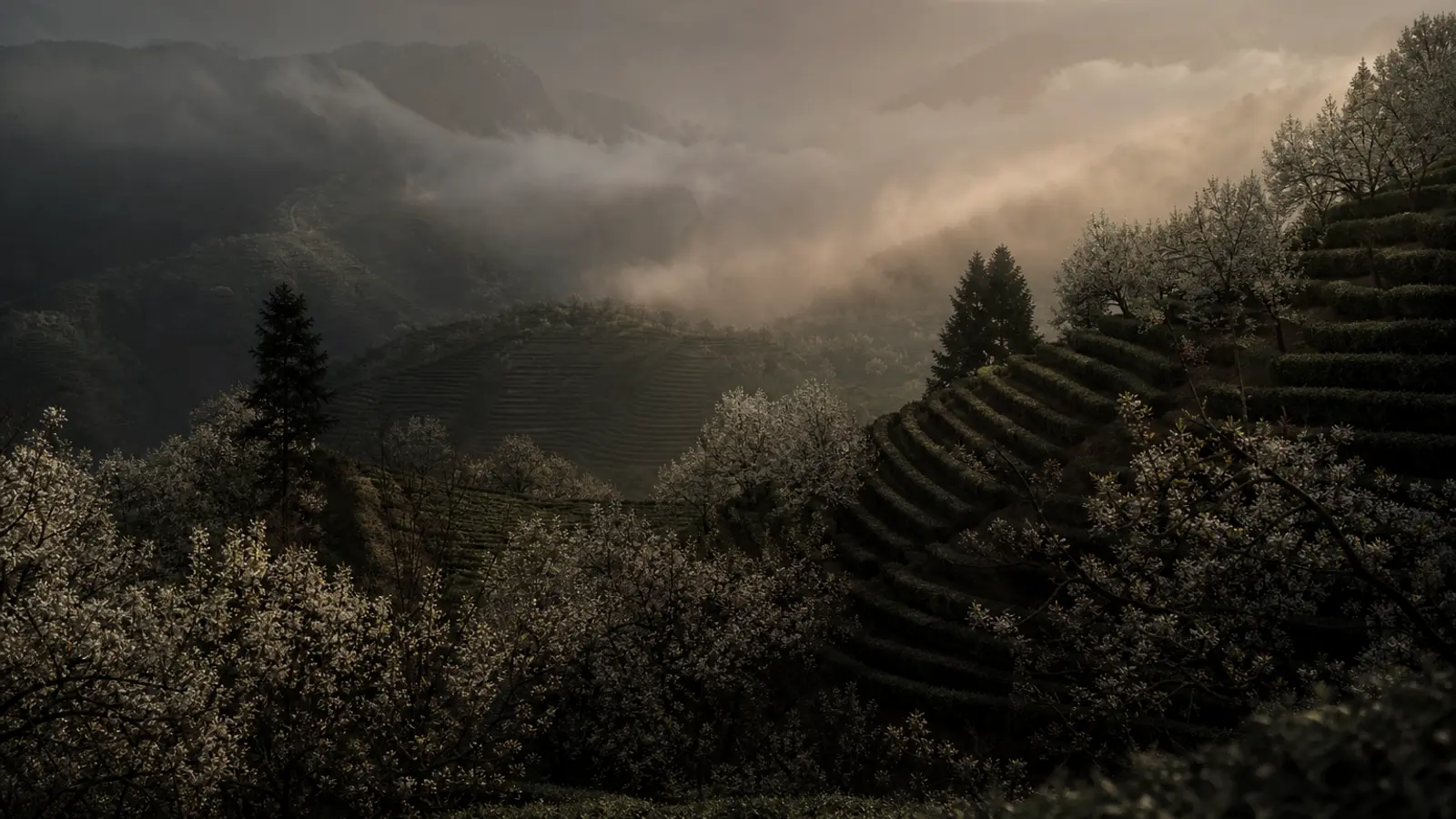
Li Shan (梨山, Pear Mountain) is one of Taiwan’s most revered oolong origins — a high-altitude growing area between 1,800 and 2,400 meters in Taichung’s Central Mountain Range that produces li shan oolong with orchid aromatics, mineral depth, and a concentration that lower elevations simply cannot achieve. If Taiwanese high mountain oolong (高山茶 gāoshān chá) is a category defined by altitude, Li Shan is where altitude stops being a marketing number and starts becoming a tangible, steep-by-steep reality in the cup.
The wine parallel I reach for: Li Shan is the Grands Echézeaux of Taiwanese oolong. Not the absolute pinnacle — that honor belongs to Da Yu Ling (大禹嶺), the La Tâche of this world — but the level where terroir expression becomes truly profound and the price has not yet reached irrational. For many serious drinkers, Li Shan represents the best value in the upper tier. It is the origin where concentration, complexity, and accessibility converge.
Geography & Location
Li Shan sits in Heping District (和平區), Taichung City, deep within Taiwan’s Central Mountain Range (中央山脈 zhōngyāng shānmài). The broader area occupies a stretch of mountainous terrain roughly centered around 24.2°N latitude, 121.2°E longitude, accessed via the famously serpentine Provincial Highway 8 — the Central Cross-Island Highway (中橫公路 zhōnghéng gōnglù) — and branching mountain roads that remain, in places, only partially stabilized after decades of typhoon and earthquake damage.
The name itself tells part of the story. 梨 (lí) means pear. These slopes were originally developed as pear orchards and temperate fruit farms during the mid-twentieth century, and many tea gardens still exist within a mixed agricultural landscape where pear, apple, and persimmon trees grow alongside Camellia sinensis. The tea didn’t arrive first. It followed the fruit.
Sub-Regions Within Li Shan
Experienced drinkers and producers distinguish several sub-areas within the broader Li Shan appellation. Each sits at a slightly different elevation and aspect, producing subtle but meaningful terroir variations:
-
Tianchi (天池, “Heaven’s Pool”) — Around 2,400 meters. One of the highest sub-areas, named for a small alpine lake nearby. Tianchi teas are known for exceptional clarity and a high-toned, almost crystalline floral character. Production is small. Prices approach Da Yu Ling territory.
-
Huagang (華崗, “Chinese Ridge”) — Approximately 2,300–2,500 meters. Some of the highest-elevation tea production in all of Taiwan occurs here. Huagang teas share Tianchi’s intensity but can display a slightly broader body, depending on garden orientation and processing.
-
Cuifeng (翠峰, “Emerald Peak”) — Roughly 2,200–2,300 meters. Slightly lower than Tianchi or Huagang, Cuifeng produces tea with recognizable Li Shan character but often at a marginally more accessible price point.
-
Fushoushan (福壽山, “Mountain of Blessed Longevity”) — The Fushoushan Farm area reaches above 2,400 meters and is sometimes discussed as a separate origin entirely. Teas labeled Fushoushan carry enormous prestige and pricing to match. Whether Fushoushan is “Li Shan” or its own appellation depends on who you ask. Geographically, it’s part of the same mountain system.
These distinctions matter. A tea labeled generically “Li Shan” may come from gardens at 1,800 meters — still excellent altitude, but a meaningfully different product from a single-garden Tianchi at 2,400 meters. The gap between the lower and upper reaches of this origin is as significant as the gap between a village-level and a premier cru Burgundy.
Climate & Elevation
The defining fact of Li Shan’s terroir is elevation. At 1,800 to 2,400 meters, these are among the highest commercially cultivated tea gardens in the world. The consequences for the tea plant are profound:
Temperature. Average temperatures at 2,000+ meters in central Taiwan run significantly cooler than the lowlands. Winter frosts are routine. Occasional snow falls above 2,200 meters. This cold compresses the growing season severely — Li Shan gardens typically produce only two harvests per year (spring and winter), compared to the three or four possible at lower elevations.
Cloud cover and fog. The mountains generate persistent fog and cloud immersion, particularly during the growing season. This natural shade reduces direct solar radiation, slowing the breakdown of L-theanine into catechins. The result: higher amino acid content relative to polyphenols, which translates directly to sweetness, umami depth, and reduced bitterness in the finished tea.
Diurnal temperature swing. The gap between daytime and nighttime temperatures at 2,000+ meters can exceed 10–15°C. This daily stress cycle forces the plant to accumulate aromatic compounds and sugars as a defense mechanism. In wine, a similar principle explains why high-altitude vineyards in Mendoza or the Moselle produce wines with both aromatic intensity and structural acidity. In tea, the mechanism produces the same dual gift: perfume and backbone.
UV exposure. Despite the fog, the sheer altitude means greater ultraviolet radiation exposure during clear periods. UV stress further drives the production of secondary metabolites — the complex aromatic precursors that processing will later unlock.
The compressed growing season deserves emphasis. A tea plant at 400 meters in Nantou might flush every 40–50 days. At 2,200 meters on Li Shan, the interval stretches to 60 days or longer. The plant grows slowly. Each leaf is denser, smaller, more concentrated. Less leaf means less tea, but what exists carries more per gram.
Soil & Terroir
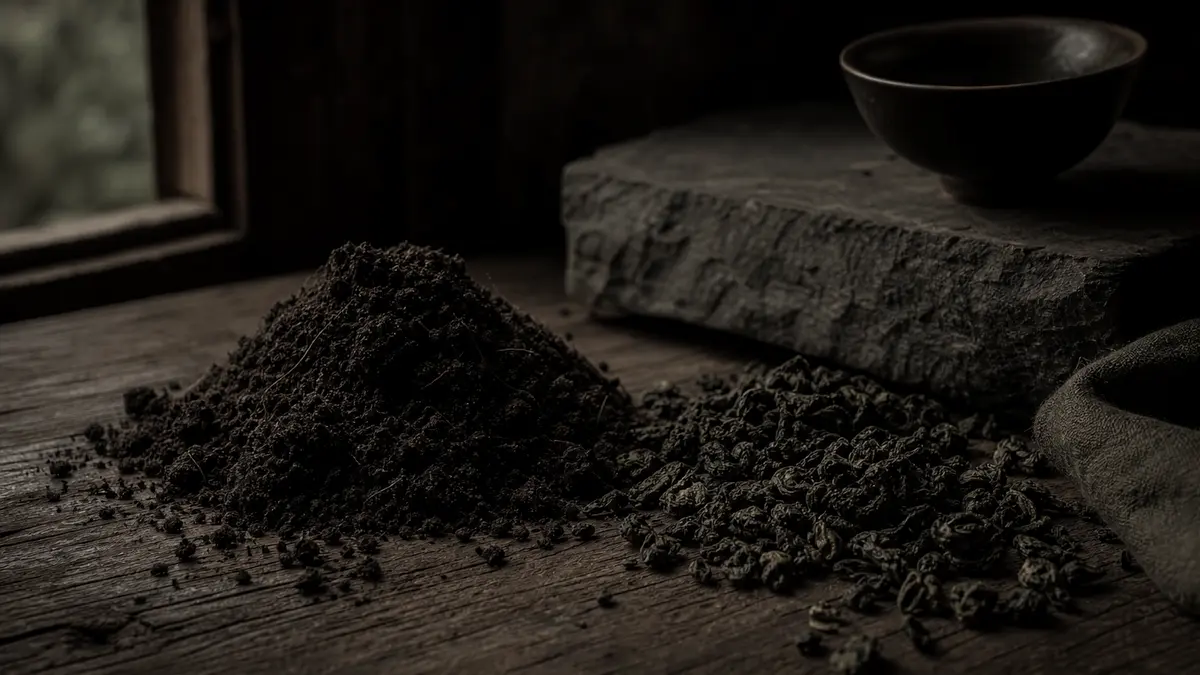
Li Shan’s geology is dominated by the metamorphic and sedimentary formations of Taiwan’s Central Mountain Range — primarily slate, shale, and sandstone substrates that have weathered into rocky, well-drained soils with moderate to low organic content. Drainage is excellent, almost aggressive. Water does not sit on these slopes.
The soil is generally slightly acidic (pH 4.5–5.5), which suits Camellia sinensis well. The rocky substrate provides mineral nutrition without excessive fertility — the plant must work for its sustenance, which further concentrates flavor compounds in the leaf.
The mixed agricultural landscape adds an intriguing dimension. Tea gardens on Li Shan are frequently interspersed with pear trees, apple orchards, and persimmon plantings. Whether the proximity of fruit trees meaningfully influences the tea through soil chemistry, aromatic cross-pollination, or microbial ecology is a hypothesis, not established science. But the fruit-adjacent terroir is distinctive and worth noting. The decomposition of fallen fruit and fruit-tree leaf litter likely contributes to the soil’s microbiome and organic fraction in ways that differ from a monoculture tea plantation. I find this plausible as a contributing factor to Li Shan’s character, though I wouldn’t claim it’s proven.
What I can say with more confidence: the combination of rocky, well-drained soil, extreme elevation, persistent fog, and compressed growing season creates a terroir that fundamentally limits yield while maximizing concentration. This is the same logic that makes steep, rocky, low-fertility vineyard sites in Burgundy or the northern Rhône produce more complex wine than fertile valley floors. The plant that struggles produces more interesting chemistry.
Key Cultivars & Tea Types
The dominant cultivar on Li Shan is Qingxin Oolong (青心烏龍), also known as Ruanzhi (軟枝, “soft stem”). This is the prestige cultivar of Taiwanese high mountain oolong — thin-stemmed, low-yielding, cold-tolerant, and capable of extraordinary aromatic development when grown at altitude and processed with skill.
Qingxin Oolong at 2,000+ meters is a demanding plant. It grows slowly, produces modest yields, and requires hand-picking on terrain that makes mechanical harvest impossible. These constraints are the price of admission for the quality Li Shan delivers.
Some gardens also cultivate Jin Xuan (金萱, TTES #12) at the lower elevations of the Li Shan area (1,800–2,000m). Jin Xuan is hardier and more productive, and it produces a pleasant creamy, milk-like character. But among serious Li Shan producers, Qingxin remains the standard. The prestige market demands it.
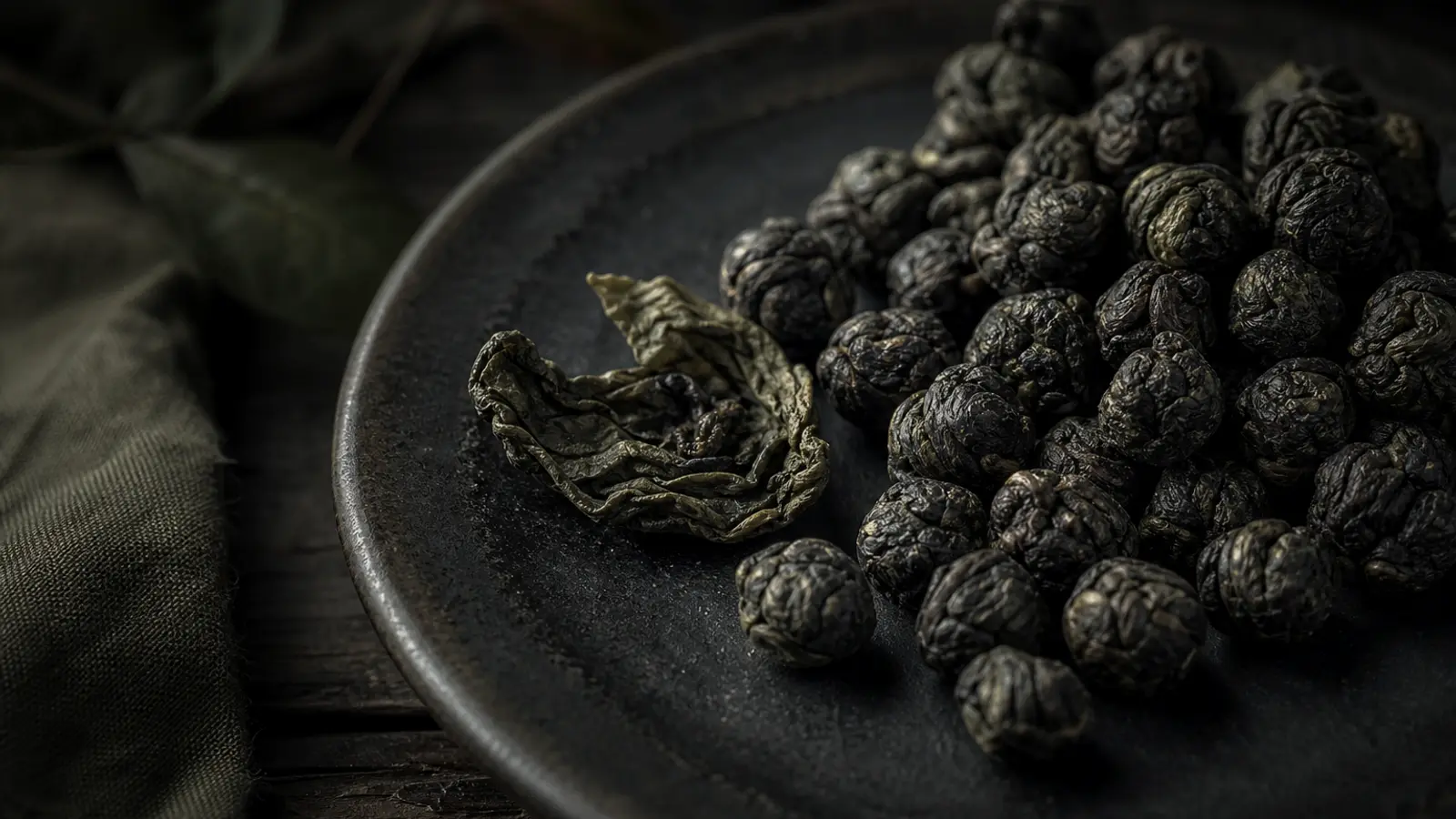
Li Shan oolong is almost universally produced as a lightly oxidized, ball-rolled oolong — oxidation typically 15–25%, shaped into tight semi-spherical pellets, and either left unroasted (清香 qīngxiāng, “clear fragrance” style) or given a light to medium charcoal roast (熟香 shúxiāng, “cooked fragrance” style). The qīngxiāng style dominates the current market and best showcases the floral-mineral character that defines the origin.
Processing Traditions
Li Shan oolong follows the standard Taiwanese high mountain oolong processing sequence, but altitude and climate impose specific constraints:
-
Picking (採摘 cǎizhāi). Hand-harvested, typically one bud and two to three leaves. Spring harvest (春茶 chūn chá) usually runs late April through May; winter harvest (冬茶 dōng chá) from October through November. Winter Li Shan is particularly prized for its sweetness and clarity.
-
Withering (萎凋 wěidiāo). Solar withering is conducted outdoors, but at 2,000+ meters the air is cooler and the sunlight more intense yet intermittent due to cloud cover. Producers must manage moisture reduction more carefully than at lower elevations.
-
Indoor withering and tossing (浪菁 làng qīng). The leaves are gently tumbled or shaken in bamboo trays to bruise cell edges and initiate oxidation. At high altitude, cooler ambient temperatures slow oxidation, giving the producer more control — and demanding more patience.
-
Kill-green (殺菁 shā qīng). Heating in a large rotating drum halts oxidation. Timing is critical: too early and the tea is grassy and underdeveloped; too late and the delicate floral aromatics are overwhelmed by heavier oxidation notes.
-
Rolling and shaping (揉捻 róuniǎn). The leaves are rolled into tight balls using cloth-wrapped compression, a process repeated multiple times over many hours. This mechanical work breaks cell walls, distributing flavor compounds and creating the characteristic semi-spherical shape.
-
Drying (乾燥 gānzào). Final moisture reduction to below 5% for storage stability. Some producers apply a light charcoal roast at this stage; others keep the tea entirely unroasted.
The skill differential between producers matters enormously at Li Shan. The raw material is expensive and limited. A processing error doesn’t just ruin a batch — it wastes leaf that took 60+ days to grow at extreme altitude. The best Li Shan producers have decades of experience reading these specific leaves in this specific climate.
Characteristic Flavor Signatures
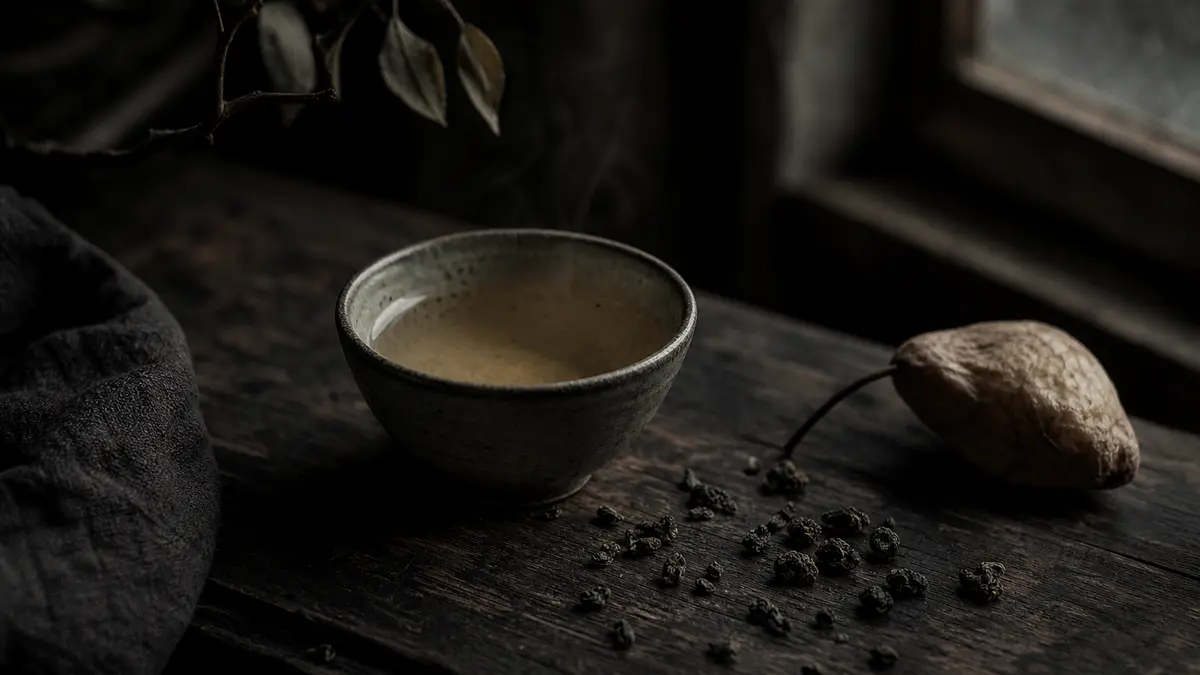
Li Shan oolong sits in a precise position on the spectrum of Taiwanese high mountain oolongs — between Ali Shan’s (阿里山) accessibility and Da Yu Ling’s (大禹嶺) ethereality. That position is not a compromise. It is a distinct expression.
Aroma. The orchid note is more pronounced than in Ali Shan — a piercing floral that lingers in the nasal passage and returns on the exhale. In top examples, it carries a quality I’d describe as luminous: bright without being sharp, persistent without being heavy. There are secondary notes of pear (appropriate, given the mountain’s name), lily, and sometimes a cool, almost mentholated high note.
Body. Li Shan has more mineral structure than lower-elevation origins. The texture is medium-bodied but lean — not the round, buttery mouthfeel of a good Ali Shan, but something more angular, more defined. Think the difference between a Meursault and a Puligny-Montrachet: both white Burgundy, both excellent, but one is broader and richer while the other is tighter and more vertically structured.
Sweetness. The sweetness is present and clear, but it expresses as mineral sweetness rather than confectionery sweetness. The huigan (回甘, returning sweetness) is strong and durable, building across the first several steeps and persisting well into the session.
Evolution. This is where Li Shan distinguishes itself most dramatically. The tea holds its character across many steeps — eight, ten, sometimes twelve infusions before the structure begins to fade. The evolution is subtle and persistent: the floral top notes gradually yield to a deeper minerality, then to a clean, sweet finish that is almost saline in its precision. Li Shan doesn’t crash after steep five the way some high mountain oolongs do. It fades gracefully, like a long finish on a well-structured wine.
Comparison to Ali Shan. Ali Shan (1,000–1,600m) produces rounder, more immediately approachable oolongs with a butter-cream character and softer florals. Li Shan’s additional 600–1,000 meters of elevation translates to more concentration, more mineral structure, a sharper floral register, and greater persistence. Ali Shan is the welcoming introduction. Li Shan is where you go when you want the terroir to assert itself.
Comparison to Da Yu Ling. Da Yu Ling (2,400–2,600m) sits above Li Shan in both elevation and mystique. Da Yu Ling can achieve an almost otherworldly delicacy — a transparency where the tea seems to vanish into pure sensation. Li Shan doesn’t quite reach that plane, but it offers more body and grip, which some drinkers actually prefer. Da Yu Ling is transcendent but ghostly. Li Shan is concentrated and present.
Quality Indicators & Authentication
Authenticity is a real concern at Li Shan’s price tier. Several markers help distinguish genuine high-altitude Li Shan oolong from lower-elevation teas sold under the name:
-
Leaf appearance. Tightly rolled, uniformly sized balls with a slight powdery bloom. Color should be deep olive green (for qīngxiāng style). Leaves that are too dark or too yellow suggest either over-oxidation or lower elevation.
-
Wet leaf. After steeping, genuine high-altitude Li Shan leaves should unfurl into large, intact leaves with visible red-brown edges from controlled oxidation. The leaf tissue should be thick and supple — thicker than leaves from 1,000m origins.
-
Aroma persistence. The orchid floral should be evident from the dry leaf, intensify in the first steep, and persist through at least six infusions. A tea that smells floral dry but flattens after two steeps is likely not from 2,000+ meters.
-
Mineral backbone. The lean, mineral quality in the mid-palate is difficult to fake through processing. Lower-elevation teas can be made to smell floral, but the structural minerality of true high-altitude leaf is a product of terroir, not technique.
-
Steep endurance. Li Shan should deliver meaningful flavor through eight or more steeps at standard gongfu parameters (5–6g per 110ml gaiwan, 90–95°C water, 30-second initial steep increasing gradually). If the tea collapses after four or five steeps, it is unlikely to be genuine high-altitude production.
Competition-grade teas (比賽茶 bǐsài chá) from Li Shan undergo formal judging and carry certification that adds a layer of authentication — and a significant price premium.
Price Ranges
Li Shan oolong occupies the premium tier of Taiwanese high mountain oolong pricing:
| Grade | Price (USD per 50g) | Notes |
|---|---|---|
| Standard Li Shan (1,800–2,000m) | $10–$18 | Reliable quality, lower sub-areas |
| Single-garden Li Shan (2,000–2,300m) | $18–$30 | Named sub-region, specific garden |
| Tianchi / Huagang (2,300–2,500m) | $25–$50+ | Highest sub-regions, limited production |
| Competition-grade | $40–$80+ | Award-winning lots, certified |
These are international export prices. In Taiwan’s domestic market, particularly at source in the Li Shan area itself, prices may be 15–25% lower for equivalent quality, though the best lots are increasingly sold directly to collectors at prices that match or exceed export levels.
For context: Ali Shan oolong ranges from roughly $5–$15 per 50g for standard production. Da Yu Ling starts around $40 per 50g and can exceed $100 per 50g for top lots. Li Shan sits precisely between them — expensive enough to demand attention, affordable enough (relatively) to drink with some regularity. This is why I call it the Grands Echézeaux position: genuine greatness at a price that doesn’t require a special occasion.
The Concentration Principle
What Li Shan teaches, ultimately, is that concentration in tea — as in wine — is not just about intensity. It is about density of information per sip. A concentrated tea doesn’t shout. It speaks at normal volume but says more with each word.
The compressed growing season, the rocky soil, the fog, the cold, the UV stress, the slow flush intervals — all of these constraints reduce yield and increase what each leaf carries. A Li Shan leaf that took 60 days to grow at 2,200 meters contains more of everything — more amino acids, more aromatic precursors, more structural compounds — than a leaf that grew in 40 days at 800 meters.
You taste that difference as persistence. As the floral note that’s still there on steep eight. As the mineral sweetness that builds rather than fades. As the feeling, 90 minutes into a session, that the tea still has something to say.
That is the art of concentration. Li Shan embodies it.