Shan State (ရှမ်းပြည်နယ်, pronounced roughly “Shan Pyay Nay”) occupies the eastern highlands of Myanmar, covering approximately 155,800 square kilometers — the largest administrative division in the country. Its tea-producing areas cluster in the highland zones between approximately 20°N and 22°N latitude, and 97°E to 100°E longitude, with the most significant concentrations in the eastern hill districts near Kengtung (ကျိုင်းတုံ) and in the northern uplands toward the Chinese border.
The borders tell the geological story. To the northeast, Shan State meets Yunnan Province, China — specifically the Xishuangbanna (西雙版納) and Dehong (德宏) prefectures that produce the world’s most celebrated ancient-tree pu-erh. To the southeast, it borders Laos. To the south and southwest, it connects to Thailand’s Chiang Rai and Chiang Mai provinces, the northern highlands that contain their own ancient tea tree populations.
Shan State is not geographically isolated from these famous tea regions. It is geographically continuous with them. The mountain ranges, river systems, and soil types that define Yunnan’s great tea mountains do not stop at the international border — they continue, largely undocumented, into the Shan Plateau.
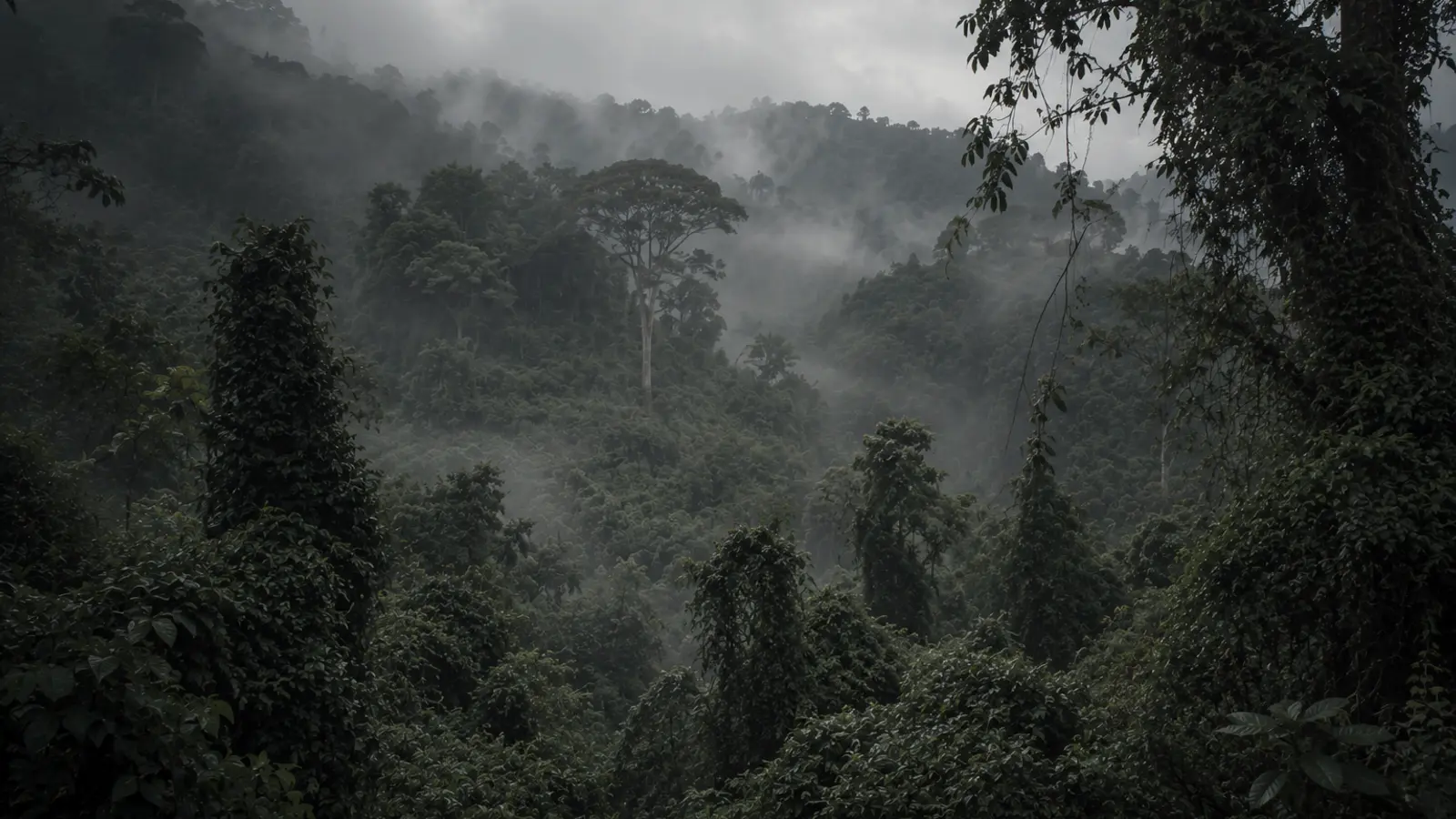
The Salween River (စစ်တောင်းမြစ်, Thanlwin River) runs through the heart of Shan State from north to south, carving deep valleys between highland ridges. The Mekong forms part of the eastern border. These river systems create the same kind of altitude gradients and microclimatic diversity that produce Yunnan’s famous terroir variations — cool misty ridges above warm river valleys, with elevation changes of 1000 meters or more within short horizontal distances.
Geography & Location
Shan State (ရှမ်းပြည်နယ်, pronounced roughly “Shan Pyay Nay”) occupies the eastern highlands of Myanmar, covering approximately 155,800 square kilometers — the largest administrative division in the country. Its tea-producing areas cluster in the highland zones between approximately 20°N and 22°N latitude, and 97°E to 100°E longitude, with the most significant concentrations in the eastern hill districts near Kengtung (ကျိုင်းတုံ) and in the northern uplands toward the Chinese border.
The borders tell the geological story. To the northeast, Shan State meets Yunnan Province, China — specifically the Xishuangbanna (西雙版納) and Dehong (德宏) prefectures that produce the world’s most celebrated ancient-tree pu-erh. To the southeast, it borders Laos. To the south and southwest, it connects to Thailand’s Chiang Rai and Chiang Mai provinces, the northern highlands that contain their own ancient tea tree populations.
Shan State is not geographically isolated from these famous tea regions. It is geographically continuous with them. The mountain ranges, river systems, and soil types that define Yunnan’s great tea mountains do not stop at the international border — they continue, largely undocumented, into the Shan Plateau.
The Salween River (စစ်တောင်းမြစ်, Thanlwin River) runs through the heart of Shan State from north to south, carving deep valleys between highland ridges. The Mekong forms part of the eastern border. These river systems create the same kind of altitude gradients and microclimatic diversity that produce Yunnan’s famous terroir variations — cool misty ridges above warm river valleys, with elevation changes of 1000 meters or more within short horizontal distances.
Climate & Elevation
Elevation across Shan State’s tea regions ranges from roughly 800 meters in lower valley areas to approximately 2000 meters on the higher plateau ridges. The Shan Plateau itself averages around 900–1000 meters — meaning even the “low” areas sit at elevations that would be considered respectable mountain growing territory in other parts of Asia.
The climate is a tropical monsoon highland type, structurally similar to adjacent Yunnan and northern Thailand. Distinct wet and dry seasons define the agricultural rhythm: monsoon rains arrive between May and October, depositing 1200–2000mm of annual rainfall depending on elevation and aspect. The dry season — November through April — brings cooler temperatures, lower humidity, and the conditions that allow spring flush to develop slowly once rains return.
Temperature ranges at altitude are significant. During winter months at 1500+ meters, nighttime temperatures can approach 5–8°C, creating genuine cold stress on tea plants. This diurnal temperature variation — warm days, cold nights — is one of the factors that tea researchers associate with higher catechin and aromatic compound development in leaf material. The same mechanism operates in Yunnan’s Lincang (臨滄) mountains and in Darjeeling.
Historically, access limitations have prevented systematic climate monitoring across Shan State’s tea regions, so the data I’m drawing on here extrapolates from available highland meteorological stations and adjacent Yunnan records, plus what field reporters have documented during periods of relative access. A comprehensive climate study of Shan State tea zones does not yet exist in the English literature.
Soil & Terroir
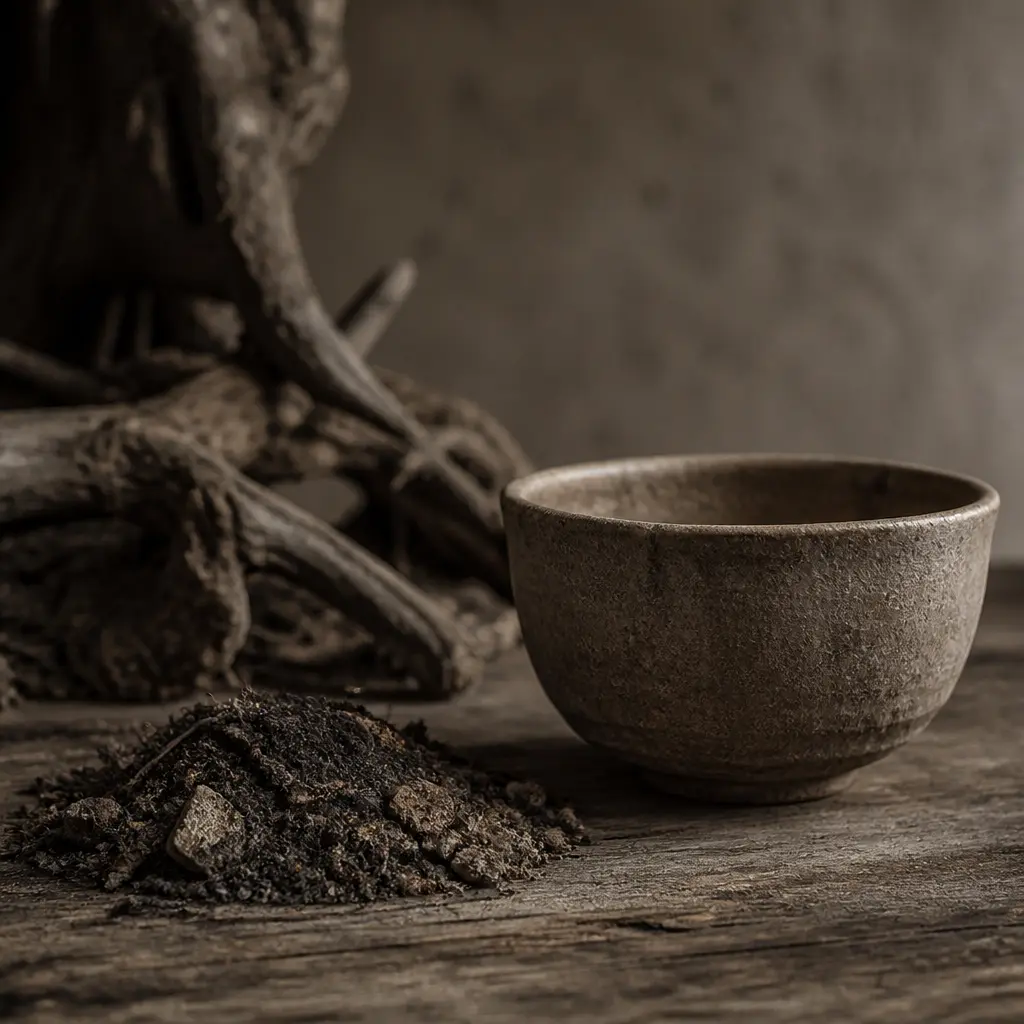
The soils of Shan State’s tea-producing highlands are primarily laterite and metamorphic-derived — iron-rich, often reddish, with moderate to low pH. This is geologically the same substrate that underlies Yunnan’s famous tea mountains. The Shan Plateau shares its deep geological origins with the broader Indochina terrane, which has been pushing against the Eurasian plate for millions of years, producing the corrugated highland terrain of the entire Greater Mekong Subregion.
Lateritic soils are well-draining, which forces tea plant roots to develop deeply in search of water and nutrients. Deep root systems in old trees are generally associated with greater mineral complexity in the leaf — though I want to be careful here not to overstate what remains a hypothesis rather than a measured finding specific to Shan State. This root-depth-to-complexity relationship is better documented in Yunnan; for Shan State, it’s a reasonable inference from comparable conditions.
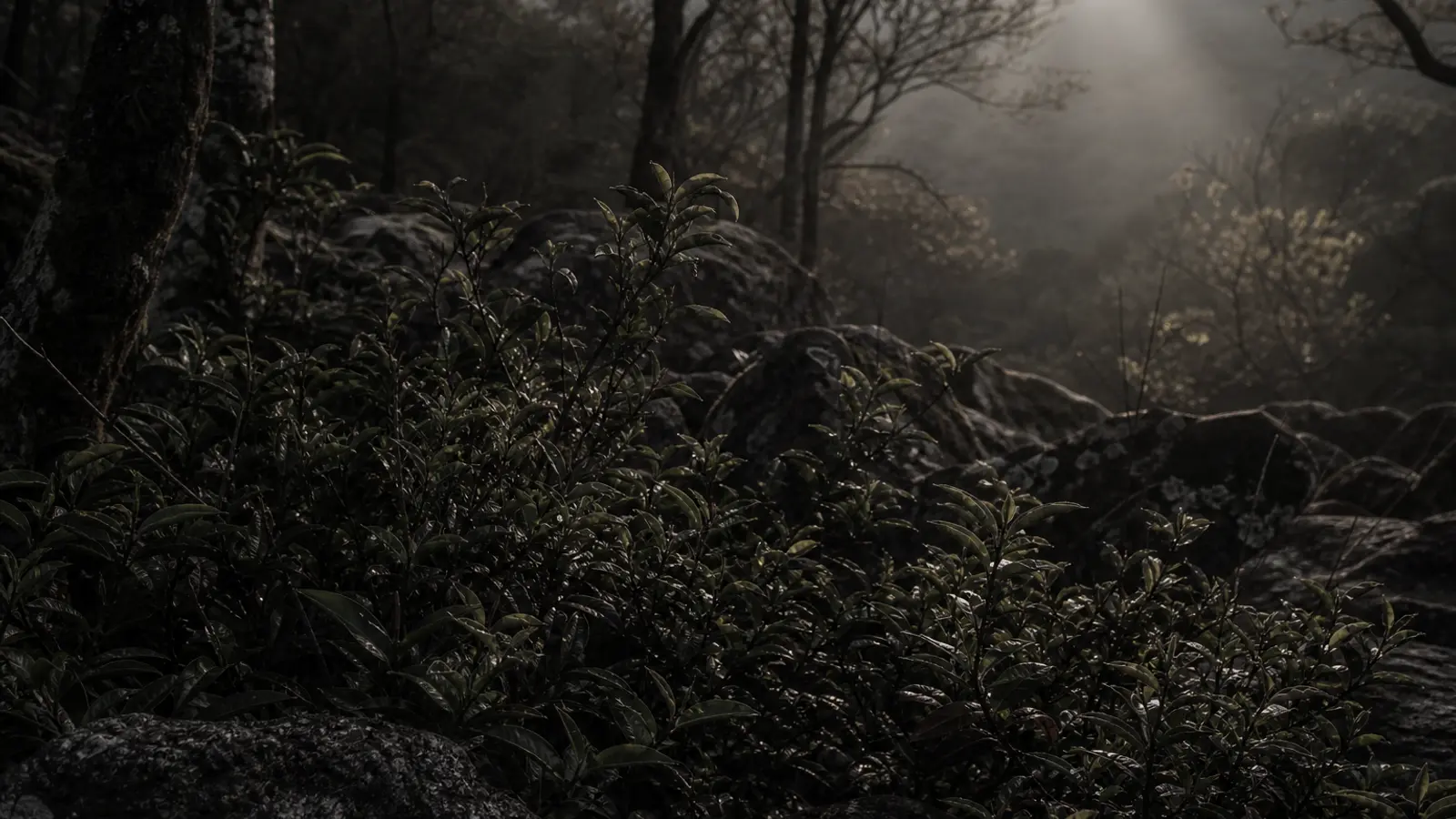
The forest environments where Shan State’s wild and semi-wild trees grow add a terroir dimension that managed gardens cannot replicate. Undisturbed forest soil contains complex mycorrhizal networks, layered organic matter, and ecological diversity that influence the biochemical environment of the root zone in ways that monoculture tea cultivation destroys. When researchers describe the “different” character of genuine wild-tree material, this forest ecosystem context is likely part of the explanation.
Key Cultivars & Tea Types
The dominant botanical type in Shan State’s ancient forests is Camellia sinensis var. assamica (大葉種, dà yè zhǒng — “large-leaf variety”). This is the same broad-leaf variety found across Yunnan, Assam, and the tea forests of northern Thailand and Laos. Given the geological and ecological continuity of the Greater Mekong Subregion, the presence of assamica in Shan State is botanically expected.
What makes the Shan State situation distinctive is the age profile and the lack of management history. Yunnan’s famous ancient tree gardens — places like Laobanzhang (老班章), Yiwu (易武), and Nannuo (南糯山) — contain old trees, but these are trees that have been harvested, pruned, and managed within human agricultural systems for centuries. Wild trees in Shan State’s more remote highland forests have no comparable management history. They are feral. Some have never been harvested at all.
Researchers who have accessed these zones during periods of relative stability have estimated ages exceeding 1000 years for specimens in the most remote forest areas. The methodology for aging tea trees remains imperfect — tree ring analysis is complicated by tropical growth patterns, and non-destructive dating requires statistical inference — but multiple independent reports are consistent about the extraordinary antiquity of some populations.
There is also significant genetic diversity within Shan State’s wild populations. The region sits within or near what some botanists consider the probable origin zone for Camellia sinensis itself, meaning wild genetic variation here may exceed what is found in cultivated populations anywhere. This is a point where the scholarship remains active and contested, but the hypothesis has serious support.
Locally produced tea types include:
- Green and semi-processed leaf for local consumption, prepared by the Palaung (ပလောင်), Pa-O (ပအိုဝ်း), and Shan ethnic minorities using traditional methods
- Laphet (လပက်) — fermented tea leaf prepared as food, not beverage (discussed in detail below)
- Compressed cakes similar to Yunnan sheng pu-erh, produced in small quantities by producers with access to presses and Chinese-influenced processing knowledge
- Dried loose leaf sold through border markets into Yunnan and Thailand
Processing Traditions
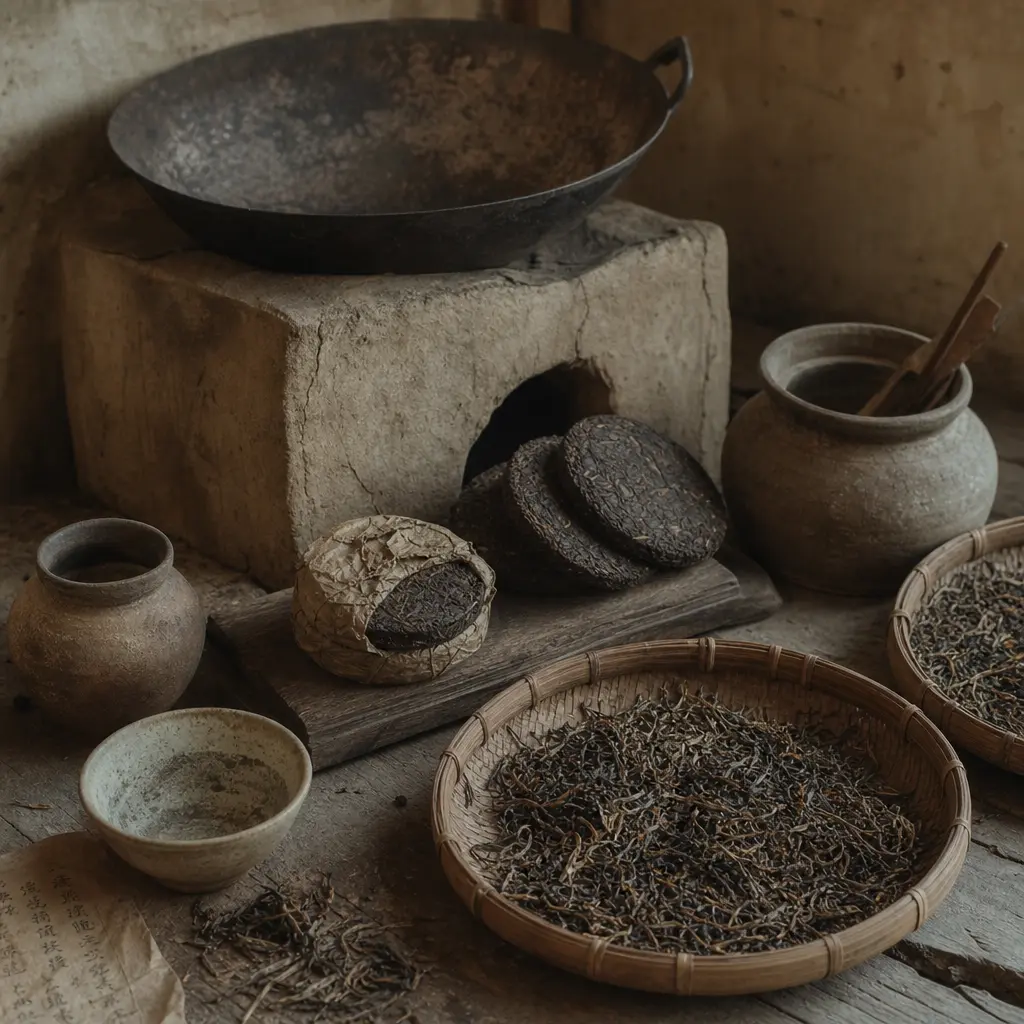
The most distinctive processing tradition in Shan State is not a tea beverage at all — it is laphet (လပက်), the fermented tea leaf salad that represents one of the oldest documented forms of tea consumption anywhere on earth.
Laphet involves picking mature tea leaves, briefly steaming or blanching them to arrest initial enzymatic activity, then packing them into bamboo cylinders or clay vessels and allowing them to ferment under anaerobic conditions for weeks to months. The resulting product is consumed as food — dressed with oil, garlic, dried shrimp, peanuts, and other accompaniments. It is eaten, not steeped.
This practice almost certainly predates the development of tea as a beverage in the region. Ethnobotanists working in the Greater Mekong Subregion have pointed to laphet and similar traditions among highland minorities in Yunnan, Laos, and Thailand as evidence that “tea” began as a food and medicine before evolving into a drink. The Shan Plateau, sitting at the geographic center of this cultural complex, likely preserves one of the oldest continuous forms of tea consumption in existence.
For the beverage tea tradition, processing methods vary considerably by community and by access to outside markets:
- Traditional minimal processing: Leaves sun-dried or shade-dried with minimal fixation, producing a green-to-yellow leaf with high enzymatic potential — similar in concept to very traditional Yunnan sheng
- Chinese-influenced pu-erh-style processing: Wok fixation (殺青, shāqīng) to arrest oxidation, rolling, sun-drying, occasional compression — this method has diffused across the border from Yunnan and is used by producers targeting the Chinese and Thai export markets
- Black tea processing: Full oxidation and drying, producing teas destined for local consumption or the less discerning export market through border channels
Quality control and consistency are significant variables. Without the infrastructure of established tea-producing regions — proper drying facilities, clean compression environments, consistent fixation temperatures — batch-to-batch variation is high. This is not a criticism; it is the expected reality of an emerging origin with limited infrastructure.
Characteristic Flavor Signatures
Here I must be most explicit about the limits of what I know directly. I am working from published tasting notes by researchers and vendors who have accessed and evaluated Shan State material — not from my own sessions. I will report what multiple sources converge on, while flagging that the dataset is small and selection bias is real (the samples that make it to professional evaluators are not a random draw from Shan State’s total production).
That said, multiple independent evaluations of genuine wild-tree Shan State material report a consistent set of characteristics:
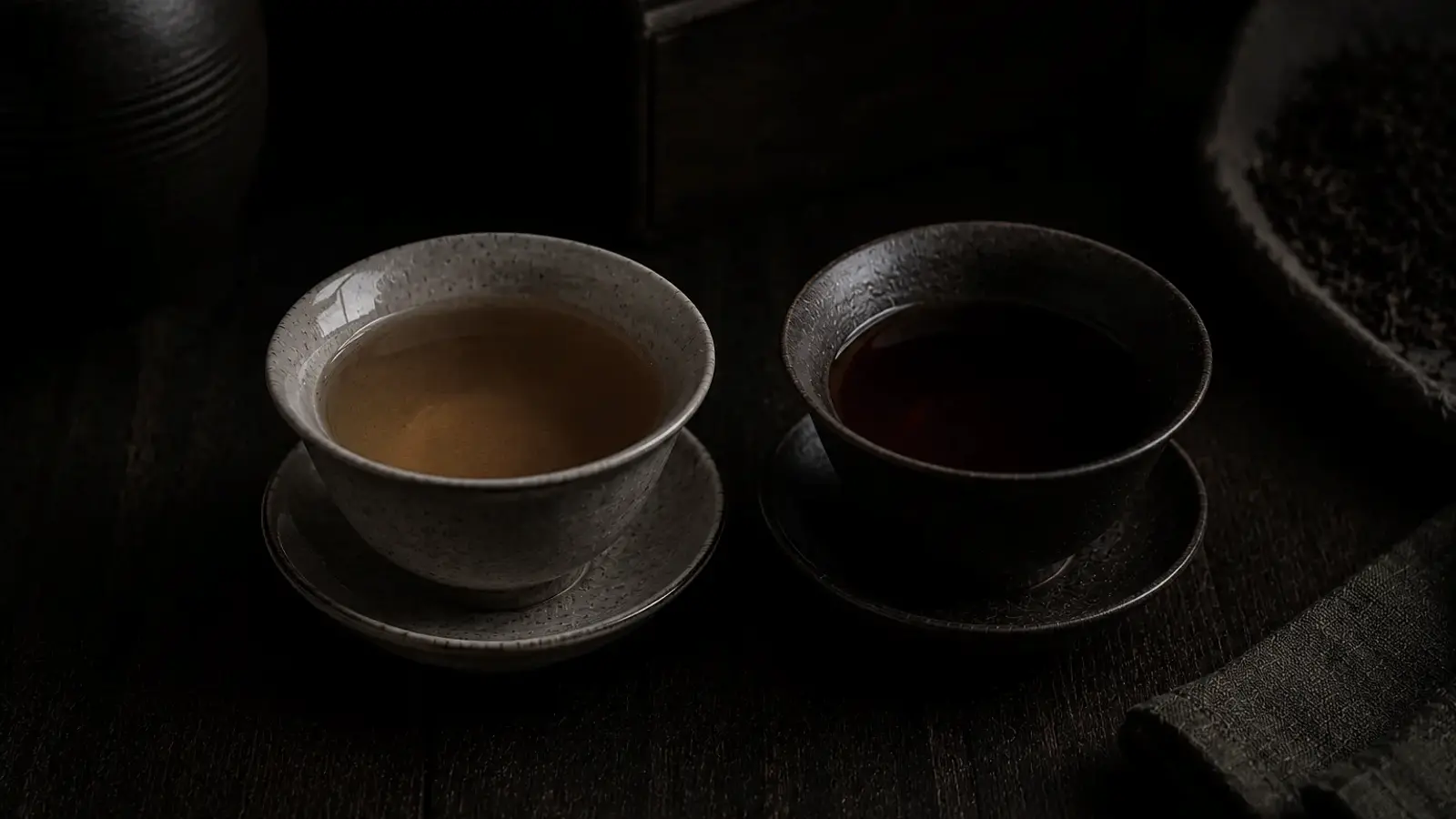
Aroma: High aromatic complexity, often described as forest-floor earthiness combined with pronounced floral or fruity high notes. Some sources describe an almost medicinal camphor quality similar to what is found in very old Yunnan trees, but described as “wilder” — less polished, more elemental.
Mouthfeel: Thick, oily texture with strong astringency from young-tree material, but in genuine old-tree material, a full coating texture with lower bitterness than leaf size would suggest. The huigan (回甘, the sweet returning aftertaste that appears minutes after swallowing) is described as pronounced and lingering.
Flavor arc: Long steeping sessions show complexity across many infusions. Early steeps are reported as intense and somewhat rough; mid-session steeps as sweeter and more aromatic; later steeps as lighter but persistent. This multi-infusion depth is a characteristic associated with genuine ancient-tree material throughout the Greater Mekong Subregion.
Bitterness profile: High catechin content likely produces significant bitterness, especially in less carefully processed material. Old wild trees theoretically moderate this somewhat — older trees have different leaf chemistry than young plantation plants — but without careful fixation and processing, astringency can dominate.
Comparison point: The flavor profile likely has more in common with Yunnan’s wilder Lincang or Mengku (勐庫) material than with the polished profiles of famous Xishuangbanna mountains. Think raw edges and forest complexity over refined elegance. That’s a hypothesis, not a tasting note.
Quality Indicators & Authentication
Authenticating myanmar shan state tea is one of the hardest problems in specialty tea sourcing today. The structural factors working against verification are severe:
Fragmented supply chains: Tea passes through multiple hands — local picker to village aggregator to border trader to Thai or Yunnan middleman to exporter — with documentation degrading at each step. By the time material reaches an international buyer, original provenance may be entirely unverifiable.
The Yunnan relabeling problem: A documented but poorly quantified phenomenon: Shan State leaf entering Yunnan through the Muse (မူဆယ်) / Ruili (瑞麗) border crossing, where it enters Yunnan supply chains and may be pressed and sold as Yunnan gu shu (古樹, old tree) tea. The economic incentive is clear — Yunnan gu shu commands premium prices; Shan State material currently does not. If this relabeling is as widespread as some sourcing-focused researchers suggest, then some percentage of inexpensive “Yunnan gushu” in global circulation is actually Shan State material. There is no reliable way for end buyers to distinguish these products without DNA analysis of the leaf material, which is expensive and not commercially standard.
What genuine material should show: Vendors who have conducted field verification tend to describe Shan State material by its morphological characteristics — large assamica leaves, often with irregular surface texture consistent with trees grown without pruning, sometimes with unusual coloration or leaf shape variation reflecting the genetic diversity of wild populations. Compression quality on cakes is often rougher than Yunnan commercial product. Storage and transport conditions may introduce variability.
Vendor documentation: The most meaningful quality signal available to international buyers is the depth and specificity of vendor documentation — field photographs, GPS-tagged tree locations, producer relationships documented over multiple seasons. This kind of documentation exists for a small number of offerings from vendors with genuine Shan State sourcing experience. Absent that level of documentation, provenance claims should be treated skeptically.
For anyone evaluating Shan State material, I would ask:
- Can the vendor name the specific township or village of origin?
- Can they document the processing method and who performed it?
- Is there third-party testing for pesticide residue and heavy metals?
- What is the vendor’s chain of custody from tree to buyer?
Most offerings on the market will not be able to answer all four questions. That doesn’t automatically mean the material is fraudulent — documentation infrastructure simply doesn’t exist for most Shan State production. But buyers should calibrate their premium accordingly.
The Political Reality
No honest terroir profile of myanmar shan state tea can avoid the political context. Since the February 2021 military coup, Myanmar has been in a state of profound civil conflict. The consequences for Shan State’s tea trade are severe.
Much of Shan State’s tea-producing highland territory is administered not by the central Myanmar government but by armed ethnic organizations — the Restoration Council of Shan State (RCSS), the Shan State Army, Pa-O National Liberation Organization, and others. Control is fragmented and contested. Access for outside researchers, journalists, or buyers requires navigating ethnic ceasefire politics that change faster than supply chains can adapt.
This fragmentation means:
- No consistent export documentation: Tea cannot be reliably certified for origin, age, or quality through any recognized certification body
- Currency and payment complexity: International banking restrictions on Myanmar make payment to local producers difficult; hawala-style value transfer systems are common
- Physical access limitations: Tea gardens in remote highland areas may be inaccessible for months at a time due to conflict, road conditions, or security restrictions
- Price distortion: The risk premium embedded in any genuine Shan State supply chain means that the economics either push material into the black-market relabeling pipeline (where it gets laundered into Yunnan supply chains) or make verified material expensive to source transparently
For buyers interested in supporting local producers directly, these constraints are not academic — they represent genuine ethical complexity. Purchasing Shan State material through opaque channels may fund armed actors in the supply chain. Purchasing through the few vendors who have done serious due diligence and can document their chain of custody is a different proposition.
The situation may change. Political contexts shift. But as of this writing, accessing verified, ethically sourced myanmar shan state tea requires significant effort and a high tolerance for uncertainty.
The Laphet Tradition and Its Significance
I want to return to laphet (လပက်) because it deserves more than a processing footnote. The fermented tea leaf tradition of Shan State represents living evidence of tea’s role as food before it became beverage — and this distinction has implications for understanding what tea was to its first human users.
The Pa-O and Palaung peoples, along with Shan communities, have maintained laphet traditions for generations that predate any written record. The practice shares structural similarities with other fermented tea food traditions found in Yunnan (where miang and similar practices persist among Bulang and other ethnic minorities), in Laos, and in northern Thailand. The geographic distribution of these practices traces a rough arc across the Greater Mekong Subregion — precisely the zone where Camellia sinensis is thought to have originated and where the oldest known wild trees grow.
The implication: the oldest human relationship with tea plants in this region was not a cup of steeped leaf. It was a fermented, preserved, eaten food. Tea as medicine. Tea as nutrition. Tea as preserved protein vehicle. The beverage culture we associate with tea today — the Chinese literati gongfu (功夫茶) tradition, the Japanese ceremony, the British afternoon ritual — all of this came later and elsewhere, after tea had been domesticated and diffused outward from its origin forest.
Shan State’s laphet tradition is a living connection to that pre-beverage relationship. This matters for how we think about terroir — not just as flavor and soil chemistry, but as the full human ecology of a plant and its people.
The Wine Parallel
If I were mapping Shan State to a wine analogy, I would reach for Georgia (the country) circa 2005 — not because the wines are similar, but because the situation is structurally parallel.
Georgia had ancient winemaking traditions (8000-year-old qvevri fermentation vessels) and unique autochthonous varieties found nowhere else on earth. It was politically complicated (post-Soviet, contested territory, fragmented infrastructure). Almost no Western critics had paid serious attention. The few bottles that reached export markets were expensive to source, inconsistently produced, and hard to authenticate. And the potential, once people actually got access to the material, was extraordinary.
That’s Shan State tea. The ancient trees exist. The genetic diversity is real. The terroir — forest-grown wild assamica at elevation, in geologically continuous terrain with Yunnan’s greatest mountains — is legitimate. The difficulty of access is not a marketing story; it is a genuine constraint that will eventually ease as political conditions evolve.
The discovery phase for Shan State tea has barely begun. The few vendors who have made the effort to source transparently from this region are doing genuinely frontier work. When the access eventually improves — when researchers can document the ancient populations systematically, when processing infrastructure develops, when supply chains can be traced and verified — this region has the potential to produce material that will reframe how the specialty tea world thinks about origin and antiquity.
This is not a prediction. It’s a hypothesis with serious supporting evidence. The terrain, the trees, the traditions, and the biochemical reports from the small samples that have reached evaluators all point in the same direction. Whether the market access follows is a political and logistical question, not a terroir question.
What Currently Reaches the Market
To be specific about what is actually available to international buyers:
The primary export channels for myanmar shan state tea are:
Thai border routes via Mae Sai: The Thai border town of Mae Sai (opposite Tachileik/တာချီလိတ်) is the most documented crossing point for Shan State tea entering international commerce. Some material moves through Thai specialty tea traders, occasionally reaching Western-facing vendors. This route is relatively more stable than northern options.
Chinese border via Muse/Ruili: The Muse (မူဆယ်) crossing into Ruili (瑞麗), Yunnan is the highest-volume border crossing for goods of all kinds. Tea moving through here enters Chinese supply chains, where it is indistinguishable to end buyers from domestic Yunnan product unless the importer has made specific efforts to document and segregate it.
Direct small-batch export: A very small number of vendors have established enough producer relationships to import Shan State material directly through formal channels — a slow, expensive process given current Myanmar banking restrictions, but not impossible.
Several Western-facing vendors have offered Myanmar material: some as occasional limited releases when sourcing was possible, others as documented field-trip results when researchers or buyers managed to gain access. These offerings are not consistent product lines and tend to sell out quickly when available. The material that reaches these channels typically commands significant premiums that reflect the sourcing difficulty rather than necessarily the quality ceiling of what the region produces.
Price Ranges
Pricing for verified myanmar shan state tea on the international market is extremely variable and difficult to establish as a reliable reference, for the following reasons:
- Supply is too small and inconsistent to establish market pricing
- Quality documentation varies enormously, making like-for-like comparison nearly impossible
- Premiums reflect sourcing difficulty as much as inherent quality
For the small volumes available through Western-facing specialty vendors, genuine documented Shan State material typically prices in the range of $30–$120 per 100g for processed leaf (loose or compressed), with pricing driven by vendor sourcing documentation, tree age claims, and processing quality. Material with strong provenance documentation commands the higher end of this range.
Material moving through border channels without documentation — which represents most of the actual volume — prices significantly lower at the origin level (multiple sources suggest rough equivalents of $5–$20 per 100g at border trade level), but buyers further down the chain often have no visibility into this pricing layer.
Comparison: equivalent-claim ancient-tree sheng pu-erh from Yunnan’s famous mountains prices between $60 and $400+ per 100g depending on mountain and vintage. If Shan State material is genuinely being laundered into Yunnan supply chains as cheap gushu, it may be appearing on Western markets at $30–$80 per 100g as “Yunnan” product, with buyers unaware of the actual origin.
A Note on Evidence Standards for This Article
I want to close with explicit acknowledgment of where this profile sits epistemically.
Established and well-documented: The geographic and geological continuity with Yunnan; the presence of ethnic minority tea traditions including laphet; the existence of ancient wild tea tree populations as documented by researchers with field access; the political context and its supply chain consequences.
Reported but limited data: The flavor characteristics of Shan State tea material, drawn from the small number of professional evaluations that have been published or documented. The sample size is genuinely small, and selection bias (only the most notable material gets evaluated) is real.
Reasoned hypothesis from analogous data: The specific terroir mechanisms — root depth, forest ecosystem effects, mycorrhizal complexity — projected from better-documented Yunnan parallels onto Shan State conditions. Reasonable, but not confirmed.
Speculation with honest labeling: The market relabeling phenomenon is documented by multiple sourcing-focused reporters but not quantified. The “discovery potential” comparison to Georgia wine is an analogy, not a forecast.
If and when access improves and systematic evaluation of Shan State material becomes possible, this profile will need significant revision. That’s the nature of writing about a frontier. I’ve tried to make the knowledge boundaries as clear as the knowledge itself.