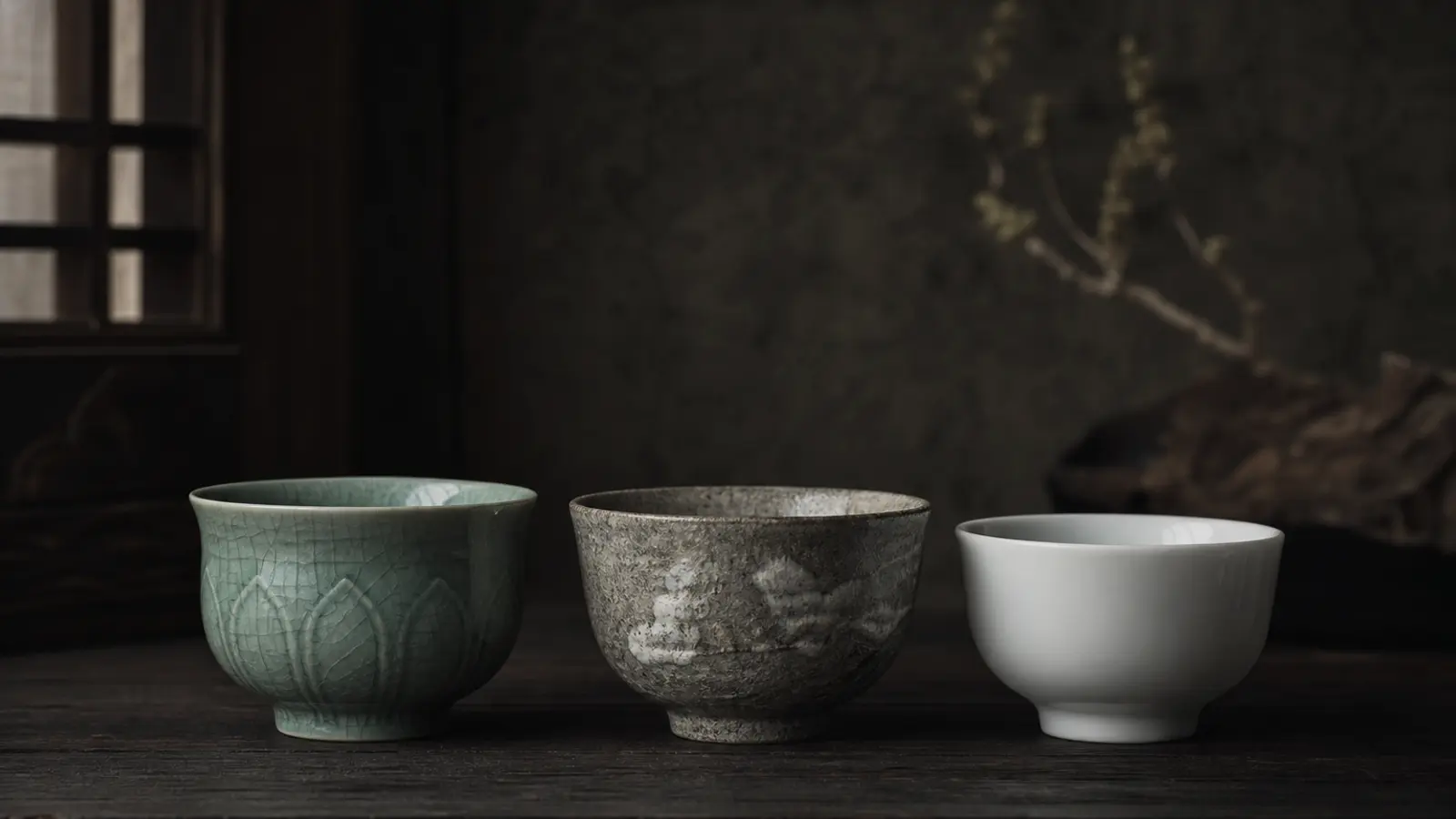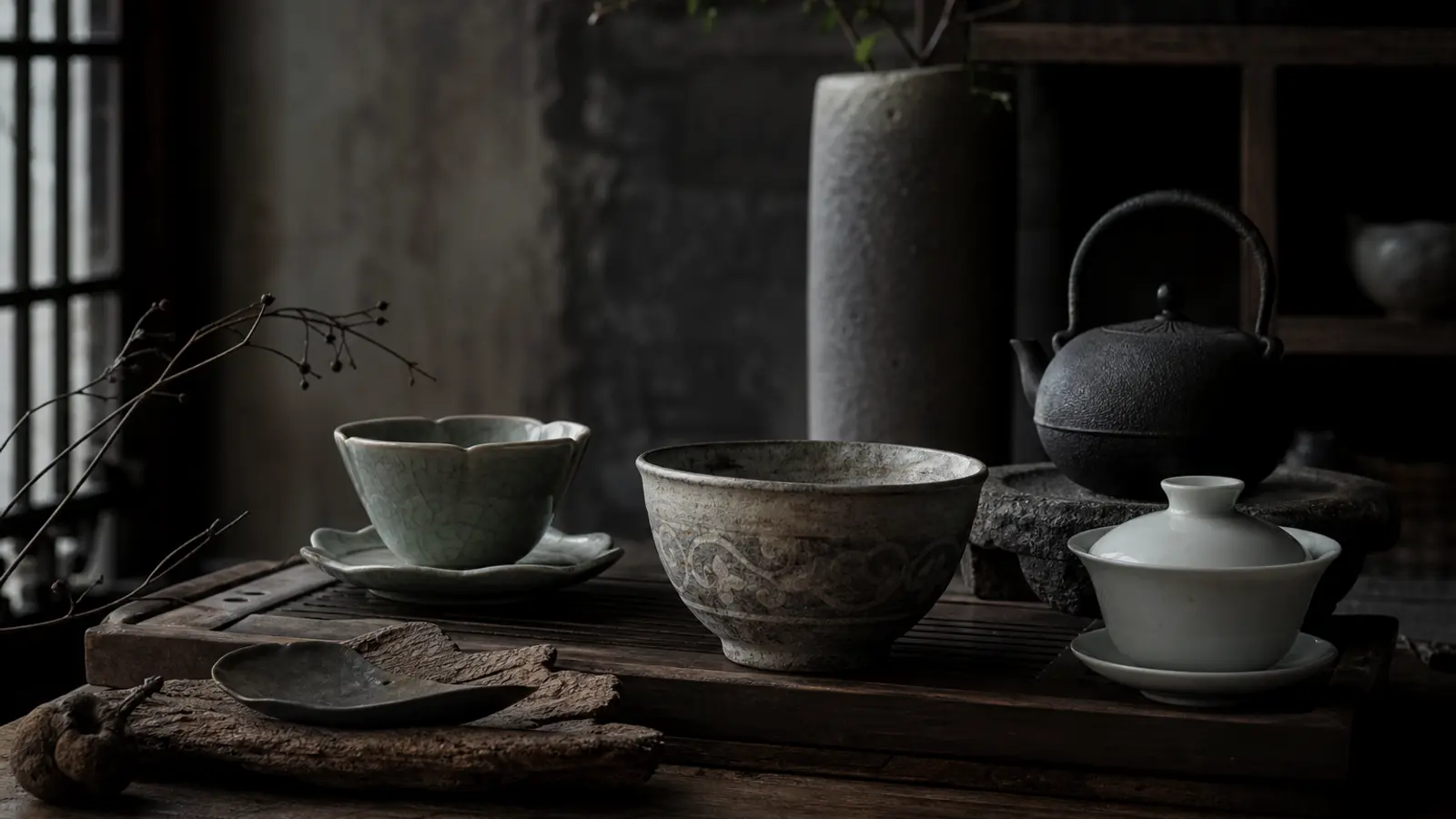
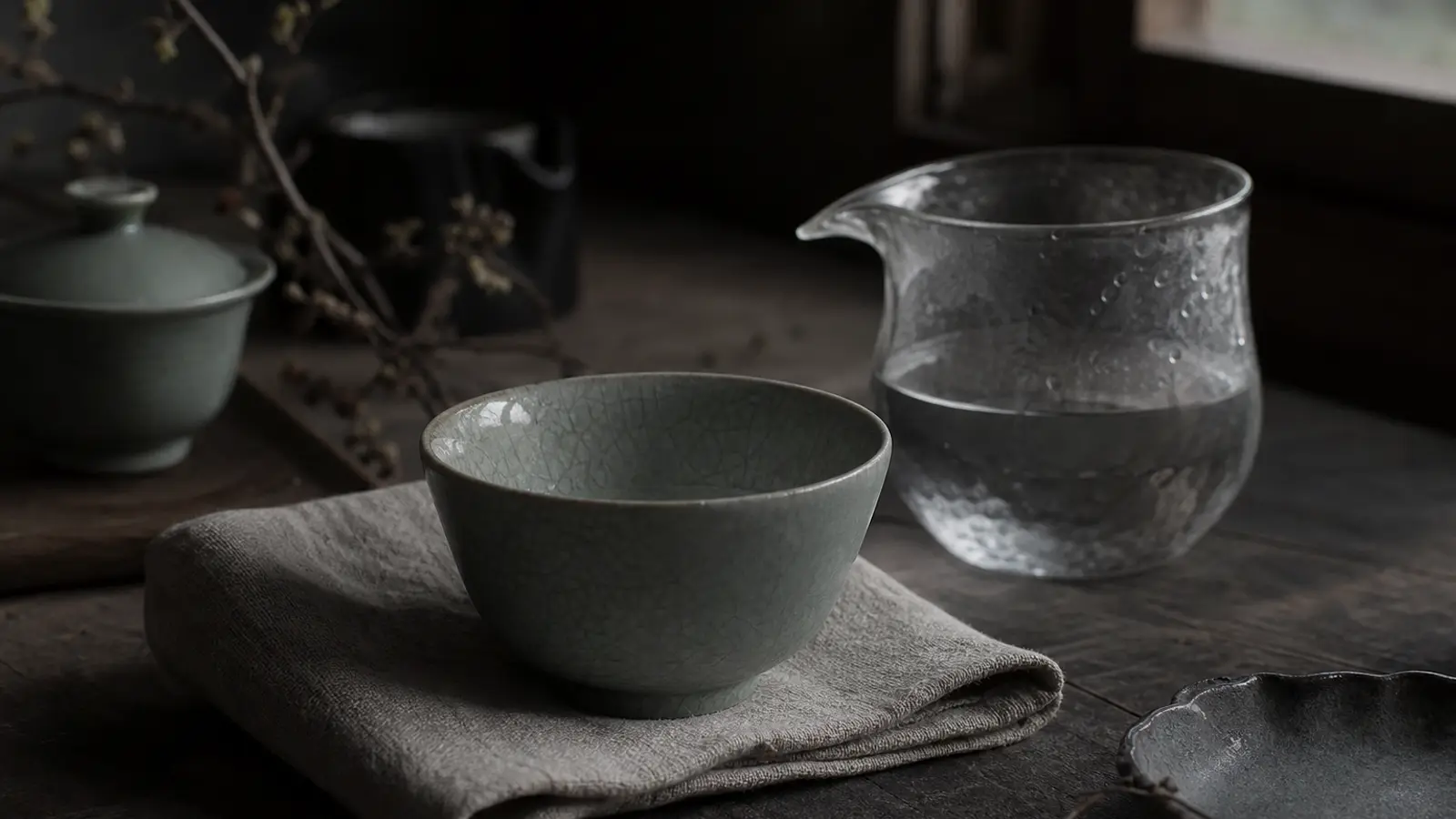
Korean teaware — whether celadon, buncheong, or white porcelain — requires specific care that differs from Chinese porcelain or Yixing clay. Each Korean ceramic tradition has distinct material properties: one is glazed with a fine crackle network, another is semi-porous stoneware that absorbs tea oils, and the third is fully vitrified and nearly inert. Understanding these differences is the foundation of proper korean pottery care, and it will keep your pieces performing well through years of daily use.
I think of it like wine glasses versus decanted earthenware versus glazed stoneware crocks. You wouldn’t clean them all the same way, and you shouldn’t clean Korean teaware with a one-size-fits-all approach either.
Three Korean Ceramic Traditions, Three Care Approaches
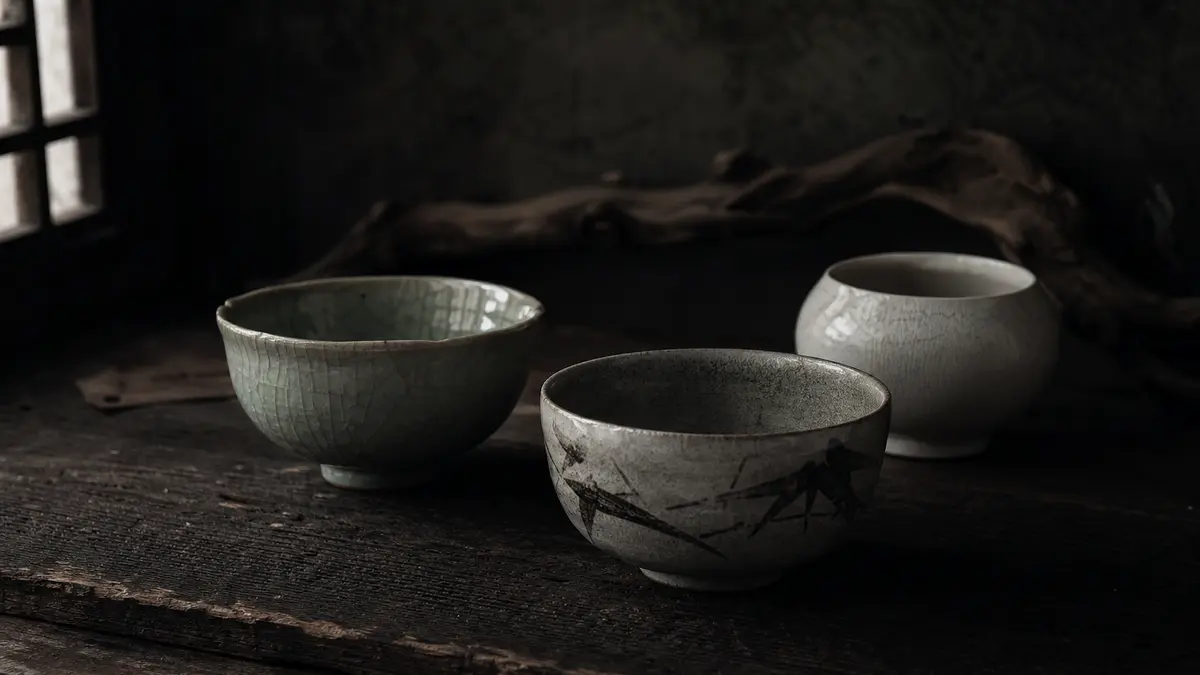
The critical first step is identifying what you own. Korean teaware falls into three major categories, each with its own material behavior. Here’s how to handle each one.
Celadon (청자 Cheongja): Glazed, Crazed, and Low-Maintenance
Celadon is the tradition most people picture when they think of Korean ceramics — that distinctive jade-green or blue-green glaze over a gray stoneware body. The glaze surface is relatively easy to maintain, but it has one defining characteristic that shapes your entire care routine: crazing (균열 gyunyeol).
Crazing is the fine network of hairline cracks in the glaze surface. This is not a defect. It is a deliberate feature of Korean celadon, the result of the glaze and clay body contracting at slightly different rates during cooling. Those craze lines are part of the piece’s identity.
After each session:
- Rinse the piece thoroughly with plain hot water.
- Use your fingers or a soft cloth to wipe away any residual tea liquor.
- Dry completely with a clean towel, then air-dry upside down before storing.
What to avoid:
- No soap or detergent. Surfactants can work their way into the craze lines and become nearly impossible to fully rinse out. You’ll taste detergent in your next session — and it may persist for weeks.
- No dishwasher. The rapid thermal cycling inside a dishwasher causes thermal shock that can deepen existing crazing or crack the piece outright.
- No abrasive scrubbing. A soft cloth is all you need.
Over time, tea liquor will stain the craze lines slightly, darkening them to a warm amber or brown. This is normal. In Korean ceramic aesthetics, this gradual staining is considered part of the piece’s living patina — evidence of use, not neglect. If staining becomes excessive or uneven, a brief 15–20 minute soak in plain hot water will reduce it. Don’t try to eliminate it entirely. That patina is the point.
How to Season Buncheong Teaware (분청사기)
Buncheong is the Korean ceramic tradition closest in behavior to Chinese Yixing (宜興) clay. It is a semi-porous stoneware, often decorated with white slip brushwork or stamped patterns, and its surface actively interacts with tea over time.
This is where korean pottery care gets interesting — and where the parallel to wine decanters breaks down in favor of something more like a well-seasoned cast iron pan.
Initial seasoning before first use:
- Submerge the piece in clean hot water (not boiling — around 80–85°C) for 30 minutes. This opens the pores of the clay body.
- Remove, let it cool to room temperature naturally, and dry with a clean cloth.
- Brew your chosen tea type in the piece for 3–5 sessions before evaluating its character.
Those first few sessions may taste slightly mineral or earthy. This is the raw clay expressing itself, and it’s temporary. By the third or fourth session, the stoneware begins absorbing tea oils, and the flavor profile smooths out considerably.
Dedication matters. Like a Yixing teapot, I recommend dedicating a buncheong piece to one tea category. The absorbed oils build up over time and will complement future sessions of the same type. Good pairings:
- Korean green tea (녹차 nokcha) — the vegetal sweetness rounds out the mineral clay character
- Aged sheng pu-erh (生普洱) — the complex oils season the stoneware beautifully
- Shou pu-erh (熟普洱) — deep, earthy flavors that the porous body absorbs well
Switching between drastically different tea types in a buncheong piece muddies the accumulated character. A bowl seasoned with shou pu-erh will carry those heavy earth notes into a delicate green tea session, and neither will benefit.
Cleaning buncheong:
- Rinse with plain hot water immediately after use.
- Never use soap. Ever. The porous surface absorbs detergent the way it absorbs tea oils, and you won’t get it out.
- Never scrub the interior surface. The patina — that slight darkening and oil sheen — is the accumulated result of your tea sessions. It improves the piece.
- Dry upside down on a clean cloth in a ventilated area.
White Porcelain (백자 Baekja): The Workhorse
White porcelain is the most maintenance-free Korean teaware tradition. The body is fully vitrified at high firing temperatures, meaning it does not absorb flavors, oils, or aromas. The surface is completely neutral.
This makes baekja the most versatile option:
- Mild soap is acceptable for cleaning.
- The surface can handle hotter water without thermal shock risk.
- No seasoning is needed, and no dedication to a single tea type is necessary.
- A soft sponge is fine for removing stubborn tea stains.
Use white porcelain when you want a clean, neutral vessel that showcases the tea itself without any contribution from the clay. It’s the equivalent of tasting wine from a clear, uncoated crystal glass — nothing added, nothing taken away.
Even with baekja, I still avoid the dishwasher for handmade pieces. The mechanical jostling can chip rims and handles, and the value of artisan-made Korean porcelain warrants the thirty seconds of careful hand-washing.
Universal Korean Teaware Maintenance Rules
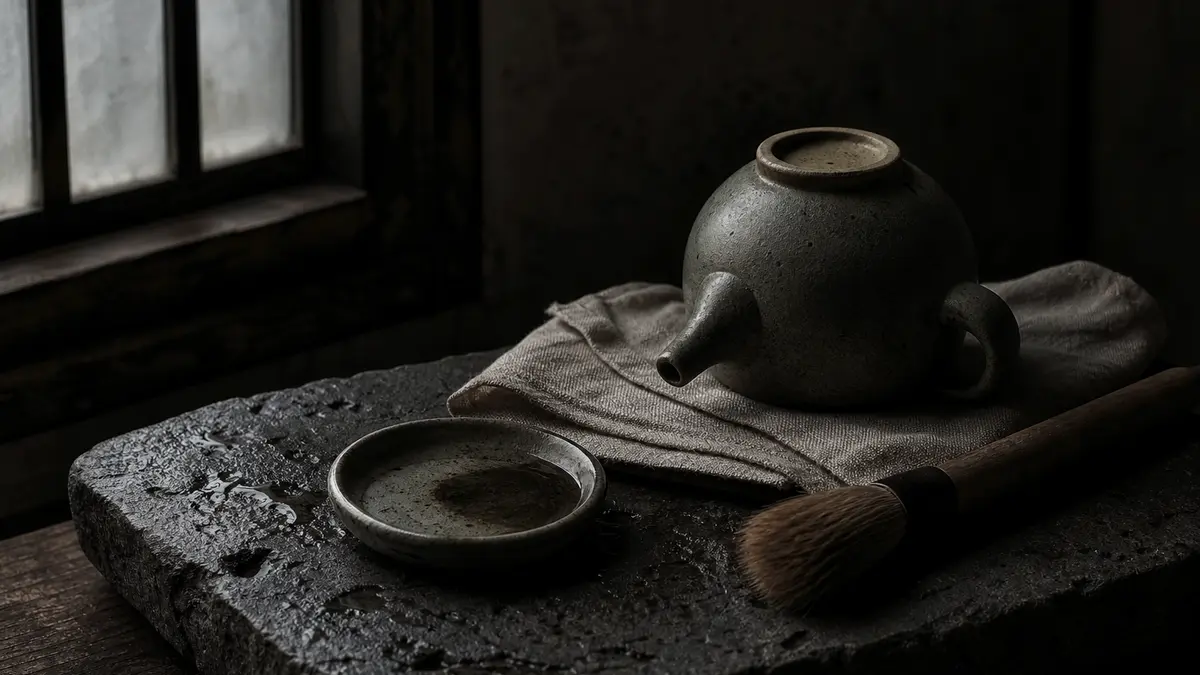
Regardless of which tradition your piece belongs to, a few principles apply across the board.
Handle with dry hands. When picking up heated Korean ceramics, make sure your hands are dry. Wet hands on a hot ceramic surface create a localized temperature differential that can cause thermal shock — a hairline crack that may not be visible immediately but weakens the piece over time. This applies to all three traditions but is especially critical with celadon.
Store dry, store ventilated. Moisture is the enemy. After cleaning, ensure your teaware is fully dry before putting it away. A damp piece stored in a closed cabinet can develop mold, particularly in the craze lines of celadon.
Use the paulownia box. If your piece came in a paulownia wood box (오동나무 상자 odong-namu sangja), use it. These boxes are not just packaging — paulownia wood naturally absorbs excess moisture and provides cushioning against impact. Store the piece in its box when not in active use.
Humid climate precautions. If you live in a tropical or subtropical climate (Southeast Asia, the American Gulf Coast, similar environments), display pieces need air circulation. A celadon bowl sitting on a shelf in 80% relative humidity with no airflow can develop mold in the craze network. A small fan or dehumidifier in the display area solves this. For pieces in paulownia boxes, crack the lid occasionally to prevent moisture buildup inside.
Quick-Reference Care Table
| Celadon (청자) | Buncheong (분청사기) | White Porcelain (백자) | |
|---|---|---|---|
| Porosity | Low (glazed, with crazing) | Semi-porous | Non-porous (vitrified) |
| Seasoning needed | No | Yes — 30 min soak + 3–5 sessions | No |
| Soap | Never | Never | Mild soap OK |
| Dishwasher | No | No | No (for handmade pieces) |
| Dedicate to one tea | Not required | Recommended | Not required |
| Patina expected | Yes (craze staining) | Yes (oil absorption) | No |
| Thermal shock risk | Moderate | Moderate | Low |
| Storage | Dry, paulownia box | Dry, inverted on cloth | Dry, any clean space |
The Long View
Korean pottery care is not complicated, but it is specific. The thirty seconds of attention you give a piece after each session compounds over months and years into teaware that performs better, looks richer, and connects you more deeply to the Korean ceramic traditions that produced it.
A well-maintained buncheong tea bowl at year three has a depth of character that a new piece simply cannot match. The seasoned interior carries a ghost of every session before it — a subtle foundation note that enhances rather than overwhelms. Celadon develops its own history written in the amber tracery of its craze lines.
This is teaware that rewards patience and consistency. Treat it accordingly.