A note on knowledge transparency: White tea sits at the edge of my direct practice. I have not explored this category with the same hands-on depth I bring to pu-erh, oolong, or green tea. What follows draws from established tea scholarship, producer documentation, and the accumulated knowledge of people who have spent serious time in Fujian. I’ll flag where I’m working from research rather than my own gaiwan (蓋碗). That distinction matters to me, and I think it should matter to you.
With that said, white tea is too important a category to leave unaddressed. It is the least processed of all true teas, arguably the oldest style still produced in continuous tradition, and increasingly one of the most collectible. This white tea guide covers what it is, where it comes from, how it’s made, how to brew it, and why the “delicate and mild” reputation is only half the story.
What Is White Tea?
White tea is a minimally processed tea produced primarily in Fujian province, China, from young buds and leaves of the Camellia sinensis plant. It undergoes no rolling, no pan-firing, no intentional oxidation. The process is almost aggressively simple: the leaf is withered — allowed to dry slowly in natural air or with gentle applied heat — and then dried to stabilize moisture content. That’s it.
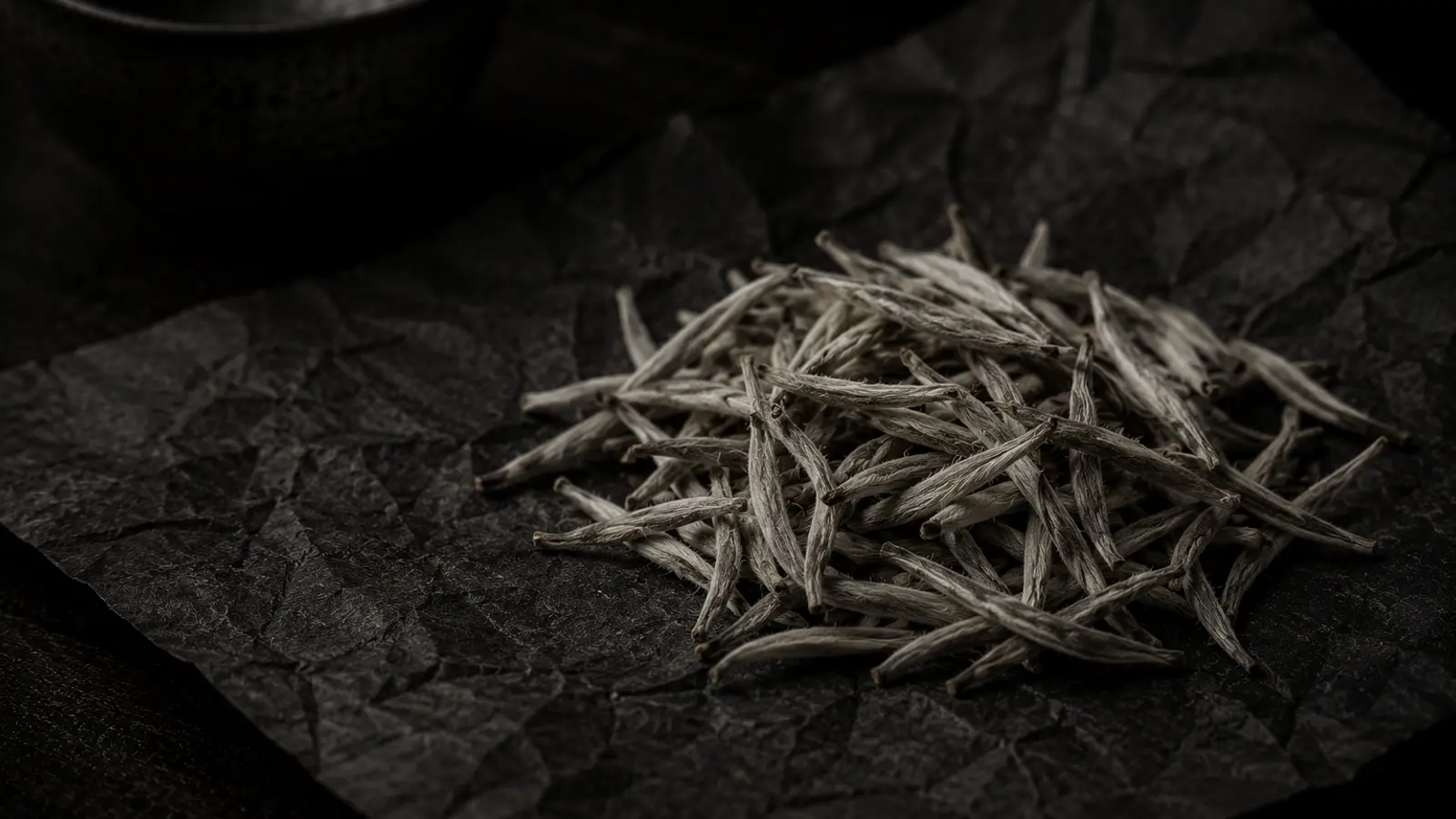
The name comes not from the color of the liquor (which ranges from pale gold to deep amber depending on age and grade) but from the white down — called bai hao (白毫), or “white hair” — that covers the immature buds. Under good light, a jar of Silver Needle looks like it contains tiny silver-furred creatures.
Because there is so little intervention, the leaf itself dictates the tea. Varietal, terroir, the exact moment of harvest, the weather during withering — all of these variables pass through to the cup without the processing interventions that might soften or redirect them. In this way, white tea has something in common with a minimally interventionist natural wine: the maker’s job is largely to stay out of the way.
White Tea Processing: What “Minimal” Actually Means
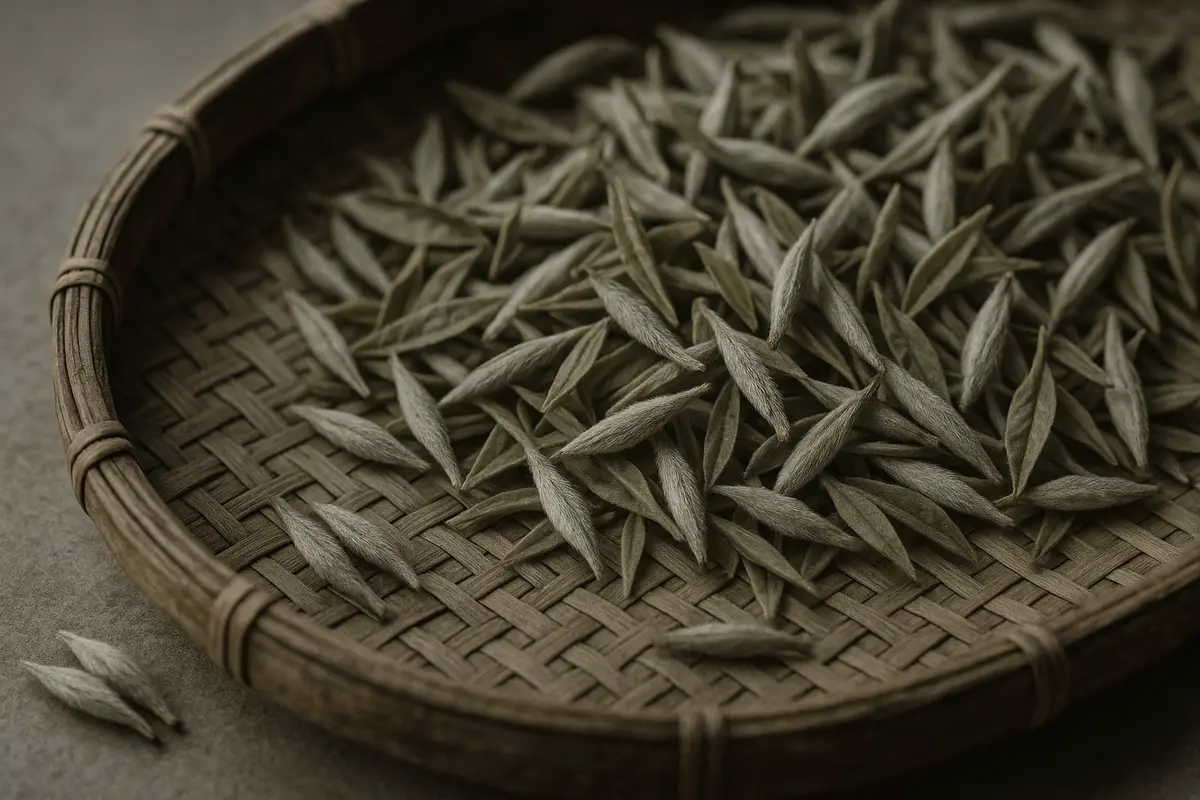
The apparent simplicity of white tea processing is somewhat deceptive. Doing nothing — or nearly nothing — correctly requires real skill and attention.
Withering
The freshly harvested leaf is spread in thin layers and allowed to lose moisture slowly. Traditional outdoor withering under diffused sunlight is still practiced in Fujian, but indoor withering with carefully controlled airflow is common, particularly in Zhenghe. The withering period can last anywhere from 36 to 72 hours depending on humidity, temperature, and the leaf’s initial moisture content.
During this time, some enzymatic activity does occur — which is why white tea is not technically zero-oxidation, even though it involves no deliberate oxidation step. The leaf undergoes a slow, passive transformation. Flavors develop. Grassy raw-leaf notes soften into the sweet hay and honeydew characteristics that define the category.
Getting withering wrong produces flat, grassy tea or, worse, tea with off-flavors from uncontrolled fermentation. This is where the producer’s judgment is everything.
Drying
After withering, the leaf is dried — either in warm ovens, under the sun, or a combination — to bring moisture down to a stable level for storage and sale. The drying temperature and duration affect the final flavor profile significantly. Higher temperatures produce more toasty, full-bodied results; gentler drying preserves more delicate florals.
No rolling. No shaping. No kill-green (殺青, shā qīng) firing. The leaf goes from the plant to the drying stage with almost nothing in between.
The Main White Tea Grades
Bai Hao Yin Zhen (白毫銀針) — Silver Needle
Silver Needle is the apex of the white tea category and one of China’s most famous teas. It is made exclusively from the single, unopened terminal bud of the tea plant, harvested during a narrow window in early spring — typically late March to early April in Fujian. Each bud is covered in dense white down.
The flavor profile is delicate by design: sweet dried hay, fresh melon, honeydew, light floral notes, sometimes a faint saline quality. The mouthfeel is smooth and silky without much weight. The aftertaste — what Chinese tea culture calls huigan (回甘), the returning sweetness — is gentle but persistent.
Because it is made entirely from buds, Silver Needle is labor-intensive to produce and priced accordingly. Expect to pay $30–$80 per 50g for quality current-harvest material from reputable vendors; high-end single-origin from named gardens runs higher.
Bai Mu Dan (白牡丹) — White Peony
White Peony is made from the bud plus the first one or two unfurled leaves. The inclusion of leaf material adds body, a slight vegetal or grassy note, and more flavor complexity. It’s a fuller tea — better for people who find Silver Needle too ethereal, and more suitable for multiple infusions at higher leaf ratios.
In my research, this comes up repeatedly as the category’s most versatile everyday option. It’s also significantly more affordable than Silver Needle: $15–$40 per 50g for solid quality material. White Peony rewards gongfu brewing particularly well, where the added complexity can unfold across multiple short steeps.
Shou Mei (壽眉) — Longevity Eyebrow
Shou Mei is harvested later in the season from more mature leaves. The leaves are larger, darker, and less uniform than Silver Needle or White Peony. The flavor profile is coarser — more robust, sometimes slightly woody or fruity, with less of the delicate sweetness of the finer grades.
Shou Mei is often pressed into cakes for aging, and it performs exceptionally well with time. Its higher leaf content and more pronounced initial character give it a strong foundation for long-term transformation. Research-tier note: aged Shou Mei cakes from the late 1990s and early 2000s now command serious collector prices in mainland China, though much of the secondary market remains opaque to Western buyers.
Gong Mei (貢眉) — Tribute Eyebrow
Gong Mei falls between White Peony and Shou Mei in harvest timing and character. It’s less commonly discussed in tea writing but represents a significant portion of Fujian’s white tea production. The flavor is rustic by Silver Needle standards but honest — earthy, slightly floral, with good body.
Origin: Fuding vs. Zhenghe
White tea is produced in several Chinese provinces, but Fujian remains the historical and qualitative center of the category. Within Fujian, two counties dominate: Fuding (福鼎) and Zhenghe (政和). They produce measurably different teas.
Fuding White Tea
Fuding is the most famous white tea production region, responsible for the style most people encounter in specialty tea shops worldwide. The dominant cultivar is Fuding Dabai (福鼎大白), a large-leafed variety selected specifically for white tea production.
Character: Lighter body, more pronounced floral notes, a cleaner and more ethereal profile. Fuding Silver Needle, in particular, is prized for its delicacy — the kind of tea that rewards slowing down and paying attention.
Fuding’s coastal geography and milder climate contribute to what locals describe as a lighter, more fragrant character. Think of it as the Burgundy of white tea — elegance over power.
Zhenghe White Tea
Zhenghe sits further inland, at higher elevation, with a cooler climate and heavier soils. The dominant cultivar, Zhenghe Dabai (政和大白), produces a larger, thicker bud.
Character: More body, richer flavor, a savory or fruity quality that can border on umami. Zhenghe Silver Needle lacks the ethereal delicacy of Fuding but compensates with depth. Some tasters prefer it precisely because it’s more present in the cup.
The Fuding vs. Zhenghe distinction maps loosely onto wine terroir discussions: same grape, same general method, genuinely different results based on place. Neither is objectively superior — they’re different expressions of the same category.
| Feature | Fuding | Zhenghe |
|---|---|---|
| Geography | Coastal, lower elevation | Inland, higher elevation |
| Primary cultivar | Fuding Dabai (福鼎大白) | Zhenghe Dabai (政和大白) |
| Silver Needle character | Light, floral, ethereal | Rich, savory, fuller body |
| General profile | Delicate, clean | Complex, weighty |
| International recognition | Higher | Growing |
The Aging Story: One Year Tea, Three Years Medicine, Seven Years Treasure
One of the biggest misconceptions about white tea is that it’s always light and delicate. That’s true of young Silver Needle. It is emphatically not true of aged white tea.
The Chinese saying captures the folk understanding perfectly: 一年茶三年药七年宝 — one year tea, three years medicine, seven years treasure. White tea ages, and the transformation it undergoes is significant.
Young white tea (under two years) shows its characteristic fresh, sweet, delicate profile. With three to five years of proper storage, the flavor deepens — fresh hay becomes dried fruit, light florals become warmer and more complex, the mouthfeel gains weight. Beyond seven years, well-stored white tea develops genuine depth: dried dates, woody spice, a warming quality in the throat that Chinese tea culture associates with medicinal properties.
The aging mechanism differs from pu-erh (普洱). White tea’s transformation is primarily oxidative — slow, ongoing enzymatic and chemical change in the absence of microbial activity (unlike shou pu-erh’s heavy fermentation or the ongoing microbial activity in sheng pu-erh storage). The result is less earthy and funky than aged pu-erh, more aligned with the evolution of a well-made natural wine.
For collectors, this creates a real opportunity. White tea cakes — Shou Mei and White Peony pressed into discs like pu-erh cakes — are increasingly treated as aging vehicles. Storage requirements are similar to sheng pu-erh: stable humidity (around 60–70% RH), good airflow, no off-odors, protected from extreme temperature swings.
The market for aged white tea is less mature than aged pu-erh and therefore less transparent on pricing. Research suggests that verified aged white from the 1990s commands $100–$300+ per cake at auction, but provenance verification is genuinely difficult. Approach any aged white tea purchase from a vendor you don’t know well with appropriate skepticism.
Caffeine in White Tea: Correcting the Myth
White tea has a persistent reputation as a low-caffeine option. This is partially true and partially misleading.
The confusion comes from conflating “minimal processing” with “low caffeine.” Caffeine content is primarily a function of which part of the plant is used, not how it’s processed. Young buds accumulate more caffeine than mature leaves — buds are the plant’s most metabolically active tissue.
Silver Needle, made entirely from buds, can carry caffeine levels comparable to a moderate green tea — roughly 30–45mg per 8oz cup depending on brewing parameters, though reliable standardized data across multiple samples is limited. (This is a research-tier claim: variability between cultivars, growing conditions, and brewing method is high.)
White Peony and Shou Mei, which include more mature leaf material, tend to run lower. If you’re genuinely sensitive to caffeine, the grade matters as much as the category.
The honest answer: white tea is not a safe assumption for low caffeine. Silver Needle especially may surprise you.
How to Brew White Tea
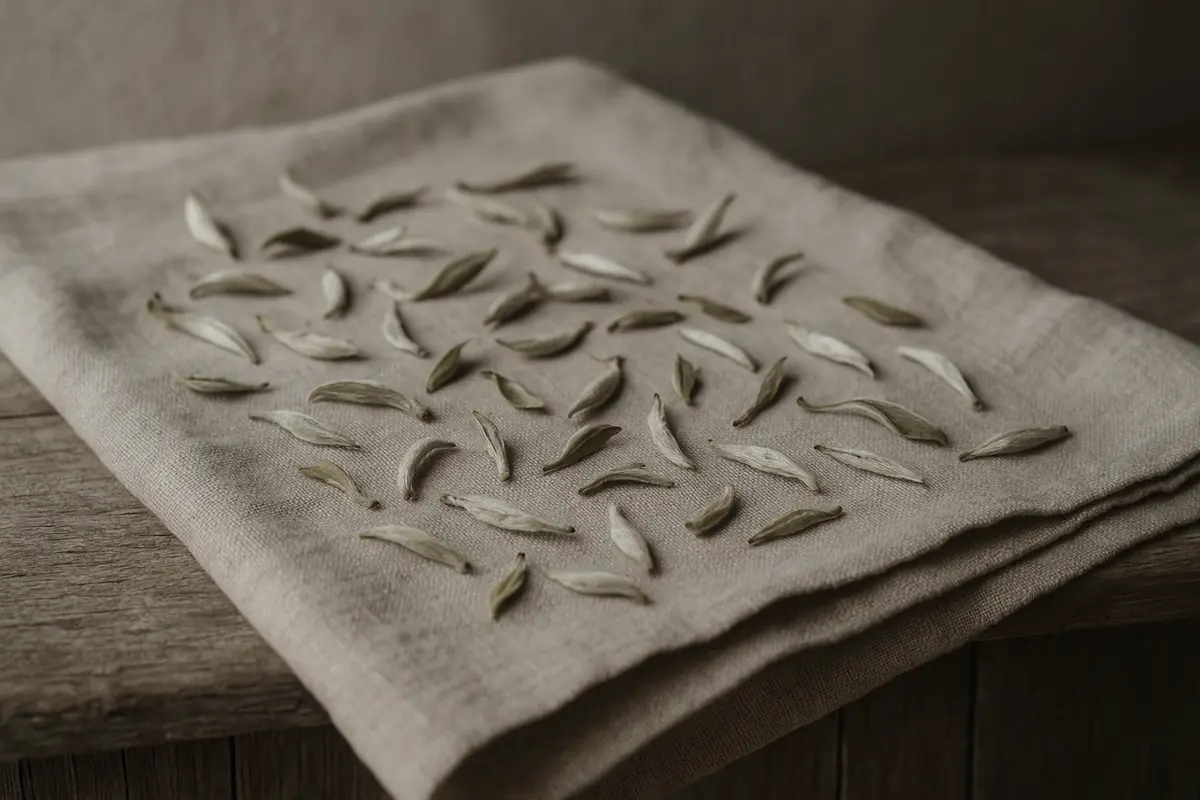
White tea is forgiving compared to green tea — it’s less prone to bitterness from overheating or oversteeping — but it rewards attention.
Water Temperature
75–85°C (167–185°F) is the standard range. Cooler water (75–80°C) suits Silver Needle’s delicacy; White Peony and Shou Mei can handle the higher end of that range. Boiling water isn’t catastrophic with white tea the way it is with fine green tea, but it flattens the subtle notes that make the category interesting.
Leaf Ratios
Western method: 2–3g per 200ml cup, 3–5 minute steep. Good for casual sessions when you’re not set up for gongfu.
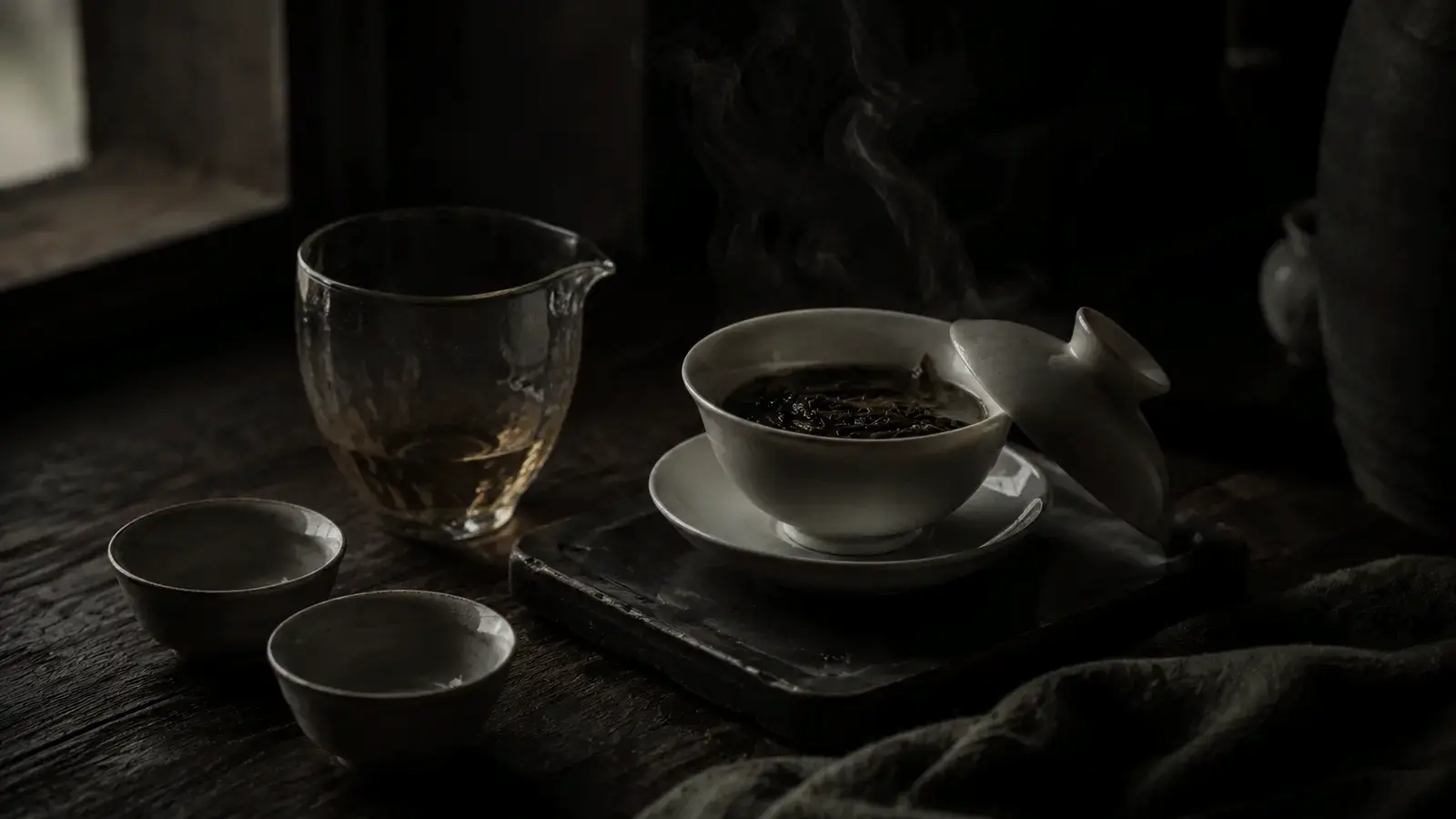
Gongfu method (蓋碗 or teapot): 5–7g per 100ml, flash steeps starting at 15–20 seconds, extending gradually. White tea’s low tannin content means it won’t turn unpleasantly astringent even with higher leaf ratios, which makes gongfu brewing particularly satisfying — you get to watch the flavor evolve across 6–10 infusions.
Aged white tea benefits from slightly higher temperatures (85–95°C) and longer initial steeps. The more developed structure needs more coaxing than young material.
Vessel Choice
A gaiwan works well for Silver Needle and White Peony — you can watch the leaves and control each infusion precisely. For aged white tea, a ceramic or porcelain teapot is appropriate. Avoid unglazed clay (yixing) for delicate young white tea; the clay may absorb the subtle notes you’re paying for. Aged white tea can work with clay, but there’s debate about whether it adds or distracts.
Cold Brew Option
White tea cold-brews exceptionally well. 5–6g per 500ml of cold water, 8–12 hours in the refrigerator. The result is clean, sweet, and remarkably refreshing. Cold brewing suppresses caffeine extraction slightly and eliminates any risk of heat-induced bitterness.
Buying White Tea: What to Look For
A few practical considerations when sourcing:
Grade clarity: Reputable vendors specify grade (Silver Needle, White Peony, Shou Mei, Gong Mei) and origin (Fuding, Zhenghe, or other). Vague “white tea” labeling without this information is a yellow flag.
Harvest date: Fresh white tea has a harvest date (春 chūn = spring; 秋 qiū = autumn). Knowing when it was picked tells you how old the tea is and what to expect from aging trajectories.
For aging: Look for cakes specifically pressed for aging, ideally with documented storage history. Shou Mei and White Peony press better than Silver Needle for long-term aging. Pay attention to storage conditions — warehouse-aged (仓储, cāngchǔ) white tea from humid Guangdong-style storage will taste different from naturally stored Fujian material.
Price signals: Genuine Silver Needle is labor-intensive. If the price seems too low — under $15 per 50g for “Silver Needle” — the grade designation is probably optimistic.
White Tea in Summary
White tea is defined by what doesn’t happen to it. No rolling. No firing. No deliberate oxidation. The leaf, the bud, the terroir, and the season are exposed directly in the cup without the softening or redirecting influence of heavier processing.
That transparency makes it an honest category. Silver Needle (白毫銀針) from Fuding rewards patience and attention with ethereal sweetness. White Peony (白牡丹, Bai Mu Dan) offers more body and complexity at a more accessible price. Aged Shou Mei pressed into cakes develops a depth that dismantles the assumption that white tea is inherently delicate.
The aging tradition — 一年茶三年药七年宝 — is one of the more compelling stories in Chinese tea culture, and it’s one that’s becoming financially significant as collectors diversify beyond pu-erh.
For someone building a broader tea practice, I’d suggest starting with a quality White Peony from a named Fuding or Zhenghe vendor, brewed gongfu at 80°C. It’s accessible enough to be approachable and characterful enough to be interesting. From there, a Silver Needle comparison will clarify why the bud-only grade commands its premium.
I’ll be honest: this is a category I intend to spend more time with. The aging story alone is worth a return visit.