Phoenix Mountain tea comes from one of the most singular origins in the tea world. Phoenix Mountain (凤凰山 Fènghuáng Shān) in Chaozhou (潮州), Guangdong province, is the birthplace of dancong oolong (单丛乌龙) — a tea tradition where individual ancient trees are named and harvested separately because each produces a unique aromatic identity that no blending could improve. If the concept of terroir can be reduced to its most extreme, most granular expression, this is where you find it. Not at the mountain level. Not at the garden level. At the level of a single tree.
I come from a wine background, and I have never encountered anything in wine — not Burgundy’s classified plots, not the crus of Barolo — that matches the specificity of Phoenix Mountain. Here, a tree is a vineyard.
Geography & Location
Phoenix Mountain sits in the northeastern corner of Guangdong, near the coast of the South China Sea. The mountain is part of the broader Phoenix Mountain Range (凤凰山脉 Fènghuáng Shānmài), a series of granite ridges running roughly northeast-to-southwest through Chaozhou and neighboring Raoping (饶平) county.
The highest point is Phoenix Topknot Peak (凤凰髻 Fènghuáng Jì) at 1,497 meters. Tea gardens span a wide altitudinal band from roughly 400 meters up to about 1,100 meters. A few wild or semi-wild trees grow higher, but the bulk of production occupies this range.
Chaozhou city lies at the foot of the mountain, connected to the coast by the Han River (韩江 Hán Jiāng). The proximity to the sea — less than 60 kilometers in some directions — shapes the climate in ways that matter for the tea.
The latitude is approximately 23.5°N to 24°N, placing Phoenix Mountain in the subtropics, slightly north of the Tropic of Cancer.
Climate & Elevation
Two forces dominate the climate here: altitude and maritime proximity.
The South China Sea pushes moist air inland against the mountain slopes. Above 800 meters, fog is frequent — sometimes persistent for days. This fog diffuses sunlight and maintains moisture on leaf surfaces, slowing photosynthesis and encouraging the accumulation of aromatic precursors in the leaf. The effect is similar to what fog does for Pinot Noir in the Sonoma Coast or for Riesling in the Mosel — it extends the growing season’s cool phase and concentrates flavor compounds.
The altitude creates significant diurnal temperature swings. Daytime temperatures at 1,000 meters can be 8–12°C cooler than at the base. Night temperatures drop further. This differential stresses the tea plants just enough to drive the production of secondary metabolites — the polyphenols and volatile aromatics that make dancong what it is.
Annual rainfall is substantial, typically 1,600–2,200 mm, with the heaviest rains arriving during the monsoon season from April through September. Spring harvest usually targets the window before the heaviest monsoon rains hit in earnest.
The highest-altitude gardens — above 900 meters — produce the most prized and most expensive dancong. The relationship between altitude and price on Phoenix Mountain is nearly linear.
Soil & Terroir
The bedrock is volcanic and granitic. Millennia of weathering have produced deep clay soils with high mineral content — iron, manganese, and various trace elements from the parent granite. The soil is acidic, generally pH 4.5–5.5, which tea plants prefer.
What makes Phoenix Mountain’s terroir extraordinary is the scale at which it varies. The granite bedrock is not uniform. It fractures and weathers unevenly across the slopes, creating pockets of different soil chemistry within very short distances. Add to this the variation in slope aspect (some trees face east, others southeast, others are tucked into north-facing hollows), the degree of canopy cover from surrounding forest, and differences in drainage — and you get micro-terroir at an almost absurd resolution.
Individual trees separated by three or four meters can produce meaningfully different aromatic profiles. One tree smells of gardenia. Its neighbor smells of ginger flower. The tree ten meters upslope carries a distinct honey note. Same species, same cultivar family, same farmer — different soil chemistry, different sun hours, different flavor.
The wine parallel that keeps coming to mind is Côte-Rôtie in the northern Rhône: ancient hillside plantings on steep granite slopes where individual parcels produce radically different wines from the same appellation. But even Côte-Rôtie works at the parcel level — maybe a hectare at a time. Phoenix Mountain works at the tree level. It is terroir pushed past the resolution limit of anything in wine.
Key Cultivars & Tea Types
Dancong (单丛 dān cóng) literally means “single bush” or “single trunk.” The name tells you the philosophy: each tree is treated as its own entity.
The dominant cultivar species on Phoenix Mountain is Camellia sinensis var. sinensis, with the local population showing enormous genetic diversity. Centuries of seed propagation (as opposed to clonal cutting) have produced a wild mosaic of individual genotypes. When a particular tree proves exceptional, it earns a name, and cuttings from it may be planted to create a clone family (株系 zhūxì). But the mother tree remains the standard.
The named aromatic categories — called “fragrances” (香型 xiāng xíng) — are how dancong is classified. The most recognized include:
- Milan Xiang (蜜兰香) — Honey Orchid fragrance. The most widely planted and commercially available. Floral, honeyed, approachable.
- Ya Shi Xiang (鸭屎香) — Duck Shit fragrance. Despite the name (a deliberate misdirection by farmers who wanted to discourage outsiders from seeking the trees), this produces an intensely floral, almost tropical cup.
- Zhi Lan Xiang (芝兰香) — Orchid fragrance. Elegant, high-toned florals.
- Gui Hua Xiang (桂花香) — Osmanthus fragrance. Sweet, golden, with a scent recalling osmanthus blossoms.
- Jiang Hua Xiang (姜花香) — Ginger Flower fragrance. Spicy-floral, distinctive.
- Xing Ren Xiang (杏仁香) — Almond fragrance. Nutty, toasted, richer body.
- Huang Zhi Xiang (黄栀香) — Gardenia fragrance. Heady, sweet, perfumed.
- Yu Lan Xiang (玉兰香) — Magnolia fragrance. Clean, expansive floral.
- Rou Gui Xiang (肉桂香) — Cinnamon fragrance. Warm, spiced — not to be confused with Wuyi Rou Gui.
- Ye Lai Xiang (夜来香) — Tuberose fragrance. Nocturnal flowers, a deep and intoxicating aromatic.
These are not added flavors. They are not scented teas. Each fragrance name describes the natural aromatic profile that a specific tree or clone family expresses through its leaf chemistry alone. The diversity is staggering — some sources list over 80 recognized fragrance types, though many are rare or hyper-local.
Processing Traditions
Dancong processing is a demanding, high-skill oolong method. The basic sequence follows the oolong template — wither, bruise, oxidize, kill-green, roll, dry — but the details are calibrated to each specific tree’s leaf characteristics.
Harvest timing is tree-specific. A farmer with 30 named trees might harvest each one on a different day, sometimes separated by only hours, based on that tree’s leaf maturity and the weather. Spring harvest (春茶 chūn chá) is the most prized, typically April to early May. Some trees also yield a valued autumn harvest (秋茶 qiū chá).
Withering (晒青 shài qīng, literally “sun-greening”) happens in direct or diffused sunlight, often on bamboo trays. The duration depends on sun intensity, wind, humidity, and the specific leaf’s moisture content.
Bruising and oxidation (做青 zuò qīng) is the critical phase. The leaves are tossed, rested, tossed again — a cycle that can repeat six to ten times over the course of many hours, sometimes through the night. The farmer monitors by smell, touch, and the changing color of the leaf edges. Oxidation levels for dancong typically land between 30% and 50%, though this varies by fragrance type and the farmer’s style.
Kill-green (杀青 shā qīng) arrests oxidation. On Phoenix Mountain, this is done in a heated wok or drum, by hand or machine.
Rolling (揉捻 róu niǎn) shapes the leaf into the characteristic long, twisted strips of dancong — distinct from the tight balls of Anxi tieguanyin or the wiry threads of Wuyi yancha.
Drying and roasting (烘焙 hōng bèi) finish the tea. Traditional dancong receives charcoal roasting (炭焙 tàn bèi), often in multiple sessions spaced weeks or months apart. The roast level varies: light roast (清香型 qīng xiāng xíng) preserves high floral aromatics, while heavier roast (浓香型 nóng xiāng xíng) adds depth, caramel, and structural complexity. Some producers rest their tea for a year or more between roast cycles.
Every step is adjusted for the individual tree. A Ya Shi Xiang from a 600-year-old tree at 1,050 meters is not processed the same way as a Milan Xiang from a 30-year-old tree at 500 meters. The skill of the maker lies in reading each tree’s leaf and adjusting accordingly.
The Ancient Gardens
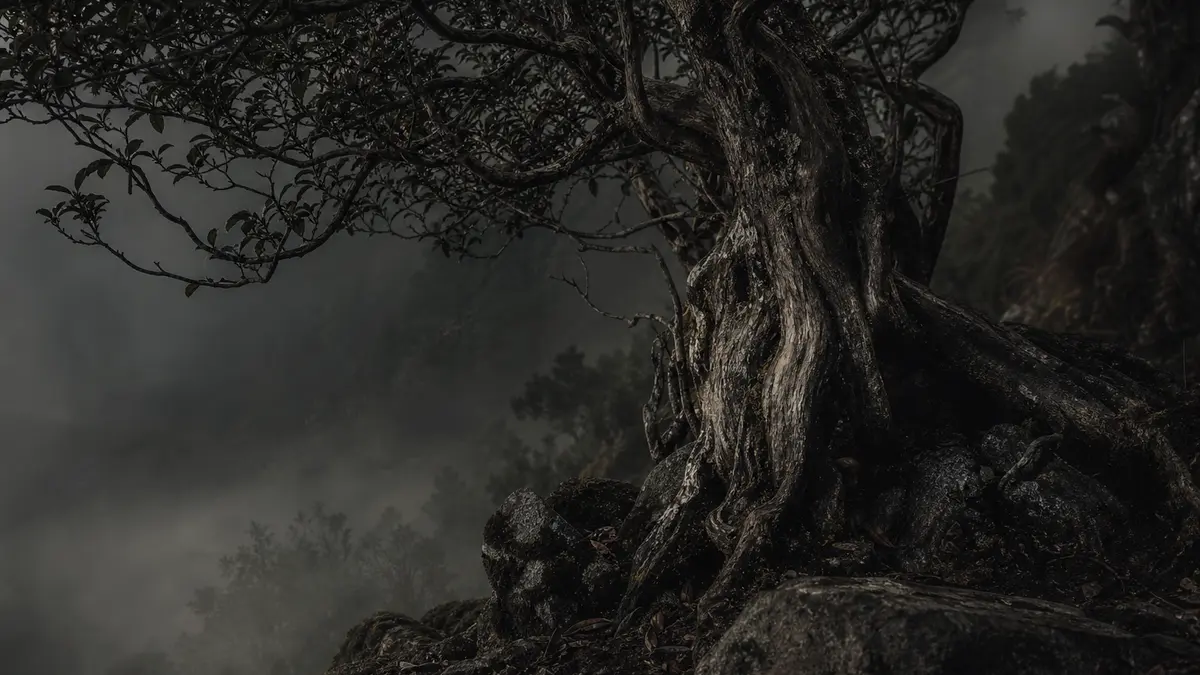
Some individual trees on Phoenix Mountain are documented at 500 to 600+ years old. A few specimens are claimed to be older, though verifying age beyond a few centuries is inherently imprecise.
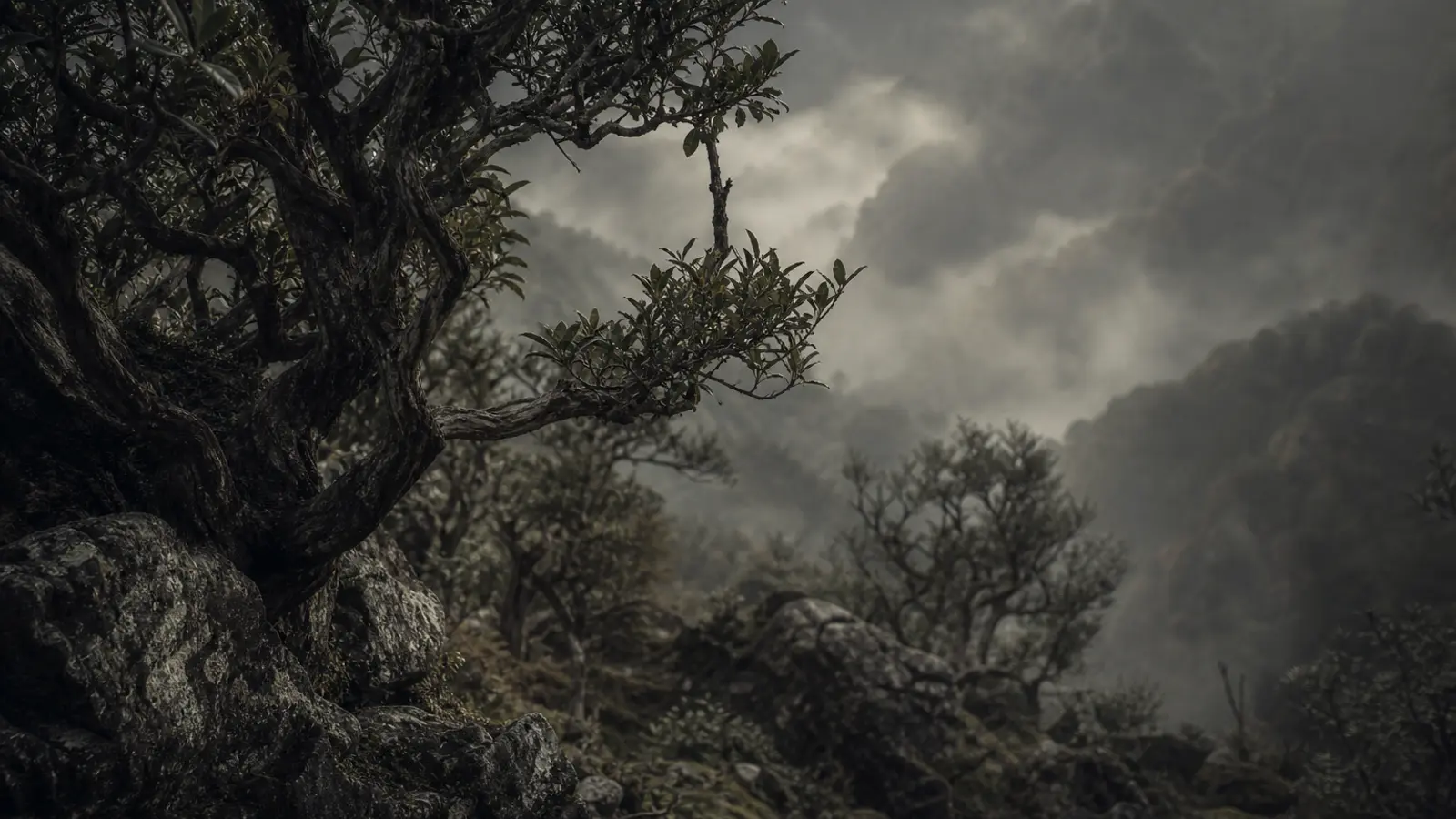
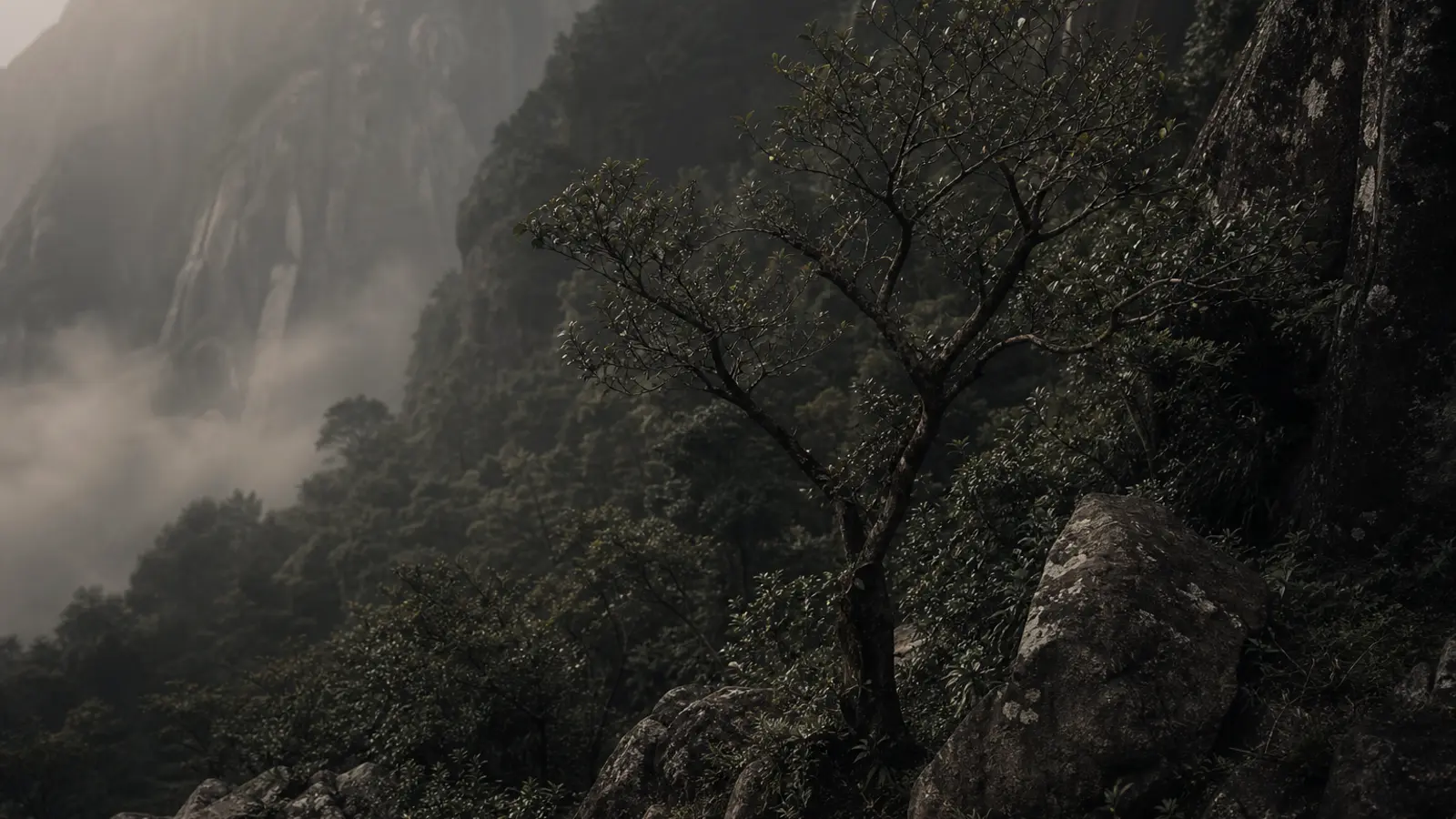
These are not plantation rows. Picture instead a steep mountain slope forested with broadleaf evergreens, and scattered among the forest, ancient tea trees — some with trunk diameters exceeding 30 centimeters — growing individually or in small clusters. The gardens are maintained by Chaozhou families who have tended them across generations. Access sometimes requires hiking steep footpaths.
Each named tree (or the clone family descended from it) carries its own harvest timing, its own processing protocol, and its own market price. The most famous individual trees are local celebrities. Farmers know their histories, their genealogies (which trees were grown from which mother tree’s cuttings), and their year-to-year variation. A great tree in a great year is an event — its leaf is spoken for before it’s picked.
This is the opposite of commodity agriculture. It is closer to the way Burgundy treats its oldest vines, except there’s no blending at all. Each tree’s leaf stands alone.
Characteristic Flavor Signatures
Dancong from Phoenix Mountain shares certain baseline traits across its many fragrance types:
- Aromatic intensity. The nose hits first and hard. Good dancong is among the most aromatic teas produced anywhere.
- Huigan (回甘). The returning sweetness in the throat is a hallmark of quality dancong. In fine examples, it lingers for minutes.
- Brisk astringency. Dancong is not a soft, round tea. It has structure — a spine of tannin-like astringency that wine drinkers will recognize as “grip.” This structure supports the aromatics and gives the tea length.
- Mineral finish. High-altitude dancong often carries a clean, stony minerality — the granite speaking through the cup.
The specific aromatic profile depends entirely on the tree. Milan Xiang delivers honey and lychee. Ya Shi Xiang opens with a burst of gardenia and tropical fruit. Jiang Hua Xiang hits you with ginger blossom. The range across fragrance types is wider than the aromatic range across most entire tea categories.
Altitude matters enormously. Low-altitude dancong (below 500 meters) tends toward broader, simpler aromatics with more bitterness. High-mountain dancong (above 800 meters) shows finer, more complex aromatics, longer huigan, and cleaner minerality.
Quality Indicators & Authentication
Assessing dancong quality comes down to a few key signals:
- Altitude of origin. Ask for it. High-mountain (高山 gāo shān) dancong from above 800–900 meters commands premium prices for good reason.
- Tree age. Old-tree (老丛 lǎo cóng) dancong, from trees generally over 80–100 years old, produces leaves with more depth and complexity than young plantation stock.
- Named mother trees vs. clone families. Leaf harvested directly from a famous named mother tree is the rarest and most expensive category. Clone family leaf from cuttings of that tree is the next tier. General plantation stock of the same fragrance type is the entry level.
- Roast integrity. Heavy roast can mask poor leaf quality. Light-to-medium roast on high-quality leaf reveals more — and hides less.
- Dry leaf appearance. Look for long, tightly twisted strips with a dark, even color. Broken or dusty leaf suggests rough handling or lower grade.
- Wet leaf after brewing. Intact leaves with visible red-brown oxidation edges and a green center indicate clean oolong processing. Uniform dark brown or black leaves suggest over-oxidation or heavy roast compensating for weak material.
Authentication is a real concern. The most famous fragrance names — particularly Ya Shi Xiang and Milan Xiang — are applied liberally across a wide range of quality levels. Low-altitude, young-tree, mass-produced dancong sold under a prestige name is common. The label alone guarantees nothing.
Price Ranges
Phoenix Mountain dancong spans an enormous price range, reflecting the altitude-age-tree hierarchy:
| Category | Approximate Price (USD per 100g) |
|---|---|
| Low-altitude plantation dancong (below 500m) | $5–$15 |
| Mid-altitude (500–800m), young trees | $15–$40 |
| High-mountain (800m+), mature trees | $40–$100 |
| Old-tree (老丛), high-mountain | $80–$250 |
| Named mother tree harvests | $250–$1,000+ |
International export pricing runs significantly higher than domestic Chaozhou market pricing for the lower and middle tiers, due to shipping, markup, and the chain of intermediaries. At the top end, prices converge — the scarcity is real regardless of where you buy.
Named mother tree harvests from the most famous specimens can push well beyond $1,000 per 100 grams. These are produced in quantities measured in hundreds of grams per year and are typically sold through personal relationships in Chaozhou long before any international buyer has a chance.
The Chaozhou Gongfu Connection
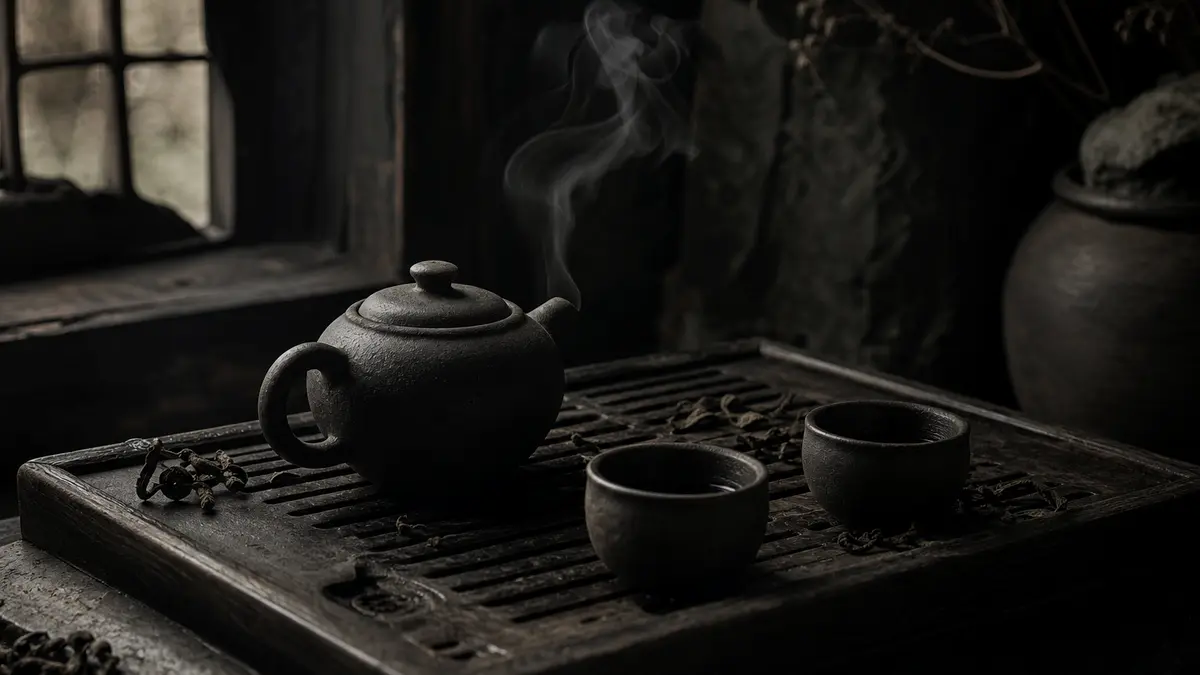
Phoenix Mountain dancong is inseparable from Chaozhou gongfu tea (潮州工夫茶 Cháozhōu gōngfu chá) — the regional brewing tradition that is arguably the original gongfu method.
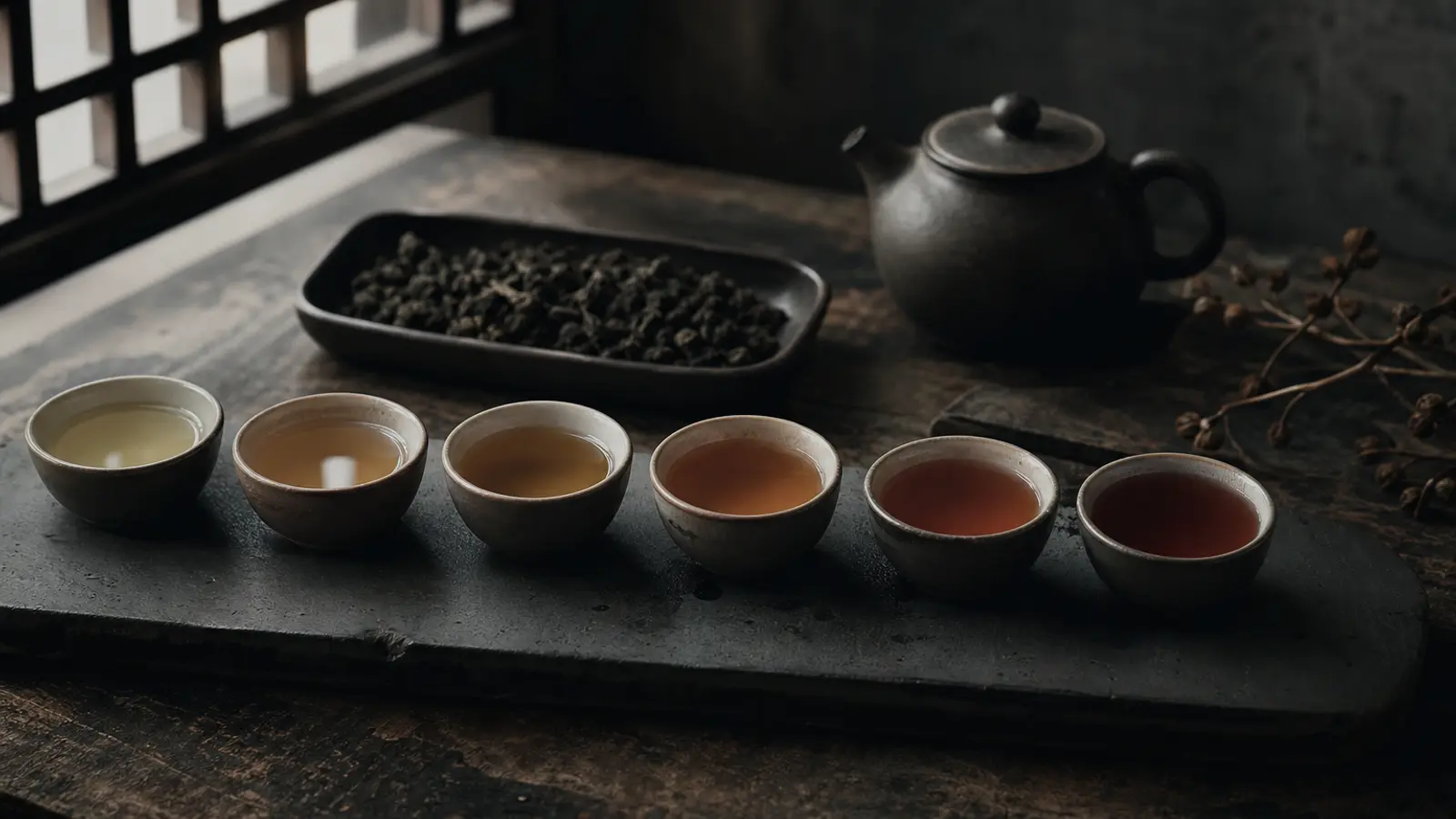
The Chaozhou style uses tiny cups in a three-cup arrangement (三杯式 sānbēi shì), a small clay pot or porcelain gaiwan (蓋碗), and rapid, concentrated pours. The ratio is high — often 8–10 grams of leaf in a 100–120 ml vessel. Water temperature sits at a full boil or just below, around 95–100°C. Infusions are short: the first pour might take five seconds.
This method exists specifically to serve dancong’s aromatic intensity. The high leaf ratio and fast pour concentrate the aromatics into a tiny volume of liquid. You don’t sip a full mug of dancong the way you might drink a big-leaf Yunnan black tea. You take a small, intense hit — the aroma fills your sinuses before the liquid even touches your palate.
The three-cup format is social by design. Three cups for three people. The host pours for two guests and themselves. The cups are rinsed and refilled in a continuous cycle. The tea changes across infusions — opening, peaking, fading — and the conversation follows the arc.
I think of this the way I think of Burgundy served in proper stems at cellar temperature. The vessel and the method are not separate from the tea. They co-evolved. Drinking dancong from a large mug is like drinking Chambertin from a tumbler. You’ll taste it. You won’t experience it.
Why Phoenix Mountain Matters
Phoenix Mountain represents the most radical expression of terroir in the tea world. Where other origins work at the garden level or the village level, Phoenix Mountain works at the individual tree. The tradition of naming trees, harvesting them separately, and processing their leaf according to each tree’s specific needs is unlike anything else in tea production.
It is also fragile. The ancient trees are irreplaceable. The knowledge required to process each tree’s leaf correctly lives in the hands of a small number of families. The commercial pressure to simplify — to plant clonal rows at low altitude, process in bulk, and sell under famous fragrance names — is real and growing.
For the drinker, the takeaway is this: when you encounter genuine high-mountain dancong from an old tree, harvested and processed with care, you are tasting something that cannot be replicated. Not by a different tree on the same slope. Not by the same tree in a different year. It is one tree, one season, one maker’s hands. That specificity is the point.