Every time I drink Longjing, the umami surprises me. I know it’s coming. I’ve tasted it before. And still — the first sip lands and I think: how is this possible from near-clear water?
Dry Leaf
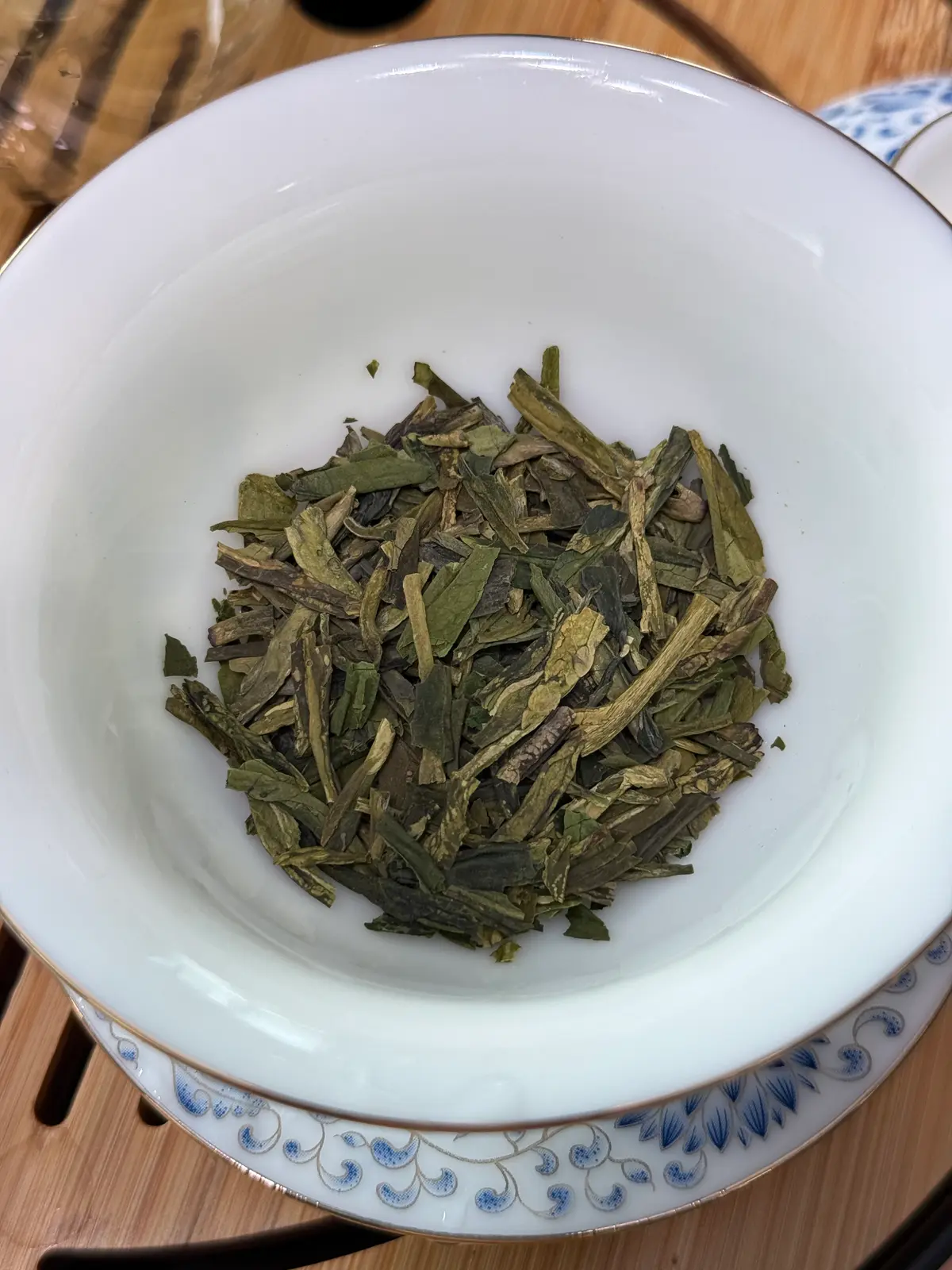
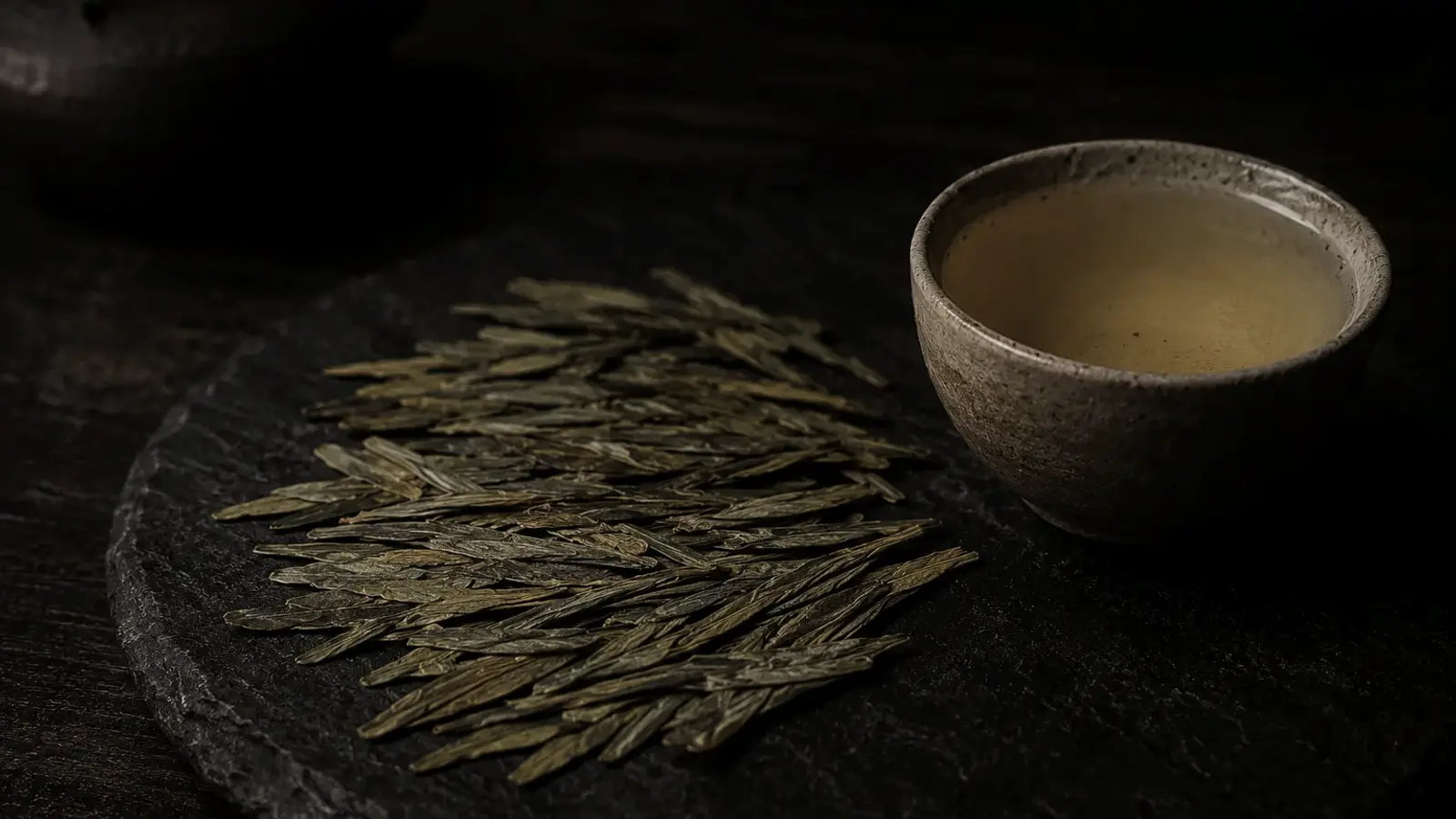
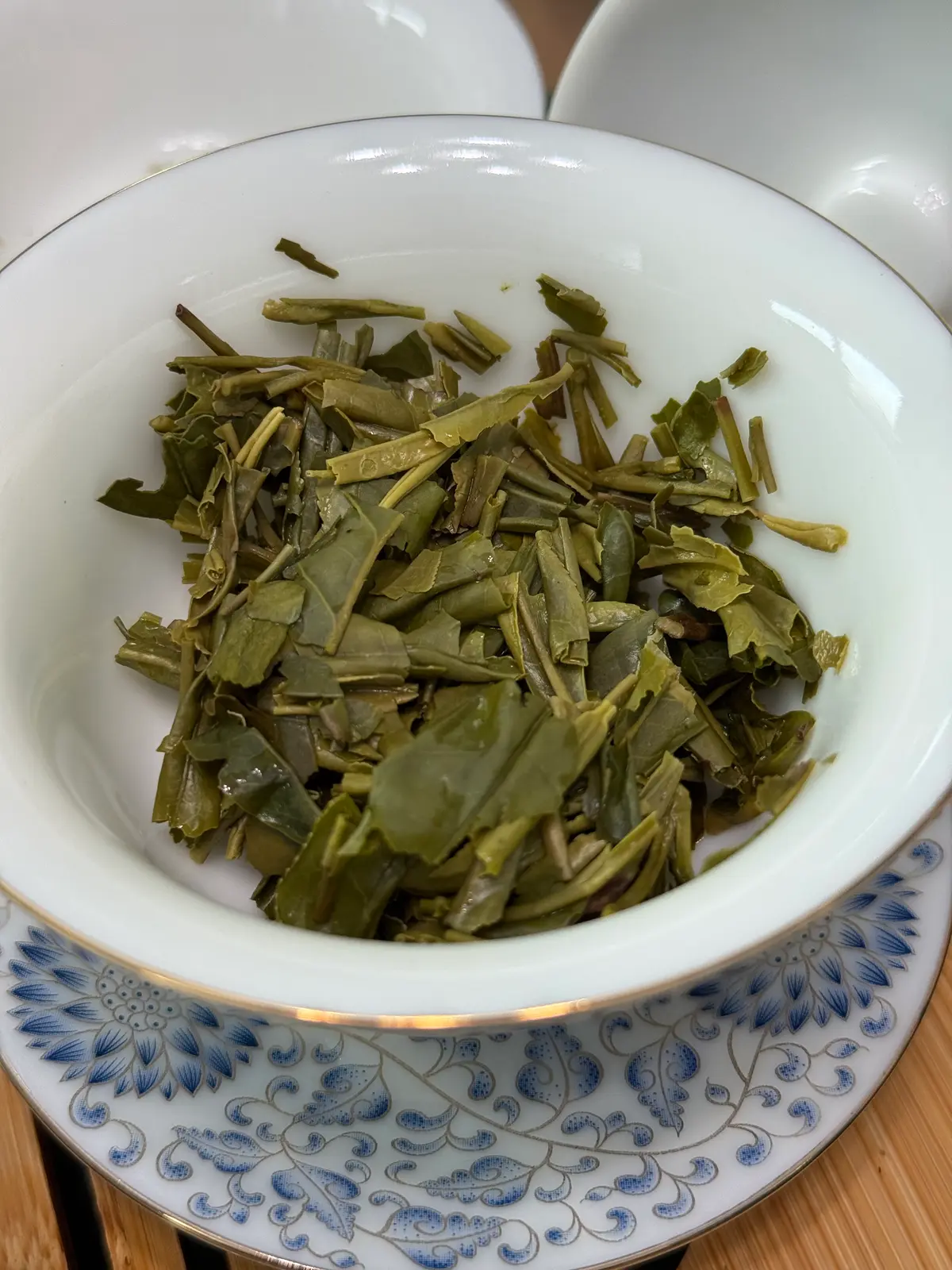
Flat, sword-shaped leaves — the signature Longjing form from hand-pressing in a heated wok. Mingqian (明前) harvest — pre-Qingming premium early spring pick, when amino acid content peaks and bitterness is at its annual low. Light, almost fragile. Not like dried pu-erh that might crack and break. More like a tender, fragile leaf that barely lived before it was picked. These are the youngest buds of spring, harvested days after they emerged.
The Session
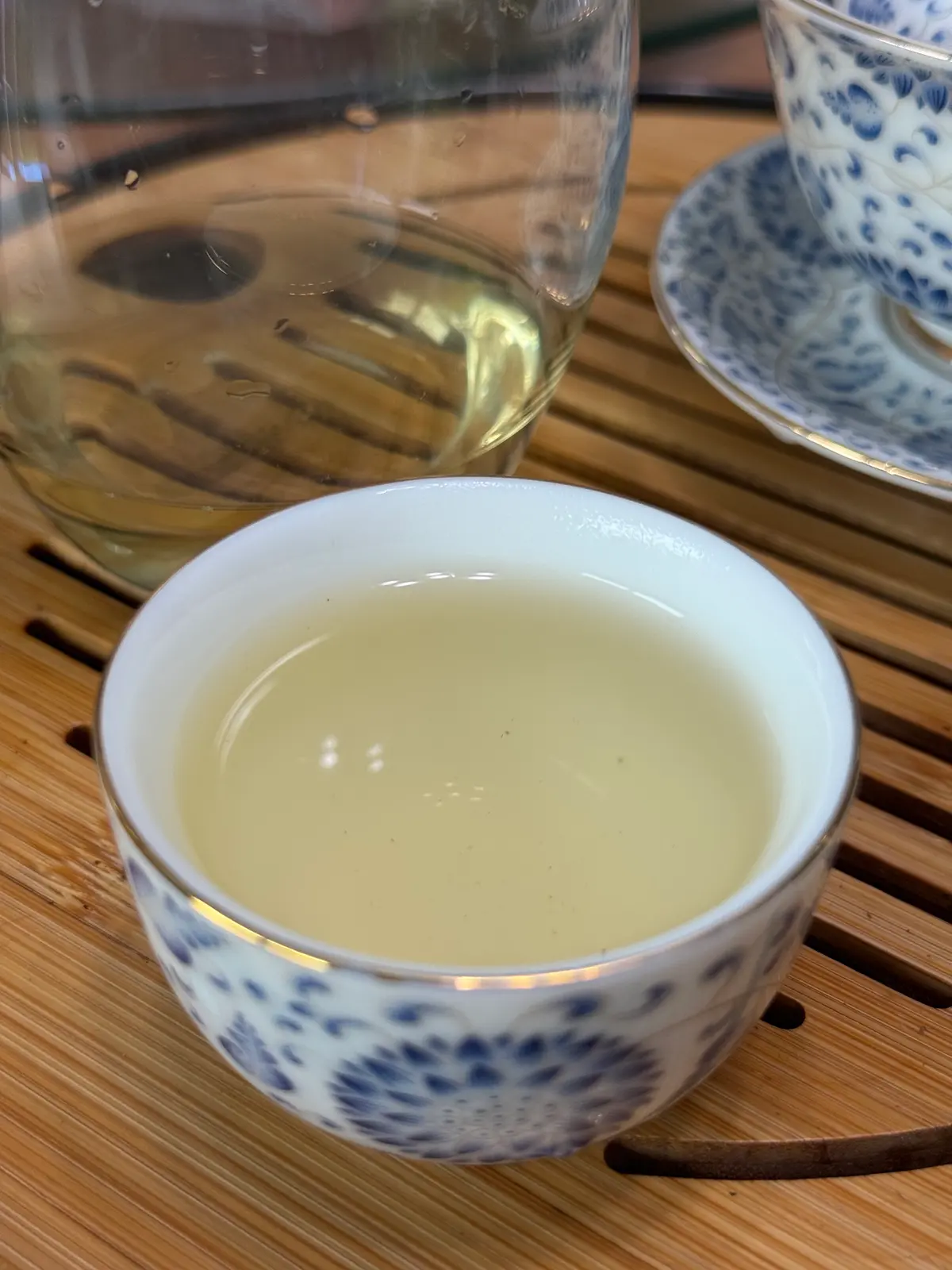
The liquor pours nearly clear. Pale gold with the faintest green tint. If you didn’t know what you were looking at, you’d think it was flavored water. Then you taste it and the umami rolls through — savory, brothy, filling the mouth with a richness that contradicts everything the color promised. This was the original Longjing revelation: intensity has nothing to do with color.
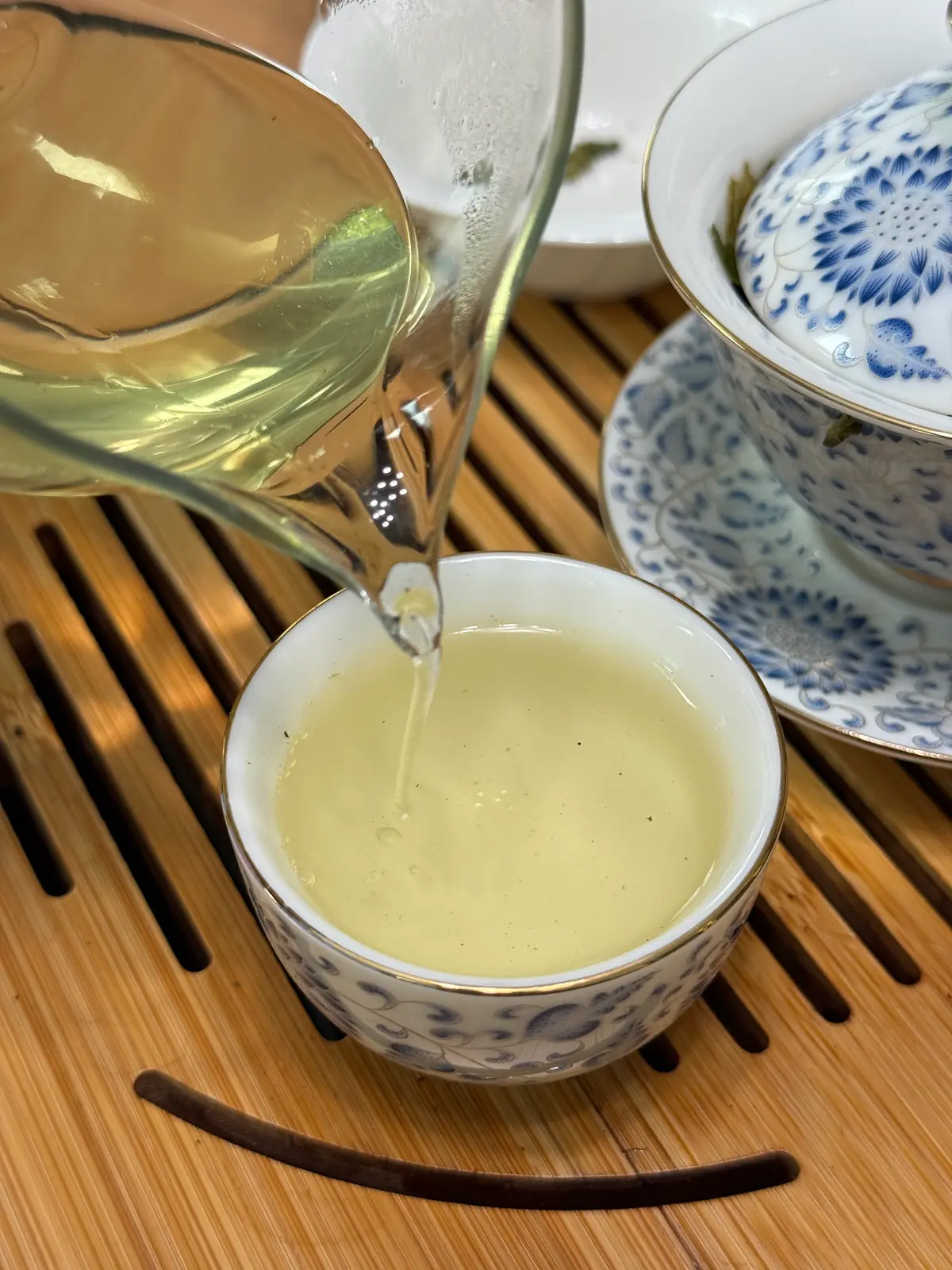
The texture is where this tea lives. Silky silky smooth. The liquor just glides down my tongue and throat. Not thick. Not coating. Not viscous. Slender. Delicate. A completely different vocabulary of smoothness from everything I’ve been drinking in pu-erh. For weeks I’ve been pursuing thickness and density — dark amber viscosity, coating mouthfeel, heavy body. I love that. But this Longjing taught me that smoothness has more than one shape. The silk thread is as beautiful as the velvet curtain. Both are real.
There is a bitterness — but it’s bare bones. The faintest structural scaffold holding the taste up, preventing the umami and sweetness from floating formlessly. It’s not Bulang Mountain bitterness that challenges you and demands huigan conversion. It’s architectural bitterness — present only to give shape, then it disappears.
And the sweetness. It’s there, but far and hidden. Not upfront like shou. Not earned through bitterness like aged sheng. It sits behind everything else — behind the umami, behind the faint bitterness, behind the silk texture — and you only notice it as the louder elements fade. A quiet presence at the back of the room. In pu-erh I’ve learned to look for sweetness that announces itself. Longjing taught me to listen for sweetness that whispers.
Flavor Profile
Front: Umami — pronounced, surprising, dominant even on repeat tastings. This is the amino acid content of Mingqian harvest expressing directly: L-theanine and glutamate at their annual peak.
Mid: The silk texture carries the umami forward with the bare-bones bitterness providing the faintest scaffold.
Finish: That hidden sweetness — clean, possibly floral, with a palate-washing quality that leaves the mouth cleaner than before the first sip.
Mouthfeel & Huigan
I like thick smooth liquor that’s dark raw amber. The 2005 Ban Zhang’s viscosity. The Zi Ya’s coating density. The Chocolate Noir’s velvet. That’s my primary preference and it hasn’t changed.
But I also love this. This Longjing smooth liquor. So beautiful. It’s slender. It’s delicate. It proves that my palate has room for two modes of beauty — the powerful and the gentle, the dense and the ethereal, the dark amber and the near-clear gold.
Huigan in Longjing doesn’t operate like pu-erh’s bitterness-to-sweetness conversion. The sweetness simply exists at a distance, always present, never converting from anything, just quietly waiting to be noticed. It’s the difference between a dramatic entrance and someone who was in the room the whole time.
Qi Notes
Bright, alert, clean. Morning clarity without jitters. At 3-4g with 80°C water, the caffeine is gentle. Appropriate for anxious mornings when caffeine concern is present. No dizziness, no cha zui risk. This is the gentlest functional tea in the collection. For a deeper look at how water temperature shapes what you taste, see the tea brewing water temperature reference guide.
Value Assessment
100g purchased from a physical tea shop in Bangkok. Mingqian Xi Hu designation — the premium early spring harvest from the protected West Lake growing zone. Stored in refrigerator, which preserves green tea freshness. Unlike pu-erh, this tea is fading — the amino acids that create the umami are slowly degrading. Drink within weeks, not months. Don’t hoard Longjing. It rewards immediacy.
Verdict
Pu-erh taught me about depth through time. Da Hong Pao taught me about depth through fire. Longjing taught me about depth through restraint — minimal processing, no aging, no roasting, just the pure expression of place and season captured in a cup of near-clear water.
The tea that proves beauty has more than one architecture. The dark amber world of aged shou is one cathedral. This pale gold world of Mingqian green tea is another. Both sacred. Both beautiful. The palate that can hold both is richer than the palate that only knows one.
Slender. Delicate. Beautiful.
This tea's strongest axis is Aroma (8/10). Notably low: Mineral.