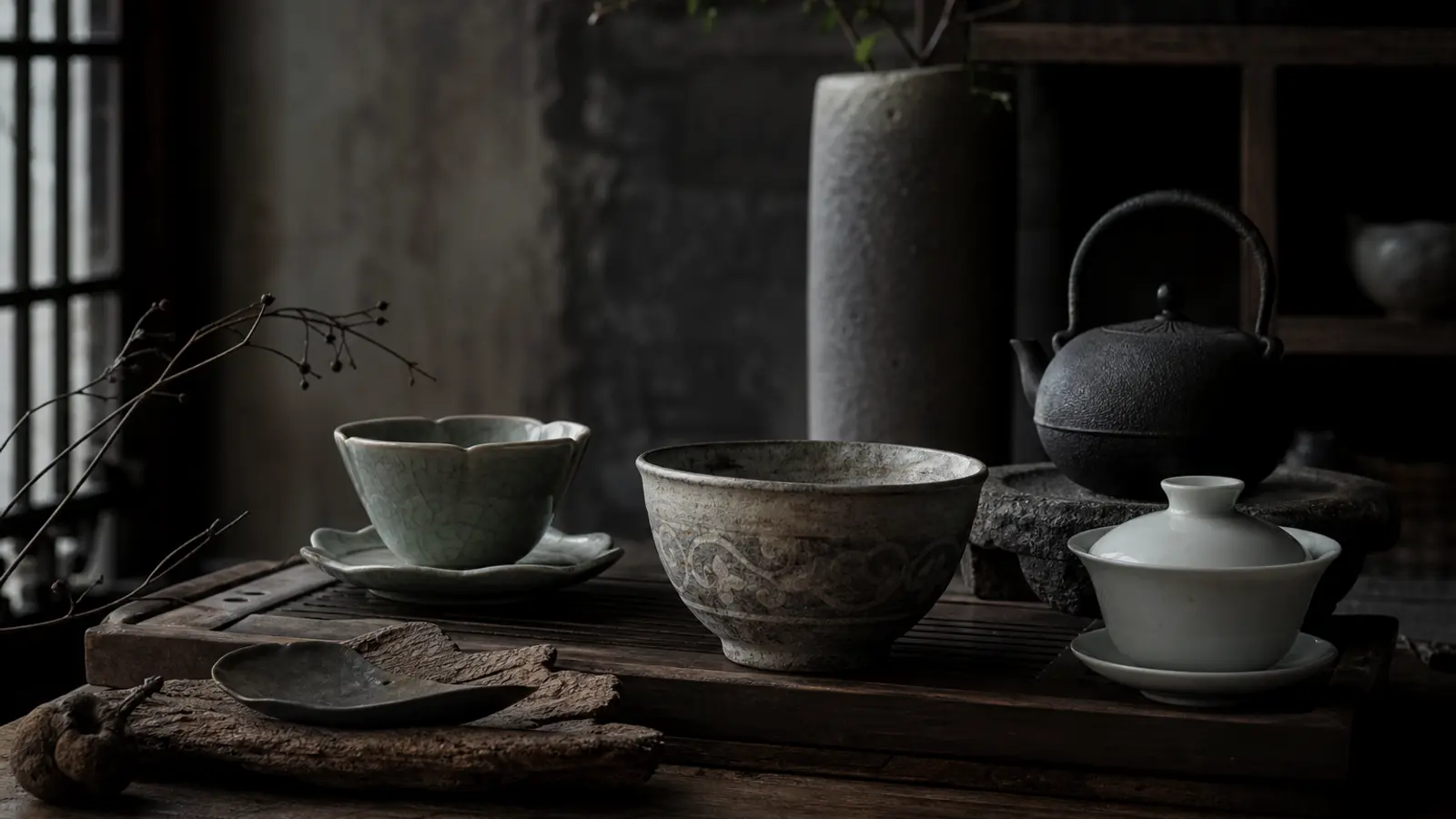
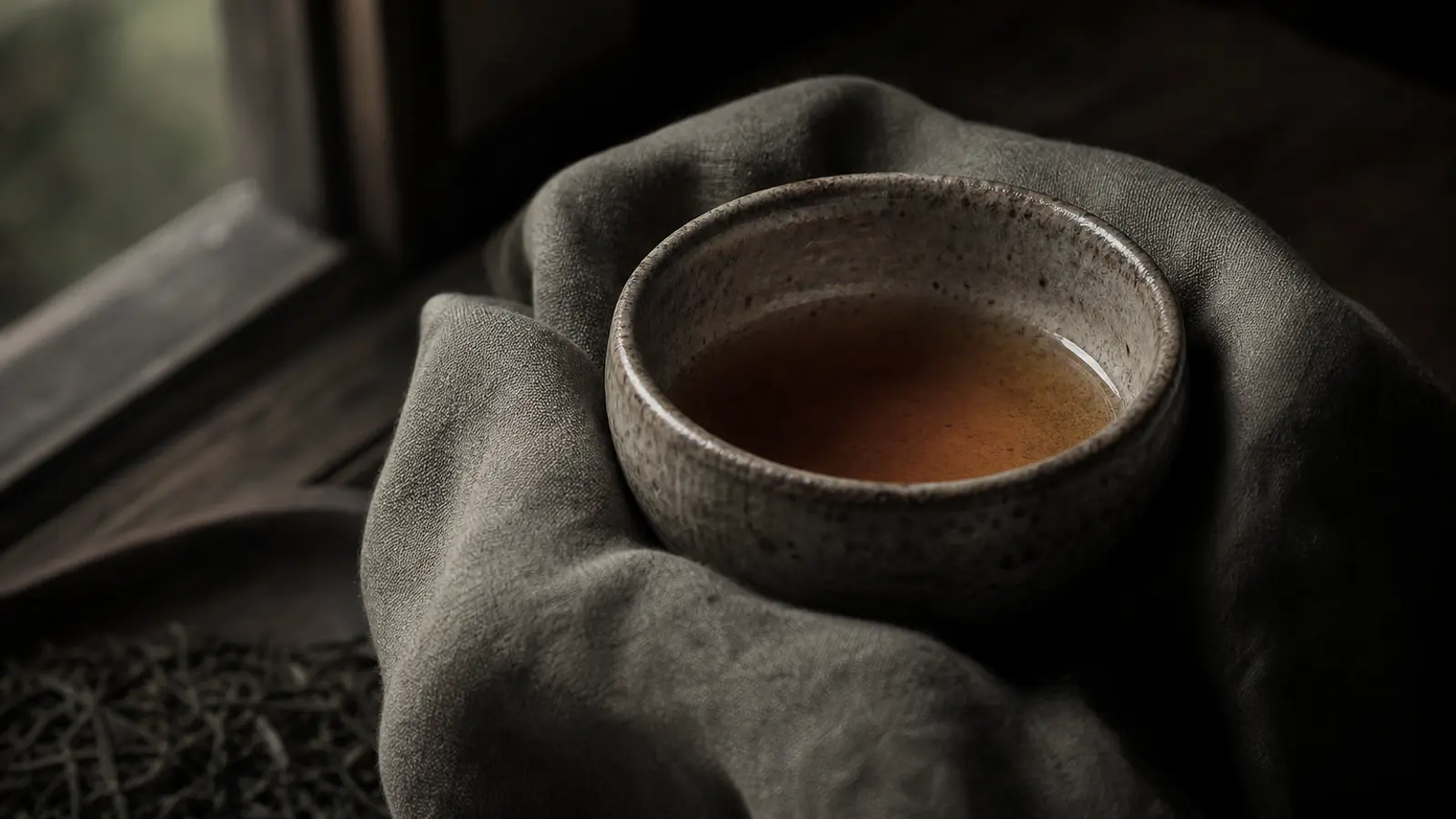
The korean tea bowl dawan is one of the most physically intimate vessels in tea. You do not grip it by a handle. You do not pinch it between two fingers. You hold it in both palms, feel the warmth of the liquid through the clay, and drink slowly. That physical grounding — both hands cradling something warm and heavy with intention — is the point.
This guide covers what a 다완 (dawan, tea bowl) actually is, how it functions in both Korean 다도 (darye, tea ceremony) and gongfu settings, how to choose a size, and what the four main glaze traditions offer in practice. Prices are converted from KRW at current market rates.
What Is a Korean Tea Bowl?
A 다완 is a wide, open-form bowl designed for drinking tea. Diameter runs 10–16cm; depth is shallower than you might expect relative to that width. The form originated in the Korean ceramic tradition and was historically significant enough that Japanese tea masters in the 16th century famously prized Korean Dawan (다완) above almost any other vessel — many of the greatest bowls in Japanese museum collections are Korean.
The characteristic 다완 profile — slightly flared or straight walls, a foot ring wide enough to grip, occasional deliberate irregularity in the rim — reflects a philosophy of making that values the mark of the hand and the character of the material over machine precision.
Traditional markers include the 삼도 다완 (three-stripe bowl), distinguished by three parallel lines incised or painted around the interior. These stripes are not decorative accident — they are a traditional signal of authentic Korean workshop practice, a way of placing the bowl within a lineage.
How a Dawan (다완) Changes the Experience of Tea
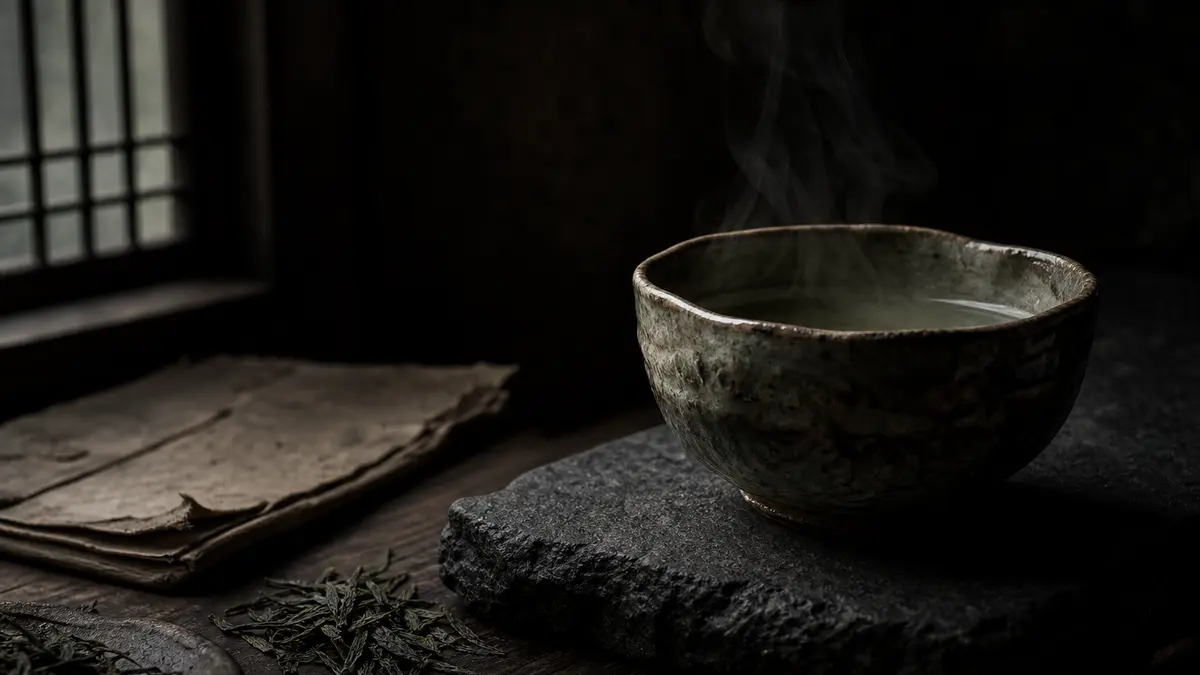
Think of this in wine terms: choosing a 다완 is like choosing a glass shape. Pour the same wine into a narrow flute and a wide Burgundy bowl and you taste different wines. The liquid is identical; the experience is not.
The 다완 does several things that small cups cannot:
Volume and pacing. A standard 다완 holds 100–200ml. You pour once, drink slowly, and sit with the liquor longer than a 30–50ml gongfu cup allows. This is not a vessel for rapid comparative tasting. It is a vessel for settling in.
Aroma delivery. The wide, open mouth directs vapor toward your face as you lift the bowl. You encounter the 향 (hyang, fragrance) of the tea before the liquor touches your lips. With aged teas — particularly shou pu-erh (보이차) or well-stored sheng — this aromatic opening can be significant.
Physical warmth. Both palms contact the bowl. In cooler months, this becomes part of the ritual: the bowl warms your hands, the warmth travels up your arms. There is a grounding quality to this that practitioners of Korean tea ceremony describe as central to the experience, not incidental to it.
Slowing the session. The size and the two-handed hold make it physically difficult to rush. You cannot dash off a 다완 the way you might knock back a small cup. The vessel imposes a pace.
When to Use a Dawan (다완) — and When Not To
Best for:
- Contemplative evening sessions where the goal is presence, not analysis
- Shou pu-erh and aged sheng, where comfort, warmth, and rounded depth suit the bowl’s character
- Korean Darye (다도) practice, where the bowl is the vessel for the entire ceremony
- Cold weather sessions when the physical warmth of the bowl matters
- Any situation where you want the tea to slow you down
Less ideal for:
- Precise steep-by-steep analytical tasting — you need small volumes and consistent comparison across steepings for that work
- Light green teas or delicate white teas where the wide opening accelerates cooling and the larger volume can feel mismatched to the tea’s nature
- Sessions where you need to evaluate color closely (iron glaze bowls in particular hide liquor color entirely)
Size Guide: Getting the Diameter Right
| Diameter | Volume | Best use |
|---|---|---|
| 10–12cm | 100–150ml | Daily drinking, solo sessions, standard practice |
| 14–16cm | 180–280ml | Ceremonial settings, sharing, display |
For most people starting out, a 10–12cm bowl is the practical choice. It fits naturally in the hands, heats through to the touch quickly, and works for a solo tea session without requiring you to brew an excessive volume. The 14–16cm bowls are beautiful objects and have their place in ceremony, but they can feel oversized when you are sitting alone with a thermos of hot water.
The Four Glaze Traditions
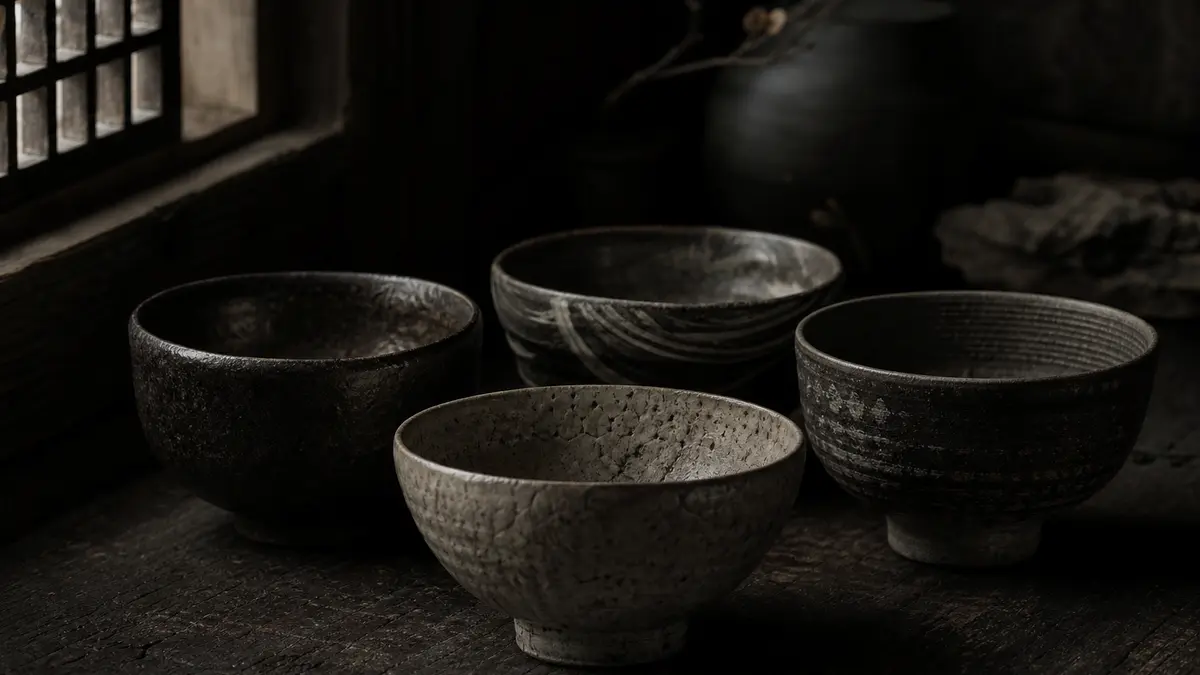
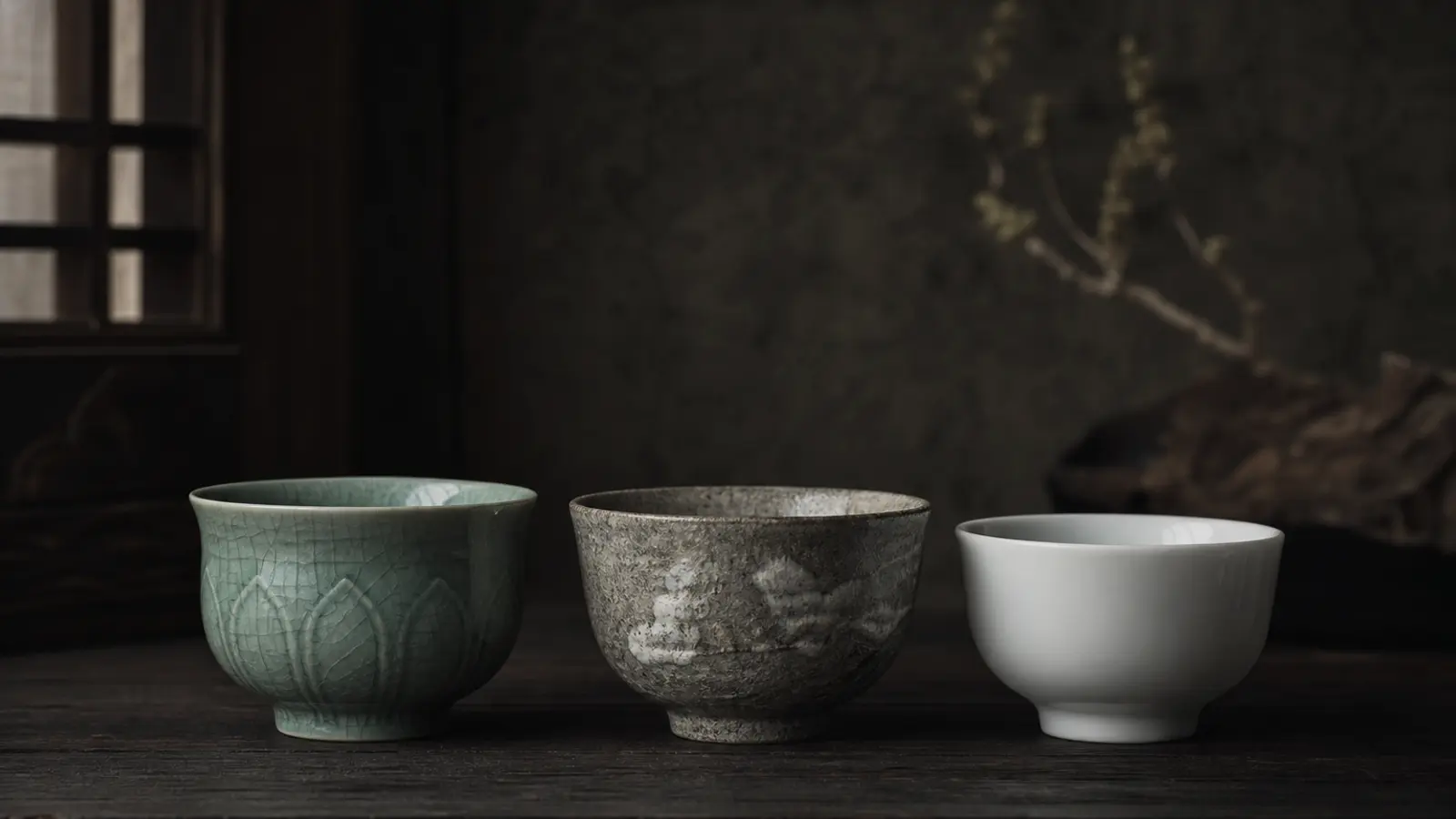
Korean ceramics divide roughly into four major glaze families for 다완. Each produces a genuinely different experience — this is not marketing distinction. The material affects heat retention, visual character, how the bowl feels in hand, and in some cases how it changes over years of use.
Cheongja Dawan (청자 다완) — Celadon
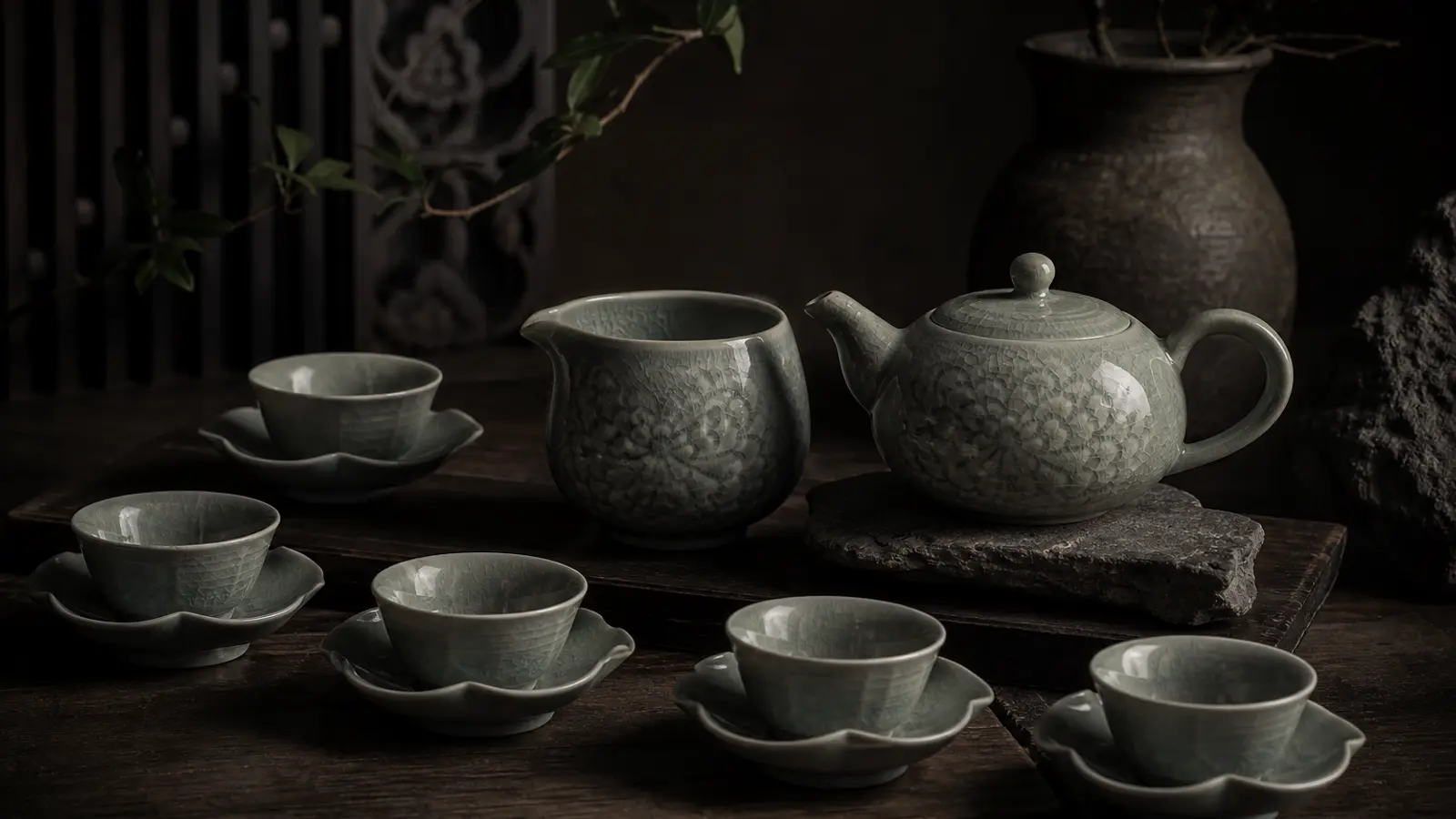
청자 (cheongja) is the jade-green glaze tradition with the longest historical prestige. The color ranges from pale grey-green to deep blue-green depending on firing conditions and clay body. A well-made celadon 다완 has a cool, restrained beauty — the glaze surface is smooth, the color shifts in different light, and the overall effect is ceremonial in register.
In practice, celadon bowls have a slightly glassy interior surface. They clean easily, do not season with use, and show tea liquor with a greenish cast that can obscure the actual color of darker teas. They are excellent for display and for formal ceremony. For everyday rough-and-tumble use, the glaze’s tendency to chip at the foot ring requires care.
Price range: $85–$430 for solid workshop production; master-level pieces considerably more.
Buncheong Dawan (분청 다완) — Buncheong
분청 (buncheong) is arguably the most physically satisfying glaze tradition for daily use. The clay body is visible, often grey-buff, with slip decoration or stamp patterns on a surface that ranges from matte to semi-gloss. The bowl feels substantial in hand, not precious.
More importantly: 분청 다완 season. The unglazed or partially glazed areas absorb oils and tannins from tea over years of use. A bowl used daily for shou pu-erh for three years looks different — warmer, more complex — than a new bowl. This ageing character is considered desirable, not a flaw. In this respect it parallels an unlined clay teapot.
분청 is the tradition I find most congruent with regular use. The bowls are forgiving — they do not show every fingerprint, they tolerate being set down on rough surfaces, they improve with neglect in the best possible sense.
Price range: $45–$300 workshop quality; master potters significantly higher.
Baekja Dawan (백자 다완) — White Porcelain
백자 (baekja) is the white porcelain tradition: clean, bright, analytical. The stark white interior shows tea liquor color with complete fidelity — you can see exactly what shade of amber or rust you are drinking. For anyone who wants to assess a tea visually, this is the practical choice.
The trade-off is character. White porcelain 다완 read as cooler in hand, more clinical in atmosphere. They do not season. They show chips and scratches more readily. They have a formality to them that suits some practitioners and feels sterile to others.
For shou pu-erh, the dark liquor against white porcelain is visually striking. For very aged sheng with a complex amber-gold color, it can be genuinely beautiful.
Price range: $55–$350 for solid production pieces.
Cheolyoo Dawan (철유 다완) — Iron Glaze
철유 (cheoryu) is the iron-rich glaze tradition that produces dark, almost black surfaces — sometimes with subtle iridescence, sometimes with spots or streaks where iron concentrates in the firing. The visual effect is dramatic. A well-fired 철유 다완 in certain light looks like it contains the night sky.
It hides tea color completely. You are not reading the liquor; you are drinking it. Some practitioners find this liberating — it removes one axis of analysis and returns attention to taste and smell. Others miss the visual cue.
Iron glaze bowls retain heat well. The thick, dark glaze surface holds warmth longer than lighter-bodied pieces. For cold-weather evening sessions, this matters.
Price range: $55–$400 workshop quality.
Price Ranges: What to Expect
Korean Dawan (다완) exist at every price point. Here is an honest breakdown:
Entry level: $33–$67 (₩50,000–100,000 KRW) Workshop production, often student or early-career potters. These are functional bowls, suitable for learning and daily use. Quality varies significantly. Look for even wall thickness, a stable foot ring, and a rim that is comfortable against the lip.
Mid range: $100–$300 (₩150,000–450,000 KRW) Established workshop potters with a consistent style. At this level you are paying for refined technique — the throwing is even, the glaze control is deliberate, the overall form reads as intentional rather than approximate. These are the bowls that suit daily use by a serious practitioner.
Master level: $400–$1,533+ (₩600,000–2,300,000+ KRW) Named master potters with exhibition track records. At the high end of this range sits work like 백산 김정옥’s (Baeksan Kim Jeong-ok’s) 삼도 다완 — pieces that function simultaneously as daily teaware and as art objects. The three-stripe mark on these bowls is not decoration; it is authentication within a tradition.
If you are buying your first 다완, I would not begin in the entry tier. The quality difference between a $50 bowl and a $150 bowl is significant enough to affect whether you actually use the vessel or leave it on a shelf. The mid-range delivers character without requiring you to treat the bowl as too precious to use daily.
Using a Dawan (다완) in Korean Darye (다도)
In formal 다례 (darye, Korean tea ceremony), the 다완 is the primary vessel. Tea — often 작설차 (sejak or jakseol, fine Korean green tea) — is steeped directly in the bowl. Water is poured at 70–80°C for green tea. The steep is brief, 45–90 seconds. You do not pour off into a separate cup; you drink from the bowl itself, both hands cradling the form.
The ceremony is built around this vessel. Its size requires you to be seated, settled, present. You cannot perform 다례 in a hurry.
Using a Dawan (다완) in Gongfu Practice
In Chinese-influenced gongfu brewing, the 다완 functions as an oversized drinking cup rather than a steeping vessel. You brew in a 蓋碗 gaiwan (蓋碗) or teapot as normal, then pour the finished liquor into the 다완.
This works particularly well for shou pu-erh (보이차) and aged sheng. The bowl’s warmth, its generous volume, and its two-handed hold suit the comfort-forward character of these teas. Where small gongfu cups reward analytical comparison of steep-to-steep progression, the 다완 invites you to settle into a single pour and notice what emerges as the tea cools.
Some practitioners use a 다완 as a large fairness pitcher — pouring from the pot into the bowl, then distributing to smaller cups. This is functional rather than traditional, but it works.
Buying Your First Dawan (다완): A Short Checklist
-
Choose a glaze tradition first. Decide whether you want something that seasons with use (분청), shows color clearly (백자), has ceremonial presence (청자), or offers drama (철유). This narrows the field meaningfully.
-
Hold it before you buy if possible. The weight distribution, the feel of the rim against your lip, the way the foot ring sits in your palm — these are not things photographs communicate well. Korean teaware markets, gallery shows, and some specialty retailers allow handling.
-
Check the foot ring. It should be even, stable, and slightly concave on the bottom so the bowl does not rock. A chipped or uneven foot ring is a functional problem.
-
Start at 10–12cm. Unless you have a specific ceremonial purpose, the smaller diameter suits daily use better.
-
Budget for the mid range. At $130–$200 you access genuine craft without treating the bowl as too precious to use daily.
The 다완 is a simple object in concept — a wide bowl for drinking tea — and a complex one in practice. Its physical form changes how you hold your body, how fast you drink, how much of the tea’s 향 you encounter before you taste. It is not a vessel for every session. But for the sessions where you want the tea to anchor you to where you are sitting, it is the right tool.