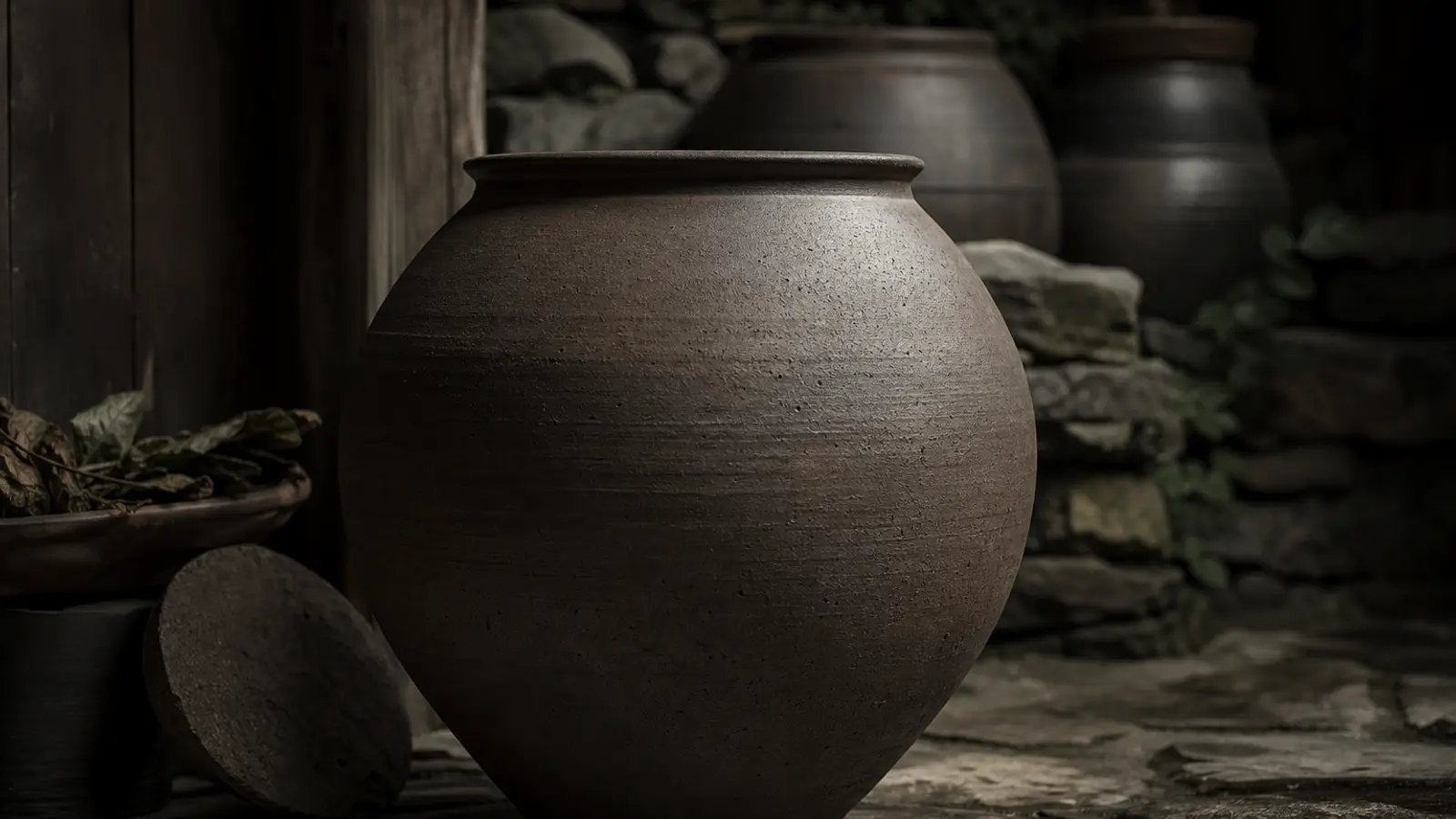
Onggi pottery (옹기) is one of the most functionally precise ceramics ever developed. Not precise in the way a porcelain gaiwan (蓋碗) is precise — thin walls, tight lid, controlled pour. Precise in a biological sense: the clay body is engineered to allow air circulation while preventing liquid from escaping, creating conditions that specific microorganisms need to thrive. For centuries, this property held Korean food culture together. Now it’s earning a quiet place at the tea table.
What Onggi Is — and What Makes It Different
Onggi is Korea’s traditional unglazed stoneware. The category spans an enormous range of forms — from massive 200-liter kimchi (김치) urns buried in the ground to small household crocks and, increasingly, tea vessels. What unifies every piece is that breathing clay body.
Most ceramics sit on a spectrum between porous and vitrified. Earthenware is highly porous; porcelain is effectively non-porous. Unglazed stoneware like Yixing zisha (紫砂) sits somewhere in the middle. Onggi occupies a specific and unusual position: porous enough for sustained gas exchange, tight enough to hold liquid without leaking. That combination is not accidental. It took Korean potters centuries to develop and refine.
The clay used for onggi is typically sourced from feldspar-rich deposits in the Korean peninsula — different regions have distinct clay characters, analogous to how Burgundy and Beaujolais draw from distinct soil profiles. Potters mix this base clay with coarse sand and ground seashell. The seashell addition is not decorative or traditional for its own sake. Calcium carbonate from the shells burns off during firing, leaving behind micropores in the ceramic matrix — typically 3–5 micrometers in diameter. These pores are large enough for oxygen molecules and water vapor to pass through, but small enough that surface tension holds liquid inside. The result: a vessel that breathes.
No other major ceramic tradition produces this functional combination at scale. Georgian qvevri (ქვევრი) amphora come closest — ancient clay vessels used for wine fermentation, recently recognized by UNESCO. The parallel is direct: both are ancient breathing clay vessels used for fermentation, both are being rediscovered by a generation interested in traditional production methods. Onggi is the amphora of Korea.
The Science of the Breathing Clay
The micropore structure drives everything onggi does well.
When kimchi ferments inside an onggi jar, the ceramic moderates the environment in both directions. Oxygen entering through the pores supports the initial aerobic phase of fermentation, then gradually diminishes as the microbial community shifts. Carbon dioxide produced by Lactobacillus (젖산균) and Leuconostoc species can escape rather than building pressure. Humidity is regulated: the clay absorbs moisture when the environment is dry and releases it when conditions are humid, buffering the contents against swings that would favor spoilage organisms.
The same mechanism governs doenjang (된장) and gochujang (고추장) production. These soybean-based ferments depend on Aspergillus and Bacillus species that require controlled aerobic conditions. Onggi provides them without any human intervention in the vessel’s function.
What makes this remarkable from a materials science perspective is that the effect is passive and continuous. No technology, no monitoring, no adjustment. The clay does the work.
How Onggi Is Made
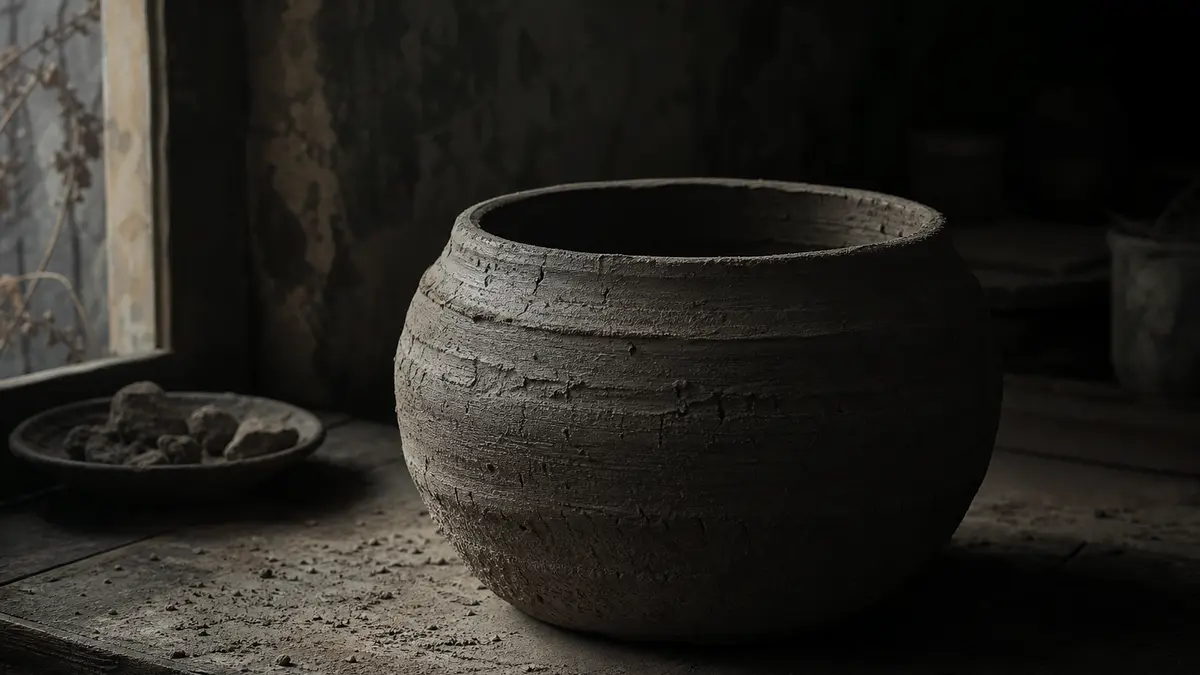
Traditional onggi production is a coil-building process. The potter works upward from a base, adding coils of clay and consolidating them from the inside using a technique called tarak (타락) — a paddle-and-anvil method that compresses and thins the walls while the vessel rotates. For large pieces, this is physically demanding work; a skilled onggijang (옹기장, master onggi maker) can throw a vessel taller than themselves.
No interior glaze is applied. The exterior may receive a thin slip or ash glaze for water resistance on the outer surface, but the interior remains raw clay — preserving the micropore structure that defines the vessel’s function.
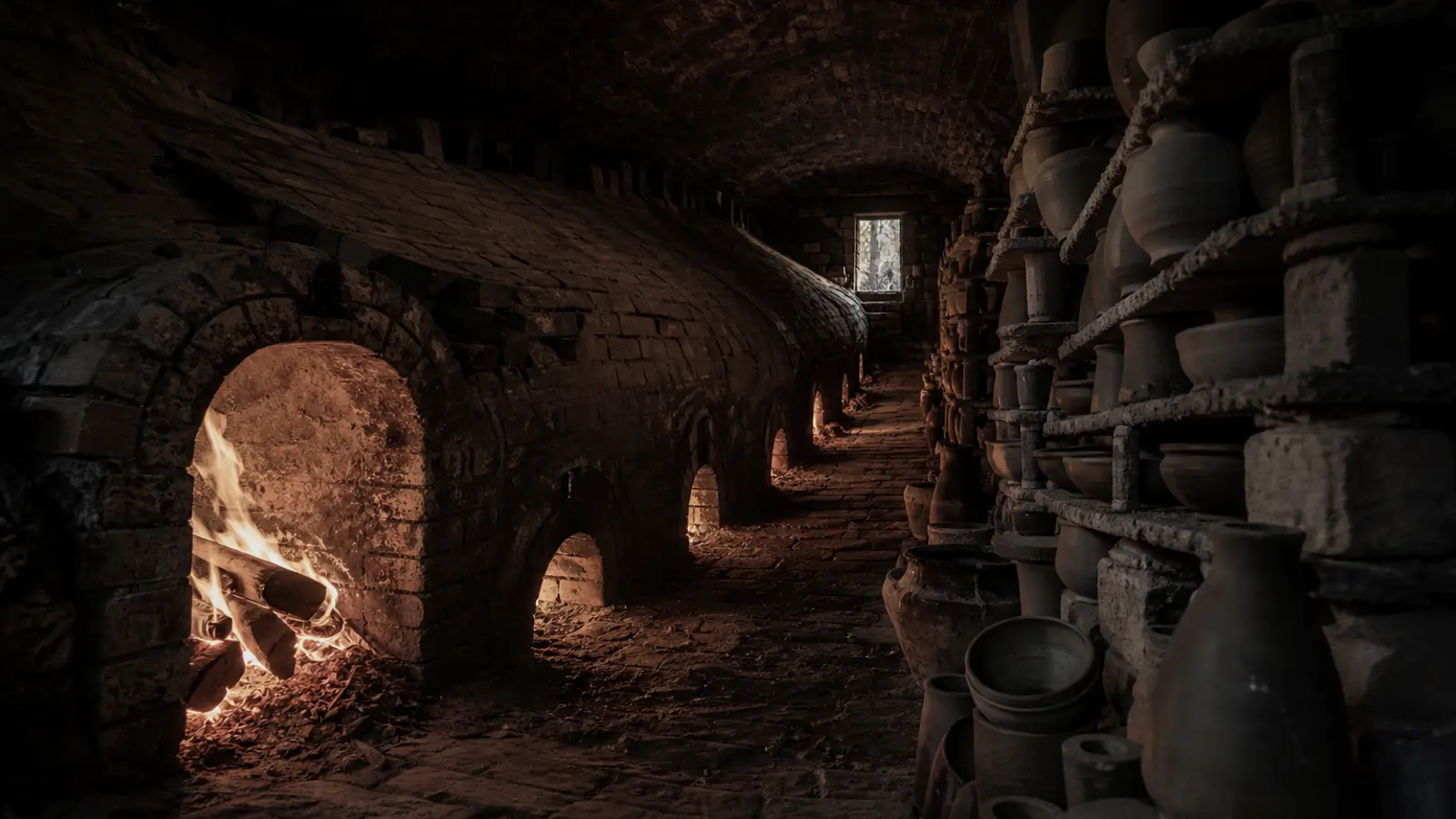
Firing happens in traditional anagama-style kilns (가마) at roughly 1100–1200°C. This temperature is lower than high-fire porcelain (which vitrifies at 1260–1300°C), and intentionally so — higher temperatures would close the pores and eliminate the breathing property.
The Onggi Renaissance
Traditional onggi production nearly disappeared in the second half of the twentieth century. Plastic containers were cheaper, lighter, and faster to produce. By the 1980s, the number of active onggi workshops had collapsed from thousands to dozens.
Two forces are reversing this.
First, the Korean government designated master onggi makers as intangible cultural heritage artisans under the Cultural Heritage Protection Act. An onggijang designation carries prestige, preservation funding, and formal apprenticeship pathways. This slowed the craft’s erosion and created a pipeline of trained practitioners.
Second, the global K-food wave accelerated interest. Kimchi’s registration as a UNESCO Intangible Cultural Heritage element (kimchi-making, gimjang, registered in 2013 for North Korea and 2015 for South Korea) brought international attention to Korean fermentation. People discovering kimchi inevitably encounter the question of how it was traditionally made — and the answer leads directly to onggi. A pot you buy at a Western grocery store doesn’t explain fermentation; an onggi jar does.
Contemporary potters are now working in onggi traditions with creative latitude that classical production rarely allowed. Some are producing smaller-scale pieces for urban kitchens. Others are adapting onggi forms for the tea table.
Onggi at the Tea Table
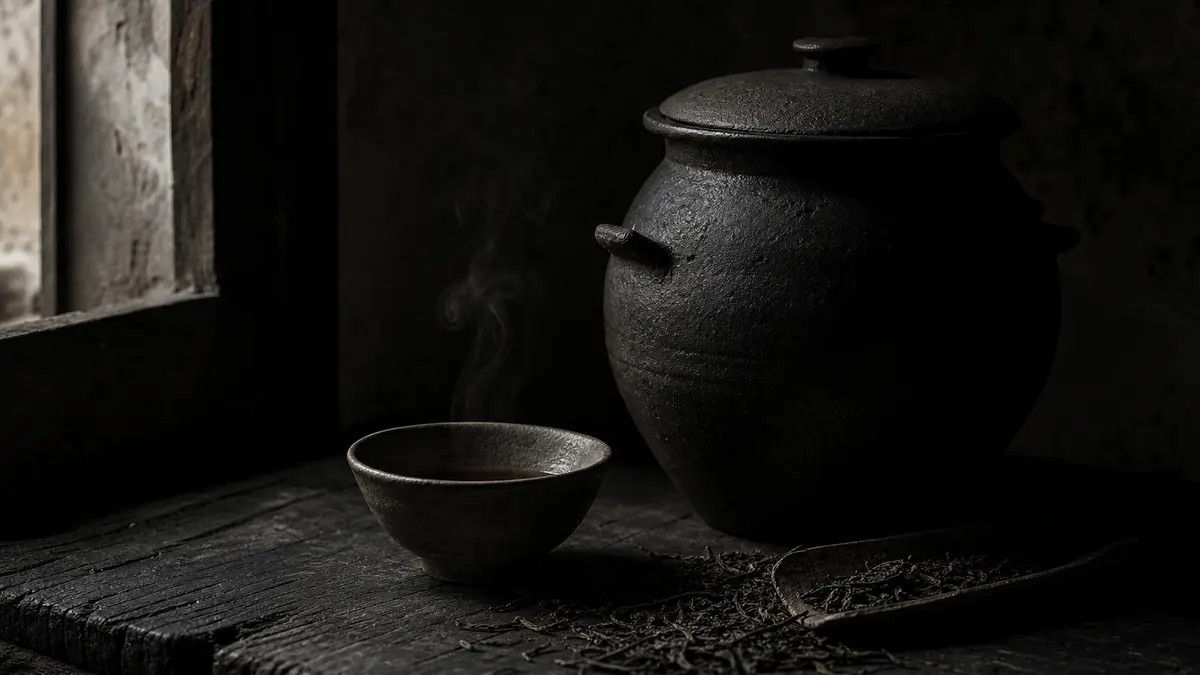
The application of onggi to tea is genuine, not trend-chasing. The same properties that make onggi ideal for kimchi make specific pieces relevant to tea practice.
Water Jars
The most established onggi tea application is the water jar (물항아리, mulhangari). Boiled water poured into an onggi vessel cools to brewing temperature while the clay’s thermal mass slows the drop. More practically, the porous walls allow very slow evaporation, which some practitioners argue softens water that’s been heavily chlorinated or has high mineral content. I find the effect subtle but real — water rested in onggi for an hour before brewing feels rounder than water that went directly from kettle to gaiwan.
The aesthetic dimension matters too. An onggi water jar on the tea table is an object with presence. The dark, unglazed surface, often mottled from wood ash in the kiln, grounds the tea space in a way that a stainless steel kettle doesn’t.
Tea Storage
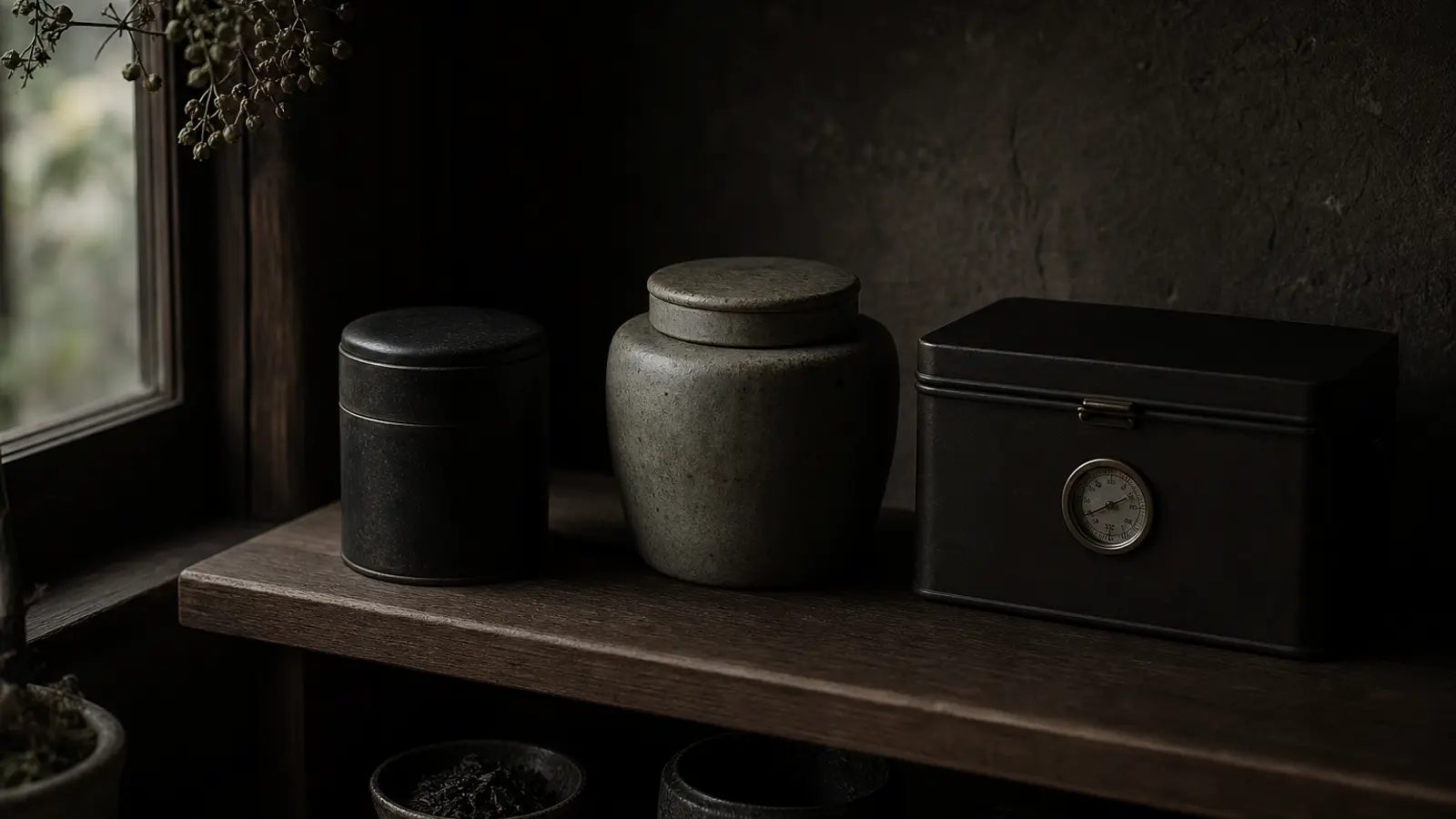
This is where onggi’s fermentation science connects directly to tea aging. Pu-erh (普洱茶) stored in a sealed container ages anaerobically, which tends to produce flat, musty profiles. Stored in a highly porous vessel, it dries out too quickly. The target is controlled air exchange — and that is exactly what onggi provides.
For sheng pu-erh (生普洱) or Liu Bao (六堡茶) being aged in tropical or subtropical conditions, an onggi-style container offers humidity buffering and gentle oxygen exposure. The clay absorbs and releases moisture with ambient humidity fluctuations, maintaining a relatively stable microenvironment inside. This is not identical to the pumidor or humidity-controlled cabinet approach, but for teas that benefit from faster, more active aging, onggi storage is worth serious consideration.
The practical caveat: onggi will impart character to whatever it stores over time, just as a seasoned Yixing teapot does. The first few uses in an onggi storage jar will carry some clay character. This is not a defect — it’s the material doing what it does — but it means you should dedicate a jar to a particular tea type rather than switching between green tea and aged pu-erh.
Teacups and Gaewans
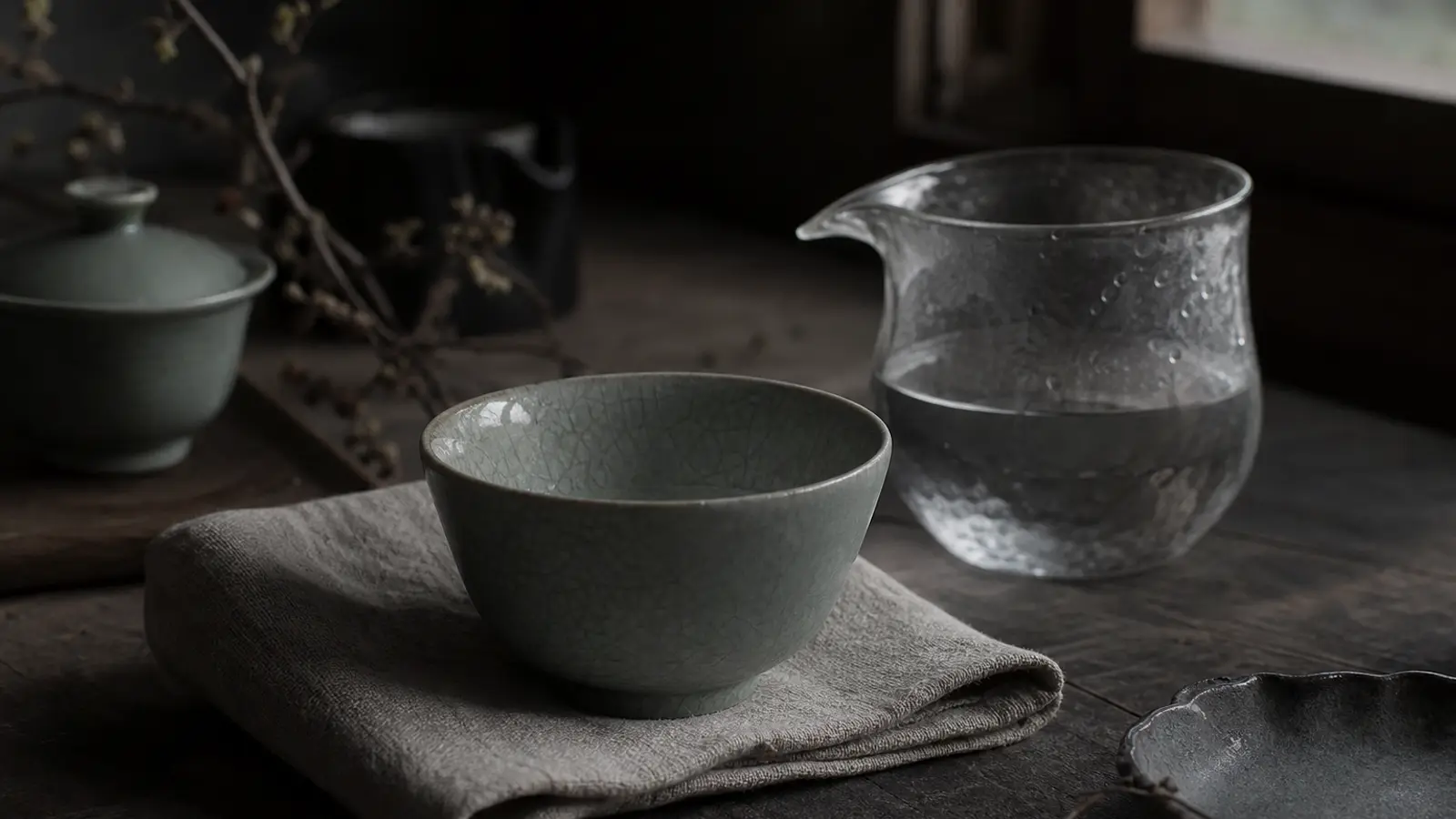
Several contemporary Korean potters are producing onggi-influenced cups and gaewans (蓋碗, written in Korean as 개완). These are smaller pieces than traditional fermentation onggi — the form has adapted, though the clay body remains functionally similar. The unglazed interior surface seasons with tea oils over time, developing a patina analogous to a well-used Yixing piece.
Drinking from an unglazed onggi cup is a different tactile experience than porcelain. The surface is slightly rough, matte, and warm to the touch. The clay doesn’t reflect aromas back as cleanly as porcelain, which suits teas with earthier, more complex profiles — aged teas, roasted oolongs, darker Korean teas like kkwari-balbam-cha. It would not be my first choice for a delicate first-flush Darjeeling or a high-mountain dancong (单丛).
Comparing Onggi to Other Unglazed Ceramics
| Property | Onggi (옹기) | Yixing Zisha (紫砂) | Japanese Yakishime | Georgian Qvevri |
|---|---|---|---|---|
| Primary use | Fermentation, storage | Teapots | Serving, sake | Wine fermentation |
| Firing temp | ~1100–1200°C | ~1200°C | 1200–1300°C | ~900–1000°C |
| Porosity | High (intentional) | Low-medium | Variable | High |
| Liquid-tight | Yes (surface tension) | Yes | Yes | With beeswax lining |
| Seasons with use | Yes | Yes | Moderately | Yes |
| Scale | Large to small | Small | Small to medium | Very large |
| Tea application | Storage, water jars, cups | Teapots, primary | Cups, carafes | Not typical |
The comparison to Yixing is worth dwelling on. Both traditions involve unglazed clay that seasons with tea exposure. Both have devoted scholarly and collector communities. Both are associated with specific microclimates and regional clays. But Yixing’s fired clay is nearly vitrified by comparison to onggi — it holds heat efficiently and concentrates tea oils, which suits the gongfu (功夫) brewing tradition’s small pots and fast infusions. Onggi’s higher porosity makes it less suited to precision brewing and better suited to the slow-exchange applications: storage, aging, water rest.
Practical Guidance for Onggi at Home
If you’re approaching onggi for the first time, start with a water jar rather than a tea storage container. The investment is lower (expect $30–80 USD for a small contemporary piece from a Korean craft fair or online retailer; traditional workshop pieces from established onggijang run significantly higher), and the application is immediate. Use it to cool water for gongfu sessions. Notice whether the water character changes over a week of use.
For tea storage, choose a piece with a fitted lid that creates a semi-seal — not airtight, but close. Dedicate it to one category of tea. Clean it between teas only with water, never soap; surfactants will penetrate the pores and are nearly impossible to remove fully.
Onggi-inspired teacups require some patience. The first several uses will carry a faint clay character that gradually recedes as the surface seasons. Brewing darker, earthier teas through this break-in period makes practical sense — the clay character blends in rather than clashing.
A Living Material
What distinguishes onggi from most teaware is that it’s not static. A porcelain cup performs the same function on day one and day ten thousand. An onggi vessel changes — it seasons, it absorbs, it develops a history that you can taste in the subtlest way if you’re paying attention.
That’s the connection to fermentation, and the connection to tea at its most serious. Both practices understand that vessels are not passive containers but active participants. The clay selects for certain microbial and chemical conditions. The tea develops inside that selection pressure. Time and material work together.
For the tea practitioner drawn to the aging dimension of pu-erh, or to the earthen, mineral qualities of traditional Korean teas, onggi is not an exotic detour. It’s a logical destination.